We continue down memory lane in this blog, a trip mostly stimulated by coming across an album my dad put together for me many decades ago. From where this pictorial album ends, I would say he assembled it in 1970 or so. The final shots have me returning from Peace Corp Service in India, which happened in 1969.
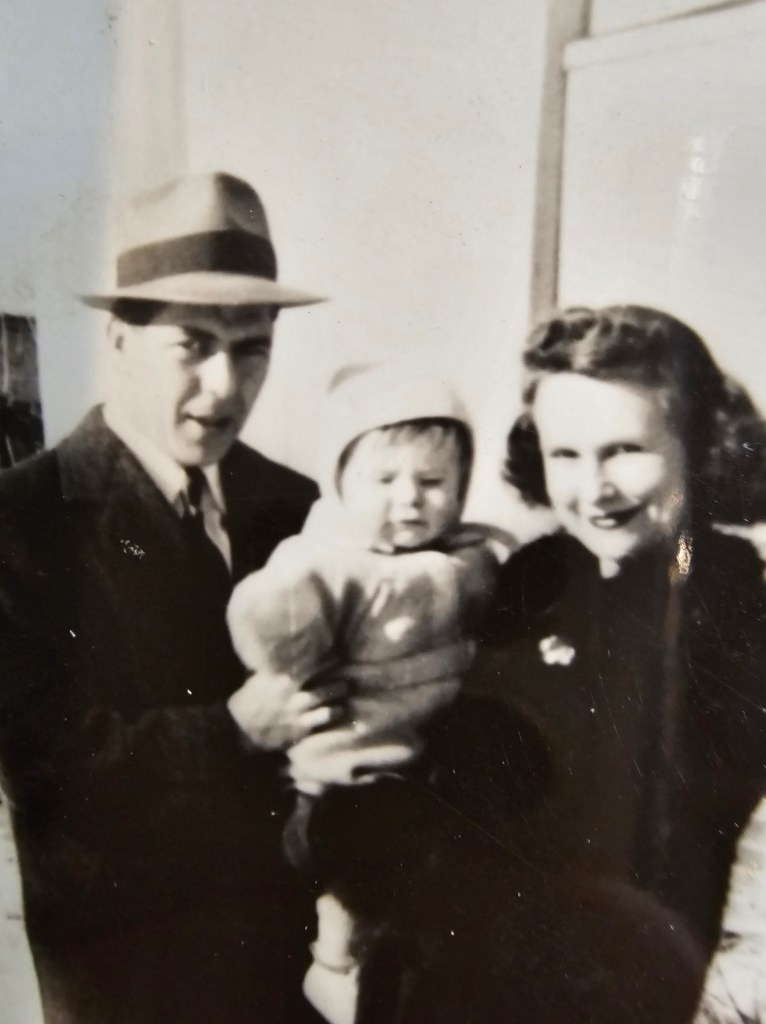
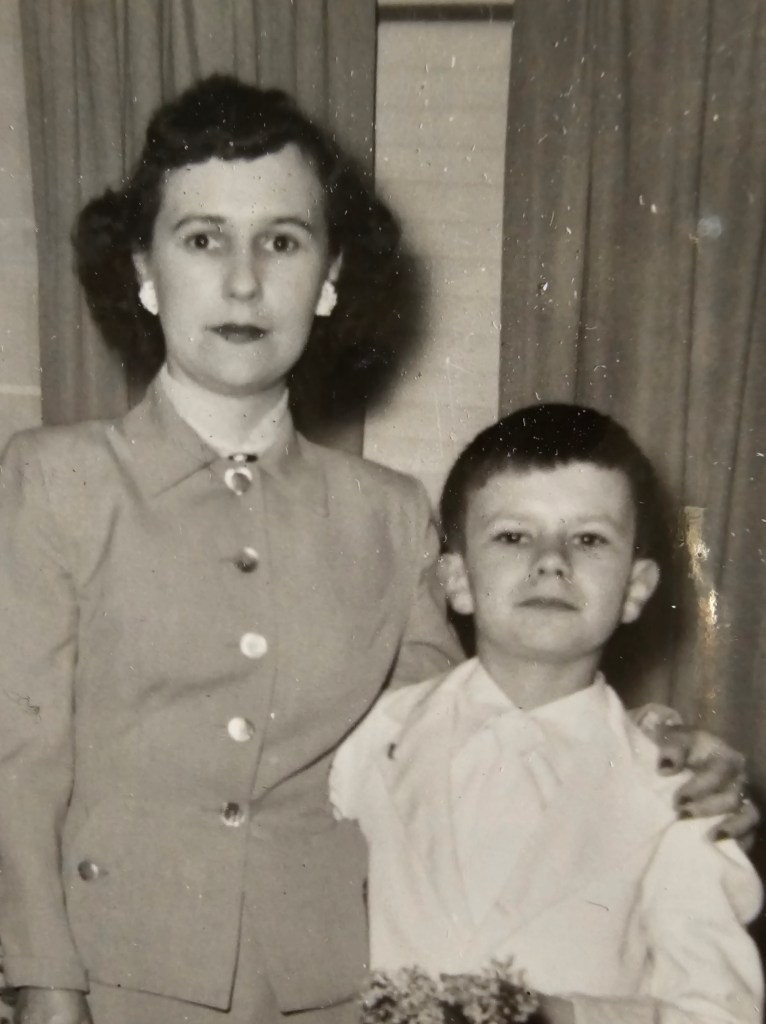
But perhaps we should start at the beginning. I don’t recall the pic above being taken. My parents look happy to have me around. However, in the early years, I’m certain that I was a drag on their lifestyle. They liked night clubs and poker nights with friends and heading to the race track and the high life. What I remember from my early years involved spending lots of time with my grandmother and my aunts. Later in life, my mother would argue with her sisters about who really raised me. I’m astounded that anyone would want to claim credit, but there you have it. I do vaguely recall being dumped on beds with a pile of coats as a poker game noisily went on in some adjacent, smoke-filled room.
Here I am with my Aunt Ag (my father’s sister). They lived nearby early on and I managed to spend a lot of time at their place. Bill was the only family member to graduate from college and have a ‘white collar’ job. I was crushed when they moved to the suburbs. For years I was a surrogate child for them since they never had any of their own.
Pity, they would have been perfect parents. Later, they ‘adopted’ (so to speak) another kid … Amy. She went on to make a fortune in Cape Cod real estate. When Ag died, Bill insisted that Amy and I ride with him in the funeral procession. I still recall one day when, as a tot, I came home one evening to find a suitcase outside the door. I was told by my folks that I spent so much time with Ag and Bill, I should go and live with them. I cried. Then again, I cried a lot.

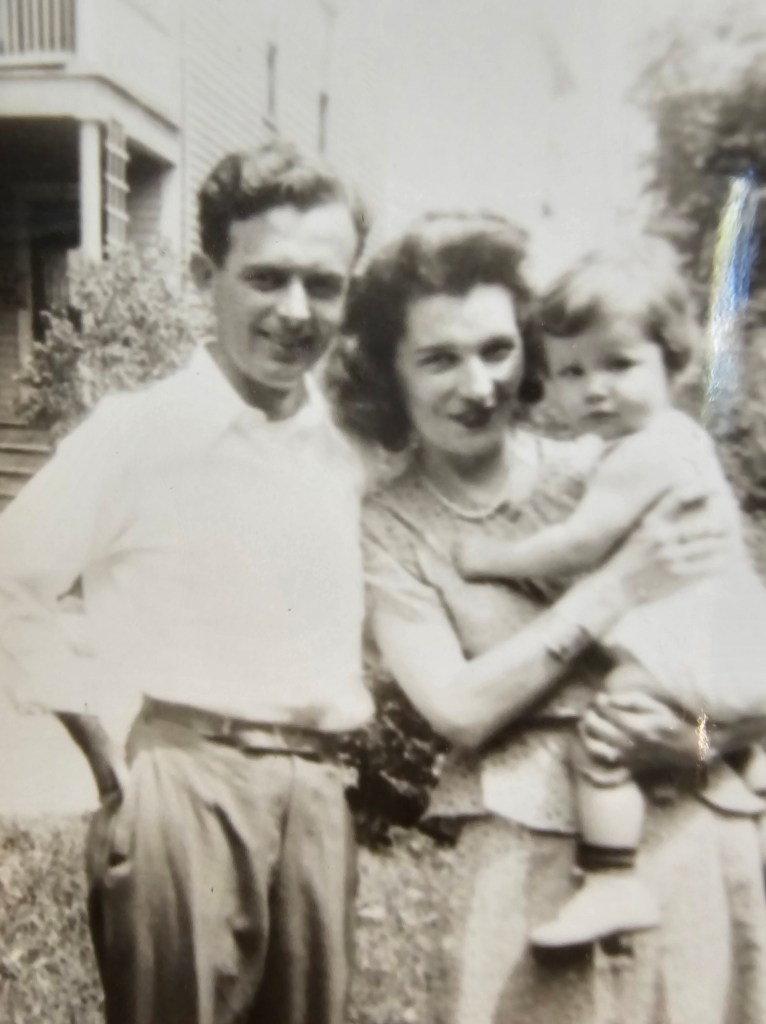
Here I am with my dad. I doubt he was excited to be stuck with a messy kid. He was rather fastidious and I’m sure I was a bother in many ways. I cannot imagine he EVER changed a diaper. As I got older, however, he did get into it, fatherhood that is. He started to take an interest in my life. He was very proud when I (finally) began to excel in school, a fact that shocked the crap out of me. He had so much potential, coming of age during the depression took his chances of success away.
On the other hand, I let him down on the athletic field. He had played sports as a kid in high school, and I never excelled in that area, at least not once I reached high school myself. I started working many hours per week, getting a job at age 14 in the public library. There were no spare hours between that and a rigorous academic schedule. While I had a good excuse to end my athletic endeavors, there was plenty of guilt there in which I could wallow. In the end, I owe him a lot. He had wit, charm, and could entertain others with his stories. I embraced these gifts from him with tremendous gratitude.

Speaking of athletic prowess (or am I changing direction here), my career was short-lived. In the first pic, the kid on my right (Lincoln Seafood) is my cousin Paul. He WAS a good athlete following in his dad’s footsteps (a baseball pitcher on his day with an excellent local reputation). After high school, Paul was signed by the Los Angeles Angels and played in their minor league system. On the other side is his younger brother Bobby who was the only male cousin to attend college (he became a pharmacist).

The pic above brings a smile to my face. The local papers covered Little League games back then, with box scores and all. My pitching heroics one day got me a headline. (As an adult policy wonk and academic, I was in the papers all the time, but this was special then). My heroics are laid out in the text. Later, I became the starting pitcher of my junior high team, where I lost only one game. I once even came within two outs of a no-hitter.
But one sad day I realized that my anticipated career in sports was illusory 😳. I was on 1st base when I got the sign to steal. Now, I did have some skills. However, being fleet of foot was not one of them. I had three speeds … slow, slower, and dead stop. I looked at the coach in disbelief. After giving the sign several times, he yelled … ‘steal second base, you moron.’ So, on the next pitch, I chugged down to second and slid in without, to my utter amazement, being tagged out.
WHAT? I could NOT have stolen 2nd base. No freaking way! I concluded that the batter MUST have hit a foul ball. So, without confirming my deductive conclusion, I started back to 1st. When the other team recovered from their shock, they tagged me out to end the inning and danced off the field.
All I remember from yet another horrific moment from a childhood full of them was a single image … our couch screaming obscenities at me as his adams apple bobbed up and down while his face turned a pure crimson red. We didn’t worry about kid’s feelings back then. At least I cannot recall any concern for mine 😞.
A kind teammate brought me my glove, perhaps saving my miserable hide in the process. I then slunk back to my position. Fortunately, our coach’s murderous rage had subsided by the time I returned to our bench. But I knew at that moment I would not be making a living on any athletic field. Alas, I would have to get a real job someday, though how I conceivably might support myself as an adult totally escaped me in that moment. I was an indifferent student at that point and had no demonstrable skills … NONE whatsoever.
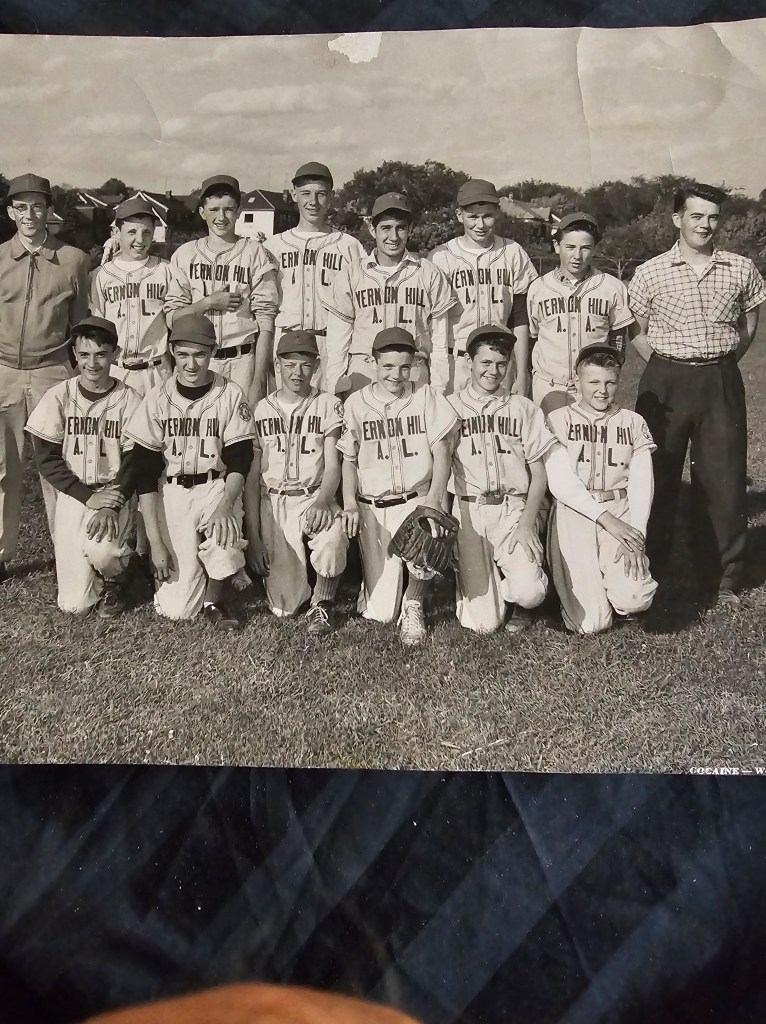
Okay, all was not a disaster. My American Legion team (pictured above in 1958) won the league championship. I’m the 2nd player from the right (back row). The tallest kid (4th from the right) was one of my best friends. He was just the nicest kid imaginable who came from a large family of very modest means. But there was a great deal of love in his home. I very much envied him that. He eventually went on to the Coast Guard Academy and became an officer in that service. He had such a big heart. I wish I hadn’t lost touch. 😕
But that’s a problem with guys. We seldom form lasting attachments with our early friends. Later, as adults, we rely on our significant others to form social attachments, though we might well have plenty of professional colleagues. After all, they have utilitarian value. Below is the exception for me.
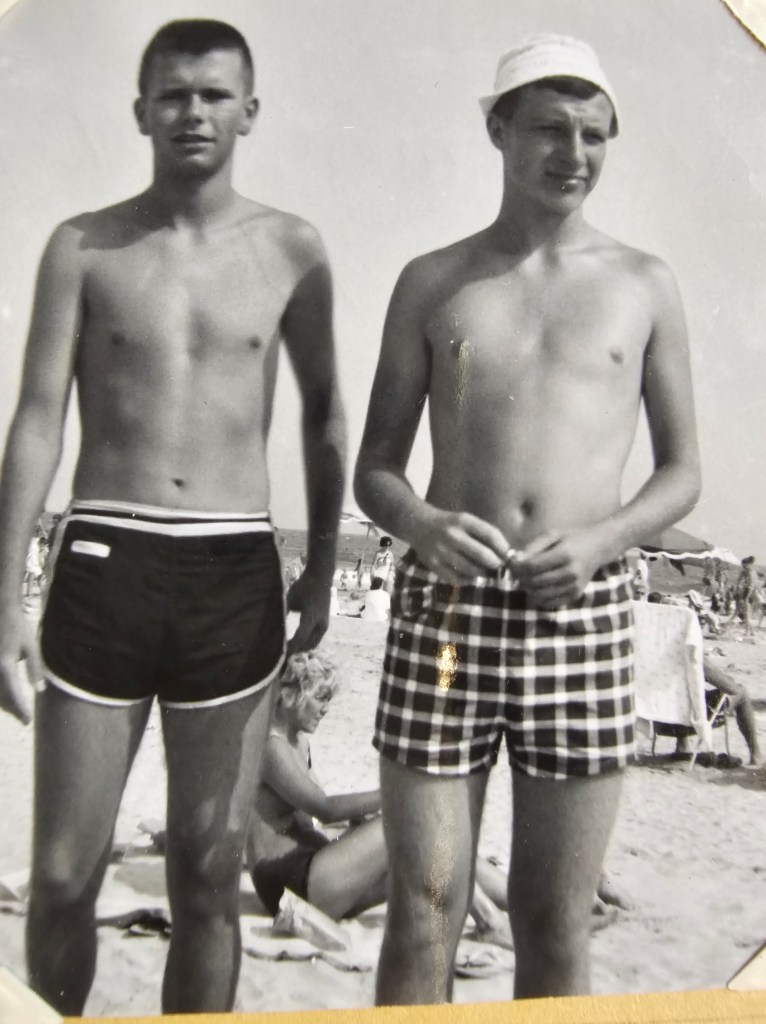
To the right in this pic is Ron Senosk, probably taken during our high school days. We played a lot of sports together and became good friends though we never lived near one another and went to different schools. (NOTE: he was a good athlete averaging 20 plus points per game for his high school basketball team 🏀). Perhaps competing against me did wonders for his ego.
Years later I was back east in Massachusetts when a cousin told me that Ron’s father had just passed and a service was being held. To his shock, I showed up and our friendship was renewed. As kids, he had reflected the prejuduces and attitudes of his environment. We fought a lot since I was already a flaming liberal and he was anythung but. I found, however, a different adult. Even though he was a Lieutenant-Colonel in the Army reserves, he was anti war and had otherwise become a raving liberal. We no longer had to fight over values, though we did differ in other ways. He ran every day. According to his lovely (and long-suffering) wife, he only missed two days of jogging in some three decades
I somehow did survive those early years, though I was unhappy a lot, uncertain about what I brought to the world, and pessimistic about my future. I can never forget my mother repeatedly telling me that her teen years were the best of her life. Wow! That almost led me to end mine prematurely. It would get worse. Was that possible. Fortunately, she was dead wrong.
As I think back, my experiences were so ordinary. Yet, as events were to prove, America then WAS the land of opportunity. Even kids who showed no promise whatsoever (like ne) could make it, could get advanced degrees and could enjoy sparkling careers. I later felt so bad for the kids I taught at University. Rampant greed and tegressive politics had snatched so many opportunities away from them (take college debt for example). I explore my early years and more at length my world in A Clueless Rebel.

At least I came to life intellectually in college. Recently, friends pointed out a book that listed those colleges recognized for transforming student lives. Clark University was one so designated. It was described as taking indifferent high school students and somehow turning them into intellectuals and even scholars, some of whom end up at top research universities. I turned out to be a poster boy for that kind of transformation.
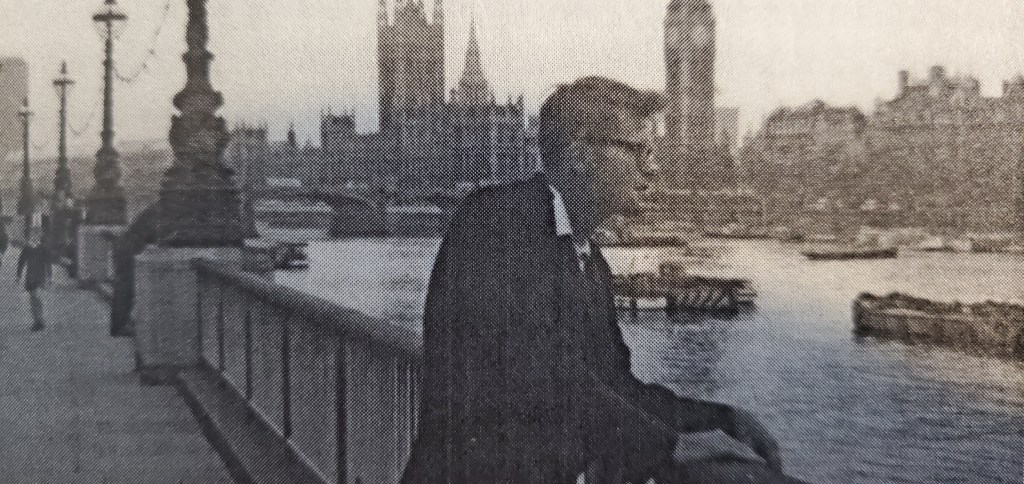
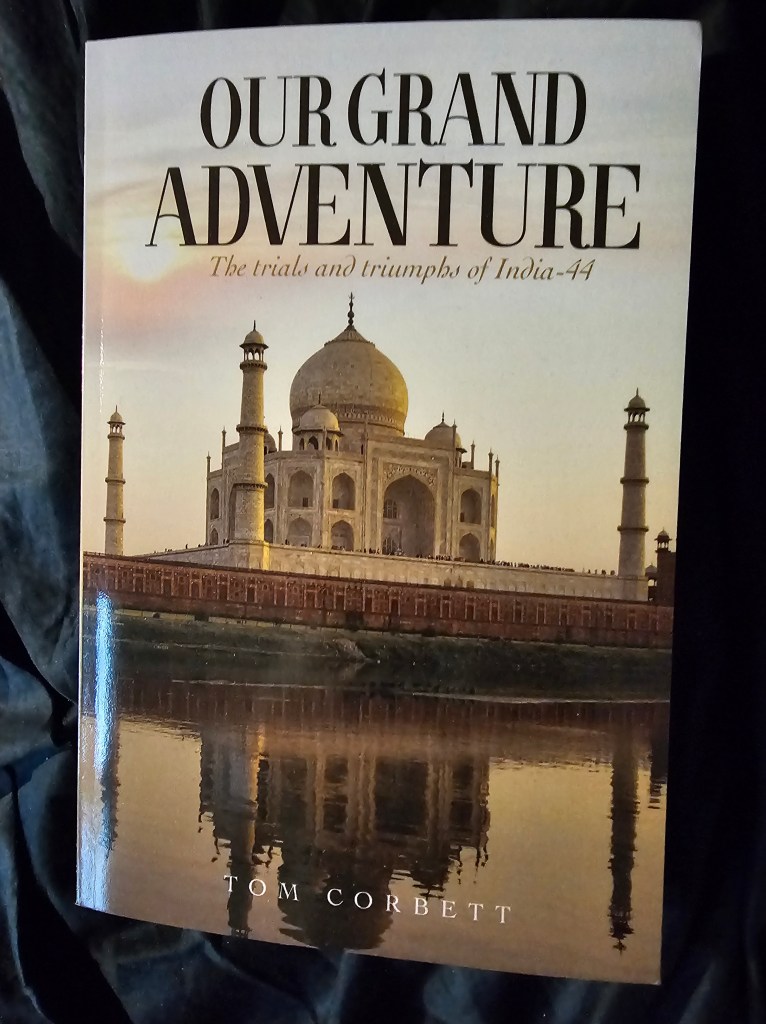
But that could not be known at the time. Having failed to stop the Vietnam War in college and still seeking to do good in the world, Peace Corp beckoned. Above, I’m looking over the Thames as I journey to India and a set of experiences that would test me and my fellow volunteers. That is a story in itself. Naturally I wrote a book on the topic titled Our Grand Adventure.
I’ll probably write another reflections– oriented blog or two before heading in an entirely different direction. Just be patient.





 Tom's Musings