Skip to content
    • Sample Page

Tom's Musings

  • Almost beyond belief.

    September 23rd, 2023

    I try to be understanding. I really try. But Republicans continue to think of ways to demonstrate their utter lack of common sense. Again, there are legions of examples, but I will focus on the Wisconsin version of the gang that can’t shoot straight’s war on the State’s flagship University… Wisconsin Madison. Why attack a world class research university that contributes so much to the State’s economy defies logic. Then again, thinking straight has never been a Republican strength.

    Let’s start with a few facts about UW-Madison, my professional home for several decades even though I spent a good deal of time in Washington D.C. and working with various state and local governments. In the recent ranking of U.S. universities, UW ranked 35 overall, and 12th among public institutions. That is up from the 49th spot just several years ago despite repeated attacks by the Republican leadership led by Robert Voss. In global rankings, UW has ranked among the top 50, earning its reputation as a ‘world class’ research university.

    Some may say that Wisconsin, being a rather average state in terms of economic resources, cannot afford to support a top school. But that is not how this works. In fact, the state contributes only 15 percent of the total campus budget. That is, the state only kicks in about $537 million of the campuses $3.7 billion dollar budget. Another 21 percent ($749 million) comes from student tuition and fees while some 18 percent ($676 million) is generated by private donations.

    Adding these budgetary components up only accounts for a little more than half of the total budget. While there are other sources of support, the most significant revenue source not mentioned so far is research grants. In a recent year, some $1.38 billion dollars in grants flowed into the Madison campus, placing it 8th among all universities. The state can enjoy a top university because a reputation for excellence in the past enables Madison to attract top talent and, therefore, large amounts of extracurricular support.

    Here’s the thing. Most of us academics at a place like Wisconsin are mini entrepreneurs. We bring in far more in revenue than we take in salary. I certainly could have earned more outside a state university but felt a strong pull to contribute to the public good. This place, indeed any research university, would fall apart if a talented faculty were not so successful in competing for scarce research money. Surely, we would not be running a $33 million dollar surplus as is now the case. I know that I personally brought in millions either directly or indirectly, and I was nothing special. It is what you do at a place like Wisconsin or Michigan or any of the elite public research schools.

    Of course, that does not even begin to account for the full economic contribution the university makes to the local economy. Epic systems started as a spin off of a university project several decades ago. When any doctor puts patient information into an automated system, it is likely an Epic product. The firm has grown from a handful of people into massive effort that will soon employ 18,000 mostly highly paid technical and professional workers. And this is just one such offshoot but surely one of the most successful ones.

    You would think that Republicans would take pride in such an economic engine. They traditionally have been the bottom line people. Anything that generates a robust ROI (return on investment) is a good thing. Right? But no, Republicans have been attacking the University ever since Scott Walker became governor. Now that the Dems control the top position, the attack dogs are found in the Assembly and Senate.

    What is the latest line of attack? Voss and his minions are going after programs designed to enhance diversity, equity, and inclusion (D.E.I initiatives) on the campus. Yes, this is where they have drawn the most recent line in the sand. They don’t want anything done that might provide educational access to underserved populations either in terms of improving access to the university or enhancing the prospects of success once enrolled. Apparently, they want to restrict access to the American dream to white, affluent families.

    Voss et. al. started their attack by threatening to cut all the money going to postions working on D.E.I. concerns (roughly $32 million systems wide). But with the university running a surplus and with these initiatives representing such a small fraction of the total budget, this was not much of the threat. So, more recently, they have threatened to eliminate all pay raises if the university insists that diversity remain an important goal.

    Now, think about that for a moment. While universities can always fill faculty positions, research universities are always competing for the top talent, often poaching stars from other schools. They need the best and brightest to bring in the research grants necessary to mantaining a stellar reputation and, frankly, keeping the institution going. If you can no longer attract these top people, or they are stolen by competitor institutions, the whole enterprise can quickly unravel.

    The pettiness of our Republican statemen doesn’t stop there. Recently, they refused to sanction the building of a new engineering complex even though the cost would not fall on taxpayers. In response, the university administrators are seeking the freedom to decide what facilities they need if the cost is privately covered. Not expand STEM-focused facility. How moronic must you be to support that? Even idiots know we need more engineers to compete in the high-tech global economy.

    Let’s face it, the conservatives dominating today’s Wisconsin Republican Party are using the University as a convenient punching bag. The strategic approach of that party is focused on inciting hatred and tribalism among their base. A convenient target for such enmity is the educated elite who are capable of independent thinking. Such folk are more likely to be able to connect the dots and determine self-interest. They will easily calculate that pursuing only those policies that favor a tiny sliver of the state’s wealthiest people is a narrowly conceived and counter- productive approach. That is, an educated population capable of independent thought will not likely support transparently stupid policies. Thus, they want their base to see what they consider the educated elite as some kind of enemy. How short sighted.

    Unfortunately, the divide and conquer tactic has worked in the past. Keep the base riled up works on the short term. Convincing rural whites that any help directed at those who have been excluded in the past is an attack on their interests is, unfortunately, an easy sell. Convince voters that this is a zero-sum game where democrats represent the other side, and you can get people to vote against their own interests. They are more interested in ‘sticking it to those they dont like’ than improving things for all.

    A thought struck me as I considered such things. The state contribution is getting smaller and smaller each year, yet their attempts to micromanage this important institution continue to increase. Will they next be trying to manage what is taught in the classrooms as DeSantis is trying to do in Florida. Do you want those who support censorship and book banning to determine what is taught and how? I think not.

    So, why not begin the process of severing the relationship between the flagship campus and the state. Research and the education of the next generation are too important to be left to provincial politicians motivated by the worst of instincts and intentions. We need great universities where truth can be pursued vigorously and independently, where the future is continuously reinvented. We need strong and independent institutions like Wisconsin-Madison has been for decades.

    I’m not certain that severing the university’s ties to state government can work, but it is a place to start a vigorous debate.

  • The ‘rant’ continues.

    September 21st, 2023

    As you may recall, I recently vented over our national fascination with sporting events even as we generally ignore or deny issues of real import. I remain shocked at the extensive discussions of the most trivial matters concerning weekly football matches, both professional and collegiate. Of course, major college programs now field semi-pro players, so the old distinction is irrelevant. Nevertheless, we approach life as if all that matters is the outcome of the most recent sporting events involving our favorite teams.

    A few institutions of higher learning have seen the light in the past. The University of Chicago abandoned inter collegiate athletics many decades ago, preferring to focus on what matters … research and education. My undergraduate alma mater, Clark University, was founded as the second graduate school in the U.S. (after John’s Hopkins). Jonas Clark, the founder, stipulated that the school would never have a football team. He was a prescient man.

    When Donna Shalala took over as Chancellor at the University of Wisconsin around 1990, she took a different path. The athletic department was in the crapper. She immediately saw that the way to open up the wallets of the alumni was to field winning teams, especially in football. She hired a new athletic director (Pat Richter) and a new football coach (Barry Alverez). Athletic success soon followed along with more generous donations to the school’s endowment.

    Most potential contributors cannot fathom the complexities of research and development at this level, but they damn well know how their favorite teams are doing. It is hard to argue with Donna’s logic, who went on to serve as Secretary of the U.S. Department of Health and Human Services and then as Congresswoman. She was a smart cookie.

    While I lament the loss of the amateur character of major collegiate sports, I get the pressures to go along and chase the dollars. Flashy success on the sporting fields helps secure support for what really counts in labs hidden from public purview. However, I weep that so much energy goes into activities that, at the end of the day, are just not that important. These games, at best, are the bread and circuses that detract most of us from attending to what really counts. That is what concerns me the most.

    So many of us eagerly check out whether our team has risen or fallen in the latest rankings even though it is very early in the season. Really, the rankings are virtually useless at this point, though that does little to diminish the passionate debate bordering on the pathological that follows each new posting. 🙄

    Would that such intensity follow other news that gets far less attention. In 2023, we have had 23 different weather related climactic disasters in the U.S. with damages exceeding $1 billion each. This breaks the previous record set in 2020 and we have three months to go. Why aren’t we following this unfolding tragedy with the same laser focus as we do the fortunes of the SEC football teams?

    Our national debt now exceeds $32 trillion. As the old saying goes, a trillion here and a trillion there and pretty soon you are talking about real money. In a few years, we will be spending $1.4 trillion annually just to service our debt. I can remember when we struggled to keep the federal budget under a billion dollars.

    To the extent that we do debate such matters, the logic employed is laughable. How many Republicans have argued that we should use the same discipline with our national finances as we do with our household budgets. Yeah, right! Total personal credit card debt now exceeds $1 trillion while overall household debt now exceeds $17 trillion.

    Or we get the twilight zone debate where Republicans focus on cuts in domestic spending (excluding defense) to solve our budget issues. Anyone with a ounce of sense must realize that a serious debate must include both spending cuts AND revenue increases, especially when those at the top of the pyramid often pay disproportionally less in taxes than struggling school teachers. The share of the income and wealth pies going to the top 1 percent did not happen because God willed it. It happened because egregiously greedy individuals manipulated the system in their favor. Let’s get passionate about that debate.

    Or why do we look aside when it is pointed out that over 16 percent of children under 6 live in poverty. We can easily soothe our collective consciousness by rationalizing this tragedy by assuming it is their fault or nothing can be done, at least not without adverse consequences. But then we would have to explain away the reality that our peer nations have child poverty rates that are a fraction of ours. Poverty is not beyond the reach of public policy if there is a will to address it.

    One last kick at this cat. As of a few days ago, we had over 500 mass shootings in the U.S. We are on the way to another record year of human carnage. Is this not worthy of our attention and our passion? Here we are talking about lives lost, bodies maimed, and families shattered. Surely, this should count as much as any freaking football game.

    Listen, I have followed collegiate sports teams (go Badgers). I can enjoy a good contest (though not as much as I used to do). But I have never forgotten what is important and what, at the end of the day, is not. Sports is entertainment. It is not life and death!

  • I must be getting better … I’m pissed off!

    September 20th, 2023

    I could have chosen a more elegant title for this post, but why not go for raw honesty. This will be less of an intellectual exploration of an intriguing issue and more of a pure rant. You are warned!

    Basically, I am mystified by the self-serving label we have assigned to our species … homo-sapien. Just where is this sapien attribute? I look about me and see myopic obsessions with trivialities and an avoidance of the important stuff … a national trait that borders on the pathological. Add a hefty dose of unconscionable greed, and you pretty much have contemporary America.

    Where to start? Well, we are in the midst of football mania. Endless discussions of which college team is moving up or down in the polls saturate our media 24/7. I was appalled recently when Alabama fans could be heard screaming homophobic and racist insults at Black Texas players celebrating their recent win over the Tide. Players and coaches routinely get death threats after a loss.

    Such fanaticism is out of control. FOOTBALL IS JUST A FREAKING GAME. I cannot help think back to the decline of the Roman Empire as the surrounding tribes steadily eroded the empires grip while the Coloseum was filled with raving spectators demanding gore and entertainment. Let us party today until it is too late to hold off the barbarians of our own era. The analogy is too compelling.

    Remember when college football athletes actually represented their schools. That quaint tradition is history. Now, most top teams are filled with mercenary players seeking the best deal. They will switch sides at the hint of a better deal. A player who completes 4 years at his initial choice is becoming rare indeed.

    But why would players care about the schools whose colors they wear when school administrators are looking out for the best deal themselves. The Big 10 conference (a misnomer since they now have 16 teams and climbing) just signed a 7 year, $7 billion dollar media contract. 😳 Each institution will receive between $80 and $100 million per year. Traditional conference alignments and rivalries disappear seamlessly in the rush for big bucks. How sad.

    I can remember when I looked up a former colleague who became the top budget guy for the University of Wisconsin Athletic Department around 1990. This was at the nadir of Wisconsins football fortunes and budget pressures resulted in the elimination of several sports including baseball. My colleague could not help but laugh when he told me he received way more attention (and pressure) for the athletic budget than he ever did in his previous position where he handled state expenditures for health and welfare programs. The athletic expenditures were pocket change in comparison but that is all people seemed to care about. 🙄

    My memory may be a bit fuzzy but his entire budget back then was, as I recall, little more than what Alabama pays Nick Saban to coach the Crimson Tide. Top collegiate football coaches now enjoy compensation levels approaching or exceeding $10 million annually. Let us never forget that budgets reflect our priorities. Something is terribly wrong when so much attention and focus is directed at a game as opposed to what Universities are really about … education and research.

    I find myself less interested in collegiate athletics today, at least the major revenue generating sports. Oh, I still watch, but with a sense of detachment, if not dismay. When we should be focusing on climate change, or AI challenges, or social instability wrought by hyper inequality, we are obsessed with the point spread of the upcoming game. How freaking sad.

    I now find myself watching the Wisconsin Women’s volleyball games. They are currently ranked #1. The last two games were played before 17,000 and 10,000 fans (away games). There is still a love for the game itself to be seen here. But I fear that they also may succumb to the lure of unfettered greed as they become more popular. Sigh!

    Anf here is the irony of itcall. When the huge stadiums in our coastal cities are under water due to rising ocean levels, most Americans will still be focused on how this will impact the odds of their favorite team’s chances in the next game. Talk about sticking one’s head in the sand.

  • The ‘disappeared.’

    September 17th, 2023

    On September 5, I mentioned that I was taking a short hiatus to recharge the batteries. That break has lasted longer than expected. Though some of you know the reason, perhaps an explanation is in order.

    I had been feeling like crap for a while when I realized that I might need to check in with my primary care physician. Yup, I am a typical male who thinks he can ‘tough it out‘ on his own. That is, I am a clueless moron and a complete putz.

    I got to see my doc on the 7th. After looking at my lab tests, he called me and asked which hospital I preferred. When I asked him how soon I needed to be admitted, he shocked me by saying ‘right now.’ My response was ‘holy crapola.’ I had an infection and my kidneys were failing, or so it looked.

    Let’s face it. I am 79 years old. At this advanced age, you are acutely aware that colleagues and friends are slipping away with irritating regularity. The notion of an unlimited future suddenly appears ridiculous. 😳 There is nothing like an emergency hospital admission to remind one of life’s one certainty … you won’t be around forever.

    Fortunately, I live in Madison Wisconsin where the medical care is top notch. Over a two day period, they filled me up with fluids and antibiotics until my Creatinine and BUN levels began to decline. A few other measures were elevated, but that might be related to the infection. Confident that I had weathered the storm, they sent me home.

    The key point is that my scores started heading in the right direction. My Creatinine level has fallen from 4.3 (a level indicating kidney failure) to 2.37. I’ve a ways to go but this is good indeed. During all this, I have been both preoccupied and feeling very fatigued. Writing a blog didn’t seem all that important, as you might imagine. 🤔

    Now that I am on the mend (we hope), I will start writing again, though I intend to pace myself. More importantly, I’ve learned some lessons. My body was NEVER a finely tuned machine even before this wake-up call. Several times I had stopped at a business titled the Ideal Body Shop only to find out they deal with cars, not human bodies. Very disappointing.

    Nope, I’m going to have to be careful going forward. You know. Drink plenty of fluids, rest, eat sensibly, cut down on salt and sugary stuff, and see the doctor when I feel like shit. Up until now, I assumed that being sensible only applied to other people. I was wrong. I ain’t no different than any of you out there.

    Stay tuned. More coming, you lucky SOBs.

  • A short pause.

    September 5th, 2023

    Hi all … I’m taking a short hiatus to recharge. BE BACK SOON!

  • Bibliophiles…a wonderful life.

    September 4th, 2023

    My wife and I could seldom pass a book store without ‘dropping in.’ Once in, the magic of the place would seduce us with whatever munificent powers the rows of books possessed. On the one hand, you appreciated the sweat and pain all these authors experienced to share their imaginations and knowledge with you. At the same time, you realized you would, you must, ignore the vast number of offerings. There was no conceivable way to embrace all these gifts. The cruelty of life would only enable you to sample a fraction of the available delights.

    I believe I’ve shared my early and unexpected love of books before. Still, at our age, who remembers what we read last week. My simple, working class home had few works of literature… Reader’s Digest Condenced Books which were delivered periodically and a whole bunch of Perry Mason mysteries penned by Earl Stanly Gardner. Oh, and there was an entire set of the Encyclopedia Brittanica which dated to shortly after WWII. But that was enough to capture my attention. Perhaps I was doomed from the start.

    In that long ago and unrecognizable world, we working class ruffians were told to get out of the house and not to come home until the street lights were on. Like the other budding delinquents I maraudered through the local streets and backyards and parks playing games, rough housing, and I imagine making a general nuisance of myself. But I also did something else…repair to the local library to peruse their treasures. That was my private vice to be shared with few. My childhood friends would hardly understand.

    Slowly, my heroes became those who could move others with the written word, writers like John Steinbech. Oh, that seemed like a magical power beyond my poor talents. Hell, I kept getting failing warnings in penmanship, back when they taught us kids the secret language of the primitives … cursive writing.

    At the same time, no one encouraged me toward the arts. Not quite true, actually. My father was curious whether I had inherited any of his skills with the graphic arts. So, he got me a few starter books. I had zero talent or interest. My mother pushed me to learn the accordian, she saw a future for me on Lawrence Welk. That was a second disaster. Singing? They told me just to move my lips in during any group school singing project. I even tried buying beginning sculptor sets to see if any spark lie in that direction. NOTHING!

    I am certain that there were many other artistic paths to explore, ballet for example. But such pursuits would have been beyond the pale in my culture. Besides, have you ever seen my graceful movements though space. Of course you haven’t. No one has.

    It probably wasn’t until I could put the essential question off no longer … after Peace Corps and a Masters Degree that prepared me for very little. Up to that point, I harbored a Walter Mitty dream of becoming the next great American author. I had written an novel about a few memorable characters in a 1960s American city being torn apart by race and class divisions. I wish I could now find it. I think it was pretty damn good. I know I enjoyed writing it on the edge of the Rajasthan desert.

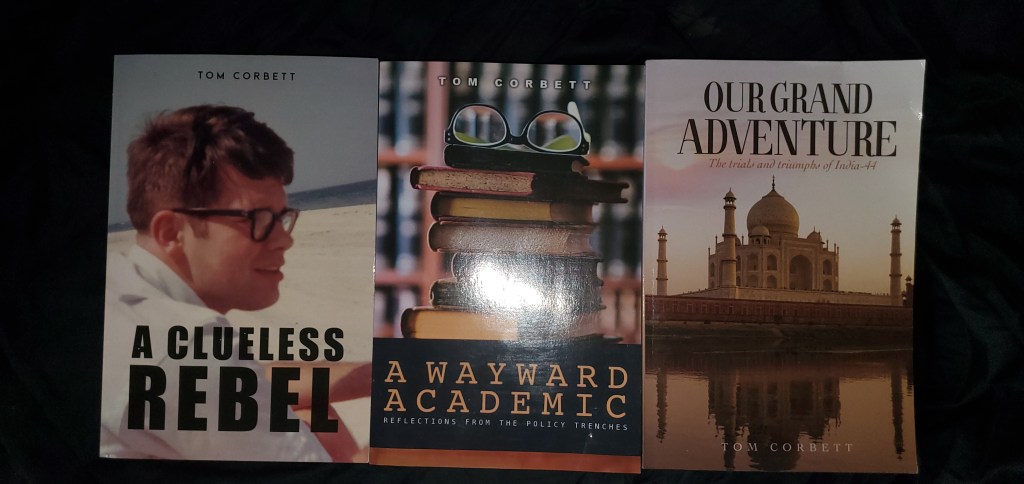
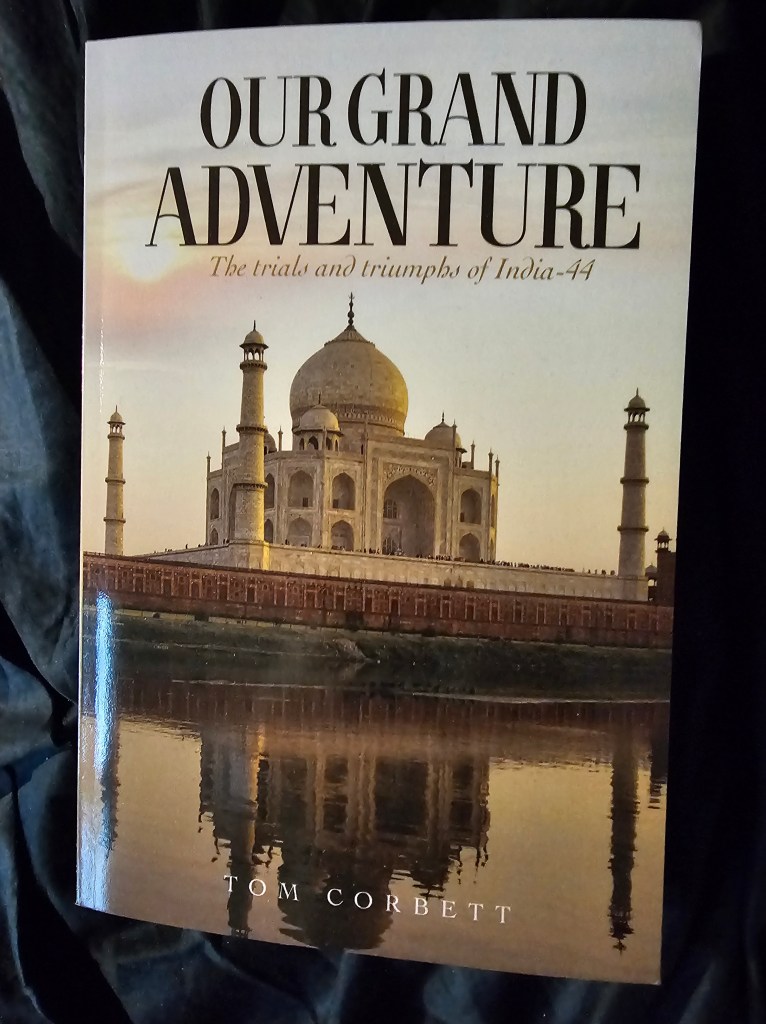
    But I took another route. One which promised both economic security and some interesting challenges. I did want to eat 3 squares a day and have a roof over my head, after all. I stumbled (and I do mean stumbled) into a career as an academic-based policy wonk. That was a perfect career for someone like me who wanted to call his own shots, teach the next generation, and have rather complete independence and control over what social problems he might pursue. Check out my book A Wayward Academic: Reflections from the policy trenches.

    If you have followed my blog, I have relayed the positive feedback on my writing I received from my academic colleagues. That always tore at me about the career choice I made. Had I been too practical? Then again, it was a rather perfect spot for me. Being associated with a nationally known ‘think tank’ (the Institute for Research on Poverty) opened all kinds of doors for me and offered an ever changing set of issues to explore. On the other hand, I found the publication venures narrow and stifling. I could not be creative enough there.

    The tension within between wanting to express myself creatively and also wanting to make calls few practical contributions to society was never fully resolved. But, in the end, especially as I retired, I managed to whet both appetites.

    I was lucky beyond measure. I managed to be both a bit if a Rebel and an Artist. And all from a ruffian kid from the mean streets of Worcester Mass. Who would have thunk?

  • I am baffled, befuddled even.

    September 2nd, 2023

    This will be a short post about a topic that has baffled most of us … why so many adore Trump with cult like adoration. In the past, we all saw politicians come along where we shuddered at the acclaim given them. However, they might have compensating charm or glibness or looks or even oratory skill. But none of this explains the Trump phenomenon (though he was good looking in his youth).

    Here we have a man whose only talent in life has been conning a diminishing number of banks out of loans that he would squander on failed businesses before landing a gig on TV as a successful entrepreneur who would say ‘your fired’ to young candidates aspiring to work for him. Even during his younger, brasher years in New York, he was a pariah (as the Ed Koch quote suggests).

    My next door neighbor started his professional career doing PR work in the Big Apple. He insists that even as early as the 70s, most saw Trump as an entitled con man and snake oil salesman. There were little doubts about his character even out of the starting gate.

    I can’t go on to catelogue all his sins … his incessant lying, his bullying of all accept the most obsequious sycophants, his total lack of real friendships or even a pet, his pathological narcissism, and his total lack of empathy. Those professionals who have viewed his disturbing behavior from the outside over years have agreed thar he suffers from borderline personality disorders. Malignant narcissism is the easiest to diagnose but an even more disturbing sociopathic personality disorder is not far behind. It is not comforting having a President who is certifiably nuts. I’ve read some of the books written by those who served under him in his administration. Utterly frightening the lengths they had to go through to prevent this evil man from wreaking total chaos on the country and the globe.

    But all that is obvious to those of us who live in the real world. What about those millions who have followed this crackpot with undying adoration. These are the ones who still donate their dollars to his defense funds, even as he claims to be a multi-billionaire. These are the ones who still insist that he won in 2020 despite zero evidence that this is true. These are the ones who believe that Hillary is running a pedophilia ring disguised as pizza shops, that Biden is the most corrupt President in American history (again with no proof), and that a ‘dark state’ is secretly threatening the American right and treasured freedoms. This is paranoia on steroids.

    Despite all the evidence and legal indictments against those who committed treason by attempting to stop the constitutional passing of power, the fundamental tenet of the American experiment in American Democracy. The mob running through the Capitol on January 6, maiming the police standing in their way were no more than curious tourists in their eyes. If you believe that, I have a tin hat for you.

    My basic question is this. How could the most moronic, self centered, and evil person of our generation rise to levels of such adoration. How could self-described evangelical Christians accept this total loser as Christ’s anointed one while rejecting Jimmy Carter as a real follower of Christ’s message. Someone explain this one to me.

    Sure, I’ve considered the usual explanations with the most common one being that some are embarrassed that they were conned and doubled down. Other explanations focus on our fractured communication systems that permit the most bizarre beliefs to go unchecked. I get all that and more.

    At the end of the day, I yet look about me and wonder. Is all this based on pure hate. Does this vile creature represent and legitimize an essential vitriolic disgust by thise on the hard right with people like me, those that they see us as pampered elites. 😳 But I was never pampered. I was a working class kid who started out with paper routes and never stopped until I had doctorate, which only gave me the opportunity to work much harder than most people.

    If the Trump phenomenon is a matter of vitriolic hate, then I wonder if we can survive this break in our society absent some violence. Perhaps the second act of our Civil War is inevitable. While I hope not, it is discomforting that we live in this divided society. One side may be wrong on some matters but remains attached to reality while the other side is off in a fantasy world. I don’t know if any communication is even possible.

  • Detour back to the ‘Troubles’

    August 31st, 2023

    I have been brought back to my recent sojourn into Northern Ireland by a 5 part series on ‘the troubles’ shown on PBS. It ended last night. Hopefully, they will repeat the series. It is definitely worth a watch as it demonstrates the utter folly of sectarian hate as well as the compelling reasons why it is so prevalent.

    There are plenty of scenes of street battles, firebombings, car bombings, burning buildings, devastated neighborhoods, and destroyed families. But the gut wrenching part of this documentary is found when now older men and women come to terms with their pasts.

    It is a complex story. But right now what I can best do is relay small moments that captured my attention. The troubles started in 1969 in Derry (or Londonderry) where a Catholic majority was dominated by a Protestant minority through unfair voting rules … only property owners could vote and the Catholic population was, in general, too poor to own much. Their resentments simmered for many years until, inspired by the American Civil Rights movement, their anger and frustrations boiled over.

    Constant street battles ensued until British Troops arrived. At first, both sides, the Republicans and the Unionists, brought the troops tea and biscuits. But the good feelings didn’t last. I was shocked to discover that the infamous Bloody Sunday massacre happened after the Catholic marchers had retreated back into the bogside (their area of Derry). British paratroopers ran after them and killed over a dozen, wounding many more. It would take almost 4 decades before the British Prime Minister (Cameron) admitted in Parliament that their military forces were totally in the wrong and formally apologized for the unwarranted slaughter.

    That event proved totally counterproductive to the Brits. After this event, recruitment to the IRA soared. A lovely woman wearing a green dress for her interview related her own outrage and then mentioned how her 16 year old brother lied about his age to join the IRA. He died 4 years later … being shot by a British soldier. She remains angry to this day.

    Another man told of joining the UDA, the Protestant paramilitary to defend his community. That force grew to a small army of 50,000. He was sent to plant an explosive device which went off prematurely. He survived but was sent to prison for 8 years. While there, he talked to another inmate who told him how he was ordered to kill a shop owner. None questioned orders so he did it. Then the man’s wife walked in the shop, so he killed her. Then the young daughter entered the establishment and he killed her. The unionists listening to this story returned to his cell vowing never to pick up a gun again.

    They also touched on the story of Jean McConville, a Protestant mother of several children whose Catholic husband died early on from cancer. Through marriage, she yet lived in Catholic housing project in Belfast. One night, a British soldier was hit outside her door. She responded to his pleas for help. This outraged her neighbors. Several days later, local women came and took her away, telling the children that their mother would be back in half an hour. Her body wasn’t recovered for some 30 years. She was another tragic victim of the paranoia of the time, a suspected tout or snitch who had to pay the ultimate price. She was one of 17 who simply disappeared in the middle of the night.

    Another woman relayed the story of being pregnant and in the hospital to give birth when the father of her baby gave her name (among others) to the British Security Branch. She went to jail. Through tear filled eyes, she related how her new born daughter was brought to the prison but she did not recognize the child as hers. Her shame at this resides within her to this day.

    A then young Catholic lad shared the story of his father who, on hearing the news that several Protestant workers had been slain in an explosion as they came from work, prophecied to his son that innocent Catholics would soon die. This father, who had no role in the IRA or the troubles was soon gunned down in a retaliatory ambush. Tit for tat. An eye for an eye and soon, as Gandhi said, the whole world is blind.

    By the early 1990s, the Unionists were killing more than were the IRA. It became clear that the British Security forces, including Special Branch, were colluding with the unionists paramilitary side in strikes against the Catholics. Paranoia ran rife … whom could you trust? Everyone was a potential traitor or tout.

    International attention to the Troubles had peaked in the 1980s. The Provos (Provisional IRA) felt that Britain could care less if Irish killed other Irish. So, they brought the war to Britain itself, bombing targets in London and elsewhere. The IRA prisoner’s incarcerated in the Maze were suddenly stripped of their rights as political inmates or POWs. Now, they were treated just like ordinary criminals. In response, many of them first refused to wear prison clothes, or bathe, and smeared feces on their cell walls. Those futile gestures led to the hunger strike. Bobby Sands was the first to die after 66 days, only to be followed by another and another. Some 10 martyrs perished before the hard line Thatcher government silently accommodated many of their demands.

    The war on Britain reached a crescendo when a resort hotel in Brighton Beach was bombed. The annual meeting of the Conservative Party was being held there, and the Iron Lady was the target of the attack. This came not all that long after Lord Mountbatten (and others) were blown up by an IRA bomb on his yacht during a holiday retreat off the coast of the Irish Republic (1979). Mountbatten had been a much loved member of the Royal family and held many positions including the being the last Viceroy to India.

    Amidst all this horror were a few positive moments. The Harp Bar was a grungy place that catered to punk musicians. It was a place where both sides could congregate to listen to the music they loved. More than one interviewee mentioned first going there with hate in their hearts for those on the other side. But, to their amazement, they found that they all were more alike than they realized. Breaking down the extreme segregation each side had faced was critical to communication and ultimate acceptance of those on the other side.

    One man recalls how his friends back in the day were sure they could spot Catholics by sight. In fact, they were certain that Catholics smelled different. When you live in a highly segregated world, you can so easily demonize the other. And when the killing starts, perceptions further harden. Some of those being interviewed for this documentary had set aside past hates, others not so much.

    There is this. There are many, many other stories I’m glossing over. But how many does one need to hammer home the basic lesson that sectarian conflict is pure insanity. It rots your soul and deprives you of any remaining humanity. It is the ultimate folly.

    Nevertheless, there are those in America calling for a civil war. They seem bent on hurting and killing and maiming those whom they have already demonized. The insurrectionists who rampaged through the nation’s Capitol looking to hang Pence and Pelosi for imaginary crimes are just the tip of the swirling anger out there.

    One must ask, is this what the far right wants? Watch this documentary and point out one positive lesson from those years other than they ended with the Peace Agreement in 1998, after some 30 years of slaughter and carnage. I can’t find any.

  • Death and Taxes … mostly the latter!

    August 29th, 2023

    Biden’s issue of forgiving some student loan debt has raised many hackles out there. Of course, in this political climate nearly everything does, so that’s not surprising. Whenever one group is favored by our tax laws or our public policies more generally, questions of fairness inevitably arise. I can hear my dear neighbor now … why should these elite kids (elite by virtue of having access to higher education) get this windfall while others before them struggled to pay off their college loans. There is a surface inequity lurking here. So, how should we look at this, and other benefit programs for the public good.

    I remember way back in my youth as a policy wonk. I was staffing a Wisconsin legislatively mandated study of welfare programs. One set of reforms we considered involved making substantial changes to the state tax system. For example, we proposed a state level earned income tax initiative that would employ the tax system to incentivize work and provide some benefits to low-income workers. It was, in fact, enacted. This was back when this was a novel idea.

    Another colleague from the university was involved in a mandated study of the tax system. He pulled me aside one day,  chastizing me for laying on further bells and whistles to an already complicated tax system. His message was clear. The tax system should focus only on raising revenue. All these other deductions, exemptions, and writeoffs (sometimes justified on noble grounds) merely introduced inefficiencies and inequities.

    My reaction was classic. I understood the principle he espoused, but my social ends were too important and deserved to be an exception. And there you have it. Anything that favors my ends is justified but everything else is a boondoggle. A classic case of self interest.

    A few years later, in the mid 1980s, there was another push to rationalize the federal tax system. That push was to streamline the rules. You know, replace the thousands of pages of the tax code with something simple. For example, how much money do you have? Send it all in to Washington.

    This remarkably effective set of reforms is well told in the book … Showdown at Gucci Gulch. This book relates a fascinating story. It was assumed that the reform would flame out as all the high priced lobbyists (who tended to wear Gucci loafers) attacked the bill to advantage their individual clients. If anyone of them had said, ‘let’s meet in this corner and form a united front,’ the bill would have collapsed. But they didn’t, each pursuing their own agenda. The bill passed.

    Almost immediately, the lobbyists regrouped and began passing a host of special tax provisions. Republicans loved this tactic since it provided benefits to one of their prime constituencies (the super rich) without expanding the bureaucracy, at least not by much. It took no time at all to recreate the complex tax system everyone loathed because few could understand.

    Anyone who was paying attention could figure out what was happening. From the 1980s on the tax system became a massive vehicle to redistribute wealth and income to the top of the pyramid. Not surprisingly, the share of all goodies going to the top 1 percent exploded from less than 10 percent in 1979 to almost one quarter in recent years. This is a tectonic shift and risks destabilizing our democracy.

    Let us go back to the student debt question for a moment. Would the forgiveness program penalize those who paid their debt already. Perhaps, but here is how I look at it. Most other countries substantially subsidize higher education. Our public universities once did the same, but those days are long gone. Whereas other places see this as an investment in overall human capital and the public good, we tend to see education as a private benefit, to be paid for if the student is able. It is a classic example of a collective versus an individualistic perspective.

    It doesn’t take much to flip this issue on its head. The loan forgiveness program is merely a long overdue way of back dooring a higher education public subsidy. In effect, we merely would be joining so many other countries in making higher education broadly available and affordable. The loans you take up front that are later forgiven. The public subsidy occurs at the end of your education and not at the beginning, and it includes private schools. I’m sure we can debate the details.

    There are other tax issues we might look at anew. Take corporate taxes for example. Their contribution to the overall revenue base has diminished radically. As far as I can see, these tax provisions are merely a full employment scheme for corporate tax attorneys. Why don’t we end this program outright. From what I recall, the ultimate burden of corporate taxes falls on either the consumer or the shareholders, though economists never quite agreed on which. But one thing is sure, the big firms often get substantial pay outs in terms of tax refunds.

    Of course, we would have to recoup lost revenue somehow. I would raise the personal income tax rates substantially while eliminating all these egregious give aways. In this, I’m arguing forca broadend tax base with few loopholes.

    We would be hit with ‘the sky is falling’ doom and gloom predictions by the right. But remember this. America became the economic envy of the world when we had top tax rates around 70 percent. When Clinton raised the top rate in the 90s (after they had been cut by more than half in the Reagan years), Republicans were apoplectic. They screamed that we were in the end times.

    What actually happened. Our economy boomed. Our annual deficits became surpluses. The stock market flourished. The Republicans, once again, were dead wrong.

    Ben Franklin asserted (allegedly) that nothing is more certain than death and taxes. How odd he would associate taxes with death. Taxes are not the equivalent to death. Far from it. They are an investment in the public good. The happiest countries in the world (according to repeated international hedonic studies) are those that pay the highest taxes. Why? They realize what they get for their investment. They recognize that much of the stress of modern living is diminished by these public investments.

    Ultimately, taxes are an expression of a nation’s values. They can be positive or negative, a classic tale of the devil being in the details. Perhaps it is time for a renewed look at an old issue. Perhaps we can recreate a system that reflects positive norms and a collective sense of community values.

  • A Mistake … or Not?

    August 27th, 2023

    Earlier this month, way back in 1939, Leo Szilard visited Albert Einstein to convince him to sign a letter to be forwarded to President Franklin Delano Roosevelt. Szilard, a Hungarian born physicist, had conceived of the potential of nuclear fission earlier in that decade, though Einsteins work provded the basis for such intellectual breakthroughs. One consequence of their theoretical work was the potential for a weapon of fantastic destructive potential.

    By 1939, it was more than apparent that the Nazis were on the road to war. In fact, when Szilard petitioned Einstein to join him in pushing the President to be aware of this new atomic age, the Polish invasion that made this a worldwide conflict was just days away. Szilard was particularly anxious to get Albert’s support since he was virtually the only egghead of sufficient public acclaim to possibly get Roosevelt’s attention.

    Einstein, in fact, needed some persuading. He was, by instinct, a pacifist. He had been very critical of some of his academic colleagues who had helped the German government during WWI, especially in developing nerve gases and more destructive technologies for use in that conflict. He was torn by Szilards request.

    In the end, he did sign on. We believe his rationale was understandable. Einstein was now at Princeton, having left Germany when the Nazis came to power. In fact, he was in the U.S. giving lectures when that happened. He was denied reentry and, after spending some time in England where he felt his life might not be safe from Nazi assassins. He soon migrated to the States but retained personal experiences of the depth of Nazi perfidy.

    He, and most other top scientists, knew that Germany had many top brains available to them, brilliant men such as Werner Heisenberg and Wernher von Braun. They concluded that the Nazis might just get the jump on the allies in developing the next generation of super weapons. In fact, the Germans did develop ballistic missiles and jet planes, but too late in the war to do much good.

    However, what if they beat the allies to the forces of nuclear fission? Of course, this is one of the core moral issues underlying the compelling and riveting movie … Oppenheimer. Scientists, even those morally opposed to war, felt they had no other choice. Robert Oppenheimer was a classic example of such an internal debate. He, including many of his colleagues, was trapped in what economists call a prisoner’s dilemma. Not knowing what the other side was capable of achieving, could they stand by and do nothing?

    The other moral question was whether to use this new power or not. By the time it was realized that the atomic bomb was feasible, the overarching calculus had changed. By late 1944, those working on the bomb suspected, or began to believe, that Germany did not have the head start initially feared and was nowhere close to having a bomb. Their fears from a few years earlier were not to be realized.

    Some considered delaying the culmination of their work, or at least demonstrating their concern by opposing their own creation in some fashion. However, their drive as scientists, along with the motivation inherent in being a part of the most exciting scientific enterprise of the 20th century, pushed them on. I believe that were some of the complex emotions brilliantly conveyed through this masterpiece of a movie.

    When they saw the mushroom cloud on July 16 at the Trinity site in New Mexico, they fully appreciated the consequences of what they had done. Some remained enthusiastic, others immediately regretted their participation. Oppenheimer quoted an ancient Sanskrit text … I am Shiva, the destroyer of worlds. Einstein would later say that signing Szilards letter to Roosevelt was the biggest mistake of his life.

    Then there was the decision to use the bomb. Once it existed, the scientists would lose control over its use. As depicted in the movie, Truman tells Oppenheimer that he dropped the bomb, not some egghead. But the scientists who came to regret their participation could not so easily forgive themselves, not totally.

    So, how much guilt and remorse should they carry? How much guilt, if any, should Truman carry for actually using the weapon? These are all questions embedded in much moral ambiguity.

    Can anyone blame the scientists who worked on the bomb for doing so given the information set available to them at the beginning of their work? If you thought the most evil regime imaginable might develop this awesome weapon, could you stand by and do nothing? Oh, I can think of rationales for taking that chance (on doing nothing), but they are not convincing even to me.

    And Truman’s decision to use it. Think of his world in that moment. As allied forces got closer to the Japanese mainland, the ferocity of the fighting grew along with casualties. The two atomic bombs incurred sone 120,000 immediate deaths and thousands more later. The scenes of unimaginable suffering haunt some of us even today.

    However, any conventional invasion of the mainland would have resulted in many times that number of casualties. The saturation bombings of Tokyo alone (to soften up the population prior to an invasion) would have resulted in many more deaths. That city was made mostly of wood for crying out loud. Just think about the horrors of allied bombings in Dresden and Hamburg that generated fire storms of unspeakable fury.

    Many argued that using the bomb made it permissible to use it again in the future. Again, the movie touches on this brilliantly. As Oppenheimer argued, the only way to show the world how awful this weapon is demanded an actual demonstration or two. Yes, this might be a convenient rationale, and these examples might have had the opposite effect. However, the world has lived with this power for almost 80 years without using it again. Mutual destruction has proven an effective deterrent, though we have come so close to the apocalypse more than once.

    Yes, we might have created a weapon so destructive that we cannot use it again. When we did use it, there might well have been fewer deaths and less destruction than we otherwise would have seen. We can never know for sure.

    We have the benefit of hindsight. Perhaps that’s why I loved the movie so much. It put me in their shoes. What would I have done? What choices would I have made? Few of us are thrust into a situation where such monumental decisions are demanded. Few of us confront such existential choices of such enormity.

    Thank God for that. They are not easy ones to make … not when you are in the center of the storm. I am thankful that I have been so irrelevant in life.

←Previous Page
1 … 17 18 19 20 21 … 32
Next Page→

Blog at WordPress.com.

Loading Comments...

    • Subscribe Subscribed
      • Tom's Musings
      • Join 41 other subscribers
      • Already have a WordPress.com account? Log in now.
      • Tom's Musings
      • Subscribe Subscribed
      • Sign up
      • Log in
      • Report this content
      • View site in Reader
      • Manage subscriptions
      • Collapse this bar