Time for something on the lighter side. I can’t be doom and gloom every day, even if it is the ‘real’ me.
Below are a few stolen bits that struck my fancy.
ENJOY!
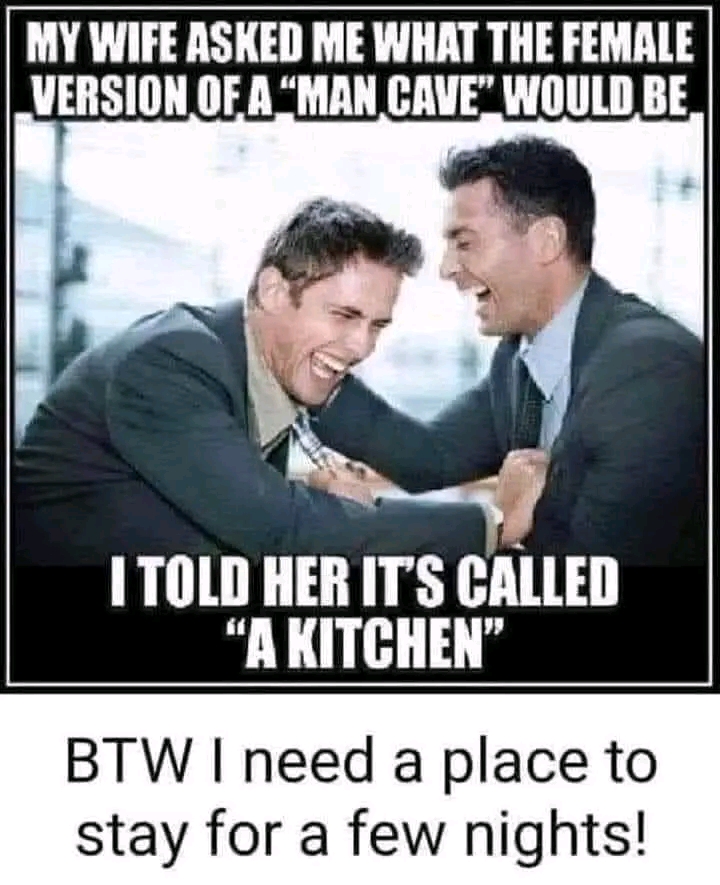

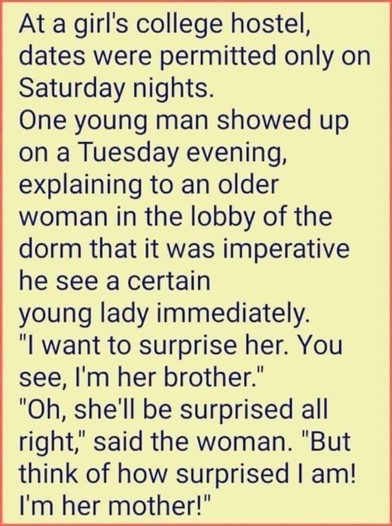
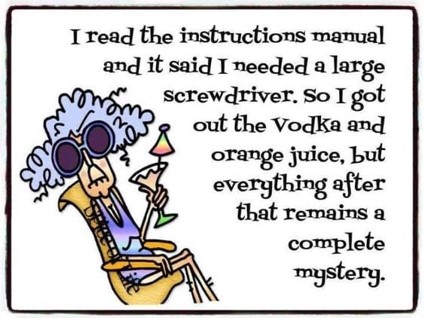


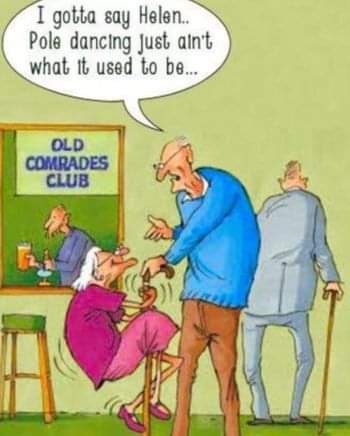





THAT’S ALL FOR NOW, FOLKS!

Time for something on the lighter side. I can’t be doom and gloom every day, even if it is the ‘real’ me.
Below are a few stolen bits that struck my fancy.
ENJOY!
THAT’S ALL FOR NOW, FOLKS!
[Note: I was going to work on this some more but I had too many technical difficulties, so here it is as. Could be better.]
I zoomed with several of my old Peace Corps buddies the other day. The nominal reason for this cyber gathering was that one of our aging flock recently met with our Peace Corps training director who, as we realized at some point, was not much older than we were when he helped prepare us for our adventures in India. Now he is in his 80s while the rest of us are in our upper 70s. In some ways, our long ago a excursion to the other side of the world seemed like it happened yesterday. In other ways, it might have been from someone else’s life.
Let me say a few introductory things about the trials and tribulations of India-44. As the number suggests we were the 44th group to go to the sub-continent. We were all college kids, chosen in our junior years and given extensive training over two summers before being sent over upon graduation. All this happened during what has often been called the ‘wild west’ of Peace Corps service during the mid1960s when we started our service, or preparing for it at least. They hadn’t worked out all kinks yet and we were the guinea pigs for a number of innovations and experiments. But we were young, idealistic, and naive. Some of us thought it would be a great excursion into the unknown. Indeed it was.
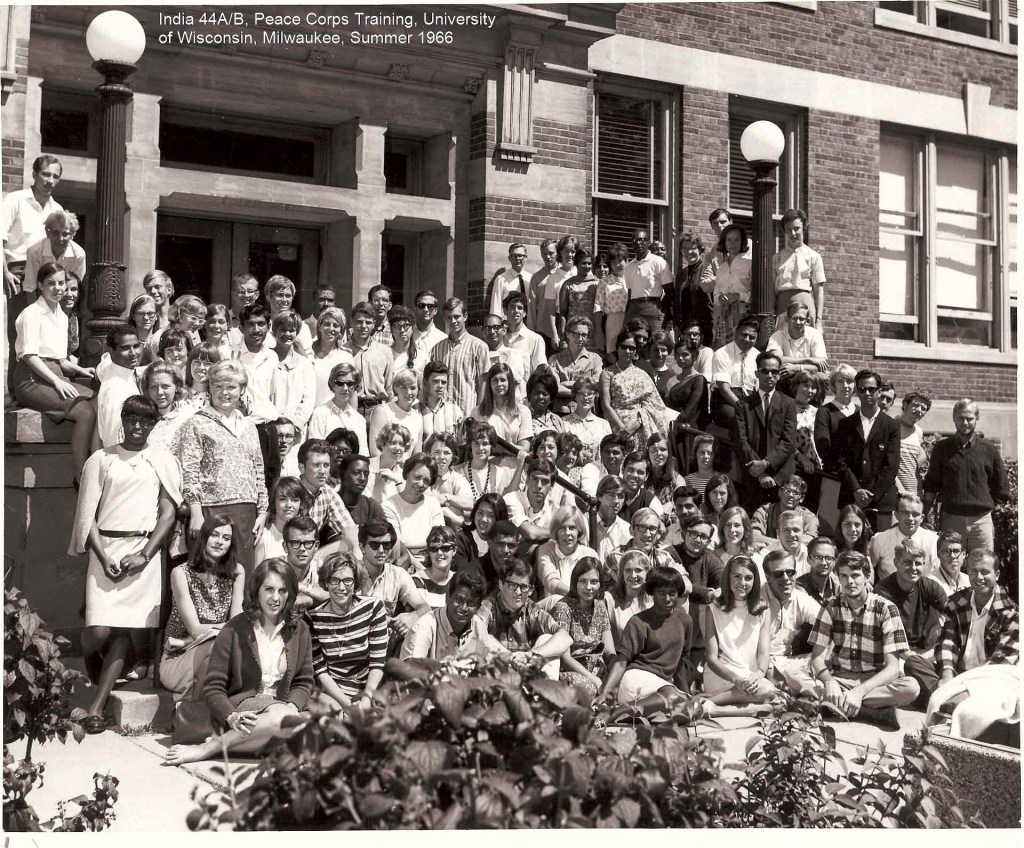
Can you find me?
The training would be long and, in some ways, arduous. We started at the campus of the University of Wisconsin-Milwaukee where we were immersed in language training, technical preparation, cultural awareness initiatives, physical trianing, and a whole bunch of tests and challenges to see if we were fit and likely to survive. We met again during our between semester break in our senior years before returning for more intensive preparation before being sent abroad for (guess what) more training.
Amidst the on-campus lessons, I spent time on a Native American reservation in South Dakota (truly the end of the world) where we were exposed to a cross-cultural experience. The next summer I spent time on a farm just north of Madison in Waunakee Wisconsin where we lived in tents and tried to become farmers. I’m guessing the whole ordeal would have gone better if they had not changed the focus for India 44-B (my specific group) from poulty to agriculture. I am guessing the pic below is from our tenure on the farm. I’m the tall one in the middle and beginning to look a bit scruffy.
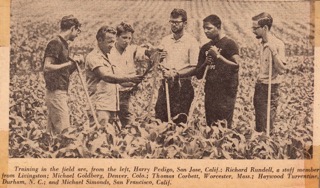
From a detailed journal kept by Mike Simonds (the young man on the left of the pic above), we were reminded of the grinding schedule. He lsited out several days of activities, classes, events that went from the crack of dawn to late in the evening.
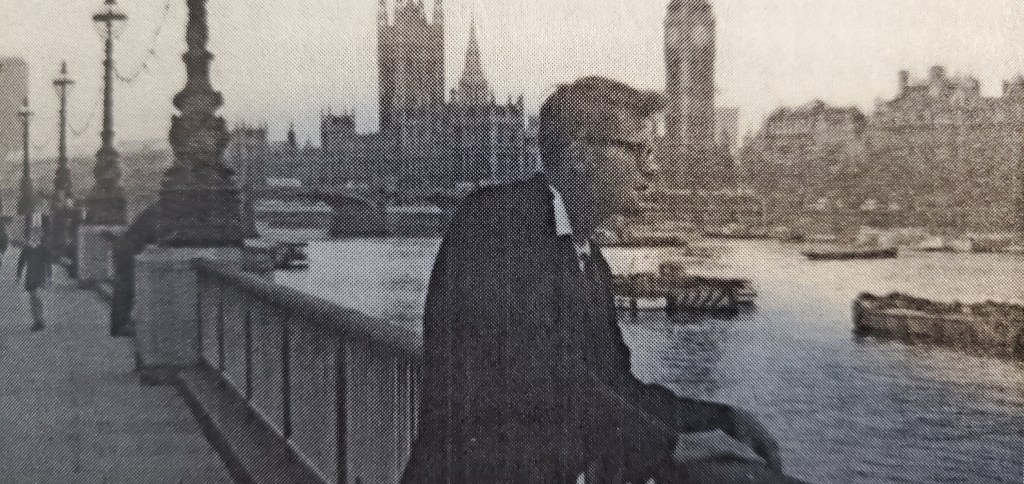
At every turn you wondered if the ax would fall. Someone would be brought in for a meeting and sent home. The choices were bizarre. How could they have kept me when others who appeared more talented and dedicated were sent packing. Still, in the summer of 1967, we were off to India. This is me, looking over the Thames during our a brief break in London. I wonder what was going through my mmind at this moment? Probably somehting like ‘what the hell have I gotten myself into.’
Of course, we then landed we did more training. Here are a bunch of us from 44-B (see below), the would be Ag experts now refining our skills (or perhaps realizing for the first time that many foods grow out of the ground and do not appear by magic in grocery stores. Despite the staff’s good intentions, you cannot turn college kids from the city into farmers in a few weeks. Well, they couldn’t turn me into one.
You might be asking what happened to the women. They were assigned to 44-A, a public health group that were to be stationed in Maharasthra, the adjacent province to our south where Mumbia (then Bombay) could be found. While we learned Hindi, they learned Maharati. We were sorry to be separated but I suspect they were thrilled to be safe from a bunch of testosterone laden young males. I know they were ecstatic to be away from me. I tended to drool a lot when around them.
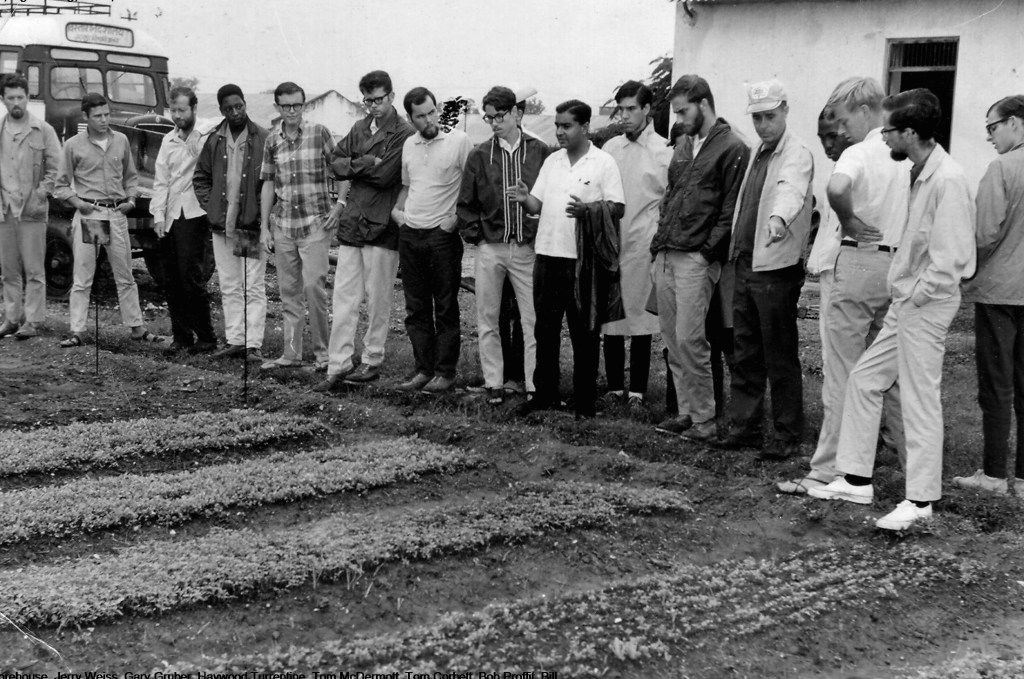
Can you find me here?
There were some high moment before we were sent off to our sites. We played several basketball games against the local college kids (see pic below) whipping them soundly before they got ther revenge. For the last game (before a large crowd) they brought in a new team, either from the army or the local prison. These bruisers did a job on us to the delight of the cheering local onlookers. Every time I drove to the basket, I would get pummeled. Hard to make many shots when your hurling them toward the basket from 50 feet away. But we survived.
Even better, three of us were asked to join a team representing Udaipur (we were to be stationed in the vicinity of this lovely city in Rajasthan) in the all India tournament in Jaipur. Myself (lower extreme left), Bill Whitesell (next to me) and Hatwood Turrentine (4th from left) were selected to help bring basketaball glory to the area. What we didn’t know was that the other teams could really play the game. We were soundly defeated in our first game, then won a consolation game, before heading home in shame. But it was fun.

In September of 1967, those of us who survived were sworn in as Peace Corps volunteers. We had one last party at the Lake Palace before two years in the desert. The Lake Palace was a former playground of the local Maharaja situated in the middle of lake Pichola. It is now considered one of the most luxurious hotels on the world. A good deal of one James Bond movies used it as a site (Octopussy?). Two of my colleagues stayed there a decade ago and attested to its splendor. It was like the last feast before the slaughter, the final meal before the long walk to the ‘chair.’
I am on the left (glasses) talking to Usha (one of our language instructers) on the right. I, and a couple of others, actually got to know Amar (next to Usha) and her family quite well. We were invited to the Punjab to witness the marriage of her brother (a military officer), a lavish affair that went on for what seemed like days. Indian marriages (and celebrations there in general) can make ours look tame. Making such connections enriched the experience immensly.

Reality hit the next day when three of us boarded the back of a truck with our trunks and all out wordly goods and hurtled out of the Adravelli Hills into the desert to the south. We arrived here on a Sunday. No one greeted us. Here was the local Panchayit Samiti, the government development office and our new home. The town of Salumbar was about a mile further over the next hill. The third of our group was to be located even further from civilization, there was no way he could survive.
I yet remember hopping on my bike and cycling to find someone who might be in charge, which I did. Randy (my site partner) and I took one of the government houses (far right). No other government official lived there, preferring to live in town. I could go on about life here, which had its good and bad moment. We were really isolated, no electricity for 6 months and never running water. We relieved ourselves in a small, smelly room with a hole in the floor. That bodily function was not easy to negotiate on nights without moonlight.
The temps often were north of 110 drgees except in the brief winter and the monsoon season (when all type sof crawling and flying creatures came to life). I recall checking out a desk in our place and finding a scorpian looking at me. During the rainy season, you kept a lid (a book?) on your cup, only lifting it to take a sip, then covering it again. If you didn’t, you would be ingesting several bugs with your next swallow. It was not for the weak of heart. Still, we often spent the evenings on our roof, as the desert cooled and the most amazing field of stars were revealed to us. I have never since been so close to nature.

Most of us felt quite incompetent. What made that critical in a way is that most farmers were marginal. They had small plots that could yield just enough to get them to the next year. But we were there to motivate them to try new seeds and techniques. Fine, but these innovations required good practices performed at the right times. If things went wrong, and so much could, the poorer farmers would be in deperate straights and our guilt would be astronomical. So, we selected our guinea pigs carefully. Below is one demonstration plot we worked on as an example to the community. Looks good to me.

Still looking for things to occupy our time, we thought a poultry demo would be good. We built this ourselves (the ONLY thing I have ever built in my life) on our roof to keep predators away. I still recall the excitement when the first egg was laid. Success was measured in the smallest ways.

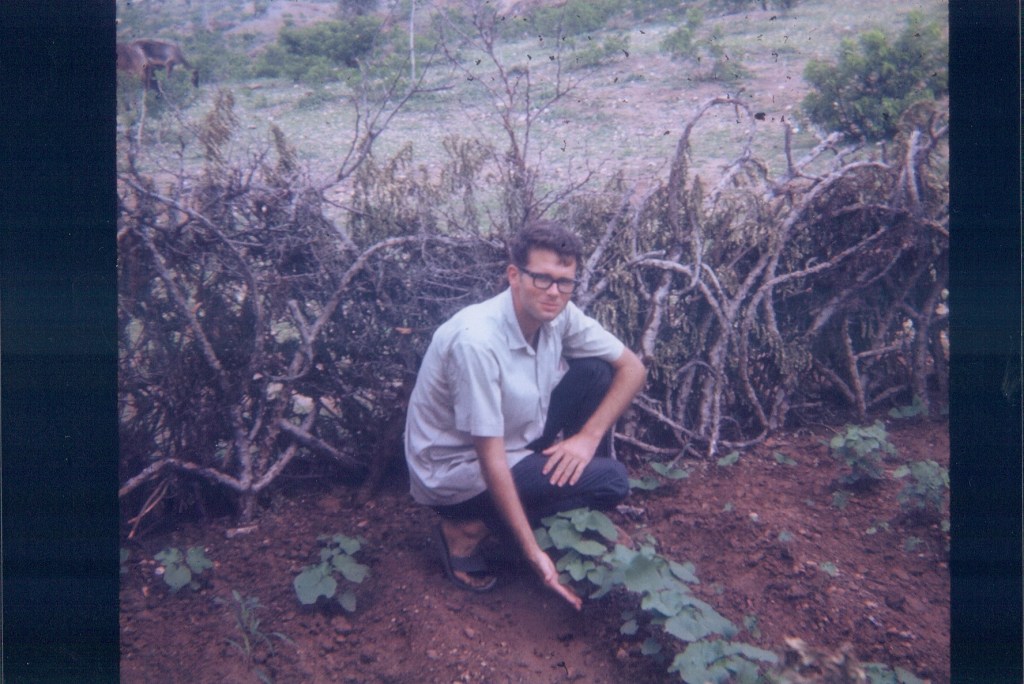
And we did a bunch of other small things. Here is a modest garden outside our remote place. Our protective wall (at my back) worked for a while but not forever. We lost the crop at some point when the local predators breached our defenses. But we knew our produce was edible. Oh well, A for effort.
Below is a street scene in Salumbar. We spent a good deal of time here, made a few friends, and became part of the community. This scene best captured how I felt about the place. It struck me as a throw back to Dodge City in the 1880s. I thought surely Matt Dillon would face off with a desperado at high noon. I still recall one day watching several men, riding camels down a street (probably this street). They had rifles slung over their shoulders and belts of ammunition. I thought, the James Gang come to town to rob the bank. No such excitement.
On another occasion, a group of Jain Saints visited to great local fanfare. Apparently, this entourage walked around India and it was a significant event if they made their way to your town. What I recall most was one Saint pulling all his bodily hair out as an exercise in self-mortification. I then realized why I had left the Church.

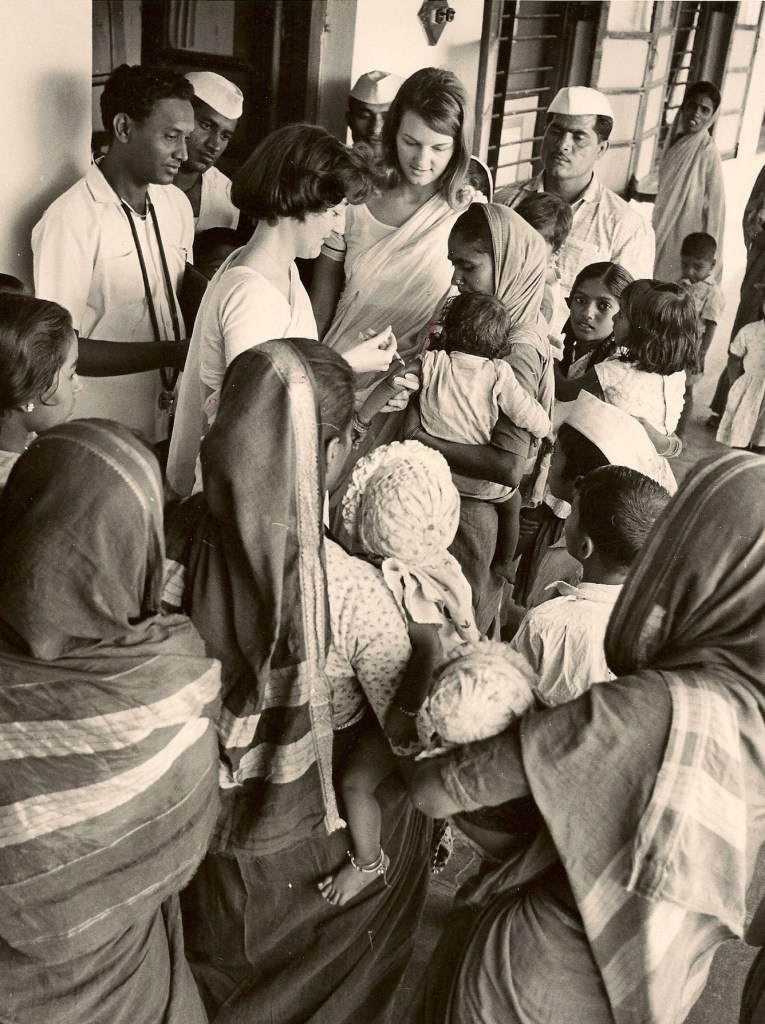
Meanwhile, our sisters in 44-A were laboring in villages to our south. Since I had worked in a hospital while in college I had hoped to get into the public health part of the program. Such was not to be. I considered appealing my assignment early on in training but feared rocking the boat.
In any case, here are two of the intrepid gals, Mary Jo and Carol, doing something medical in their site. Mary Jo (on the left) was a nurse and one of the few with actual and relevant skills. In the end, nothing bothered us more than the feeling we had little to offer. I seemed to recall that there were two rumors about why we were there. One option was that we were CIA spies but there was nothing to spy on here. The other was that we were there to learn agriculture so we could be farmers back home.
Despite all the doubts, probably more got done that we recall. There were demonstration plots, some schools were built with volunteer help, wells dug, and so much else like poultry initiatives. We did not change the world but we might have altered a few lives. That is enough in the end.

What you don’t forget are some of the connections that are made. Here are the three I mentioned above that the local Udaipur College boys chose to play on their basketball team in that ill-fated tournament (discussed above). There is Haywood on the left, me, and then Bill. We are at the Delhi home of Amar (pictured in the Lake Palace foto). We grew close to that family.
In some ways, the three of us represent the diversity of our group. Bill was from a large Catholic family, perhaps considered lower middle class. He went of Yale on an academic scholarship, later getting a business degree from the Wharton School, and then a Ph.D in economics, from NYU. In life, he started out in banking in Paris but wanted to do something more worthwhile (and more ethical), ending up with the Federal Reserve. Haywood grew up in a large, and very poor, share cropping family in North Carolina. He always said they had no money but plenty of love. He credits Peace Corps with exposing him to new possibilities … eventually going on for advanced degrees in Geography and Theology and becoming a successful operative for a national labor union.
As I look at the faces below when we gathered for our first reunion in 2009, I am still in awe of the talent and accomplishments. I don’t know if Peace Corps had some magic in their selection methods or the PC experience itself altered people’s lives. However, the accomplishments of these people (not all are pictured here) are simply amazing. I am so proud of being associated with them.

Here is another group shot (below). It was taken in 2011, in Washington DC where we had our 2nd reunion. There was a 50th reunion of the creation of the Peace Corps and we thought that a good reason to gather. We are dressed up since we are on our way to the Indian Embassy for a fete they have arranged for those of us who served there and were in town. Apparently, we must have left a decent impression on them even though the country program ended in the mid-1970s.
We had just finished an edited collection of stories (written by individual volunteers), which I was able to hand over to the Embassy officials with great fanfare. The top Indian official there that night said something that resonated with us. He believed that the value of the program was not in the technical expertise we brought to their land. No, it was in the sharing and learning about each other that took place. In the end, I think he nailed it.

One last pic before ending. Below is a Google Earth shot of our site. Remember that lonely and bleak desert shot above Today, that same area looks thriving with all kinds of development including a hospital. A wider shot would show green fields and advanced irrigation where merely desert had been. I would like to take credit for all this but humility prevents me (LOL)

This was a cook’s tour of an incredibly complex esperience, one that did change all our lives. If you want more, here is where to go … Our Grand Adventure: The trials and triumphs of India-44!


Madison at twilight
I think I first noticed this phenomenon right where I live … Madison Wisconsin (Dane County). This is the site of the flagship campus of the University of Wisconsin system, the seat of state government, and the locational choice of an increasing number of hi-tech and professionally-oriented firms and businesses. What else makes the place special? It has become a liberal, should I say progressive(?), enclave.
In fact, it is shifting the balance of political power in a state that has been a toss-up arena for some time now. For years, voters in Dane and Milwaukee had offset strong Republican support coming out of the Milwaukee suburbs and the very rural areas of the state, those places where more cows than people live. Often, the votes from smaller cities decided each election, most of which were pretty close. More likely, voter turnout determined winners and losers with state-election outcomes being settled by razor thin margins. There were more Democrats in the state overall but victory depended on whether they could be persuaded to vote in large enough nuumbers.
That equilibrium seems to be changing. Democratic Governor Tony Evers, not the most dynamic campaigner you will ever meet, has won the last two Gubernatorial races. Even more surprising, the liberals have won back control of the State Supreme Court last spring and rather easily at that. This reversed a number of earlier losses where huge amounts of corporate money successfully backed very conservative jurists. Huge turnouts in Dane county with increasingly larger Democratic majorities explain much of these recent successes. The SCOTUS votes from Dane County in this last election totaled more than were cast in Milwaukee (the state’s much bigger city). More importantly, some 82 percent of all these votes were cast in the Democratic column.
It was not always this way. When I moved to Madison in the very early 1970s, I thought I had stumbled into a large farming town. Sure, the University (and an active anti-war movement) was here but the culture overall was not that progressive. The rural parts of Dane County held sway over the county board; there were almost no upscale restaurants; and local TV and radio ads were dominated by pitches for agriculture products. They kept warning me about root worm. It took me several months before I realized that was something that attacked corn, not humans. I was rather appalled by my surroundings at first.
That began to change soon enough when they got their first upscale restaurant (called Ovens of Brittany) and when a former left-wing student activist from Chicago named Paul Soglin upset the establishment by being elected city Mayor. His critics used the usual fear tactics, that the city would become a Commie satellite if this (Jewish) radical took charge. Amazingly, it didn’t work this time. On his election, a number of shocked Madison residents sold their homes and moved beyond the city limits, fearing God knows what. However, Paul turned out to be a superb mayor who led the city into modern times, eventually serving as chief executive off and on for several decades.
Today, the city and county are nothing like the burgh to which I relocated over five decades ago. It is an exciting and growing urban center with a plethora of cultural opportunities in all the arts, an array of fine eateries and ethnic restaurants representing cuisines from around the world, an extraordinary number of firms that attract highly educated and well-paid employees, and ample recreation opportunities. Mad city is no longer a sleepy big town (or was it a small city then) but now has emerged as a cutting-edge, cosmopolitan urban center where young professionals seek to to live and work.
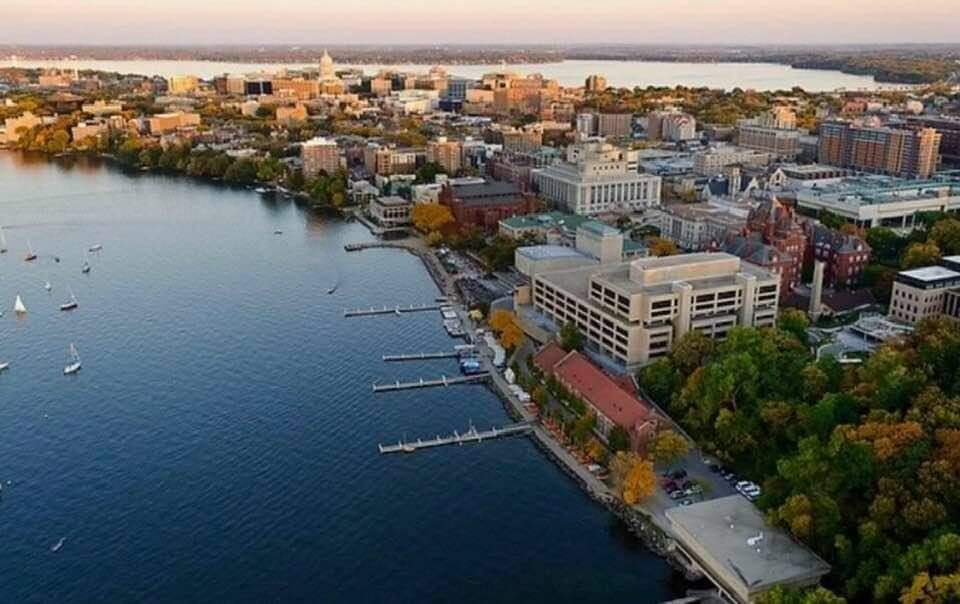
Campus and Capitol
Not surprisingly, the cutural and intellectual winds have become decidedly progressive including several significant ethnic communities along with a vibrant LBGTQ+ community. It was recently ranked the 5th most educated city in the nation and the 6th most fittest city in the land. It often ranks in the top 3 in many such polls including where professionals want to live, a good place to raise families, and a superb place for those who enjoy the outdoors. Oh, and I just read an article suggesting it is the #1 college sports town in the nation (the Badger fan base admittedly is a bit wacko). The unemployment rate hovers around 2 percent or less and the place is growing like mad. They cannot put up new housing units fast enough with demand pushing the median price of single family dwellings to the $400,000 mark and beyond.
Republicans are not unaware of what is happening. Perhaps that is why they are trying to hurt the University so badly. Recently, the Republican controlled Assembly and Senate wacked $32 million from an already spare budget to attack diversity initiatives in higher education. They also refused to approve a new, and badly needed, engineering building, apparently out of sheer spite. Really, who turns down efforts to enhance the education of students in the STEM disciplines these days. You have to be totally deranged to do that. Oh my, I almost forgot which group I was talking about … Republicans.
Perhaps the words of former Republican Governor (and Presidential candidate) Scott Walker gets at their motivations. “Young voters are the issue. It comes from years of radical indoctrination … on campuses, in school, with social media, and throughout culture. We have to counter it or conservatives will never win battleground states again.” Of course, we fear Scott doesn’t know much about college campuses. He dropped out of college (or was thrown out depending on whom you believe) with a 2.4 or so GPA after a brief tenure at Marquette University, a decent (but not superior) Catholic Institution of higher learning in Milwaukee.
On paper, I would be one of the brainwashed college students that Republicans worry about … way back in the 1960s’ that is. I entered Clark University fresh out of my stint in a Catholic seminary and yet imbued with many core traditional values straight out of the playbook for my ethnic, working class culture. By the time I left to go to India after graduation, I was a very different young man. Among other sins, I had led the anti-war activities on campus.
Still, my political and intellectual metamorphesis seemed to have absolutely nothing to do with any brainwashing, at least not as far as I recall. I merely had access to a wide range of honest information about the world and, much more importantly, was encouraged to think rigorously and independently about things around me. To my recollection, no one told me what to believe, just how to think. That is a critical distinction. Nothing strikes fear into the hearts of conservatives more than people being able to think for themselves.
[Digression: My change of heart on the Vietnam war came early on. The key moment occurred in a day long dialogue with a fellow student as we both were working on our individual National Science Foundation sponsored undergraduate research projects (he deserved his, not sure about mine). Anyway, he stayed in psychology and went on to get his Ph.D. at Harvard. I certainly knew even then that he was a most worthy opponent. Still, being a stubborn Irishman, I told him at the end of the day that we would have to agree to disagree. But in my heart, I realized he was right and I was defending a hopeless position. I yet look upon that day as when my core political perspective began to shift.]

My Undergrad Alma Mater:
It changed my life.
Back to my main thesis. The call by Scott Walker to do something has not been ignored. Beyond Republican attacks on some of America’s leading research universities (Wisconsin is ranked among the top 50 such institutions in the world), the ‘right’ is mounting their own form of brainwashing to counter what they believe the ‘left’ is doing. Hillsdale College, a small and very conservative liberal arts college in Michigan, is leading the charge to reshape the perceived indoctrination of the young toward a more conservative direction. They only have 1,700 students but an endowment approaching $1 billion, enough to push it’s hard right agenda on to the wider world. I had been on their mailing list for some time, but I found their stuff extremely hard to stomach. I do like to keep in touch with a broad range of opinions but only when shared by those who function in the real world.
They have initiated what they call the 1776 Curriculum. It reframes American history to emphasize what we think of as American Exceptionalism. You know, we are a Christian nation blessed by God to do good in the world and always have been such and done so. It mostly is aimed at high schools but they touch other levels as well. Some 8,400 teachers and administrators have downloaded the materials so far, which also includes suggestions on which books to ban. Their lessons and perspectives have crept into the college ranks. Some Florida schools of higher education are teaching that slavery was good for black people since it taught them useful skills. Perhaps, but it doesn’t come out very well for the enslaved in a benefit-cost analysis when all pros and cons are considered.
The potential Wisconsin political shift story is illuminating but only part of this larger story. There are some 171 cities and counties designated ‘college towns’ where the ambiance and environment is materially impacted by one or more local schools, at least as defined by several metrics. Since 2000, some 38 have flipped from red to blue, while only 7 have flipped in the other direction. Moreover, the Dems grew their percentage of the vote in 117 of these jurisdictions (representing an average of over 16,000 more votes) while less than half that many (54) drifted to the ‘right’ (by a smaller average of some 4,000 votes). Overall, the shift clearly is in a blue direction. In the year 2000, these towns went 48 to 47 percent for Gore. By 2020, the gap had grown to 54 to 44 percent for Biden.

Bascom Hall (Univ. of Wisconsin)
The University of Michigan is like the University of Wisconsin in many ways. Both Big 10 public universities though Michigan slightly outranks the Badgers on the academic prestige scale (both are considered world class schools). The home of the Wolverines is located in Washtenaw County which gave Gore a 34,000 vote plurality in 2000. Two decades later, they gave Biden over a 100,000 vote margin. Like Dane county, Washtenaw may be swinging the entire state into the blue column in what had become a swing state in recent times. Other states are seeing similar swings. Travis County Texas (the University of Texas) has seen a growth of some 290,000 democratic votes between 2000 and 2020. Henneppin County (the University of Minnesota) has seen a similar trend, up some 245,000 over the same period. The triangle area in North Carolina is driving similar trends in that state.
Unlike Scott Walker, I don’t blame recent Republican concerns all on so-called brainwashed students. They have other issues like knowing that your core base prefers candidates better suited to the looney bin than high office. And there are those large demographic trends. Caucasions of European ancestry are becoming a minority in this country, likely in another generation, an inevitability stoking the hostile animus of White Nationalists.
Putting such factors aside, I suspect a less obvious dynamic is at play here in these college towns. Younger people are concerned about things like climate change, growing hyper-inequality, and the still hidden consequences of Artificial Intelligence (AI) … things that are important to their future. The Republican Party focuses on abortion, the southern border, and mythical attacks on Christianity … emotional issues but hardly fundamental concerns to our future survival. You don’t have to be a rocket scientist to figure who is interested in governing and who is playing classic bait and switch politics. The GOP tells you to focus on this non-issue cultural thing over there while they feverishly continue to make their wealthy friends even richer (really, do the 1%, or the .01%, want it all?).
As students (and younger people generally) swing to the left in places where they tend to congregate, they inevitably set a broader tone for the community. Such places create a more accepting and progressive culture. More than that, research universities attract hi-tech and professional firms which, in turn, demand educated employees. A reinforcing cyclical pattern emerges. Smart, young, accomplished people are not likely to be embedded in the cultural grudges about which Republican enclaves stew. These are people much better able to connect the dots in general, absorb news critically. They tend to have stimulating conversations socially, read a lot, and can see the bigger picture.
My social gatherings (book clubs and just ordinary get togethers) are dominated by sparkling conversations of a remarkably high intellectual order. While my friends are from the geriatric set, they are really smart and accomplished … retired lawyers, engineers, doctors, academics, and other such types. We remain astonished that people out in the rural areas of the state continue to supprt a Republican Party that has evidenced absolutely NO interest whatsoever in addressing their problems or providing solutions for them … and I mean zilch, nada, zero interest. That conundrum continues to amaze me, especially when I see signs on rural farms saying Trump in 2024, stop the bullshit. Really? They are looking to the the biggest conman ever in public life for honesty? Now, that is insanity totally beyond measure.
No one knows what the future will bring but the above trends give me a measure of hope. Remember that our electoral college permits candidates to be swamped in the overall vote but still be elected. While Biden won by a 7 million vote plurality in 2020, some 50,000 to 60,000 votes distributed differently in just five swing states could have handed Trump the White House a second time. When national outcomes remain in doubt, extant trends in these college towns may prove to be a life raft for our democracy. They may save us from going over the edge into the abyss of conservative authoritarianism and even totolitarianism.
I hope so. I’m a bit old to seek political asylum in a foreign country though I may check out getting Irish citizenship (being of Irish decent on my dad’s side) during an upcoming trip to the old sod.

The Wisconsin State Capitol
I started this blog for three reasons. First, I took a hiatus from writing (and then sometimes significantly rewriting) full-length books. I was stricken with a temporary delusion that I ought to consider getting a real life. How silly is that? Second, the Facebook (Meta) gestapo banned me from their platform … twice … presumably for life each time. The first exile happened when I had accumulated 30,000 followers. The second, initiated under a different name, was imposed when I had collected 7,000 followers. These were not temporary sentences to their jail which they did with regularity. No, I couldn’t even access their platform. I was considered a serious felon, worse than Trump. Third, several people who missed my FB posts actively encouraged me to start a blog. God knows why. You cannot go broke underestimating the judgment of most people.
Perhaps the most important reason for the blog is that I needed to do something that would get me in front of my laptop. In many respects, writing had come to dominate my life in these so-called golden years. Since 2011 or so, I have pushed out like a dozen big volumes. The exact number is fuzzy since some original works were rewritten and republished under different names and even publishers. Thus, the exact number depends on how to define an individual work. By any measure, it was a lot of writing and I needed a break from that frenetic pace.
I started this blog thing perhaps four months ago. For many weeks I was writing one a day. A neighbor of mine expressed amazement at my productivity, noting it would take him a week to write what I was putting out each and every day. Recently, I have eased back to about one every other day now that the total exceeds 100 blogs (is that what they are called?). My Facebook output also was seen by others as substantial, and apparently worth reading … thus the huge number of friends and followers for someone not known to the public. People would ask me how long I worked on it every day, believing it had to be many hours. In truth, it was surprisingly little time. I often picked the best material that crossed my news feed and passed it on, though some was original. At the time I was banned the first time I was adding something like 100 new followers each day. I had arrived.
I don’t quite know whether to lump my Facebook efforts as a legitimate literary endeavor though I feel it could be considered quite creative in some respects. (NOTE: After my latest (second) lifetime banishment I found another way to get back on as a new account though I am clueless as to how this was accomplished.) I am now cranking out jokes, insights, and leftish political comment at my usual pace. I’ve secured over 230 ‘friends’ in less than a week. There is considerable rejoicing among my old (or former) cyber acquaintances who have found the latest version of ‘Tom’ on that platform. Their glee is tempered by the legitimate expection that the heavy hand of the FB version of the KGB will strike again, and soon. Their gestapo seems to despise humor and original thinking. It is fine to make people hate, just not laugh or think.
Writing, even what passes for it on Meta (why did they change their name), has become my addiction. Over the past dozen years or so, I found myself drawn to my laptop (or even phone). If I wasn’t working each day on a book or some other writing project I would become jittery. I would not calm down until my fingers were flying over the keyboard, more like pecking at the keyboard. That sounds very much like an addiction to me. Either that or I am painfully aware that, if I am NOT pushing my creative instincts to the side, I would be forced to confront REALITY. Oh Lord, perish that thought! I might even have to tackle my disordered life, perhaps take on the cleaning of that hazardous waste site that passes for my domestic domicile. I believe death is a preferable fate.
Some Fictional Works

Sometimes, when I’m not gazing at my navel, I wonder about nonsense. For example, is this frantic writing just a convenient retirement hobby or something more fundamental to me as a person. If the latter, where does this impulse come from? I do know I started to seriously write non professional stuff (e.g., fictional works like those examples pictured above) when certain life changes happened in my late 60s, just as I was leaving my professional life behind. Even after partial retirement from the University, I remained somewhat active in a number projects. They were winding down by 2010 with the publication of my co-authored academic book on Evidence Based Policymaking. These remaining activities ended totally in 2015 after I had organized a week long conference to upgrade the skills for academics teaching poverty related courses around the country. I had co-managed this with the late economist Robert Haveman. In reality, though, I had left most of my professional life behind by 2011.
Around that time, my late spouse began to evidence symptoms of dementia which eventually was recognized as Alzheimers. Any one familiar with this affliction knows it better as ‘the long good-by.’ Your loved one slowly declines as the disease takes over more of their brain and slowly saps their cognitive abilities and then their motor functions. The process can go on for a decade or so on average. During this progression, the world the two of you enjoyed slowly becomes more constrained. There is no more travel, especially as you become a full time caretaker until institutional memory care becomes unavoidable. During this process, you find yourself more and more home bound, perfect for a writer. What else is there to do but sit on your fanny and let your mind and imagination loose upon the world.
All this makes it sound as if my personal writing frenzy was one of convenience. Nothing else to do so why not punch out some books. Not quite that simple! Anyone who has tried writing something like a book knows it is not as easy as it sounds. No indeed. It is more like a commitment, either that or something for which one should be committed. I now forget which. No, something else was afoot. So, let us look deeper.
I’ve reflected on this issue a number of times. One can always create, or recreate, one’s own history and biography. I’m well aware of that fact after being involved in several literary works focused on my Peace Corps group’s (India-44) experience as well as two more general memoirs, one professional and one personal. What I found is that it is most difficult to sort out reality from fanciful memory. But we can only do our best.
I can recall going through my dad’s effects, perhaps when he passed in 1987. I came across a clipping from a 1930’s newspaper on his high school basketball team. The reporter asked him what he wanted to do when he was an adult. His response took me back … be a journalist he replied. For some reason, that hit me hard. Really, he was just a poor Irish kid with no chance at college. After walking on the wild side a bit in his early years, he settled into factory work and a working class lifestyle. But I wondered if the Celtic muse lie somewhere within him.
He did have books in the house. I can recall a complete set of the Encyclopedia Britannica, the internet of its day; a whole set of Perry Mason mysteries by Earl Stanley Gardner, and the condensed books series from Reader’s Digest, a volume of which would arrive at the house on a predictable basis. I read everything I could get my hands on plus what I found at the local library, an institution not frequented much by my working class neighborhood friends. In fact, I kept my sojourns to that place a secret.
I also remember that he was a good story teller. He had that classic Irish wit and that dry sense of humor that I thankfully inherited, or so I like to claim. As he aged he would complain about my mother dragging him out to see people and socialize (he had become a bit of an introvert as I am). Yet, when he was in the public eye (so to speak), he would regale people with an innate charm and keep them laughing. Again, I would like to think I inherited such attributes which I see as core Celtic traits, along with some less desirable ones such as an excessive fondness for liquid spirits. We sons of Eire can be sociable, loquacious, and entertaining. Ah yes, self-delusion is a marvelous skill everyone should perfect.
As an only child, I probably spent more time alone than others of my cohort. With time, and fueled by books, I had an active imagination even early on. We kids all had dreams of what we would do as adults. Most of my buddies wanted to be athletes or cowboys or soldiers or something along those ridiculous lines … vocations related to the games we played in the streets and local parks. I, on the other hand, wanted to be an author. Of course, I never told my buddies. The scorn and teasing would have been intense and so humiliating, along with the physical beatings. I was slow but not totally stupid.
I can recall in high school. I was an average student at best (and that is stretching it), though I did attend in a good school. One day, the Xaverian brother who taught English gave us an assignment to write a short story. The others moaned while I beamed. I loved words, numbers not so much. That night I cranked out my masterpiece. It was a story that built up tension and drama as the story evolved. My brilliant stroke was not to reveal the actual context of the narrative until the final sentence. You thought you were reading about a dramatic and life-threatening moment until it was revealed that all the angst was about a harmless neighborhood basketball game. I was such a clever lad.
When the good Brother asked for a volunteer to read their story, all the others slunk deeper into their seats while my hand shot up. ‘Oh God,’ I could imagine him thinking, ‘not that idiot Corbett.‘ But he had to call on me since I was the only volunteer. As I finished my epic story, doubt seized me. I didn’t want to look up, afraid they were all laughing at me (a not uncommon event in those days). When I found the courage to peer around the class, I can still remember the looks on their faces. Mostly, they were shocked, and apparently impressed. The class idiot (one of them at least) had his moment in the sun. When you have so few, you remember them. I realized I just might have one talent amidst so much failure. It doesn’t take much to keep one going.
When I was in the Seminary, studying to be foreign missionary Catholic Priest, I had a course in something called Oral Interpretation. I think it had something to do with making you a better speaker. The Maryknoll Priest who taught the course had many contacts with the theater crowd in Chicago (the Seminary being located in a Windy City suburb), at least if the autographed pictures in his office were any indication. So, I assumed he knew a lot about the the creative process. One assignment was to pick a favorite literary passage of yours and read it to the class. I was into the playwright Eugene Oneil at the time and selected a passage from his classic, The Iceman Cometh. Again, I poured my interpretive juices into my rendition of an emotionally charged scene. When I looked up, I saw the same expressions of amazement I had seen in prep school. The teacher also looked amazed. I yet recall his words of praise … ‘Now that is oral interpretation.’
I left the seminary in my second year and transferred to Clark University in my home town of Worcester. It was a radical departure from my Catholic, working class roots. My mind exploded as I also found my intellectual (and somewhat radical) political roots. This so-called ‘den of atheism and communism’ (at least in the Catholic community) is just what I needed. Once again, I had a moment. While a psychology major (the best department at the university where Freud gave his only American lectures and the American Psychological Association was formed), I really loved my Literature classes. One day I ran into my Lit Prof while getting some food. Since he was trapped, I told him about my secret desire to be a writer, expecting him to laugh out loud. I got laughed at a lot.
He didn’t, which surprised me in the moment. It was not until I myself was a university teacher later on that I realized that you train yourself (most of us do at least) to respond to absurd student fantasies with a straight face. Charles Blinderman, that was his name, did so with me in that moment. But what he said next has stayed with me for something approaching six decades. It was a simple question. ‘Can you tell a good story?’
I didn’t know if I could, not really. So I don’t believe I responded at the time, standing there mute which is a state many have wished upon me but few have succeeded in achieving. My father could tell good stories (or perhaps that is a false memory) but, even if true, I was not sure that counted. Nor was I certain that it was an inheritable attribute. So, I took his words as a silent challenge. Alas, it would take decades before I seriously tried to answer him.
Even after college, I had no freaking idea what I wanted to do. There were no placements in the help-wanted ads looking for wanna-be authors. So I went to India in the Peace Corps. There, sitting in the harsh Rajasthan desert, I had a lot of time on my hands. So, in painstaking long hand, using the now extinct code of cursive script, I wrote a full novel. Those few who read it liked it, as did the women who volunteered to type parts of it up for me (I was such a charming lad), and as did my tough minded professor in my Master’s program in Milwaukee (after my return). And so I wondered, was this dream of being a writer possible. Could I? Had I answered Blinderman’s query.
The problem is that I liked eating on a daily basis. I also rather enjoyed having a roof over my head. I thought hard about trying to look for a publisher but, at the end of the day, I put the manuscript aside and went in another direction. By chance and serendipity, I wound up as something of a nationally respected policy wonk and a less respected academic at the University of Wisconsin where I found I had some administrative skills (including being good at raising money) and was a damn good consultant to govenrment agencies and assorted public bodies. In addition, I was a damn good teacher which, even at that level, is about imagination and story telling.
Amazingly, I discovered I had a few skills. I wasn’t as hopeless as I thought I was as a kid. This career of mine was all by accident, not by design. I never had a plan, certainly not one that would find me at a world class research university. One thing is for sure, I never intended to be a conventional scholar which required you to be overly narrow and (except for the most brilliant) constrained one’s imagination to keep a focus on a bunch of smaller, more technical, and (in my mind) trivial issues or questions.
So, I fell into a long career going between the academic and the policy worlds. I loved that. I could pick the topics on which I wanted to focus and approach them as I saw fit, as long as I could raise the money to support my intellectual interests which was surprisingly easy to do. Even better, I was not really responsible for any of the mayhem I created. It also turned out that being professionally located at a renowned research institute at this top-ranked university opened a lot of doors. People assumed I was smart and knew something. Go figure … the jokes on them!
When I retired, I told the audience at my final party that I had been so blessed. My only hope as a kid was that I would not end up doing manual labor later in life. I managed to avoid that, thank god. What I did do, as I told the audience that day, was to fly around the country addressing some of the most pressing social problems of our day while working with many of the best and brightest in the academy as well as in public service. And they even paid me to do this. I felt I had cheated life. It sure beat working for a living.
Of course, I had to put my writing dream on hold, or thought I did at least. The pace was brutal as I juggled so many roles … academic, teacher, administrator, money raiser, project administrator, consultant, and public speaker. But, in reflection, I realized that was not quite true. I did write, a lot. As a so-called academic, I did a lot of professional writing … reports, book chapters, articles, and so forth. I wrote more for outlets that would reach beyond an academic audience, thus was never respected very much as a scholar. The ONLY thing that counts in that culture are narrow and technical pieces published in provincial peer reviewed outlets read by a handful of scholars interested in your subject. I wanted to reach out to the world. You probably can see that my attitude would cause trouble. Still, I had this knack of keeping everyone laughing which permitted me to remain popular within my world and kept me involved as what I call ‘a player.’ I kept getting invited to be involved in the critical issues of the day.
Some Nonfiction Works
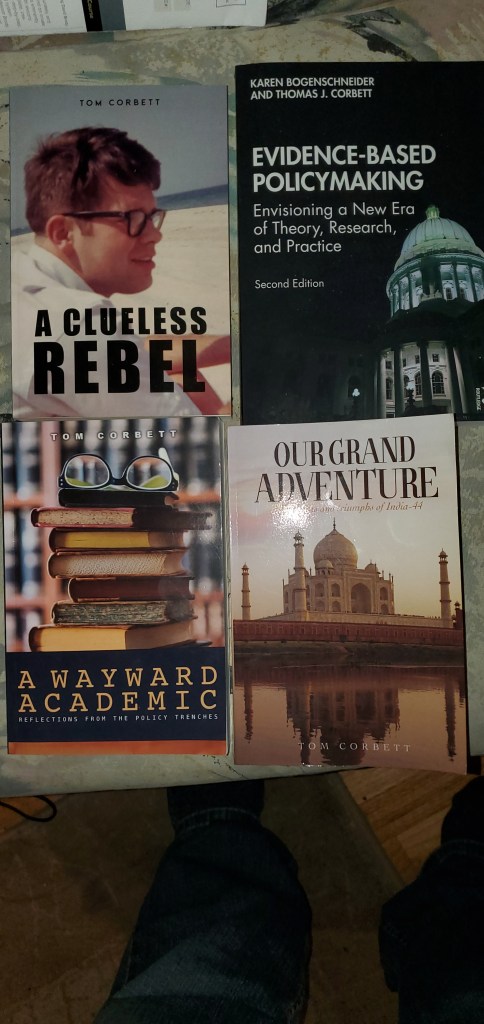
One thing was certain, I was highly respected as someone who could communicate with the written word, and give great public talks (or contribute to conferences and seminars) which I did endlessly. Over time, what really shocked me was my acceptance by the hard ass econometricians and other hi-tech scholars. As someone who had great difficulty with high school algebra, I should not have been where I ended up, especially in helping run a nationally known university-based research entity (my imposter syndrome often overtook me). Most surprisingly, I was embraced by many of the economists who dominated the Institute where I spent most of my time (I taught various policy courses in the School of Social Work but spent little time there).
Now, if you were to know economists, you would find them to be a disputatious and aggressive tribe. They surely do not accept those they deem fools with ease. And yet, I felt more accepted by these (what should I call them) hard-asses than I was by the softer social workers in the academy. My best guess is that my skill at cross-walking between several cultures (academia, government, the philanthropic world, think tanks, evaluation firms, public agencies, etc) and then integrating my observations into well crafted writings performed a service they admired. I gave them a window to the broader world. It certainly wasn’t my technical sophistication.
One vignette has remained with me. I was walking back to the Social Science building one day along the path that borders Lake Mendota. The campus is gorgeous. Anyway, this was early in my tenure at Wisconsin when I was less than nobody. Suddenly, I heard someone calling my name. It was Robert Lampman, a revered economist at Wisconsin. In the early 1960s, he served temporarily on the Council of Economic Advisors during the Kennedy years. During that service, he wrote a seminal chapter in the annual Economic Report to the President. This chapter was widely considered to be the intellectual basis for what later became the War on Poverty and for parts of the Great Society.
For the life of me, I could not figure out what this eminent man would want with a nobody like me. He then went on to praise something I had just written and put out within the Research Institute. It was likely the first thing I had written there. After exuberant praise that left me speechless, his last words before we went our separate ways were ‘Tom keep on writing.’ Those words also stayed with me. Bob was one of the finest men I ever met in the academy … I still cannot believe he was an economist.
I won’t bore everyone with more tedious vignettes but I can recall so many moments when I was the object of praise from my ‘hard-ass’ colleagues, or when I was asked to speak before rather distinguished audiences, or to be included in meetings at high levels including the Old Executive Wing of the White House. It was heady stuff for a working class boy from the mean streets of Worcester. I doubt all that happened because I was particularly bright. I never thought of myself as conventionally smart though I probably was imaginitive and clever in a way. I had a facility for seeing connections among seemingly disparate phenomena and for cutting through the fog to get to the core of any issue. Still, I think what gave me an edge at the end of the day was a command of language. I could speak and, more importantly, write well, even persuasively on occasion. I yet recall one colleague (trained as an economist) calling my writing style ‘Corbettese.’ It was not the style found in the academy.
So, my childhood dream of being a writer never came to pass. I put it on the back burner during my career, perhaps for reasons about which I am not proud. I lacked the courage to give my inner passion a full voice. Basically, at the end of the day, I didn’t want to starve to death. At the same time, it wasn’t as if I sacrificed all for some career that despised. That would have been a tragedy. There is little doubt that more money could have been made in other professions or avocations, but most of them would have driven me crazy. Besides, money is immaterial once the basics are ensured. Recently, I remember thinking about the young doctor who did my last colonoscopy procedure. For several reasons, there is a backlog in scheduling these invasive procedures, so it struck me that she might be doing them all day long. Undoubtedly, she is making good money but I could not help thinking … I would not last a month. I needed stimulation in life, new challenges, impossible problems to confront, and audiences (via talks and print) to share my observations and thoughts. And that is precisely the life into which I stumbled blindly. It was a good life.
Did I take the wrong road? Should I have pursued my passion with more vigor. Is a ‘good life’ enough? Who knows. What I can say is that I did employ that innate literary talent in the career I found, or rather which found me. That is something. More importantly, I have been given a second chance. I have time now, lots of it. While not wealthy by any means, I don’t worry about money. And when I am at my laptop stringing together words into images and thoughts and observations, I find myself lost in another world.
It turns out that I am comfortable in that world. On reflection, I think I will stay here for a while longer.
My Latest
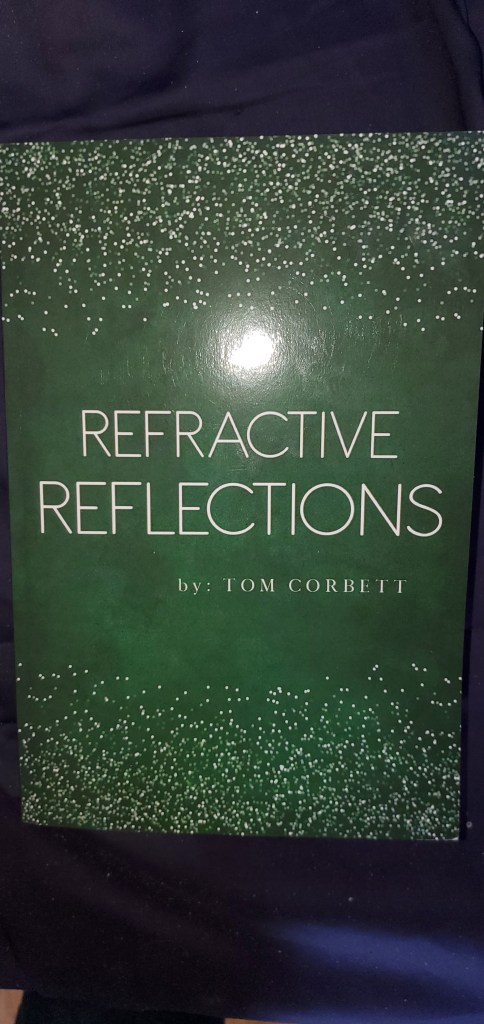
http://www.booksbytomcorbett.com
Perhaps time for some random nonsense. Okay, okay, you are saying that all my posts are nonsense. Point well taken.
…………………………………..

Hmm, I just came across one of those ubiquitous rankings of cities, best for this and that. This one was for the top ‘fittest’ cities. Madison (seen from across Lake Monona above) was again near the top … # 6. Let me say categorically that I dragged the city down on that one. Definitely would be in the top 5 if I were to move away.
Oh, and don’t forget … it also was ranked as the 5th top educated city in the land. If you want to be around people with sound minds in sound bodies, this is the place to be. Just to be clear, I’m not one of them (being unsound in both mind and body) but many others are.
To be honest, there is a petition circulating to encourage me to leave the city, a sure way of boosting the ratings higher.
…………………………………
I can’t see how Trump can be President again. It is not because he is a thoroughly disgusting, morally bamkrupt, pathological narcissist and sociopath. While those are his better points and self-evident, others of similar ilk have had successful political careers. No, Trump is ineligible since he would contravene the Constitution if he were to serve again … namely Section 3 of the 14th Amendment, this clause having been approved after the Civil War to prevent clear enemies of the Republic from usurping power. It says:
‘no person shall … hold any office, civil or military, under the United States who, having previously taken an oath … to support the Constitution of the United States, shall have engaged in insurrection or rebellion against the same, or given aid or comfort to the enemies thereof.’
Oh wait, I forgot. Didn’t the GOP tell me that those nice people beating the Capitol Police half to death were merely tourists ambling through our seat of government. How silly of me.
………………………………….
Did you know there were only 21 Whoopng Cranes in the world a few decades ago. That beautiful bird, one of God’s special creatures, was on the verge of extinction. Now there are some 830. A shout out goes to the International Crane Foundation (located just north of Madison) and George Archibald for his tireless work for some five decades in bringing this and other species of cranes back from the brink. I so admire dedicated people like this though they make me feel like a worthless slug.

………………………………….
For some reason, I just mused on the precise moment when I knew I would never make a living as an athlete. I was a pretty good baseball pitcher in my early teens, almost went undefeated for my junior high school team. Anyway, one day I was on first base when I got the steal signal from our coach. I was stunned, being the slowest runner on the team. I must have looked clueless to him since, after giving the same sign several times, he yelled … “steal second you nimrod.” So, on the next pitch I chugged down to second and slid in safely. I could not believe I had stolen a base and just assumed the batter had hit a fall ball.
In a move I have never forgotten by me (though I have tried deperately), I started jogging back to first base before our totally shocked opponents recovered to tag me out. I can still recall the adams apple of our coach going up and down as he yelled things at me that no young teen should ever hear. However, it was all for the best. A lesson was learned. I scratched pro-athlete off my list of possible future vocations.
I kept scratching off other possiblities as it became apparent that I had neither the talent nor disposition for each alternative considered. Manual labor, or real work, was never even an option to be remotely considered. At the end of the day, being a useless faux academic and pretty good policy wonk was all that was left. But I had fun … that’s what counts.

NOTE: That’s me in the middle flanked by two cousins. The one on the left went pretty far in the Los Angeles Angels minor league system but never quite made it to the majors.
…………………………………………….
The movie Oppenheimer is out. That got me thinking that about how anyone would have made the decision he did … to use his skills to create a weapon potentially capable of destroying civilization. Albert Einstein perhaps started the atomic bomb rolling when he signed a letter to FDR that had been drafted by fellow physicist Leo Szilard warning of the danger that Germany might create an atomic weapon. They had the brainpower to do it.
Both Oppenheimer and Einstein were toward the pacifist end of the political spectrum. Einstein was very critical of his fellow German academics who helped the war effort in WWI. He also fled Germany as the Nazi’s were coming to power. Both men (Oppy and Al) faced an incredible dilemna. They hated war. In a way, that made it easier for them to ease their consiousnesses about creating a super-weapon. It might save lives in the end by ensuring the Nazi’s would not win (I doubt Japan played much of a role in their thinking). Of course, Einstein never got to play a substantive role in the Manhatten Project. He was considered a security risk by the paranoid powers that be for some specious reason or another.
Truman had little doubt about using this new tool. He already saw the ally costs in lives lost associated with taking places like Iwo Jima and Okinawa by conventional means. If they had to invade mainline Japan, some estimates put the potential causualties as high as a million lives. We can never know for sure but the dropping the bomb on Horoshima and Nagasaki likely saved many lives. Conventional bombing alone to siften them up for an invasion would have killed more Japanese than the two atomic weapons did. As Oppenheimer believed, the horrific example to the world of using such a weapon may also have detered future use, a lesson that never would have been embraced had the bomb remained simply an unused threat.
Albert and Oppy, on the other hand, suffered from their participation and contribution to the creation of nuclear weapons. They gambled on Germany (and the Nazis) being far further along than they were. By the time that they realized they would not develop the bomb (though they did come up with jet planes and ballistic missiles by the end of the conflict), it was too late to reverse course.
Since I had trouble with high school algebra, I never would have been involved in the Manhatten project. But if that were possible, what decision would I have made? What decision would you have made? Remember this, while many of the scientists came to regret their actions at Los Alamos (and the satellite sites) it was assumed at the beginning that the Germans had a 12 to 18 month head start on the allies in creating a nuclear weapon. Who would wait and debate morality under such a threat?
Oddly enough, the Nazi’s hate of the Jews may have thwarted their best chance of ultimate victory. Hitler once said that quantum physics, the theoretical basis for the bomb, was ‘Jewish’ Science. He could never support it. In the end, his own irrational hate contributed to his downfall.
………………………………………….
Do you ever receive these emails from political campaigns that suggest they are sharing top secrets with you. I remember the Republican ones for some reason. They usually start with something about ‘the information below is for my eyes only,’ perhaps even suggesting that I delete the message after reading. A common variation on the theme is that they are ONLY sharing this inside info with a few trusted supporters, especially those who have been financially generous in the past.
Right there, my antennae go up. If the leaked secret info is from a conservative source, I never should be getting it. I have not given them a single dime even though some 70 percent or so of all the messages I get are from that side of the aisle. Could it be that they are playing me with a con? Perish the thought.
Then I read the ‘top secret’ message. After the blabber, it comes down to the Dems are ‘woke, radical, socialist, and pawns of Satan himself.’ They need all the money I have left to stop this grave threat to America, to our freedoms, and mother and apple pie. Ifyou need any confirmation as to the low regard in which politicians hold the public (including some, though I believe fewer, Dems) this is all the proof you need.
They, especially those on the right, think we are idiots. Oh wait, people still vote Republican. Perhaps they are correct.
…………………………………………
I have suffered from the ‘imposter complex’ most of my life, a debilitating affliction associated with low self-esteem. I’m not sure that people see this from the outside since I have taken on a number of challenges over time and, from what some have told me, generally look confident as I addressed them. The truth! Inside I am a bundle of doubts … always have been though the level of insecurity has diminished somewhat over time. After all, my favorite mantra now is ‘what are they going to do, fire me.’
Somehow, I managed to survive what seemed like a reasonably successful career as a policy wonk, as a manager of a university-based research entity, as a university-level teacher, as a consultant to the feds along with many state and local government, and as other such things. I gave hundreds of talks to all kinds of audiences, did untold print-media interviews and even a few TV appearances, and consorted with quite a few top government officials and academic luminaries. Yet, all along I kept waiting to be revealed as a total fraud and kicked out of the room. For some reason, that never happened and I cannot, for the life of me, explain why.
The key question is where did my affliction start. I had an epiphany during a recent power walk. Yes, I have sunk so low as to resort to exercise. Had to, really had gotten disgustingly fat. But I digress. My insight was that it all started on the playground as a kid. Now, it is true that my mother never praised me at all, though I found out later she bragged to everyone else about me (with lies). But I got nothing but criticism. Surely, that contributed to my sinking self-image.
The real culprit was located, I believe, in the despicable protocols for picking team members for those games we played as young urchins. Today, kids are spoiled rotten. They are driven to organized events by doting parents, play under adult supervision, and then given participation awards for not crapping in their pants during the contest. In my day, we simply marauded around the neighborhood until we organized ourselves into do-or-die sporting events on the nearby playgrounds or right in the streets.
For baseball, a common approach was to have one team captain (the captains were the best athletes there that day) throw a bat to the other captain who would catch it with one hand somewhere along the barrel. Each captain would then start alternating hands up the bat until one of the two could still cup the nob at the skinny end found on all baseball bats. That captain would get the first pick and then they would alternate as they selected their team members.
This was the excrutiating part. If you were a talentless schmuck like me, you stood there as all the healthy guys were picked, then the tomboy girl who insisted on playing with us manly guys, and then the walking wounded who were on crutches or in a wheelchair. Finally, they got to me. I could see the pain in the captains eyes as he looked about to see if anyone else was coming along. Absent any reprieve, he would sigh as he said ‘guess I’m stuck with Corbett.’ I think those words will be etched on my tombstone. It really wasn’t a good start in life.

NOTE: That is me on the left.
…………………………………………..
I had a breakthrough of sorts the other night. A neighbor sent me a URL that was linked to a Facenbook site. This has happened before and I’ve never been able to access them since I was banned from Facebook (Meta) many moons ago. This was not just going to Facebook jail, I was banned, exiled presumably forever twice (I am reduced to sneaking back on). That’s why I started this blog.
Anyway, I decided to give FB another try so that I could access the joke sent to me. Usually, such efforts would stall when I would get this message that I needed to prove my identity by uploading an official ID like my Wisconsin drivers license. I tried that a number of times and nothing. More recently, I’ve been getting a message that I had used an old password but none of my paswords seemed to work when tried. When I then tried creating a new one, I never made it passed all their security barriers. Hopeless, I figured.
Last night I tried a new account (not sure why). In the past, I would get just so far and they would say there was already an account with this email or phone number, but I knew I could not access that account since they would ask me for my ID again. Not last night, however. I would get a ‘continue’ message and, amazingly, I could. In he end, I was able to create an account under my real name … Tom Corbett. Were the FB Gestapo asleep at the switch?
The problem, however, is that once again I am starting out with NO FRIENDS (I am up to 120 plus already). Under Thomas Corbett I had 30,000 friends and followers before being banned for life. Under Jim Corbett I quickly accumulated 7,000 friends and followers before their vigilant Gestapo thugs threw me off (permanently) once again. My sin this last time was posting a pic of Jesse Owens getting a medal at the 1936 Berlin Olymic games (see below). I made the comment that it was unfortunate that FDR did not invite him to the White House but I understood the political reasons for why he was reluctant.

This lifetime ban undoubtedly was because of the third white athlete on the podium giving a Nazi salute (again, see pic above). The shot had nothing to do with this white guy, and my comments did not allude to him in the least. But apparently I was seen as fomenting some right wing violence. ME? Really, you have got to be kidding.
I will say this one more time. You have to stay up nights creating a community standards program that is so ineptly designed and moronically managed that the whole thing leaves you in disbelief. WOW! I doubt my run this time will be for long. I probably will post a picture of a tulip and be accused of discriminating against roses.
……………………………………………
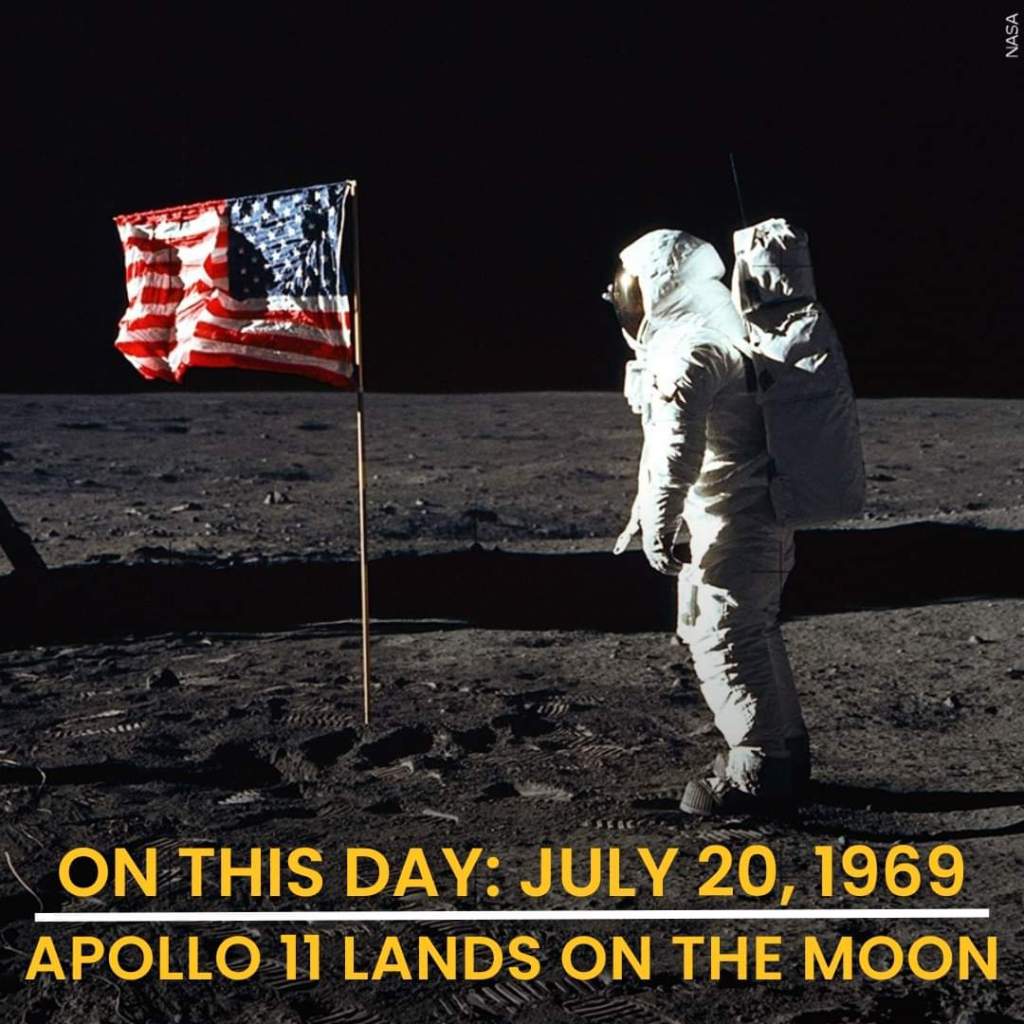
This epic event happened some 54 years ago (where has the time gone). I saw it happen in a Dublin Ireland Hotel Bar at about 3 AM after spending another futile evening trying to seduce a lovely young lass … a Swedish tourist in this instance. I ran into her while touring Trinity College and accompanied her back to her hostel where we got yo know one another a bit better. A lesson for all males. Never chase fast women. They will outrun you all the time.
When time to take my leave, I had to make it across town to my own hotel in the middle of the night. When I arrived, I was shocked to see a bunch of people huddled in front of a TV in the bar (which had officially closed down much earlier, this not being New York). Curious, I wandered over to see what was what and found history was being made. I enjoyed the moment.
Of course, I was actually proud to be an American back then. Now, not so much!
……………………………………………..
Perhaps next time, I will post something about college towns turning the political tide in many states, possibly saving America from the an authoritarian takeover by the hard right. Florida is not exactly the poster state for this thesis. As I mentioned, some Republicans are waging a war on higher education, with Ron Desantis trying to lead the charge.
Take Ron for example. I’m serious, please take … somewhere or anywhere. He has hijacked the campus of the New College of Florida, a smaller school with a liberal reputation. Besides getting rid of the President, he has installed six new members to the Board of Trustees. These include:
Not surprisingly, some 36 percent of the existing faculty are fleeing. This won’t dismay Desantis and friends at all. They will bring in propogandists to replace actual scholars and legitimate teachers since he wants this institution to become the Hillsdale College of Florida.
Ah, remember when we revered academic freedom as a strength.
……………………………………………………………..
My mind really wanders during my morning walks (when I’m not worrying about collapsing in a heap from cardiac arrest). One final early memory, one possibly associated with another of my lifelong neuroses and pathological affliction … an extreme difficulty being intimate with those of the female persuasion. Now, I’ve always been great around women on a casual or friendship level. Being friend, companion, colleague comes naturally to me. And I like the superior sex. They have their idiosyncracies but I have always found them to be more insightful as interesting as friends and more organized and focused as professional colleagues. Most of what would pass as my friends have been women.
The difficulty always came in moving beyond this casual stage. I was paralyzed when it came to asking for a date. One hint of a rejection and I would go into a form of hibernation where I would lick my wounds for months. While I had questions about whether females could ever be attracted to males physically, I really was convinced I had nothing to offer. When good fortune smiled on me (and it did on occasion, amazingly enough), I immediately became suspicious … what is she really after?
Enough on my pathology, one of them at least. Where did it start?
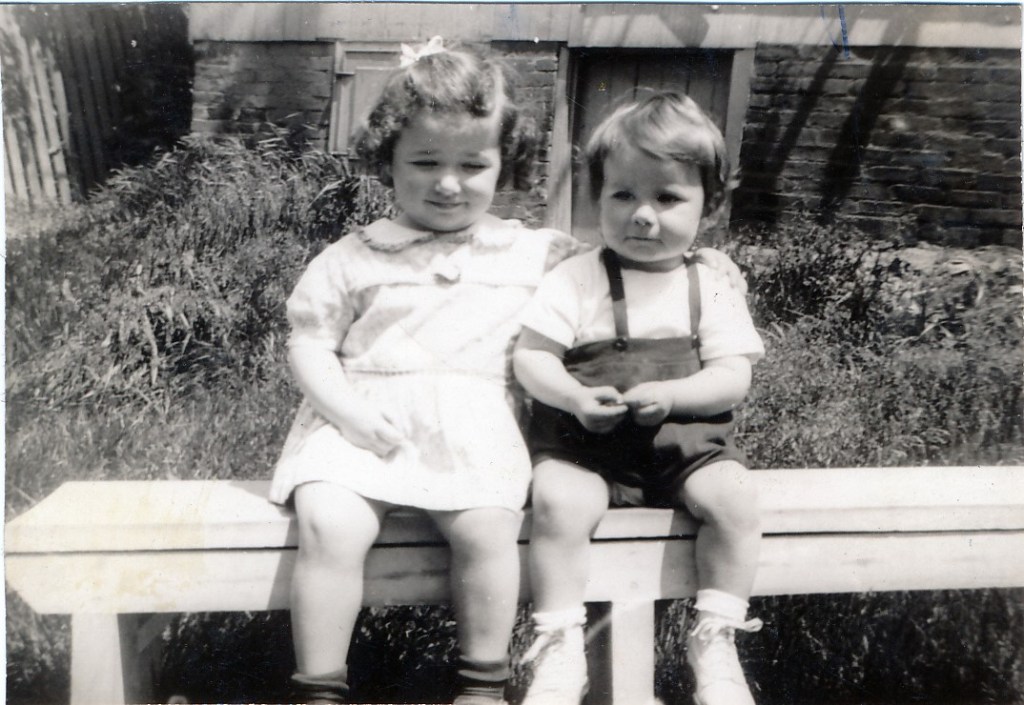
Here I am with Diane … my upstairs neighbor. One day, while playing in the backyard, she said ‘I’ll show you mine if you show me yours.’ Though I suspect we were a bit older than in this pic I had NO IDEA what she was talking about. Show what and, for god’s sake, why? But, as I recall, she dropped her drawers and then so did I (while remaining utterly clueless).
And then, a booming voice came from above ‘What are you doing down there.’ For a moment, I thought it was the voice of God and that I would be cast into the bowels of Hell for all eternity. But it was a female voice and we all knew that God was an angry looking old man. It turned out to be my gray-haired grandmother (Irish no less) looking down disapprovingly from her 3rd floor back porch. I immediately was stricken with a profusion of emotions … guilt, embarrasment, fear, dread, and remorse. Mostly, I was frantically thinking of how I might make my way to Mexico as a young tyke.
I can’t recall what happened after this moment but surely I was scarred for life. I wonder if I’m too old to start therapy?
………………………………………………
You are probably asking why I have arrived at the conclusion that our Republic is doomed? Even if your aren’t, I am going to tell you in any case. It is because we have become two separate nations, supported by distinct cultures that CANNOT be reconciled (my old rant again). They are not separated by different political opinions or even normative views. No, we are talking about two distinct populations that see basic reality in very different ways, and have all the social and communication supports to support these utterly different and fundamentally disparate worlds.
In my youth, we had serious divisions like Apartheid in southern states. Yet, there was a common narrative painting a realistic picture of what minorities faced. It is just that a large portion of the population had decided that it was in their best interests to exploit Black people. But I cannot recall them believing that they were lynching minorities and bombing or burning down their churches out of kindness. There was a national media, at least as we got into the 1960s, that painted a relatively honest picture of what was happening.
The big difference today is that those on the other side of the divide from me have access to an alternative reality. They can skip over the ‘liberal’ media and ‘fake’ news to seek those outlets that will feed their fears and stoke their anger. As I noted earlier, according to the MAGA cult the mob attacking the capitol on January 6 were patriots defending the Constitution, not insurrectionists defiling that sacred document. And Donald Trump, they tell us, is the final arbiter of truth. Read that one again … Donald Trump is seen as the savior of the little people as he spouts venom from his Mar-A-Lago version of Shangri-La.
We have found George Orwell’s 1984. Up is down, black is white, war is peace. And I am looking for the exit ramp.
……………………………….
Until next time … CHILL!
It is that time again. I have been way too serious lately.
……………………………………….

……………………………………….
So, a blond walks into a police station looking for a job. The officer behind the desk decides to humor her by asking a few questions as if it were a real job interview.
“What’s 2+2?” He asks.
“4” she responds.
“Now a tougher one. What is the square root of 100?’
She thinks for a few moments and says “10.”
“Excellent,” he beems. “Now, who killed Abraham Lincoln?”
“Oh, sorry, I don’t know.”
“Well, you go home and work on that one.” He figures he will never see her again.
When the blond gets home she calls her best friend. “Oh, I’m so excited. Not only did I get a job with the police but I have a murder case to work on.”
……………………………………………………..
A little old lady walks into the doctor’s office. “Doctor, I keep farting but it isn’t too much of a problem since they hardly smell and they are quite silent. In fact, I have farted several times since getting to your office.”
“I see,” the doc said and gave her some pills with instructions to return in a week.
She returned a week later and was a bit upset. “I don’t know what you gave me but now my farts smell something awful but at least they are still silent.”
“Good,” the doc said. “Now that we have cleared up your sinuses, I have something to improve your hearing.”
………………………………………………………………
A Catholic Priest, a Protestant Minister, and a Jewish Rabbi were discussing the knotty topic of when life begins.
“At fertilization,” said the Priest, “that is when God breathes the spirit of life into the embryo.”
“No, no,” responded the Minister, “it begins at birth. That is when the fetus becomes an actual person and starts toward being an independent soul who must confront sin and redemption.”
The Jewish Rabbi scoffed. “You are both wrong. Life begins when your child graduates college and finally moves out of the damn house.”
…………………………………………………………..
A man walks into a bar with his dog and orders a drink. The bartender says “you can’t bring a damn dog in here.”
The man says, “oh, this is my seeing-eye dog.”
“Sorry,” the bartender, now embarrased, responds. “Listen, the first drink is on me.”
The man takes his drink and finds a seat near the door. Minutes later, a man with a chihuahua walks in and the first man calls him over. “Listen buddy, the bartender will kick you out unless you tell him this is your seeing-eye dog.”
“Thanks for the tip.” The man walks up to the bar and did just that.
The bartender scoffs. “That’s a Chihuahua. They aren’t seeing eye dogs.”
The man pauses for just a second. “WHAT! You mean to tell me they gave me a damn chihuahua?”
…………………………………………..
Here is Tom in the kitchen!

………………………………………………………………..
Bits & Pieces:
I’m on two diets now … I wasn’t getting nearly enough food on just one.
Apparently, RSVP’ing back to a wedding invitation with ‘maybe next time‘ isn’t the right response.
Scientists have determined that Aliens lock their doors when passing by the earth. Wouldn’t you?
I asked my date if I was the only one she had been with … she said yes, all the others had been nines and tens.
I miss the 90s when bread was still good for you and no one knew what kale was.
If you see me talking to myself, I’m having a staff meeting.
It is true that dogs are loyal. However, cats are not known to reveal to the cops where your drugs are stashed.
Do you get up in the morning, look at yourself in the mirror before sighing … that cannot possibly be accurate.
I told my wife I wanted to be cremated … she made me an appointment for next tuesday.
Therapist: your wife says you never buy her flowers. Me: to be honest, I never knew she sold flowers.
My wife asked me to take her to one of those fancy restarants that make the food right in front of you. So, I took her to Subways. That’s when the fight started.
After almost 50 years of marriage, I knew that my wife still found me sexy. Every time I passed by her, I would hear her say, ‘what an ass.’
………………………………………………………………
A PUBLIC SERVICE ANNOUNCEMENT!
There is a dangerous virus being passed around electronically, orally, and even by hand. This virus is called Worm-Overload-Recreational-Killer (WORK). If you receive WORK from any colleague, your boss, or anyone else via any means DO NOT TOUCH IT. This virus will wipe out your private life completely.
If you should come in contact with WORK, put your jacket on and take two good friends to the nearest bar. Purchase the antidote known as Work-Isolator-Neutralizer-Extractor (WINE) or another known as the Bothersome -Employer-Eliminator-Rebooter (BEER). Take the antidote repeatedly until the WORK virus has been compltely eliminated from your system.
You should pass this warning on to 5 friends. If you do not have 5 friends, you are likely already infected and WORK has taken over your life. RIP!
…………………………………………
A blond assistant to a CEO was asked to plan her boss’ meetings during an East Coast business trip. She didn’t know when he was scheduled to arrive in New York and thus could not schedule his meetings.
Then she had an idea. She called the airline and asked. “Can you tell me how long it takes to fly from San Francisco to New York?”
The airline agent said, “just a minute …..”
The blond immediately responded. “Oh, that’s so helpful, thank you so much,” and hung up the phone.
…………………………….
After a weekend full of partying with much alcohol and drugs, Tom showed up for work on Monday morning. They had a surprise drug test scheduled but Tom had been tipped off in advance. He came to work with a urine sample from his girlfriend. She didn’t touch booze or drugs so Tom thought he was golden.
With a big smile, Tom turned his fake urine sample into the nurse.
The next day his boss texted: ‘I have good news and bad news. The good news is that you are drug free. The bad news is that you are 6 weeks pregnant and, by the way, you are fired.’
………………………………
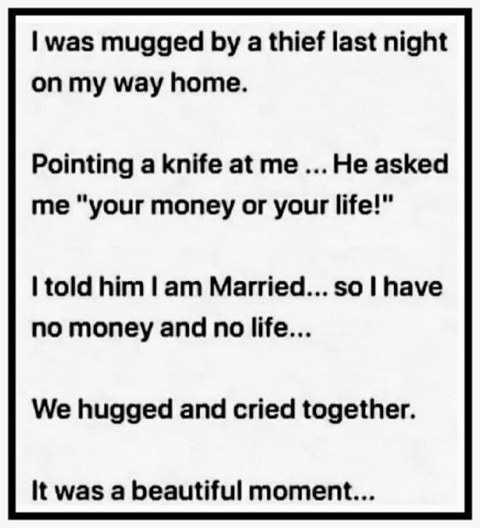
……………………………..
Marriage Insights:
How do most men define marriage …. a very expensive way to get free laudary.
At a cocktail party, one woman said to the other. “Aren’t you wearing your wedding ring on the wrong finger?” The other replied, “yup, but only because I married the wrong guy.”
A woman marries a man expecting he will change, but he doesn’t. A man marries a woman expecting that she won’t change, but she does.
Girl: when we get married, I want you to share all your worries and troubles .. to lighten your burden. Boy: that’s so kind of you but I don’t have any worries and troubles. Girl: that’s because we are not married yet.
A woman always has the last word in an argument. Anything the man says after that is the start of the next argument.
Marriage is a three ring circus: Engagement ring, wedding ring, and the boxing ring.
I told my wife once that I needed more space. So, she locked me outside of the house.
There are only two times when a man doesn’t understand a woman … before marriage and after marriage.
…………………………………………………..
A young woman knelt in the confessional. “Bless me father, I have sinned.”
“What have you done, my child?”
“Father, I have committed the sin of vanity. Twice a day I gaze at myself in the mirror and tell myself how beautiful I am.”
The Priest turned to get a good look at the woman. “My dear, I have good news. That isn’t a sin, just an error in judgment.”
……………………………………………………..
Tom left for work one friday afternoon. Instead of going home, he stayed out the enire weekend hunting with the boys and spending all his weekly wages at several bars. When he finally got home, he was confronted by a very angry wife.
After screaming at him for two hours she ended with, “how would you like it if you didn’t see me for two or three days?”
Without thinking Tom replied, “that would be fine with me.”
Monday went by and Tom didn’t see his wife. Tuesday and Wednesday came and went with the same results. Finally, the swelling subsided just enough by Thursday where Tom could see her out of the corner of his left eye.
……………………………………
So, a ventriloquist is telling Irish jokes in a pub. Paddy, who was getting more irate by the minute finally stands up: “Now just a minute laddie, tis an awful thing you are doing, making us all look like morons and idiots. I ought to punch you in the nose.”
“I’m so sorry, sir, I didn’t mean ….”
“Not you,” shouted Paddy, “I’m talking to the little fella sittin on your knee.”
……………………………………………

There were moments in my surprisingly long life when I feared that what passed for democracy in America would not survive. While our experiment in a government ‘of the people, for the people, and by the people’ had always been far from perfect, it was better than virtually all of the alternatives. The most concerning moments, at least in my memory, likely occurred during the ‘Cold War’ as the two super-powers glared at one another across fields of nuclear weaponry. When Soviet Communism, as expected (by me at least), faded as an explicit threat, they were replaced by another glimmer of concern when Islamic Terrorism reared its ugly head. But that proved more a tempest in a teapot.
Our external threats were peculiar in a way. A nuclear conflict between superpowers would have led to the mutual destruction of both civilizations. While not pleasant to contemplate, we would not have to learn Russian or sing The Internationale at the start of each school day. Internal threats were perhaps less ominous yet more likely to, in fact, end our experiment in democracy. There was that scare when Richard Nixon pushed the envelope (for the time) on dirty electoral tricks and then moved to politicize the Federal Government’s legal apparati (DOJ, IRA) to go after his ‘enemies.’ But his own party still had considerable integrity back in the 1970s and would have none of it.
I’m also overlooking those earlier moments in our history when democratic protocols were imperiled. Obviously we had a Civil War, in which even Abraham Lincoln ignored legal niceties like Habeus Corpus, at least during the early dark days. There were many moments during our rapid industrial growth at the end of the 19th century when local police or the national guard or even federal troops were called out to break labor and protect the interests the corporate elite, an abuse of power by contemporary perspectives. And there was Red Scare in the U.S. after the Bolshevik revolution of 1917 when Americans were scooped up absent reasonable cause (mostly because they were foreigners with funny names), when apartheid in the South disenfrachised non-whites, when we used concentration camps to incarcerate Japanese-Americans during WWII for no other reason than their ethnicity, or when we trampled on civil rights of so many during the paranoia of the McCarthy period, just to name a few.
Let us face it, sustaining democracy and the rule of law can be a tenuous challenge, especially when threats (real or imagined) are present. It is always tempting to grasp at the certainty of authoritariansim and the comforting strength of the strong man when the world around us seems to be fraying at the seams. The post World War I era proved particularly fragile as the old monarchical order fell to be replaced at first by uncertain and often fractured democracies. Mussolini, Hitler, Stalin, Mao, Franco, the Japanese military rushed in to assert a patina of control and certainty in a seemingly unsteady world caught between the extremes of Fascism and Communism. And they did satisfy the public’s thirst for order, at least for a while.
Today, we face an anomolous situation. With the exception of the Russia-Ukraine conflict and several simmering civil wars on the Horn of Africa, there is general peace around the globe, as least by historical standards. The U.S. economy is doing well. Equity markets are up, as are wages. Unemployment is down to so-called ‘frictional’ levels, inflation seems to be abating, and our recovery from the COVID economic dispruptions appear to be coming in for a remarkably soft landing. We should be happy as a nation. And yet, I have never been so uncertain about the future of democracy in this country, as imperfect as it has been, than I am at present. What the f%#k is going on?
When you think about it, most of the old threats were external, or reactions to perceived external threats whether legitimate or not. Russia was never going to invade and subjugate America. The logistics against that were overwhelming though our fantasies ran wild on occasion. Remember the movie Red Dawn, which was released early in the Reagan years? It was about a sneak attack by the Russkies and the Cubans with all the action taking place in some remote part of Cornwall Kansas or wherever. The enemy troops suddenly drop out of the sky to take over this remote town (that no one would want in the first place) until a bunch of high school students begin to fight back.
Think about that for a moment. Somehow, Russia managed to do all the complex logistics, including troop and weapons relocation, to mount a secret attack on the U.S. without anyone noticing. This had to be the worst science fiction movie EVER but it was popular in theaters during the Reagan years. Just shoot me. The same is true of Islamic Fundamentalists. They could, if they were organized enough, be an irritant but they have not even been that except for a few spectacular acts (many in Europe which is closer to them). Even if the Islamic version of the American Evangelical religious movement were strong enough, our sophisticated technologies would limit any real damage they might do.
No, any real threat to America is inernal. We are the enemy. By that I’m suggesting that a substantial portion of the America people (25 to 35 perecnt) apparently support some form of strong man takeover of the country. While not a majority, that’s the same level of support the Nazi’s had before taking power and way more than the Bolsheviks had before the October revolutuon. These unhappy Americans would prefer an authoritarian regime reflecting their values with no acceptance of diversity of ideas nor any plurality of values and opinion. They reject the rule of law and the slow and inefficiant processes by which democratic rule operates.
Hell, an entire major political party has embraced the most ridiculous position of defending a former President who walked off with highly classisfied documents, sent armed thugs to overturn the constitutional processes for executing the transfer of power, and pushed and threatened and bullied top officials to overturn a legitimate election result. This once proud party is now suborning treason and refusing to denounce an apparent traitor (or at least resisting the legal systems attempts at determing guilt or innocence). There leaders spend their time trying to scare the pants off the public (what happened to governing?).
But that is just the tip of the iceberg as they say. What worries many are what is going on in the background to prepare for a White House held by Trump or Desantis or some other right-wing wanna-be authoritarian. If the current GOP front runners prevail, 2025 won’t be a repeat of 2021. Trump was clueless early in his administration about how to execute a coup, at least until he panicked when faced with defeat in 2020. At the start, while he appointing some whack jobs like Steve Bannon and Stephen Miller, he also brought in adults who might be conservative but knew and (for the most part) respected the law. Before most of these were fired or pushed out, these adults spent much of their time trying to keep a pathological narcissist from irreparably harming the country. The anecdotes of what they had to do to keep the Donald from ultimate mischief are sometimes hilarious and, at the same time, frightening as hell.
The next time around will be different. They will be ready, no adults will be permitted in the room. They are not going to risk the loss of power to a legitimate expression of the will of the people as they did in 2020. They made that mistake once. It won’t happen again. If they can, there will not be another unfettered and free election.
A New York time piece recently overviewed the background work being done (assuming right-wing control of the WH again) to centralize most power in the oval office, get rid of the pesky civil service, impound funds for anything they don’t like (emasculating Congress), politicize fully the DOJ, take over the FBI, control the important independent agencies like the FTC and the Federal Reserve. They will do all this under a dubious interpretation of parts of Article II of the Constitution, the so-called ‘unitary executive’ clause which states that ‘The executive power shall be vested in a President of the United States.’
Can some ambiguous words really be employed to mount an authoritarian coup? Five Justices would have to agree with an interpretation that once was endorsed by former Justice Scalia. Can anyone say with confidence they are not close on SCOTUS? If that fails, there is always the Reischtag ploy used by the Nazis where you create a crisis and use that emergency to grab ultimate power. Look at how they are ramping up the border ‘crisis.’
If Trump (or a Trump look-a-like gets executive power again, they will be better prepared. They are working on such a coup right now. Some 65 right wing groups under the aegis of the conservative Heritage Foundation are doing preliminary ground work and preparatory planning. This effort is known as Project 2025. Some key potential players already have been recognized. There is Jeffrey Clark, one of the few senior DOJ officials to overtly support Trump’s attempt to overthrow the legitimate 2020 election. And there is Russell Vought, a former Director of OMB.
The impulse tpoward oligarchic or dicatorial or even theocratic rule is rooted in an intense dislike and outright repudiation of things like ‘equality before the law, free speech, academic freedom, a legitimate market-based economy (as opposed to a manipulated one), any form of diversity or demographic plurality, and anything smarting of the will of the people.‘ They also are attracted to a utopian (or dystopian) vision based on patriarchy and an taliban-form of extreme Christianity. They want a hierarchical society headed by those deemed fit to rule with meek subserviance from all followers. When they say ‘the good old days’ they are thinking back to a feudal society of lords and serfs, a world found in the ‘old south’ before federal power insisted on voting rights for all in the 1960s.
On a personal note, it has struck me that I would be among the first to be dealt with if all this were to come to pass. So called intellectuals (I do a passable job of faking it on occassion) are usually enemy number 1. Such people think for themselves, a trait that cannot be tolerated in any authoritarian regime. Remember the Nazi book burning, or Mao’s ‘cultural revolution’ or what Desantis is doing in Florida right now. Also, I have no problem identifying as a ‘soft socialist,’ which now includes anyone who cares about vulnerable families or even working stiffs. But I am old, and ready to buy the farm, so I don’t care about my fate. It is the loss of a great historical experiment that strikes me as the tragedy.
Obviously, a lot has to fall into place for this nightmare scenario to happen. But here is what worries me. Hitler grabbed power in part because the industrialists thought he would be useful to them. He would curb the trade unions and spend millions of deutsche marks on munitions and infrastructure development like the Autobahn. That is, he promised them that they could get even richer than they already were.
We already have an extraordinary concentration of wealth in this country. Some five digital giants [Apple, Microsoft, Alphabet, Amazon, and Meta] have a combined market capitalization of over $8 trillion, a sum that exceeds the the GDP of all nations EXCEPT THE U.S. AND CHINA. Their top managers make up to $50 million annually plus stock options, private jets, and all sorts of benefits. The men behind these giants have net asset sheets of $100 billion or even more. And that is not enough. There is no such thing as enough. They want more.
Democracy, I believe, depends upon a blance in society where power and resources are distributed with reasonable fairness. Since 1980, we have been going in the wrong direction. The top 1 percent has seen their share of the pie go from less than 10 percent to almost one-quarter … what we might call a tectonic shift. We have a few at the top making enormous sums and aggregating immense power to themselves. On the other hand, you have the small people (working stiffs) like Hollywood screen writers who have seen their pay fall recently by some 23%. Actors (not the big stars) average $26,000 … a non-living wage. No wonder there is a strike in the movie and streaming industries. It is a microcsom for America writ large … a new feudal society is in the making.
A quick thought experiment. What might happen if there were a wakening among the public as to the extreme degree that our society has become hyper-unequal. What if the Democratic Party successfully tapped the underlying hostility associated with this awareness of exploitation, as was done in the progressive era and during the great depression. Perhaps a modern day FDR or Bernie Sanders would catch the imagination of the voters. Would those who have reaped so much recently willingly share a bit of it? Would they give up the incredible power they have accumulated? Or would they return to instinct and protect what they have, using the base fears of white nationalism and extreme evangelicism to vault to a position of unfettered and unchallenged political power to match their economic power?
Remember this! Many of the intellectuals and cultural elite in early 1930s Germany said it could never happen to them. They were too sophisticated. They were too educated. That clown Hiter was a buffoon and would soon be gone. Famous last words.
I keep thinking I will take a bit of time off from the blog to do other things … like clean the sty that passes for my domestic domicile. But then I see something that catches my attention. Perhaps, if my desire to procrastinate were not so desperate, I would not look so hard for these omnipresent distractions.
My latest mental digression involved some numbers spread about by a liberal activist group about SNAP, the Supplemental Nutrition Assistance Program. Most people might say what? But SNAP is reasonably big business. Last year, it provided resources to over 40 million familes at a cost of almost $120 billion bollars or 1.9 percent of the Federal budget. If you are old enough, you might remember SNAP benefits as something called Food Stamps, those coupon type things that people handed over at the grocery store. Folk my age still refer to these nutrition benefits as stamps even though this faux currency went extinct around the time that vinyl discs to record and play music disappeared.
Some historical context here. The origins of the program can be traced back to the JFK era of the early 1960s. We all know that Kennedy was rather shocked by the rural poverty he witnessed while campaigning for the Presidency in West Virginia. Thus, he was supportive of ideas floating around the Department of Agriculture at the time to subsidize the cost of food for low-income families through these funny stamps. This was more a way to deal with excess food commodities and simultaneously to prop up farm prices than anything else. Still the idea was controversial enough to warrant it being tried on a limited trial basis first. A decade later, in the early 1970s, the pilot program had yet to go national though it had expanded greatly by this time.
I have a story. Everything reminds me of a story. My future spouse joined me in Madison in late 1971 after finishing up her Master’s degree in Milwaukee. She had run out of money during this period between finishing school and finding that first job. Desperate, she went on Food Stamps, as they were called at the time, to tide her over this rough patch. She arrived in Madison with a bunch of these unused stamps. I thought, hey, let’s use this funny money to splurge (we were rather broke at the time). The thought of having some food to eat struck me as a capital idea.
It turns out that Dane County (where Madison is located) had not signed onto the Food Stamp program yet, deciding to help the county poor through the handing out of ‘surplus commodities.’ These commodities were mostly crappy blocks of cheese that had been rejected by 3rd world countries. So I said, ‘hey, let’s head to the adjacent county where I knew the stamps would work.’ Stopping at the 1st store over the county line, we used the stamps to buy steaks and luxury food items we could not otherwise afford. Ah bliss, no more peanut butter for a week or so :-).
It was not until we arrived at the checkout counter of this rural grocery store that I realized our error. The glares of the people around us at this seemingly white, young, middle-class looking couple using this ‘welfare’ program were debilitating. If looks could kill, I would have been toast. So, I did what any brave and self-confident man would do … I asked my future wife to continue our check-out while I beat a hasty retreat to our car in the parking lot (What in God’s name did she see in me?). Alas, I had contributed to the growing stigma about welfare … a social issue in which I would become embroiled over the next four decades or so.
Later, I found out that it did not take much to feed the grist mill of hate toward welfare. A few years later I was interviewing the county human services directors around the state for some research I was doing. I kept hearing a story about a doctor (I believe) whose new wife and children were getting some low-income government benefits. There was a loophole in the rules permitting that his assets and income be ignored toward eligibility since he had not adopted the woman’s kids. I agreed that this was a scandal to be remedied. Then it hit me that I was hearing the same story over and over. This one case had been blown out of all proportion and had become a singular point of discontent.
And that, my friends, is the core point of today’s ruminations … social and political stigma. The numbers that caught my eye were about survey reactions associated with the recent Farm Bill in Congress, about 80 percent of which focused on the SNAP program (old Food Stamps) with the remainder of the legislation dealing with things like crop insurance and land conservation. Though I remain a bit sceptical of numbers put out by agenda driven groups, here is what has been reported:
2. Even more (some 87 percent), thought SNAP benefits should be easier to get.
3. At the same time, a majority of respondents believe there should be work requirements attached to the benefits.
4. These mostly liberal views persisted despite respondents guessing that recipients received was more in benefits than they did in reality. The median guess was $20 per day while the actual figure was more like $6 dollars per day.
Even if these numbers are exaggerated, they are not disconnected from what we found when welfare was a big political issue. Back in my day, respondents to surveys typically expressed the opinion that government should do more to help poor children and the poor in general … though not at a level expressed in these results. If, however, you asked whether government should spend more on welfare, the outcome would flip with most saying NO! It turns out that the public was on to something. They wanted to help … just not by giving people cash in ways that might discourage work and marriage. The old cash welfare program, as designed, had become a proxy for all the core values of society … family integrity, raising children properly, responsible sex, work and general responsibility, social cohesion, and so much more. It had become a fundamental debate over values.
It is, in fact, correct that no one is going to get rich off SNAP benefits, unless that are scamming the system. In 78% of all counties, SNAP benefits fail to cover the cost of a minimal meal set at $3.14 by the Department of Agriculture. SNAP benefits top out at $2.75 per meal. The program helps but does not categorically eliminate food insecurity. In recent years, roughly 34 million Americans have been designated ‘food insecure.’ It might well be that the recent spate of inflation at the super market has made many households more sensitive to the plight of struggling Americans. But that is just a guess on my part.
Here is what intrigues me. Irrespective of whether the survey numbers are accurate or not, I do detect a shift in attitudes. By the 1990s, when the debates about poverty and welfare had reached a fever pitch (a kerfuffle in which I was intimately involved), there was a sense of palpable anger in the land. States lived in fear that any local generosity toward the poor (in terms of higher benefits than what their neighbor offered) would lead more losers to move to their state .. the so-called welfare magnet issue which was a code word for black migration in the eyes of many. A race to lower benefits started and picked up steam. They were caught in what economists call the ‘prisoner’s dilemna’ where the actions of one state spurred reactions in others and that would cycle back to the first (endlessly).
Research in which I was involved suggested that the ‘migration’ impact of comparatively higher benefits was real but small. That did not matter. As with anything involving an emotional issue such as welfare, perception was everything. During this era, welfare had become the so-called ‘mid-east’ of domestic policy. Passions ran high and compromise seemed impossible. In 1988, a comprehensive welfare bill made it through Congress. Senator Pat Moynihan from New York (the ex Harvard professor and welfare expert) said at the time that this topic was so complicated and emotion driven that no further legislation was possible in that century. A mere 8 years later, the old Aid to Families with Dependent Children program was scrapped and replaced by a work oriented block grant called TANF or the Temporary Assistance to Needy Families program.
The wild and adverse consequances predicted as a result of the Bill never came to pass. Sen. Moynihan claimed that millions of woman and children would be living on the streets. In fact, poverty among children and families improved slightly as many states used the new block grants and the attendant program flexibility to help poor families in more productive ways. In my opinion, the doomsayers were wrong because the welfare migration fears had, over a period of two to three decades, lowered the ‘real’ benefits to recipients to the point of being relatively meaningless. AFDC, in its final death throes only cost the federal government about $16 billion a year … pocket change to the feds.
The welfare wars were never really about money. It was the emotions surrounding the program that drove the debate. My mantra during those tempetuous times was that ‘I knew I was approaching the truth when no one agreed with what I was saying.’ I would be contacted weekly (at least) often much more often by reporters from around the country asking my views on whatever had hit the public or political fancy that week. It was a heady time for a policy wonk like myself but a depressing insight into the foolishness that passed as governing. But I had fun and that’s what counts.
And here is my point (at last), the passions are over. Sure, if the Republicans get full control of government, they are likely to end SNAP along with public education, government support for health care, and social security, just to start. Every last dime saved will drift upward to the economic and oligarchic elite. But we hope that will not happen. In the meantime, the poor have receded as the whipping boys and girls of society, the convenient scapegoats who can be blamed for all our ills.
I find that oddly comforting.

Christine Emba wrote an opinion piece in the Washington Post titled ‘Men Are Lost.’ That, arguably, is self evident but then she apparently goes on to suggest a way out of the wilderness for these poor souls burdened with a Y chromosome. But I stopped reading when she transitioned to her message of hope, assuming it was merely babble put in as a sop to the male readers in the crowd. I have no idea why she was trying to spare our feelings. Those of the male persuasion are on the way out, becoming obsolete. That is a done deal. Time to get our heads out of the sand and accept reality.
Lets look at a few numbers. Men today earn 70 Bachelor degrees to every 100 earned by their female counterparts. In 2020, half of all females outearned their marital partners. That may not sound impressive until you realize that the figure in 1960 was only 4 percent. My late spouse clearly outearned me except for several years early in our marriage. It was a good thing that I had no problem being a kept man. In fact, I personally rather enjoyed it. But many men do react badly to falling behind in the gender race, especially in what had been their traditional roles like provider and protector. Emba suggests that some 75 percent of all ‘deaths of despair’ are males … presumably because those traditional roles are disappearing rapidly.
Hmm, I wonder how many females now bring an AR-15 with them on a Saturday night out as opposed to being escorted by a useless and inconvenient male protector. Well, I know I would have been totally useless in that role. No matter, the trends have been so obvious that, in the last decade, a few laws have been proposed to intervene with young males who have lost their sense of purpose and direction. They should have had one of these services back in my day when I was a baffled and hopeless young teen.
Emba asserts that she raises her sons to 1) politely ask a woman out on a date if he is so inclined; 2) accept rejection without fuss; and 3) always make sure the female returns safely home at the end of the evening. I went amiss somewhere. I was paralyzed at the thought of asking for a date, hid under my bed for months if I were rejected (excuse me, when I was rejected), and (on those rare times I managed to secure a date) the female always got home safely. I offered absolutely zero threat to any woman, nor any excitement whatsoever.

Anecdotal evidence has long supported my strong impression that males are in the twilight of their careers as the provider. I recall looking at the pictures of the Docs at the clinic where my internist works, a place called Associated Physicians. When I started as a patient there, the medical staff was predominantly male with, as I recall, perhaps a single female or two thrown in. Today, there are something like 18 female docs with only 3 males remaining. On cannot generalize from one example but the trend is unmistakable. While 62 percent of practicing docs today are still male, more than half of all medical students now are are from the other side of the gender gap.
The new reality is even more apparent among those healing our animals. I also recall looking at the class pictures of the UW Veterinary School grads over the years. I was waiting for while my dear dog was being treated by the cardiac specialist at the school (a female naturally). The annual graduation pics indicated that 80 percent of class compositions were male when the school was built sometime in the late 1970s (I believe). Going down the row, you could see more and more females each year until recently when some 80 percent of the graduating new vets are now women. The U.W. numbers reflect the national situation. Across all accredited Vet schools in the U.S. and Canada, some 80 percent of the students are now female.
The same goes for other higher level educational programs. Some 55 percent of law school students are now female. I recall a colleague of mine at U.W. sharing her early experiences. She was the first female hired on the law school faculty at U.W. However, when she graduated (late 1950s?), she was one of only two women in her class. The Law School Dean told her at that time that no reputable law firm would hire her simply because she was a woman. Lacking other options, she became an outstanding academic and scholar. One might also note that our highest courts are quickly reaching gender parity.
In addition, some 53 percent of all doctorates granted granted by American universities in 2020 were to females, though this may be a bit misleading. They yet lag behind in the STEM disciplines like Mathematics, Computer Sciences, Engineering, and Business (though they have almost reached parity in this last arena.) If these trends continue, males will become an endangered (or rarely seen at least) species on college campuses and in graduate schools. Long gone are the days when young women saw college as a way to snag the all important MRS label. It is all too clear to current cohorts that they must be self-sufficient and independent. They cannot depend on a man (always a bad bet) for support through life. Even if they had any interest in snagging a husband, the pool of acceptable characters (those with a high earning potential and future prospects) is shrinking rapidly.
This raises a salient question. What good are men in the first place. In the old days, women were mere legal appendages of their fathers and then their husbands. Those binds were loosened slowly but even into the early 1970s, women would experience difficulty opening up credit in her own name. Husbands were often required to sign loans or other legal documents. Women simply took their new husband’s name, a hold over from earlier patriarchic societies (my spouse never considered taking my name in 1972).
At the time, Women were only beginning to reach for full independence. Even when legal restrictions fell, existing expectations and traditional roles persisted. When my spouse and I applied for our first home loan in 1972, the loan officer mentioned that they would take only 75 percent of our combined salaries. Since we were both professionally employed (with me making slightly more than her at that moment), they were taking all of mine and half of hers in their calculations. Despite our somewhat aggressive prompting, the loan officer would not explain the rationale for this practice. We believed they yet felt females did not stay in the work force. They were yet seen primarily as mothers and child bearers who dabbled in careers until they settled into their real vocations.
Let us be frank for a moment, especially since being Tom is boring (sorry, really bad pun). We should ask whether, given the new realities, men are worth the trouble for women. Most of the male contributions to the family and to relationships are rooted in the deep past when we ran around in small tribes. We guys were needed to gather, steal, or capture essential resources, to provide sperm for procreation, and muscles to protect the family unit. We must ask if such inputs are passe or easily replaced in a modern society that is way more technologically oriented.
Look at me (no, don’t). As a young man I had no money, nor any desire to accumulate any beyond what was needed to secure three squares a day and a modest roof over my head. Nor could I argue that my prospects for the future were bright … I had no freaking idea what I wanted to do in life. In addition, while I assume I was fertile back then, there was no way I intended to have children, getting a vasectomy early on to ensure against any careless mistake on that front. Moreover, I could not protect myself, never mind a female companion, unless I could bore an attacker to death which was a distinct possibility. Later in life, I put many a student into a coma with my lectures. And this commitment thing? I always thought Garrison Keillor (of Lake Wobegon fame) nailed it when he said ‘male monogamy is like seeing a bear riding a ten speed bike through the woods … it is possible but you are always amazed at the sight of it.’ [Note: That monogamy thing becomes a piece of cake when you approach 80 years of age and your testosterone level approaches zero.]
Not surprisingly, my feeble attempts to woo those of the fairer sex usually ended in disaster, I was shot down so many times I lost count. While it always hurt, I understood. Okay, I was funny, smart, and I thought pretty damn interesting (in my own warped mind that is). But what could I bring to a relationship besides a few stale jokes and some fresh, if useless, ideas and theories. Not much of any substantive value, or what the average female would find attractive. And yet, there were a few out there who surprised me. They were attractive, very smart, and had biting wits (I loved the give and take). Perfect, but totally shocking. I never could figure out why they did not immediately shoot me down. I still cannot figure that out. Oh well!
Seriously, what did women see in guys. I have no clue. It could hardly be companionship. Come on! Men are shallow and mostly uninteresting and smelly clods (to women that is). While we really don’t talk (among ourselves that is) much about sex after our teen years (most of us have given up by then), we can go on forever about sports, our jobs, and politics. Sure, women can wax eloquent about such things for a while but then want to talk about ‘feelings.’ They want to ‘process’ things. This is why I never pursued a therapist career after getting my Psychology undergad degree. I could not stand the thought of listening to people babble on about their stupid feelings. I just know I would whack them across the face after 15 minutes and tell them to ‘suck it up.’
Ever watch old married couples at a restaurant, if by themselves. They eat in silence. Ever watch two couples together. So often, the guys talk to one another and the gals have a separate conversation. Assuming God exists, he must be Don Rickles in disguise (the sarcastic comic who created much laughter with his twisted view of things). My image of God, or Don in disguise, is this supreme being who, being bored one day, decides to create these two genders. The males he created horny so they would chase females and the females he created foolish so that they would seek males in the vain hope of finding companionship. After his little joke, God sat back and laughed heartedly as the two sexes tried to relate to one another. On the other hand, just look at female friends together, talking and laughing (usually about the men in their lives) together. Now, that is companionship.
Bottom line, men are becoming (or are already) obsolete. The one exception might be that they provide sperm for procreation. But how many of thes pesky little swimmers do we need for that function? The insemination process can be done technically, no need for the messiness or distress of actual sex. Besides, how long will the species remain as it is today? The year when the singularity is achieved keeps getting moved up, some now say 2030. We simply don’t know what the future version of a ‘sapien species‘ will look like, but the procreation function likely will be far different than what we do today.
So, my fellow men, no need to whine about our fate. As in the pic below, mostly we have been pains in the asses. Still, we had a damn good run. But, like T-Rex and the Dodo bird, we just never developed useful attributes and now can easily be replaced. And so it goes.
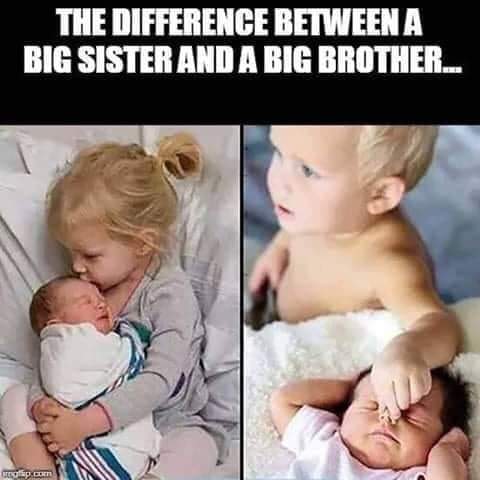

Recently, I waxed eloquent about the difficulties of articulating our core beliefs. At the time, I promised to give my own a try. Normally, I forget all my promises as soon as they are made but this is an exception. Here is my start on this one … my first modest effort at least. After all, articulating one’s world view is an iterative process, I am certain of that. It probably takes one’s entire life to get it right. Well, not right exactly … you just run out of time to finish the effort.
Overall, while I hate labels, being a ‘humanist’ is one tag with which I can live, for myself at least. Sure, it misses some of my more obvious attributes such as oneriness and boorishness (I think I’m funny even when I’m not) and stubborness (hey, I’m irish) but those are more personality traits than core beliefs and sentiments. See, this is hard.
No matter, I like this list (see above) of alleged Humanist attributes for the most part. They capture the sublety and nuanced approach to life toward which I’m drawn. Some will say that Humanism is centered too much on man (and woman) and does not encompass any higher being or power or entity. As such, it is too limited and does not inspire greater vision or ambition or even justice. After all, what is it about humans that would inspire respect, never mind adoration.
While that is a point well taken, here is how I see things. A traditional concept of God or Gods or some form of superior, even supreme, Deity can be seen as thwarting human endeavor in several elemental ways. How is that, you are undoubtedly asking (or maybe not)!
Consider the following. Divine truth obviates the need to seek a deeper knowledge about our world. For millenia, understanding was premised on first principles and sought through deductive reasoning. This led to a lot of circular reasoning and not many discoveries and breakthroughs. As a thinking species (homo sapiens) we stagnated for far too long. Second, a belief in a superior absolute also posited morality outside of the individual or tribe. It was set in stone (sometimes literally) in the form of a set of prescribed givens. Were not the Ten Commandments handed to the Jewish tribe. Perhaps it is better to generate community rules by considering what might constitute a civil and workable society. If you rely on a given set of ethics imposed from without, you had better trust the source implicitly. Goodness, when determined outside of one’s own conscience, typically is shaped and enforced by some form of punishment from a judgemental deity, the burn in Hell scenario. At the same time, some form of redemption is also available … confession, saying a perfect act of contrition, making a huge contribution to church leaders (whatever). This suggests that there always is a loophole for moral turpitude. You can sin at will as long as you repent in the correct manner, and in a timely fashion. Morality becomes a game to be played.
As I have related elsewhere, I only recall one lesson from my high school Freshman religion class (I think we had four years of such instruction but I blocked out most of it). Anyway, the good Xaverian brother (Simeon was his name I believe) told the following story. Tommy and Susie were chaste teens doing their best to follow God’s rules. One night, however, they let their passions get the better of them and went too far. He never explained what too far meant but we knew we had never been there. Suddenly, Tommy and Susie stopped, realizing they had committed a mortal sin. Fearing they might wind up in eternal flames were they not able to get to confession in time, they decided to say a ‘perfect act of contrition,’ a holy get out of jail free card for Catholics at least. Then, Brother Simeon threw in the kicker. At that very moment, a six-ton truck came over the hill, swerved into their car, and dispatched the unlucky couple into eternal Hell. It took me years before I was able to make out with a girl in a car without having a panic attack. 😦
I don’t have the time to recount all that I found objectionable in that story. Why I didn’t chuck Catholicism on the spot remains a mystery, other than the fact that dispensing with our cultural baggage ain’t easy. But I found his cautionary tale counterproductive. How could I respect a deity that would overlook a good life because of one transgression, especially one based on the chemistry He (or She) put in each of us. Or wouldn’t such a Deity accept their intent to seek forgiveness and not demand they actually say the magic words. That seems like total nit-picking to me. And just why would a just and loving deity create this species with so many weaknesses (like basing procreation which is a good thing on male lust which is deemed bad) and then expect these frail specimens to surmount all these arbitrary challenges. Was God bored one eon and decided to conjur up this experiment on earth for some form of amusement? In the long-ago moment, I was sure there were answers to my doubts and that maybe we would get them in senior year. Spoiler alert … we didn’t.
Eventually, it hit me that morality was less something imposed upon us and more something that we must arrive at on our own. To my mind the spirit of Humanism lies in the sense that we are responsible for our rules, how we observe those rules, and how we deal with violations or shortcomings. No one will punish you in the afterlife though you might suffer some consequences in this life according to commuity laws unless you are filthy rich and only abuse the common folk.
The burden and blessing of this Humanistic perspective is that each of us must articulate our own moral compass and, most of the time at least, build an internal rationale for following its strictures. Other than those other pesky humans around you, and perhaps the law as I mentioned, no one is looking over your shoulder, calculating your sins, or assessing your final punishment. It would be nice if there were such a system of ultimate justice (then we might be satisfied that Donald Trump would pay for his sins), but there is no proof of such.
I still remember as a child the milk bottle metaphor. I’ve asked many other Catholics if they recall this and very, very few (if any) have. Anyway, if your milk bottle was white, your soul was full of His (or Her) grace and God was pleased with you. If you had committed some venial sins, dark spots would appear in your bottle (i.e., soul) and there would be some price to pay for your transgressions … purgatory or limbo back in the day. If your bottle was empty, or dark, you were screwed for all eternity since you had committed at least one mortal sin (almost anything sexual fell into this category it seemed). As a horny teen, I wanted to complain to God about this one.
It took me decades to shed this irrational belief that somewhere at the center of my being was an empty or dark milk bottle. Given how I conducted my life, I could not imagine any milk remaining in the container. I sense my reasoning was flawed or, more likely, was counterproductive. I typically concluded that I already was screwed given how weak and pathetic I was. So, to my way of thinking, why change my ways now? No way I could refill my bottle with milk, I mean grace.
While the simple beliefs of my childhood fell away quickly in college, a process that clearly had started earlier (Freshman religion class likely) but which I had refused to acknowledge. In retrospect, my initial attraction to Humanism resonated with me before I knew what it was, probably because it reflected the lessons I took away from my early religious training. I was not here to adore and worship some invisible entity. Really, why would this ‘supreme being’ even care what I thought. Why, in heavens name, would such an onmiscient and all powerful entity seek my adiration or care about my fealty. Really!
No, if there was a center about which to organize my thoughts and moral sentiments, it would be rooted in how I promoted the well-being of my fellow travelers on this orbiting sphere found in the edge of a remote galaxy also spinning in the vastness of space. After all, we arguably are the most advanced species on earth and, as far as we know, alone in the universe until we get definitive proof otherwise. Perhaps we are the one creation in the cosmos capable of both understanding and shaping all about us in some larger sense … at least as we continue to evolve. Wow! Now that is a lonely and scary thought.
While it may leave one feeling isolated in some ontological sense, it eventually afforded me a sense of hope. If there were meaning in all this, it would not be handed to us in some creation narrative of apochryphal origins. It would be found somewhere in the future as we evolve toward ends we can barely imagine at present unless, of course, the cosmologists are right and we are destined in some absolute sense to wind down into a cold and dark and lifeless universe (the Big Freeze) or in a world where expansion reverses and all we see out there collapses into a tiny singularity (the Big Crunch) or in a world where exansion continues and accelerates (the Big Rip). However, let us not go to those unpleasant visions right now.
In the end, morality and ethics are not arrived at by reason alone. Emotions and baser sentiments are involved. I have little doubt that what I took away from my Catholic culture played a big role in who I am now. (I need to bblame someone.) It had nothing to do with the church as an institution, nor the litany, nor all the frivolous rules. No, it had to do with embracing what was handed down from the person of Christ as a teacher (or Rabbi). Who knows what the historical Jesus was like, or if he really existed. But the thrust of this message attributed to him, his new testament, was moving.
Forget the trivia, he apparently told his followers again and again. Focus on love, on service, on compassion for all, not just your own kind but for sinners and saints alike, for foreigners to you, and especially for those who are vulnerable and suffering. Christ’s esential message, it turns out, was the core teaching of most major movements but I didn’t know other spiritual traditions as a young man. I was exposed to this one and it made great emotional sense to me. Hell, I studied for the Priesthood for a while because of it.
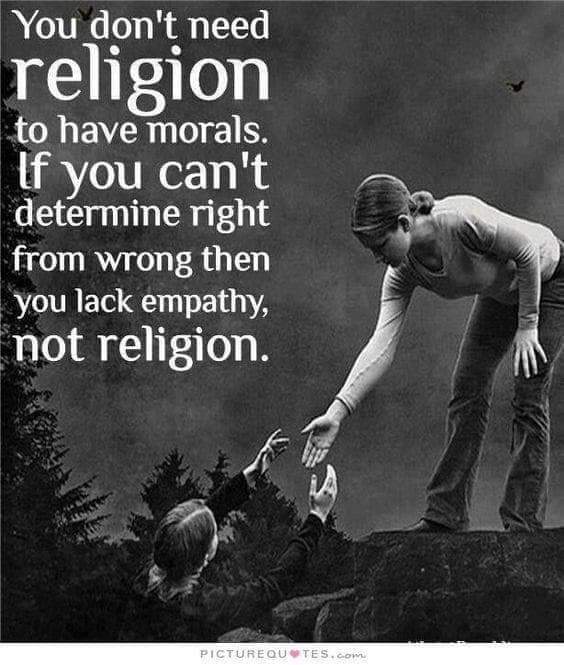
In short, I intuited that Christ was the first Humanist though I probably did not formally make that connection for a while. Really, if you skip over that image of Christ whipping the money changers in the Temple, what you see is a pacifist going around telling people to love one another as equals. He is encouraging his followers to look past differences in class and position and background and to accept all. Even more radical, he suggests they give up their worldly goods and follow him into a simple communal life. Let’s face it, the guy was the first Communist. Okay, either that or a cult leader, but not a crazy one.
Let me put a spin on what I took away from my early spiritual development, things I am sure would not have been approved by the parish Priest nor the good Xaverian Brothers who tried to educate me (and save my lost soul) in high school:
INTERNATIONALISM … I felt, even as a fairly young kid, that we were all part of one big tribe. Nation’s were arbitrary lines. Ethnicities and races were unimportant differences. We were all in this together and we had to reach ut and help one another. Isn’t that what Christ did in his examples? As a young man I could not understand why we did not do more to help feed the hungry and starving around the world. I even joined the World Federalist Society, or tried to, some one-world group that, I later wondered, had been a Commie front organization. No matter, their message seemed spot on to my young mind.
PACIFISM … Okay, I was not a total pacifist in my tender years. I felt we had to stop godless Communism and, if the Cuban Missile Crisis had blossomed into a full conflict, might well have signed on to fight. But my disgust with violence was always there. When friends had conflicts I always tried to bridge the differences and not take sides. Perhaps it was my parents arguing all the time but I had a deep aversion to conflict. Peace was embedded within me. Nevertheless, I did see some conflict as necessary. World War II was a moral conflict to stop Fascism. Perhaps, if the 40 plus percent of Americans who believe another Civil War here is inevitable in the next decade, I easily could see justification in taking up arms against MAGA extremists who would impose totolitarian rule in place of democracy and turn the U.S. into a backward and semi-feudal nation.
EQUALITY (OF OPPORTUNITY) … Fairness, I believe, has always been part of my ethical fabric. Okay, it is a vague concept, I get that. Many rich people feel it is unfair that they should pay proportionally more than someone who has little. While their is a surface plausibility in that postiton, I feel the opposite. Nor do I believe we can get everyone to equal outcomes in the race of life. It is even difficult to get all to relatively fair starting points in that marathon race. However, we can do better. There is something grinding to me that some win the genetics and wealth lottery (being born to rich parents for example) while others are born as crack babies. How can we assess the worth of others when the race is so unfair? More practically, how many contributions are lost simply because some have no chance at life?
RESPONSIBILITY OVER FREEDOM … The dominant American ethos or narrative centers around personal freedom. The ‘American dream’ posits unlimited opportunity to seek personal success and to acquire virtually unlimited material goods. Really, that’s it … you can get a bigger car or house than your neighbor. That is what it is all about? Beating the other guy is life’s most cherished goal? That’s what you might conclude by reading Forbes or the Wall Street Journal. If so, I will get off that merry-go-round, thank you very much. As a younger man, I recall a board game called ‘Life‘ I believe. If you successfully made your way around the board to the end, you would get a million dollars or something like that (the hypothetical payoff is likely higher now). I always thought … that’s it? That is what life is all about? How sad. Why isn’t the end all about helping others … saving a suffering child. How about making life a bit bearable for our fellow passengers on this perilous journey we share.
COLLABORATION OVER COMPETITION … The other part of the American narrative is the ‘lone wolf’ image. We are successes by our own efforts. The western pioneer who killed off the savages (a form of genocide) and created a homestead with the sweat of his brow has been our ideal. We still idolize the Bill Gates and Steve Jobs of the world, entrpreneurs who started out in garages or dorm rooms. In reality, most advancements have always been accomplished as collaboraitve efforts over time. Even Thomas Edison borrowed or stole much from others. I believe it was Isaac Newton (an egotist himself) who admitted that ‘he stood on the shoulders of prior giants.’ The big challenges in the future, like ‘climate change’ or dealing with the promise and perils of ‘Artificial Intelligence’ will demand unprecedented levels of collaboration and cooperation. Advanced classes at the top technical schools stress collaboration because the problems are beyond one man’s abilities. The solitary genius must give way to the team. Again, we are in this together.
EVOLUTIONISM … I’m not sure that is a real word but it reflects an important part of my world view and has been alluded to earlier. Meaning comes from where we are going, not where we have been nor where we are now. Possibility always has a future tense but is not guaranteed. Success for all (the species) requires many things discussed above like collaboration, opportunity, responsibility (for the planet) and so forth. I still recall the moment when, as a young student during a late night bull session, I swept my arm up as I waxed on about evolution and the prospect that we were in an era of transformational change that comes along once in a few millenia. I recall writing a master’s thesis on that theme back in the early 1970s.
That night and in that moment, though, I recall stopping and thinking wow … the cynic is gone and a hopeful clone who surely looks like Tom Corbett has taken hs place. My pessimism returns from time to time (things like the Trump disaster soured me). But I never have forgotten the hope embedded in the writings of Jesuit Priest and scientist Pierre Teihlard de Jardin who, while working in China, found such hope in an evolutionary perspective. Perhaps we, and all about us, were not created by a deity but the reverse. We, as evolving entities, are in the process of creating God. Just a thought.
This is just a start. Each point demands much more discussion. Each has internal challenges and contradictions. With time, I will return to these themes. Patience! You have not escaped from the twisted mind of Tom Corbett just yet.
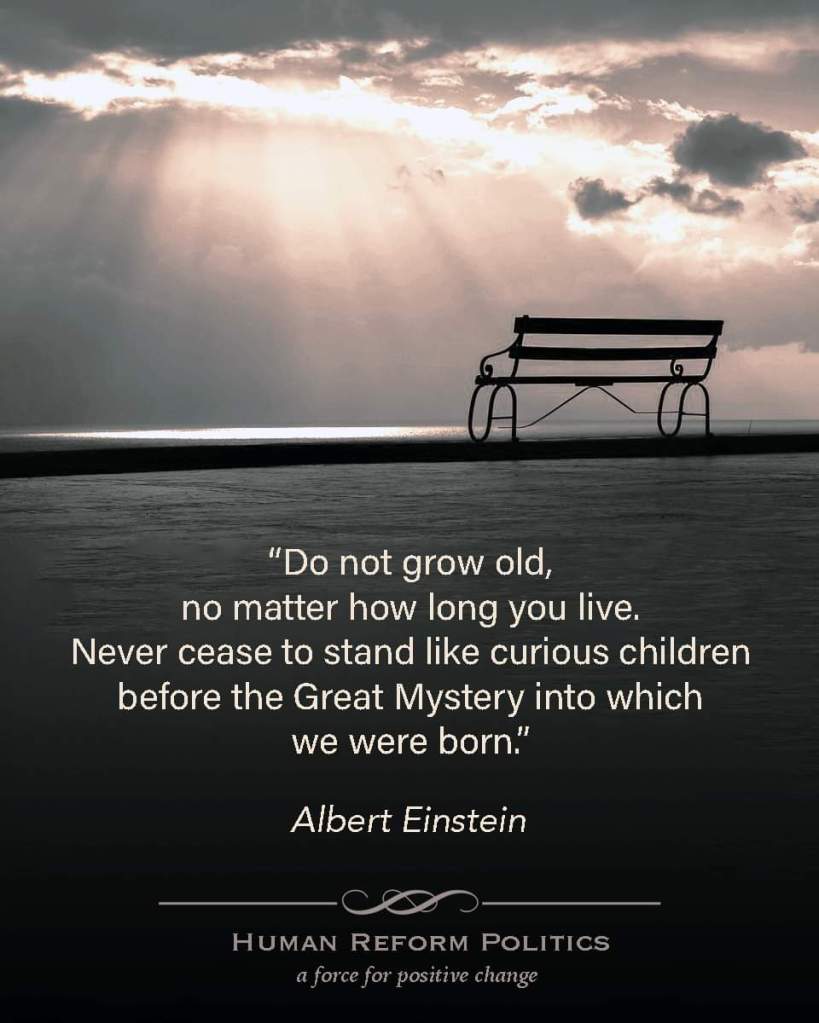
 Tom's Musings