• Sample Page

Tom's Musings

  • Poverty & Policy #3 … a ‘war’ on poverty.

    November 19th, 2023

    I ended the last post with a mention of Bob Lampman’s seminal chapter on Poverty in the annual economic report to the President (Kennedy). It cast doubt on the full efficacy of the ‘rising tide lifting all boats’ argument while suggesting that targeted public initiatives would be necessary.

    Of course, Lampman’s arguments, while pursuasive, were not decisive to the story of how poverty once again became a ‘front-burner’ issue. That tale is more complicated than one chapter in an annual report. For example, some have pointed out that Kennedy had been quite moved by the abject poverty he witnessed while campaigning in West Virginia. Others noted the book by Michael Harrington titled The Other America which appears to have reminded the nation that an impoverished segment of the population still existed in an increasingly affluent America … a group that yet remained hidden from general view. And an Edward R. Murrow documentary, The Harvest of Shame, also had an outsized impact. While each of these  contributed something to the ‘rediscovery’ of poverty, I doubt any single one was seminal.

    Rather, I believe the following happened. In the quarter-century following World War II, America experienced an extraordinary period of economic growth. In retrospect, this was not an unexpected or shocking development. We had about 6 percent of the word’s population but were generating about half of the globe’s total economic output. Our natural competitors were in ruins, bankrupt, in disarray, or all three. Moreover, the safety net enacted under FDR’S New Deal and related labor market protections (e.g., the Wagner Labor Relations Act) (surprisingly) were not dismantled when the Republicans took back power in the eatly 1950s. However, I yet wonder what might have happened if Robert Taft, not Eisenhower, had won the Republican nomination in 1952.

    During these halcyon economic times, poverty was falling like a rock, from probably half the nation (or more) during the great depression to about 22 percent at the end of the 1950s. It continued to fall through the 60s, though at a reduced pace as the easy victories had already been secured. In addition, real income more than doubled during this period with every income quintile participating in this growth. That is, both income and wealth inequality were falling sharply in what later became known as the ‘great compression.’

    We witnessed an economic environment conducive to the growth of an American middle class. This was an era of high taxes on the wealthy, of significant infrastructure investments (e.g. the interstate highway act), and strong unions … economic features that would soon come under virulent attack. It was an era where the public and private sectors worked for the benefit of all, perhaps reflecting a residue of collaboration remaining from the war effort (Note the highly effective G.I. Bill that enabled many to obtain a college education).

    During this period, the critical point is that poverty was becoming a manageable issue, a social challenge that was feasible to attack with some prospect of success. Remember that Bob Lampman had argued that an expanding economy would continue to remove people from economic insecurity. But he had thrown in a critical caveat: the rising tide would leave some boats behind because of geography, race, or physical and cognitive limitations. These ‘structural’ pockets of poverty would demand special attention and targeted interventions by federal and state authorities.

    In effect, poverty was seen as a war that could be won, something closer to a ‘mop-up’ action. Perhaps the poor will not always be with us, as the Bible suggests. In the 1960s, Nobel laureate James Tobin wrote that continued economic growth (supported by expansionary monetary and fiscal policies) when combined with targeted public interventions could yet eliminate poverty by 1976, the nation’s bicentennial celebration. Sensing such optimism and drawing upon his hardscrabble Texas roots as a teacher to poor Hispanic children as a young man, Lyndon Johnson declared a War On Poverty (WOP) in 1964. Picking up the themes that had been floating around the Kennedy administration, he created the Office of Economic Opportunity (OEO) to coordinate this war.

    To wage such a war, the generals needed two things: (1) a better understanding of the enemy, and (2) information, or intelligence, about that enemy. For the first task, Molly Orshansky, a mid-level bureaucrat in the Social Security Administration, was given the assignment to come up with a poverty measure. She did a simple back-of-the-envelope calculation. She took an older study that estimated that food absorbed about one-third of a low-income family’s budget. Then she took a more recent estimate of the lowest cost of a ‘basket’ of food items for such a family. Finally, she multiplied the cost of that ‘basket’ by three. Voila … a poverty standard.

    That crude estimate became the ‘official’ poverty measure which, except for inflation updates and a few technical adjustments, remained the government sanctioned measure for decades even after it had come under widespread attack by scholars and serious policy wonks. [For example, food represented a smaller portion of total expenditures in more recent years which theoretically impacted the multiplier she used.] Years later, when she was long retired, I heard Molly express shock and dismay that no one followed up on her crude measure with a more sophisticated alternative. But, alas, politics often get in the way of reasonable decision-making.

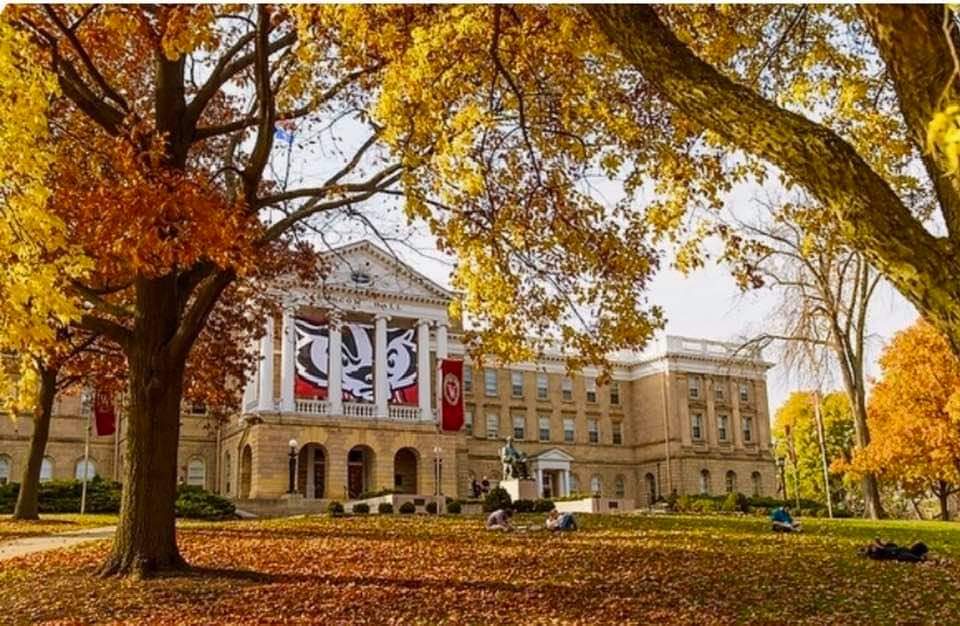
    For the second need, good intelligence, federal officials approached the University of Wisconsin for help, largely because of Bob Lampman’s connection to that campus. They wanted the school to create a kind of ‘think tank’ that would do thoughtful, independent research and analysis, the kind needed to successfully wage such a war. Though some at the University worried that getting overly involved in a controversial public policy issue would erode academic independence and expose the campus to political interference, the Institute for Research on Poverty was created in 1966 with Bob Lampman being appointed the first interim director.

    In brief, the ‘war’ had two fronts. The first focused on rehabilitating people and communities, including strengthening local participation in the policy development process. These were purposes close to Johnson’s (and OEO’s) original vision. Initiatives such as Head Start, Upward Bound, Model Cities, Community Action Programs, and too many others to mention were developed under this banner.

    The second front is best associated with what became known as the ‘Great Society.’ It involved either expanding or creating new benefits programs. We saw the creation of Medicaid, Medicare, a pilot Food Stamp initiative, along with new housing and education initiatives. Cash assistance for dependent children was made easier to access. No matter the tactic involved, this poverty ‘war’ remained front and center in most domestic policy debates. Bob Lampman himself noted that many policy makers applied a litmus test to new proposals … ‘what does it do for the poor?’

    These two fronts reflected the interests and perspectives of the foot soldiers involved. In the beginning, social work and social workers were heavily committed, abetted by President Kennedy’s 1961 address to the nation which placed social work at the center of efforts to reduce welfare dependency by focusing on rehabilitative strategies. Soon, however, economists elbowed social workers aside, pushing cash and cash-like transfers as the primary strategy in the war. Social workers conceded their initial role without much protest.

    Despite all the frantic effort and the jockying for control, there never was an underlying strategic consensus regarding this total ‘war’ on poverty. All the traditional tensions bubbled just under the surface:

    What was the nature of the problem(s) being addressed … personal failings or institutional shortcomings?

    What ends should be pursued … increased opportunities or guaranteed (income related) outcomes?

    How should the disadvantaged be helped … human capital enhancements, increased job opportunities, community rehabilitation, the remediation of personal and family dysfunctions, or the direct transfer of cash and cash-like resources?

    Who should be in charge … the federal government, the states, locals, nonprofits, or private markets.

    And perhaps most importantly, did government action help or hurt?

    As we will see, the so-called ‘war’ on poverty became a virulent political conflict centered about the very ‘war’ itself.

  • Poverty & Policy #2 … the Wisconsin Idea.

    November 17th, 2023

    As noted in blog #1, the national poverty debate has had a long and convoluted history, so let me pick up the story with a local perspective … the Wisconsin Idea or scholarship in the service of the public good. The underlying concept goes back to the early decades of the University in Madison, especially toward the end of the 19th century. Among its promoters were Charles Van Hise, an early president of the school, and Robert LaFollette, the great progressive politician and reformer. The two were classmates and became lifelong friends. Fighting Bob would become a U.S. senator and an iconic figure in national politics. The Public Policy school at Wisconsin is named after him.

    Another early UW president, Thomas Chamberlain, captured the normative foundation of the Wisconsin Idea as follows: ‘scholarship for the sake of scholars is refined selfishness. Scholarship for the sake of the state and the people is refined patriotism.’ A wonderful sentiment to be sure, but I seriously doubt he would get tenure today.

    During what was called the ‘Progressive Era’ early in the 20th century, UW faculty members such as John Commons, Charles McCarthy, and Richard Ely worked with members of the Wisconsin legislature on a number of issues that later became national initiatives. These include a workers compensation program, a progressive income tax, unemployment insurance, and various labor market improvements. Wisconsin had become the ‘laboratory for democracy’ as President Teddy Roosevelt would assert.

    Perhaps more importantly, these Wisconsin scholars helped elevate the professionalism of the state legislature by developing an independent and skilled staff capability, on occasion taking such supportive positions themselves. These structural reforms wrested control of the bill-writing process from powerful corporate special interests who previously had drafted legislation for their own narrow purposes. Legislation now aimed at the common good became more feasible.

    One of Ely’s students, Willard King, wrote a tractor titled Wealth and Income of the People of the United States. His work spurred interest in determining how much of the nation’s income was concentrated in the top 1 percent of the population. He and others who followed his lead found that inequality was growing during this period, with the top 1 percent commanding 18 percent of all income in 1913 before rising to a 24 percent share by 1928, just before the onset of the Great Depression. (It might be noted that a similar high in the concentration of wealth was reached in 2007, just before our most recent economic crash.)

    The 1930s saw the economic crash of all crashes. The economy was in ruins, with at least one-quarter of the labor force unemployed, and poverty rates estimated in the neighborhood of 60 percent using contemporary standards (which did not exist at that time). Quite naturally, economic want resurfaced as a dominant public issue. When President Roosevelt wanted academic help to confront this national emergency, he turned once again to the University of Wisconsin. He tapped Ed Witte, a student of John Commons, to head the Committee on Economic Security. Witte, in turn, brought several other Wisconsin experts to D.C., including Arthur Altmeyer and Wilbur Cohen. Members of this team drafted and helped implement the Social Security Act, which reversed the existing consensus by establishing a dramatically expanded federal role for dealing with economic matters in this nation.

    Fast forward a quarter of a century. Robert Lampman, a student of Ed Witte and also an economics professor at Wisconsin, was serving on President Kennedy’s Council of Economic Advisors. Along with Burt Weisbrod, Bob wrote the seminal chapter in the annual economic report to the President that has often been credited with inspiring the subsequent declaration of a War on Poverty by Kennedy’s successor … Lyndon Johnson.

    Arguably, ideas and scholars from Wisconsin had, in fits and starts, fundamentally altered the public sector’s role in economic life. The Dickensian laissez-faire free for all that prevailed for the most part in the 19th century had been challenged. In its place, a more vigorous role for government had been instituted, one designed to ensure a reasonable playing field and which mitigated the worst outcomes associated with unfettered free markets. This new consensus enjoyed wide support in the post WWII period. Even Republican President Dwight Eisenhower endorsed this broadened role for government.

    Now, however, a more ambitious role for the public sector had been set … the total elimination of want and economic security. Had an unreachable goal been set? Was failure inevitable? Was this a bridge too far?

  • Poverty & Policy #1 … a compelling challenge.

    November 16th, 2023

    Poverty as a public concern has been with us for a long time. That the issue has endured is a testament to just how compelling it is, despite being so contentious and resistant to easy resolution. Just why is it so compelling, at least to us self-described policy- wonks at least, while remaining such an annoying distraction to most of society?

    At the end of the day, poverty is what we call a ‘wicked social problem’ where we are confused about: (1) the nature of the problem; (2) the theories and evidence brought to bear on the issue; (3) the ends and goals we are trying to achieve; and (4) the means for achieving those identified ends. Really, who doesn’t want to spend their professional life tackling that kind of hopeless challenge.

    I am reminded of a story I shared at my retirement party. I noted what a marvelous career I had fallen into … a career where I got to fly around the country to work with the best and brightest on some of society’s most vexing problems: Poverty and welfare reform and the optimal structure of the social safety net. For me, this was like working in a professional candy store. All sorts of policy delights were enticingly laid out before me. All I had to do was pick and choose which would engage my attention. If I were to become bored, I could move on to the next. I could hardly have hoped for anything better.

    My career was great fun but also challenging in the extreme. Consider the following: President Kennedy promised to put a man on the moon within a decade, and we did it; President Johnson launched a war on poverty shortly after, with not such a great result. Conquering space was primarily a technological challenge, while poverty and welfare reform are complicated by a set of underlying human factors. One of my favorite mantras during the height of the welfare reform debates was that ‘I knew I was approaching the truth when no one else agreed with me.‘

    We often date our national focus on Poverty to the 1960s. But there is, of course, a much longer history. This ‘poverty as a public issue’ story is not unimodal, rising once to national prominence and then fading from view. Rather, it is cyclical … rising and falling several times.

    With rapid urbanization, industrialization, and a resurgence of immigration (particularly from Southern and Eastern European countries along with a second blight-related surge from Ireland), poverty emerged as an object of significant public attention in our post civil war period. In response, there arose several policy initiatives including Charity Organization Societies (to bring some coherence to the confusing array of local efforts), the Scientific Charity Movement (to bring some rigor to the investigation of distressed families), and a number of Settlement Houses (to help mostly poor, recent ethnic immigrants integrate into American society). With the exception of a Civil War pension program, virtually all aid to the poor was local, much of it private, and all of it disorganized.

    Above all, a fundamental aspect of the subsequent national debate about poverty was evident: the distinction between poverty and pauperism, between institutional or environmental explanations of economic vulnerability and those explanations based on perceived personal failings. It was the classic distinction between what was thought of as the ‘worthy‘ and the ‘unworthy‘ poor, a distinction that would remain with us through time and color all future policy debates. Those debates, as you will see, became heated at times. This would not be a professional focus for the faint of heart.

    In the next blog in this series, I turn to what is called the Wisconsin idea where scholarship is devoted to society’s more demanding issues.

  • American Poverty … an old and new story.

    November 9th, 2023
    irp-gro
    up

    As you know, I spent the bulk of my professional life at the Institute for Research on Poverty at the University of Wisconsin. It was an ideal place for an itinerant thinker and social philosopher like myself. It also was a place where I forged several irreplaceable associations. So, before I launch into the substance of the next several thematic blogs, a bit of context.

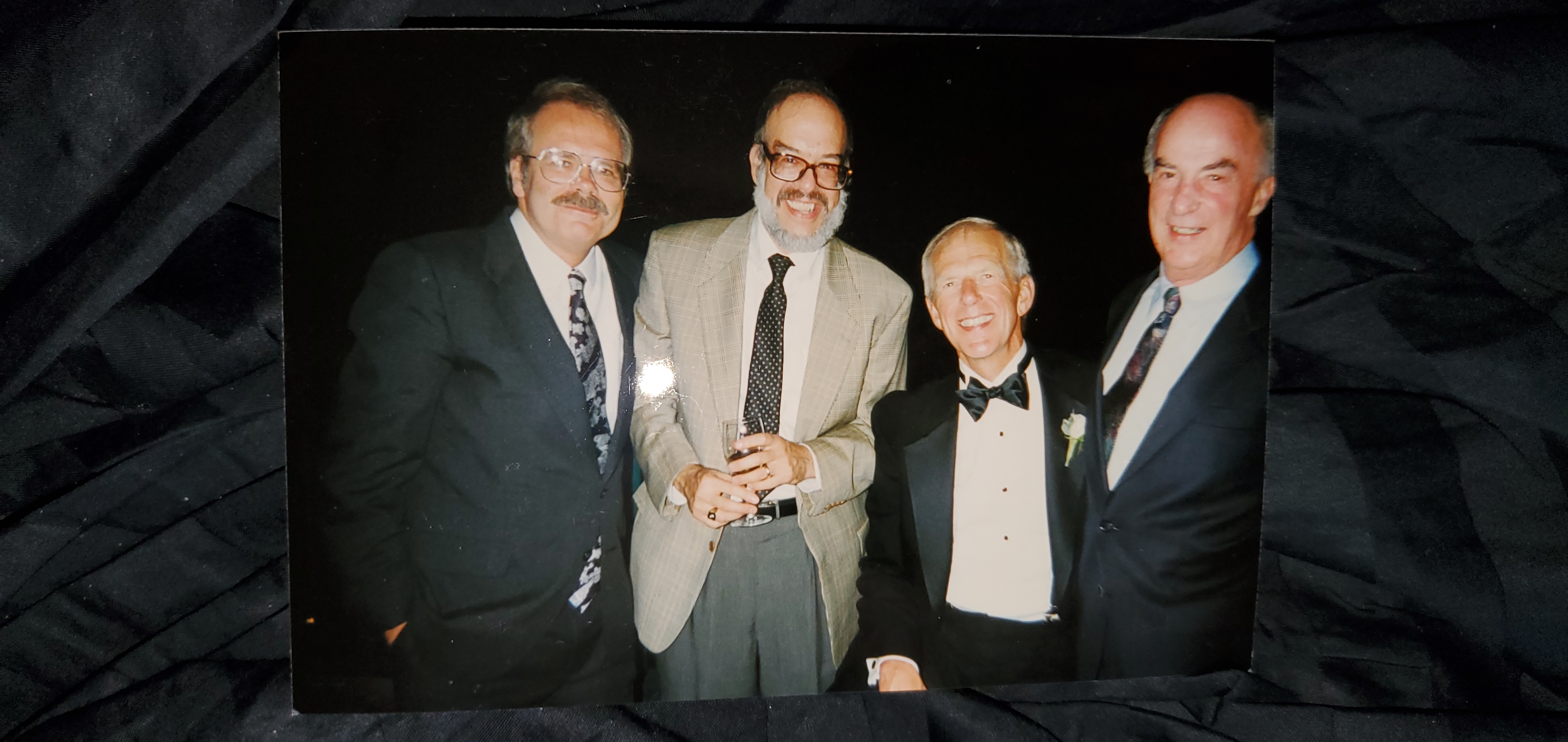
    Over the next couple of weeks, I will be sharing the published version of my final talk given at an Institute function. Bob Haveman (2nd from right in the pic above which was taken at his stepdaughter’s wedding in New York) called me one day in 2013. He asked if I could quickly drum up a plenary talk on ‘poverty as a policy issue‘ since the invited speaker had fallen ill. I was retired at this point, but thought … why not? BTW … the others in the pic include Irv Piliavin (far right), Irv Garfinkle (2nd from left), and me (far left). That was quite a crew. I feel grateful to have known and worked with each of these fine scholars.

    The talk I managed to drum up quickly was a hit. They were so impressed that I was next asked to turn my notes for that talk into an article, which I did. The resulting piece in FOCUS garnered much positive attention and comment. After that, I thought little about it until recently. I seldom dwelt on past works. However, a discussion with a good friend not long ago reminded me of this piece, though I can not retrieve why in the world it came up after all these years. Nevertheless, I retrieved the article and forwarded it to her. She, in turn, surprised me by suggesting that I serialize it for this blog.

    I hesitated. Really? Who would care? But I did share it with a neighbor of mine who is a rather renowned infectious disease doc at the University of Wisconsin hospital and a man of extraordinary intellectual interests. He had mentioned wanting to know more about social policy (his curiosity about things is endless). He subsequently responded enthusiastically to the piece, suggesting that this gem should be published in several well- known outlets. That simply made me smile, but the notion of at least distributing it on this blog moved once again to the front burner.

    So, here we are. These next several blogs are based on an article in the Institute for Research on Poverty’s primary publication, FOCUS (vol. 30, No. 2, Fall/Winter 2013-14. While I will remain faithful to the original, I likely will take some liberties. For example, I will excise some material for brevities sake and may add a few comments as needed. Still, poverty has not been a hot topic over the past decade or two. Yes, there is angst about inflation and an eroding American dream for too many, but income poverty does not generate the attention and political obsession it once did. When it is raised, the question is posed in terms of rising inequality, not absolute poverty.

    Even with these possible modifications, what you will read is essentially what I first shared some 10 years ago. As the saying goes, the issue has legs. Moreover, much to my chagrin, I doubt there has been a great deal of ground-breaking research or innovative thought in the past decade. Poverty as an intellectual object of concern (or a political focus) has waxed and waned over time. We are in a trough at present.

    When the Institute for Research on Poverty was created some 58 years ago as part of the Federal government’s War-On-Poverty, there was little research on the issue of poverty per se. The public mission of ending poverty (as expressed by President Johnson in 1965) spawned an avalanche of studies over the next several decades. Public interest in the issue was intense, and the political disputes surrounding the topic were of the ‘life and death’ variety. I speak from experience when I say that dipping one’s toes into the poverty and welfare swamp was not for the faint of heart. You risked offending someone no matter what you said. My favorite mantras from those years was that “I knew I was approaching the truth when no one agreed with me.”

    All that changed about a decade after the 1996 law purportedly ‘ended welfare as we knew it’ was passed. When it became certain that the anticipated catastrophic predictions attached to that law had failed to materialize, interest in poverty faded from view. It was as if someone hit an off button

    So, I am reasonably confident that what I said in 2013 would hold up today. After all, one of my other favorite mantras I used during the height of the ‘welfare reform’ wars suggested that there really wasn’t anything new being proposed as a solution despite all the fanfare associated with each new political pronouncement. Governor Tommy Thompson’s (a politician known for his dramatic welfare innovations) announced his famous ‘Learnfare’ reform (conditioning welfare grants on school attendance) in the late 1980s as a bold new idea. In reality, it was little more than a regurgitation of practices that had routinely been employed in the 1930s through the 1960s by welfare workers to determine the worthiness of poor applicants for assistance. Still, the world greeted it as something fresh and new, thus putting him in the national spotlight for a while. Senator Patrick Moynihan, the welfare expert in Congress, referenced 18th century English Speenhamland laws when pushing his 1988 set of reforms. Of course, as an ex Harvard Professor, he was one of the few politicians conversant with history. For most, ancient history was anything that occurred before they were elected to office.

    The bottom line is this. I remain confident that the The Rise and Fall of Poverty as a Policy Issue remains as relevant today as when these ideas were initially shared. By the way, in future blogs in this series, I will refer to each new publication as Poverty and Policy followed by a number and a label. It just may be that I will sneak a few traditional blogs into the mix. So, pay attention.

    Watch for the first of the series (Poverty and Policy) over the next few days. Sometimes the magic works, sometimes it doesn’t. Let’s try it and see.

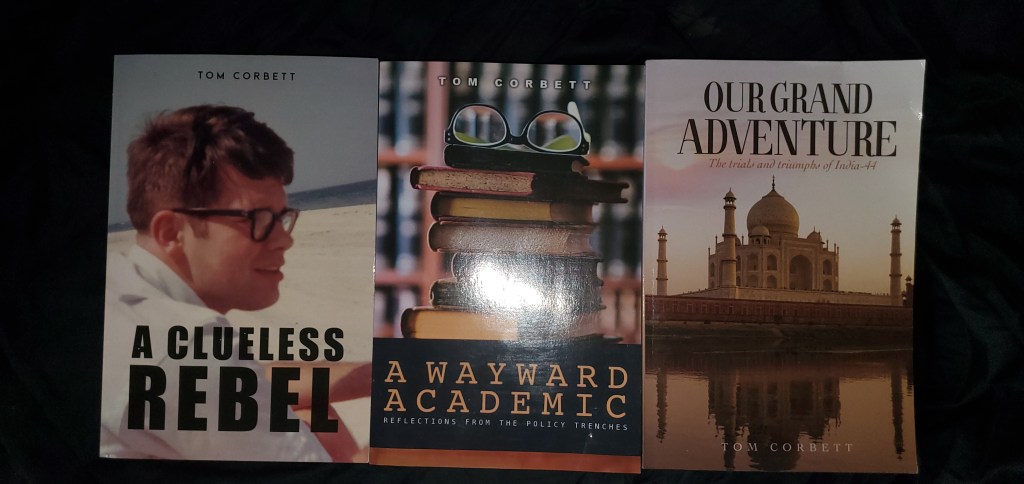
    Finally, if you want more of my thinking on this topic (and who wouldn’t), track down two of my books … A Waward Academic: Reflections from the policy trenches and/or Confessions of an Accidental Scholar.

  • Random memories … marriage.

    November 6th, 2023

    I lied about the previous blog being the ‘final’ reflection. I didn’t lie intentionally. It is just that memories, or more accurately one more return to these old pictures, keep me rooted in the past. At my age, this is not a bad place to be. After all, memories represent the bulk of my consciousness.

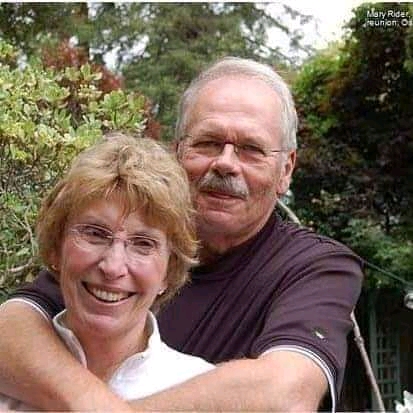
    The above pic was from our wedding day. Mary Rider and I had been living together for a year or so before we decided to wander over to the courthouse just before Christmas in 1972. Upon finding a judge who would let us marry in our own fashion, we set a date and did the dirty deed. Our witnesses were two fellow workers we strong armed into performing their required roles.

    No one else even knew about this quiet ceremony. We wanted to keep it all low keyed. But marriage is not a ceremony. It is an understanding, more akin to a set of spoken (sometimes unspoken) agreements. Our particular set of understandings would endure (and thrive) for half a century. It proved a remarkably good arrangement.

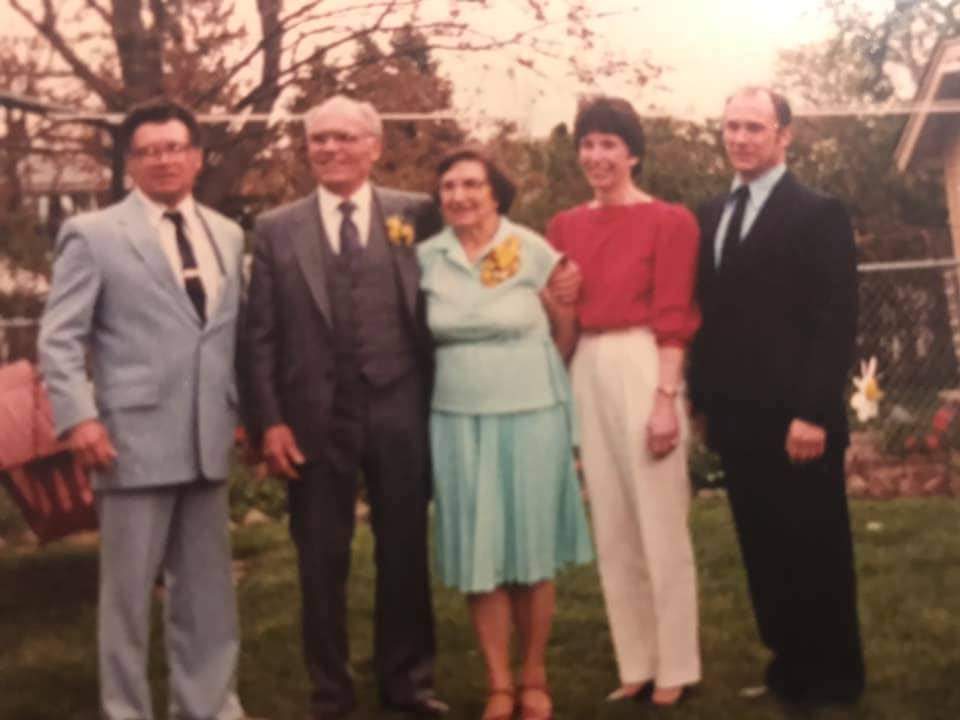
    I soon got to know Mary’s family … her parents and her two older brothers (see above pic). The shock (for me) in adopting a new family was located in their normality. Mary told me that she had never heard her parents argue. I was incredulous. I had never heard my parents be civil to one another unless in public. But it was true. Her folks got along splendidly and seemed to appreciate one another. I had to recalibrate my assessment of relationships, which had been very negative based upon my own childhood.

    That childhood had ingrained within me a negative set of expectations about love and marriage, and commitment. Not surprisingly, I had been anti-commitment in the extreme as a young adult, viewing it as something akin to a life sentence. Somehow, Mary had penetrated the barriers I had erected. I’ve thought hard about her technique. Apparently, she didn’t seem to be trying to nail me. In the end, that proved quite effective. That’s the best I can do.

    Mary had a meteoric rise through Wisconsin Government to the position of Deputy Director of the Wisconsin Supreme Court. Along the way, she earned her law degree with honors. As you know, I made my way into academia, mostly with smoke and mirrors. She, on the other hand, had real talent as a manager. I know she managed me real well.

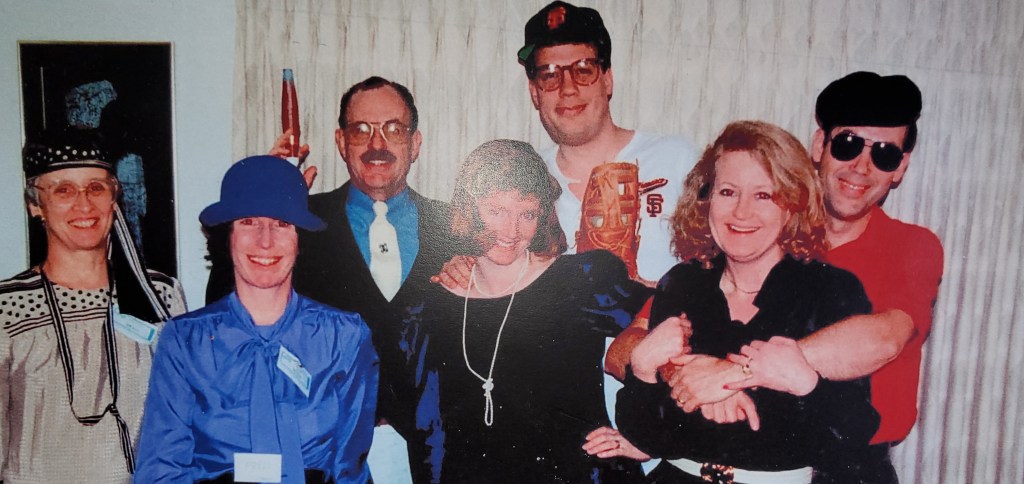
    We both reveled in each other’s careers, getting to know some amazing and accomplished people along the way. The pic above is one example, taken during a themed party at our house. The men in the back row were my colleagues. The late Bill Prosser (on the left with a cigar) was a senior federal official I got to know well during my work in DC. When the pic was taken, the baseball player in the middle was a junior economist at UW. He eventually became the campus Provost and is now the President of the University of Oregon. The one on the right was a sociologist at UW at the time. He went on to become a Dean at UW before taking the position of Provost at Oklahoma State University, though he is now retired. (He is a Native American who was born in that state, and wanted to return to his roots.)

    I also got to know many from Mary’s professional world … lawyers and judges and other legal types. We were blessed to have fascinating positions and to interact with such accomplished and bright people. Blessed indeed. Our lives never lacked for intellectual and social stimulation. And we were involved in many state and national issues. It was never a dull life.

    One court story. Mary came home one night rather upset. She noted that the Legislature wanted to kick the Supreme Court out of the Capitol, casting covetous eyes on the space. ‘So what,’ I responded in my usual sympathetic manner. ‘You don’t understand,’ she responded (I seldom did). ‘The justices won’t move unless I find them a place looking over the lake. And worse, I will have to get them something with seven corner offices on the same floor with that lake view, all with equal space. They will be there with their measuring devices making sure that no other justice did better than they. I don’t think that even possible.’ I managed academic prima-donna’s at my research institute, but they were sweethearts compared to the Court Justices. In the end, this silly idea fizzled.

    Most of our life together, however, probably was no different than any other marriage. It helped that we had our own interesting careers. We were not dependent on the other for meaning or a sense of accomplishment in our individual lives. I think that can be critical to a long relationship. You need to be comfortable in your own life if you are not to be a burden on the other, or expect too much from them.

    Still, we did do a lot together. For example, we traveled a lot, taking in many sites around the world, and we traveled well together for the most part (which is a good test of compatibility if you are considering marriage). In fact, our basic patterns and interests were in sync. We agreed on not having children, on politics, on basic values, and on spending habits. Nothing is more important over the long haul.

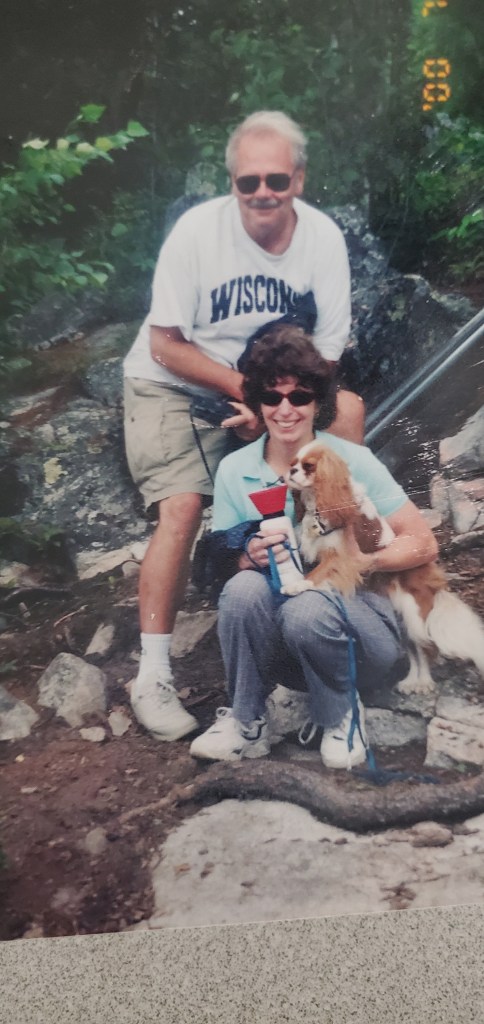
    Yet, some of the best times were not that far from home. Mary’s dad had built a cabin up on Burntside Lake in Northern Minnesota. We would spend time up their each summer. The pic above was taken up there with Ernie, our pet Cavalier. I knew my place in the household pecking order. If I fell over the boat on one side and Ernie the other, I knew who would be toast if Mary were forced to only save one of us. I’d be toast without question.

    As I said, we had a good marriage and partnership. For over four decades, all was well. Then, about a dozen years ago, I noticed changes as did others. In fact, I was in denial of the obvious for some time. Eventually, even I had to accept the reality that Mary had early onset Alzheimers.

    For those with loved ones so afflicted, it is known as the ‘long goodbye.’ The person who was such an important part of your life slowly slips away from you. At first, the changes are imperceptible. In the end, the disease ravages the brain rather completely. You only have memories left.

    Mary needed professional care for the last four years of her life. Still, there were good moments. The final picture is of Mary at Brookdale Memory Care facility with her niece. I have always loved this shared laugh they had. Such moments became increasingly rare, however.

    During the Covid lockdown, we could only see our loved ones virtually (via computer). I recall the staff person holding the screen in front of Mary while saying that her prince charming wanted to say hello. On that first such visit, she kissed the screen … a heart-warming moment. In subsequent such visits, she would look, wrinkle her nose, and walk the other way. The staff person would run after her repeating. “Mary, it is your prince charming.” At that, Mary would break into a run. Funny … yet sad at the same time.

    In the end, it proved a blessing that she passed. Still, she gave me a lifetime of good memories. And who else would possibly love a sad sack like me? I was a lucky man. 😌

  • A Final Reflection?

    November 2nd, 2023

    If you will permit me, I’d like to share a few comments on my life at the University of Wisconsin or, to be more precise, the Institute for Research on Poverty. I spent some four decades there, in one fashion or another. I did research, taught undergraduate and graduate classes, helped run a nationally renowned policy research institute, consulted with officials from all levels of government, cemented ties between academia and various institutions in the real world (think tanks, evaluation firms, the philanthropic community), raised a great deal of money, gave untold talks to academic and policy audiences, served on numerous committees, wrote uncounted reports and articles and book chapters, and so forth. And yet, I was never a formal part of the university community. I remained, more or less, an independent entrepreneur who exploited the academy as a platform from which to operate.

    How did I get to this unique position? Professionally, I started out as an analyst with the State of Wisconsin. That proved a blessing in disguise since I formed a love of policy work before being exposed to the stifling aspects of the academic culture. After about 4 years of working for the State of Wisconsin, I migrated the mile or so down State Street to the University of Wisconsin. I enjoyed my life as an analyst for Wisconsin’s social welfare programs. As was my want, however, I was never satisfied with doing my formal job since that was never stimulating enough. So, I was always searching for new mischief in which to get involved.

    Early on, for example, I realized that the paper basis for managing income maintenance and human service programs was outdated (this was in the early 1970s). We had to move forward to the emerging digital age, which was rather advanced thinking back in those primitive days. Perhaps I thought boldly because I knew nothing about computers … zilch, less than nada. Ignorance easily can generate foolish and excessive zeal. Still, I joined several other young turks to push for the computerization of these programs, even in the face of initial opposition from the powers that be. You can imagine our naivete. Still, we were a stubborn lot. Eventually, Wisconsin became the first to develop and implement a computerized system for managing the major welfare programs and, once again, a model for the nation.

    Since I cannot tell this remarkable story here, I do recommend reading my memoir titled A Wayward Academic: Reflections from the policy trenches. (See pic below, the one on the left).

    But let me move on to the university. Much in my life happened by serendipity. That is, little was planned or intentional. Becoming a quasi-academic was no exception. As I noted, I was involved in many projects as a state analyst. One day, my state bosses (who had little faith that academics had anything of substance to contribute) told me to work with an egghead from the University (Irving Piliavin) who had an idea for a research project. Eventually, it was funded by the federal government. Out of the blue, he called and asked me to move to the Institute for Research on Poverty where this large, complicated project would be housed. He needed someone who knew how government worked. He assumed I did, and even better, I came cheap. I thought about his offer for 5 seconds (I was giving up a civil service position after all) and said yes.

    As the two-year project wound to a halt, I concluded that this academic lifestyle was better than working for a living (despite seeing first hand the tensions and driven work habits of scholars at a top research university). But I first needed a doctorate, which I managed to obtain only after many years and, in the end, more as a gift than anything earned. Doctoral studies were not a difficult process for me. I recall working harder in high school. But I was always distracted. I never stopped working on an array of policy projects that interested me. The real world kept dangling interesting and amazing issues before me to distract me from the tasks at hand. I must have had an attention deficit disorder. Even while taking classes, I was lured into playing a major role in a legislatively mandated welfare reform study. Getting a degree could not compete with what I termed the enticements available in my policy candy store.

    I never thought of myself as an actual student. I was older and already had tackled a set of tough challenges. Besides, my nominal dissertation advisors were my colleagues, not mentors. I had bailed out several of their research projects with my knowledge of how policy operated in the real world. I also had wowed them with my Prelim answers. One of my committee members publicly stated I was the smartest student to come through the program. I knew that was not true, but it was nice to hear. I believe they were confused by the experience I brought to the table and my verbal skills. Having barely passed high school algebra, my quantitative skills were decidedly lacking. When they realized I would remain an ABD (all but dissertation) for life, they dummied up a plan to get me a degree by hook or crook

    Upon being handed an undeserved degree, there was no way I was leaving. I already had a robust agenda of projects to keep me busy. So, I remained at the University as a researcher and then scientist … academic positions but not with faculty status. I soon began teaching policy courses in the School of Social Work where I proved an inspiring teacher. I was always an entertainer at heart.

    This was perfect for me. I had maximum flexibility and freedom to do what I wanted, as long as I could raise my own money. That was no problem, I was good at that. In fact, the university occasionally made me ‘take a month’ off despite the fact I had plenty of money banked in my personal account. It was a rule I was told, the rationale for which escaped me.

    Being identified with the Institute for Research on Poverty (IRP) proved another blessing. This was the premier academic-based research entity on social policy in the country. Being associated with it (and being in a management position there by the 90s) opened up many doors. Everyone assumed I was an expert. IRP had been created as part of Lyndon Johnson’s War-On-Poverty and has remained in business as a designated federally sponsored institute almost 60 years later.

    Eschewing a typical academic position proved a blessing, in my mind at least. Conventiomal scholars must, especially early in their careers, focus on narrow issues. They must drill down, publish a lot of what I consider narrow papers in provincial journals with limited audiences. Later in their careers, they can focus on broader and more meaningful issues of real importance. Besides, I wanted to remain involved in the real world. I learned a lot from interacting with real people and programs. The scholarly ‘literature’ was only one source of information

    Hell, I was too impatient to do that insular scholarly stuff. I came of age professionally when poverty and welfare issues were front burner items. I surely was not going to waste a dozen years or more earning my academic bona-fides while the welfare wars were raging in Washington and State capitols. That would be like showing up for the war a week after the armistice had been signed.

    For about two decades starting in the mid-80s, I plunged deep into the very guts of the welfare and poverty wars. I was on the speed dial of reporters around the country and sought after as a consultant and public speaker. More critically, I had not been pigeonholed as an expert in a narrow area as scholars often are. I could, and did, take the big picture, often reframing traditional disputes in refreshing ways. I had freedom to select which issues to take on and how to approach them.

    In 1993, just before heading for Washington to work on Clinton’s welfare plan, I wrote a piece for FOCUS (an IRP publication popular with academics and policy wonks) titled Child Poverty: Progress or paralysis. It was a synthesis piece that integrated perspectives and ideas from across the political spectrum. I was stunned by the popularity of the ideas contained in this article which I almost didn’t publish it because I thought the ideas old hate since I had used them in many of my talks. A research assistant working for me changed my mind on that score, thank God.

    This piece, as it turned out, took the policy and scholarly world by storm. At the center was a metaphor that employed the image of an onion where different reforms represented distinct layers. I argued that what had been thought of as contradictory ideas really were complementary initiatives that addressed separate issues or subgroups within the population of vulnerable families. This seemed obvious to me but stunned the policy world. However, I doubt I could have published this (and similar pieces popular with policy audiences) if I were mired in the narrow and provincial world of academia. My unique position as a free lance academic entrepreneur gave me unusual lattitude to exercise imagination and function outside conventional boxes.

    Over the years, I worked on virtually every major initiative to come down the pike. As laid out in A Wayward Academic, my involvement in these issues typically came with a call or request to get involved. I did not have to seek out interesting topics. They literally were thrust upon me, for better or worse. That is, opportunities fell into my lap.

    Early on, I had worked on several large and conventional research initiatives … the use of discretion in welfare decision-making, the under- subscription of wage-bill subsidy programs, a longitudinal study of homelessness, an exploration of the welfare migration dilemma, and several other conventional academic topics. While I was competent in these traditional studies (actually very good at managing large-scale data collection efforts), I was easily bored. I wanted bigger challenges that cut across distinct policy issues and narrow siloed questions. My strength lie in seeing broader issues and reframing them in ways that others couldn’t or at least didn’t.

    Let me just note a few of these larger and more compelling issues to be found in my policy and intellectual candy store: helping legislate work-oriented welfare reform initiatives in Wisconsin and elsewhere, developing one-stop work and welfare model programs, exploring why integrated human service models fail and what can be done about that, developing models for critically examining reform proposals to increase the prospects of success or seeing changes on the ground that others failed to see, updating evaluation methods as welfare programs evolved beyond income support initiatives, theorizing about the importance of culture and institutional frameworks to reform efforts, reconceptualizing and updating the official poverty measure, articulating new approaches to human service integration schemes, launching successful ‘peer assistance models’ for stimulating and developing new reform concepts, updating and advancing the social indicators movement, and advancing a new arena of scholarly study … institutional ethnography. There are others, but let us move on.

    Of course, all was not wine and roses. Being at the forefront of the welfare wars, one was bound to create enemies. Tommy Thompson, long time Wisconsin governor and HHS Secretary under Bush (the son), disliked me, an animus that threatened the relationship between IRP and the state. But I began working with his policy advisor and welfare expert, Jennifer Noyes (pictured below).

    Over time, we repaired the fractured association between academia ((IRP) and the real-world (the State of Wisconsin). Later, I worked hard to get Jennifer to the University (and IRP) where she became a wonderful colleague and friend. She now serves as a top assistant to the Chancellor of the entire campus.

    I cannot imagine a better career. My standard line when asked what I did was this … I flew around the country to work with the best and the brightest on society’s toughest challenges. I loved it, but it was exhausting. I would arise at 5 AM each morning and get to the campus by 6 or 6:30. Even in DC, I would get to the Humphrey building so early that I would be checked in by night security. The workload was unending. I still recall putting talks together on the plane to some event and planning class lectures on the return flight. And yet, I never could get over the fact that they paid me to have this kind of fun.

    If I did make one mistake, it was letting others talk me into putting my name forward for a tenure track position in the School of Social Work very late in my career. Whatvin gods name was I thinking. All that did was add some additional burdens onto my already exhaustive schedule with absolutely no advantage for me. But I was such a people pleaser I went along with this fiasco. It likely was headed for disaster though we will never know. I retired from teaching and administration before any decision came due. I would continue my consultation, research, and writing for another decade or more.

    I was retired when I got a call from Bob Haveman one day. They were launching an IRP initiative to bring in professors who taught poverty courses from around the country. (A pic of the 2015 class is above … I’m the gray hair head in the back row). The intent was to employ IRP associates to upgrade the skills of those training the next generation of policy wonks. A long-time IRP affiliate (Rob Hollister from Swarthmore College) was to give the plenary talk that would set the tone for the week. However, he came down with an illness at the last moment. Could I fill in?

    I had given so many talks on a variety of topics over the years. ‘Sure,’ I responded, ‘Why not.’ Then I reflected that I had not been thinking about these issues for a while, and this was such a last minute request. But the magic never disappears fully. I threw something together that, to my surprise, wowed the audience. I was asked to write up my notes for a FOCUS piece which came out in 2015. It was to be my final contribution.

    This is a long segue into where I’m hoping to go next with this blog. That last talk (and subsequent article) is a decent summary of my concluding thoughts on a rewarding career. So, I will share it with you, in bite-size pieces, over the next several blogs.

    I’m sure you cannot wait!

  • Yet another reflection.

    October 29th, 2023

    The picture above was my college graduation shot. I was quite pensive, even serious. I could easily have been mistaken for a business major heading for a Wall Street career. As discussed below, nothing was further from the truth. It might be more accurate to describe me as a quiet, perhaps clueless, rebel in training.

    Most likely, I was reflecting on all the changes that had taken place since I had left the seminary three years earlier. Or perhaps I was anticipating the further changes I would experience in India as a Peace Corp volunteer. The metamorphosis I experienced in those so-called transional years was fundamental and profound. I emerged from a cocoon embracing, perhaps suffocating within, a Catholic and conservative working class culture to become someone with an insatiable curiosity about the world and a desire to change things.

    I

    A quick note on my seminary experience (above, I am with my seminary roomates … both named Peter). A general and likely religious inspired desire to do good led me to the seminary. I joined a foreign missionary group partly because I wanted to help the less fortunate in some material manner. What better way to sate that pervasive Catholic guilt and fulfill Christ’s core message. Go forth and do good!

    Eventually, the obvious dawned even on a slow learner like me. Really believing in God was a prerequisite for the job. That, it finally hit me, was a job requirement one could not fake, at least not easily nor for long. Besides, there just might be more appropriate ways to save the world, like this new Peace Corps thing. But that would have to wait until after college.

    I returned home in the fall of 1963. I found out that Holy Cross, the Catholic College I would have attended straight out of HS would not accept spring semester applicants. I’d have to wait until the fall. That was just the excuse I needed to apply to Clark University, also located in my hometown (attending school out of town was financially infeasible). In truth, I was intrigued by this place known within the local Catholic community as a den of atheists and Communists. I had not met any of these derelicts to date.

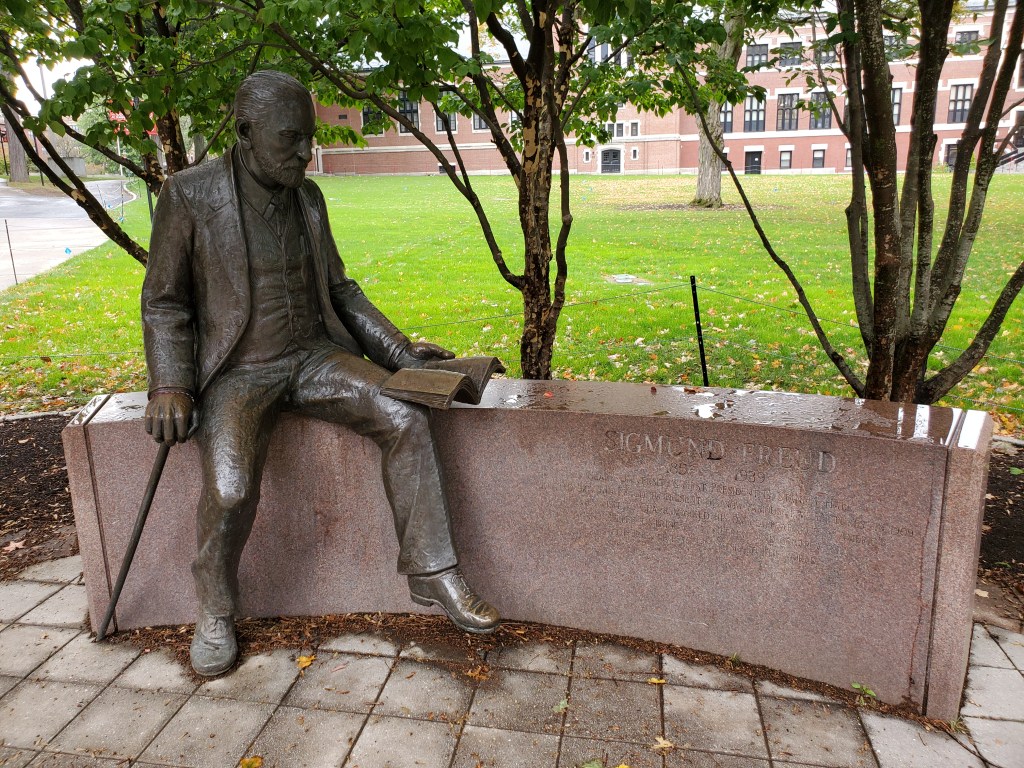
    Serendipity was undoubtedly at play here. Clark was a small, liberal arts school with an interesting history. It was founded as the 2nd Graduate school in the U.S. (after John’s Hopkins). When Sigmund Freud lectured in the U S., he came to Clark (that is a statue to him above.) Later, Robert Goddard (known as the father of the space age) developed the liquid fuel rocket to further his dream of space exploration. Over time, Clark settled into a niche as a very good, though not necessarily a top-tier school. I wouldn’t have gotten in if it were, having been a middling student at best early on.

    Suddenly, I was thrust into a perfect environment. It was small, intimate, with an atmosphere that invited risk-taking and free inquiry. I found like-minded intellectual adventurers (including several graduate students) who joined me as I explored the boundaries of my existing world view. We would spend hours (sometimes pulling all nighters) debating the issues of the day as we tore apart the presumptions with which we entered school and painfully erected our new world views and moral compasses. In the end, I had undergone a radical change. I have little doubt that I owe much of whom I am today to my days at Clark. Being a child of the turbulent and activist 1960s helped a bit as well.

    As I approached graduation, I went back to the same impulses that had drawn me into the seminary after high school. Now, however, I had a better sense of who I was. I would do a kind of missionary work but with a more secular mission … the Peace Corps.

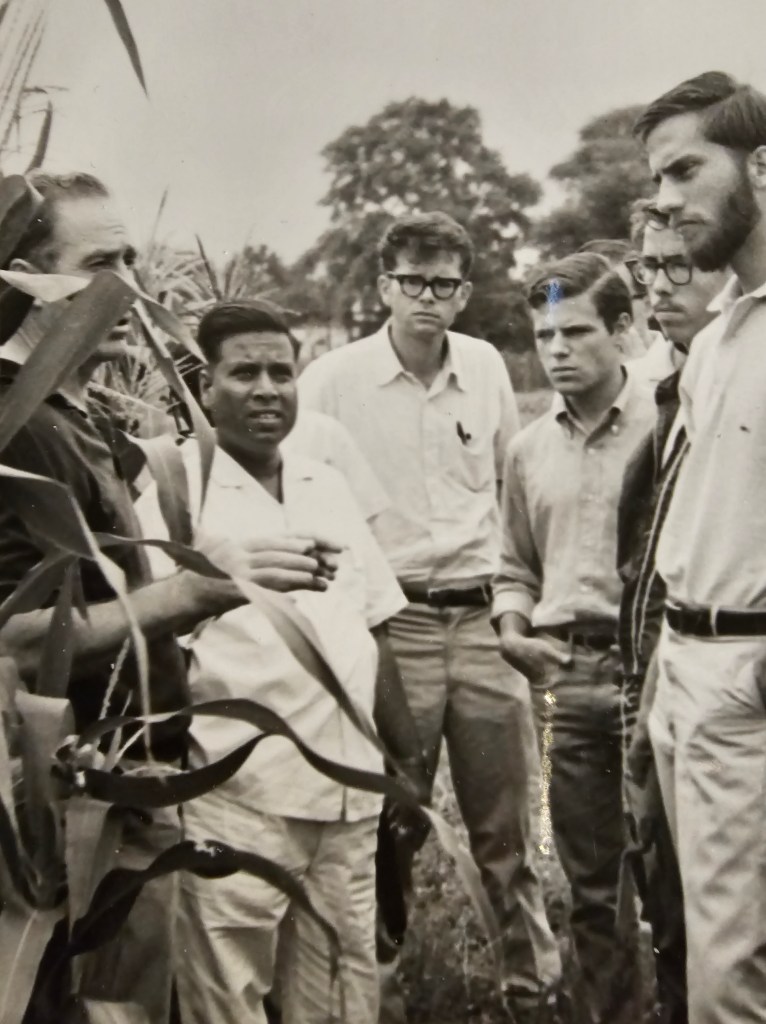
    After a long and arduous training regimen, I would soon be off to India as an agricultural specialist. Don’t ask, it was not one of the better schemes Peace Corps launched in those early days. Again, in hindsight, the botched character of the program may inadvertently have been a blessing.

    I can’t fully share the PC experience here. I can not even come close. My small group that survived the training and early experiences in country went on to endure heat, isolation, cultural friction, various illnesses, confrontations with snakes and other creatures, and intense feelings of inadequacy. As smart as we were, we were expected to contribute in technical areas in which we had little competence. Yet, failure could have significant consequences for those living at the margin

    Over two years, I managed to start a number of ag projects using high- yield experimental seeds, start a home poultry project, help the local schools, and make a few good friends, among other things. But mostly, I had two years of solitude, time to reflect, to read voraciously, to write my own novel, to learn to appreciate diversity in this world, and to gain valuable insights into the importance of culture. I began to understand the pace of life, especially how others saw things. My world was not the only world. I eventually brought these last lessons with me into my subsequent careers as a policy wonk and an academic.

    Many of us got together some 40 years after our return home in 1969 (see pic below). It was an emotional experience (the first reunion I ever attended). We realized how deeply we had been touched by that experience, including how many of us had felt like failures. Oddly enough, this was our first real opportunity to express and process feelings from four-plus decades ago.

    But as I looked about at my now aging fellow volunteers, and as I listened to the shared stories, I realized how fortunate I had been during these formative years.I had met such talented and successful people, like the ones in that reunion room. Most had gone on to do amazing stuff, including garnering advanced degrees from the nation’s top schools.

    And my story! I had gone from an intense religious encounter in a seminary to a college experience that, in addition to opening up new worlds for me, pushed me to fundamentally reorder my world view, and then on to a unique cultural experience that both tested me and exposed me to previously unimagined challenges. It was not always easy, but I had been fortunate indeed.

    As I reached adulthood, I still did not know what I wanted from life, but I did know I would do it on my terms. I brought forth with me all the experiences and turmoil from my so-called transitional years … the introspection of my seminary experiences, the social activism and intellectual turmoil of a 1960s college experience, and an unforgettable cultural immersion in rural India. I was ready for anything.

    In truth, I rather stumbled into a career through a series of unplanned events. It is better to be lucky than good since I never had a plan. At the end of several twists and turns, I had a masters degree and later a doctorate. Somehow, I wound up associated with the prestigious Institute for Research on Poverty at the University of Wisconsin. This was the pre-eminent academic based national think tank on social policy issues. It is the only such institute to receive federal support continuously from Johnson’s War On Poverty to the current day.

    It was a special, and fortuitous, landing for me since I could pick and choose the issues I wanted to pursue. Personal freedom is one perquisite of an academic position I love dearly (there are less desirable aspects of academia). I also had an opportunity to pass on whatever I had to share with future generations of idealists interested in shaping the world. I loved teaching.

    In A Wayward Academic: Reflections from the policy trenches, I describe my fascinating career where I had a front row seat to many of the hot policy issues that embroiled the nation from the 1970s through the start of the 21st century.

    Being a free lance policy-wonk proved a perfect spot for a dilettante like me who had trouble focusing on a single issue, at least not for long. You might imagine that I wasn’t a conventional scholar or academic … they had to be extremely focused to be successful. But I could be insightful, clever, synergistic, and worked well with diverse audiences.

    Best if all, helping run the premier research entity on poverty and welfare issues when they were front burner concerns opened so many doors to me. Perhaps my priceless experiences during those transitional years gave me a perspective and advantages others did not possess. It wasn’t any of the usual or conventional skills since I was the kid who barely passed high school algebra. Yet, I still found a seat at the policy tables.

    When I stepped down as Associate Director of the Institute for Research on Poverty at UW (and retired from teaching policy courses at the undergraduate and graduate levels), they threw a nice party for me. I told those assembled that I had been blessed. I managed to find a position where I basically flew around the country to work with the best and brightest on the nation’s most perplexing social issues. And best of all, I was paid to do this. Not bad for a hopeless working-class Catholic kid with no apparent skills whatsoever.

    If this tour of my early years intrigues you, try my memoirs. A Clueless Rebel covers my early years in general with great humor. Our Grand Adventure: The trials and tribulations of India 44 covers my group’s Peace Corps experiences. And A Wayward Academic: Reflections from the policy trenches covers my career as a policy wonk. It is also a cooks tour of U.S. policy from the ‘war on poverty’ to the ‘war on the poor.’

  • Random Early Reflections.

    October 26th, 2023

    We continue down memory lane in this blog, a trip mostly stimulated by coming across an album my dad put together for me many decades ago. From where this pictorial album ends, I would say he assembled it in 1970 or so. The final shots have me returning from Peace Corp Service in India, which happened in 1969.

    But perhaps we should start at the beginning. I don’t recall the pic above being taken. My parents look happy to have me around. However, in the early years, I’m certain that I was a drag on their lifestyle. They liked night clubs and poker nights with friends and heading to the race track and the high life. What I remember from my early years involved spending lots of time with my grandmother and my aunts. Later in life, my mother would argue with her sisters about who really raised me. I’m astounded that anyone would want to claim credit, but there you have it. I do vaguely recall being dumped on beds with a pile of coats as a poker game noisily went on in some adjacent, smoke-filled room.

    Here I am with my Aunt Ag (my father’s sister). They lived nearby early on and I managed to spend a lot of time at their place. Bill was the only family member to graduate from college and have a ‘white collar’ job. I was crushed when they moved to the suburbs. For years I was a surrogate child for them since they never had any of their own.

    Pity, they would have been perfect parents. Later, they ‘adopted’ (so to speak) another kid … Amy. She went on to make a fortune in Cape Cod real estate. When Ag died, Bill insisted that Amy and I ride with him in the funeral procession. I still recall one day when, as a tot, I came home one evening to find a suitcase outside the door. I was told by my folks that I spent so much time with Ag and Bill, I should go and live with them. I cried. Then again, I cried a lot.

    Here I am with my dad. I doubt he was excited to be stuck with a messy kid. He was rather fastidious and I’m sure I was a bother in many ways. I cannot imagine he EVER changed a diaper. As I got older, however, he did get into it, fatherhood that is. He started to take an interest in my life. He was very proud when I (finally) began to excel in school, a fact that shocked the crap out of me. He had so much potential, coming of age during the depression took his chances of success away.

    On the other hand, I let him down on the athletic field. He had played sports as a kid in high school, and I never excelled in that area, at least not once I reached high school myself. I started working many hours per week, getting a job at age 14 in the public library. There were no spare hours between that and a rigorous academic schedule. While I had a good excuse to end my athletic endeavors, there was plenty of guilt there in which I could wallow. In the end, I owe him a lot. He had wit, charm, and could entertain others with his stories. I embraced these gifts from him with tremendous gratitude.

    Speaking of athletic prowess (or am I changing direction here), my career was short-lived. In the first pic, the kid on my right (Lincoln Seafood) is my cousin Paul. He WAS a good athlete following in his dad’s footsteps (a baseball pitcher on his day with an excellent local reputation). After high school, Paul was signed by the Los Angeles Angels and played in their minor league system. On the other side is his younger brother Bobby who was the only male cousin to attend college (he became a pharmacist).

    The pic above brings a smile to my face. The local papers covered Little League games back then, with box scores and all. My pitching heroics one day got me a headline. (As an adult policy wonk and academic, I was in the papers all the time, but this was special then). My heroics are laid out in the text. Later, I became the starting pitcher of my junior high team, where I lost only one game. I once even came within two outs of a no-hitter.

    But one sad day I realized that my anticipated career in sports was illusory 😳. I was on 1st base when I got the sign to steal. Now, I did have some skills. However, being fleet of foot was not one of them. I had three speeds … slow, slower, and dead stop. I looked at the coach in disbelief. After giving the sign several times, he yelled … ‘steal second base, you moron.’ So, on the next pitch, I chugged down to second and slid in without, to my utter amazement, being tagged out.

    WHAT? I could NOT have stolen 2nd base. No freaking way! I concluded that the batter MUST have hit a foul ball. So, without confirming my deductive conclusion, I started back to 1st. When the other team recovered from their shock, they tagged me out to end the inning and danced off the field.

    All I remember from yet another horrific moment from a childhood full of them was a single image … our couch screaming obscenities at me as his adams apple bobbed up and down while his face turned a pure crimson red. We didn’t worry about kid’s feelings back then. At least I cannot recall any concern for mine 😞.

    A kind teammate brought me my glove, perhaps saving my miserable hide in the process. I then slunk back to my position. Fortunately, our coach’s murderous rage had subsided by the time I returned to our bench. But I knew at that moment I would not be making a living on any athletic field. Alas, I would have to get a real job someday, though how I conceivably might support myself as an adult totally escaped me in that moment. I was an indifferent student at that point and had no demonstrable skills … NONE whatsoever.

    Okay, all was not a disaster. My American Legion team (pictured above in 1958) won the league championship. I’m the 2nd player from the right (back row). The tallest kid (4th from the right) was one of my best friends. He was just the nicest kid imaginable who came from a large family of very modest means. But there was a great deal of love in his home. I very much envied him that. He eventually went on to the Coast Guard Academy and became an officer in that service. He had such a big heart. I wish I hadn’t lost touch. 😕

    But that’s a problem with guys. We seldom form lasting attachments with our early friends. Later, as adults, we rely on our significant others to form social attachments, though we might well have plenty of professional colleagues. After all, they have utilitarian value. Below is the exception for me.

    To the right in this pic is Ron Senosk, probably taken during our high school days. We played a lot of sports together and became good friends though we never lived near one another and went to different schools. (NOTE: he was a good athlete averaging 20 plus points per game for his high school basketball team 🏀). Perhaps competing against me did wonders for his ego.

    Years later I was back east in Massachusetts when a cousin told me that Ron’s father had just passed and a service was being held. To his shock, I showed up and our friendship was renewed. As kids, he had reflected the prejuduces and attitudes of his environment. We fought a lot since I was already a flaming liberal and he was anythung but. I found, however, a different adult. Even though he was a Lieutenant-Colonel in the Army reserves, he was anti war and had otherwise become a raving liberal. We no longer had to fight over values, though we did differ in other ways. He ran every day. According to his lovely (and long-suffering) wife, he only missed two days of jogging in some three decades

    I somehow did survive those early years, though I was unhappy a lot, uncertain about what I brought to the world, and pessimistic about my future. I can never forget my mother repeatedly telling me that her teen years were the best of her life. Wow! That almost led me to end mine prematurely. It would get worse. Was that possible. Fortunately, she was dead wrong.

    As I think back, my experiences were so ordinary. Yet, as events were to prove, America then WAS the land of opportunity. Even kids who showed no promise whatsoever (like ne) could make it, could get advanced degrees and could enjoy sparkling careers. I later felt so bad for the kids I taught at University. Rampant greed and tegressive politics had snatched so many opportunities away from them (take college debt for example). I explore my early years and more at length my world in A Clueless Rebel.

    At least I came to life intellectually in college. Recently, friends pointed out a book that listed those colleges recognized for transforming student lives. Clark University was one so designated. It was described as taking indifferent high school students and somehow turning them into intellectuals and even scholars, some of whom end up at top research universities. I turned out to be a poster boy for that kind of transformation.

    India bound.

    But that could not be known at the time. Having failed to stop the Vietnam War in college and still seeking to do good in the world, Peace Corp beckoned. Above, I’m looking over the Thames as I journey to India and a set of experiences that would test me and my fellow volunteers. That is a story in itself. Naturally I wrote a book on the topic titled Our Grand Adventure.

    I’ll probably write another reflections– oriented blog or two before heading in an entirely different direction. Just be patient.

  • Another personal reflection … Scripts.

    October 24th, 2023

    Scripts! We all have them. They represent our default positions in life … where we go when uncertain, threatened, insecure, or just seeking a safe place. I assume they are a product of primal experiences … those early reinforcements from our primary caregivers that just might be cemented in place by a bit of genetic wiring. Nature and nurture working together.

    I probably have several identifiable scripts, but I doubt any have been more persistent or consequential than my ‘imposter syndrome.‘ In case you have been spared such, this affliction attacks any self-worth you might possess. You go through life feeling unworthy, like a fake who has negotiated life through a series of clever stratagems. You see yourself as little more than a con man surviving on little more than smoke and mirrors.

    Feeling inferior infused and defined most aspects if my life. I never felt as athletic as the other kids. I thought of myself as ugly and unattractive to the females who had the misfortune to wander through my sorry life. I realized I wasn’t totally dense but was always amazed when I managed somehow not to fail in school. In fact, starting in junior high school I was placed in various advanced classes for more gifted students. However did that happen? Naturally, I assumed all that were a series of mistakes. My performance did little to correct my self-image, at least until college.

    This feeling of being a fraud persisted even in the face of contradictory evidence. I somehow managed to get through college, do a tour in the Peace Corps (India), eventually earn a doctorate, and wind up teaching and doing research at a top research university. I even found myself running a natinally respected research entity at the University of Wisconsin. Still, I never could convince myself I earned any of this. In fact, all remained a mystery in my eyes.

    As my career evolved, I found myself involved in national policy issues and consulting with a variety of government bodies at the local and national levels. I would be in a meeting with top federal officials and the best policy wonks. I would suddenly realize they were listening to me. To me! At the same time, I fully expected security to burst in the room to escort me to the street, the fraud in the room finally being exposed. Yet, the next moment I realized I just might be one of the cleverest guys in the room. It is very hard going through life bouncing from one extreme to the other, not knowing which captured reality.

    Where did this imposter script come from? Well, I have a guess, but who knows if it is correct. My mother always criticized me, finding fault in everything I did. It wasn’t until I was long into adulthood that it became apparent that I, her only child, was a mere prop in her life. She never realized her dreams so used me to garner praise from her significant others. Apparently, I could never live up to any advanced billing in her eyes even as she praised me to the heavens to others. I, however, never heard these glowing words. When others praised me in life, and I can NOW see that often was true, I found ways to discount all that. Denial and self-deprecation were my go-to places.

    My mother and I … always on display.

    There is a second script worth mentioning, one I view with mixed emotions. As you may know, my religious indoctrination was in the Catholic faith. As a kid, I was serious about it, eventually entering a religious seminary after high school. My tepid efforts to become Pope ended soon enough when I realized that a belief in God was a basic job prerequisite. I embraced the core lessons of Christ (and most other traditions) but could not accept the notion of a personal deity nor the trappings surrounding the claims any spiritual institution made. None of them had an exclusive claim on truth.

    HS graduation … with the Maryknoll Missionary Order recruiter.

    What I found is that you can push aside any formal allegiance to a specific religious tradition easily enough. I had no trouble separating myself from the Catholic Church as an institution within weeks of matriculating at Clark University, that den of atheism and Communism according to Catholic opinion in my hometown. In truth, no one at my school cared one wit about my religious beliefs, one way or another. It turned out indifference was the most effective antidote to any religious allegiance.

    In fact, it is quite easy to cut the formal ties to a religious institution. However, much of the emotional detritus stays with you. For many of us ex-Catholics, you never can quite kick the guilt … the ever present sense of sin or falling short. I’ve chatted with numerous ex Catholics over the years. We agree that Jews and us carry around the most baggage from our early years. Perhaps it was all that stuff about original sin, about confession and the ever present fear of dying while in a state of sin that burdens us.

    What I can recall from my early indoctrination is the milk bottle metaphor. The milk bottle represented our soul. If you were in a state of mortal sin, the bottle was black, empty, lacking any Grace. You were headed for eternal damnation.

    Oh, oh, my milk bottle was at risk here. I think a moment later, this young lass kicked me in the family jewels.

    Now, if you had committed several venal sins (those of less consequence), your milk bottle was spotty. It was if you had contracted a virus that resulted in your bodily tissue being partly infected. What you wanted, of course, is for your milk bottle to be totally white. Then you were in God’s grace, and heaven was assured.

    But here’s the problem. And there always is a problem. Sin was everywhere. There was no way to avoid it, especially when we males hit puberty. Our hormones immediately roared into high gear, and Hell seemed unavoidable. There was no way to escape it. Our only hope was yo be struck by lightening within 10 seconds of leaving the Confessional and receiving the Priest’s absolution. Anything longer than 10 seconds and you likely would have an impure thought, not that you could ever act upon these thoughts. All the Catholic girls I knew back then had dedicated themselves to Saint Virginius of the Holy Bodily Temple. They would rather be dipped in boiling oil than do the dirty deed. That didn’t matter. We guys were having impure thoughts every 7.7 seconds. We were doomed.

    You can kind of see how we Catholic kids (boys that is) were awash in guilt. Our milk bottles would always be spotty, if lucky, empty if unlucky. But maybe there was an out. If you were paying attention, you might latch on to Christ’s message. Be kind and loving above all else. In particular, help others who were less fortunate and were more vulnerable. If you really wanted to score points with the Big Guy, be especially kind to those not of your tribe. Loving those not considered your neighbor, like foreigners, could get you many points. Basically, the out was to do good deeds in life. You were sure to sin all the time, your hormones guaranteed that. At best, you might neutralize the damage.

    Let me just say this. Going through life believing you are a fake and feeling guilty (e.g., sinful) imposes a huge burden. I’m rather shocked I made it. I do realize that the first thing I would do most mornings is apologize. For what, I was never quite certain, but being a fake and unworthy probably warranted some kind of morning petition for mercy and hopefully forgiveness. He’ll, I was petitioning an entity I didn’t believe existed. How pathetic is that?

    I think I was lucky to be surrounded by people who had a much higher opinion of me than I had of myself. After many years of surprisingly positive feedback (which I had increasing difficulty dismissing), I managed to climb high enough out of my pit if self-disgust to feel okay about myself. That sense of being a failure and a fraud surely remains, but doesn’t dominate my self-image any longer. As I turn 80, I even entertain a positive feeling or two about myself.

    Good enough, I think! I’ll take it.

  • A personal reflection

    October 21st, 2023

    When I started this blog last March, I thought I might muse a lot about my favorite subject … ME! But there are so many daily topics that seemed to demand attention that I kept getting distracted. One can never overestimate the capacity of our fellow beings to keep doing outrageously stupid things. For example, take the current clown show going on as Republicans try to elect a new Speaker. The best they can do is nominate a thug who has not sponsored a single piece of successful legislation in his rather long career. But I shall not be distracted this time.

    I’ve always been fascinated by what shapes who we become. How did I, or any of us, become the adults we are? Not having children of my own, I rely on insights from friends who share vignettes about their offspring. For example, I’ve listened to liberal parents lament about the one child who grew to become a Trump Republican. They just shake their heads and wonder how such a tragedy came to be. That would have been my greatest fear if I had made the mistake of becoming a parent. I dreaded the possibility of siring a child who grew up to be a Republican. I could accept virtually any other outcome except that one. That is the one sin I could forgive in myself.

    On a less apocalyptic note, I’ve noticed siblings with very different vocational aspirations, personalities, ambitions, and so forth. It is difficult to imagine they came from the same biological material or that they experienced similar environmental inputs. The process though which nurture and nature interact indeed remains a deep mystery.

    I have no siblings. My parents took one look at me and said … ‘we ain’t making that mistake a second time.’ The world has thanked them ever since. 😊 Still, I wonder why I turned out the way I did. My puzzlement focuses on one aspect of my core personality … my liberal, if not quasi-radical, beliefs and disposition.

    This mystery arises from three points. First, I was raised in a homogeneous culture and was exposed to little, if any, competing thought. Second, I was immersed in a Catholic, working class culture which undoubtedly found my budding beliefs to be anathema. And finally, there were signs of harboring strange beliefs very early on, surely before I was exposed to alternative views of the world. When I was a kid, no one was harboring the thoughts and feelings that were crowding into my head. What was going on?

    There were many early moments which now strike me as informative, yet distinctly odd. I recall being perhaps 12 years old. The couple that owned the flat my parents rented were being visited by their daughter and her husband from Virginia. As I was listening to the adults talk, the visitors expressed outrage that the Supreme Court would racially integrate their schools. For some reason, I piped up and gave an emotional defense of that action. Where did that come from? No one in my world favored civil rights, or at least expressed any interest in the condition of minorities. I don’t recall even meeting a black person until high school when a Black gal also worked in the Public Library with me. Hell, prejudice was so widespread in my immediate culture that we had a pecking order among white ethnic Catholic groups. The Irish were on top and then down through the Polish and other ethnic groups until you got to the Italians. I now hate to even consider where my tribe placed conventional minorities. Prejudice was ingrained as a way of life. Yet, somehow, I instinctively was appalled at the very thought.

    Around this age, I recall thinking a lot about how much we had in America and how little other peoples had (post-war hardships were yet visible). I recall wondering why we didn’t share more of our abundance with others. More amazingly, I thought hard about how arbitrary national boundaries were, to my mind at least. We needed one government for the entire globe. Of that, I was certain. I was ecstatic when Europe began to merge into what became the European Union. I even recall joining, or trying to join, something called the World Federalist Society, a one world government advocacy group. They likely were a Communist front organization, but that message resonated with me. It still does.

    I was in public schools until the 9th grade. Then I went to a Catholic, all boys, high school. While being taught by religious brothers was not attractive to me (they would whack you if you misbehaved and your parents would whack you a second time if they found out about it), it was just about the best Catholic (if not all) school academically in Central Massachusetts. There were no electives, just rigorous academic courses.

    However, we did have religion classes for all four years. Even though I took my religion very seriously, I would argue (silently) with what was being spoonfed to us about what we were supposed to believe. The Catholic birth control arguments struck me as totally arbitrary and ridiculous as did the notion that children not exposed to our specific religious tradition would end up in a place called limbo (a convenient invention). I could never accommodate a God that arbitrary and capricious that He would sentence innocent individuals with zero chance of redemption to some form of second-class eternity. What was with that? That struck me as totally indefensible given the message of love Christ advanced. I should have realized right then that my days in a Catholic seminary would be few. They were.

    It was as if a Rebel within me was waiting to break out, only waiting for the right moment to do so. That moment came when I left the Seminary and matriculated at Clark University, a secular school in my hometown that was labeled a den of Communists and atheists by the local Catholics. I loved it. I loved the freedom of thought, the questioning, the diversity of opinion. Within weeks (or was it days) I emerged from my Catholic, working class cocoon. I never looked back.

    Now, if I hadn’t taken that route (seminary and then Clark), how would I have turned out? 😳 I would have gone directly from my Catholic high school to a very good, but traditional, Catholic college … Holy Cross. Would I still have emerged as an anti-war activist, and leftist leader, had I gone that expected route. Would I still have become a lifelong Progressive, as I pretty much did? I can not say with certainty, but the journey surely would have been more difficult.

    It was as if I was waiting to rebel. But why? How were the seeds implanted in me. I’ve scoured my brain for a rational explanation. One comes to mind, though it is far from convincing. My father was less prejudiced than anyone else I knew back then. He was no liberal but, on occasion, he would comment on things that bothered him.

    I recall we were in Cape May, New Jersey … an upscale place on the shore where some named acts would perform. I was perhaps 9 or 10 years old, so this might have occurred in the early 50s. A black singer of some repute was appearing at this local upscale resort, as was displayed on the marquee. I still recall my father saying something like … “that is a shame. This entertainer is the headline act, but he is not permitted to stay at this resort.” I can not recall if he ever elaborated. His disaproving tone, however, spoke volumes to me.

    No matter how many times I go over the same ground, I come back to the same place. Sure, I can recall a comment or two from my dad. But that hardly explains how early and how dramatically I veered away from the culture in which I had been encased from birth. It was as if I were hard wired to be whom I became. I was destined to rebel.

    I’m not sure I like that conclusion. It suggests that there is little we can do to alter the divisive cultural divides that separate us from one another. You are what you are. Period! Moreover, genetic hard wiring seems inconsistent with the spacial distribution of political patterns which suggests that nurturing plays a stronger role. Why are conservatives and liberals disproportionately found in separate enclaves unless a good deal of residential self selection is going on.

    That’s the problem with anecdotal evidence. You cannot extrapolate very far. No matter. I became a liberal, progressive, leftist, woke type or whatever label you prefer. I am so glad I did, no matter the cause. It means I have a conscience and a soul. I’ll take that any day.

    If you want more, I have an entire memoir loosely devoted to my early years. A Clueless Rebel. Available at Amazon.com.

←Previous Page
1 … 14 15 16 17 18 … 31
Next Page→

Blog at WordPress.com.


Loading Comments...
 

    • Subscribe Subscribed
      • Tom's Musings
      • Join 41 other subscribers
      • Already have a WordPress.com account? Log in now.
      • Tom's Musings
      • Subscribe Subscribed
      • Sign up
      • Log in
      • Report this content
      • View site in Reader
      • Manage subscriptions
      • Collapse this bar