• Sample Page

Tom's Musings

  • America’s embarrassing health care financing system.

    December 6th, 2023

    Time to move beyond my poverty series. I ended that run by stressing the fact that America’s poor record in addressing economic vulnerability, at least when compared to our peer nations, can partly be explained by explicit national policy failures and outright neglect. That is, other nations that look like us in most important ways have more sensible and compassionate policy regimes. That same insight, assuming it ranks as an insight, might be applied to health care in the U.S.

    Let us start with some basic facts. (Note: some numbers vary across reports due to variation in the years used and other technical causes, but the relative positions are unchanged).

    The U.S. spends almost $13,000 per year, per person on health care. That comes to some 17.8 percent of our GDP. That is way more than our peer nations spend. Germany, with the next highest outlays, lays out $7,400 per citizen. Canada, our neighbor to the north who share with us much in terms of culture and other external factors, spends $5,900 per Canadien, and like every other advanced nation, covers all of its citizens. Japan, further down the list, lays out only $4,700 per person.

    Okay, we spend more than all other countries. But we get more in return … right? In truth, reality could not be further from this seemingly reasonable presumption. Let us start with a global metric … life expectancy. Below, I lay out expenditures as a percent of GDP (Gross Domestic Product) and measured national life expectancy averages:

    Nation % GDP. Life Exp.

    Germany. 12.8% 83.4 years.

    France. 12.4% 85.5. “

    Canada. 11.7% 84.7. “

    Japan. 11.1% 87.6. “

    U. S. 17.8% 79.3. “

    Just in case you missed it, we spend way more of our national wealth on health care and still die earlier. One might be tempted to blame issues generally beyond the scope of normal medical interventions (e.g. life style choices). But, even here, the U.S. comes out poorly. The number of annual avoidable deaths (AD per 100,000 persons) suggests a sorry state of affairs in the States:

    Nation. Avoidable Deaths

    Germany. 195 (per 100,000)

    France. 164. ” “

    Canada. 171. ” “

    Japan. 137. ” “

    U.S. 336. ” “

    Think about this. Even when normed for population differences, we fail to save twice as many treatable patients in the U.S. as the Canadian system to our north does. And they pay a fraction of what we do in both out of pocket costs (OOP) and in overall costs, at least relative to us. The bottom line is that we are getting the medical shaft. Despite spending outrageous sums, we have fewer docs per 100,000, fewer hospital beds, and longer wait times to see physicians. And God help you if you are one of the 8.6 percent of Americans without any insurance, never mind substandard coverage. Try getting a medical appointment, even in a health care mecca like Madison Wisconsin. It takes forever … even if you have excellent insurance.

    This is just my intro teaser to our national health care disgrace. More to come!

    Note: A thank you to Mary Rowin for reminding me recently of this issue.

  • Povert & Policy #8 … reflections.

    December 5th, 2023

    I finished my original talk (and article) on which the last several blogs were based by returning one more time to the ‘Wisconsin Idea.’ Key to that idea is that each generation helps the next, passes the torch so to speak. Each one of you, I told my audience back then, has a responsibility to pass on to the next generation an understanding of and a passion for an issue (poverty) and for a population (the poor). If you do not care, who will?

    Ironically, the passage of a national welfare reform bill which many thought would exacerbate poverty and hurt the poor seemed to diminish interest in such issues. Not immediately, but within a decade or so, it struck me that no one was talking about ending poverty anymore. Perhaps the policy world was exhausted by the extended battles over what to do with welfare. Or perhaps everyone just wanted to fight about other stuff (abortion and immigration) after the anticipated post-reform apocalypse failed to materialize. Who knows?

    Yet, as I look back, there was a time where serious observers thought we might eliminate poverty in America. It did seem to be within our grasp. Were such people, like Nobel economist James Tobin, delerious? No! While no country has completely eliminated want, some have come quite close, though how it is defined makes a big difference. International comparisons of comparative poverty point out one truth. We in America can do a much better job, at least as well as our peers. It is merely a matter of will.

    Many of our peer nations (especially in Northern Europe) have poverty rates that put us to shame. When our child poverty rates neared 1 in 5 in some years, their rates hovered below 1 in 20. There are likely several factors involved in their comparative success but our rather pathetic policy approaches cannot be discounted. And let us face it. Public policy is something we control. Consider this. Over 1 in 3 elderly were poor in 1959, before the war on poverty was enacted. That rate fell to less than 1 in 10 by the 1970s. It wasn’t labor markets that accounted for this difference. It was the set of policies we enacted during the 60s and early 70s.

    There is an old truism … the morality of a nation is defined by how it treats its most vulnerable citizens … the young and the old. We decided that the elderly were worth our attention, and we ensured that most of them deserved to be spared from extreme want. Our young were another matter. We can speculate on why, but I sense that we could never forgive the alleged sins of the parents. Thus, our children continue to disproportionately suffer.

    It doesn’t have to be that way. We can do better. Perhaps the next time poverty works itself to the front burner, we will.

  • Poverty & Policy #7 … our neglected agenda.

    November 29th, 2023

    In the 21st century, we appear to be suffering from collective amnesia, at least when it comes to the issue of poverty. We seldom discuss this issue any longer in our national dialogue. It is as if it has disappeared from our consciousness. Where has this collective national neglect gotten us? About a decade ago, when the original piece was first put together, here were some of the numbers I shared:

    Overall poverty number (almost 50 million) is somewhat higher than it was several decades ago. Our child poverty rate (roughly 1 in 5 kids) would spark outrage in our peer nations though hardly is noticed here (note: our child poverty rate is sone 5 or 6 tines higher than in several Scandinavian countries);

    Income and wealth inequality are at levels not seen since just before the Great Depression. The share of all income going to the top 1 percent was back up to 24 percent in 2007, the year preceding our most recent economic collapse. While inequality in most advanced counties is up, the U.S. raned 4th worst out of 33 peer nations (in 2013);

    Social mobility rates in the U.S. have declined to the point that we have fallen behind our so-called ‘socialistic’ peers in that respect. By some measures of social mobility, the probability of moving up the income distribution (e.g., from the 4th quintile to the 2nd quintile for example), we rank dead last compared to our European peers. Want the American dream, head to Scaninavia;

    U.S. health care outcomes are middling at best. We stand next to Romania in some rankings despite spending more than anyone else, by far. Worse, we had the 47th highest infant mortality in the world when this piece was written;

    Our educational outcomes suggest that our kids are falling further behind our primary economic competitors, particularly in math and the sciences. Our rate of functional illiteracy among adults (reading comprehension substantially below expected grade level) places the U.S. well down the international list;

    Oh, and we had (when this was written) the highest teen birth rate among advanced nations.

    What I find particularly troubling is that our easy strategies for dealing with declining economic opportunities (e.g., stagnating incomes for most along with growing societal inequality) appear exhausted. We have already delayed marriage, had fewer children, thrown our spouses and partners into the labor market, saved less and borrowed more (using housing equity as personal ATMs), and added more advanced educational credentials after our names. And our children often delay establishing their own households (good luck kicking them out of the nest). And still, economic outcomes and opportunities grow more unequal.

    Yet, we see remarkably little outrage across the country. When new policies are posed, not enough people ask … ‘what does this do for the poor and those falling further behind in an increasingly bitter Darwinian struggle for success.’ So, let us ask again, did we lose the ‘War On Poverty?’ (I should note that this was one of five question I had on my Ph.D. preliminary examination back when the war was a recent and ongoing conflict.)

    On a superficial level, the answer is yes … at least in terms of anticipated expectations. But let us think about the question in a slightly different way. Think of the adverse trends over the past several decades that would be expected to exacerbate poverty here in the States and also increase the economic struggles for so many. Here are a few of those salient trends:

    Demographic changes … consider the dramatic rise in single-parent households raising children;

    Globalization … American firms seek to lower labor costs by outsourcing higher-paying jobs overseas.

    Technology driven changes, automation, and especially artificial intelligence … tasks formerly done by humans are increasingly performed by digital technology and robotics. After all, can robot driven trucks or college courses being led by AI technologies rather than troublesome professors be far off?;

    Immigration … with migration opening up in the mid-1960s, we saw the proportion of foreign borns jump from 5 percent to 13 percent, many (though surely not all) of whom were low-skilled individuals;

    Deunionization … unionized workers in the private sector fell from about one-third of the workforce in the 1950s to about 7 percent in recent years;

    A Fractal Economy … within specific sectors of the economy, compensation packages have grown wildly unequal even in the face of modest differences in talent and contribution. A typical CEO’s remuneration went from 27 times the average worker’s pay in 1973 to 262 times that average in 2008. A professional baseball player who gets one additional hit for every 10 plate appearances earns multi-million dollar contracts as opposed to another who fails to get that hit and struggles to make a living in the minor leagues;

    Macro-Policy Changes … aggregate federal taxes and benefits to individuals reduced inequality by 23 percent in 1979 but by only 17 percent in 2007. In effect, our overall policy structure became less favorable to struggling families;

    When you consider these adverse trends as a whole, including others that might be added, perhaps we did better than many of us thought, at least in moderating the deleterious impacts associated with an increasingly hostile world for those stuck toward the bottom of the income distribution. Without the efforts of so many since the mid-1960s, there would be even more hunger, insecurity, and suffering across the land. Still, so much remains to be done.

    I remember asking a colleague many years ago why he thought the United States had such an impoverished social safety net for the vulnerable and disadvantaged. He gave a one word answer … heterogeneity. I dismissed his answer as overly simplistic. Over the years, though, I came to fully appreciate his terse response. We are too tribal and have no common culture or identity. It is too easy for us to say, and to believe, that the less successful are ‘them’ and not ‘us.’ They are ‘the others’ who did it to themselves. In effect, we are not all in this together. It is instructive to note that Americans are more likely (by some 30 percentage points) than our European counterparts to respond positively to questions that assign success to personal efforts as opposed to luck or social environments or inherited family fortunes. If you struggle, it is your fault. You should have made sure you were born to a wealthy family.

    Alas, we are getting to the end of our journey through the poverty and policy thicket. Next time, however, some final thoughts.

  • Poverty & Policy #6 … ending welfare as we knew it.

    November 27th, 2023

    In the 1990s, even those of a more liberal persuasion saw a different role for government, one where programs ought to be designed in ways more consistent with prevailing norms which clearly were drifting in a more conservative direction. This normative drift was clear when I decided to spend a year in DC to work on President Clinton’s initiative to reform welfare. From June, 1993 to May, 1994, I was technically on leave from IRP and assigned as a senior policy consultant to the office of the Assistant Secretary for Policy and Evaluation (ASPE) at Health and Human Services (HHS). This was the nerve center for the administration’s welfare reform effort, a broad initiative involving several federal departments.

    Not surprisingly, I found that the tensions across the partisan divide to be demanding, though not as daunting as they were to become in the post-Gingrich era. However, the normative tensions within the administration were equally as challenging. While some attention was directed toward income poverty, for example by liberalizing the Earned Income Tax Credit, the main focus was on mitigating welfare dependency. Whether an initiative would ‘end welfare as we knew it’ became the new litmus test for many in determining the worth of any new idea. At least, that was the message from the White House.

    A debate raged within the Clinton administration: what did his oft repeated mantra of ‘ending welfare’ actually mean. One thing is certain. I seldom heard the old litmus test (what does it do for the poor) as reform ideas were being vetted. Ex UW Chancellor and current HHS Secretary Donna Shalala was an unabashed liberal. She focused her energies on health care reform, seemingly avoiding the conservative drift of the internal welfare debate. In any case, these internal debates delayed the anticipated completion of the welfare proposal long enough to forego serious Congressional consideration until after the midterm elections. By then, it was too late; the Republicans had taken control of the House.

    That sad end was in the future. I recall rushing to DC as soon as my teaching obligations were finished for the Spring semester in 93. I worried that the reform package would be completed without my input. No worries. I knew the first morning that I had missed nothing. The internal policy struggles and philosophical disputes would go on for months. In January of 1994, word came down that welfare reform was being put on the back burner. Health care reform, an initiative headed by Hillary, was being prioritized.

    That weekend, however, I watched Senator Patrick Moynihan on one of the Sunday AM talk shows. He blustered about there being no health care crisis. Rather, we had a welfare crisis. While I thought him dead wrong on his positive assessment of our health care system, I did appreciate the signal he was sending the administration. Welfare was back on the front burner when I arrived at the Humphrey Building (where HHS is located) the very next morning.

    The old tensions remained, however. Essentially, the liberals scattered throughout the administration were desperately trying to preserve cash welfare as an entitlement in the face of changing normative opinions and political realities. In the end, that was a futile delaying tactic. At the 1994 State of the Union address, President Clinton announced he would have a welfare bill before Congress that Spring. I immediately pronounced to all who would listen that the date on the Bill would be June 21, 1994 (which I assumed was the final day of Spring). I proved prescient (that indeed was the date on the Act). I must admit, though, a good deal of my rhetoric survived in the final product. Nevertheless, it was DOA for reasons mentioned above. Byvsummer of 1994, all political attention was focused on the upcoming midterm Congressional elections (which brought Newt Gingrich and the Republicans to power).

    The GOP had their own ideas, as you might imagine. After much back and forth, Clinton finally relented and signed a Republican-sponsored Bill in August of 1996. As the story goes, all of his advisors counseled him to veto the Republican Act except AL Gore, his Vice President. When he did sign it, several of his top advisors resigned, including Peter Edleman and Mary Jo Bane. The Act he signed created the Temporary Assistance for Needy Families (TANF) program. This law ended the existing entitlement to cash assistance, imposed time limits on the receipt of assistance, and strengthened work requirements. In a reasonably short order, the national cash welfare rolls fell from 14 million recipients to about 4 million.

    That decline should not have shocked anyone. The W-2 reform in Wisconsin suggested what might happen if you transformed the very cultural foundations of a cash welfare program. An earlier conversation I had with a county welfare director in western Wisconsin gives you an idea of how profound the impacts were. Before W-2, she told me they had 1,400 AFDC cases. In the run-up to the reform (where the new expectations were made clear), the caseload fell to about 900 cases. When the county signed a contract with the state to run W-2 (as a block grant, not as a welfare entitlement), the state and county agreed that about 500 cases would be an excellent assumption for the post W-2 caseload. After the dust had settled, they found only 60 cases remaining. Alarmed, the director launched a study to find out what happened to the lost families. Most, she told me, had just disappeared.

    The Welfare Peer Assistance Network (WELPAN) concept, which I put together just before the enactment of national reform in the mid-1990s, periodically brought together top state welfare officials for intense two or three day discussions on the future of reform. For me, it was another delightful counter in what I considered my professional candy store where I confronted captivating and confounding social issues.

    The Midwest group (there were two others for a time) endured for well over a decade and, in my opinion, captured the best thinking of those who were making reform a reality on the ground. Given the new flexibility available to welfare administrators, and enjoying freed-up resources for a time, these officials yearned to go back to dealing with the root causes of poverty rather than merely slapping band aids on the symptoms. They discussed ways of once again joining human services with income support to heal whole families. And they played with ideas for integrating a broad array of human services into coherent packages to deal with the complex challenges many of these families faced. Finally, they sought ways to intervene early … before problems became entrenched and intractable. It was such an exciting and ambitious conversation, at least for a time.

    Once the welfare debate ended on the national level, however, so did any substantive policy conversation regarding poverty and the poor, at least in Washington. For a while, there were great alarms raised among liberals about what would happen to poor mothers and children in the TANF era. Disaster was predicted while the federal government and Foundations poured millions into so-called ‘welfare leavers’ studies. But none of the worst predictions materialized. Most on the left failed to realize that cash welfare already had pretty much disappeared … typical benefit levels having eroded substantially over the previous two decades. When I arrived in DC, I kept saying we better reform AFDC soon, or there would be nothing left to worry about.

    With national legislation a reality, and no catastrophic fall out, our political dialogue moved on. In contrast, Prime Minister Tony Blair announced a kind of British ‘war on poverty‘ in 1999. He pledged to eliminate child poverty in Great Britain over the next two decades. It is hard to imagine any U.S. politician, even President Obama, making a similar announcement during the post- reform period. The hard right campaign to reorient the acceptable political dialogue in America had succeeded beyond their wildest expectations. Everyone, it appeared, avoided discussing the poor. When they did, it was often in primitive, Dickensian terms.

    The ferocious welfare debate was over. What did we achieve, if anything? Well, keep reading.

  • Poverty & Policy #5 … the tide turns.

    November 25th, 2023

    Remember the Reagan revolution? ‘Government is not the solution to our problems. Government is the problem.’ Another favorite from the conservative 80s was ‘we had a war on poverty and poverty won.’ Beyond the clever bon mots, we had a visible shift in the dominant political perspective and in governing ideological norms. Suddenly, it seemed, we shifted from aggressive public interventions to remedy social problems to something like the following:

    Supply-side economics, market-based strategies, privatization and related laissey-faire approaches, and the glorification of minimal government.

    A pronounced shift from ending poverty to minimizing welfare dependency; and

    The devolution revolution … the abandonment of federal solutions to the promotion of local solutions to social problems through block grants and turning social issues back to the states.

    The revolution promised by the new crowd in Washington would fundamentally transform America. In the end, though, Reagan imposed more tax cuts than anything else while failing to cut social spending as he had promised his base. When the so-called ‘great communicator’ (a nickname that always puzzled me) took office, the top marginal tax rate was 70 percent. He cut that to 50 percent by 1982 and to 28 percent by the end of his administration. Other taxes were slashed or revised as well. In 1980, the rich paid half of their income in taxes, a rate that fell to 35 percent by the end of the 80s. Progressivism in our tax system took a big hit.

    Reagan, however, did bring about a real neo-liberal revolution in many respects. He limited anti-monolopy actions, loosened the rules on banks and Wall Street, and attacked unions when he could. Union membership plummeted to less than 17 percent of the workforce. Power increasingly was centered in the financial sector and the corporate elite. The gains accruing to the moneyed class skyrocketed, as well as the dangers associated with letting them run amok.

    Where Reagan disappointed his conservative base was in cutting spending, especially social spending. There is a very telling vignette told by David Stockman, Reagan’s budget director during the early 1980s. He presented the President with a list of social programs along with three possible actions … spend at current levels, take a modest cut from this program, or take a ‘big whack’ out of it. When confronted with specific decisions, Reagan balked. He had hard rhetoric but soft instincts. Stockman was appalled, knowing what this meant to future budget deficits.

    The net result was that social problems did not disappear, nor did the costs associated with them. The Laffer hypothesis, that government revenues would increase with sharp tax cuts because of the growth associated with lower taxes, proved to be a laugh as most impartial economists predicted. Slowly, poverty rates began to creep back up while inequality began to rise more rapidly. Most of all, the Reagan revolution resulted in alarming federal debt levels, a consequence of the Republican Party abandoning balanced budgets as a policy objective. (Note: only Clinton and Obama would make a serious dent in budget deficits since the 80s.) If the Democrats had been the ‘tax and spend’ party, the Republicans were now the ‘borrow and spend‘ alternative, especially where weapons were involved. You simply cannot have enough toys that kill people. But their wealthy supporters would do well indeed.

    The intellectual tide was also turning. Charles Murray wrote a very popular book titled Losing Ground in which he argued that public interventions for the poor from the New Deal on exacerbated the problems being addressed rather than alleviating them. This was followed up by a book by Lawrence Mead called Beyond Entitlement. Larry’s argument was that welfare type entitlements corroded personal responsibility which provided theoretical support for Murray’s pessimistic views on the efficacy of social investments to society. The two works supported the views that poverty pretty much was a personal failure (the ‘unworthy poor’ thesis) with serious consequences for society.

    A cultural and normative shift was under way, which had been a goal of those underwriting a neoconservative revolution that became quite serious by the early 1970s. Poverty was no longer a salient policy concern; welfare costs and welfare dependency dominated the discussion. More than welfare writ large, it was the Aid to Families with Dependent Children (AFDC) program that stoked public indignation the most, even though it was relatively small in terms of both caseload and expenditures. AFDC, it seems, proved a convenient proxy for a broad array of contentious public battles involving normative disputes concerning family, sex, work, personal responsibility, government over reach, compassion or the lack thereof, and so much more. It was the new front on which cultural battles would be fought politically and, as many would say, would become the ‘Mideast of domestic policy making.’

    In the meantime, income and wealth inequality began to worsen. From a low of 9 percent of total income at the end of the 1970s, the top 1 percent saw their share grow to 12 percent by 1984 and to 20 percent in 1994. After slowing during the Clinton years, this unequal division of the economic pie continued to worsen. Just before the housing bubble crash of 2007-8, inequality equaled what it had been at the onset of the Great Depression in 1929. These inequality changes can be considered tectonic shifts that fundamentally altered the face of opportunity in the U.S.

    America, however, remained distracted by other issues like Clinton’s failed effort to extend health care to all … something that every other advanced nation managed to do. Rather, we continued to spend way more per-capia than anyone else on health care for outcomes that were disappointing at best. We have often struggled to beat out Romania in basic health outcomes while other key measures, like infant mortality, are shockingly bad when compared to our peers. But our public discourse focused on the welfare crisis rather than doing anything about our embarrassing health financing system.

    Soon, much of the world again watched Wisconsin as Governor Tommy Thompson, later Secretary of Health and Human Services under George W. Bush, launched a host of welfare reform initiatives. The first to grab national attention was Learnfare, an initiative that linked children’s school behaviors to their parent’s welfare benefits. It was to be the first of many that introduced what might be termed a ‘social contract’ notion to public assistance, an approach where help was conditioned on an increasing number personal behaviors. This was, in reality, a very old conception that dated back to the Elizabethan Poor Laws but now was touted as something innovative and exciting. Moreover, Thompson was able to get his ideas implemented where so many others had failed given the political minefield welfare had become. Buoyed by the notoriety of his initial reforms, the Governor proposed more dramatic changes, including a so-called welfare replacement concept known as Wisconsin Work’s or W-2.

    While Thompson’s rhetoric was tough, the reality of his reforms was more tempered. He expanded child care help and access to health care and workforce services for struggling families, initiatives that greatly helped the working poor. He was quite willing to help those he felt were playing by society’s rules and expected norms. Through all these changes, the University (especially IRP), played no role. The Wisconsin Idea had hit what night be termed a ‘rough patch.’

    I can’t do justice to the kerfuffle between the Governor and IRP during this period but the rupture was serious. Mostly, it was a matter of misinterpretation. For the Governor (any politician really), you were either on his side or against him. There was no such thing as objectivity. I was called by the media to comment all the time and would try to be a real academic … giving both sides on controversial issues. The press, I found, often would choose only those comments that would rattle the Governor. I realized just how badly he saw me (and IRP) when he attacked me personally at a public event in Chicago while I sat in the audience. Welfare reform took no prisoners.

    As a final note on the nadir of the Wisconsin Idea, I did start working with Jennifer Noyes, Thompson’s policy aide and eventually the head of W-2. Tentatively, we put the IRP-State relationship back together again. Jennifer eventually came to the University (something for which I lobbied hard) became Associate Director of IRP and now works directly for the UW Chancellor. Sometimes you get things right.

  • Poverty & Policy #4 … the ‘war’ stalls.

    November 21st, 2023

    By the early 1970s, those fighting to sustain community and personal rehabilitation strategies by employing social work technologies faltered. Rather, the debate began to focus more on direct resource transfers (e.g., cash, food, shelter, health care). There were many reasons for this, but surely one was the feeling that poverty was not a pathology. The poor needed money and not meddlesome service interventions. Critics of the emerging perspective countered with the allegation that merely giving the vulnerable money masked deeper challenges including possible individual and familial dysfunctions. This debate continues.

    In my first professional position (1971) working for the State of Wisconsin’s human services agency, social work types dominated the key administrative positions. In fact, the traditional welfare functions had just been integrated into the agency administering classic human service systems. Oddly enough, this happened just as the federal government was divorcing the giving of money from any offer of social services to struggling families. By the time I migrated to the Institute for Research on Poverty at the University of Wisconsin (1975), virtually all the important scholars doing poverty related work were economists.

    This revolution did not occur over night. Sometime in the early 1970s, those fighting for community and personal rehabilitation strategies had pretty much backed away from playing an active role in the anti-poverty drama. The debate, as noted, had shifted to direct resource transfers. In fact, I noted that social workers were abandoning the field in the ‘war’ on poverty by the late 1960s, a retreat that picked up speed over time. I think they are still running. I served on the UW School of Social Work’s master’s program admissions committee for many years. When I ran across an applicant who expressed an interest in working with the poor, I would call for the paramedics so that I might be revived. I also continued to work with the State Human Services agency periodically. By the 1980s, you could fire a cannon down the agency hallways and not risk hitting any social workers. They largely had disappeared, probably all becoming marriage therapists.

    By the time I was engaged in poverty work as an academic, the focus clearly had shifted to cash and cash-like transfers. For example, President Richard Nixon, despite his many flaws, proved to be a big spender on social programs, though he was not a fan of rehabilitative service programs. Among other things, he:

    Instituted a cost of living provision to annually update benefits for Social Security benefits;

    Federalized welfare for the blind, disabled, and aged under the Supplemental Security Income (SSI) program;

    Nationalized the Food Stamp program (now known as SNAP) so that it became virtually a funny-money Income floor or what economists termed a ‘negative Income tax;’

    Supported and almost passed a real cash-based negative income tax. His ‘family assistance plan’ came within one vote of passing in the Senate;

    A bit later, one of the most important anti–poverty measures was introduced, the Earned Income Tax Credit which continues to lift working families out of poverty to this day.

    Despite all this progress, the underlying tensions evoked by the poverty wars never were far from the surface. Nixon dismantled or slashed many remnants of the original War On Poverty, oversaw the separation of human services from the transfer of cash to poor families with children, and vetoed the Comprehensive Child Development Act.

    War fueled deficit-spending (financing the Vietnam conflict), a robust social safety net, and declining income inequality worked their magic. In 1973, poverty would fall to its nadir, 11.1 percent, a figure we would not see again for several decades. Moreover, measures of inequality had also fallen dramatically with the share of the income pie going to the top 1 percent falling from about one-quarter in the late 1920s to slightly less than 10 percent in the 1970s.

    In 1973, the Arab oil embargo disrupted the long hegemony of the U.S. economy. By this time, we had real competition in global markets. And the political right, emboldened by a strategic plan to reshape government in a hard conservative direction, paid close attention to the tactics laid out by future Supreme Court Justice Lewis Powell. He called for the reframing of every institution underlying American governance and for transforming the very normative culture in how we thought about society. A new ‘war’ had been declared, this time on what was seen as an ‘activist’ government.

    The original War On Poverty was losing momentum. So, what had we achieved? We found ourselves with a social safety net that yet reflected an earlier world view of the poor, one based on a notion of the ‘worthy’ and ‘unworthy’ poor. For the worthy poor, those NOT expected to work, assistance was relatively more generous, included reasonable cash transfers, and was more likely to be seen as a federal responsibility. For those deemed unworthy, such as those expected to work like able-bodied male adults, assistance was meager at best, usually in the form of non-cash help, and remained largely a local responsibility. For those in the middle, like single mothers with children, we were torn. Control was split between the federal and state levels, remained uneven in terms of generosity across jurisdictions, and was increasingly conditioned on proper behaviors.

    In addition, one could feel this ideological pushback gaining momentum, abetted by some alarming social trends. Many were frightened by civil discord (urban riots) and by what they saw as a breakdown in law and order. Moreover, there appeared to be a fracture in expected social conventions and norms. For example, the nonmarital birthrate began an inexorable rise from 5 percent in 1960 to about 40 percent before leveling off. And welfare rolls continued to expand through the 1960s and 1970s, not decline as many had predicted given a robust economic climate. Some feared that society was losing its mooring and blamed welfare for all the problems.

    A growing right-wing pushback was aided in no small measure by a planned growth in the conservative voice, as was called for in the Powell strategy memo. In earlier debates, the American Enterprise Institute (created during WWII) had been one of the only think tanks opposing an expansionary public assault on poverty. By the end of the 1970s, contributions from wealthy donors had created a score more centers of conservative thought with the Cato Institute and the Heritage Foundation leading the way. The Virginia and Chicago Schools of conservative academic study also mounted a serious campaign to undermine the prevailing consensus around Keynsian economics.

    In Washington, reform politics seemed exhausted. President Jimmie Carter’s Program for Better Job’s and Income was a last gasp for a positive national comprehensive reform as residual concerns about poverty appeared to be going the way of the Titanic, slipping slowly out of sight. Perhaps sensing the shift in where the debate would next settle (in the states), the Wisconsin Legislature mandated its own reform study … an initiative chaired by Economics Professor Robert Haveman and partly staffed by me. Between us, we developed a policy technocrat’s dream that included broad changes to the tax system, to the workforce development system, to the child support system, to name just a few. Some of our ideas saw the light of day, including the implementation of a state Earned Income Tax initiative and several significant child support reforms. Still, making headway was increasingly challenging, unlike a decade or so earlier. We would soon discover that even the vaunted ‘Wisconsin Idea’ would soon encounter rough waters, especially with the State’s new political elite.

    Stay tuned!

  • Poverty & Policy #3 … a ‘war’ on poverty.

    November 19th, 2023

    I ended the last post with a mention of Bob Lampman’s seminal chapter on Poverty in the annual economic report to the President (Kennedy). It cast doubt on the full efficacy of the ‘rising tide lifting all boats’ argument while suggesting that targeted public initiatives would be necessary.

    Of course, Lampman’s arguments, while pursuasive, were not decisive to the story of how poverty once again became a ‘front-burner’ issue. That tale is more complicated than one chapter in an annual report. For example, some have pointed out that Kennedy had been quite moved by the abject poverty he witnessed while campaigning in West Virginia. Others noted the book by Michael Harrington titled The Other America which appears to have reminded the nation that an impoverished segment of the population still existed in an increasingly affluent America … a group that yet remained hidden from general view. And an Edward R. Murrow documentary, The Harvest of Shame, also had an outsized impact. While each of these  contributed something to the ‘rediscovery’ of poverty, I doubt any single one was seminal.

    Rather, I believe the following happened. In the quarter-century following World War II, America experienced an extraordinary period of economic growth. In retrospect, this was not an unexpected or shocking development. We had about 6 percent of the word’s population but were generating about half of the globe’s total economic output. Our natural competitors were in ruins, bankrupt, in disarray, or all three. Moreover, the safety net enacted under FDR’S New Deal and related labor market protections (e.g., the Wagner Labor Relations Act) (surprisingly) were not dismantled when the Republicans took back power in the eatly 1950s. However, I yet wonder what might have happened if Robert Taft, not Eisenhower, had won the Republican nomination in 1952.

    During these halcyon economic times, poverty was falling like a rock, from probably half the nation (or more) during the great depression to about 22 percent at the end of the 1950s. It continued to fall through the 60s, though at a reduced pace as the easy victories had already been secured. In addition, real income more than doubled during this period with every income quintile participating in this growth. That is, both income and wealth inequality were falling sharply in what later became known as the ‘great compression.’

    We witnessed an economic environment conducive to the growth of an American middle class. This was an era of high taxes on the wealthy, of significant infrastructure investments (e.g. the interstate highway act), and strong unions … economic features that would soon come under virulent attack. It was an era where the public and private sectors worked for the benefit of all, perhaps reflecting a residue of collaboration remaining from the war effort (Note the highly effective G.I. Bill that enabled many to obtain a college education).

    During this period, the critical point is that poverty was becoming a manageable issue, a social challenge that was feasible to attack with some prospect of success. Remember that Bob Lampman had argued that an expanding economy would continue to remove people from economic insecurity. But he had thrown in a critical caveat: the rising tide would leave some boats behind because of geography, race, or physical and cognitive limitations. These ‘structural’ pockets of poverty would demand special attention and targeted interventions by federal and state authorities.

    In effect, poverty was seen as a war that could be won, something closer to a ‘mop-up’ action. Perhaps the poor will not always be with us, as the Bible suggests. In the 1960s, Nobel laureate James Tobin wrote that continued economic growth (supported by expansionary monetary and fiscal policies) when combined with targeted public interventions could yet eliminate poverty by 1976, the nation’s bicentennial celebration. Sensing such optimism and drawing upon his hardscrabble Texas roots as a teacher to poor Hispanic children as a young man, Lyndon Johnson declared a War On Poverty (WOP) in 1964. Picking up the themes that had been floating around the Kennedy administration, he created the Office of Economic Opportunity (OEO) to coordinate this war.

    To wage such a war, the generals needed two things: (1) a better understanding of the enemy, and (2) information, or intelligence, about that enemy. For the first task, Molly Orshansky, a mid-level bureaucrat in the Social Security Administration, was given the assignment to come up with a poverty measure. She did a simple back-of-the-envelope calculation. She took an older study that estimated that food absorbed about one-third of a low-income family’s budget. Then she took a more recent estimate of the lowest cost of a ‘basket’ of food items for such a family. Finally, she multiplied the cost of that ‘basket’ by three. Voila … a poverty standard.

    That crude estimate became the ‘official’ poverty measure which, except for inflation updates and a few technical adjustments, remained the government sanctioned measure for decades even after it had come under widespread attack by scholars and serious policy wonks. [For example, food represented a smaller portion of total expenditures in more recent years which theoretically impacted the multiplier she used.] Years later, when she was long retired, I heard Molly express shock and dismay that no one followed up on her crude measure with a more sophisticated alternative. But, alas, politics often get in the way of reasonable decision-making.

    For the second need, good intelligence, federal officials approached the University of Wisconsin for help, largely because of Bob Lampman’s connection to that campus. They wanted the school to create a kind of ‘think tank’ that would do thoughtful, independent research and analysis, the kind needed to successfully wage such a war. Though some at the University worried that getting overly involved in a controversial public policy issue would erode academic independence and expose the campus to political interference, the Institute for Research on Poverty was created in 1966 with Bob Lampman being appointed the first interim director.

    In brief, the ‘war’ had two fronts. The first focused on rehabilitating people and communities, including strengthening local participation in the policy development process. These were purposes close to Johnson’s (and OEO’s) original vision. Initiatives such as Head Start, Upward Bound, Model Cities, Community Action Programs, and too many others to mention were developed under this banner.

    The second front is best associated with what became known as the ‘Great Society.’ It involved either expanding or creating new benefits programs. We saw the creation of Medicaid, Medicare, a pilot Food Stamp initiative, along with new housing and education initiatives. Cash assistance for dependent children was made easier to access. No matter the tactic involved, this poverty ‘war’ remained front and center in most domestic policy debates. Bob Lampman himself noted that many policy makers applied a litmus test to new proposals … ‘what does it do for the poor?’

    These two fronts reflected the interests and perspectives of the foot soldiers involved. In the beginning, social work and social workers were heavily committed, abetted by President Kennedy’s 1961 address to the nation which placed social work at the center of efforts to reduce welfare dependency by focusing on rehabilitative strategies. Soon, however, economists elbowed social workers aside, pushing cash and cash-like transfers as the primary strategy in the war. Social workers conceded their initial role without much protest.

    Despite all the frantic effort and the jockying for control, there never was an underlying strategic consensus regarding this total ‘war’ on poverty. All the traditional tensions bubbled just under the surface:

    What was the nature of the problem(s) being addressed … personal failings or institutional shortcomings?

    What ends should be pursued … increased opportunities or guaranteed (income related) outcomes?

    How should the disadvantaged be helped … human capital enhancements, increased job opportunities, community rehabilitation, the remediation of personal and family dysfunctions, or the direct transfer of cash and cash-like resources?

    Who should be in charge … the federal government, the states, locals, nonprofits, or private markets.

    And perhaps most importantly, did government action help or hurt?

    As we will see, the so-called ‘war’ on poverty became a virulent political conflict centered about the very ‘war’ itself.

  • Poverty & Policy #2 … the Wisconsin Idea.

    November 17th, 2023

    As noted in blog #1, the national poverty debate has had a long and convoluted history, so let me pick up the story with a local perspective … the Wisconsin Idea or scholarship in the service of the public good. The underlying concept goes back to the early decades of the University in Madison, especially toward the end of the 19th century. Among its promoters were Charles Van Hise, an early president of the school, and Robert LaFollette, the great progressive politician and reformer. The two were classmates and became lifelong friends. Fighting Bob would become a U.S. senator and an iconic figure in national politics. The Public Policy school at Wisconsin is named after him.

    Another early UW president, Thomas Chamberlain, captured the normative foundation of the Wisconsin Idea as follows: ‘scholarship for the sake of scholars is refined selfishness. Scholarship for the sake of the state and the people is refined patriotism.’ A wonderful sentiment to be sure, but I seriously doubt he would get tenure today.

    During what was called the ‘Progressive Era’ early in the 20th century, UW faculty members such as John Commons, Charles McCarthy, and Richard Ely worked with members of the Wisconsin legislature on a number of issues that later became national initiatives. These include a workers compensation program, a progressive income tax, unemployment insurance, and various labor market improvements. Wisconsin had become the ‘laboratory for democracy’ as President Teddy Roosevelt would assert.

    Perhaps more importantly, these Wisconsin scholars helped elevate the professionalism of the state legislature by developing an independent and skilled staff capability, on occasion taking such supportive positions themselves. These structural reforms wrested control of the bill-writing process from powerful corporate special interests who previously had drafted legislation for their own narrow purposes. Legislation now aimed at the common good became more feasible.

    One of Ely’s students, Willard King, wrote a tractor titled Wealth and Income of the People of the United States. His work spurred interest in determining how much of the nation’s income was concentrated in the top 1 percent of the population. He and others who followed his lead found that inequality was growing during this period, with the top 1 percent commanding 18 percent of all income in 1913 before rising to a 24 percent share by 1928, just before the onset of the Great Depression. (It might be noted that a similar high in the concentration of wealth was reached in 2007, just before our most recent economic crash.)

    The 1930s saw the economic crash of all crashes. The economy was in ruins, with at least one-quarter of the labor force unemployed, and poverty rates estimated in the neighborhood of 60 percent using contemporary standards (which did not exist at that time). Quite naturally, economic want resurfaced as a dominant public issue. When President Roosevelt wanted academic help to confront this national emergency, he turned once again to the University of Wisconsin. He tapped Ed Witte, a student of John Commons, to head the Committee on Economic Security. Witte, in turn, brought several other Wisconsin experts to D.C., including Arthur Altmeyer and Wilbur Cohen. Members of this team drafted and helped implement the Social Security Act, which reversed the existing consensus by establishing a dramatically expanded federal role for dealing with economic matters in this nation.

    Fast forward a quarter of a century. Robert Lampman, a student of Ed Witte and also an economics professor at Wisconsin, was serving on President Kennedy’s Council of Economic Advisors. Along with Burt Weisbrod, Bob wrote the seminal chapter in the annual economic report to the President that has often been credited with inspiring the subsequent declaration of a War on Poverty by Kennedy’s successor … Lyndon Johnson.

    Arguably, ideas and scholars from Wisconsin had, in fits and starts, fundamentally altered the public sector’s role in economic life. The Dickensian laissez-faire free for all that prevailed for the most part in the 19th century had been challenged. In its place, a more vigorous role for government had been instituted, one designed to ensure a reasonable playing field and which mitigated the worst outcomes associated with unfettered free markets. This new consensus enjoyed wide support in the post WWII period. Even Republican President Dwight Eisenhower endorsed this broadened role for government.

    Now, however, a more ambitious role for the public sector had been set … the total elimination of want and economic security. Had an unreachable goal been set? Was failure inevitable? Was this a bridge too far?

  • Poverty & Policy #1 … a compelling challenge.

    November 16th, 2023

    Poverty as a public concern has been with us for a long time. That the issue has endured is a testament to just how compelling it is, despite being so contentious and resistant to easy resolution. Just why is it so compelling, at least to us self-described policy- wonks at least, while remaining such an annoying distraction to most of society?

    At the end of the day, poverty is what we call a ‘wicked social problem’ where we are confused about: (1) the nature of the problem; (2) the theories and evidence brought to bear on the issue; (3) the ends and goals we are trying to achieve; and (4) the means for achieving those identified ends. Really, who doesn’t want to spend their professional life tackling that kind of hopeless challenge.

    I am reminded of a story I shared at my retirement party. I noted what a marvelous career I had fallen into … a career where I got to fly around the country to work with the best and brightest on some of society’s most vexing problems: Poverty and welfare reform and the optimal structure of the social safety net. For me, this was like working in a professional candy store. All sorts of policy delights were enticingly laid out before me. All I had to do was pick and choose which would engage my attention. If I were to become bored, I could move on to the next. I could hardly have hoped for anything better.

    My career was great fun but also challenging in the extreme. Consider the following: President Kennedy promised to put a man on the moon within a decade, and we did it; President Johnson launched a war on poverty shortly after, with not such a great result. Conquering space was primarily a technological challenge, while poverty and welfare reform are complicated by a set of underlying human factors. One of my favorite mantras during the height of the welfare reform debates was that ‘I knew I was approaching the truth when no one else agreed with me.‘

    We often date our national focus on Poverty to the 1960s. But there is, of course, a much longer history. This ‘poverty as a public issue’ story is not unimodal, rising once to national prominence and then fading from view. Rather, it is cyclical … rising and falling several times.

    With rapid urbanization, industrialization, and a resurgence of immigration (particularly from Southern and Eastern European countries along with a second blight-related surge from Ireland), poverty emerged as an object of significant public attention in our post civil war period. In response, there arose several policy initiatives including Charity Organization Societies (to bring some coherence to the confusing array of local efforts), the Scientific Charity Movement (to bring some rigor to the investigation of distressed families), and a number of Settlement Houses (to help mostly poor, recent ethnic immigrants integrate into American society). With the exception of a Civil War pension program, virtually all aid to the poor was local, much of it private, and all of it disorganized.

    Above all, a fundamental aspect of the subsequent national debate about poverty was evident: the distinction between poverty and pauperism, between institutional or environmental explanations of economic vulnerability and those explanations based on perceived personal failings. It was the classic distinction between what was thought of as the ‘worthy‘ and the ‘unworthy‘ poor, a distinction that would remain with us through time and color all future policy debates. Those debates, as you will see, became heated at times. This would not be a professional focus for the faint of heart.

    In the next blog in this series, I turn to what is called the Wisconsin idea where scholarship is devoted to society’s more demanding issues.

  • American Poverty … an old and new story.

    November 9th, 2023
    irp-gro
    up

    As you know, I spent the bulk of my professional life at the Institute for Research on Poverty at the University of Wisconsin. It was an ideal place for an itinerant thinker and social philosopher like myself. It also was a place where I forged several irreplaceable associations. So, before I launch into the substance of the next several thematic blogs, a bit of context.

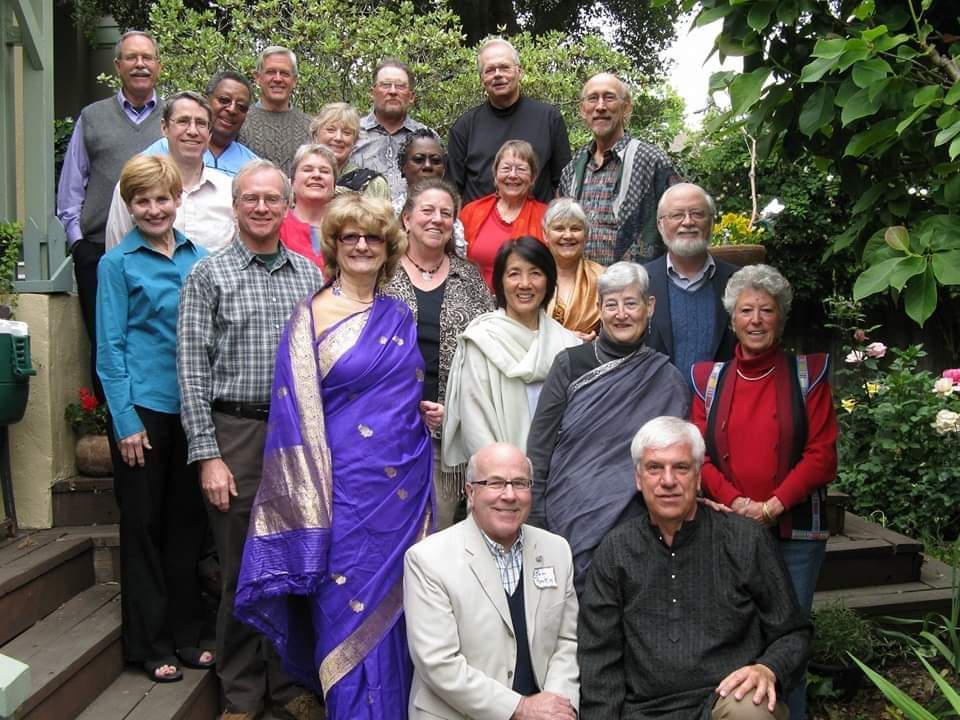
    Over the next couple of weeks, I will be sharing the published version of my final talk given at an Institute function. Bob Haveman (2nd from right in the pic above which was taken at his stepdaughter’s wedding in New York) called me one day in 2013. He asked if I could quickly drum up a plenary talk on ‘poverty as a policy issue‘ since the invited speaker had fallen ill. I was retired at this point, but thought … why not? BTW … the others in the pic include Irv Piliavin (far right), Irv Garfinkle (2nd from left), and me (far left). That was quite a crew. I feel grateful to have known and worked with each of these fine scholars.

    The talk I managed to drum up quickly was a hit. They were so impressed that I was next asked to turn my notes for that talk into an article, which I did. The resulting piece in FOCUS garnered much positive attention and comment. After that, I thought little about it until recently. I seldom dwelt on past works. However, a discussion with a good friend not long ago reminded me of this piece, though I can not retrieve why in the world it came up after all these years. Nevertheless, I retrieved the article and forwarded it to her. She, in turn, surprised me by suggesting that I serialize it for this blog.

    I hesitated. Really? Who would care? But I did share it with a neighbor of mine who is a rather renowned infectious disease doc at the University of Wisconsin hospital and a man of extraordinary intellectual interests. He had mentioned wanting to know more about social policy (his curiosity about things is endless). He subsequently responded enthusiastically to the piece, suggesting that this gem should be published in several well- known outlets. That simply made me smile, but the notion of at least distributing it on this blog moved once again to the front burner.

    So, here we are. These next several blogs are based on an article in the Institute for Research on Poverty’s primary publication, FOCUS (vol. 30, No. 2, Fall/Winter 2013-14. While I will remain faithful to the original, I likely will take some liberties. For example, I will excise some material for brevities sake and may add a few comments as needed. Still, poverty has not been a hot topic over the past decade or two. Yes, there is angst about inflation and an eroding American dream for too many, but income poverty does not generate the attention and political obsession it once did. When it is raised, the question is posed in terms of rising inequality, not absolute poverty.

    Even with these possible modifications, what you will read is essentially what I first shared some 10 years ago. As the saying goes, the issue has legs. Moreover, much to my chagrin, I doubt there has been a great deal of ground-breaking research or innovative thought in the past decade. Poverty as an intellectual object of concern (or a political focus) has waxed and waned over time. We are in a trough at present.

    When the Institute for Research on Poverty was created some 58 years ago as part of the Federal government’s War-On-Poverty, there was little research on the issue of poverty per se. The public mission of ending poverty (as expressed by President Johnson in 1965) spawned an avalanche of studies over the next several decades. Public interest in the issue was intense, and the political disputes surrounding the topic were of the ‘life and death’ variety. I speak from experience when I say that dipping one’s toes into the poverty and welfare swamp was not for the faint of heart. You risked offending someone no matter what you said. My favorite mantras from those years was that “I knew I was approaching the truth when no one agreed with me.”

    All that changed about a decade after the 1996 law purportedly ‘ended welfare as we knew it’ was passed. When it became certain that the anticipated catastrophic predictions attached to that law had failed to materialize, interest in poverty faded from view. It was as if someone hit an off button

    So, I am reasonably confident that what I said in 2013 would hold up today. After all, one of my other favorite mantras I used during the height of the ‘welfare reform’ wars suggested that there really wasn’t anything new being proposed as a solution despite all the fanfare associated with each new political pronouncement. Governor Tommy Thompson’s (a politician known for his dramatic welfare innovations) announced his famous ‘Learnfare’ reform (conditioning welfare grants on school attendance) in the late 1980s as a bold new idea. In reality, it was little more than a regurgitation of practices that had routinely been employed in the 1930s through the 1960s by welfare workers to determine the worthiness of poor applicants for assistance. Still, the world greeted it as something fresh and new, thus putting him in the national spotlight for a while. Senator Patrick Moynihan, the welfare expert in Congress, referenced 18th century English Speenhamland laws when pushing his 1988 set of reforms. Of course, as an ex Harvard Professor, he was one of the few politicians conversant with history. For most, ancient history was anything that occurred before they were elected to office.

    The bottom line is this. I remain confident that the The Rise and Fall of Poverty as a Policy Issue remains as relevant today as when these ideas were initially shared. By the way, in future blogs in this series, I will refer to each new publication as Poverty and Policy followed by a number and a label. It just may be that I will sneak a few traditional blogs into the mix. So, pay attention.

    Watch for the first of the series (Poverty and Policy) over the next few days. Sometimes the magic works, sometimes it doesn’t. Let’s try it and see.

    Finally, if you want more of my thinking on this topic (and who wouldn’t), track down two of my books … A Waward Academic: Reflections from the policy trenches and/or Confessions of an Accidental Scholar.

←Previous Page
1 … 12 13 14 15 16 … 30
Next Page→

Blog at WordPress.com.


Loading Comments...
 

    • Subscribe Subscribed
      • Tom's Musings
      • Join 38 other subscribers
      • Already have a WordPress.com account? Log in now.
      • Tom's Musings
      • Subscribe Subscribed
      • Sign up
      • Log in
      • Report this content
      • View site in Reader
      • Manage subscriptions
      • Collapse this bar