We had a school shooting in Madison (my home town) the other day. A 15 year old girl killed a teacher and a fellow student, wounding 4 others (two critically) before ending her own life. There was the usual breast beating, the outpouring of thoughts and prayers. But no one even bothers to mention doing something about our insane gun laws and lack of regulations. That is a nonstarter.
It is not as if America never responds to public safety questions. Decades ago, a loose cannon poisoned a few bottles of aspirin and we have since been stuck with caps that are virtually impossible for old farts like me to open. One wanna-be terrorist tried to hide explosives in his shoes and we’ve been shedding our footwear at airport security ever since. On the other hand, this is the 83rd school shooting this year alone. And your garden variety mass shootings typically average one a day. In terms of gun violence, we are the total outlier among our peer nations … the carnage capital of the civilized world.
And don’t bring up the 2nd amendment. The wording is confusing. Many legal scholars interpret it as I do. The federal government cannot disband well regulated state militias. It says nothing about encouraging everyone to stock a small arsenal, including military-grade weapons. The Founding Fathers were concerned about centralized power and a large federal standing military. They hoped to sustain locally managed and organized defense structures. Well, the large federal military is with us to stay. I’m sure those writing our Constitution now would be aghast at the shooting gallery America has become.
The question for me is … why aren’t Americans outraged? Should not we be demanding action in Washington? Should we not be turning over every stone in an effort to find a solution. The old shibbeloth that guns save lives is ridiculous. Stranger on stranger homicides are relatively rare. The vast majority of gun-related deaths are self-inflicted (suicides) or shootings among people intimately involved with one another (domestic disputes). Yes, some will find alternative methods to kill either themselves or others (knives, poisons, explosives), but a handy firearm makes it so much easier to turn an immediate impulse into an irreversible tragedy.
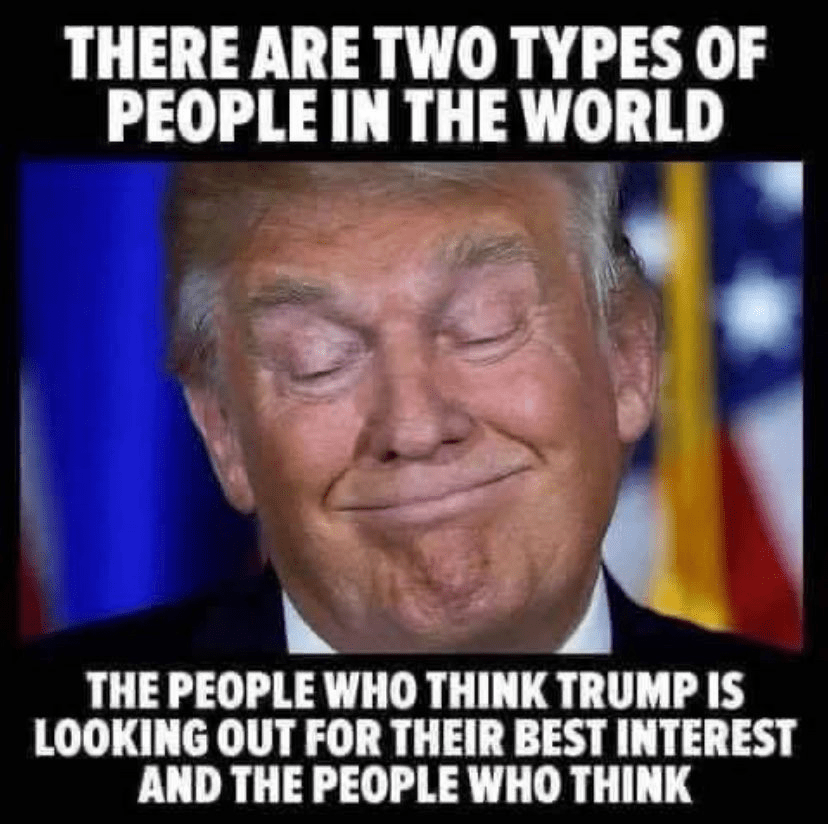
This thought leads me to another conundrum. How could Americans vote for, never mind worship, the most disgusting public figure, at least in my lifetime. The Dems have been criticized for running a campaign that focused on Donald’s flaws, which were legion and undeniable.
I mean, really! The man is little more than an immature bully. He ridiculed a disabled reporter, gold star families (parents of deceased soldiers), military personnel in general, and a host of groups outside the White and Christian mainstream. He has demanded and assaulted scores of women, including under-age girls. He has a series of bankrupt business ventures, including schemes to defraud customers. His credit worthiness is so bad he had to appeal to Russian Oligarchs for loans. He has cozied up to heinous dictators, virtually revealing himself to be a Russian asset while undermining historic relations with our traditional allies. He cannot follow logical arguments, nor comprehend material above a 5th grade level which, not surprisingly, well captures his vocabulary and speaking skills. His command of public issues would have resulted in failing my introductory policy classes.
At another level, numerous mental health experts have opined that he is a pathological narcissist at the least, that he lacks impulse control, and that he routinely evidences immature, if not infantile, behaviors. Beyond those shortcoming, he routinely affirms a total lack of basic empathy, the minimal standard we assign to humans. If accurate, he well may be a dangerous sociopath, a psychopathy that might become particularly dangerous if he is not subject to ongoing supervision by actual adults. (Note: He had such individuals about him during his first term but he has studiously avoided them recently). And let us not touch upon his compulsive lying. All politicians engage in some distortions and sins of ommission. That is part of the game. Donald, however, lies so much, so egregiously, and so often that fact checkers lose count and interest. Being disingenuous may be all for effect, but one wonders about his ability to function in the real world. Can he distinguish fact from fiction?
Those are a few of his personal failings. More recently, he has engaged in troubling systemic failings. For example, he is surrounding himself with sycophants who constantly indulge his cruel fantasies for revenge on real and imagined enemies. He increasingly demands obsequious displays of overt fealty and lavish personal praise. A parade of notable persons from the private sector and media now bow down before him. Worse still, his appointees are, without exception, unsuitable for their positions. Despite what Republicans believe, government is important and performs critical functions. Would you ask a plumber or childcare worker to perform open heart surgery on you because you dont like the doctor’s politics. Moreover, there will be no one to rein in his ego or constrain his passions for unbridled power. The world is quaking at the very thought of the future where a child-like man can exert his infantile fantasies in ways that can have global consequences.
And yet, despite all this, America seems unperturbed. In a recent opinion piece, Robert Reich asked where any opposition may be found. The mainstream press has been cowered by the President-elects threats, or are now owned by oligarchs eager for a kleptocracy through which to expand their own power and reach. Our Universities fear loss of research funding, threats to accreditation, or direct attacks on their traditional independence. Non-profits and activist groups face the growing wrath of cultish devotees who would employ just about any tactic to complete their power grab. Trump is directing his personal rage (including criminal actions) at traditional politicians such as Republican Liz Cheney and those who had the temerity to question his prior actions. I almost wonder when we will hear the sound of marching feet from a new generation of Brownshirts. It took Adoph Hitler only 90 days to fully gather dictatorial control in Germany. He employed a faked Reischtag fire to assume total control. Might not our modern day version of an authoritarian party simply shut down the government (the first steps in that direction have been taken), then declare a national emergency before having a compliant Congress give his cabal extraordinary powers. It is a long shot but not beyond the realm of possibility. Frightening times, indeed.

Lets face facts, the man has shown no respect for the Constitution nor the traditions attached to a mature democracy. He tried to incite a treasonous uprising when he lost a valid election. He concocted a variety of schemes to subvert the constitutional and peaceful transfer of power. Think about that a moment. John Adams, in 1800, quietly went back to Boston when he realized that his political enemy, Thomas Jefferson, had more electoral votes. He didn’t call out the militia or incite unruly mobs. At that moment, the American experiment in Democracy was born. The words on the Constitution became real. Trump desecrated that Constitution and engaged in clear treason. His penalty, getting almost half of all votes in the recent election. Even today, his lackey supporters in Congress are rewriting recent events to absolve him of all wrongdoing while painting those who investigated his ethically bankrupt actions as the real villains. Thus, ever speak the tyrants.
I used to wonder how so many continued to worship murderous dictators like Joseph Stalin and Chairman Mao long after they passed from the scene. Despite their legacies of terror, they remained heroes to so many for so long. How could this be so? I am concluding that reality plays a small role in the perceptions of so many among us. We see what we want to see, not what is.
Lets take a quick look at an issue that many pundits claim influenced recent vote choices. Voters were known to say ‘I don’t like him personally, but the economy was better under Trump than Biden.’ WOW! Okay, let’s look beyond the fact that Donald was fortunate to inherit a growing economy that Obama had rescued from Bush’s ineptness. What did Donald do besides threatening that growth by mismanaging the Covid crisis. What then did Biden and his team do? Like Obama, Biden’s team made prudent decisions and investments to get our economy on track again.
Just a few reality points. During Biden’s tenure, the economy created 16 million new jobs. Some 20 million new new applications for new businesses were made. At least $1 trillion in private sector investments were made in clean energy and advanced manufacturing technologies. Inflation, which had spiked after Trump’s covid mismanagement, was eventually brought under control. And with a robust economy, wage increases exceeded inflation during the past two years. Finally, equity prices reached record levels in the major stock markets. Unlike what Americans apparently saw (thanks Fox News), the nation’s economy was seen by others as the envy of the world. Again, propoganda won over reality.
Another shibbeloth was that government outlays are out of control. The national debt is approaching $34 trillion dollars, or might be past that milestone. You know the old saying, a trillion here and a trillion there and soon we are talking about real money. The culprit was easy to identify for many. The damn Dems were spending us into bankruptcy. That was obvious, right! Now, Musk et. al. will cut $2 trillion from spending and downsize our bloated bureaucracy. Donald and his minions to the rescue.
Again, a reality check. Our fiscal health is not based on spending alone. Nor does public spending at the federal level depend much on the number of federal employees. Despite widespread perception, the total number of full-time federal employees hasn’t increased in decades … leveling off at slightly less than 3 million even as the population of the country has grown. Contract employees have grown a bit but not much. In fact, the government is doing more things for more people with essentially the same number of civil servants it had in the 1970s. And cutting the number of federal workers will hardly dent our national debt. They represent a rather small fraction of annual spending, a really small percentage indeed.
Why our exploding debt? Yes, spending has increased, but mostly for transfers to individuals and governments. These are programs like Social Security, Medicare and Medicaid, agriculture subsidies, SNAP, and so forth. Extreme pain will result from savaging such programs. Besides, as normed against the size of our economy, we spend less on domestic needs than our peer nations. For example, we spend some 18 percent of our GDP on our mixed public-private health care system in the U.S. for outcomes ranked near the bottom when compared to similar countries. Many of our peers (with public systems) spend less than 10 percent of their GDPs.
What the political deficit debate seldom mentions is the other essential factor in determining our fiscal health … revenue. That is unfortunate since that is where the primary culprit lies. I won’t bother to mention that our tax burdens are generally less than our peer nations … often much less. That convinces no one. I must mention that Americans are unusually sensitive on the tax issue. Others more easily see what they get for public investments. Americans have been conditioned to see taxes as little more than legalized theft. This tendency goes back to our roots. The British Parliament imposed a few taxes on the American Colonies to defray British expenses in defending the colonialist (and British interests) during the Seven Years War. As is their want, the citizens here went bonkers and eventually started a revolution.
Our debt is mostly a result of our unwillingness to pay our bills. Worse, it is a failure to ask those who have the ability to pay to pony-up their fair share. Essentially, the top of the income and wealth pyramid is getting away with grand theft. As Warren Buffet has said many times, yes, there has been a class war and my class has won.
I won’t go through the entire tax code to demonstrate this point. I will point out, however, that the top marginal income tax rates once hovered about 90 percent. They were cut first by Kennedy and then drastically by Reagan in the early 1980s. In recent decades, they bounced around between 35 and 39 percent. In addition, corporate tax rates have been slashed along with non wage income like deferred interest. These benefit rich tax payers the most. Again, Warren Buffet captures this outrage in a pithy way … he finds it odd that he pays a lower tax rate than the secretary that manages his schedule. So, it is not surprising that the share of income and wealth going to the top has gone through the roof.
The 2017 Trump tax cut alone added $2 trillion to our national debt. If extended, as Trump has promised to do, they will add another $4 trillion to a burden that we will pass on to our descendents. These cuts, and most all Republican tax cuts, are skewed to the well-to-do. For example, Trump’s cuts gave a pay out averaging $252,000 to our wealthier neighbors. The bottom 60 percent got tax cuts averaging $457 bucks. We have mortgaged our futures over an unwillingness to ask the wealthy to contribute to the public good. How sad.
And yet, Americans don’t get it. Dems have lost more and more working class stiffs over time. There are all kinds of reasons given for this. Some might even have a modicum of truth to them. But even if you misread reality in recent years (believing Trump did well by the economy), why would you support a man and a movement that clearly does not have your interests at heart. That is an exercise in delusional thinking. Why not end your suffering quickly by taking one of those handy guns and blowing your brains out? The best explanation I can come up with is pure hate. People, as Americans have done forever, will sacrifice their self-interest to support politicians who will sanction their prejudices and hatred. “I give you permission to despise and fear those who don’t look and act like you.” What a pathetic deal.
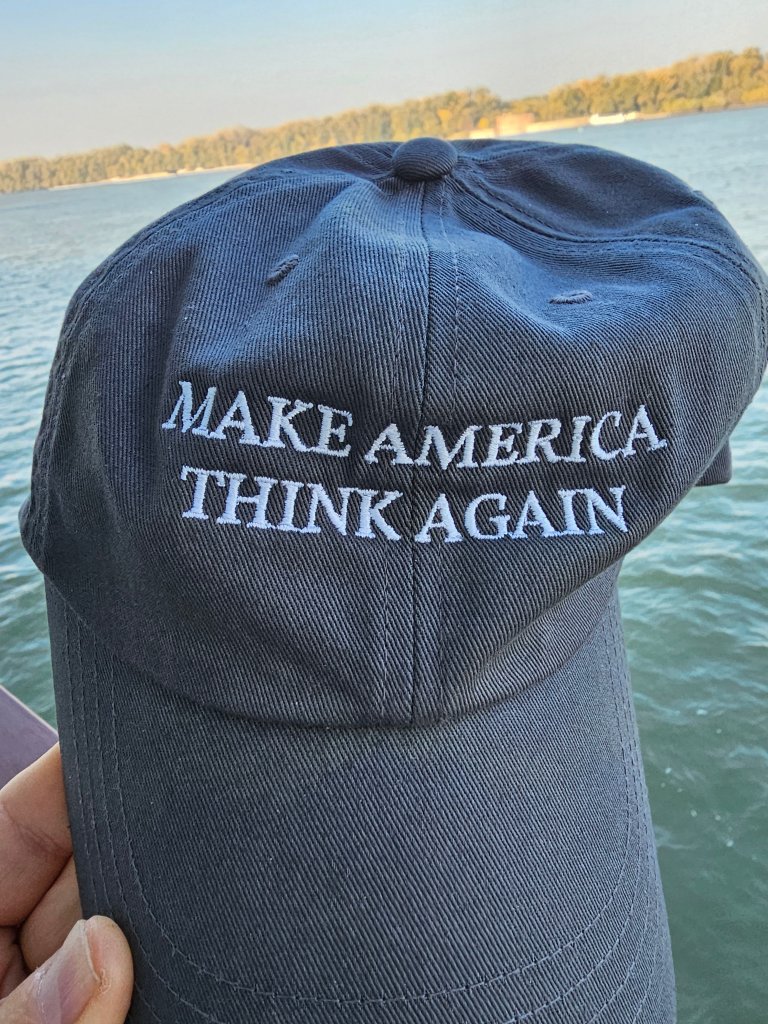
Time for a new look at reality.












 Tom's Musings