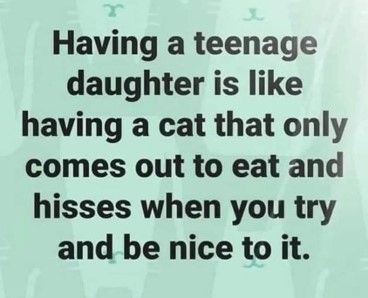
A few more awful jokes.








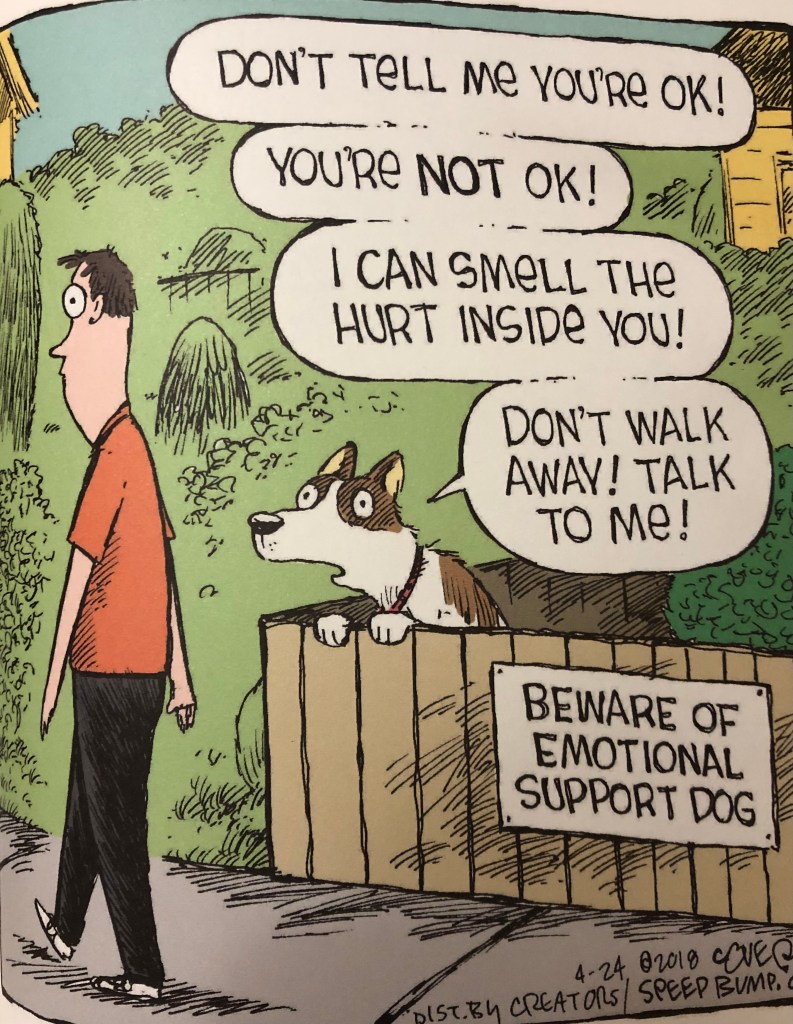

And here is Albert laughing at my jokes.

Don’t panic if I’m missing for a few days
Even genius has to relax and recharge every once in a while, though that excuse really has nothing to do with me.
A few more awful jokes.
And here is Albert laughing at my jokes.
Don’t panic if I’m missing for a few days
Even genius has to relax and recharge every once in a while, though that excuse really has nothing to do with me.
This series will be a rather random array of odd stuff that caught my attention. Again, I vouch for the authenticity of nothing, so caveate emptor.
…………………………………………
Josef Schulz was just an ordinary German soldier drafted in the Wehrmacht during WWII and stationed in the Balkans. One day he was ordered to serve on a firing squad to shoot 16 Ukrainian civilians. He considered this order immoral. He took off his helmet and joined the poor men about to be killed.
Josef was shot along with the others for disobeying an order.
………………………….
Edward Everett Hale was a prodigy who was admitted to Harvard at age 13 and became a minister and historian in life. In 1903, he became the minister to the U.S. Senate. One day he was asked if he ever prayed for the Senators. He responded as follows:
“I look at the Senators and I pray for the country.”
…………………………………………
Donald Trump, as we know, is a pathological narcissist, perhaps patterning himself after Josef Stalin. Everyone knew it was easy to get on Uncle Joe’s bad side which was a quick way to the Gulag or to one’s heavenly reward (I pity us if the Donald is reelected).
One story about Joe involves a talk he have at a mill factory. When he finished, the assembled crowd clapped for 5 minutes, then 10. At the 12 minute mark, the foreman of the mill stopped which the others took as their cue that they were also permitted to stop.
Bad move! The foreman was arrested and sent to a gulag for not being enthusiastic enough.
…………………………………..
Charles King is an ex-President of Liberia. He holds a dubious record for election fraud. In the 1927 election, he received 234,000 votes. Nothing shocking there except …
there were only 15,000 registered voters in the country.
………………………………………….
When Albert Einstein met Charlie Chaplin in 1931, they allegedly had this historic exchange.
Einstein to Chaplin: “I admire you because you do not say a word yet the world undertands you.”
Chaplin back to Albert: “And I you since the world so admires you though no one understands a thing you say.”
…………………………………………………
A really drunk guy approached author Truman Capote in a Key West bar once. The man was irate since his wife had asked Truman for his autograph. Upon confronting the author, the drunk pulled out his manhood and barked, “You like to autograph things, autograph this.”
Capote’s response was priceless. “I doubt there is room there for my autograph but perhaps I can initial it.”
………………………………………………..
Over a century ago, many females were diagnosed by male doctors as having an affliction known as ‘female hysteria.’ This was a condition associated with such symptoms as anxiety, depression, mood swings, and the like. One treatment for this affliction involved stimulating the patient’s private parts (clitoris) until what was termed a ‘pelvic paroxysm’ had been achieved. We know this outcome as an orgasm. Sometimes special intruments were employed (precursors to vibrators) or manual stimulation (no comment).
It never occured to anyone that the female patient simply was horny since women were not supposed to have such a weakness.
…………………………………………………..
Astronaut and U.S. Senator John Glenn actually flew missions in Korea with baseball great Ted Williams, the last Major League player to hit over .400 in a season. The so-called ‘splendid splinter’ (Williams was very skinny in his youth) lost some 4 or 5 seasons while serving as a fighter pilot in WWII and Korea. Glenn once told the story of Ted’s plane being hit and making it back with flames coming out of his engine, no radio, and disabled landing gear. He skidded down the run way and jumped from his plane before it could explode. Glenn oft said that he thought more of Williams as a pilot than a ballplayer, and he considered Ted one hell of a ballplayer.
And Ted’s impression of John Glenn. “Oh… could he fly a plane … absolutely fearless. The best I ever saw. It was an honor to fly with him.”
………………………………………………………….
There you have it … all the nonsense fit to print on the 1st of July, 2023.
There are many things that confuse me. Let’s face it, I am a guy who is easily confounded by all sorts of things like my smart watch which is way smarter than me. Often, my troublesome issue lies with how and why other folk see the world so differently than I do. The culprit here is either me or something amiss with all these other good people. Occam’s razor would suggest the problem lies with yours truley. Sigh!
Let me start with a common conundrum. Over time, I have heard many working class people assert that Republicans, or even more absurdly Trump, represent their interests with more fidelity than that other nefarious political party. I simply find that mind-numbingly absurd, simply beyond comprehension with my limited brain. Really, how could a party, and a group of politicians, whose transparent and sole purpose is to serve the interests of the filthy rich be seen to represent the average Joe. That simply beggers the imagination.
Okay, I get that some people in rural areas see their quality of life being diminished as towns and small cities decline, as farming increasingly becomes the domain of agri-business corporations, and as younger folk leave home in search of better, or any, attractive opportunities. If Wisconsin is any kind of bellweather state, the urban-rural split reflects our political landscape writ large. The state as a whole is seen as purple … it can go one way or the other by relatively small margins in statewide races.
At the same time, extreme gerrymandering has cemented Republican control of the state Senate and Assembly despite Democrats getting a small majority of all statewide votes cast. The bottom line … the Badger State is a microcosm for the nation where the Dems typically win the overall vote but, with the Electoral Vote favoring more rural and red states, Presidential elections are in doubt while control of Congress is typically hotly contested.
In our state petri dish, most rural Cheesehead counties are overwhelmingly Republican and conservative, which was not the case for most of my tenure in this state. I personally knew a number of liberal democrats who won elections in mostly rural western and northern counties, areas now solidly Republican. Still, I do understand the growing angst in such places. When you drive through small towns amidst the bucolic rolling hills of what is called the ‘driftless area,’ a terrain long ago carved out by past glacial movements, you can see and feel the economic and social decay. Businesses are boarded up and those yet open often look as is they could use a new coat of paint. It is sad in many cases.
Then you look at Madison, home of the State Capitol and the flagship campus of the University of Wisconsin system. It is booming, with new businesses and residential buildings sprouting up all over the place. Increasingly, it is the home of many high-tech oriented firms and increasingly is seen as the region’s health care and financial center. It is a place where professionals want to live and work. The oft-used example of the Madison boom is Epic Systems, the premier developer of computerized medical record keeping. It was started in 1979 by a UW grad with a couple of helpers and a stake of about $250,000 (in today’s dollars). Judy Falkner, the founder, is now worth billions.
Epic has a stunning campus just outside Madison (Verona Wisconsin). It employs about 12,000 mostly high tech workers with plans to expand their futuristic campus (a visit there rivals Disneyland) by adding another ancillary campus with 1,700 more workers this year alone. These are younger, well educated, professionals who tend to be liberal. Madison (and Dane County) now votes overwhelmingly Democratic … 82 percent for the liberal candidate in the latest election. It is tipping the state in a bluish direction. (Note, with gerrymandering, control of the state senate and assembly will remain firmly in Republican hands at least until after I pass from the scene.)
Many believe that the so-called outstate, those mostly rural counties located away from the big cities, are motivated in their political beliefs by a growing resentment what they see as effete, urban elites … those pampered and over educated prima-donnas who look down upon their country cousins with disdain as slow-witted bubbas. Thus insulted, at least in their imaginations, they vote for hard conservatives who sate their anger with histrionic rheoric about radical socialists and sometimes with confounding votes.
In the recent budget, the Republican controlled Senate and Assembly hacked out $32 million from the University budget to punish administrators for attempting to enhance diversity and inclusion in higher education. It is hard not to see this as ill-disguised racial animus … why are we helping those unworthy kids when my worthy kid is struggling.
But Republicans also refused to green light a new engineering complex on the Madison campus, a project that would mostly be financed with private donations. With everyone screaming that we need more STEM educated workers in this state as well as the country at large, this decision is simply nuts. Just watch China pull away from us laughing all the way to being the number 1 economic and technological power. Why not put up a sign at the state border or our national ports of entry saying ‘educated people go away.’
Now, I get the anger. I really do. I also make much fun at the expense of my former academic colleagues. They give me so much ammunition. Yet, I feel the conservative anger from average folk (not the filthy rich) misses the mark, by a lot. Hard working stiffs who vote Republican see these so-called elites doing well while they are struggling. They often believe that some traditionally disenfranchised groups are being helped disproportionately … with the recent SCOTUS ruling scaling back the use of affirmative action in higher education perhaps reflecting a mild backlash in the face of such sentiments. In fact, a recent poll in liberal California found a majority of respondents saying we might be going too far in redressing inequality of opportunity. Our melting pot has never adequately dealt with tribal competition and tensions.
However, and here is my incredulous amazement, why in God’s good name would you vote for a party and for politicians who have NEVER supported policies that favor people like you, other than attacking the same people you are likely to despise. And I mean NEVER, and I seldom employ absolutes except when vexed. While I know well that old saw about the enemy of your enemy being your friend, voting Republican in the belief they will help you economically is a bridge too far for me. There simply is no evidence to support this belief.
Why am I so perplexed this morning? Let’s just look at a few trends. As I’ve mentioned in the past, the golden era of America’s economy occured in the three decades following WWII when the tax system was very progressive and public spending on things like infrastructure, education, health, and social opportunities was rising. That ended in 1980 with the onset of the Reagan revolution. Since then, Republicans have held either the Presidency or Congress for all but a few years.
There have been momentary bright spots. Clinton had a couple of unfettered years where he started us toward budget surpluses and spurred several years of robust economic growth before Gingrich and crowd opposed him at every turn, eventually shutting down our government. The two years at the beginning of Obama’a administration also was an exception in which Obamacare was passed and we made our way out of the housing financial crisis. The same was true on Biden’s first two years which saw an impressive array of investments in technology, infrastructure, and middle-class well-being while he dug us out of the pandemic-induced economic reversal.
That being said, the last four decades have mostly seen the reign of top-down economics. Provide optimal economic incentives to the wealthiest Americans, and remove all impediments on them to act prudently, and we will all benefit. Be patient and the crumbs will fall off the tables of the uber rich to those waiting below. At every turn and for every problem, the solution was more tax cuts for the wealthy even as the national debt held by the public soared to almost $25 trillion in May, 2023. Though much of this debt growth was due to additional tax cuts favoring the wealthy under Trump, Republicans blamed it on spending for programs targeting ordinary folks.
The ‘trickle down’ con game has ruled our policy debates for decades now with some very questionable outcomes:
First, the distribution of the pie in America has become embarrassingly unfair. In 1970, the middle of the income distribution (the middle class) obtained 62 percent of aggregate income. That fell to 43 percent in 2018, while the share going to the more wealthy group rose from 29 percent to 48 percent (the poorest remained comparatively unchanged). However, the richest of the rich did very well. The top 1 percent saw their share go from less than 10 percent in the late 1970s to almost a quarter of the pie in recent years.
While there are several reasons for this, our tax system remains a big one. The top marginal tax rate was 91 percent during the Eisenhower years as we paid down our war debt and invested in a growing middle class. Kennedy knocked the top rate down to 70 percent but it was not until Reagan came along that the uber wealthy began smiling all the way to the bank. The top rate was dropped to 28 percent. While we have retreated from that low point somewhat, the really rich still do very well. There are special breaks for certain types of income available only to the richest of the rich (e.g., hedge fund managers).
All this leads to atrocious inequities. For example, Big Oil made $200 billion last year and still got a $30 billion dollar tax break. Many billionaires, like hedge fund managers just mentioned, pay something like 8 percent in income taxes on average, a rate well below what your typical working stiff pays. This was a point made repeatedly by Warren Buffet who did not understand why he paid proportionately less in taxes than his secretary. Can anyone answer his question besides the obvious response that the wealthy can buy off too many of our politicians?
Such trends, or outcomes, lead to … guess what … more inequality. A study of G-7 nations (the U.S., the U.K., Italy, Japan, Canada, Germany, and France) found that we had the most distorted economic outcomes among these rich nations. The most commonly used measure of inequality is the GINI coefficient with 0 being perfect equality and 1 being perfect inequality. We were at 0.434 (quite high inequality) while France was the most equal of the group at 0.326. If the Scandinavian countries had been included, the U.S. would be way down the list … looking relatively worse that is.
Extremes of inequality lead to bad outcomes for vulnerable groups. Take children for example. Kids in America are much more likely to be poor when compared to ther peers in other wealthy countries. Poverty gets measured in different ways but most studies put about one-in-five American kids below the poverty line in recent years. Again, other wealthy countries see rates almost half as much. Several Scandinavian countries have rates at 5 percent or lower with the Danes coming in at 3 percent. As the old maxim goes, the moral worth of any country is measured by how it treats its most vulnerable citizens. Need I say more.
These extremes also tend to get systemized over time. Higher inequality gives the uber rich more leverage in tilting the rules in their favor. It is not rocket science that they can then fund candidates they like and policies that favor them. They want to preserve their favored situation in the future. Duh!
A study of global social mobility bears this out. An index has been created that assesses the prospects of moving up (or down) in society. A measure of 100 indicates the greatest social mobility possibilities while lower scores indicate lesser mobility or less of a chance of moving up the economic and social ladder. Robust social mobility used to be thought of as the American dream, where hard work could realize anyone’s dreams. Denmark came out #1 (a score of 85.2) while the U.S. ranked 27th (a score of 70.4), just below Lithuania but one spot above Spain. In truth, the old American Dream is now found in those socialist northern European countries which, not surprisingly, have the happiest citizens according to global hedonic studies (the U.S. has ranked about 17th in happiness recently).
It is not that all Americans have their heads buried in the sand. Some 61 percent of all Americans feel there is too much inequality here, though only 41 percent of Republicans feel this way. Similarly, some 70 percent have indicated in recent survays that the economic and political system is unfair. Perhaps that discontent is reflected in our widespread disillusinment with the federal government. Slightly less than one-quarter of respondents now express trust in our national government to do the right thing, down from over 70 percent in the early 1960s. Even insiders now despair. Liz Cheney, a conservative Republican who also happens to have principles and brains, said recently, “what we’ve done in our politics is create a situation where we are electing idiots.” Wow!
See my confusion. By most, if not all metrics, Republican leadership is leading us into 3rd world status. Why aren’t more folks outraged? Why do so many continue to support those who act contrary to their basic interests and against our national survival as a country of promise where all might prosper?
Can anyone help me out here? I do remain confused.
The question is … are things at home (the U.S.) or around the world better or worse than when my generation came of age in the post WWII era. I have waffled hopelessly on this issue since first raising the question several posts ago. Why the dithering?
Partly because the answer is conditional. I would give a different response is I were responding from my personal situation, or that of people like me or close to me, or from viewpoint of some larger perspective (e.g., society). It is the old ‘where you sit determines where you stand’ conundrum. But there are so many other factors that might condition my response. Are we talking about creature comforts, or the strength of society (assuming we knew how to measure such), or our prospects (valid or presumed) of the future. And there lies the rub in all such vague queries … so much depends upon the character of the initial question posed. This was a point I sressed with my policy students. If you don’t get the policy question right in the first instance, solutions will elude you.
In part, my confusion lies in the fact the question is unanswerable as posed. All comparative assessments, like this one, are inherently subjective. Sure, we can drum up a set of quantitative measures and hope we have decent, or at least comparable, data across time. But, as suggested in a prior post, these thrusts at some empirical answer are far less rigorous than one might imagine. That’s why we can get an outcome in Wisconsin where Green Bay is rated as a more desireable place to live than Madison. Other than a few die hard Packer fans, I cannot imagine too many real people agreeing with this ranking.
One thing I do know. When I chat with my neighbors and acquaintances, there is an overwhelming feeling that things are worse off now than when they were young, and we are all old farts. Now, these are a group of highly educated, professional folk (retired doctors, lawyers, engineers, academics, and such). They are all financially well off and most have enjoyed long and successful marriages with children who are, on balance, doing well. These are our success stories, folk who should be optimistic and hopeful. That said, our regular discussions on this matter suggest they are not optimistic in the least. They are deeply pessimistic about the future.
So, let me start there. Why do these more successful senior citizens evince such dark opinions on the state of society and the future we have before us. Time and again, I hear the refrain that they are glad they are old and that they are desperately fearful of what their children, and particularly their grandchildren, face. Given this, I have pushed myself to think back to my youth. The people in my long-ago world were far removed from those who now surround me, at least in terms of status and economic success.
Back then, my family (and our neighbors) had no luxuries. In my early years, I lived in a cold water flat, my mother washed clothes by hand, we took buses everywhere, and there was no central heating. I can recall seeing my breath in winter since my bedroom was far removed from the space heater we employed to keep us from freezing. But there’s the thing. That seemed normal to me. I didn’t feel put upon or disadvantaged. Everyone around me was in the same boat, or leaking raft if you will.
If I had cast my attention upon the broader world then, I would have seen war, felt the real fear of imminent nucear annihilation, saw extreme racial divisions, sensed oppression and exploitation of all kinds of groups including members of the LGBTQ community. I would have heard stories such as the fate of Alan Turing, the British mathemetician and logician some call the father of the computer age and the breaker of the Enigmal Code during WWII which saved untold allied lives. He was driven to suicide by the hateful manner he was treated for his sexual preference, including being jailed. I also would have known that we incarcerated thousands of Japanese Americans in concentration camls during the recent War for no greater sin than their heritage, a fate spared those of German and Italian descent. If I had cared, I would have been aware rather widespread poverty in many parts of America where people still lived without indoor plumbing and electricity, a reality that shocked Senator John F. Kennedy as he toured rural West Virginia seeking the Democratic nomination for the presidency.
But here’s the thing, and there is aways a thing, underlying all the bad news, and there was plenty of that, was an undercurrent of hope and optimism. Fascism, which recently had seemed unstoppable, had been smashed, at least in the places that counted. The other totolitarian form of governance remained a menace, but by the 1960s had attained the zenith of its reach, though would hang on for another generation before collapsing from its own internal contradictions. For three decades after the end of WWII, the American economy grew and, because of progressive policies remaining after the New Deal, was shared by all Americans. Every quintile of the economic pie had doubled its income in real terms, after inflation. Inequality had fallen to historically low terms so that, by 1979, the top 1 percent of Americans had less than 10 percent of the pie, an historically low figure. Beyond that, a host of ‘rights movements’ were confronted, and then rolled back to eliminate the legal impediments to full participation in society. And America stood alone as the most powerful country in the world.
None of this was accomplished easily or without trauma. The traditional elite never forgave FDR for leveling the playing field, for introducing regulations and limits on what had previously been a largely laissez faire approach to the economy. Slowly, and tentatively at first, they began a counterattack that would continue into contemporary times. Those who clung to a feudal notion of white nationalism were not about to give up their privileges easily, attacking and bombing and lynching those whom they saw as threats. And the left, enraged by what they saw as American overeach in its military adventures, struck out with their own form of nihilistic violence. By the 1960s, no one could put a pretty face on what was happening in America. I can yet recall sitting in my remote site in rural India in the late 1960s while thinking … the bloody country is falling apart.
And yet, despite all that, there was a sense of optimism amongst my generation, and even the generation before us. I can recall my father-in-law saying many times that things had gotten better for working men like him over his lifetime. I can recall the lives of my own parents improving demonstably as they could afford more creature comforts over time. There was a sense of movement and hope and progress despite all the pain and temporary anguish that inevitable accompanies dislocation and change.
My father was a damn smart man. Yet, schooling beyond high school was never an option. I never showed much promise as a youngster. In fact, I was lumped with the slow kids one year in grammar school. Still, going to college was always a given to me, even though my parents could not contribute much at all to financing my education. It was doable and, if you wanted it, you could go get it. Yet, we did not emerge from our self-directed path to success as adults with any sense that we were better than others, at least not the guys and gals with whom I associated. No, we focused on ways that we might reach back and bring others less fortunate along with us. We instinctivley realized that we were not special. There were many smart and talented kids just like us who faced additional barriers or were not as fortunate. There were many ‘diamonds in the rough’ who needed just a little push or perhaps a helping hand to get going.
As I mentioned elsewhere, cognitive biases can distort history, or at least how we see the past. Change happens slowly and reluctantly, hope can be illusory in the short run. The Grimke sisters, who were raised in the ante-bellum South in a slave holding culture rejected slavery passionately. As adults, they moved to the North to fight against what they considered an abomination. Abby Kelley, who grew up in Worcester and environs, my home town, joined the Grimke sisters in speaking and organizing to promote both the abolitionist cause and, simultaneously, the rights of women. When they started their campaigns in the 1830s, they were reviled for both their liberal views on race and their wilingness to challenge traditional gender roles.
It was not an easy path. It would take another four decades to end slavery and another century to smash apartheid in parts of America. It would take almost nine more decades to get women’s suffrage and some seven score decades before restrictions on women began to seriously fall. Yup, change doesn’t come easy, nor absent patience.
Yet, these early abolitionist females persisted despite the dangers and personal sacrifices. Why? Perhaps they were batshit crazy. OR, they had this core of optimism and hope that was not easily extinguished. Most of these pioneers continued, and there were scores of them, even when they realized their goals would not be achieved in their lifetimes, or when it became apaprent that success would only come at a horendous cost. The number of deaths attributable to our civil war cannot be known for sure but some plausible estimates put the total at over 700,000 from battle and disease.
As I think back to my early years, I was not some cock-eyed optimist by any stretch. As I’ve oft repeated, I was burdened with the Irish black cloud. Despite that innate disposition, I came around to this belief that things would get better. Our generation, my generation, was better than those that came before. We saw the possibility of a more inclusive and better world, one that would reach out to all irrespective of accidental attributes such as color or ethnicity or sexual preference. We even saw a world where some dimensions of the good life might be assured … like access to health care and education and adequate nutrition. This would not be accomplished at the expense of personal responsibility, not by a long shot. It was more like giving all in our national community a relatively equal chance at doing well in life. The unfairness of the birth lottery, where privileges are inequitably distributed and not earned, would be muted. That was the dream that drove us … the vsion of a more equal and fairer world.
Obviously, that did not happen. Many things are better, immeasurably so. But at least two things frighten us to our core. One reality is that the sense of inevitable progress is gone. Our dream of a bright future stalled, and then gradually faded. Let me touch briefly on this theme now (more in the future). The explicit counter revolution against the spirit of the New Deal can be traced back to the 1950s, William Buckley’s National Review and the Virginia School of Economics, a conservative think tank based on Jeffersonian principles and public choice theory launched by James Buchanan. Its tenets slowly picked up steam resulting in the Reagan evolution of 1980 after the two parties had sorted themselves out into distinct liberal and conservative camps. Yet, even then, Reagan could reach across the aisle to work with Democratic speaker ‘Tip’ Oneill. The culture war was simmering but had not ignited.
That era of sound and rational government came to a bitter end with the Gingrich Revolution of the early 1990s, a period to which I was close enough to witness. Now, Republicans were ordered to oppose the opposition at every point (there were some exceptions like NAFTA). Compromise was deleted from the political lexicon as a dirty word. More than that, Republicans now were expected to demonized the opposition in vicious and personal ways. They were given colorful words to use when referring to Democrats and anything the so-called radical socialists proposed. A good Republican friend of mine told me how the systems of Party fines and penalties for those collaborating with the other side worked. Those refusing to go along were labeled RINOs and driven from the party.
A whole new communication world emerged, starting with Rush Limbaugh in 1988. But it gained steam with the Drudge report in 1995, Fox News in 1996, and Newsmax in 1998. Talk radio exploded from 2 stations in 1960 to 1,130 in 1995, with 70 percent pushing a conservative viewpoint. With big bucks to be made, Limbaugh was followed by Beck, O’Reilly, Hannity, Carlson, Coulter and other stars of the hard right. Evangelicals like Ralph Reed and Pat Robertson had no trouble convincing gullible Christians that they and their beliefs and especially their culture were under attack.
Suddenly, rather than coalescing around a common vision and national narrative, we were being torn apart culturally with personal or ad-hominem attacks. Cooperation and bipartisanship across parties became virtually non existent, a harsh reality not seen since the equally volatile period just before our Civil War. The parties, which had seen much cooperation in my youth, had divided categorically into a hard conservative and a more liberalish camp.
This cultural divide, or chasm, is best represented by what are called ‘trifecta’ states where the three branches of governemt are held by the same party. There are 17 such Democratic and 22 such Republican states. These two camps are racing away from one another … one toward and inclusive society focusing on oppotunity for all and the other on a more feudal vision of society where the goodies go to the strongest and leadership is concentrated at the top. That’s overly simplified for now but represents a burgeoning reality.
The second reality confronting us is that our newer challenges seem particularly catastrophic. Okay, nuclear annihilation would have been catastrophic but that was within our control. We had to do something pro-active to incinerate ourselves. On the other hand, it is hard to imagine how a civil society can survive a climate catastrophe which will happen unless we do something to stop it. It also is easy to imagine the social stresses emerging from the AI revolution, or the nightmare scenario where humanity is threatened by its own technological wonders. And there are the conventional dangers like hyper-inequality. How can society reverse course when more and more of the goodies are accumulated into the hands of a very few. Is there a point where hyper-inequality increases exponentially according to some inherent dynamic laws. If so, the end of a civil society may be in reach.
And there is the rub. My peers see an evaporating hope. They see a governing system incapable of responding to the harsh realities before us. We are too divided by a cultural war that must appear frivolous to outsiders. Oddly enough, only war, the kind with bullets, has brought us together in the past. Might we come together again in the name of a positive vision … like combatting clmate change and saving the globe. Perhaps!
Unfortunately, our record does not suggest much optimism is warranted.
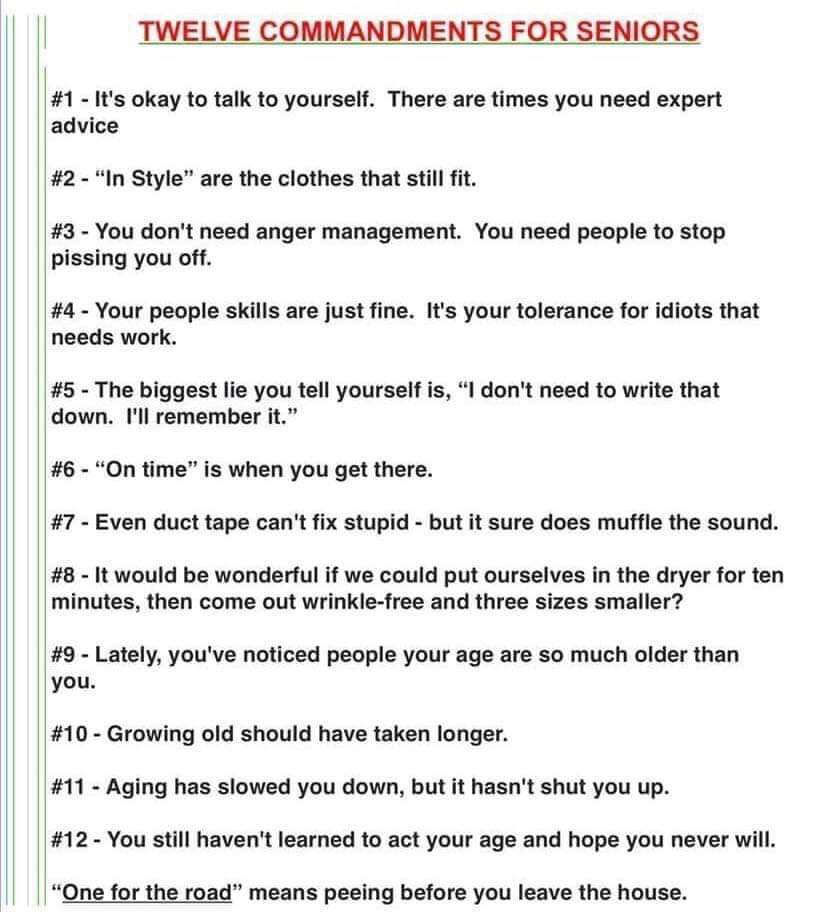
Time for some wit amidst all the wisdom I share. I know, I know … you can’t find either wit nor wisdom in my posts. But the price is right.
………………………………………………………………….
Bad News … A man goes on a lengthy business trip and leaves his pet dog with his brother. He calls a week before his return to ask how his dog is doing.
“Oh,” the brother hesitates before blurting out, “he’s dead.”
“What?” The man replies. “Couldn’t you have broken it to me with more sensitivity?”
“Like how?”
The grieving man continues. “Well, you could have first told me that Fido got out of the house. I would have called back after a bit and then you could have told me that Fido had somehow got up on the roof but help was on the way. When I called the 3rd time, then you could have said that the fire department was there to rescue him. And then, during the next call, you could break it to me that fido fell off the roof and died. By then I would be prepared.”
“Got it,” the brother said. “I’ll do that next time for sure.”
“Good, so how’s mom?”
The brother paused a moment. “Ah, she’s up on the roof but the fire department has been called.”
………………………………………………………
The Circumcission Conundrum … a teacher noticed a little boy squirming around at the back of the class. She went back to find out the problem. He was embarrassed and whispered to her that he had recently been circumcised and it was quite itchy down there. She told him to go to the Principal’s office and call his mother.
The boy did as instructed but then returned to class and now was creating a bigger fuss in the back of the class. The teacher marched back to see what the problem was now. The boy was sitting there with his penis hanging out.
“Didn’t you call your mother?”
“I did,” the boy exclaimed. “She told me that if I could stick it out until lunchtime she would come and pick me up.”
……………………………………….
A Fairy Tale … Once upon a time, a beautiful Prncess stumbled upon a frog in a pond.
The frog said to the princess, “I’m a handsome Prince but an evil witch put a spell on me. But one kiss from you and we can marry, move into the castle with my mom, and you can prepare my food, clean my clothes, bear my children, and forever be happy doing so.”
Later that evening, the beautiful Princess was dining on frog legs as she laughed, “I don’t think so.”
……………………………………………
In Loco Parentis … On the first day of college, the Dean addressed the Students.
“Remember, the female dorms are out of bounds for male students and the male dorms are for female students. For the first violation, the fine is $20, for the second it is $40 bucks, and the third offense will cost you $120.”
A male student shot up his hand.
“Yes?” the Dean acknowledged him.
“How much for a season’s pass?”
……………………………………………………..
The Deal …. Paddy was driving in Dublin when he saw a sign at a petrol station that caught his eye. FREE SEX with every fill up! Excited, Paddy pulled right in and filled up his car.
“Do I get my free sex now?”
“First,” the owner said,” pick a number between 1 and 10.”
“Seven, that’s my lucky number.”
“Oooh, so close. The number was six. Better luck next time.”
Paddy drove around the city all day and went back when he was almost out of petrol. After filling up the tank, the owner again asked him for a number.
“Six,” Paddy said confidently.
“Again, so close. The winning number was five.”
Paddy relayed his close calls to his buddy Sean. “Oh Paddy,” Sean scoffed. “The game is rigged. You will never win.”
“Not so,” Paddy argued back. “My sister had her tank filled there twice last week and got free sex both times.”
…………………………………………………..
The Double Bogey …. One day, Paddy took his wife golfing with him. On a difficult hole, he sliced his ball off the fairway and behind an old barn where the equipment to keep the course ship shape was kept.
“Oh, what will I do now?” Paddy lamented.
“I know,” his wife said. “I’ll open the doors on both sides and you can hit through the open barn right to the green.”
“Wonderful idea.”
She opened the doors on one side and then went around and opened the doors on the other. Paddy took his time, taking very careful aim. Then, he gave the ball a mighty whack just as his wife looked around the door to see what was taking so long. The ball hit her directly in the forehead, sending her to her heavenly reward.
A month later, Paddy hit the same drive on the same hole. His buddy Sean said, “No problem. I’ll open both doors and you can hit right through the barn.”
“No way!” Paddy exclaimed. “Not after what hapened last time.”
“What happened?” Sean inquired.
“I shot a double bogey on this hole.”
……………………………………………………………
The Golf Addict …. Paddy never missed a Saturday golf date with Sean and his other buddies. He was there every week no matter what, even as others in the foursome missed a round or two on occasion.
One Saturday, they were teeing up on a hole that was adjacent to the road that led to the local cemetary. As Paddy was about to tee off, a line of cars slowly passed, obviously headed to the burial of a recently deceased soul. Paddy doffed his cap, bowed his head, and stood silently as the cars passed.
“Paddy,” his buddy Sean said, “I take it you knew the deceased.”
“That I did, Sean, that I did. She was a damn good wife to me these past 40 years.” Then he put his cap back on and teed off.
………………………………………………….
Donald Marks His Territory … After Trump won the 2016 election, he stopped by to chat with the outgoing President. After a few beers, Donald asked if he could use Barak’s personal toilet.
“Of course,” the ever pleasant chief executive replied.
Donald was amazed when he noticed a gold urinal there. He mentioned it to Melania later, saying he would have to have a bigger and better one after they moved in.
A bit later, Melania and Michelle had a lunch to exchange pleasantries in which the incoming first lady expressed her surprise that Obama had such a luxury in his bathroom.
That night, as they were getting ready for bed, Michelle spoke up. “Oh, I learned one thing from Melania earlier today that might interest you.”
“What’s that?” Barak replied.
“Donald took a whizz in your saxaphone.”
……………………………………………………………………..
The Wisdom of Cliff … “Well, Normy, it’s like this. A herd of buffalo can only move as fast as the slowest buffalo. So, when the herd is hunted, it is the slowest and weakest ones at the back that are killed first. Now, this natural selection is good for the herd as a whole.
“Why’s that, Cliffy,” Norm asks.
“Because, you see, the general speed and health of the whole group keeps improving by the regular killing-off of the weakest members. In much the same way, the human brain can only operate as fast as the slowest brain cells. Excessive intake of alcohol, as we know, kills brain cells but, as with a buffalo herd, attacks the slowest and weakest brain cells first.
“Really?” Norm rolled his eyes.
“It’s a fact, Normy. Regular consumption of beer eliminates the weaker brain cells, making the brain a faster and more efficient machine. That’s why you always feel smarter after a few beers.”
They ordered another round.
…………………………………………………….
The Delivery …. A coffin manker was delivering one of his products when his truck broke down just short of his destination. Being strong, he lifted the coffin on to his head and was walking the rest of the way.
“Hey,” a cop yelled to him, “where do you think you are going with that coffin?”
“Hell, isn’t it obvious,” the frustrated coffin maker yelled back. “I didn’t like where they buried me so I’m relocating.”
…………………………………………………………..
… A woman married and had 4 children before her hisband died. She remarried and had 2 more children before the 2nd one passed. She married a 3rd time and had 3 more kids with this last one before he kicked the bucket.
Finally, this good woman herself passed. The local Priest got up to give the eulogy. “Ah, good Margaret obeyed the Lord’s command to go forth and multiply. But now, she will be rewarded by being together again.”
One mourner leaned over to her neighbor and asked, “is he referring to being together with husband number one, two, or three.”
“None of them,” the neighbor replied. “The good Father is referring to her legs.”
……………………………………………..
The Poker Game … A well respected doctor was at home relaxing when the phone rang. It was from one of his medical colleagues who told them that they needed a fourth for poker. “I’ll be right there.”
His wife was looking forward to a quiet evening at home and was not happy to see him run off for yet another emergency. “Again? This better better be serious.”
“Oh, very serious indeed. In fact, there are three doctors there already.”
……………………………………………
Gray Hair … A curious child asks his mother, “why is your hair turning gray?”
The mom relied as follows. “Every time you disobey me, do something naughty, and don’t listen to me, another of my hairs turns gray?”
The boy looked thoughtfully toward her. “You must have been awful as a child cause grandma’s hair is totally white.”
…………………………………………….

………………………………………………………
And remember this …. tact is for people not witty enough to employ sarcasm.
I have dodged and weaved about the initial question posed in this series of blogs … are things worse now than they were when my generation came of age? In my heart, I know there is no way to answer such a question, at least not with any degree of fidelity. The answer lies hidden behind the penumbra of subjective impressions and assessments.
True, the quants in the crowd will insist that metrics can be explored to assess the relative goodness or happiness across time periods. They will look at economic activity, crime statistics, divorce rates, suicides, and so forth. But these are rough proxies at best for the underlying phenomenon of interest which, unfortunately, remains obtuse and elusive. Recently, in one of the endless lists of best this and that which pop up on my phone, there was one that presumably enumerated the best place to live in each state, using what they said were objective measures. Yeah, right! They had Green Bay as number one, just ahead of Madison in the Cheesehead State. Green Bay? Really! I know of no one who talks of moving to Packer City while MadTown is booming with population growth and often is listed in the top 3 places to live in the country, if not the best. Beware of people bearing numbers as if they had magical properties.
No, in the end, such a comparison remains a matter of personal judgment. In approaching the topic, I am loosely aware that research suggests that the dominant bias is to view the past with rose colored glasses. We tend to suppress or repress or just plain forget the hard and distasteful aspects of long ago in favor of the pleasent and uplifting. Perhaps that is why I recall so little of my childhood. Actually, not true. How could you forget that I wrote a whole book about my youthful indiscretions. Based on that literary gem, I could argue that one ONLY recalls the embarrassing and the painful.

I do have one more or less firm insight on the objectivity of recollections from one’s past life. My Peace Corps group (India-44) got together for the first time on the 40th anniversary of our return to the States in 1969. It was the first reunion I ever attended and found it to be a positive, emotional experience. The result of that gathering (and a couple of more such events), we decided to set down of our thoughts and recollections of India in an edited form and my later integrated retelling of our follies in a work titled Our Grand Adventure.

Throughout our struggles to recall our past service with any reliability, we continued to question our specific memories along with any summary feel for that portion of our lives. Based upon several discussions as we developed our written record on the sub-continent, I think it is safe to say the following. The experience was hard, very hard, but we felt that it immeasurably altered our lives for the better. We were pushed, yet those of us who remained to the bitter end, a minority of those starting out in 1966, were the better for experiencing this challenging part of our lives. At the same time, most of us felt we were hopeless screwups who were out of our depths. The survivors of India 44 were an extremely smart and talented group as a whole. Most accomplished amazing things in their lives. But throwing city kids just out of college, armed primarily with liberal arts degrees, into rural India to be agricultural specialists was not the best idea Peace Corps ever had. In fact, it might rank among the worst.
Eventually, though, we realized that we did have some real-time records of our experiences. We would not have to rely solely upon faulty memories. One volunteer kept detailed journals of his experiences which he diligently dug up to review. His entries included a descriptions of events in which many of us jointly participated. Others had letters written home that had been kept by family members.
Even I, not a journal keeper, came up a form of written record. I wrote a number of letters to my college girlfriend who looked increasingly wonderful to me as I experienced the loneliness of the Rajasthan desert, isolated and with no means of easy communication with the outside world. I even thought about, and surprisingly wrote about, the prospect of marriage … a shocking turn for an anti-commitment bloke like myself. Like I said, the place was challenging.
However, she was a bright young woman (she would get a Doctorate in a real science) who decided to marry a Post-Doc she met while working at Harvard. But we continued to communicate for the remainder of my tour. Why this story of romantic loss and my hapless love life? Well, she and I did reconnect by chance (through cyberspace) some 4 plus decades later. Once reconnected, we kept up a lively and continuous interaction through cyberspace though we never physically met. However, I found out that she kept everything I sent her as well as many memorabilia from our college romance. I won’t go into this in any detail but we figured out that we did love one another back in school. We were simply too dumb and naive to realize it. Oh well!
But here’s the thing, she sent me everything she had about US, including all my letters from India to her. These became the closest thing to a journal I would ever have and the best insights to who and what Tom Corbett was as a young man. Then again, I suppose I could have lived quite well without that knowledge. However, I did pour a lot into those missives, all my hopes and fears and angsts. I doubt I have ever expressed myself better, or with more authenticity, than in those letters.
So, what did we learn from these ancient recordings in real time? Mostly, that we were more successful than we recall, and that we had more positive experiences than we could capture from our flawed memories. I chatted about accomplishments and undertakings that I no longer remembered four decades later. So did our journal keeper. He was amazed at descritions of agriculture projects that he had absolutely forgotten about.
Oh, we all discussed our struggles. They were real enough. But they apparently were offset by positive events and experiences, things that we tended to lose for some reason. My best guess is that our hopes going in were overstated on the positive side and that relative to those high expectations, reality could not match up. Our bottom line, our overall gestalt drifted to the negative side in light of our overly optimistic expectations.
One funny incident will suffice. As we were leaving India, I was rooming with the journal keeper in Delhi as we were going through all the exit protocols. When he mentioned an eye problem, we prsssured him to mention this so that PC would take care of it. That evening, he returned from seeing an Indian eye specialist who told him he had a very serious problem but insisted that the Peace Corps doc would have to tell him what it was. After wandering about on his own contemplating his imminent demise, he returned to our room that evening distraught and depressed, only to find that I had locked him out. It turned out I was occupied with a young lady who obviously had dubious standards.
Now, my memory of the event is that I was a complete schmuck who was only concerned with his own carnal delights and erotic possibilities. Hey, I’m a guy! Apparently not, however, at least according to his journal. True enough, on his first try, I believe I picked him up and chucked him down the hotel corridor (he was small of stature). On a subsequent try to gain entry to our joint room (after he tried the room of his close PC friend who treated him as I did, and for the same reason), I finally took a moment to listened to his tale of woe.
Before going to the written record, you must believe me that I have no menory of doing the right thing … none whatsoever. However, according to his journal I immediately abandoned all efforts to seek a sexual nirvana and dived into making frantic calls to find out if he was going to die anytime soon. While I was so engaged, he chatted with my lady friend. Frankly, I am stunned by my display of altruism. I mean, really, you don’t get many chances at erotic bliss in India. But it says I was self-sacrificing in black and white. I did the right thing. After all this time, I am yet amazed at that.
He also wrote in his journal that his conversation with this attractive young lass made him even more depressed. Apparently, she went on about how sexy she thought I was (I still had that Kennedy Boston accent then). He wasn’t impressed with my romantic prowess since he believed he might be dying. You would think he would put my erotic needs above his own life. Really! In the end, though, I did the right thing and his problem turned out to be a detached retina, not life threatening but which did require a trip to a military base in Germany for repair (his best friend and I visited him there). Go figure!
One of the problems I have with a blog is that I start out with a point in mind and then let my mind, and fingers, wander. I never get to my main point … which is whether the present is better or worse than when we came of age in the post WWII era. Alas, that will wait at least one more blog. Sorry about that.
Let me leave you with this. Presumably, the dominant bias is to empahsize the positive and neglect the negative from long ago recollections. That being said, my own single experimental result (from PC memories compared to the few written records) suggests that we India -44 volunteers tended to emphasize negative memories and to discount positive ones. Don’t you hate contradictory evidence?
Hmm, I’ll have to noodle this a bit further and let you know what I decide.
How about some facts you cannot live without:
In Massachusetts, it is illegal to go to bed without first having a full bath … I should have been chucked into the the slammer as a kid for sure.
It is illegal to mispronounce Arkansas in that state.
Justin Timberlakes half-eaten french toast sold for over $3000 on eBay … I’ll sell you mine for a fraction of that.
There are more cells in the human body than people living on earth. My body probably has more cells than the population of several earths.
Fingernails grow nearly 4 times faster than toenails.
Snails can sleep for three years … almost as long as I can.
An ant can lift 50 times its own weight but a bee can handle 300 times its own weight … Big deal, I can lift a 10th of my weight.
Pentheraphobia is a fear of one’s mother-in-law.
In New York city, about 1,600 people are bitten by other humans (in a year I suppose) … New Yorkers must taste good.
Koala bears are not bears … sneaky devils.
‘Evian’ spelled backwards is ‘naive’ … now that makes sense.
No word in the English language rhymes with month … you are trying to prove this wrong, aren’t you?
Leonardo da Vinci was dyslexic, he often wrote backwards.
Eggs sink in water when fresh, they float when expired. Do they levitate when spoiled?
Sound travels 5 times faster underwater.
The correct response to the Irish greeting ‘top of the morning to you’ is ‘and the rest of the day to yourself.’
Barbie’s full name is Barbara Milicent Roberts.
When you kiss, 200 million germs per second pass between the mouths … that’s it, no more romance for me.
There are more dogs than children in the city of Paris. No problem, dogs are nicer anyways.
In Michigan, a woman isnt allowed to cut her own hair without the permission of her husband … makes sense to me.
On average, the lifespan of an American dollar is 18 months. Far less in my wallet.
in 1776, a person making $4,000 per year was wealthy. Now, I just got to perfect that time machine and I’ll be as rich as Croesus.
Human thighbones are as strong as concrete … not mine.
Rats can swim for a half mile without resting, they can tread water for 3 days straight.
Female Pandas raise cubs on their own, the male leaves after mating … just like many human males I know.
In 1900, the average lifespan iin the U.S. was 47 years.
Mosquitos usually dont fly in winds greater than 10 mph … bring a fan to your next picnic.
You lose 7,000 brain cells a day at age 35. They are never replaced … shit, do I have any left?
Chocolate is associated with the release of seratonin which makes you feel happy … happy, happy, happy!
Dogs sweat through the pads on their feet.
The shortest verse in the bible consists of two words: ‘Jesus wept.’ (John 11:35).
A queen bee lays about 1,500 eggs on an average day. Now we know where the term ‘busy bee’ comes from.
Many were concerned about Albert Einstein when he was young since he couldn’t speak properly until he was 9 years old. I also was a late developer but that was because I was slow.
Fleas can jump 130 times their own height … I wonder if I can outjump a flea?
Consider this! There are a million ants for every human on the earth. Let’s hope they don’t get organized.
Banging your head against the wall uses up 150 calories per hour. That’s how I’ve lost weight recently.
There are more nerve cells in the human brain than stars in the milky way.
There is enough DNA in your body that, if put end to end, would stretch to the sun and back 500 times.
Did you know that your typical office desk has more germs than a toilet? A great reason to skip work.
A person eats 60,000 pounds of food during his or her life which is the equivalent of six elephants. OMG! I think I’m past my quota.
You burn more calories sleepng than watching tv … Damn, I’m going on a sleep diet.
You can think me for this educational post later. BTW … I vouch for none of this information.
Has the cultural divide between the left and right become an unbridgable chasm? Is the center dissolving as those hugging the middle ground are being forced to take sides?
Unfortunately, it is always difficult, nigh impossible, to assess with any fidelity such comparative differences across vast differences of time. Recently, I was lamenting to a friend that this is the worst construction season I can recall in Madison. Nary a street seems to be without those orange cones, or blocked lanes, zig-zagging traffic lanes, and backed-up impatient drivers. For the first time in memory, you really cannot get anywhere from here, at least not easily. But is that accurate? Is my current annoyance clouding my memory and perspective?
So, the question remains, did we get along as a society better in the old days, before Fox News and culture wars and armed attacks on the Capitol at the urging of a sitting President? Many believe so but is it true? After all, recent experiences have the advantage of just that … being recent and fresh in our memories while the past tends to fade with time.
I can think back to my childhood and youth. There surely were conflicts back then, certainly as I came of age in the 1960s, but even in the somnolent 50s. After all, we had a form of legal apartheid in a good portion of the country during that decade … a period seen by many as the halcyon days where all was peaceful and happiness reigned.
But just think a bit about the world back then. Blacks and other non-whites were told where they could go or not go, or where they might sit or not sit, or if they could vote at all. And they surely were told how to act in the presence of Whites. Emmett Till, a 14 year old black boy from Chicago visiting family was murdered in 1955 for allegedly whistling at a white woman (which she recanted many years later) in Mississippi. His murderers were subsequently acquited by an all white jury despite overwhelming evidence as to their culpability.
Lest we forget, people also resisted the putting of flouride in water supplies because it was considered a Communit plot of some sort. A good friend today laments that, growing up in North Dakota, she suffered many cavities since no fluoride made it into her water supply. She blames her teeth issues on a the backward politics of her state which prevented a common sense preventative measure from being introduced. She never became a Commie as far as I know though she is a bono-fide liberal, so there is that. On the other hand, we all eagerly lined up for our Salk Polio vaccines despite a shaky roll out. There was no effective vaccine disinformation campaign (though some resistance came from scientists pursuing a different remedy). In that era, the public believed in science and the scourge of polio quickly became just a bad memory.
We also had the John Birch Society and like-minded right-wing groups. The remnants of the Birchers can still be found in Wisconsin’s Fox River Valley. But groups like this laid out a paranoid belief that the Commies were everywhere. Not even Dwight Eisenhower, our Republican President who had defeated Hitler in Europe, could be trusted, though I can no longer recall what his sins could have been. Then again, he did collaborate with the Reds to defeat Hitler, and he even appeared with Stalin and the Politburo in the Kremlin for the May Day parade in 1945 at the very end of the war in Europe. But they had been our allies at the time and had suffered an immense human cost to defeat our common foe … the Nazis. Still, just appearing with Satan’s minions may have been enough of a sin in eyes of the far right.
The paranoia of the 50s was not relegated to the fringes. Congress went on a Red witch hunt after China fell and the Korean police action, I mean war, broke out. The House of Un-American Activities Committee (HUAC) dragged people before its tribunal to smear their reputations for sins like having lunch with someone who once had a cousin suspected of being a fellow traveler. When those who fell victim to this form of kangaroos court justice employed their Constitutional rights, they were branded guilty and often blackballed in their professions.
Like the very system Congress was attacking, those brought before the Committee were deemed guilty absent evidence and could only redeem themselves by pointing out other alleged Reds. Most would not stoop to such self-serving, but despicable, tactics and paid the price for having a conscience. The great entertainer, Charlie Chaplin, was one such victim. However, he emigrated to Europe to escape American paranoia and injustice.
In the early 1970s, Chaplin was invited back to a Hollywood Academy Award ceremony for one of those a lifetime achievment award things. When introduced, he was given a 12 minute standing ovation. It was the longest and most exuberant reception ever given a celebrity before or since, partly in recognition of his talents of course but also to acknowledge the beastly way he had been treated in the States. It was the Academy’s way of asking for his forgiveness.
Of course, the author of the 1950’s witch hunts was Senator Joseph McCarthy. The paranoid tenor of the times is still known as McCarthyism. ‘Tailgunner Joe’ won his Senate seat after WWII. He never was a tailgunner in the war but had a picture taken that suggested as much. From the start he had a cozy relationship with the truth that he exploited when his career in Washington seemed to be floundering. During a speech in West Virginia, he made unsubstantiated claims about Commies infesting our government in Washington, especially the State Department. His wild assertions were picked up by the press, and Joe saw a publicity gold mine.
This early ‘throw anything at the wall to see what sticks’ approach to politics would become a staple of Republican politics as vile negative campaigning became a well-established art form. As is often the case, his unsupported claims had to escalate to keep the public’s attention and maintain his place in the media spotlight. Then, not surprisingly, he went too far … attacking the U.S. military. The Senate censored him, he lost his limelight, and he soon died of acute alcoholism, but only after many lives were ruined.
The good citizens of Appleton Wisconsin kept a statue of Joe McCarthy prominantly displayed in front of the local courthouse for many decades after his passing in the late 1950s. He remained a political hero in this conservative area. The statue was still there when my then new wife was seeking that same Appleton Courthouse where Joe’s likeness could still be seen in the early 1970s. She was doing interviews for a State sanctioned and supported research project on women in state government.
Suddenly, she was pulled over by an Appleton police officer who questioned where she was going and what her business in town might be. Perplexed, she asked why she had been pulled over, what had she done wrong? The officer replied, ‘you did nothing wrong. I merely saw the Support the ERA sticker on your bumper and knew you were not from around here.’ As a reminder, the Equal Rights Amendment (ERA) was designed to guaranteed equal treatment of women under the law and was being considered at this time (it didn’t make it). Apparently, anyone who supported this radical concept likely was a liberal, surely an outside agitator from Madison, and probably a card carrying Commie. You could never be too careful. Oddly enough, my radical spouse eventually became the Deputy Director of the Wisconsin Supreme Court and of the unified state court system.
Then, of course, we had the turbulant 60s. Too much violence and conflict happened during that decade to recount in anything less than a book. But the bitterness of the era was real. Minorities and other non-mainstream folk were beaten and assassinated, churches bombed, draft boards threatened and records destroyed. Numerous ill-considered terrorist incidents carried out to stop what some considered an immoral war or to advance various rights.
I can recall joining an anti-war march very early on (1965?) in Worcester Mass. It happened the day after Senator Wayne Morse of Oregon gave a spell binding speech on the immorality of this conflict and the flimsy rationale for escalating the comflict (the Gulf of Tonkin incident). Those opposing the war were still a tiny minority. So, as we (I was accompanied by my girlfriend at the time who would go on to be the Dean of the Education School at Rutgers after getting her Doctorate from Harvard) marched peacefully with a small group of protesters in front of City Hall.
We became concerned as we were surrounded by an angry mob many times our size. They saw us as traitors and Commie dupes. Soon, we were barraged with eggs and beer cans, not all of the latter were empty. You could literally feel the hate these good people had toward us. The moment I recall best was when the line of marches stopped. I saw a group of guys who looked like bikers straight from the movie set of Brando’s The Wild Ones. One of these gentlemen said, ‘let’s beat the f%$k out of the tall one with glasses.’ I looked about me without moving my head. I was the only tall one with glasses. I started the ‘perfect act of contrition’ which, I had been told as a young man, could even get a debauched sinner like me past St. Peter. But I could no longer recall the entire Catholic prayer. I was doomed.
The height of this insanity, and the ending of the worst and most senseless violence, arguably can be associated with the Sterling Hall bombing on the University of Wisconsin campus in 1970. On August 24, a truck laden with explosives was parked beneath the building that contained the Physics Department and which also housed research projects associated with the Department of Defense. After a hasty phone call to authorities, too late to do any good, the ensuing blast ripped the building apart in the middle of the night. Miraculaously, only one person was killed, a Ph.D student who was working through the night so that he could take his wife and child on a quick holiday before the next semester started. His wife, oddly enough, would later work as a computer specialist at the research entity I helped run in future years. The antiwar protests continued but the uncontrolled rage was dialed back after this tragedy.
This quick historical tour is not meant to recount the past with any depth or veracity. Hardly that. But it does cast light, I hope, on the dfficulty in assessing one era against another. I have many stored anecdotes which suggest that the conflicts and cultural divides were as virulent then as they are now. Perhaps it is time for another plug of one of my books where many of these stories can be retrieved.

This work has all you need to know on those fabulous decades of the 50s and 60s. Yes, there was all kinds of conlict and bitterness and even violence back in the days which many view with nostalgia. The political divides even then tore families apart. My father, a smart man who never had an opportunity to obtain a formal education beyond high school, was immensly proud of my own success in school. Yet, he was bitterly disappointed when I drifted into the anti-war camp in college. That was a family cultural divide we had much difficulty surmounting, but we did in the end.
So, are we merely imagining that things are worse now, that democracy is imperilled as never before, that we are facing challenges that are unparalleled in our history? Well, McCarthy in fact was censored by his peers when it became obvious that he was a charlatan. Congress did end legal Apartheid one century after the end of our Civil War. And Nixon was forced to resign after Watergate when even members of his own political part indicated that they could not support his illegal actions. As bad as things were back then, as virulent the conflicts and disputes, there were limits. Members of both political parties would rise up to say ‘enough is enough.’
So, is our country in bigger trouble today than it was five decades ago? So sad, too bad! You will have to wait for another blog for an answer. But I promise one. I DO! Someday :-).
Several days ago, I started writing about what I call the cultural divide without really defining what was on my mind. So, let me start today’s offering by remedying that omission, at least in some small way.
I was all over the map as an academic, which made me a poor scholar but a pretty good policy wonk. It turns out that, in my wanderings as a faux academic, I did focus on the concept of culture in the latter part of my career. I mostly was concerned with what I termed institutional culture, the way that organizations form their goals, determine appropriate behaviors for their members, and shape the perceptions and dispositions of those members. Trust me, organizations have distinct cultures.
What initially drove that interest was a desire on my part to shift human service systems away from narrow and siloed perspectives toward more comprehensive and (hopefully) coherent intervention strategies. After all, social challenges such as poverty are not unidimensional in character and cannot be resolved by simplistic silver bullets.
Driven by this rather obvious (to me), but oft overlooked, insight, I and my colleagues helped develop the first integrated welfare-work agency (Kenosha, Wisconsin) in the late 1980s, which became a model for the nation and even oversees. In doing so, it was apparent that the impediments to integrated systems were less structural and legal. The real hurdles were more in how distinct institutional cultures impeded real collaboration when separate programs and agency staff were brought together and expected to collaborate.
Of course, there are many cultures to which one is, or can be, exposed. First, we are raised in a specific culture. I was immersed in a Catholic, ethnic, working class environment early on. We often are exposed to a different culture as we break away from childhood, especially in college. Then we are newly acculturated (or prior ones are reinforced) during our professional training and then again when we accept a position in a firm or organization. Then there may be other influential cultural forces in our neighborhoods and among acquaintances.
Most of my academic colleagues were shaped by very similar experiences and forces over time. Many were raised in households where their parents were academics, then went straight on to school and graduate training where the coda of science was ingrained in them. Finally, they segued into a research university, if lucky, where the rules remained the same as they had been throughout their lives to that point. Consistent cultural experiences can blind one in an inflexible normative and experiential bubble.
You can spot a lifelong member of the academy a mile off. Given a choice of curing cancer or getting one more publication in a top peer reviewed journal that will be read by a few hundred others who think just like them, they will choose the latter without a moments hesitation. That is what their whole life trained them to worship and what their institutional culture rewards. Getting that next journal piece out trumos all else, certainly teaching. (Note: Want your kid to get a good education, send them to a school that considers teaching important, not to a school where it is a grudging institutional function at best.)
Some of the more rebellious types, like me, do not stay within a single cultural straitjacket and bounce around where whims and exciting opportunities take us. I feel that makes us more like wanderers through life. This has its costs but also makes us more insightful and better lateral thinkers. Of course, that might just be me rationalizing my professional life, such as it was.
I was a wanderer. If I had been a real academic, I would have focused on one or two narrow questions and cranked out several dozen articles looking at those narrow issues from every possible angle. There is a reason that every research article ends with the phrase … we need more research. It has nothing to do with science and everything to do with the currency of the academy, pumping out a high quantity of publishable technical work.
I, on the other hand, crafted a professional life where I was positioned in a research university but spent a great deal of time in the real world. That meant I had to go back and forth between radically separate cultures. Most of my colleagues would have been paralyzed by this. But I thrived in the chaos. Even now, I cannot escape thinking that my colleagues missed so much by only getting their input from ‘the literature’ and from their cloistered colleagues. There is a whole world out there to be explored and lessons to be extracted.
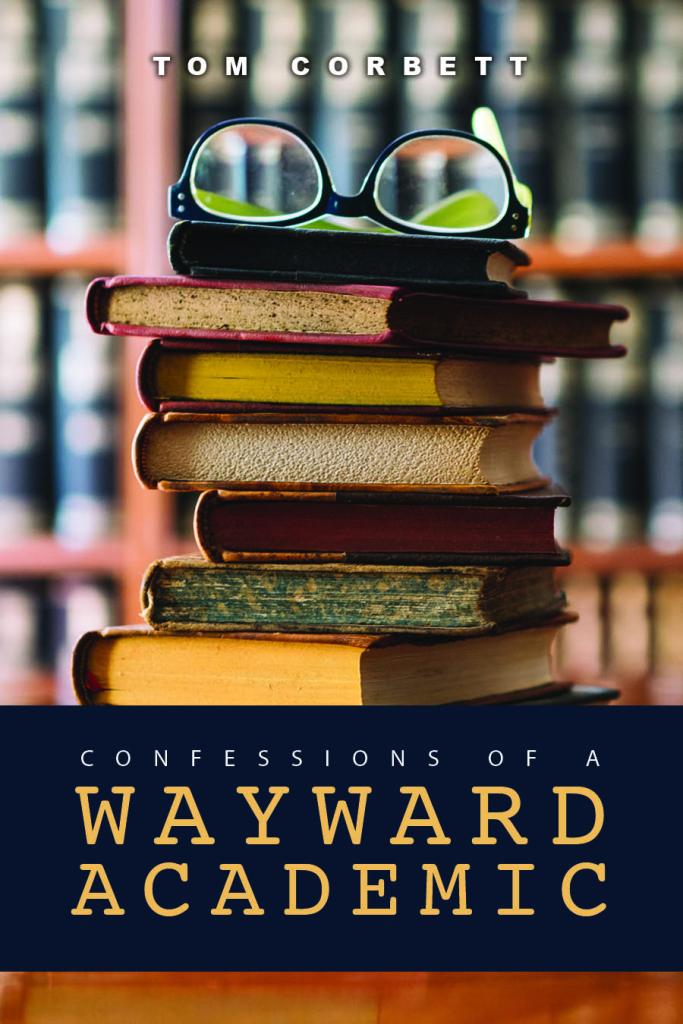
Developing a cultural adaptability and some capacity for nuanced thinking helped me in another way. I could see things from diverse perspectives and appreciate where others were. Therefore, while I came out of my youth as a starry eyed leftist and socialist of sorts, I soon saw a bigger picture. As I got deeper into impossible issues like welfare reform at the state and national levels, it was encumbent to work with people who did not agree with me, as wrong-headed as they were :-). That was the nature of the beast. Advocates could afford to be self-righteous, but policy wonks needed to be more flexible. You might try reading my profesional memoir titled A Wayward Academic: Reflections from the policy trenches.
Now, the issues in which I was engaged were not for the faint of heart. Welfare was a huge issue back then, it was considered the ‘Mideast of domestic policy.’ People dug in and normative conflict was a daily affair. I was contacted by media on a weekly basis (at least) and always tried to give objective, neutral facts and unbiased opinions. That confused the crap out of them because reporters were used to getting ideological rants. I, however, always tried to play the academic role. My preference was not to persuade but to enlighten. With my students, it was the same. Conservative students loved me (there were a few but not many) because I focused on how to think about complex issues and not what to think about them.
One of my better articles was called Child Poverty: Progress or Paralysis (I’ve mentioned this before when talking about my famous onion metaphor). I mention it again since it represented a major theme of my professional work … to seek out arenas where I thought people might agree even where extant normative dissension seemed beyond repair. Again, the genius of this piece was to lay out a diverse set of approaches to reform, from very liberal to very conservative, and show that they were complementary and not competing strategies. All I can say is that the piece was amazingly popular.
But here is the thing. Back in my day, many conservatives who cared about poverty issues remained attached to the real world. They liked data and evidence even if such might come to different conclusions. Believe it or not, we could have reasonable discussions about things. I will mention Ron Haskins whom I met during my year in D.C. which, in fact, took place right after the release of my Child Poverty article. Ron loved it and sought me out. He was widely considered THE Republican staff expert in Congress on poverty and welfare issues. At the same time, he was rational and evidence driven. We hit it off immediately and sparred on and off for the next couple of decades.
BUT, in the 1990s, the political world was changing. Newt Gingrich was putting the final nails in the coffin of sensible government. In the future, it was all about power and winning, not doing what was right. I remember Ron at a conference with mostly eggheads. He was asked what role evidence and data played in making policy (this was mid to late 1990s after the cultural divide in politics was rapidly hardening). Without pause, he said maybe 5 percent, possibly 10 percent on the upside. He told the assembled academics that it now was all about power and values … ideology told you what to believe and power enabled you to get it done no matter how much sense it made.
He was the ultimate insider and should know. Then again, he left the Hill around this time, perhaps seeing what was happening. He took a position with the prestigious Brookings Institute. Later, he would lament that his party ‘had lost their way.’
I think back to Tommy Thompson, a lifelong Republican who served as Wisconsin Governor, Secretary of HHS under George W. Bush, and even President of the University of Wisconsin system late in his career. While he had some suspicions about me (once yelling at me in a public forum in Chicago), he was a old school Republican with whom one could work if they tried. He wasn’t the slash and burn conservative that dominates the party today. He cared about the programs and clients being served even as he fought hard to make recipients more responsible and accountable. He loved the University and was light years from Today’s Republicans who attack the Madison campus just to make cheap points with rural voters even as such attacks cripple the state’s economic engine. Retribution against ‘woke’ liberals is all that counts among today’s so-called conservative leaders.
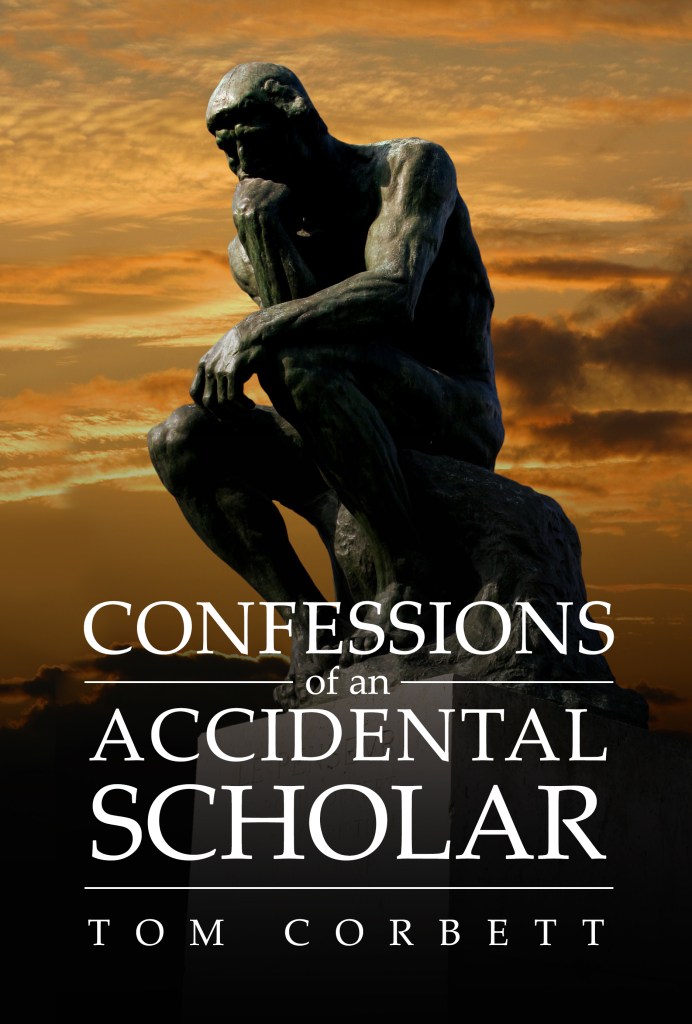
In Accidental Scholar (see above), I summarize a lot of my thinking on various topics though I’m thinking of updating this work later in the year. Most of the material contained here comes from an earlier period when reason and evidence yet played a substantive role in the doing of policy, a least more than the ‘point scoring’ role or ‘owning the libs’ role found in recent policy debates. It was a golden age for people like me who seek reasonable solutions to very difficult problems.
Well, that was a cook’s tour of a long and comlicated story. The bottom line … the essential ingredients to what made government work, even with varying norms, has slowly eroded over time and has disappeared almost totally in the past two decades or so. Without reason and evidence, all we have is passion and fury and revenge. Now we are on the precipice of losing our status as a ‘nation of laws’ and as a government guided by established constitutional principles.
All this is a long way from the golden years when I could sit down with those of differeing views, a Ron Haskins for example, and talk things through. How I miss those days. And, given the stakes involved, how desperately we need to rediscover them.