Time for a few jokes. You probably heard many of these before but hey, this is costing you nothing. So, you’re getting your money’s worth.
……………………………..
Rabbi’s Advice … Tom goes to see his Rabbi. “Rabbi, something terrible is happening and I have to talk to someone about it.”
“What’s wrong?” the Rabbi asks.
“My wife is trying to poison me.”
The Rabbi was shocked, “How can this be?”
The man is clearly desperate. “I tell you … she is poisoning me. What should I do?”
The Rabbi then offers. “Tell you what, I’ll talk to your wife and find out what I can and then call you back.”
A few days later, the Rabbi calls Tom and says. “Okay, I spoke to her on the phone for three full hours. You want my advice?”
“Of course,” the man responds.
“Take the poison!”
………………………………………………
Couples Counseling … Tom and his wife go to a therapist to deal with their problems. After they sit down with the therapist, the wife points out all the problems she sees with their marriage.
After some 45 minutes, the therapist holds up his hand to stop the wife’s monologue. Then he gets up, walks over to the wife, and kisses her passionately. He turns to the husband and says. “Now sir, if this happens to her 3 times a week, your wife will feel much better about herself and your relationship.”
Tom nods appreciatively and asks, “Great, just one question though.”
“Sure, what is it.” The therapist asks, pleased that things are going well.
“I easily can drop her off here Mondays and Wednesday but I go golfing with my buddies on Fridays.”
………………………………………………..
No Golf Partner …. Tom’s wife says, “I noticed you haven’t been playing golf lately.
“I don’t have anyone to play with,” Tom replies.
“What about Clyde?’
Tom grunts. “Would you play with someone who cheats on his score and moves his ball when you’re not looking.”
“Well, I suppose not,” the wife agrees.
“Well, neither will Clyde.”
……………………………………………..
The Visit … After work, Tom brings his buddy from work home for dinner unannounced at 6:30.
His wife starts screaming at him as the friend silently observes it all. “My hair and makeup are not done, the house is a mess, the dishes are stacked in the sink, and I’m still in my pajamas. And besides, I cant be bothered cooking tonight. Why the hell did you bring someone home.”
The husband replies calmly. “Well, he’s thinking of getting married and I promised him a demo.”
………………………………………………………………
…………………………………………………………….
Fidelity … Sitting at a bar, Tom told the bartender that he was drinking to forget the heartbeak of his broken engagement.
“So sorry, dude, what happened?” the bartender asks.
“Well, what can I say? But would you marry someone who didn’t know the meaning of the word monogamy and who laughed whenever the issue of fidelity came up?
“No way in hell,” said the bartender.
“Well, neither would my fiance.”
……………………………………………………….
Reminiscing …. Three old ladies were sitting side by side in their retirement home, reminiscing about the old days.
The first one recalled the time she could get a large cucumber from the local grocer for one penny, indicating the length and thickness of the vegetable with her hands.
The second lady nodded, adding that onions used to be much bigger and cheaper also. Then she used her hands to demonsrate the size of two onions she could get for a penny a piece.
The third lady smiled as she piped up. “I can’t hear a damn word you two are saying but I sure as hell remember the guy youre talking about.”
……………………………………………..
The Magic Trick … An Irishman and an Englishman walk into a bakery. The Englishan steals 3 buns and puts them into his pockets and the two men leave. Outside, he says to the Irishman, “that took great skill and guile to steal those buns. The owner didn’t even see me.”
The Irishman replies: “Thats just simple thievery. I’ll show you how to do it the Irish way and get the same results.”
“I doubt you have anything to teach me,” the Englishman says, “but go ahead.”
So, the two men go back into the shop and call the owner over. The irishman begins, “Sir, I want to show you a magic trick. I’ll make three buns disappear and then reappear.”
“Well, I’d love to see that one,” the owner responds.
The Irishman asks for a bun and then eats it. Then he asks for two more and eats them as well.
The owner becomes suspicious. “So, where’s the trick?”
The Irishman smiles: “Look in the Englishman’s pockets.”
………………………………………………
…………………………………………………………………………………………
The Birthday Gift … Tom tells his buddy, “I dont know what to get my wife for her birthday. She has everything. Besides, she can afford to buy anything she wants. I’m just stumped.”
Toms buddy responds, “Hey, why dont you make up a fancy certificate that says she can have two hours of great sex, any way she wants it, when she wants it. She’ll probably be thrilled.”
Tom, not being the brightest bulb on the marquee, did just that.
The next day Tom’s buddy asked, “Did you take my suggestion?
“Yes,” Tom grimmaced.
“Well, how did it go?”
Tom sighed. “She loved it. She jumped up and kissed me before running out of the house shouting ‘I’ll see you in two hours.‘
So, I was perusing a piece in the Washington Post that reported out on a large survey of American workers who could work at home, the so-called remote-capable workers. It turns out that 60 percent fully worked on site before the pandemic, a proportion that fell to 22 percent after the plague was over. That’s probably a good thing since only 6 percent of these workers would prefer to work in the office all the time. I’m guessing those respondents probably have bratty kids at home or a spouse of questionable temperment.
As the researchers probed a bit deeper, they uncovered some interesting findings. A full 69 percent of the survey takers agreed that working in the office helped them connect better with their peers while slightly more than half (54 percent) felt that on-site work facilitated collaboration. This strikes me as critical arguments for spending some time in the office though that would depend greatly on the nature of the jobs. For me, as someone who finds other people highly overrated, human contact is not much of a draw. However one slices it, the trend toward remote work was greatly assisted by the pandemic.
This reminds me of one of my many adventures in life which was to be part of a Union bargaining team during some tense negotiations. This happened when I was a Wisconsin State employee in the early 1970s and this was the first contract to be worked out in this manner since legislation had been passed to permit more or less full negotiations over compensation and the conditions of employment. I worked as a research analyst at the time. Somehow, and I really cannot recall how this happened, I became the head of the Research Analyst and Statistician bargaining team or just Analysts for short.
We were one of five such teams, the smallest and the least powerful group as opposed to some of the others like the State Police, Public Safety, and Prison Guards. If we nerds went on strike, who would care. I can envision it now … ‘cave to our demands or we’ll march on the capitol armed with our pocket calculators.’ Admittedly, it was a great personal experience with tough negotiations that went on months even after the existing contracts had lapsed. Unfortunately, I left my position to take an opportunity at the University just before it all came to a close.
But I raise this episode in my so-called career for a specific reason. One of the ‘demands’ repeatedly raised by members of my unit was the desire to be treated as ‘real professionals.’ That included the ability to work from home when it was appropriate and, of course, that the work actually got done. I hit a brick wall with that one, not only with the State negotiators but with the heads of the other bargaining units on my own negotiating team. The other bargaining units were focused on traditional issues like pay, benefits, traditional work rules, and maintaining the advantages of seniority in job security. Whenever I brought up issues like being treated as real professionals or having more control over how we did our work, some beefy prison guard would pat me on the head and tell me to go sit in the corner and shut up. They did not want the peculiar wants of the nerds complicating negotiations over real isues. It was concept before its time.
In any case, I paid much attention when this study of contemporary workers moved on to the issue of job satisfaction. Obviously, back then, the research analysts and the rest of the state workers were not on the same page. Satisfaction was rooted in distinctly separate dimensions of one’s work experience. Even without comparable data from my era, what would we find today? In this study, roughly four out of five respondents expressed satisfaction with their jobs though slightly more than half felt definite stress in their work.
In my state employment world of five decades ago, I recall considerable stress (we were in a period of considerable innovation) but most were happy and energized in their work unlike, as I understand it, the more recent mood of state civil servants which is downbeat after years of Republican control in the State. This suggests that some workers today (outside of state employment at least) are finding positions that generally are meeting their needs even though about half are experiencing stress through their work. Just what might some of those employment needs be?
When asked what was important in their job, compensation or pay was at the top of the list with job benefits close behind in the ranking of factors. The first non-monetary attribute receiving a high rank is having a good boss, which ranked in the top three. Then you fall all the way to 6th position to find any other social or interactional factor. There, the friendliness of coworkers is sited, followed by the prospects for advancement in 7th. Finally, in 8th place, respondents mentioned the perceived benefits to society. The focus on compensation also dominated the reasons for switching jobs with higher pay being the most important factor followed by dislike for their old position and then a search for a more interesting job.
There’s probably nothing earth shaking in these findings. Yet, they raised some thought in my febrile brain. The focus on pay is consistent with results from more general questions of what is important to people. When I was coming of age in the 1960s, the attitudinal surveys of that era, when focused on the young, found establishing a sound philososphy of life or finding meaning in life relatively more important that materialistic goals. That finding has been fully reversed over time.
I doubt this reversal can be attributed to the fact that we have suddenly become obsessed with shiny baubles and hedonistic lifestyles, though such have always had their attractions. I suspect that today, young people see a higher and steeper mountain to climb before them. As income and wealth inequality has grown, achieving even the vaunted so-called American Dream is now more of an acquisitional nightmare. In many markets, the home of one’s own with a white picket fence and a secure job with a pension to support your family is more mirage than reality. Fewer now can focus on the content and conditions of their professional lives as opposed to how much it will pay simply to keep their heads above water.
My own life’s experiences are instructive here. As I have stressed in other posts, I seldom worried about what I would do in life after I reached my teens. True, I constrained certain choices to maximize my life options … like deciding not to have children and minimizing any interest in material possessions. Still, I and most of my own peers felt we would always find our place in society. We often took courses that interested us and not because they would lead to a well-paying job. I chose a major because it was the strongest at my school and promised insights into the human condition, not because it promised future riches. I sought out jobs in my youth that seemed to offer work of significance (hospital work and work with troubled kids) and not merely for money or how these positions would look on a college application or a future resume. And we spent countless hours discussing the issues of our day and how to make the world a better place, not trading tips on how to dress for success or in seeking future contacts for a hoped for rise to the top.
As I went through life, how much I made was always less important than what I was doing. Whereas doing something of ‘benefit to society’ was buried well down the list of meaningful job attributes for today’s workers, it was very high on my list and on the lists of many of my peers. During my working life, I suspect it would have been second on my ranking, right after ‘doing something that interests me.’ Whether or not the work was challenging, and stimulating, and absorbing was always what drew me in and kept me going. That was true in my early civil service work where my colleagues and I did some groundbreaking stuff in the management of human service programs and in my university work where I had the pleasure of engaging in so many of society’s most difficult challenges (e.g., welfare reform). I revelled in being a ‘player,’ one who had the opportunity to take on whatever issue or puzzle attracted my admittedly short-term attention span. It was fun and stimulating which is what counted above all else in my book.
Now, there was a cost to this approach. I never did the things that would ensure my rise in academia and, as a result, never made much money. Even as Associate and Acting Director of a university-based research entity, I was likely the lowest paid academic affiliate in that nationally renowned Institute (which included faculty from leading universities from around the country). Without going into detail here, making more money would have required that I do stuff that academics prized but which I found narrow and provincial. It was more important to me that my position, at least as perceived by the outside world, opened all the doors to me that I needed. Once in, I was always able to fool people (whether in D.C., in state governments, and even among academics) into believing I knew what was talking about. Thus, I was continuously invited to give talks, to consult on public issues, to be at the table when the direction of policies were being debated, and to share my ‘expertise’ with fellow academics. However, while I wrote tons of reports, policy papers, book chapters and the like, I seldom wrote for peer reviewed journals which I felt constained creativity into siloed straight jackets and were targeted at an audience that did not necessarily interest me.
Being a respected policy wonk while pretending to be an academic (necessary to give me maximum flexibility and allowing me to teach) was perfect in most respects. It afforded me national credibility even if (as I already mentioned) it never paid well. In the end, the low relative pay never bothered me. Perhaps being married to a woman who made more than me (and didn’t care how much I made) helped a lot, as did my (our) early decision to forego offspring which would have changed things. We were comfortable, and that’s the important thing. We enjoyed our work and we shared common values. She also was more interested in the substance of the work she was doing and much less than the pay though her high position in the judiciary ensured she did okay. However, when she saw the Wisconsin Court system going into a kind of partisan death spiral by the beginning of this century, she retired early rather than participate in the death throes of impartial and objective justice. Yes, there was an economic cost to that decision but I agreed with her totally. Don’t do it just for a somewhat better retirement package.
Economists know that the marginal utility of each extra dollar earned has value up to a point when basic needs are satisfied. Based upon numerous survey data, that kink point can be identified and is usually located somewhere above (though not far above) the median income figure for a locale. After that, each additional dollar acquired has less value which continuously diminishes as you climb the income ladder. As one wealthy venture capitalist once argued, what can people do with all this money his rich peers were seeking? You can only eat so much food. A nice digital watch tells time just as well as a Rolex. You can only drive one car at a time, etc. The acquisition of more and more becomes merely a game of one-upmanship among a few of the elite. As one of those elite once procalimed, ‘money is how we keep score.’ But, in the end, it really is a game and one with awful consquences for so many others.
Bottom line, we both were happy with ‘what’ we were doing, not ‘how much’ we were making. I recall once being asked to fly to Canada to consult on some human service design issues in Toronto. I was doing a lot of that (not something valued in the academy). My close colleague at the time (she now works directly with the University Chancellor) asked me on this occasion why I never asked for compensation for such excursions, perhaps a stipend of some sort from whomever made the invite. Most of my colleagues probably would.
But these were public entities which I thought were always short of resources. Thus, asking them to kick in never crossed my mind. After all, I already was being paid (not a lot but enough) for whatever I did through the university so I was happy. I also raised a whole lot of money from outside grants to support my project and consulting work. Therefore, some things I did (like teaching policy courses) were more add-ons than necessary tasks. I wound up banking money for the future since I could not draw it down in salary due to university rules.
Thus, I wound up being way over stretched. In addition to my research and project work, I felt an obligation to help run the Insitute, to teach students, and to give talks to policy and academic audiences around the country. These functions were important to me even if it required I get up at 4:30 or 5:00 each morning and get to the university when it was still a ghost town. I could not pass up the opportunity to share what little I knew with others and perhaps making a difference down the road. I suppose that nothing had changed since I was a kid trying to figure things out and discussing how to create a better world with my college friends, except now people were listening to me … often a frightening prospect.
Let me end this with one thought. I am NOT anyone special. Many of us came of age in a different world which had different opportunity sets and distinct dominant concerns. My spouse and I were simply fortunate to be able to live according to values that were more prominent than they are now, ones that I still revere. But I know that the young today face different constraint sets and confront severely altered and enhanced pressures. If I were young today, I might respond very differently to an uncertain and hostile future. It seems more of a future based on a Darwinian struggle, a dog-eat-dog world. That is sad.
I am SOOOO glad I am an old fart.
PS: For more detail, check my professional memoir … A Wayward Academic: Reflections from the policy trenches.
I have always been fascinated by the question of how progress happens, how new ideas and devices come about. In the past, great leaps forward would be made and then forgotten for centuries or simply not noticed at all. Insights and innovations would burst upon the scene in China, the Hindu valley, Meso-America, Egypt, the Hellenic golden age, and Rome before being lost, or so it seemed. The Islamic Golden Age (750 to 1250 CE) was a particularly robust period of thought and intellectual ferment where great leaps in medicine, astronomy, mathematics, optics, and the scientific method were made. Then, after the intellectual and political center of Baghdad fell to the Mongols in the 13th century, much of that progress faded from view until revived in the European Renasissance some two or three centuries down the road.
What we generally call insight and innovation, I like to think of as ‘lateral thinking’ where we look upon what we already know in new ways. In the extreme, where something seems unique or at least very original, we might call it ‘orthogonal thinking’ but why quibble. Now, of course, what we call progress is more likely to be capitalized, exploited, and routinized in our daily lives. Science and innovation is big business and we have the means to both retain, disseminate, and build on new innovations and insights. Even when I was a kid, it was axiomatic to say that more scientists were living at that moment than had lived during the entire prior history of mankind.
Until the very end of the 19th century, education often focused on the classics and antiquated knowledge, a kind of rear-view mirror perspective. Formal education ended after four years of higher-level studies. It was as if all that was needed to be known was already known and retrievable from the giants of the past. We yet had pretences that individuals might be polymaths and knowledgable about many aspects of the natural sciences and the literary arts. As I have mentioned before, graduate schools with specialized and advanced curricula in defined content areas only emerged at Johns Hopkins and then Clark University in the 1870s and 1880s.
Today, it seems as if nothing is beyond science and those intrepid seekers of truth working at the frontiers of knowledge. We have come a long way from the quotes I offer below which cast a more limited tone on the future. These pessimistic predictions come from a book I just finished on the development of the LASER (an acronym for Light Amplification by Stimulated Emission of Radiation). The man who came up with this ingenius device in 1960, which is now found in applications from common communication technologies found in the home to advanced medical tools, was Ted Maiman, a scientist working at Hughes Laboratory.
Many others at more famous academic institutions were also trying to get there first but had failed. Who knows, perhaps others would have gotten the brass ring soon if Ted had not grabbed it first. Most inventions in the modern era are being worked on by multiple people and likely would have been ‘discovered’ by someone. Still, a lecture scheduled at an upcoming major conference in that year apparently would have argued that the Laser concept was beyond our reach and could not be realized. The talk was hastily cancelled when Maiman unexpectedly made the Laser a practical reality. The academic saved from making such an embarrassing prediction in public is not alone. Check out these beauties:
“Everything that can be invented has been invented.”
Said in 1889 by Charles Duel, the Director of the United States patent Office.
“Heavier than air flying machines are impossible.”
Said in 1895 by Lord Kelvin, President of the Royal Society.
“There is no likelihood that man can ever tap the power of the atom.”
Said in 1923 by Robert Millikin, the winner of a Nobel Prize in physics.
Let me be very clear, I have never invented anything. You need technical and mathematical skills in which I am totally lacking to do that. However, I have had some creative impulses that blossomed into new ways of looking at problems and in expressing semi-ingenious possibilities for getting around stumbling blocks. The social issues on which I worked were highly problematic, often representing impossible Gordion Knots for academics and policy wonks alike.
I won’t beat this into the ground but let me site one example. I did generate rather new or unique ways of looking at at least one intractable social problem. In an article titled Child Poverty: Progress or Paralysis (FOCUS: IRP, 1993), I laid out a new conceptual scheme for looking at welfare reform, an issue that was tearing the country apart at the time. I developed an ‘onion metaphor’ to examine the challenge, relying on the heterogeneity of the poor which contradicted the homogenous picture of the population most used. Simple, no doubt. But the way I employed this visual representation enabled me to argue that approaches that were seemingly at odds with one another could be seen as complementary and not competing solutions.
Now, I happened to be in Washington (on leave from U.W. working for a year in the Clinton administration) at the time the piece hit the streets. It proved to be a smash hit out there and I soon became known as the ‘onion man.’ Really! The General Accountability Office (GAO) had me in for a talk on it and used it for years when Congressional requests for information on welfare came in to them. For a number of years, when I gave talks around the country, people wanted to hear about my ‘onion metaphor.’ Turns out that this vegetable really can bring you to tears.
This wasn’t my only creative moment but special enough for me to learn something from it as well as from my more recent writing of non-academic literary works. Being creative is an inscrutable and mysterious process. You cannot will it. The onion metaphor hit me in Burlington Vermont of all places. I had agreed to participate in a State Conference on welfare reform that would include a broad range of officials from many different disciplines and agencies. They were not all on the same page by any means.
As I was registering at the hotel the night before, one of the organizers came up to me to ask if I could give an introductory talk to get everything going. I smiled thinking some advanced notice would have been nice but, being a nice guy, I said sure. So, that night, I struggled with how to get such a diverse set of different institutional actors with distinct backgrounds thinking about a topic that had defied any reasonable dialogue even among experts in the field. As I mused on this challenge in bed, I fought off sleep after a day of travel. Suddenly, the notion of the onion metaphor came to me. It seemed silly but, in the moment, it was the best I was likely to come up with to sound less like an idiot in the morning. I hoped so at least.
I once had a professor who repeatedly said ‘you don’t know something until you can explain it to others.’ It took me a while to appreciate just how right he was. I’ve found over time that three elements seem to be asociated with ‘creativity’ for want of a better term. The first, as Einstein said, is to stop thinking hard on things and let your mind wander. The second is to get out of your usual habitat, or discipline, and absorb input from diverse sources. And the third is to to explain, or try to, what is going on inside your own head to others though, I must admit, what goes on inside my head is fascinating.
When I am writing fiction, my imagination leaps ahead especially when I am not trying … when I am just walking about or halfway to slumber. Then I have to decide whether to stop and write it down or hope I will recall it when I get back to my laptop. Moreover, when I was working on tough welfare reform issues or the design of new humans service systems, I benefited greatly from mixing traditional academic sources with real life experiences. Most of my colleagues felt that all worthy thought would be found in peer reviewed journals. They seldom confronted the real world, and surely spent little time there. Obviously, there is good stuff in the formal literature but it is often narrow and provincial and only covers part of reality.
Great leaps demand the challenges that come from the intersection of science and experience. You need both in most cases. Jenner came across the vaccine concept for the dreaded smallpox virus after listening to a milkmaid exclaim that she would never get the smallpox since she already had the cowpox, an association well known among farm hands. Einstein jumped foreward intellectually while working in a Swiss patent office since he could not get an academic appointment after obtaining his physics degree. Not securing a university position was likely the best bit of luck in his life. And don’t forget that the germ of my ‘Onion’ metaphor came in a Burlington Vermont hotel room as I was dozing off. And then I started using this conceptual seed in many talks as it evolved into a stronger concept. I used it so often, I almost didn’t write it up in my Focus article since I thought everyone had heard it by then. Thankfully, a graduate student working with me convinced me otherwise.
I take my little epiphanies very seriously, especially the one about letting new connections and insights into your head by relaxing and focusing less directly on an issue or topic. That is precisedly why I take so many naps at this stage in my life. No great breakthroughs recently but I remain hopeful. Perhaps today’s nap will be the magical one.
Recently, I have completed my 79th journey around the sun. I find this more palatable than stating my actual age. In fact, it has been some time since that disgusting number has proven to be an acceptable utterance. Rather, my age has morphed into a kind of burden bordering on the horrific. Sure, we joke that being alive is better than the alternative but really? When people ask how I’m doing, I reply ‘I’m still vertical and taking nourishment’ or ‘ I’m still on the right side of the turf.’ In truth, that is bull shit.
Lets face it. There comes a time when we start looking back with mixed emotions rather than looking forward with anticipation, if not anxiety. Before I continue, let me hasten to add that, in some respects, I’m not sad being old. Recently, I chatted with a friend where we both agreed that we were lucky to have lived in the times that we did. Moreover, we feel damn fortunate not to be coming of age in the current era. As bad as things were in the 50’s and 60’s, and we did have major problems then, there was a sense of hope in the future. Now, kids look forward with apprehension and anxiety. Depression and suicidal thoughts appear endemic in today’s youth. How sad is that!
Of course, I cannot get inside their heads today. Nor can I feel confident in recalling my early perceptions and feelings with any accuracy. It might well be that I’m glossing over my authentic reactions of what it was like back in the day, coloring them with today’s gloomy perspectives on the world.
In fact, I can vividly recall periods of doubt when I was just a kid. I feared that I had nothing to offer the world and could not imagine who would hire me or how I would survive on my own. I resolved such anxieties with the thought that I could always join the Army. They would take anyone, even a hopeless sad sack like me. How relieved I was to find out that I could manage life quite well without having any demonstrable skills whatsoever. Nevertheless, I am sticking with the hypothesis that we were the lucky generation and today’s poor bastards don’t have it as well as we did. That’s my story and I’m sticking with it.
I guess I base this view on the fact (opinion?) that we had a more equal society in the post-World War II period. The great depression had discredited the old and previously dominant laissez-faire attitude toward the economy while a global war interjected a broad community-like feeling that we were all in this together. There was a kind of leveling for a while that led to the emergence of many ‘rights’ revolutions over the next two to three decades. While the process of change was turbulant and even violent on occasion, we thought the end would bring a better society for all. And things did get better. Poverty and income inequality fell steadily, de-jure discrimination and oppression on many fronts were beaten back, and opportunities for all were exapanded. Your position at the starting line of life was not cast in cement. Even a talentless schmuck like myself could rise from the working class streets of Worcester to a world class university and into the rooms where national policies were made. As my cousin’s husband would always say, ‘is this a great country or what.’
Now, of course, we would use the past tense I fear … this was a great country. The elite never forgave Franklin Delano Roosevelt for betraying ‘his class.’ The embedded roots of virulent authoritarianism had never disappeared and waited for an opportunity to make a comeback. Never forget that many people back in the day thought that government putting fluoride in our water supply was a Communist plot and that even Dwight Eisenhower, our Republican President and the five-star general who beat the Nazis, was really a Communist sympathizer. I yet recall that many in Texas cheered when JFK was slain, believing him to be a traitor. The hard right was always there, they just were in temporary hiding.
We know realize that they were merely planning and plotting for their comeback to a position of dominance. Aided by buckets of money and new technologies, they broke through in national politics with Reagan. As the internet and cyberspace increased our capacity to split apart as a coherent society, the hard right steadily increased in size and power. They drove out any and all moderate members from the Republican party (does anyone think Eisenhower would have a chance today) and have made their part in a virtual cult embracing every aspect of 1930s totalitarianism. I despised Romney’s policies but he was the last sane Republican. I fear how all this will play out but am rather glad I might not be here to see the end game.
Oddly enough, I was going to write about something else …. I digress a lot as you know by now … but this is what ‘musing’ is all about. Anyway, I suppose that my most recent milestone was beginning my 80th sojourn around our own star … the sun. If it means anything, it would be the gratefulness that I have lived when I did and that I had all these opportunities that fell into my lap. In all honesty. I cannot say that I worked all that hard for them. I was fortunate and blessed with (or inherited) a vast supply of BS.
But what about some of the other, and earliier, milestones.
16 … Turning 16 was special. I recall doing all the driver training stuff before my b-day so I could go for my exam on that day. I was apprehensive since I learned almost all the others in my training class had flunked their first time around. Somehow, I passed and was ecstatic. I was now free to roam the world. All I needed was a car of my own which never materialized for many years. Oh well, it is the symbol of independence represented by a license that counts.
21 … Another milestone. On that day, you become an adult. Now that is freedom! Yoy can legally get drunk, you can sign contracts though I had none to sign, and you were legally liable for your debts. So, this was a mixed bag of benefits and responsibilities including a free pass to killing yourself with cirrhosis of the liver which I came perilously close to doing in future years. On that day, I do recall my father taking me to his favorite bar … talk about a rite of passage. I tried to keep up with him as he downed his normal allotment of daily beer while thinking this might not end well. I was so relieved when he said it was time to go. When I stood, I said a prayer that I would make it out the door before falling over. I didn’t want to disappoint my dad in front of his friends. I did make it but it was a close-run thing.
26 … Today, it might not mean anything but it meant a lot for the males in my generation. It was the birthday on which you escaped being pursued by the Selective Service Draft. If they managed to snare you in their tentacles, it could mean a one way trip to sunny Vietnam. Most every male I knew spent eight years scheming and plotting to evade the draft. I finally got around to being called for my physical after returning from India, perhaps I had made it to 25 by this time. That was a memorable day including being interrogated by three members of military intelligence (a story for another blog) to determine if I was a bad-ass or able to serve in our military. Eventually, they decided I could. I also thought seriously about fleeing to Canada (which I now regret not doing) and trying to make a case as a Conscientious Objector. By this time, the lottery was in effect which told you which month you would be called up. My 26th birthday was in May and my lottery number suggested I could be called up the same month. To make a long story short, May came and went without me being called, though I sweated a lot during this time. I had my life back.
30 … This is only significant symbolically. Nothing really happens except you feel that you are finally an adult. In truth, I didn’t feel like an adult for many years hence and acted accordingly in several ways. But to the outside world, I was one of thse responsible folk with a home, a wife, a real job, and all that conventional crap. It also made me laugh. In the wild 60s, a favorite mantra on the left was ‘never trust anyone over thirty.’ Now I finally knew what they meant.
55 … This may seen like an odd milestone date but it was the first year both my wife and I could retire and get a pension and join AARP and become eligible for a number of benefits specified for old farts. In fact, my spouse did retire as Deputy Director of the Wisconsin Court System on her 55th birthday. She worked directly for the State Supreme Court justices and witnessed the early decline of that body into fractious partisan disputes. She wanted nothing to do with a court that cared not one whit for justice but mostly for some ideological agenda. A couple of years later, I partially retired from teaching and administration (which meant I was not tied to the campus) but kept doing project and consulting work until my early 70s. However, we could escape to Florida in the winters now which helped my spouse’s Reynauds condition. In effect, it was another kind of freedom milestone.
65 … I cannot say this milestone had much personal meaning for me. However, it is when government declares that you are an old fart. You start getting Social Security (the full benefit) and Medicare. I guess symbolically at least, one enters their dotage but it doesn’t feel that way.
80 … If one gets this far, you are indeed a certified elder. Unlike in many cultures, it is not as if anyone listens to your accumulated wisdom. In fact, whenever you have trouble with all the damn new-fangled technology, you are always looking about for a teenager to bail you out. More than that, you finally feel old. The body definitely is slower and creekier. You can no longer fool yourself that you really are a 50 year old whose birthday listed on their driver’s license is an error. You see your colleagues and acquaintances passing day by day. When you get together with friends, you discuss recent medical adventures and future doctor visits which you dread since the lab results are likely to reveal something awful. Worst of all, everyone gives you the same advice for continuing on. Watch your diet, drink plenty of water, and exercise daily. Shit, that’s all you got for me … continuing on only if I torture myself.
Hey, I rather like my fat, excuse me flat, body. Oh well, I’m still vertical and taking nourishment, perhaps too much nourishment.
I understand some of you are not getting email notices when I publish a blog. Well, neither am I any longer. Until I figure that out, just check http://www.toms-musings.comon occasion. BTW … I am cutting back on blogging to get some balance back in my life.
H. L. Mencken was one of the most astute observers of American life and politics in the early 20th century, perhaps only rivaled by Will Rogers. Still, it took almost a century for him to get the above prediction totally right, though he came close with Chief Executive Officers such as Coolidge, Reagan, and George W. Bush. I recall the chatter after Reagan visited the U.K. during Margaret Thatcher’s run as P.M. Apparently, she shared the opinion within her circle that, while she loved Ronnie’s values and perspectives, he surely wasn’t smart enough to even hold a portfolio in her cabinet. Calvin Coolidge was a total nonentity who felt that the best government was none at all. He preferred long daily naps to, you know, managing the affairs of the ship of state. Business leaders could do that in his stead. And W. was the perfect class dunce that could easily be manipulated by Rove, Cheney, and others from the ‘dark side.’
What is it about our political apparatus that we can spend so much money and effort in selecting our top national leaders and yet come up with such losers, as least intellectually. Sure, we also have elected leaders of highly questionable moral turpitude on occasion. Still, my questions about a candidates values would not necessarily preclude him or her from the position. Nixon comes to mund here. No one, however, ever questioned his intelligence. I’m not talking about electing Nobel prize candidates but about people whom you would walk away from at a cocktail party because they simply were way too dumb to be interesting. I’m not talking about a high bar here.
In most democratic nations, the Presidency (sometimes the Monarchy), is a symbolic office with limited powers at best. The members of Parliament (or whatever the governing body is called) choose the Chief Executive Officer from among the elected party in power at the time. You may not like the person or agree with their values but, as far as I can see, those chosen are always bright. Just compare Germany’s Angela Merkel (a scientist before going into politics) with Donald Trump (a moronic conman). Argument over. Just think about the British Prime Minister getting up in Parliament and anwering the withering questions from the opposition, which they do on a regular basis. Doing that effectively takes an amazingly quick wit and excellent debating skills. Here, the closest thing we have to this is the occasional White House press conference which are highly stage managed, if they occur at all.
Obviously, even our so-called Founding Fathers had doubts about whom might be elected to high office. That’s why they established all these checks and balances in our system and definitely why they instituted the electoral college. It is also why they limited voting rights to propertied males for the most part. While they wanted a democracy, they feared a mature democracy with more or less universal suffrage. The men who developed our constitution were the elite of the time and were quite suspicious of the ‘rabble.’ They were especially fearful that a broad voting public would drift toward a different form of tyranny, one based on passion and self-interest and not on reason and the long view. Horrors, if the rabble rose to power, they might vote to cancel their debts to the propertied classes.
For the first several administrations, the elite ran things. There was Washington, Adams, Jefferson, Monroe, Madison, a second Adams, etc. These were men the founding fathers envisioned running the show, highly educated and urbane and with patrician qualities. That turned around with Andrew Jackson, a racist populist from the backwoods who really should not adorn our $20 bill. His campaign of genocide against Native Americans was unconsionable. After that, we had a series of forgettable Presidents with a few, like Lincoln and Garfield and Teddy Roosevelt and a flawed Wilson, who were principled and saw a higher duty for the office.
Arguably, FDR was the onset of the modern Presidency. The Global Depression and World War II demanded that the powers of the Chief Executive be expanded and that a larger bureacracy be created for the enhanced role of the federal government. The U.S. was now a global power and had taken responsibility for ensuring the welfare of more and more Americans. An active administrator and administration was required. No longer could a President fritter away his days taking naps or playing poker with his friends. He had to run things and in a big way.
Thus, the President had to have a skill set that would enable him to run the biggest coporation in the world. Wow! Yet, with a 24/7 and 365 day year round campaign for high office, we more often than not get highly suspect candidates. Worse, even when presented with one decent person, chances are the populace will chose the loser among those offered. When FDR first ran, he gave so little thought to his running mate that he chose John Nance Garner for the spot, the man who would have risen to the top spot if something happened to Roosevelt. Garner was a racist, southern conservative with an approach to economics that rivaled the Republicans at the time … totally wrong for the times.
So what, you say? Roosevelt probably felt the same way. But even before being sworn in, an assassin took several shots at FDR from close range during a rally in Miami. Fortunately, the shooter’s arm was jostled as he shot, resulting in FDR being spared while at least one bullet struck the Mayor of Chicago who was leaning in to congratulate the President-elect at that very moment. Mayor Cermak died soon after. Garner would have been an absolute disaster in the White House at the very moment we needed a person of exceptional qualities. History might have been very different.
Since then, only Harry Truman served in the presidency without at least a college degree but he made up for that with uncommon common sense, decent cognitive abilities, and a strong moral center. Others, like Lyndon Johnson and Ronald Reagan had college degrees but from lesser institutions. Still, looking at many who have held our highest offices recently, few might be considered exceptional from a credential point of view. And while Kennedy, Nixon, Carter, Clinton, Eisenhower, and Obama were above average in intelligence, Reagan, Bush Jr., and Trump (to name a few) were almost too dumb to tie their own shoes.
I’ve thought on this many times over the years. Were the Founding Fathers right. Do we need to put a check on our ability to elect any old moron who excites the base? They thought the electoral college might perform this role if someone unfit won an election. The Electors would be the last line of defense against an idiot taking charge. Now, it is merely a formal function, not a substantive one.
At the same time, I wish we had some way of ensuring that candidates met some minimal level of competence. After all, most job seekers for professional positions must first pass one or more hurdles before even being considered by hiring supervisors. They must meet minimal educational and experience qualifications or be vetted by a civil service panel before getting to their actual hiring interviews. I was for my first government position (and I made it through somehow) which demonstrates that the system is not perfect.
Now, a President must have several qualities with intellegence being only one of them. Still, I do wish we had some way of screening out the dullards and the cognitively deficient before they secured the highest office in the land. We see the State or U.S. Bar Association often putting out statements or assessments of the candidates fitness for the Courts before an election. These are advisory only but a way of (not always successfully) weeding out those with no business being on the Bench. In Parliamentary systems, the candidate’s Peers do the vetting and are unlikely to select a total loser. If they do, the governing party is likely to fall from a ‘no-confidence’ vote. In a full democracy, we have no such assurances or ‘fail safe’ mechanism.
The election of Trump proved that anyone, and I mean anyone, can be President. Think about that. Would you want a plumber doing open heart surgery on you? Would you choose someone who failed arithmatic to be your accountant. How about your butcher being in the cockpit of a jumbo-jet that was taking you to Europe or Asia. Even your barber must be licensed. We expect minimal levels of competence for ordinary jobs, should we expect more from the person chosen to lead the most powerful (for now) nation on earth? I believe so.
In my dream world, I would like to see some process for vetting candidates before they are permitted to run. Do they psooses the minimal skills to do the freaking job? Do they know jack-shit about government and governing (Trump did not). Can they connect the basic dots in policy matters to pass one of my Policy courses (Trump would not). I desperately wish we had some form of screening system by a non-partisan body to at least guarantee that a person had the minimal qualifications and skills for the position. I had to go through such a vetting process for a low-level public service position. Can’t we be ingenious enough to do the same for the position on which our futures depend?
This will be short today. In fact, I was going to skip today until a news item cought my attention. Then again, many do. The Washington Post reported on some recent research that, among other findings, suggested that America has suffered some 1.6 million ‘excess’ deaths in the Black Community over the past two decades. I believe they use the term ‘excess’ for what I would call ‘amenable’ deaths, those that could have been delayed (since we all die eventually) if they had acccess to the kind of medical care and other resources generally available to all in other advanced countries. That is, there would have been 1.6 million fewer deaths among Blacks if the mortality rates between the races were equal.
They place the blame for this at the hands of unconsionable levels of inequality, partly structural in character, that we traditionally find in America. One domension of American exceptionalism is extremely high levels of inequality. As income and wealth and opportunity disparities have soared since the beginning of the 1980s, so have certain social outcomes associated with the differential ability to secure what is needed to thrive.
Inequality covers many sins but let us focus on one. Too many individuals cannot get health care, or cannot afford decent care, or skip and delay care due to copays and other costs, or fail to take any or all their prescribe dmedications due to inflated prices. Many become sick when they did not have to, or sicker than they have to, or die when they might have lived. Sick and unproductive workers, let us not forget, cost money and weaken productivity.
A second study determined the price society pays for failing to achieve a level playing field (e.g., health equity) that facilitates the premature passing of African Americans was $238 billion in 2018 alone. The notion of inequality (as suggested) covers many dimensions of American life … access to good schools, to social networks, to better jobs, and so forth. Some historical lessons are sharp and obvious. Domestic workers and farm laborers were excluded from the 1935 Social security Act because they were mostly black workers. For decades, redlining steered minorities into specific geographic areas that were less desirable. When the researchers expanded their analysis to a broader population the fiscal cost soars. The failure to achieve equity in America, primarily health equity, cost the nation $1 trillion dollars. Now we are talking real money.
You would think that some 60,000 preventable deaths every year would raise alarms in society. But then, we have tens of thousands of gun related deaths every year without any action being taken. And therein lies my conundrum. Why do we look upon what ought to be a national calamity with such indifference? How can we not respond to such outrages? Are we that callous a country?
I watch a lot of what I call ‘brain rot’ shows. Mostly, these are true crime semi-documentaries where some grisly murder takes place and the authorities successfuly track down the miscreant or miscreants. Given the number of series devoted to such themes, Americans apparently find blood and mayhem quite amusing or at least distracting. Often they are wrapped up in seductive titles … Snapped (usually women who kill their spouses) or Killer Siblings (family members who go off on a murderous crime spree) or The Murders of Atlanta or New York (or wherever). I’m not criticizing since I am one of the faithful vieweres.
Here is my point. In these shows, the authorities (and sometimes whole communities) devote incredible energy and expend enormous resources to identify and capture the guilty party and then seek justice for their criminal acts. The investigations and pursuit for such crimes can take years and cover many states or even countries. The costs involved can be extraordinary, suggesting that the search for resolution and justice is passionate, admirable, and even moving. Moreover, there typically is a sense of finality and completion when a satisfactory ending is achieved. In many cases, justice involves not only determining who did the crime but finding the victim (or the few bones that remain) who might have been dumped in lake, buried in a secret grave somewhere, or stashed in some unused freezer or locker somewhere. The subsequent finding of guilt in a courtroom and the incarceration or execution of those responsible (we hope they got the right person) leads to palpable relief on the part of all concerned, often entire communities, amidst tears of relief and even joy.
That is all well and good. We breath more easily when justice is served. But this usually involves the death of one person or, in extreme cases, less than a handful. While every death can be viewed as tragic, how can we ignore the preventable deaths of thousands while being so concerned for a single violent act? Why so little public outcry when many perish? Why no calls for justice? Why are not those responsible brought to justice. Really, when was the last time you saw CEO’s or lawyers for tobacco companies, the NRA, pharmaceutical firms that overcharge, or politicians who refuse to expand access to health care brought to justice? Arguable, they are responsible for unknown numbers of deaths. And yet, they earn 6 to 8 figure salaries and enjoy the lifestyle of potentates.
I can easily think of several reasons why we treat these deaths differently. A conventional murderer often selects a specific victim and the manner of dispatching that unfortunate is up close and personal. We can draw a direct line from one person to another. Institutional slaughter is less personal, less visceral, and carried out within respectable boundaries … the seeking of corporate profits to please shareholders or satisfying one’s political base to remain in power. Then again, Mafia murders were done for similar reasons.
I understand all that. Yet, I cannot escape one reality. On the one hand we may have one death for which the state might spend millions in the search for and punishment of the guilty. On the other, there will be thousand upon thousands of unecessary deaths where those responsible will remain pillars of society. They eventually will retire to their villas in Tuscany or their mansions in Naples Florida. Where is the justice in that?
How many forks along the road of life do we confront? Do we think hard about each one, calculating the cost-benefits of every binary (or more complicated) choice confronted? Do we then fret and worry that a wrong decision had been made, that we had taken the poorer path and had forfeited some better alternative? Do we even have a freaking idea where we are going?
Not having any children of my own, which I’ve discussed earlier, my conclusions about how people confront life comes from the students I taught and my own pathetic existence. I could add that my close friends have helped but I don’t have any, other than the good people that ‘rent-a-friend’ sends over from time to time. No, my information sources remain sparse.
My students at the University of Wisconsin encompassed the period from the 1980s to early in this century. While I taught undergrad classes, my better sources of data came from the Social Work graduate students I taught in the 2nd year Practicum course for those interested in doing Policy work as a career. This course was small, roughly 8 to 15 students, and I had them for two whole semesters. From many conversations with them over the years, I absorbed the unpleasant truth that their world increasingly was dominated by anxiety and uncertainty. Many were in deep debt and worried about their futures. They focused much on job prospects and the bleak options they felt were in front of them. Many struck me as desperate.
I don’t blame them for this somewhat myopic and dismal perspective on their futures … this obsession with securing professional and financial success. The adult world they faced was far different from what I confronted in the 1960s when I was coming of age. In the most general sense, options for them seemed to be narrowing while the climb to financial security appeared to be a more difficult ascent. You needed more credentials, and of the correct kind, just to get into the ground floor while the stairway up was steep and filled with competitors. In the 1960s, a plurality of college age resondents said that developing a sound philosophy of life was extremely important to them. A generation or two later, securing financial security had risen to the top.
We all knew that inequality in both outcomes and opportuities became more pronounced in recent decades. In 1979, less than 10 percent of all income went to the top one-percent of families. That figure doubled in the years after Reagan took office and would continue to rise until it approached 25 percent. Such unequal outcomes had last been seen just before the great crash of 1929. This trend represents a tectonic change and a radical shift in the distribution of society’s goodies. A few were getting a lot while the rest of us were left scrambling for crumbs.
It was so different when I was in college. Sure, the competition was tough, it always is. At the same time, the prospects before us seemed open and unlimited. I became a Psychology major at Clark University mostly because it was the best department in the University. The American Psychological Association (APA) had been founded there and this was the place Sigmund Freud came to give his only lectures in America. After all, I had no idea what I wanted to do when I grew up. In truth, the thought of being a counselor of some sort repelled me … listening to other people bitch all day! I’d probably whack them after a half hour session and tell them to ‘suck it up.’
I might have been thinking about an academic career. That prospect dimmed quickly enough. Academic Psychology was abandoned after I spent a summer doing research on a National Science Foundation grant for promising young scholars. (How in the world was I chosen?) At the end of that summer, I realized I had to kill all my rodent subjects, one of whom peed right into my face as I jabbed a needle into his stomach. Thus ended my career as a research psychologist.
I did get as far as asking my advisor where I might consider going for a graduate degree. He didn’t blink as he rattled off Harvard, Yale, and Stanford. I almost laughed in his face. I was still a working class kid wondering how they had not yet discovered I was a fraud and kicked me out of Clark. It was not until many years later when I realized my colleagues were from these very institutions that I finally realized my advisor was not on drugs.
ME CONTEMPLATING MY FUTURE IN 1966!
When I drifted out of college, I went the Peace Corps direction. I had been atrracted to that ever since Kennedy announced it in 1961. It fit my do-gooder sensibilities and appeared likely to be one hell of an experience. It was, though, a much more challenging trial than I had anticipated. Today, students might worry that two years out of their lives would put them behind in the competition up the ladder of success. How would potential employers look upon this kind of escapade? Perhaps some would see it in a positive light but could one take the chance. My sense is that, for recent generations of young people, every decision is approached in light of future payoffs.
Such considerations never entered my mind. I took courses in school because they interested me. I went the Corps route because it intrigued me. After India, I wandered back into graduate school in Urban Affairs at the University of Wiscosnin-Milwaukee since it spoke to my desire to help save society and I had heard about it while training there. That it might embellish my credentials was of secondary importance. In my world, one had faith in the future and that things would work out … somehow.
I remember once, when I was involved in the anti-war movement, a young man (though older than me) from my old neighborhood suggested that my activities might threaten my future plans. A file in some government agency might torpedo what little chance I had in life. He had recently joined the FBI and he was sincere in his comments. I thought on his advice for a moment and rejected it out of hand. I could not turn my back on what I believed for mere expediency. Perhaps more importantly, I never believed my future was in doubt or that I would find something ineresting to do. Even if he were correct, I was determined to do the right thing, not the safe thing. You could think like that back then.
For me, in the end, meandering through life worked out fine. Go fgure! After India, I returned to Milwaukee for a masters degree mostly because, as I mentioned, I had heard good things about the Urban Affairs program when I trained for the Peace Corps there. Good enough I thought. I was into social problems and this degree sounded vague enough to keep all my options open. Really, if I had studied accounting I would likely have to be an accountant. That sounded like prison to me. Shoot me now.
I had a great time in Milwaukee but that eventually ended, as all good times do. For the first time, I thought about gettng a real job, as much as the prospect pained me. I looked around for something to do in a desultory fashion when a professor I had worked with asked me to join him on a trip to Madison. He was working with with some State officials on a long forgotten project. During lunch, the topic of my unemployment came up and one official suggested I consider State Service. I immediately lied and said that had always been my dream while wondering silently what the hell State Service might entail. Before heading back to Milwaukee he secured some paperwork for me to fill out, which I did and sent back. Then I immediately put that incident out of my mind.
Then, my aimless life took another turn. This professor called one evening and said I had a job interview the next day in Madison. ‘What job?’ I asked but all he had was a building, a room number, and a time. I trekked down to the Capital City, found the room and walked in. It was as civil service interview panel for the position of Research Analyst-Social Services. Well, I thought, This should be quick since I knew little about research and less about social services. But, with very modest expectations, I tried to enjoy the experience before heading back to Beer City while hoping to forget all about what I considered a wasted day.
Sometime later, I get another call. I have an actual job interview with the hiring supervisor in the Department of Health and Social Services. It turned out I had made it to the 3rd position in the hiring queue after another candidate dropped out (only the top 3 could be interviewed for the position). I went through this next step again assuming one of the two more qualified individuals would get the position. Then, mirabili dictu, I got a call and was offered this real job. The hiring supoervisor said she found the 2nd candidate better than the 1st and I was better than the other two. I told her it was a damn good thing she did not get to the next person on the list. Go figure!
I enjoyed life as as a State employee, this was back in the days when they were valued and Wisconsin was doing exciting things. Then, after about four years, lightening struck again. My supervisor told me to work with a Social Work Professor on a Research Grant he was preparing, a grant application to a federal agency that had to have the support of the state agency. Why not! I helped him out and forgot about it once my collaborative work was complete. Once again, I get a call. This academic said he got the grant and would I consider moving to the University to help him run this large and very complicated project. Giving up a civil servic eposition was risky. So I gave this matter great thought, about six seconds, before saying … sure, why not!
Now I’m at the university but as low as you can go. But I figure, this is better than working for a living. As the project was winding down, I realized I needed the ‘union card’ (a Ph.D.) to have any career here. So, I started in the doctoral program in Social Welfare (while working under some of the best poverty researchers in the country). I was a terrible student since I spent little time at it. With my state contacts, I was able to forge critical linkages between the scholars at the University’s Institute for Research on Poverty (IRP) and the agencies responsible for social programs and welfare. I was busy working on the hot topics of the day when I should have been studying. Still, this state-university marriage was a natural match that paid dividends for many years on both sides.
Other idiosyncratic choices came about. One day, the Institute Director sent out a memo asking if anyone wanted to spend time working in the Office of the Assistant Secretary of Planning and Evaluation (ASPE). This entity did overall planning for the U.S. Department of Health and Human Services (DHHS) and aslo provided IRP with much of its federal funding as the designated site for poverty related research. I crumpled the memo up and threw it in the wastebasket. But I kept thinking about it during the day. This was at the beginning of Clinton’s administration and welfare reform would be high on the agenda. So, I retrieved the crumpled paper, and brought it home to discuss with my spouse. What would she think if I spent a year in D.C.? (She was Deputy Director of the state Court System by this time and would stay in Madison.) Her only response was to take out my suitcases and start packing for me. Hmmm?
By the time I returned, I was well established in Washington as a policy guru, I was in a leadership position at the Institute for Research on Poverty, I was a popuular teacher, and I was in demand to give talks and to consult with states and local around the country on welfare and human services issues. In short, I was what was called a ‘player.’ Somehow, without any plan whatsoever, and with zero direction in life, I wound up enjoying a rewarding career. Again, if you read my book titled A Wayward Academic: Reflections from the policy trenches, you will see how the substance of my career was dictated by random phone calls.
My wife had a similar life trajectory. While she was a more diligent student than I (we met while I was in m Master’s program), she also had no direction as to a career. Yet, once in State Service (she started as a limited term employee heading a research project), she quickly rose through the ranks in several agencies to end up as Deputy Director of the Wisconsin Supreme Court. Only then did she take a sabbatical and go back for her Law Degree. As my cousin’s spouse always said, ‘is this a great country or what.’
By this time, you are asleep or asking what my point might be. As my late wife and I came of age, it seemed as if the world was open before us. The American dream, if you will, remained alive and well. You could work your way through school without help from wealthy parents (she also came from a family of modest means). You didn’t have to start worrying about which courses to take in grammar school. You didn’t need to do all kind sof extra activities and grind away in AP classes on the chance of making it to an Ivy League school. You were not a failure if you got a B in a class. If you were smart and imaginitive and a risk taker in my day, opportunities seemed to present themselves to you.
Bottom line, I feel so lucky to have lived when I did. In college (and in my masters program), I spent countless hours debating with my peers about the issues of the day. Sure, I also did just enough in my classes to keep future options open but that is not where my real education was obtained. It was in the crucible of argument and the confronting of the issues of the day … war and peace, civil rights, social opportunites for all. That is where I learned how to think things through and sort out complex issues. When I was in my doctoral program I learned more from staffing a legislatively mandated welfare study than from my classes (in which I had several incompletes at one point).
My cognitive abilities were sharpened in these continuing debates about real world issues. My enduring values were perfected as I tried to work on actual policy conundrums, not going through the usual lock-step process expected on students. It was there that my liberal education became a reality, not liberal in any political sense, but in the pursuit of a free inquiry to determine what constitutes a just society and a fruitful future in life. Hell, when I was on the MSW admissions committee in the School of Social Work, I realized my college GPA wasn’t good enough to get past the Committee on which I now served.
I feel sad kids today. With all the goodies now being distributed to the favored few, the rest of them must scramble for what is left. Even so, I watch Republicans in Wisconsin and elsewhere (Florida) try to turn our colleges into high level technical skills. They wish to destroy the kind of free an unfettered inquiry that directs minds toward creative ends. They fear that thinking students will not buy what they are peddling. My neighbor, whose father was a professor, told me he once asked an iconic scholar at UW what the benefit of a liberal arts education might be. The scholar’s response stayed with him all these years … ‘so it will be harder to fool you.’
I hope they never succeed in destroying a place of free inquiry like the University of Wisconsin. I had it so good.
I ran across this foto and paused. It was taken in 1967, almost certainly in Udaipur India where we were getting our final training before heading out to our sites for two long years. Now that was a journey marked by frustration and fultility though interspersed with occasional moments of triumph or, more accurately, small successes. It is difficult to discern what we were thinking in that moment. Perhaps it was hitting us that we knew shit about what we were being asked to do. It had been a long and arduous training but, let’s face it, you cannot turn city kids into farm experts in a few weeks. It is even more impossible when the technical training was in another field altogether (chicken farming or poultry raising) for the first half of our preparation.
Not long after this shot was taken, three of us would be loaded on the back of a truck with all our worldly possessions stuffed into a standard Peace Corps trunk and sent on a perilous journey down out of the Adravilli Hills to our hot desert homes some 50 or so miles (kilometers) south of the enchanting city of Udaipur. Randy (not pictures above) and I were assigned to Salumbar, a real town and the headquarters for local community development efforts. Poor Steve (the Black fellow whose face can just be seen in the 4th position from the right) was sent even further south to some hamlet long forgotten. He was a great guy, but his assignment was impossible. It was too remote and the place simply too backward. The locals talked a dialect (Mewari) in which we had no training, and it took him one day on India’s cruel form of torture (rural buses) to reach us and another day to get to Udaipur. He gave up after a few weeks. I’m surprised he lasted that long.
Many of these faces bring back memories, though not all. I cannot recall the name of the fellow on the far left. He did not come to any of the reuninions that we began having in 2009, the 40th anniversary of our return to the States in 1969. But I do recall the last time I saw him. Three of us were standing in St. Peter’s Square, the center of Vatican City and the Catholic Church. While gawking at our surroundings, we heard a familiar voice. It was he (who cannot be named). We chatted amiably about all we had seen and then went our separate ways. Perhaps I would have treasured the moment more if I had realized our paths would never cross again.
Next to him was Jerry. He was a thoughtful and serious fellow that I did not get to know very well. Then again, it did nor help that he married one of the gals from the public health group we trained with and who then served in Maharasthra to our south. Thus, he did not hang much with us during our occasional escapes to Udaipur for R&R. I believe his new wife became ill (several in my group became seriously ill though I escaped any real trouble). They both returned to the States after about a year. That marriage did not last but I do see his blogs from time to time. He remains immersed in leftish politics and in fighting the good fight. He has retained his spirit while mine might be lost somewhere under the couch.
Gary, the slightly dishevelled gentleman to the right of Jerry, was a favorite of all of us. He seemed very talented and extremely bright. He played a marvelous violin and had such a unique and idiosyncratic take on things. He saw things in an oblique but unique manner. He was one of two in our group to extend for a third year in India. Sadly, he never adjusted well after returning to the States. He wound up surviving on earning from playing his violin on street corners and from a small trust fund left by his parents. To our dismay, we discovered that he ended it all by jumping off a building in San Francisco. Damn, he was such an original.
Haywood was another of what I would call one of my closer friends. We all loved him. He had grown up dirt poor as part of a sharecropper’s family in North Carolina but always said the one thing they had in abundance was love for one another. Later, he would insist that Peace Corps changed the course of his life. On numerous occasions, he noted that some of us motivated him to go on to do graduate work which, in turn, led to a career as a top official in a national union. He probably looked at me and said, if this klutz can do well, then anyone can. Yes, I’ve been an inspiration to many. To use an old cliche, he did light up any room he entered. I can still hear his infectious laugh, feel his kind heart, and recall his humorous stories. He passed way too early several years back and is missed by all.
Tom M, [not to be confused with Tom C (me)] is next in line. While Tom has a soft look about him, that hid a tough, focused interior. He had strong values and was always looking for ways to make a difference. After getting his master’s in government from Harvard, Tom eventually went on to work with the United Nations. During his career, he was assigned to a number of the world’s hottest spots while working with refugees and others caught up in struggles and conflicts we’ve never been able to completely avoid. As happened in the Balkans during their post-Tito ethnic and nationalistic coflagration of the early 1990s, he found himself trapped on the front lines. That was far from the only time he was in danger. An exciting life indeed. Another vilounteer (not pictured) spent his career in the U.S. Foreign service. he had roatated out of the embassy in Iran not long before the Khomeini inspired student takeover in 1979.
Me! Then there is me, tall and lean and with a full head of hair. Sigh! But you know about me so I’ll only share one story. Some time back, I took this picture and showed it to a number of acquaintances and colleagues. Which one of these characters is me? I would ask. Each would study the picture, look at me, study the picture again, look at me a second time, and then make a selection. Invariably, they would pick the wrong guy, usually a selection I found perplexing or even insulting. I suggested to several they seek help from an opthamologist.
Bob is next to me. He is a bit of an enigma. I don’t recall much of him from our days in India. He might actually have worked hard at his job. Then, he passed before we started getting together about a dozen or so years ago.
Bill comes next. Like Haywood, he is someone I got to know somewhat better than many of the others. He was a scholarship student at Yale, coming from a large working class Catholic family. We were in the same language class during training, which was somehow based on aptitude though my making it in proved that the selection process was flawed. He, however, was smart indeed. He and I travelled back together through Europe at the end of our tour enjoying several enjoyable, if futile, efforts at seducing young ladies who were unfortunate enough to cross our paths. Then he went on to to get a Business degree from the Wharton School at the University of Pennsylvania and a Doctorate in economics from NYU. He did everything from working in international banking in Paris to working at the Federal Reserve. He always had a strong ethical side to him and spent part of his early retirement focused on climate change, writing a scholarly book on the topic. A fascinating guy.
Below is a pic of Haywood, myself, and Bill while we visited the family of one of our language instructors in Delhi.
Next we have an instructor from the local university about wjom I know absolutely nothing.
Roger is next. He was one of several volunteers who had attended the University of California-Berkely as an undergraduate. With a few exceptions, most India-44 volunteers (the one’s who lasted that is), came from the east and west coasts. Many attended prestigious schools though not all. This was back in the day when the Corps had many more applcants than they could select or use. Not surpisingly, many then failed to make it into the program, or through training, or either to be assigned to a site nor complete their two years of service. Many were called but few chosen and fewer survived to the end. India was considered one of the toughest sites back then for a varety of reasons, something we learned about through painful experience. Enough of a digression. I recall Roger being a serious volunteer with a love of cycling. He somehow used the crappy Superman bikes we were given and cycled all over Rajasthan. Years later, we met at his home in the Bay area. His wife was also into Indian culture and dance. His Peace Corps tour clearly had stayed with him.
David L is next … the tall young man with the short beard. He left at the end of our in-country training but still managed to leave me with a strong impression of him. He was from Virginia, retained a distinct southern accent, and was deeply committed to social justice and civil rights. During our stateside training we spent a week in Houston Texas. It was 1966, and we northerners were totally innocent. When we heard that a black volunteer was denied entrance to a ‘private club’ that was open to any white person who would pay the entrance fee, we had to protest. That led to a kerfuffle at the entrance. David, when he was grabbed by a couple of rednecks immediately went limp. It was the ‘non-violent response’ he had learned in civil rights protests. I will never forget what came next. As tensions mounted, I saw a police car coming down the street and waved them over. I told the officer that a violation of the civil rights law had just occured. He looked at me as if I had just dropped out of a space ship, told me he didn’t give a f%$k about civil rights, and then rolled up his window as he continued on his way. We somehow made our escape and filed some kind of action the next day with a federal agency (forget which) that I’m sure was discarded the moment we left. I wish David had stayed with us.
A Peace Corps technical instructor is next. All I recall is that he was from some midwestern state and had the impossible task of turning us into farmers ina few weeks.
Steve is the head of the black guy barely visible. I think he was from Tennessee. Poor Steve was assigned to an impossible site south of my town, probably near the freaking border of Gujarat. I have no idea what Peace Corps was thinking with some of these placements. From the inception of the program to when we were placed, a lot of time had passed and the original situation may have changed. Moreover, the presumption that any American kid could make a technical contribution, even if they knew jack-shit about what they were doing, was wildly optimistic. Steve was a wonderful guy and tried hard. But no one could have lasted where he was. One has to remember, that we were really isolated back then … no cell phones or other means of communication. You were really on your own in the freaking Rajasthani desert where it was hot, disease ridden, isolated, and lonely. Beside that, you could not get a beer (or any alcohol)at a local bar and even looking at women was discouraged.
David D. was an interesting character. He also was an Ivy league scholarship student … Columbia University. Perhaps because he had to fight for all he had achieved, he had a bit of a chip on his shoulder. He was smart though perhaps not the best fit for Peace Corps. Something happened about halfway through our tour and he was sent home early. Still, he remained attached to the group and came to a couple of our reunions. He never lost his interest in India, going on to get his Doctorate in South Asian Studies at Columbia. When we did reunite, I found him to be mellower and at peace with himself. He was mch more self-aware as well. We all grew in our own ways.
Mike is the next in line, thin with a beard. Well we were all thin then but he was extra thin. I liked Mike a lot. He also had grown up in a relatively poor ethnic family. Many of us later talked about how easy it was then to go to college. The California public system was dirt cheap (he attended San Francisco State University). There is one reason Mike remains a favorite of mine. Later in life, he wrote a hilarious manuscript about his misadventures with members of the fair sex after his divorce. In his writings he referenced some of his earlier failures with women, one involving the final party we had before leaving India. He was having a medical issue at the time and might have skipped the party in any case. But what he wrote was that he decided not to go since he despaired competing with guys like me for the favor of the ladies since I was ‘tall, dark, and had the rugged good looks of someone who could adorn the cover of a romance novel.’ Then again, his medical issue turned out to be a detaching retina and he was flown to the Military base in Germany for immediate eye surgery. Obviously, he could not see clearly. Bill and I visite him there on our way home. Mike also went on to get a graduate degree and ran a non-profit that upgraded the computer capabilities of libraries in New England. I last saw Mike on his 75th birthday when he, Bill, and familes had rented a party boat for a trip up the Hudson River. Mike is an original.
Hap completes the lineup. He also served out the two years. He was inevitably upbeat and had a smile on his face. While I never got to know him very well, it was always nice to be around him. He made us all laugh and feel good about ourselves. He also was from California and would return there to become a lawyer. At the end of our tour he started back hime with Bill and I through Europe. I think he made it to Rome before heading directly back to the States. Bill and I went on to Switzerland and Paris, from where he headed home since a girl was waiting for him. I had to visit Ireland, my irish roots were calling me, before heading back to reality. You can only avoid life for so long. Sigh!
This is a small taste of what was a seminal experience in my life, in all our lives. As you can tell, only a small prtion of all who started out on this adventure endured to the very end. Many didn’t make it to India and the caualty rate of those who did remained high. It was a tough experience but one that left us all changed, hopefully for the better. You really understood the power of culture after being immersed in a version of one that tested your strengths and endurance.
I am amazed at how much our small group (many of which were not included in the picture) contributed to the world later in life. Many went on to advanced degrees from top universities and to successful careers. Perhaps they had been picked by Peace Corps because they were special to begin with. Or perhaps they (we) were transformed by this compelling and unique experience. We cannot know.
Of all my experiences in life, three stand out … my days at Clark University, my Peace Corps experiences, and my days in Milwaukie right after returning from India. I don’t recall much else, nor much about the people at least, during my life before Clark nor during my later doctoral studies. Perhaps these moments stand out only because they occured at a special time in the trajectory of my life. Either that, and I don’t discount this, there was something magical about these moments in time that I was priveleged to experience.
If you want to experience more, pick up the volume below:


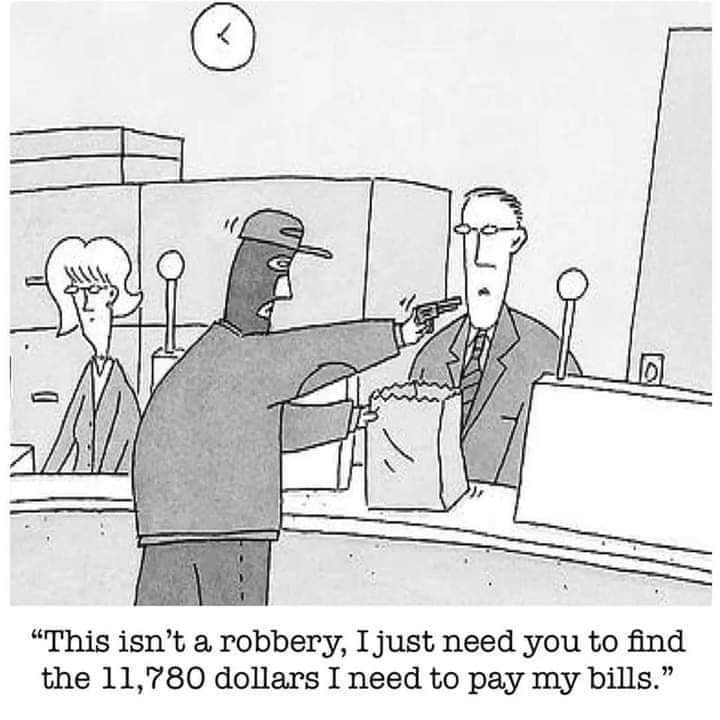
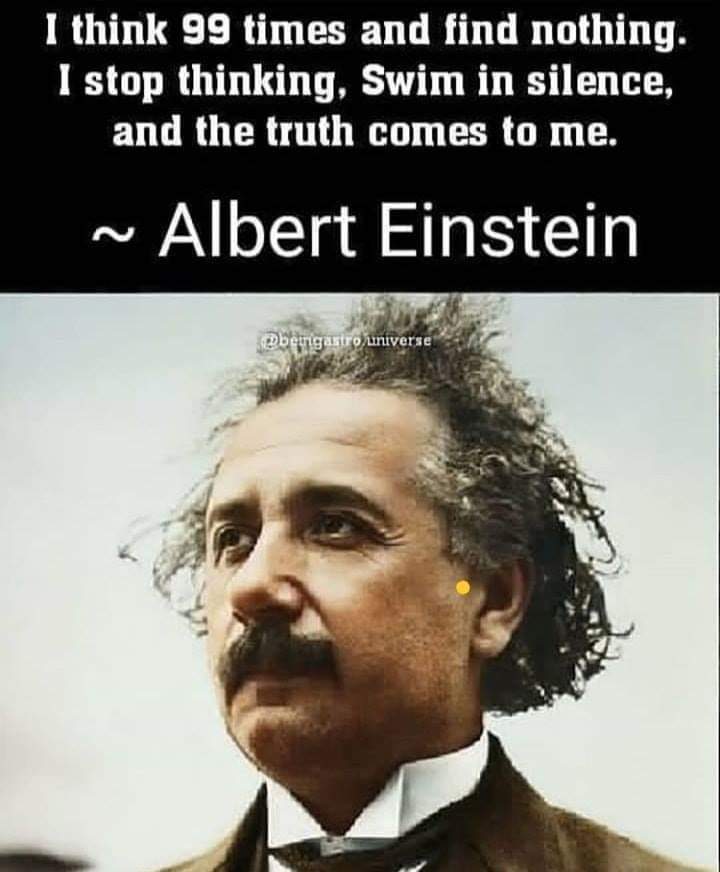
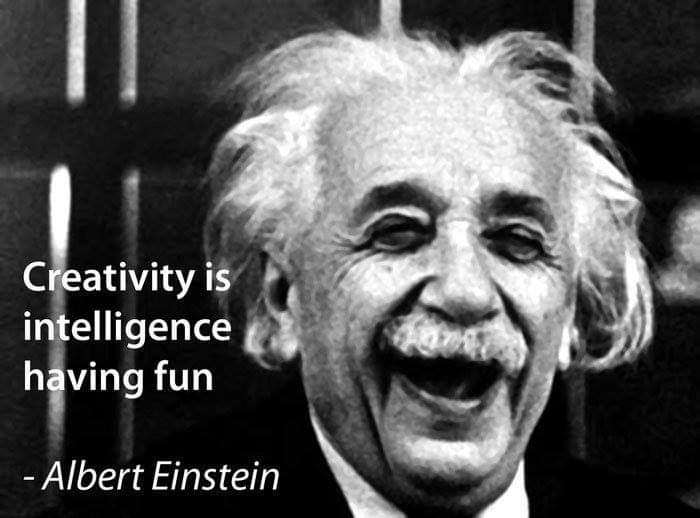

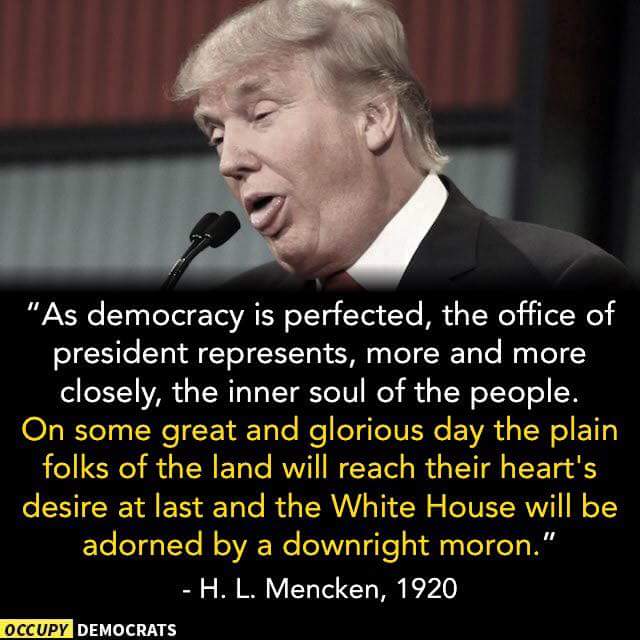

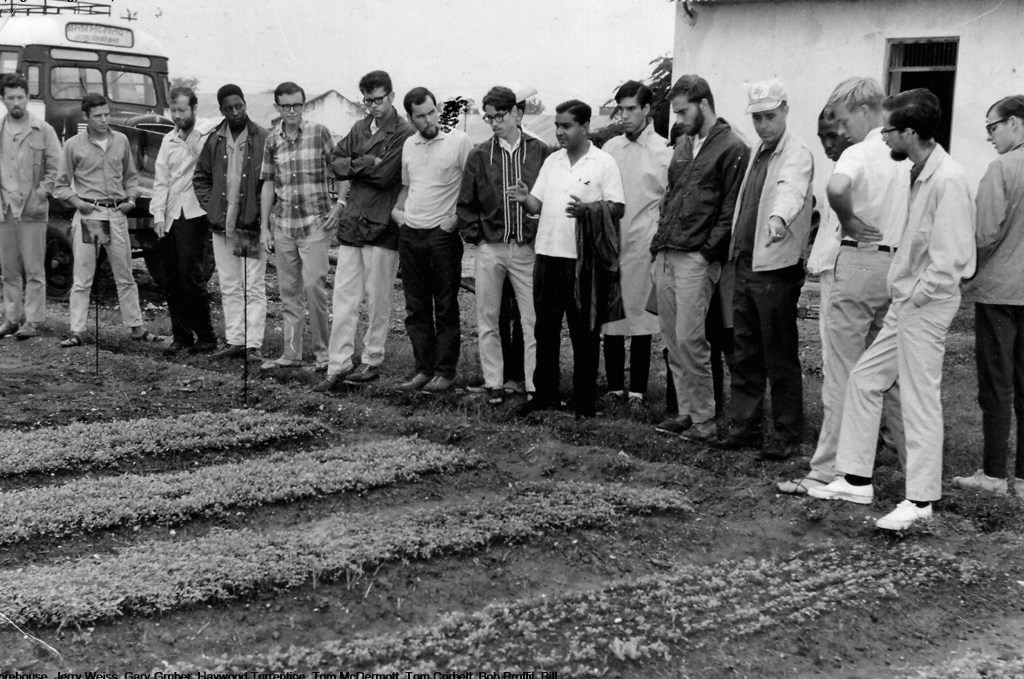


 Tom's Musings