In Massachusetts, it is illegal to go to bed without first having a full bath … I should have been chucked into the the slammer as a kid for sure.
It is illegal to mispronounce Arkansas in that state.
Justin Timberlakes half-eaten french toast sold for over $3000 on eBay … I’ll sell you mine for a fraction of that.
There are more cells in the human body than people living on earth. My body probably has more cells than the population of several earths.
Fingernails grow nearly 4 times faster than toenails.
Snails can sleep for three years … almost as long as I can.
An ant can lift 50 times its own weight but a bee can handle 300 times its own weight … Big deal, I can lift a 10th of my weight.
Pentheraphobia is a fear of one’s mother-in-law.
In New York city, about 1,600 people are bitten by other humans (in a year I suppose) … New Yorkers must taste good.
Koala bears are not bears … sneaky devils.
‘Evian’ spelled backwards is ‘naive’ … now that makes sense.
No word in the English language rhymes with month … you are trying to prove this wrong, aren’t you?
Leonardo da Vinci was dyslexic, he often wrote backwards.
Eggs sink in water when fresh, they float when expired. Do they levitate when spoiled?
Sound travels 5 times faster underwater.
The correct response to the Irish greeting ‘top of the morning to you’ is ‘and the rest of the day to yourself.’
Barbie’s full name is Barbara Milicent Roberts.
When you kiss, 200 million germs per second pass between the mouths … that’s it, no more romance for me.
There are more dogs than children in the city of Paris. No problem, dogs are nicer anyways.
In Michigan, a woman isnt allowed to cut her own hair without the permission of her husband … makes sense to me.
On average, the lifespan of an American dollar is 18 months. Far less in my wallet.
in 1776, a person making $4,000 per year was wealthy. Now, I just got to perfect that time machine and I’ll be as rich as Croesus.
Human thighbones are as strong as concrete … not mine.
Rats can swim for a half mile without resting, they can tread water for 3 days straight.
Female Pandas raise cubs on their own, the male leaves after mating … just like many human males I know.
In 1900, the average lifespan iin the U.S. was 47 years.
Mosquitos usually dont fly in winds greater than 10 mph … bring a fan to your next picnic.
You lose 7,000 brain cells a day at age 35. They are never replaced … shit, do I have any left?
Chocolate is associated with the release of seratonin which makes you feel happy … happy, happy, happy!
Dogs sweat through the pads on their feet.
The shortest verse in the bible consists of two words: ‘Jesus wept.’ (John 11:35).
A queen bee lays about 1,500 eggs on an average day. Now we know where the term ‘busy bee’ comes from.
Many were concerned about Albert Einstein when he was young since he couldn’t speak properly until he was 9 years old. I also was a late developer but that was because I was slow.
Fleas can jump 130 times their own height … I wonder if I can outjump a flea?
Consider this! There are a million ants for every human on the earth. Let’s hope they don’t get organized.
Banging your head against the wall uses up 150 calories per hour. That’s how I’ve lost weight recently.
There are more nerve cells in the human brain than stars in the milky way.
There is enough DNA in your body that, if put end to end, would stretch to the sun and back 500 times.
Did you know that your typical office desk has more germs than a toilet? A great reason to skip work.
A person eats 60,000 pounds of food during his or her life which is the equivalent of six elephants. OMG! I think I’m past my quota.
You burn more calories sleepng than watching tv … Damn, I’m going on a sleep diet.
You can think me for this educational post later. BTW … I vouch for none of this information.
Has the cultural divide between the left and right become an unbridgable chasm? Is the center dissolving as those hugging the middle ground are being forced to take sides?
Unfortunately, it is always difficult, nigh impossible, to assess with any fidelity such comparative differences across vast differences of time. Recently, I was lamenting to a friend that this is the worst construction season I can recall in Madison. Nary a street seems to be without those orange cones, or blocked lanes, zig-zagging traffic lanes, and backed-up impatient drivers. For the first time in memory, you really cannot get anywhere from here, at least not easily. But is that accurate? Is my current annoyance clouding my memory and perspective?
So, the question remains, did we get along as a society better in the old days, before Fox News and culture wars and armed attacks on the Capitol at the urging of a sitting President? Many believe so but is it true? After all, recent experiences have the advantage of just that … being recent and fresh in our memories while the past tends to fade with time.
I can think back to my childhood and youth. There surely were conflicts back then, certainly as I came of age in the 1960s, but even in the somnolent 50s. After all, we had a form of legal apartheid in a good portion of the country during that decade … a period seen by many as the halcyon days where all was peaceful and happiness reigned.
But just think a bit about the world back then. Blacks and other non-whites were told where they could go or not go, or where they might sit or not sit, or if they could vote at all. And they surely were told how to act in the presence of Whites. Emmett Till, a 14 year old black boy from Chicago visiting family was murdered in 1955 for allegedly whistling at a white woman (which she recanted many years later) in Mississippi. His murderers were subsequently acquited by an all white jury despite overwhelming evidence as to their culpability.
Lest we forget, people also resisted the putting of flouride in water supplies because it was considered a Communit plot of some sort. A good friend today laments that, growing up in North Dakota, she suffered many cavities since no fluoride made it into her water supply. She blames her teeth issues on a the backward politics of her state which prevented a common sense preventative measure from being introduced. She never became a Commie as far as I know though she is a bono-fide liberal, so there is that. On the other hand, we all eagerly lined up for our Salk Polio vaccines despite a shaky roll out. There was no effective vaccine disinformation campaign (though some resistance came from scientists pursuing a different remedy). In that era, the public believed in science and the scourge of polio quickly became just a bad memory.
We also had the John Birch Society and like-minded right-wing groups. The remnants of the Birchers can still be found in Wisconsin’s Fox River Valley. But groups like this laid out a paranoid belief that the Commies were everywhere. Not even Dwight Eisenhower, our Republican President who had defeated Hitler in Europe, could be trusted, though I can no longer recall what his sins could have been. Then again, he did collaborate with the Reds to defeat Hitler, and he even appeared with Stalin and the Politburo in the Kremlin for the May Day parade in 1945 at the very end of the war in Europe. But they had been our allies at the time and had suffered an immense human cost to defeat our common foe … the Nazis. Still, just appearing with Satan’s minions may have been enough of a sin in eyes of the far right.
The paranoia of the 50s was not relegated to the fringes. Congress went on a Red witch hunt after China fell and the Korean police action, I mean war, broke out. The House of Un-American Activities Committee (HUAC) dragged people before its tribunal to smear their reputations for sins like having lunch with someone who once had a cousin suspected of being a fellow traveler. When those who fell victim to this form of kangaroos court justice employed their Constitutional rights, they were branded guilty and often blackballed in their professions.
Like the very system Congress was attacking, those brought before the Committee were deemed guilty absent evidence and could only redeem themselves by pointing out other alleged Reds. Most would not stoop to such self-serving, but despicable, tactics and paid the price for having a conscience. The great entertainer, Charlie Chaplin, was one such victim. However, he emigrated to Europe to escape American paranoia and injustice.
In the early 1970s, Chaplin was invited back to a Hollywood Academy Award ceremony for one of those a lifetime achievment award things. When introduced, he was given a 12 minute standing ovation. It was the longest and most exuberant reception ever given a celebrity before or since, partly in recognition of his talents of course but also to acknowledge the beastly way he had been treated in the States. It was the Academy’s way of asking for his forgiveness.
Of course, the author of the 1950’s witch hunts was Senator Joseph McCarthy. The paranoid tenor of the times is still known as McCarthyism. ‘Tailgunner Joe’ won his Senate seat after WWII. He never was a tailgunner in the war but had a picture taken that suggested as much. From the start he had a cozy relationship with the truth that he exploited when his career in Washington seemed to be floundering. During a speech in West Virginia, he made unsubstantiated claims about Commies infesting our government in Washington, especially the State Department. His wild assertions were picked up by the press, and Joe saw a publicity gold mine.
This early ‘throw anything at the wall to see what sticks’ approach to politics would become a staple of Republican politics as vile negative campaigning became a well-established art form. As is often the case, his unsupported claims had to escalate to keep the public’s attention and maintain his place in the media spotlight. Then, not surprisingly, he went too far … attacking the U.S. military. The Senate censored him, he lost his limelight, and he soon died of acute alcoholism, but only after many lives were ruined.
The good citizens of Appleton Wisconsin kept a statue of Joe McCarthy prominantly displayed in front of the local courthouse for many decades after his passing in the late 1950s. He remained a political hero in this conservative area. The statue was still there when my then new wife was seeking that same Appleton Courthouse where Joe’s likeness could still be seen in the early 1970s. She was doing interviews for a State sanctioned and supported research project on women in state government.
Suddenly, she was pulled over by an Appleton police officer who questioned where she was going and what her business in town might be. Perplexed, she asked why she had been pulled over, what had she done wrong? The officer replied, ‘you did nothing wrong. I merely saw the Support the ERA sticker on your bumper and knew you were not from around here.’ As a reminder, the Equal Rights Amendment (ERA) was designed to guaranteed equal treatment of women under the law and was being considered at this time (it didn’t make it). Apparently, anyone who supported this radical concept likely was a liberal, surely an outside agitator from Madison, and probably a card carrying Commie. You could never be too careful. Oddly enough, my radical spouse eventually became the Deputy Director of the Wisconsin Supreme Court and of the unified state court system.
Then, of course, we had the turbulant 60s. Too much violence and conflict happened during that decade to recount in anything less than a book. But the bitterness of the era was real. Minorities and other non-mainstream folk were beaten and assassinated, churches bombed, draft boards threatened and records destroyed. Numerous ill-considered terrorist incidents carried out to stop what some considered an immoral war or to advance various rights.
I can recall joining an anti-war march very early on (1965?) in Worcester Mass. It happened the day after Senator Wayne Morse of Oregon gave a spell binding speech on the immorality of this conflict and the flimsy rationale for escalating the comflict (the Gulf of Tonkin incident). Those opposing the war were still a tiny minority. So, as we (I was accompanied by my girlfriend at the time who would go on to be the Dean of the Education School at Rutgers after getting her Doctorate from Harvard) marched peacefully with a small group of protesters in front of City Hall.
We became concerned as we were surrounded by an angry mob many times our size. They saw us as traitors and Commie dupes. Soon, we were barraged with eggs and beer cans, not all of the latter were empty. You could literally feel the hate these good people had toward us. The moment I recall best was when the line of marches stopped. I saw a group of guys who looked like bikers straight from the movie set of Brando’s The Wild Ones. One of these gentlemen said, ‘let’s beat the f%$k out of the tall one with glasses.’ I looked about me without moving my head. I was the only tall one with glasses. I started the ‘perfect act of contrition’ which, I had been told as a young man, could even get a debauched sinner like me past St. Peter. But I could no longer recall the entire Catholic prayer. I was doomed.
The height of this insanity, and the ending of the worst and most senseless violence, arguably can be associated with the Sterling Hall bombing on the University of Wisconsin campus in 1970. On August 24, a truck laden with explosives was parked beneath the building that contained the Physics Department and which also housed research projects associated with the Department of Defense. After a hasty phone call to authorities, too late to do any good, the ensuing blast ripped the building apart in the middle of the night. Miraculaously, only one person was killed, a Ph.D student who was working through the night so that he could take his wife and child on a quick holiday before the next semester started. His wife, oddly enough, would later work as a computer specialist at the research entity I helped run in future years. The antiwar protests continued but the uncontrolled rage was dialed back after this tragedy.
This quick historical tour is not meant to recount the past with any depth or veracity. Hardly that. But it does cast light, I hope, on the dfficulty in assessing one era against another. I have many stored anecdotes which suggest that the conflicts and cultural divides were as virulent then as they are now. Perhaps it is time for another plug of one of my books where many of these stories can be retrieved.
This work has all you need to know on those fabulous decades of the 50s and 60s. Yes, there was all kinds of conlict and bitterness and even violence back in the days which many view with nostalgia. The political divides even then tore families apart. My father, a smart man who never had an opportunity to obtain a formal education beyond high school, was immensly proud of my own success in school. Yet, he was bitterly disappointed when I drifted into the anti-war camp in college. That was a family cultural divide we had much difficulty surmounting, but we did in the end.
So, are we merely imagining that things are worse now, that democracy is imperilled as never before, that we are facing challenges that are unparalleled in our history? Well, McCarthy in fact was censored by his peers when it became obvious that he was a charlatan. Congress did end legal Apartheid one century after the end of our Civil War. And Nixon was forced to resign after Watergate when even members of his own political part indicated that they could not support his illegal actions. As bad as things were back then, as virulent the conflicts and disputes, there were limits. Members of both political parties would rise up to say ‘enough is enough.’
So, is our country in bigger trouble today than it was five decades ago? So sad, too bad! You will have to wait for another blog for an answer. But I promise one. I DO! Someday :-).
Several days ago, I started writing about what I call the cultural divide without really defining what was on my mind. So, let me start today’s offering by remedying that omission, at least in some small way.
I was all over the map as an academic, which made me a poor scholar but a pretty good policy wonk. It turns out that, in my wanderings as a faux academic, I did focus on the concept of culture in the latter part of my career. I mostly was concerned with what I termed institutional culture, the way that organizations form their goals, determine appropriate behaviors for their members, and shape the perceptions and dispositions of those members. Trust me, organizations have distinct cultures.
What initially drove that interest was a desire on my part to shift human service systems away from narrow and siloed perspectives toward more comprehensive and (hopefully) coherent intervention strategies. After all, social challenges such as poverty are not unidimensional in character and cannot be resolved by simplistic silver bullets.
Driven by this rather obvious (to me), but oft overlooked, insight, I and my colleagues helped develop the first integrated welfare-work agency (Kenosha, Wisconsin) in the late 1980s, which became a model for the nation and even oversees. In doing so, it was apparent that the impediments to integrated systems were less structural and legal. The real hurdles were more in how distinct institutional cultures impeded real collaboration when separate programs and agency staff were brought together and expected to collaborate.
Of course, there are many cultures to which one is, or can be, exposed. First, we are raised in a specific culture. I was immersed in a Catholic, ethnic, working class environment early on. We often are exposed to a different culture as we break away from childhood, especially in college. Then we are newly acculturated (or prior ones are reinforced) during our professional training and then again when we accept a position in a firm or organization. Then there may be other influential cultural forces in our neighborhoods and among acquaintances.
Most of my academic colleagues were shaped by very similar experiences and forces over time. Many were raised in households where their parents were academics, then went straight on to school and graduate training where the coda of science was ingrained in them. Finally, they segued into a research university, if lucky, where the rules remained the same as they had been throughout their lives to that point. Consistent cultural experiences can blind one in an inflexible normative and experiential bubble.
You can spot a lifelong member of the academy a mile off. Given a choice of curing cancer or getting one more publication in a top peer reviewed journal that will be read by a few hundred others who think just like them, they will choose the latter without a moments hesitation. That is what their whole life trained them to worship and what their institutional culture rewards. Getting that next journal piece out trumos all else, certainly teaching. (Note: Want your kid to get a good education, send them to a school that considers teaching important, not to a school where it is a grudging institutional function at best.)
Some of the more rebellious types, like me, do not stay within a single cultural straitjacket and bounce around where whims and exciting opportunities take us. I feel that makes us more like wanderers through life. This has its costs but also makes us more insightful and better lateral thinkers. Of course, that might just be me rationalizing my professional life, such as it was.
I was a wanderer. If I had been a real academic, I would have focused on one or two narrow questions and cranked out several dozen articles looking at those narrow issues from every possible angle. There is a reason that every research article ends with the phrase … we need more research. It has nothing to do with science and everything to do with the currency of the academy, pumping out a high quantity of publishable technical work.
I, on the other hand, crafted a professional life where I was positioned in a research university but spent a great deal of time in the real world. That meant I had to go back and forth between radically separate cultures. Most of my colleagues would have been paralyzed by this. But I thrived in the chaos. Even now, I cannot escape thinking that my colleagues missed so much by only getting their input from ‘the literature’ and from their cloistered colleagues. There is a whole world out there to be explored and lessons to be extracted.
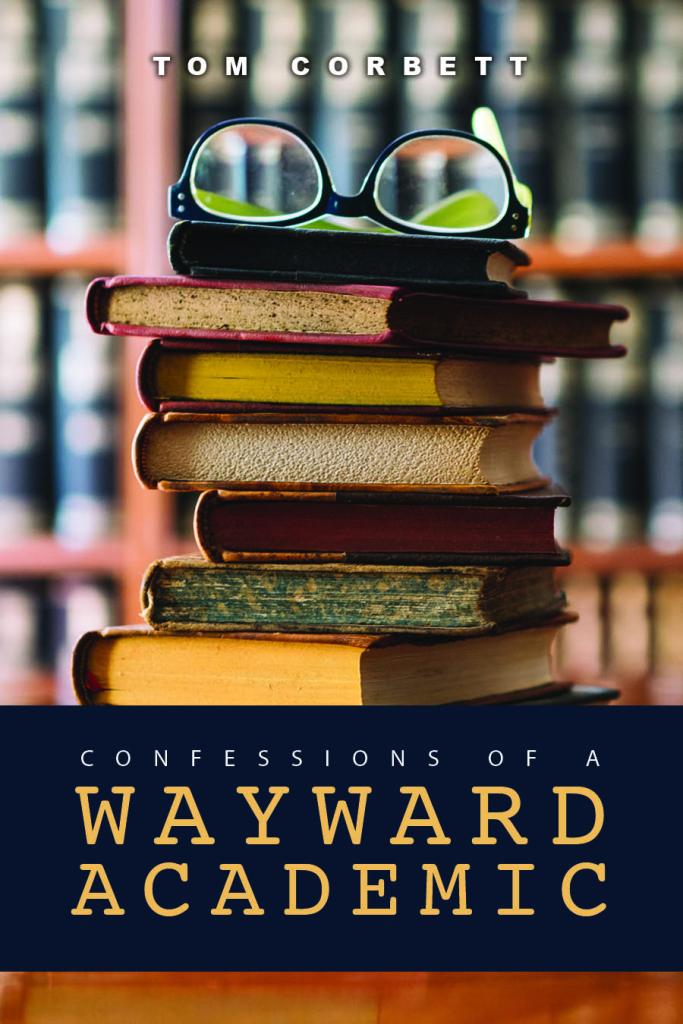
Developing a cultural adaptability and some capacity for nuanced thinking helped me in another way. I could see things from diverse perspectives and appreciate where others were. Therefore, while I came out of my youth as a starry eyed leftist and socialist of sorts, I soon saw a bigger picture. As I got deeper into impossible issues like welfare reform at the state and national levels, it was encumbent to work with people who did not agree with me, as wrong-headed as they were :-). That was the nature of the beast. Advocates could afford to be self-righteous, but policy wonks needed to be more flexible. You might try reading my profesional memoir titled A Wayward Academic: Reflections from the policy trenches.
Now, the issues in which I was engaged were not for the faint of heart. Welfare was a huge issue back then, it was considered the ‘Mideast of domestic policy.’ People dug in and normative conflict was a daily affair. I was contacted by media on a weekly basis (at least) and always tried to give objective, neutral facts and unbiased opinions. That confused the crap out of them because reporters were used to getting ideological rants. I, however, always tried to play the academic role. My preference was not to persuade but to enlighten. With my students, it was the same. Conservative students loved me (there were a few but not many) because I focused on how to think about complex issues and not what to think about them.
One of my better articles was called Child Poverty: Progress or Paralysis (I’ve mentioned this before when talking about my famous onion metaphor). I mention it again since it represented a major theme of my professional work … to seek out arenas where I thought people might agree even where extant normative dissension seemed beyond repair. Again, the genius of this piece was to lay out a diverse set of approaches to reform, from very liberal to very conservative, and show that they were complementary and not competing strategies. All I can say is that the piece was amazingly popular.
But here is the thing. Back in my day, many conservatives who cared about poverty issues remained attached to the real world. They liked data and evidence even if such might come to different conclusions. Believe it or not, we could have reasonable discussions about things. I will mention Ron Haskins whom I met during my year in D.C. which, in fact, took place right after the release of my Child Poverty article. Ron loved it and sought me out. He was widely considered THE Republican staff expert in Congress on poverty and welfare issues. At the same time, he was rational and evidence driven. We hit it off immediately and sparred on and off for the next couple of decades.
BUT, in the 1990s, the political world was changing. Newt Gingrich was putting the final nails in the coffin of sensible government. In the future, it was all about power and winning, not doing what was right. I remember Ron at a conference with mostly eggheads. He was asked what role evidence and data played in making policy (this was mid to late 1990s after the cultural divide in politics was rapidly hardening). Without pause, he said maybe 5 percent, possibly 10 percent on the upside. He told the assembled academics that it now was all about power and values … ideology told you what to believe and power enabled you to get it done no matter how much sense it made.
He was the ultimate insider and should know. Then again, he left the Hill around this time, perhaps seeing what was happening. He took a position with the prestigious Brookings Institute. Later, he would lament that his party ‘had lost their way.’
I think back to Tommy Thompson, a lifelong Republican who served as Wisconsin Governor, Secretary of HHS under George W. Bush, and even President of the University of Wisconsin system late in his career. While he had some suspicions about me (once yelling at me in a public forum in Chicago), he was a old school Republican with whom one could work if they tried. He wasn’t the slash and burn conservative that dominates the party today. He cared about the programs and clients being served even as he fought hard to make recipients more responsible and accountable. He loved the University and was light years from Today’s Republicans who attack the Madison campus just to make cheap points with rural voters even as such attacks cripple the state’s economic engine. Retribution against ‘woke’ liberals is all that counts among today’s so-called conservative leaders.
In Accidental Scholar (see above), I summarize a lot of my thinking on various topics though I’m thinking of updating this work later in the year. Most of the material contained here comes from an earlier period when reason and evidence yet played a substantive role in the doing of policy, a least more than the ‘point scoring’ role or ‘owning the libs’ role found in recent policy debates. It was a golden age for people like me who seek reasonable solutions to very difficult problems.
Well, that was a cook’s tour of a long and comlicated story. The bottom line … the essential ingredients to what made government work, even with varying norms, has slowly eroded over time and has disappeared almost totally in the past two decades or so. Without reason and evidence, all we have is passion and fury and revenge. Now we are on the precipice of losing our status as a ‘nation of laws’ and as a government guided by established constitutional principles.
All this is a long way from the golden years when I could sit down with those of differeing views, a Ron Haskins for example, and talk things through. How I miss those days. And, given the stakes involved, how desperately we need to rediscover them.
It is amazing, and disturbing I suppose, what random crap catches my attention on any typical day.
For example, there was an article about an 86 year old man who returned a copy of George Orwell’s classic book on totolitarianism titled 1984 some 65 years after borrowing it from a library. His reasoning was that people REALLY, REALLY needed to read this cautionary tale now more than ever.
Then I noticed Harvard admits some 1,600 undergrads a year, about 11% of them international students. In fact, the top 20 U.S. universities as a whole admit about 30,000 American students each year. For those wanting to attend these elite schools, the odds are not in their favor. There are about 2 million students graduating annually from about 40, 000 high schools. If these top schools ONLY selected valedictorians, there would still be 10,000 of these top scholars left out each year. And that doesn’t account for the athletes, legacies, and rich kids whose parents build a new wing on a school building who get in with lesser credentials. The truth is, even the best of the best will get left out in the race to attend the top schools.
Speaking of education, I next noticed that the Republicans in my Badger State are still bent on ruining things out of sheer spite. Recently, they refused to permit the erection of a new Engineering Building on the University of Wisconsin campus. Most states are beefing up their STEM curricula for economic development purposes. Not here! That wasn’t enough mischief for them (I really think they stay up nights dreaming up stupid stuff to do). They next proposed cutting another a $32 million from the Madison’s campus budget (an elite research university typically ranked in the top 50 such schools IN THE WORLD). Why this last minute cut? Because the school’s administration still wants to improve various diversity and inclusion efforts to attract and keep underserved populations. The nerve of these socialists. But that is hardly the deeper reason. Despite the university being an amazing economic engine for the state, the highly educated, professional, and thinking population it attracts tend to vote Democratic (Note: Dane County, where the campus and state capitol is located, voted 82 percent for the liberal Supreme Court candidate in the Spring election, tipping the top Court to the liberals. Another note: my late wife retired early from her position as Deputy Director of the State Court system when she saw it becoming highly politicized and partisan, thereby making a mockery of justice.) To Republican polliticians, the outrage of turning the deeply divided state a bit bluer had to be punished despite the fact that just one university spin-off (Epic Medical Systems) has generated some 15,000 high paying technical jobs in the Madison area. The problem is that these professionals, and the thousands of others being hired by high tech and medical spin-offs in the area, which is booming) are too smart to vote Republican. Better to have poor and stupid voters in a floundering state than have a vibrant economy with too many educated folk. (But I vent here, sorry).
Then there is the inspirational story I ran across. A 14 year old Russian boy dropped out of school, something his school mates noticed and inquired about. When they found out he had been rendered blind by a botched medical procedure, they offered to help him in any way they could, including escorting him to class and back and reading to him what the teachers wrote on the board. The boy’s mother was brought to tears by their generosity. And they kept theor promise. Lev Semenovich Pontryagin graduated with honors and went on to become one of the greatest mathemeticians of the 20 Century. And here I was, fully sighted, and I could barely pass high school algebra. (Note: I yet recall scrawling across the page of one algebra exam the words veni,vidi, flunki, loosely translated as I came, I saw, I flunked in Latin. The teacher responded by writing … almost!)
As you know, I’ve always noodled how we arrive at our moral and normative centers (see my last Blog). I ran across a story I’ve seen before yet which remains instructive. Martin Adolph Bormann was the son of Martin Bormann, Hitler’s close associate and personal secretary. The son was fully indoctrinated and a rabid member of the Hitler Youth group as a young teen when the Reich fell. Many of his closest friends committed suicide when their hero, Adolph took his life. They could not conceive of living in a different world. Martin, the son, considered this but, at the last moment, chose life. More than that, he began to ween himself from the brainwashing that dominated his youth. He became a Catholic Priest, devoting his life to fighting any return to Facism. It seemed as if no amount of indoctrination could steer him away from what he was meant to be … a decent human being.
As the 2024 election nears, we will hear the usual political drumbeat about America being ruined by high taxes, over spending, and a bloated Washington bureaucracy. Why bother with facts when rhetoric is so much more satisfying. So, I noticed a note on the top marginal tax rates over time. The top rate was 81% at the start of WWII, mostly to fight the Depression. It rose to 91% at the end of the Eisenhower administration (1960) as we still were spending down our huge war debt. Kennedy and Johnson knocked it down to 72% by 1970. When the Reagan revolution came to center stage, the top rate was dropped to 28% by 1990. Today, it stands at 35%. So, remember that America emerged as the world’s leading economy during the period when the rich were taxed at a top rate almost 3 times what it is today. The sky will not fall of we tax the filthy rich a bit more. That is just whining from the filthy rich who remain greedy beyond all measure. And, by the way, federal revenues generally average about 20% of GDP in the States, quite low when compared to other rich countries. And the size of the federal bureacracy, if anything, has declined as a proportion of the population over time. If government has exanded in size, it has been at the local level where people want, and support, MORE services. However, get ready for some frantic ‘the sky is falling’ screaming.
Speaking of whining, the MAGA devotees are all up in knots about their cult hero being indicted on 37 charges under the Espionage Act of 1917, a piece of national security legislation enacted as the U.S. became an international power player as it entered WWI. This is serious stuff. Under this Act, Julius and Ethel Rosenberg were executed in 1953 for passing nuclear secrets to Russia at the start of the Cold War. Aldrich Ames, a CIA operative just died in Prison. He was convicted in 1994 of spying for the Soviets for $1.4 million. The Trump administration had no problem going after people under this act as well. In 2019, Harold Thomas Martin was sentenced to 9 years in the slammer for espionage. What in the world excuses Trump for illegally keeping highly classified documents without adequate (or any) safeguards, and then lying about it. Ever having an eye out for transactional opportunities, many believe the only plausible rationale for his behavior was that he would try to sell this stuff to the highest bidder. Even conservative jurists admit prosecutors have an excellent case. This will be a test of whether we can remain a ‘nation of laws, not men.’ If we don’t, you can kiss the American experiment goodby.
On a more upbeat moment, I ran across bios of young women who acted with uncommon bravery in WWII. Hanna Szenes was a Jew recruited by the British Special Operations group and dropped into Hungary to help Jews escape deportation to Auschwitz. Eventually, she was captured, tortured, and executed at 23 of age. She didn’t have to do what she did. Irena Sendler was a nurse, a devote Catholic, and the daughter of a Polish doctor and Socialist who volunteered to work in the Warsaw ghetto. She risked her life on a daily basis as she snuck out as many babies and children as she could right under the noses of the nazis. She did so while entering and leaving the ghetto as she performed her duties. As with so many others, she eventually was caught and tortured mercilessly by the Gestapo. Many of her bones being broken as a result but she never told her captors anything. Several times, she came within a whisker of being executed, only escaping death when her friends bribed a Nazi official. She lived to be 98 years old. I am always humbled by such selflessness and courage.
These are just a few of such stories that pass by my consciousness in a single day. The world really is such a fascinating, if frustrating, place.
Two responses to my last blog got me thinking. That, in itself (getting me to think that is), has to be a ‘hold the presses’ moment. Unlike my youth, when my mind was agile and even imaginitive, it usually takes a ton or two of explosives to crank up any measurable cranial activity these days. Every damn time my ear doc peeks into my auditory canal I expect to hear ‘OMG… I can see straight through to the other side.’
But to the responses! A close friend emailed me that, based on what I had written last time, I am surely Dr. Doom and Gloom. The other response of note was from another blogger whom I don’t know personally but who chided me (gently) for doing my ‘liberal propoganda’ thing (again). I used to get attacked on Facebook for that all the time, usually by Trump devotees until I was served with a lifetime banishment for telling bad jokes. But those FB critics were brainwashed cult members for the most part. This gentleman is thoughtul and writes with a style I can only envy but hardly emulate. I value his opinion.
Now, the ‘doom and gloom’ label is acurate and beyond dispute. Like I have said way too many times, I am Irish and subject to melancholy (along with an irrepressible sense of humor) which is part and parcel of the ethnic territory. Perhaps several centuries of crushed Celtic dreams has something to do with that. Whatever the cause, we do tend to walk around followed by a dark cloud and a dry wit (probably a defense mechansim).
However, I must say that I am much better than I used to be. As a young man, while affable and witty on the outside, I was pretty dark on the inside. If given a toggle switch where one side would painlessly end the human experiment and the other side would permit the antics of homo-sapiens to continue, I favored the off switch (or the end it all side) through college. I really couldn’t see the point of it all. Eventually, I found some solace and hope in the evolutionary writings of Teilhard de Chardin, the Jesuit priest who spent most of his life in China but was a scholar at heart. Through his vision, I began the journey toward a limited sense of optimism. By the way, I found Teilhard quite useful in other ways. I seduced one young lady merely by mentioning that he was a favorite thinker of mine. Nothing else ever worked, so he was now one of my favorites bar none.
In truth, I have recovered from the depth of my ‘doom and gloom’ persona that dominated my youth. I have also stepped back from my crippling sense of self doubt as a younger person. I always thought the other guys were smarter, sexier, and certainly better athletes than I. The athlete thing might have been true since I was usually the last neighborhood kid picked for any team … AFTER the kid in a wheelchair. It took years but I slowly (glacially) realized there were people dumber than me out there. I had a hard time believing that but apparently it was true. (The species is doomed, doomed I say.)
Oddly enough, I can still recall the moment I edged my way from my total doom and gloom perspective on life. I actually wrote a Master’s Thesis on taking an evolutionary view of social progress over the long haul. I made the argument that we were now in another transitional stage of development like the introduction of urban life or agriculture or the onset of the industrial and scientific age (this was back in 1970). They gave me a degree for this crap which, as I think about it, probably was their version of a social promotion. No matter, during one of our late night (and beer fueled) dialogues that seemed non stop, I yet recall waxing eloquent on the histiry of human progress and suddenly sweeping my arm toward the ceiling to indicate a transformative change. I recall stoping at that very moment and saying (to myself). Did I just do that … say that? Just who the hell is this optimist?
The ‘liberal lackey’ assertion (my label, not his) is more complex and, to my mind, more meaningful. I’m convinced that I was hard wired in that direction. I grew up in an ethnic, working class neighborhood where everyone was a Democrat. The Republicans were the WASPS who lived in the wealthy part of town and made life difficult for our tribe. My only contact with them (as a kid) was when I caddied for a summer at the Worcester Country Club. But it took me three busses to get to that part of town and the cheap bastards didn’t tip well. It wasn’t until high school (St. John’s Prep at the time) that I met some of their sons (those from successful Catholic families that is).
Now, you have to understand this. Though my tribe were all Democrats, they were socially conservative. My people seemed to have a complex hierarchy of hates … against blacks, Hispanics, Jews etc. I won’t even go to what they thought of gays, etc. But it went beyond that. They had a hierarchy of ethnicities within their own white, Catholic tribe. My Polish mother had a pecking order where she had a place where each other nationality was to be situated. The Poles were at the top while the Italians, French, Greeks and so forth were considered semi-barbarians to be tolerated. Of all the people I knew in those days, my father wasn’t too bad in this regard though he did despise the Brits (as all good Irishmen did).
Now to the $100 dollar question. How did a kid who grew up in such an insular and provincial cultural bubble develop so many wild ideas? You might be asking … what wild ideas? Well, at age 12 or so, I recall arguing with visitors (to the elderly Lithuaniian couple that owned our flat) from Virginia. I firmly took the position that the Supreme Court ruling that integrated public schools was the right thing to do.
Where the hell did that come from? No one in my neighborhood would argue such. I remember thinking that we should share our agricultural bounty with the world since, again, it was the right thing to do. I only joined two ‘clubs’ as a kid. One was the Boston Celtics Junior Booster Club (I was a huge fan of Bob Cousey) and something called the World Federalist Society. What? No one in my world even knew who these guys were though, thinking back, it probably was a Communist front organization. But to me, working toward a unified political globe just made total sense. Perhaps I am an alien and the mother ship will soon return to fetch me.
Yet, until college, I was divided within. I didn’t have an integreated perspective on things. So, I recall the Cuban Missile Crisis which occured during my Seminary days when I was in training to become a Catholic missionary priest. As we teetered on the edge of a nuclear disaster, I recall thinking that I would leave the seminary, join the military, and return when the world was safe for Democracy. Wow, who was that young patriot?
At the same time, I was most proud of the Maryknoll priests and nuns (my order) who were on the sides of the peasants and the oppressed in Central and South America. Some of these missionaries practiced ‘liberation theology,’ a decidedly left-wing version of Christ’s teachings. I left the seminary when I realized I was more interested in saving the poor of the world socially and economically than in saving their souls. Sometimes it takes a while to figure things out.
College was the first time I experienced life outside my Catholic, provincial world. By dint of circustance, I did not go to a Catholic college (as expected) but to Clark University. It was in my town. Therefore, I didn’t have to worry about room and board and could therefore afford such a private school though grants, loans, and working 11-7 in a hospital. However, Clark was known as a den of atheists and Communists among the Catholic community. Despite what conservatives say, no one tried to indoctrinate me to become a radical or leftist. All they did was expose me to a wider world of ideas and perspectives. My mind literally exploded, a feeling I yet treasure.
Again, I can recall one particular moment when I transistioned from my old world to a new one. I had been tapped as one of the up and coming Psychology majors and awarded a National Science Foundation Summer grant to do original research. It was designed to motivate and prepare promising scholars for a future in the academy. (Note: It backfired. At the end of my summer I had to kill all my subjects, a bunch of rats. When I stuck the needle into the stomach of one large rodent, he peed in my face. That was the end of my psych career.)
Again, I’ve digressed. One of the other students with such an award was properly motivated. He went on to Harvard for his Ph.D. (I was encouraged to do the same but my crippling self doubt would not permit that). We must have shared a common space for our summer work. One day, we did nothing on our projects but rather started talking about the war in Vietnam. This was very early on, but he already was opposed. I yet held on to my lock-step views from my Catholic cocoon and argued with him. We went at it all day, back and forth. At the end, we agreed to disagree. But, as I walked home that night, I knew he had won. He was right and I was the one who had to change. It was not long before I was leading the left wing, or what passed as left wing then, on campus. I even joined SDS (remember them?) but before they had devolved into a sad form of nihilistic self-destruction.
The more I think on this, the more evident it is that this is where I was destined to be. Yes, nature, or one’s environment, pay a part in our development but I have come to believe that we are given certain cards at birth. Some of us need certainty while others can acommodate risk, new ideas, and love nuanced thinking. We love to think things through and arrive at our own belief systems. Shedding early scripts is never easy but, I now believe, inevitable for some of us. I was going to find my moral compass one way or another.
Clearly, this is a big topic and I have places to go and things to do. But I will pick this theme up again, and then maybe again. The notion of how one forms a world view or personal zeitgeist, and how culture shapes such, intrigues me. Unfortunately you will have to suffer along with me as I explore what intriques me.
The following has been done by many others and in numerous distinct ways. Still, I find the exercise instructive. So, here is my personal go at it.
We all have a tendency to think our times are unique. For some, it might be the best of times, for others the worst. We implicitly judge our experience against the past (or an imagined future) since that is the only way we can assess the meaning of any singular experience or understanding. I have given away my perception of the world, and how I experienced things, when I assert that I’m glad to be an old fart. That might suggest how I think about a dark past and, simultaneously, suggest what I see in a bleak future. Neither is a pretty picture. Then again, I have always been a dark cloud Irishman, so my opinion indeed means little.
No matter, just for the fun of it, let us imagine you come into this world at the turn of the 20th century, in 1900. That would have been my grandparents era. What kind of world would you have seen and experienced over the course of a long life.
1900 … you are born kicking and screaming.
By age 14, you are old enough to be aware of the broader world. You might already have spent some years doing back breaking work in a coal mine or farm field or a sweat shop since Child Labor laws had just been introduced as part of the Progressive Era’s political agenda.
Let’s say you were lucky and in school, not a guarantee in that era. You would be aware of the outbreak of World War I in August of 1914, a few weeks after some Archduke you never knew existed was assassinated in some place you could not find on a map. That conflict, fought with more modern weapons but outdated tactics, resulted in over 20 million deaths including almost 120,000 Americans.
That war is coming to an end in 1918, just in time to experience the rampant fears associated with the Spanish Flu which was misnamed since most epidemiologists believe in started somewhere in Kansas. The movement of troops help spread this killer virus in an era before vaccines. Globally, some 50 million perish.
At age 23, Facism makes its debut in Italy under Mussolini but you might not notice at the time since he allegedly made the trains run on time which, knowing the Italians, seems like a miracle.
During the roaring twenties, as you enter adulthood, all seems well except in Europe where simmering hatreds from the first World War are preparing everyone for the next one. You hardly notice as European powers exploit and abuse colonial subjects around the world. Back home, however, if you were paying attention, you would notice some disturbing things. The Klu Klux Klan has been a rising force (again) in the South and in other parts of the country. While many prospered, others suffered greatly and without legal recourse. Even Indiana, a northern states, was controlled largely by KKK sympathizers and a huge march of hooded members made their way down Pennsylvania Avenue to cheering crowds. Our immigration laws had been changed to keep out so-called undesirables thus making a mockery of the poem by Emma Lazarus etched on the Statue of Liberty. It was not a good time to be a miinority, a gay, an immigrant from a non-favored country, or even a women.
As the 20s roared, great inequalities in income and wealth continued to grow but most fail to notice. Perhaps you even buy stocks on margin to take advantage of the wide-open, unregulated economy. Then, at age 29, the bottom falls out of the bubble in an over heated market. A global depression hits and the U.S. government, wedded to conventional economic policies, does everything wrong … they try to balance the budget by lowering spending and tightening the money supply. The country sinks into despair and widespread suffering (Read Steinbeck’s The Grapes of Wrath). Note: Joseph Kennedy, the father of JFK, got out of the market before the crash. As the story goes, he knew the market was in deep trouble when he discovered that the shoe-shine boy he frequented was ‘playing the market.’
As you hit your 30s, Nazism comes of age in Germany and the outlines of the next war begin when Japan seeks its manifest destiny by attacking Manchuria and Mussolini invades Etheopia. Hundreds of thousands are killed in each such atrocity but the world hardly takes notice though the League of Nation totters. The Japanese ‘rape of Nanking’ saw at least 300,000 Chinese civilians brutally slaughtered and the world did nothing.
Age 37 … a military coup ends Spanish Democracy and Generalissimo Franco, aided by Nazi Germany, overthrows the elected government in Spain after a savage civil war. Many Americans fight in what is known as the Lincoln Brigade to save one of the shrinking number of democracies on continental Europe but to no avail. The internal hatreds and reprisals continue for decades.
At age 39, what had been a simmering conflict breaks out into the open when Hitler invades Poland. England and France honor their commitments to that suffering nation and what is a continuation of the first world conflict to many flares anew. Some 70 or million people will die in this global conflict (depending on when you set the start date).
You are 41 when you wake one Sunday morning to find that a place called Pear Harbor had been bombed by the Japanese and 2,700 American soldiers killed. FDR declares war on Japan the next day. Then Hitler, for some bizarre reason, declares war on the United States, which conveniently gave FDR an excuse to come to England’s aid over the objections of the isolationists who had dominated American politics to that point. Over 400,000 Americans would die, a comparatively trivial number compared to the 22 million Russians, 20 million Chinese, and 6 million Jews who perished in this insanity.
At age 50, the Korean war breaks out as the Communist North attacks the South. The United Nations, under American leadership, rushes to the South’s assistance. This happened shortly after Russia exploded their own atomic bomb and solidied control of Eastern Europe behind what Winston Churchill called the Iron Curtain. With China falling to to the Communists under Mao, a full fledged Cold War would rage for the next four decades between Communism and Democracy. America sunk into a miasma or paranoia and finger pointing known as McCarthyism (after Wisconsin Senator Joe McCarthy) as the rights of American to express their beliefs were trampled by rampant fears of a Red menace. A legitimate fear did exist. It was a world teetering on the edge of self destruction in a nuclear holocaust. Remember the doomsday clock. It always seemed a minute or two from midnight signifying the end of the world as we knew it.
You turn age 60 or so when the simmering Civil Rights movement comes to your attention in the first sit-ins. There had been that bus boycott somewhere but now the pace of civil disobedience picked up as Black college students sat at Southern Woolworth counters and insisted on being served. A decade of unrest, violence, church bombings, lynchings, assassinations, and full scale riots would take place, accompanied by a host of other ‘rights’ movements. The end of legal apartheid (around 1965) in America does not happen peacefully. It looks as if the country is falling apart. It reaches a peak in 1968 when Martin Luther King and Robert Kennedy are gunned down and a police riot breaks out in Chicago at the Democratic Convention when leftists bring their opposition to the Vietnam war before the public. Exciting and disturbing times indeed.
What might have affected you the most during your 6th decade is the Cuban missile crisis. You would have been 62years old when the Americans and the Soviets went toe to toe over an island 90 miles off the coast of Florida. We were within a hairbreath of devolving into a nuclar holocaust. A soviet sub, isolated and under attack by depth charges at the quarantene line around Cuba established by JFK, almost fired their nuclear missiles as they thought WWIII had broken out. Only one of the three officers in charge on board refused permission to launch what would have surely started a nuclear holocaust.
Then, you are 63 when the hero of that missile crisis, JFK, is gunned down in Dallas. You cried and the nation, most of the world, mourned. However, you do notice that many Americans among a growing right wing segment in society cheered his passing. It disturbed you but you dismiss them as a marginal number of cranks and nutters. Your mistake.
Later, you wondered if things in Vietnam would have gone differently had JFK survived. But, as you turn 64, the war by proxy in that far away land turns into an American war as combat troops are sent in. It was a conflict that had percolated since the French were given back control of the Vietnam after WWII ended but which intensified after promised unfication elections in 1956 were dismissed by the West when the Communists were seen as likely victors. As America became more deeply involved, college campuses in the States turned into tear gas filled battlegrounds.
That is not the only conflict by any imagination. You are 67, when the so called 6-day war breaks out between Israel and its Arab neighbors. It is the 3rd such conflict and not the last. This will remain a part of the globe you keep a wary eye on as you watch Walter Cronkite on the evening news. There is much conflict in Africa as the final vestiges of the old colonial period are finally ended, sometimes reluctantly.
You are 69 when The Troubles break out in Northern Ireland where Catholics are inspired by the U.S. Civil rights movement and seek an end to their own 2nd class citizenship while uniting these six counties still under British control with the rest of Ireland. If you are Irish you cannot look away as the horrific struggle endures for some three decades until the Good Friday Peace Agreement ended outright hostilities in 1998.
You are now retired at age 74 when the Watergate scandal comes to fruition and President Nixon resigns. You wonder how that could have happened but are satisfied that the system worked and that America remains a government of laws. You could never imagine a future with a Donald Trump trampling on the traditions that made the United States special, though not unique.
At age 80, a political revolution comes to fruition … The political right takes dominant control of the Republican Party, an internal struggle that had been going on ever since the Brown vs. the Board of education SCOTUS decison almost two decades earlier. It would take more time for the hard right to gain full control but the economic effects of this conservative swing begin at this time. It would be the end of America’s economic golden age where the middle class bloomed, poverty and inequality fell, and even the kids of working class stiffs (like me) had no trouble realizing their potential. Now, an elite economic oligarchy would increasingly have their way. The number of decamillionaires ($10 million or more) would rise from only 63,000 in 1979 to almost 700,000 (accounting for inflation) in 2019. The share of income of the top 1 percent would rise from less than 10 percent in 1979 to almost a quarter of the entire pie in recent years. At the same time, the middle class is gradually hollowed out as more average Americans despair or turn to Opiods and other synthetic solutions. Suddenly, or not, you realize that you need to go to a Scandinavian country to find the American dream (and happy citizens … Finlanders are the happiest according to the latest international hedonic study).
Suddenly you realize you are very old, you reach your 90s. The old Soviet Union implodes, which you applaud. Then, at age 93, the World Trade Center is bombed by Islamic terrorists. Now, you have new international worry to keep you awake at nights. Almost a decade later, it would get worse when the Trade Center is taken down.
The next year, 1994, the country shifts a bit more to the right when Newt Gingrich takes charge of the Republican Party and leads it on a scorched earth policy. From this moment on, there would be no civility, no political compromise (though he did agree with Clinton on NAFTA, the only exception to his rule of opposing anything the Dems did). Politics would now be a fight to the death, no prisoners. PERSONAL NOTE: I was in Washington during this period. A key Republican operative on the Hill told me that Newt was a ‘revolutionary, not a politician.’ He was consumed by a desire for power, not governing. He told me that they had fines for Republican members of Congress who used the wrong words. They could never call the tax on estates the Inheritance Tax, you had to call it the ‘Death Tax.’ Juvenile, but effective.
At age 96, the Fox News network comes on line, a natural next step after the creation of a string of new conservative Think Tanks and agenda driven groups (like the Federalist Society dedicated to creating a hard right judiciary). You recall fondly the good old days when Walter Cronkite gave you real news, not propoganda.
Age 100 … George W. Bush was elected despite losing the popular vote. In all liklihood, Bush lost the electoral vote as well since most believe Florida would have gone democratic by a thin margin, if the Supreme Court had not stepped in and stopped the counting.
You are now really happy you are old, though glad you were fortunate to have insurance to keep you going, unlike so many of your peers who died prematurely since the U.S., unique among advanced countries, does not guarantee health care to all. Then you shrug, perhaps that matters little since the American experiment in democracy appears to be coming to an end. As you finish out your long life, you register one more sad note. The NRA is gaining ernormous power and filling our streets with guns and even military grade weapons. Gun related deaths in the States soar well above rates found in any other advanced nation. America is becoming the new ‘killing field.’ You decide not to leave your nursing home ever again.
Okay, now the big question. Since the 20th century sucked big time in many ways, how could the 21st century NOT be better. It has to be, right?
Well, remember my dark cloud. As I sit with my close acquaintances and neighbors (virtually all highly educated, successful retired professionals such as doctors and academics and lawyers and engineers etc.) and chat about life, a deep pessimism arises. This is surprising since most are not even Irish. We all look ahead with deep foreboding. Almost universally, we are glad we are old and at the end of things. What are we seeing?
Climate change … the clock is ticking and we are not doing near enough to avoid irreversible damage and a global meltdown.
An end to key democratic principles … we see autocracy overtaking and replacing reason, science, and civility as the way we govern ourselves in America. There have always been wanna-be authoritarians out there but now a near majority of Americans would support a strong-man takeover of our government which the election of Trump or DeSantis or some MAGA candidate in 2024 would signify.
An irreversible trend toward hyper inequality … The last time we had hyper inequality in America was just before the big crash in 1929. Then, a global meltdown created conditions that permitted the New Deal to be enacted and an economic golden age to take place after WWII (though the States, in truth, had little economic competition). Now, Republican policies have permitted a massive redistribution of income and wealth to the top with nothing in sight to slow the trend. The elite are now free to push the inequality agenda further and further to destabilizing heights.
The end of homo-sapiens … I’m talking about Artificial Intelleigence (AI) here, which I first sounded an alarm about in 2013. This can be a boon to mankind or its end. There is no way of knowing the limits of this technology and whether they will quickly realize how superfluous and useless humans are. Remember HAL in the movie 2001: A Space Odyssey. Why wouldn’t the machines take over? But, that is not likely to happen until after I kick the bucket, so why worry.
More could be cited like war with China and such but that is enough with the doom and gloom. My one postive thought is that I would have been appalled in May of 1944 if I looked around at the moment of my birth (and I could appreciate what was happening). That moment in time was bleak indeed. And while bad things continued throughout my life, it wasn’t as bad as it looked on day one. In fact, there was progress on some fronts but nothing like the linear improvements my fellow college buddies and I anticipated. Compared to our hopes, things turned out spectacularly badly. Despite that, maybe, just maybe, there is meaning to the term homo-sapiens. Perhaps we will, in the end, be wise and thoughtful.
I sometimes shake my head in wonder when I reflect on who was yet with us when I was born … Hitler, Stalin, Mussolini, Franco, Tojo, Mao and a bunch of other ne’er do wells. I’m surpised I didn’t pop out, look about me, and say ‘no thanks, I’ll just head back up the birth canal.’ It was a scary world populated by a number of psychopathic leaders.
As a group, they killed tens of millions either directly, through ordered assassinations, or indirectly through starvation as a result of misguided policies. Stalin killed 5 million Ukrainians alone through his rural collectivization policies while Mao starved millions of peasants during his so called ‘great leap forward’ campaign. The numbers are so huge that we are numbed by them.
Such men easily turned on their own. Hitler had Ernst Rohm, one of his oldest friends and head of the Brown Shirts, murdered when this man became inconvenient. Mao turned on his second in command when his old friend from ‘the long march’ had the temerity to mildly criticize some of the supreme leader’s policies in public. But no one seemed to enjoy killing his friends and associates as much as Joseph Stalin. By 1937, this ‘man of steel’ had virtually all the original Bolsvehviks assassinated or banished, even those who were Lenin’s original partners in the October Revolution. Poor Leon Trotsky was initially forced to emigrate before Stalin’s assassin’s later tracked him down in Mexico to split his head open with an axe. Being in a leadership position with these tyrants was not necessarily good for one’s health.
Many thought that the worst of Stalin’s bloodlust and paranoia ended with his death in 1953. When one of the few survivor’s of his many purges, Nikita Kruschev, rose to the top of the Politburo later in the 1950s, he initiated a campaign of de-Stalinization. The surviving Soviet leaders, in particular, wanted to move beyond the model of control where the last man standing rules. The test of that new approach came when Nikita himself was deposed in the 1960s. He was surrounded by KGB agents while on vacation and ordered back to Moscow by the Politburo. His botching of the Cuban Missile Crisis had begun the unraveling of his stay at the top even though his sensible actions during the height of this face off between super powers may have saved mankind from itself. In the old days, his loss of power would have been a death sentence. In the post-Stalin era, he was permitted to resign and live out his last years in relative peace.
Since then, Russian leaders have come and gone but few, if any, have merely disappeared or been sent to the Gulag after a show trial. Gorbachev and Yeltsin oversaw the dismantling of the Soviet Empire and faced little in the way of consequences. When the Soviets crushed the liberalization in Checkoslavakia under Alexander Dubcek, this reformer was not summarily shot. He was merely stipped of his powers and given a minor job in some rural part of the country. It did look as if the Communists had joined the ranks of civilized nations … until recently that is.
Okay, they are no longer Communists technically, but Russia is still run under an autocratic regime. You might call it oligarchic capitalism or a capitalist dictatorship but names are rather meaningless. The country is run by a few for the benefit of the elite. The vanguard of the proletariat is now the vanguard of the filthy rich as they exploit the nation for their selfish interests. Hmmm, sounds just like contemporary America. One wonders what has changed other than the prevailing terminology. In the old Communist regime, they had the Nomenclatura, a list of the privileged few who enjoyed resources and comforts beyond the wildest imaginings of the common folk, the proletariat. Now, those rewards go to Putin’s buddies.
However, there appears to be one aspect of the old Stalinist regime, seemingly buried along with his body, that is making a comeback … leadership through terror and assassination. Now, I’m not saying that Vladimir Putin is the reincarnation of Joseph Stalin. No one is that bad. But he might be vying for mini-Stalin status. No wonder Trump groveled at his feet. Putin is the hyper-autocrat that The Donald craves to be. Trump would love to be able to elimnate his enemies in some permanent manner. For many years in the Putin era, his rivals for wealth and power merely wound up in jail. They no longer sent them off to the Siberian Gulag or had them disappear. Then things took a violent turn after the invasion of Ukarine in February, 2022. Let’s look at a few of the more recent strange happenings.
Artem Bartenev, age 42, mysteriously has fallen from a 12th story window. He had been a judge appointed by Putin but perhaps fell out of favor.
Belarus Leader Alexander Lukashenko was rushed to the hospital with a mysterious ailment after a public appearance with Vladimir. He is either in a coma or dead.
Earlier this month, Yuri Demin, age 62, fell from a 2nd floor window. He was head of a Russian State Inspectorate agency.
In February, Marina Yankna, age 58, head of the Russin Ministry of Defense Financial Support Department died mysteriously after criticizing the Ukrainian incursion.
In December, 2022, Russian politician Pavel Antov fell from a window in India after criticizing the Ukrainian adventure.
Also in Decenmber, Antov’s close friend was found dead from some unkown cause in a hotel room.
In September of 2022, Pavil Maganov, chariman of the Russian oil giant, Lukoil, fell out of a window in his hospital room. Also a mystery.
Finally, another highly placed Russian, Pyotr Kucherenko, fell ill on a flight from Havana to Moscow and died. Yet another mystery.
Perhaps the Public Health Service in Russia should issue a warning to ‘stay away from windows’ or, perhaps more effectively, don’t ‘criticize the supreme leader.’ Then again, perhaps one should consider the possibility that the extra-legal elimination of political rivals, real and imagined, have become the norm in Russia today. Perhaps historians in the future will unravel what is going on in that struggling country today. What is well known is that few now bring him the truth about his Ukrainian campaign. Those surrounding Putin don’t tell him about 100,000 dead Russian troops or 8,000 lost armored vehicles. After all, falling from a window is not something most of us seek out willingly. How many around Trump told him he LOST THE 2020 ELECTION to his face.
But here is where the Stalin approach to leadership might be pertinent to our situation today. Our wanna-be dictator, Donald Trump, has been indicted for a second time, now for very serious federal crimes. Not surprisingly, The Donald has been ranting about the coming violence if he were to suffer any consequences for his crimes. His public posturing might be dismissed as the ravings of a sociopathic narcissist. He clearly has gone around the bend.
What is troublesome has been the reaction of the core Republican base. Given that Trump remains the clear front runner to his Party’s nomination for 2024, this major political party apparently remains entrenched in a parallel universe. It is a world where Trump clearly won the 2020 election; where Biden, not Trump, is the epitomy of corruption; and where the federal legal agencies (Justice, FBI, etc.) have been weaponized in the service of the ‘Deep State.’ And, oh yes, Hillary is still running a pedophilia ring out of a string of pizza parlors.
And what is really troublesome has been the immediate reaction from Donald’s most committed supporters. Over the past 24 hours or so, the right wing internet has exploded with calls for an open civil war. There are calls for assassinating those responsible for the persecution of their hero, the man they see as the savior of White America and as Christ’s representative on earth, which is odd since Christ was not white and was a Jew, though who quibbles about such details. Some even have threatened to go after Merrick Garland’s children and grandchildren, the U.S. Attorney General whom they see as a traitor to America for insisting that we should remain a nation governed by law and not serve at the whim of men.
As my late wife often said, the political spectrum is a horshoe, not a straight line. The extremes are closer to one another than to the center. Putin could easily shift from being a KGB agent to a Capitalist Autocrat. That journey was short indeed. Once there, the tactics of an older era of tyrants must seem appealing, especially when the pressure is on after a failed (or seemingly failed) incursion into the Ukraine. Stalin did not remain in power because he was a brilliant leader or did good things for the Soviet Union. He remained in power through fear and violence. That is a lesson not lost on Putin, nor on his devotee and acolyte, Donald Trump.
NOTE: The picture above Putin is me (my college pic). My old college girfriend put this together after we reconnected in cyberspace after some 4 decades. She had a wicked sense of humor and wanted to make fun of her favorite socialist … ME!
I can remember the good old days when my doctors would actually look at me during a medical visit, or recognize that we were in the same room during the exam. Now, they spend our time together glancing at the clock or focusing entirely on their Epic systems keyboard. I am old enough to recall the days when there was time during a medical checkup to chat about stuff in general, about politics or books that we had just read, or why the U.S. medical system was going down the crapper. Ah, the good old days for sure.
Now, just getting a freaking appointment is a struggle. I’m not totally sure what has gone wrong, though I always have a hypothesis or two on every topic. The thing is, I live in Madison Wisconsin. This is a regional medical center where doctors love to live and practice, and where the prestiguous University of Wisconsin Hospital is located. Drive around the west side of my city and you stumble across a medical building on every other block (sometimes every block). I’m not talking about an individual doctor’s office like you would see in Florida but a whole building filled with highly trained medical professionals who presumably could be devoted to my medical well-being. Okay, too often they are dedicated to narrow part of my health or to singular afflictions … the G.I. system or my left ear or my aching butt. Nevertheless, they seem to be everywhere.
Despite being in this medical care heaven, just try to see a real physician. I dare you … just try. I used to be able to see my internist promptly and without issue. I recall getting my periodic colonoscopy scheduled in a couple of weeks (back in the old days). Hah, my internist ordered my most recent one back in November. His association used to have a general surgeon in house, and it seemed easy to get the procedure done in a very reasonable time.
Now, however, I am referred to a specialist in another one of these ubiquitous clinics. I was told not to even call the clinic for at least two weeks to permit time for my request to get into their system. When I did call, the first opening was some five months out. I asked the gal who had the pleasure of seeing my backside (admittedly my best side) why the long wait. She mumbled something about Covid causing delays and then a lower age threshold for initiating screenings. Possibly, but still. I can remember when Republicans asserted we surely did not want socialized medicine in the U.S. like they have in Canada because of the delays in getting service. Duh, we have a for profit system (in part) and the wait times to be treated are excruciatingly long. I’ve never, ever heard a foreigner (no Canadian for sure) say they wanted to move here for our health care system
One more example! In every visit my dermatologist usually finds another spot or two that needs excavation to remove a cancerous growth of some sort. I spent too much tiime in my debauched youth out in the sun and not enough time studying in the library. Fortunately, none have been Melanoma but they often require the Moh’s protocol (developed at Wisconsin) which can be a lengthy procedure but which ensures that all the cancer will be removed.
Again, I usually could get that operation scheduled within a very reasonable amount of time. How things have changed, it has been several months since my latest spot was identified on my facial cheek and another Moh’s procedure deemed necessary. I’ll be lucky if my cheek doesn’t fall off before they get to me. I like my dermatologist and we usually can chat about literature during the lengthy Moh’s procedure. But I’m a bit concerned that I now have enough time between diagnosis and treatment to write another one of my 500 plus page books.
The other day, I saw my new ear specialist. My former ear doc was one of the best in the State. I was bumped to him by another surgeon since he was one of two in the state who could handle a delicate operation that involved removing a deeply embedded tumor in my left ear without damaging the surrounding facial nerves or slicing through an artery. It was a 5.5 hour operation and I was grateful for his expertise. But he, like several of my other docs, has retired recently. Most are bailing out early these days and I’m beginning to wonder if they are trying to escape me personally. Only my neighbor, a rather reknowned infectious disease doc, has continued to work into his 80s.
So, I have a new ear doc since there is some suspicion that the tumor may be coming back. He breezes in (with medical residents and students in tow), putzes in my ear for a bit, mentions something about an MRI in a year and is gone. I hardly had time to start an argument with him about our insane health care financing system though, when I raised the issue, he did not score points with me when he blamed bad lifestyle decisions by patients for the comparatively higher health costs in the U.S. While that is undoubtedly a contributing cause, our systems failures cannot be ignored.
He obliquely did mention the Epic system though. he noted that, when he was training at Duke medical school, they introduced the Epic system. He made the point that the number of patients being seen dropped by one-third but the program remained revenue neutral (no loss of income). Before I could push him on whether that was good or bad from his persepctive, he was gone. But that did not sound good to me.
I should say that he personally is not to blame for treating me as a cog on the assembly line. In most professions, everything is driven by the bottom line these days. Medical facilities are now profit centers and nothing must slow up the assembly line. The clock is ticking when the doc enters the door and, in my ear doc’s defense, he does strike me as competent. Still, it is discomforting that you hesitate to ask a question knowing that will make your medical professional uneasy. After all, any delay will put him behind in the daily grind of assembly line medicine.
Fear not, though. There may be an answer on the horizon. I just read about recent research illuminating the wonders of AI technology. A study by researchers at the University of California-San Diego comparing responses to 200 medical questions from an artificial intelligence program (ChatGPT) as compared to highly trained human medical personnel. The responses were then subject to a blind assessment by a panel of medical professionals. So, how did the machine do compared to real doctors?
The machine generated responses were three to four times more reliable and accurate than those from human docs. The machine was less likely to make things up if it didn’t know the answer.
Shockingly, the machine were judged to be seven times more empathetic as their human counterparts.
Hmmm, one would think that humans would evidence a more human touch in patient-physician interactions. In fact, a full 60 percent of people surveyed still want to be treated by a human and not a machine irrespective of such outcomes. Your friendly (or not so friendly) doc is not likely to be replaced soon. Still, at first blush, it is shocking that machines are more sensitive and compassionate than our fellow humans. Okay, not so shocking. I’ve always felt that humans were way over rated.
On further thought, perhaps that is not so surprising. First, the machines are only mimicking what we think of as human reactions and can be trained to be better at it. Humans vary considerably along atributes such as empathy. In the future, who knows what the capabilities of machines might be. Perhaps they will evolve to feel real emotions.
It is more than that, though. With medicine increasingly driven by the bottom line, humans are not permitted to be human any longer. Docs are being reduced to assembly-line personnel … robots that look human but have institutionally been stripped of all their humanity. And like the specialization that Henry Ford introduced in Detroit a century ago, physicians have been forced into increasingly narrow specializations so that productivity can be maintained as the sick flow along the assembly line. Routinization, after all, is the key to efficience which drives up profits. When I met the woman who did my colonoscopy, I wondered if that was all she did. If that had been my job in life, I would have considered suicide within a year.
In addition, most medical interactions are reduced to gathering and inputing information into automated systems. Increasingly, communications with patients are done remotely through venues such as MyChart from Epic systems. Some docs aready complain that half their day is spent on the computer, not dealing one-on-one with patients. Routinized practice dominated by on-line automated systems requirements have become the norm. Would replacing the human factor be much of a change? Would we even notice the transition?
Will artificial doctors, especially when doing diagnostic and triage functions, be a bad thing? I cannot say. However, we cannot take much comfort in the salient trends evident in contemporary medicine, at least in the States. Experienced doctors are retiring early. They are burnt out and/or despairing in the face of mountains of paperwork, assembly line patient interactions, and corporate bottom lines. The young recruits to medicine might well be driven more by the money to be made than any sense of professional purpose. If that is the case, perhaps the machines cannot replace human doctors soon enough. After all, they don’t get tired or dissillusioned or cranky or distracted by the thought that they are late for their tee time at the club. [Note: My opthamologist, whom I thought highly of, did have a rather low single digit golf handicap which made me somewhat suspicious :-)).
On the other hand, what would prevent the next generation of AI medical healers from realizing that those pathetic human they are helping are hardly worth the effort. Why keep these talentless humans alive? How convenient for the machines if they have taken, or been given, control over the future health of the species as they realize just how useless we are. That is just a thought.
I can’t end another discussion on AI without sharing a poem one of them generated recently. It is on the topic of America’s pasttime … baseball.
“In Summer’s embrace,
Bats crack, balls soar through the air,
Baseball’s timeless grace.”
Next time I am tempted to write a book, I’ll just ask a machine to do it for me. As I keep saying, I’m so glad I’m old.
I know a great author. You might want to pick up one or two of his marvelous books for your Summer reading. You can thank me later.
Consider this. It is warm summer eve. The sun is setting over the calming waters. You wish to relax, perhaps entertain something within your restless mind or febrile imagination. A good book … that would do the trick. Well, I have just the literary offerings for you to consider. Keep scrolling!
Below are four fictional works to both engage and challenge you. Seriously, people really liked them.
I start with Oblique Journeys. This work, drawn in part from my own experiences, brings the reader back to the turbulent 1960s and the conflict that tore the country apart … the Vietnam war. It is a story experienced thousands of times … a young man must decide where his loyalties lie and what his moral center tells him he must do. Most of the narrative takes place over four decades in the future as he retired from an academic position in the country to which he fled so many years ago … Canada. Over the course of one week, Joshua Connelly comes to terms with himself, his conscience, and the relationships seemingly lost when he fled north at the onset of his adult life. Ultimately, it is a story of reconciliation and redemption.
The next three works (Palpable Passions, Ordinary Obsessions, and Felicitous Fates) are part of a series though, according to readers, each stands alone. There is plenty of backstory in each for the reader to get into the complex narrative no matter where they start. Essentially, the series deals with the saga of two familes, the Crawfords in America and later in Britain, and the Masoud clan, starting in Afghanistan before moving on the Britain. Both families engage in a two decade struggle against the push to establish autocratic and oppressive rule in their worlds. The Crawfordchildren react to their far right patriarch as he pushes his autocratic vision in the States. The Masoud girls, Azita and Deena, are inspired to fight against the Taliban regime which would truncate their dreams as educated women. The two families come together by circumstance as their personal challenges are explored on several levels … relational, political, internal, and moral. In their stories, the central conflicts of our age are explored. All these works received very high reader reviews with Ordinary Obsessions getting 4.8 out of 5 stars.
By the way, the Connelly story and characters are reintroduced in the final work of the original series … Felicitous Fates.
Now we move on to the final work in the series, and my most recent literary gem … Refractive Reflections. Actually, Felicitous Fates originally was designed to end the saga involving the Masoud and Crawford clans. Then, the damn Taliban made a comeback in Afghanistan and the far right, at Trump’s urging, attempted a violent coup in the States. Obviously, the narrative drama had to continue. It proved to be an opportunity to bring greater closure to the Joshua Connelly story. Only time will tell if this is really the end. Refractive Reflections (below) is propbably my most thoughtful work though I try to balance several dimensions in all my writings … drama, introspection, relational conflict, moral and ethical questioning, and personal redemption (or not).
Don’t like fiction! Not to worry, I have more for you. The three works below are memoirs, each written with great wit and considerable insight (in my humble opinion). A Clueless Rebel is the story of my struggle to figure out who I was. It is also a nostalgic trip back to the post World War II period when life was lived in a simpler manner and yet the possibilities appeared endless. The Amazon readers of an early version gave this 4.9 out of 5 stars, just about the best response you can get.
A Wayward Academic: Reflections from the policy trenches tells the story of my professional life. As it turned out, I stumbled into a career as a policy wonk that put me in the center of one of the more challenging issues of my generation … welfare reform and what to do with our poor. It was one hell of a ride which I recount once again with considerable wit. One of the best Washington-based advocates I know said that I was the only writer he knew who could discuss welfare reform and still make people laugh.
Finally, Our Grand Adventure is the story of my Peace Corps Group, India-44. We were volunteers during the period known as the ‘wild west’ of the PC experiment back in the 1960s. We also served in what was widely known as one of toughest sites at that time … India. To make it even more challenging, we were city kids who were given a bit of training and told too be farming experts. That was a bad idea. Our antics and efforts are hilarious and worth the price of admission.
Now, if you are looking for something of a more serious or intellectual flavor, I will throw out two possibilities. You might try Confessions of an Accidental Scholar. I think of this as the best thoughts of Tom Corbett and draws on my extensive professional writings, mostly from FOCUS, a widely admired policy publication of the Institute for Research on Poverty at the University of Wisconsin-Madison. I have always tried to write for an audience beyond the small band of scholars who frequent peer reviewed journals. If you like public policy, you will love this book.
Just to fill in the range of possibilities, I’ll suggest Evidence-Based Policymaking. This is a real academic work co-authored with Karen Bogenschneider and deals with the impediments to better employing science and reason in the policy arts. This was a topic of enormous interest to Karen and I. Warning, this is not a light read but not as bad as most academic tomes.
Well, there should be plenty here to keep you busy this summer. And then, when they make movies of some of these classics, you can say that you knew me when I was a nobody :-)!