It is that time again. I have been way too serious lately.
……………………………………….
……………………………………….
So, a blond walks into a police station looking for a job. The officer behind the desk decides to humor her by asking a few questions as if it were a real job interview.
“What’s 2+2?” He asks.
“4” she responds.
“Now a tougher one. What is the square root of 100?’
She thinks for a few moments and says “10.”
“Excellent,” he beems. “Now, who killed Abraham Lincoln?”
“Oh, sorry, I don’t know.”
“Well, you go home and work on that one.” He figures he will never see her again.
When the blond gets home she calls her best friend. “Oh, I’m so excited. Not only did I get a job with the police but I have a murder case to work on.”
……………………………………………………..
A little old lady walks into the doctor’s office. “Doctor, I keep farting but it isn’t too much of a problem since they hardly smell and they are quite silent. In fact, I have farted several times since getting to your office.”
“I see,” the doc said and gave her some pills with instructions to return in a week.
She returned a week later and was a bit upset. “I don’t know what you gave me but now my farts smell something awful but at least they are still silent.”
“Good,” the doc said. “Now that we have cleared up your sinuses, I have something to improve your hearing.”
………………………………………………………………
A Catholic Priest, a Protestant Minister, and a Jewish Rabbi were discussing the knotty topic of when life begins.
“At fertilization,” said the Priest, “that is when God breathes the spirit of life into the embryo.”
“No, no,” responded the Minister, “it begins at birth. That is when the fetus becomes an actual person and starts toward being an independent soul who must confront sin and redemption.”
The Jewish Rabbi scoffed. “You are both wrong. Life begins when your child graduates college and finally moves out of the damn house.”
…………………………………………………………..
A man walks into a bar with his dog and orders a drink. The bartender says “you can’t bring a damn dog in here.”
The man says, “oh, this is my seeing-eye dog.”
“Sorry,” the bartender, now embarrased, responds. “Listen, the first drink is on me.”
The man takes his drink and finds a seat near the door. Minutes later, a man with a chihuahua walks in and the first man calls him over. “Listen buddy, the bartender will kick you out unless you tell him this is your seeing-eye dog.”
“Thanks for the tip.” The man walks up to the bar and did just that.
The bartender scoffs. “That’s a Chihuahua. They aren’t seeing eye dogs.”
The man pauses for just a second. “WHAT! You mean to tell me they gave me a damn chihuahua?”
…………………………………………..
Here is Tom in the kitchen!
………………………………………………………………..
Bits & Pieces:
I’m on two diets now … I wasn’t getting nearly enough food on just one.
Apparently, RSVP’ing back to a wedding invitation with ‘maybe next time‘ isn’t the right response.
Scientists have determined that Aliens lock their doors when passing by the earth. Wouldn’t you?
I asked my date if I was the only one she had been with … she said yes, all the others had been nines and tens.
I miss the 90s when bread was still good for you and no one knew what kale was.
If you see me talking to myself, I’m having a staff meeting.
It is true that dogs are loyal. However, cats are not known to reveal to the cops where your drugs are stashed.
Do you get up in the morning, look at yourself in the mirror before sighing … that cannot possibly be accurate.
I told my wife I wanted to be cremated … she made me an appointment for next tuesday.
Therapist: your wife says you never buy her flowers. Me: to be honest, I never knew she sold flowers.
My wife asked me to take her to one of those fancy restarants that make the food right in front of you. So, I took her to Subways. That’s when the fight started.
After almost 50 years of marriage, I knew that my wife still found me sexy. Every time I passed by her, I would hear her say, ‘what an ass.’
………………………………………………………………
A PUBLIC SERVICE ANNOUNCEMENT!
There is a dangerous virus being passed around electronically, orally, and even by hand. This virus is called Worm-Overload-Recreational-Killer (WORK). If you receive WORK from any colleague, your boss, or anyone else via any means DO NOT TOUCH IT. This virus will wipe out your private life completely.
If you should come in contact with WORK, put your jacket on and take two good friends to the nearest bar. Purchase the antidote known as Work-Isolator-Neutralizer-Extractor (WINE) or another known as the Bothersome -Employer-Eliminator-Rebooter (BEER). Take the antidote repeatedly until the WORK virus has been compltely eliminated from your system.
You should pass this warning on to 5 friends. If you do not have 5 friends, you are likely already infected and WORK has taken over your life. RIP!
…………………………………………
A blond assistant to a CEO was asked to plan her boss’ meetings during an East Coast business trip. She didn’t know when he was scheduled to arrive in New York and thus could not schedule his meetings.
Then she had an idea. She called the airline and asked. “Can you tell me how long it takes to fly from San Francisco to New York?”
The airline agent said, “just a minute …..”
The blond immediately responded. “Oh, that’s so helpful, thank you so much,” and hung up the phone.
…………………………….
After a weekend full of partying with much alcohol and drugs, Tom showed up for work on Monday morning. They had a surprise drug test scheduled but Tom had been tipped off in advance. He came to work with a urine sample from his girlfriend. She didn’t touch booze or drugs so Tom thought he was golden.
With a big smile, Tom turned his fake urine sample into the nurse.
The next day his boss texted: ‘I have good news and bad news. The good news is that you are drug free. The bad news is that you are 6 weeks pregnant and, by the way, you are fired.’
………………………………
……………………………..
Marriage Insights:
How do most men define marriage …. a very expensive way to get free laudary.
At a cocktail party, one woman said to the other. “Aren’t you wearing your wedding ring on the wrong finger?” The other replied, “yup, but only because I married the wrong guy.”
A woman marries a man expecting he will change, but he doesn’t. A man marries a woman expecting that she won’t change, but she does.
Girl: when we get married, I want you to share all your worries and troubles .. to lighten your burden. Boy: that’s so kind of you but I don’t have any worries and troubles. Girl: that’s because we are not married yet.
A woman always has the last word in an argument. Anything the man says after that is the start of the next argument.
Marriage is a three ring circus: Engagement ring, wedding ring, and the boxing ring.
I told my wife once that I needed more space. So, she locked me outside of the house.
There are only two times when a man doesn’t understand a woman … before marriage and after marriage.
…………………………………………………..
A young woman knelt in the confessional. “Bless me father, I have sinned.”
“What have you done, my child?”
“Father, I have committed the sin of vanity. Twice a day I gaze at myself in the mirror and tell myself how beautiful I am.”
The Priest turned to get a good look at the woman. “My dear, I have good news. That isn’t a sin, just an error in judgment.”
……………………………………………………..
Tom left for work one friday afternoon. Instead of going home, he stayed out the enire weekend hunting with the boys and spending all his weekly wages at several bars. When he finally got home, he was confronted by a very angry wife.
After screaming at him for two hours she ended with, “how would you like it if you didn’t see me for two or three days?”
Without thinking Tom replied, “that would be fine with me.”
Monday went by and Tom didn’t see his wife. Tuesday and Wednesday came and went with the same results. Finally, the swelling subsided just enough by Thursday where Tom could see her out of the corner of his left eye.
……………………………………
So, a ventriloquist is telling Irish jokes in a pub. Paddy, who was getting more irate by the minute finally stands up: “Now just a minute laddie, tis an awful thing you are doing, making us all look like morons and idiots. I ought to punch you in the nose.”
“I’m so sorry, sir, I didn’t mean ….”
“Not you,” shouted Paddy, “I’m talking to the little fella sittin on your knee.”
There were moments in my surprisingly long life when I feared that what passed for democracy in America would not survive. While our experiment in a government ‘of the people, for the people, and by the people’ had always been far from perfect, it was better than virtually all of the alternatives. The most concerning moments, at least in my memory, likely occurred during the ‘Cold War’ as the two super-powers glared at one another across fields of nuclear weaponry. When Soviet Communism, as expected (by me at least), faded as an explicit threat, they were replaced by another glimmer of concern when Islamic Terrorism reared its ugly head. But that proved more a tempest in a teapot.
Our external threats were peculiar in a way. A nuclear conflict between superpowers would have led to the mutual destruction of both civilizations. While not pleasant to contemplate, we would not have to learn Russian or sing The Internationale at the start of each school day. Internal threats were perhaps less ominous yet more likely to, in fact, end our experiment in democracy. There was that scare when Richard Nixon pushed the envelope (for the time) on dirty electoral tricks and then moved to politicize the Federal Government’s legal apparati (DOJ, IRA) to go after his ‘enemies.’ But his own party still had considerable integrity back in the 1970s and would have none of it.
I’m also overlooking those earlier moments in our history when democratic protocols were imperiled. Obviously we had a Civil War, in which even Abraham Lincoln ignored legal niceties like Habeus Corpus, at least during the early dark days. There were many moments during our rapid industrial growth at the end of the 19th century when local police or the national guard or even federal troops were called out to break labor and protect the interests the corporate elite, an abuse of power by contemporary perspectives. And there was Red Scare in the U.S. after the Bolshevik revolution of 1917 when Americans were scooped up absent reasonable cause (mostly because they were foreigners with funny names), when apartheid in the South disenfrachised non-whites, when we used concentration camps to incarcerate Japanese-Americans during WWII for no other reason than their ethnicity, or when we trampled on civil rights of so many during the paranoia of the McCarthy period, just to name a few.
Let us face it, sustaining democracy and the rule of law can be a tenuous challenge, especially when threats (real or imagined) are present. It is always tempting to grasp at the certainty of authoritariansim and the comforting strength of the strong man when the world around us seems to be fraying at the seams. The post World War I era proved particularly fragile as the old monarchical order fell to be replaced at first by uncertain and often fractured democracies. Mussolini, Hitler, Stalin, Mao, Franco, the Japanese military rushed in to assert a patina of control and certainty in a seemingly unsteady world caught between the extremes of Fascism and Communism. And they did satisfy the public’s thirst for order, at least for a while.
Today, we face an anomolous situation. With the exception of the Russia-Ukraine conflict and several simmering civil wars on the Horn of Africa, there is general peace around the globe, as least by historical standards. The U.S. economy is doing well. Equity markets are up, as are wages. Unemployment is down to so-called ‘frictional’ levels, inflation seems to be abating, and our recovery from the COVID economic dispruptions appear to be coming in for a remarkably soft landing. We should be happy as a nation. And yet, I have never been so uncertain about the future of democracy in this country, as imperfect as it has been, than I am at present. What the f%#k is going on?
When you think about it, most of the old threats were external, or reactions to perceived external threats whether legitimate or not. Russia was never going to invade and subjugate America. The logistics against that were overwhelming though our fantasies ran wild on occasion. Remember the movie Red Dawn, which was released early in the Reagan years? It was about a sneak attack by the Russkies and the Cubans with all the action taking place in some remote part of Cornwall Kansas or wherever. The enemy troops suddenly drop out of the sky to take over this remote town (that no one would want in the first place) until a bunch of high school students begin to fight back.
Think about that for a moment. Somehow, Russia managed to do all the complex logistics, including troop and weapons relocation, to mount a secret attack on the U.S. without anyone noticing. This had to be the worst science fiction movie EVER but it was popular in theaters during the Reagan years. Just shoot me. The same is true of Islamic Fundamentalists. They could, if they were organized enough, be an irritant but they have not even been that except for a few spectacular acts (many in Europe which is closer to them). Even if the Islamic version of the American Evangelical religious movement were strong enough, our sophisticated technologies would limit any real damage they might do.
No, any real threat to America is inernal. We are the enemy. By that I’m suggesting that a substantial portion of the America people (25 to 35 perecnt) apparently support some form of strong man takeover of the country. While not a majority, that’s the same level of support the Nazi’s had before taking power and way more than the Bolsheviks had before the October revolutuon. These unhappy Americans would prefer an authoritarian regime reflecting their values with no acceptance of diversity of ideas nor any plurality of values and opinion. They reject the rule of law and the slow and inefficiant processes by which democratic rule operates.
Hell, an entire major political party has embraced the most ridiculous position of defending a former President who walked off with highly classisfied documents, sent armed thugs to overturn the constitutional processes for executing the transfer of power, and pushed and threatened and bullied top officials to overturn a legitimate election result. This once proud party is now suborning treason and refusing to denounce an apparent traitor (or at least resisting the legal systems attempts at determing guilt or innocence). There leaders spend their time trying to scare the pants off the public (what happened to governing?).
But that is just the tip of the iceberg as they say. What worries many are what is going on in the background to prepare for a White House held by Trump or Desantis or some other right-wing wanna-be authoritarian. If the current GOP front runners prevail, 2025 won’t be a repeat of 2021. Trump was clueless early in his administration about how to execute a coup, at least until he panicked when faced with defeat in 2020. At the start, while he appointing some whack jobs like Steve Bannon and Stephen Miller, he also brought in adults who might be conservative but knew and (for the most part) respected the law. Before most of these were fired or pushed out, these adults spent much of their time trying to keep a pathological narcissist from irreparably harming the country. The anecdotes of what they had to do to keep the Donald from ultimate mischief are sometimes hilarious and, at the same time, frightening as hell.
The next time around will be different. They will be ready, no adults will be permitted in the room. They are not going to risk the loss of power to a legitimate expression of the will of the people as they did in 2020. They made that mistake once. It won’t happen again. If they can, there will not be another unfettered and free election.
A New York time piece recently overviewed the background work being done (assuming right-wing control of the WH again) to centralize most power in the oval office, get rid of the pesky civil service, impound funds for anything they don’t like (emasculating Congress), politicize fully the DOJ, take over the FBI, control the important independent agencies like the FTC and the Federal Reserve. They will do all this under a dubious interpretation of parts of Article II of the Constitution, the so-called ‘unitary executive’ clause which states that ‘The executive power shall be vested in a President of the United States.’
Can some ambiguous words really be employed to mount an authoritarian coup? Five Justices would have to agree with an interpretation that once was endorsed by former Justice Scalia. Can anyone say with confidence they are not close on SCOTUS? If that fails, there is always the Reischtag ploy used by the Nazis where you create a crisis and use that emergency to grab ultimate power. Look at how they are ramping up the border ‘crisis.’
If Trump (or a Trump look-a-like gets executive power again, they will be better prepared. They are working on such a coup right now. Some 65 right wing groups under the aegis of the conservative Heritage Foundation are doing preliminary ground work and preparatory planning. This effort is known as Project 2025. Some key potential players already have been recognized. There is Jeffrey Clark, one of the few senior DOJ officials to overtly support Trump’s attempt to overthrow the legitimate 2020 election. And there is Russell Vought, a former Director of OMB.
The impulse tpoward oligarchic or dicatorial or even theocratic rule is rooted in an intense dislike and outright repudiation of things like ‘equality before the law, free speech, academic freedom, a legitimate market-based economy (as opposed to a manipulated one), any form of diversity or demographic plurality, and anything smarting of the will of the people.‘ They also are attracted to a utopian (or dystopian) vision based on patriarchy and an taliban-form of extreme Christianity. They want a hierarchical society headed by those deemed fit to rule with meek subserviance from all followers. When they say ‘the good old days’ they are thinking back to a feudal society of lords and serfs, a world found in the ‘old south’ before federal power insisted on voting rights for all in the 1960s.
On a personal note, it has struck me that I would be among the first to be dealt with if all this were to come to pass. So called intellectuals (I do a passable job of faking it on occassion) are usually enemy number 1. Such people think for themselves, a trait that cannot be tolerated in any authoritarian regime. Remember the Nazi book burning, or Mao’s ‘cultural revolution’ or what Desantis is doing in Florida right now. Also, I have no problem identifying as a ‘soft socialist,’ which now includes anyone who cares about vulnerable families or even working stiffs. But I am old, and ready to buy the farm, so I don’t care about my fate. It is the loss of a great historical experiment that strikes me as the tragedy.
Obviously, a lot has to fall into place for this nightmare scenario to happen. But here is what worries me. Hitler grabbed power in part because the industrialists thought he would be useful to them. He would curb the trade unions and spend millions of deutsche marks on munitions and infrastructure development like the Autobahn. That is, he promised them that they could get even richer than they already were.
We already have an extraordinary concentration of wealth in this country. Some five digital giants [Apple, Microsoft, Alphabet, Amazon, and Meta] have a combined market capitalization of over $8 trillion, a sum that exceeds the the GDP of all nations EXCEPT THE U.S. AND CHINA. Their top managers make up to $50 million annually plus stock options, private jets, and all sorts of benefits. The men behind these giants have net asset sheets of $100 billion or even more. And that is not enough. There is no such thing as enough. They want more.
Democracy, I believe, depends upon a blance in society where power and resources are distributed with reasonable fairness. Since 1980, we have been going in the wrong direction. The top 1 percent has seen their share of the pie go from less than 10 percent to almost one-quarter … what we might call a tectonic shift. We have a few at the top making enormous sums and aggregating immense power to themselves. On the other hand, you have the small people (working stiffs) like Hollywood screen writers who have seen their pay fall recently by some 23%. Actors (not the big stars) average $26,000 … a non-living wage. No wonder there is a strike in the movie and streaming industries. It is a microcsom for America writ large … a new feudal society is in the making.
A quick thought experiment. What might happen if there were a wakening among the public as to the extreme degree that our society has become hyper-unequal. What if the Democratic Party successfully tapped the underlying hostility associated with this awareness of exploitation, as was done in the progressive era and during the great depression. Perhaps a modern day FDR or Bernie Sanders would catch the imagination of the voters. Would those who have reaped so much recently willingly share a bit of it? Would they give up the incredible power they have accumulated? Or would they return to instinct and protect what they have, using the base fears of white nationalism and extreme evangelicism to vault to a position of unfettered and unchallenged political power to match their economic power?
Remember this! Many of the intellectuals and cultural elite in early 1930s Germany said it could never happen to them. They were too sophisticated. They were too educated. That clown Hiter was a buffoon and would soon be gone. Famous last words.
I keep thinking I will take a bit of time off from the blog to do other things … like clean the sty that passes for my domestic domicile. But then I see something that catches my attention. Perhaps, if my desire to procrastinate were not so desperate, I would not look so hard for these omnipresent distractions.
My latest mental digression involved some numbers spread about by a liberal activist group about SNAP, the Supplemental Nutrition Assistance Program. Most people might say what? But SNAP is reasonably big business. Last year, it provided resources to over 40 million familes at a cost of almost $120 billion bollars or 1.9 percent of the Federal budget. If you are old enough, you might remember SNAP benefits as something called Food Stamps, those coupon type things that people handed over at the grocery store. Folk my age still refer to these nutrition benefits as stamps even though this faux currency went extinct around the time that vinyl discs to record and play music disappeared.
Some historical context here. The origins of the program can be traced back to the JFK era of the early 1960s. We all know that Kennedy was rather shocked by the rural poverty he witnessed while campaigning for the Presidency in West Virginia. Thus, he was supportive of ideas floating around the Department of Agriculture at the time to subsidize the cost of food for low-income families through these funny stamps. This was more a way to deal with excess food commodities and simultaneously to prop up farm prices than anything else. Still the idea was controversial enough to warrant it being tried on a limited trial basis first. A decade later, in the early 1970s, the pilot program had yet to go national though it had expanded greatly by this time.
I have a story. Everything reminds me of a story. My future spouse joined me in Madison in late 1971 after finishing up her Master’s degree in Milwaukee. She had run out of money during this period between finishing school and finding that first job. Desperate, she went on Food Stamps, as they were called at the time, to tide her over this rough patch. She arrived in Madison with a bunch of these unused stamps. I thought, hey, let’s use this funny money to splurge (we were rather broke at the time). The thought of having some food to eat struck me as a capital idea.
It turns out that Dane County (where Madison is located) had not signed onto the Food Stamp program yet, deciding to help the county poor through the handing out of ‘surplus commodities.’ These commodities were mostly crappy blocks of cheese that had been rejected by 3rd world countries. So I said, ‘hey, let’s head to the adjacent county where I knew the stamps would work.’ Stopping at the 1st store over the county line, we used the stamps to buy steaks and luxury food items we could not otherwise afford. Ah bliss, no more peanut butter for a week or so :-).
It was not until we arrived at the checkout counter of this rural grocery store that I realized our error. The glares of the people around us at this seemingly white, young, middle-class looking couple using this ‘welfare’ program were debilitating. If looks could kill, I would have been toast. So, I did what any brave and self-confident man would do … I asked my future wife to continue our check-out while I beat a hasty retreat to our car in the parking lot (What in God’s name did she see in me?). Alas, I had contributed to the growing stigma about welfare … a social issue in which I would become embroiled over the next four decades or so.
Later, I found out that it did not take much to feed the grist mill of hate toward welfare. A few years later I was interviewing the county human services directors around the state for some research I was doing. I kept hearing a story about a doctor (I believe) whose new wife and children were getting some low-income government benefits. There was a loophole in the rules permitting that his assets and income be ignored toward eligibility since he had not adopted the woman’s kids. I agreed that this was a scandal to be remedied. Then it hit me that I was hearing the same story over and over. This one case had been blown out of all proportion and had become a singular point of discontent.
And that, my friends, is the core point of today’s ruminations … social and political stigma. The numbers that caught my eye were about survey reactions associated with the recent Farm Bill in Congress, about 80 percent of which focused on the SNAP program (old Food Stamps) with the remainder of the legislation dealing with things like crop insurance and land conservation. Though I remain a bit sceptical of numbers put out by agenda driven groups, here is what has been reported:
Some four out of five respondents want the government to do more to help poor families obtain nutritious foods.
2. Even more (some 87 percent), thought SNAP benefits should be easier to get.
3. At the same time, a majority of respondents believe there should be work requirements attached to the benefits.
4. These mostly liberal views persisted despite respondents guessing that recipients received was more in benefits than they did in reality. The median guess was $20 per day while the actual figure was more like $6 dollars per day.
Even if these numbers are exaggerated, they are not disconnected from what we found when welfare was a big political issue. Back in my day, respondents to surveys typically expressed the opinion that government should do more to help poor children and the poor in general … though not at a level expressed in these results. If, however, you asked whether government should spend more on welfare, the outcome would flip with most saying NO! It turns out that the public was on to something. They wanted to help … just not by giving people cash in ways that might discourage work and marriage. The old cash welfare program, as designed, had become a proxy for all the core values of society … family integrity, raising children properly, responsible sex, work and general responsibility, social cohesion, and so much more. It had become a fundamental debate over values.
It is, in fact, correct that no one is going to get rich off SNAP benefits, unless that are scamming the system. In 78% of all counties, SNAP benefits fail to cover the cost of a minimal meal set at $3.14 by the Department of Agriculture. SNAP benefits top out at $2.75 per meal. The program helps but does not categorically eliminate food insecurity. In recent years, roughly 34 million Americans have been designated ‘food insecure.’ It might well be that the recent spate of inflation at the super market has made many households more sensitive to the plight of struggling Americans. But that is just a guess on my part.
Here is what intrigues me. Irrespective of whether the survey numbers are accurate or not, I do detect a shift in attitudes. By the 1990s, when the debates about poverty and welfare had reached a fever pitch (a kerfuffle in which I was intimately involved), there was a sense of palpable anger in the land. States lived in fear that any local generosity toward the poor (in terms of higher benefits than what their neighbor offered) would lead more losers to move to their state .. the so-called welfare magnet issue which was a code word for black migration in the eyes of many. A race to lower benefits started and picked up steam. They were caught in what economists call the ‘prisoner’s dilemna’ where the actions of one state spurred reactions in others and that would cycle back to the first (endlessly).
Research in which I was involved suggested that the ‘migration’ impact of comparatively higher benefits was real but small. That did not matter. As with anything involving an emotional issue such as welfare, perception was everything. During this era, welfare had become the so-called ‘mid-east’ of domestic policy. Passions ran high and compromise seemed impossible. In 1988, a comprehensive welfare bill made it through Congress. Senator Pat Moynihan from New York (the ex Harvard professor and welfare expert) said at the time that this topic was so complicated and emotion driven that no further legislation was possible in that century. A mere 8 years later, the old Aid to Families with Dependent Children program was scrapped and replaced by a work oriented block grant called TANF or the Temporary Assistance to Needy Families program.
The wild and adverse consequances predicted as a result of the Bill never came to pass. Sen. Moynihan claimed that millions of woman and children would be living on the streets. In fact, poverty among children and families improved slightly as many states used the new block grants and the attendant program flexibility to help poor families in more productive ways. In my opinion, the doomsayers were wrong because the welfare migration fears had, over a period of two to three decades, lowered the ‘real’ benefits to recipients to the point of being relatively meaningless. AFDC, in its final death throes only cost the federal government about $16 billion a year … pocket change to the feds.
The welfare wars were never really about money. It was the emotions surrounding the program that drove the debate. My mantra during those tempetuous times was that ‘I knew I was approaching the truth when no one agreed with what I was saying.’ I would be contacted weekly (at least) often much more often by reporters from around the country asking my views on whatever had hit the public or political fancy that week. It was a heady time for a policy wonk like myself but a depressing insight into the foolishness that passed as governing. But I had fun and that’s what counts.
And here is my point (at last), the passions are over. Sure, if the Republicans get full control of government, they are likely to end SNAP along with public education, government support for health care, and social security, just to start. Every last dime saved will drift upward to the economic and oligarchic elite. But we hope that will not happen. In the meantime, the poor have receded as the whipping boys and girls of society, the convenient scapegoats who can be blamed for all our ills.
Christine Emba wrote an opinion piece in the Washington Post titled ‘Men Are Lost.’ That, arguably, is self evident but then she apparently goes on to suggest a way out of the wilderness for these poor souls burdened with a Y chromosome. But I stopped reading when she transitioned to her message of hope, assuming it was merely babble put in as a sop to the male readers in the crowd. I have no idea why she was trying to spare our feelings. Those of the male persuasion are on the way out, becoming obsolete. That is a done deal. Time to get our heads out of the sand and accept reality.
Lets look at a few numbers. Men today earn 70 Bachelor degrees to every 100 earned by their female counterparts. In 2020, half of all females outearned their marital partners. That may not sound impressive until you realize that the figure in 1960 was only 4 percent. My late spouse clearly outearned me except for several years early in our marriage. It was a good thing that I had no problem being a kept man. In fact, I personally rather enjoyed it. But many men do react badly to falling behind in the gender race, especially in what had been their traditional roles like provider and protector. Emba suggests that some 75 percent of all ‘deaths of despair’ are males … presumably because those traditional roles are disappearing rapidly.
Hmm, I wonder how many females now bring an AR-15 with them on a Saturday night out as opposed to being escorted by a useless and inconvenient male protector. Well, I know I would have been totally useless in that role. No matter, the trends have been so obvious that, in the last decade, a few laws have been proposed to intervene with young males who have lost their sense of purpose and direction. They should have had one of these services back in my day when I was a baffled and hopeless young teen.
Emba asserts that she raises her sons to 1) politely ask a woman out on a date if he is so inclined; 2) accept rejection without fuss; and 3) always make sure the female returns safely home at the end of the evening. I went amiss somewhere. I was paralyzed at the thought of asking for a date, hid under my bed for months if I were rejected (excuse me, when I was rejected), and (on those rare times I managed to secure a date) the female always got home safely. I offered absolutely zero threat to any woman, nor any excitement whatsoever.
Anecdotal evidence has long supported my strong impression that males are in the twilight of their careers as the provider. I recall looking at the pictures of the Docs at the clinic where my internist works, a place called Associated Physicians. When I started as a patient there, the medical staff was predominantly male with, as I recall, perhaps a single female or two thrown in. Today, there are something like 18 female docs with only 3 males remaining. On cannot generalize from one example but the trend is unmistakable. While 62 percent of practicing docs today are still male, more than half of all medical students now are are from the other side of the gender gap.
The new reality is even more apparent among those healing our animals. I also recall looking at the class pictures of the UW Veterinary School grads over the years. I was waiting for while my dear dog was being treated by the cardiac specialist at the school (a female naturally). The annual graduation pics indicated that 80 percent of class compositions were male when the school was built sometime in the late 1970s (I believe). Going down the row, you could see more and more females each year until recently when some 80 percent of the graduating new vets are now women. The U.W. numbers reflect the national situation. Across all accredited Vet schools in the U.S. and Canada, some 80 percent of the students are now female.
The same goes for other higher level educational programs. Some 55 percent of law school students are now female. I recall a colleague of mine at U.W. sharing her early experiences. She was the first female hired on the law school faculty at U.W. However, when she graduated (late 1950s?), she was one of only two women in her class. The Law School Dean told her at that time that no reputable law firm would hire her simply because she was a woman. Lacking other options, she became an outstanding academic and scholar. One might also note that our highest courts are quickly reaching gender parity.
In addition, some 53 percent of all doctorates granted granted by American universities in 2020 were to females, though this may be a bit misleading. They yet lag behind in the STEM disciplines like Mathematics, Computer Sciences, Engineering, and Business (though they have almost reached parity in this last arena.) If these trends continue, males will become an endangered (or rarely seen at least) species on college campuses and in graduate schools. Long gone are the days when young women saw college as a way to snag the all important MRS label. It is all too clear to current cohorts that they must be self-sufficient and independent. They cannot depend on a man (always a bad bet) for support through life. Even if they had any interest in snagging a husband, the pool of acceptable characters (those with a high earning potential and future prospects) is shrinking rapidly.
This raises a salient question. What good are men in the first place. In the old days, women were mere legal appendages of their fathers and then their husbands. Those binds were loosened slowly but even into the early 1970s, women would experience difficulty opening up credit in her own name. Husbands were often required to sign loans or other legal documents. Women simply took their new husband’s name, a hold over from earlier patriarchic societies (my spouse never considered taking my name in 1972).
At the time, Women were only beginning to reach for full independence. Even when legal restrictions fell, existing expectations and traditional roles persisted. When my spouse and I applied for our first home loan in 1972, the loan officer mentioned that they would take only 75 percent of our combined salaries. Since we were both professionally employed (with me making slightly more than her at that moment), they were taking all of mine and half of hers in their calculations. Despite our somewhat aggressive prompting, the loan officer would not explain the rationale for this practice. We believed they yet felt females did not stay in the work force. They were yet seen primarily as mothers and child bearers who dabbled in careers until they settled into their real vocations.
Let us be frank for a moment, especially since being Tom is boring (sorry, really bad pun). We should ask whether, given the new realities, men are worth the trouble for women. Most of the male contributions to the family and to relationships are rooted in the deep past when we ran around in small tribes. We guys were needed to gather, steal, or capture essential resources, to provide sperm for procreation, and muscles to protect the family unit. We must ask if such inputs are passe or easily replaced in a modern society that is way more technologically oriented.
Look at me (no, don’t). As a young man I had no money, nor any desire to accumulate any beyond what was needed to secure three squares a day and a modest roof over my head. Nor could I argue that my prospects for the future were bright … I had no freaking idea what I wanted to do in life. In addition, while I assume I was fertile back then, there was no way I intended to have children, getting a vasectomy early on to ensure against any careless mistake on that front. Moreover, I could not protect myself, never mind a female companion, unless I could bore an attacker to death which was a distinct possibility. Later in life, I put many a student into a coma with my lectures. And this commitment thing? I always thought Garrison Keillor (of Lake Wobegon fame) nailed it when he said ‘male monogamy is like seeing a bear riding a ten speed bike through the woods … it is possible but you are always amazed at the sight of it.’ [Note: That monogamy thing becomes a piece of cake when you approach 80 years of age and your testosterone level approaches zero.]
Not surprisingly, my feeble attempts to woo those of the fairer sex usually ended in disaster, I was shot down so many times I lost count. While it always hurt, I understood. Okay, I was funny, smart, and I thought pretty damn interesting (in my own warped mind that is). But what could I bring to a relationship besides a few stale jokes and some fresh, if useless, ideas and theories. Not much of any substantive value, or what the average female would find attractive. And yet, there were a few out there who surprised me. They were attractive, very smart, and had biting wits (I loved the give and take). Perfect, but totally shocking. I never could figure out why they did not immediately shoot me down. I still cannot figure that out. Oh well!
Seriously, what did women see in guys. I have no clue. It could hardly be companionship. Come on! Men are shallow and mostly uninteresting and smelly clods (to women that is). While we really don’t talk (among ourselves that is) much about sex after our teen years (most of us have given up by then), we can go on forever about sports, our jobs, and politics. Sure, women can wax eloquent about such things for a while but then want to talk about ‘feelings.’ They want to ‘process’ things. This is why I never pursued a therapist career after getting my Psychology undergad degree. I could not stand the thought of listening to people babble on about their stupid feelings. I just know I would whack them across the face after 15 minutes and tell them to ‘suck it up.’
Ever watch old married couples at a restaurant, if by themselves. They eat in silence. Ever watch two couples together. So often, the guys talk to one another and the gals have a separate conversation. Assuming God exists, he must be Don Rickles in disguise (the sarcastic comic who created much laughter with his twisted view of things). My image of God, or Don in disguise, is this supreme being who, being bored one day, decides to create these two genders. The males he created horny so they would chase females and the females he created foolish so that they would seek males in the vain hope of finding companionship. After his little joke, God sat back and laughed heartedly as the two sexes tried to relate to one another. On the other hand, just look at female friends together, talking and laughing (usually about the men in their lives) together. Now, that is companionship.
Bottom line, men are becoming (or are already) obsolete. The one exception might be that they provide sperm for procreation. But how many of thes pesky little swimmers do we need for that function? The insemination process can be done technically, no need for the messiness or distress of actual sex. Besides, how long will the species remain as it is today? The year when the singularity is achieved keeps getting moved up, some now say 2030. We simply don’t know what the future version of a ‘sapien species‘ will look like, but the procreation function likely will be far different than what we do today.
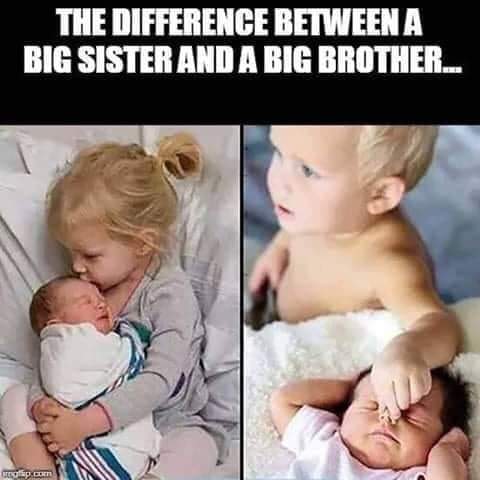
So, my fellow men, no need to whine about our fate. As in the pic below, mostly we have been pains in the asses. Still, we had a damn good run. But, like T-Rex and the Dodo bird, we just never developed useful attributes and now can easily be replaced. And so it goes.
Recently, I waxed eloquent about the difficulties of articulating our core beliefs. At the time, I promised to give my own a try. Normally, I forget all my promises as soon as they are made but this is an exception. Here is my start on this one … my first modest effort at least. After all, articulating one’s world view is an iterative process, I am certain of that. It probably takes one’s entire life to get it right. Well, not right exactly … you just run out of time to finish the effort.
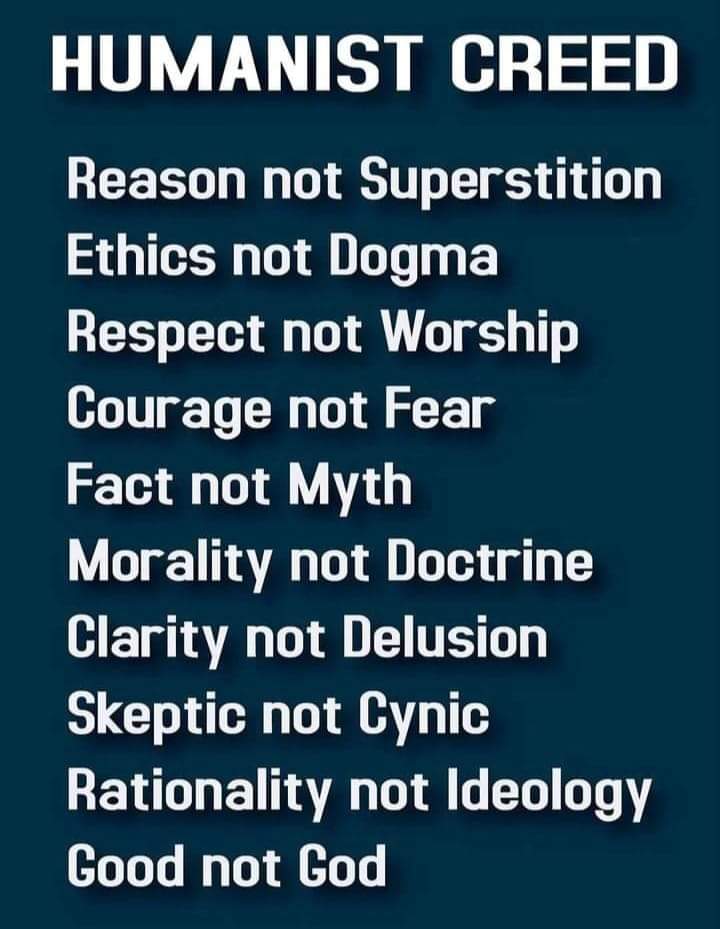
Overall, while I hate labels, being a ‘humanist’ is one tag with which I can live, for myself at least. Sure, it misses some of my more obvious attributes such as oneriness and boorishness (I think I’m funny even when I’m not) and stubborness (hey, I’m irish) but those are more personality traits than core beliefs and sentiments. See, this is hard.
No matter, I like this list (see above) of alleged Humanist attributes for the most part. They capture the sublety and nuanced approach to life toward which I’m drawn. Some will say that Humanism is centered too much on man (and woman) and does not encompass any higher being or power or entity. As such, it is too limited and does not inspire greater vision or ambition or even justice. After all, what is it about humans that would inspire respect, never mind adoration.
While that is a point well taken, here is how I see things. A traditional concept of God or Gods or some form of superior, even supreme, Deity can be seen as thwarting human endeavor in several elemental ways. How is that, you are undoubtedly asking (or maybe not)!
Consider the following. Divine truth obviates the need to seek a deeper knowledge about our world. For millenia, understanding was premised on first principles and sought through deductive reasoning. This led to a lot of circular reasoning and not many discoveries and breakthroughs. As a thinking species (homo sapiens) we stagnated for far too long. Second, a belief in a superior absolute also posited morality outside of the individual or tribe. It was set in stone (sometimes literally) in the form of a set of prescribed givens. Were not the Ten Commandments handed to the Jewish tribe. Perhaps it is better to generate community rules by considering what might constitute a civil and workable society. If you rely on a given set of ethics imposed from without, you had better trust the source implicitly. Goodness, when determined outside of one’s own conscience, typically is shaped and enforced by some form of punishment from a judgemental deity, the burn in Hell scenario. At the same time, some form of redemption is also available … confession, saying a perfect act of contrition, making a huge contribution to church leaders (whatever). This suggests that there always is a loophole for moral turpitude. You can sin at will as long as you repent in the correct manner, and in a timely fashion. Morality becomes a game to be played.
As I have related elsewhere, I only recall one lesson from my high school Freshman religion class (I think we had four years of such instruction but I blocked out most of it). Anyway, the good Xaverian brother (Simeon was his name I believe) told the following story. Tommy and Susie were chaste teens doing their best to follow God’s rules. One night, however, they let their passions get the better of them and went too far. He never explained what too far meant but we knew we had never been there. Suddenly, Tommy and Susie stopped, realizing they had committed a mortal sin. Fearing they might wind up in eternal flames were they not able to get to confession in time, they decided to say a ‘perfect act of contrition,’ a holy get out of jail free card for Catholics at least. Then, Brother Simeon threw in the kicker. At that very moment, a six-ton truck came over the hill, swerved into their car, and dispatched the unlucky couple into eternal Hell. It took me years before I was able to make out with a girl in a car without having a panic attack. 😦
I don’t have the time to recount all that I found objectionable in that story. Why I didn’t chuck Catholicism on the spot remains a mystery, other than the fact that dispensing with our cultural baggage ain’t easy. But I found his cautionary tale counterproductive. How could I respect a deity that would overlook a good life because of one transgression, especially one based on the chemistry He(or She) put in each of us. Or wouldn’t such a Deity accept their intent to seek forgiveness and not demand they actually say the magic words. That seems like total nit-picking to me. And just why would a just and loving deity create this species with so many weaknesses (like basing procreation which is a good thing on male lust which is deemed bad) and then expect these frail specimens to surmount all these arbitrary challenges. Was God bored one eon and decided to conjur up this experiment on earth for some form of amusement? In the long-ago moment, I was sure there were answers to my doubts and that maybe we would get them in senior year. Spoiler alert … we didn’t.
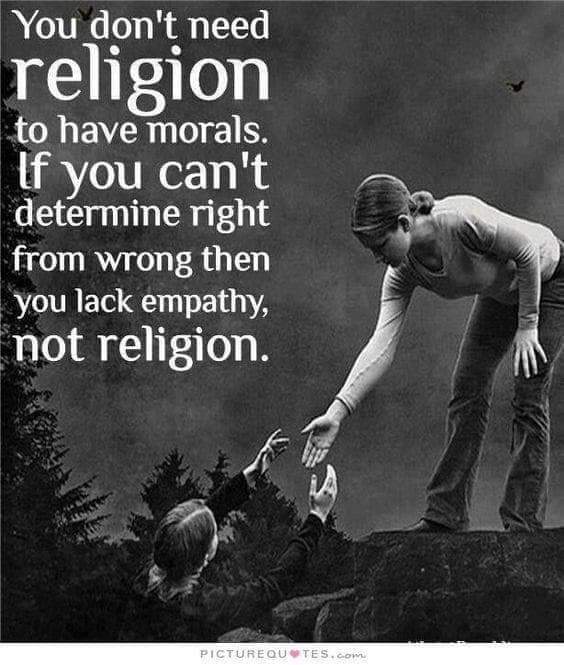
Eventually, it hit me that morality was less something imposed upon us and more something that we must arrive at on our own. To my mind the spirit of Humanism lies in the sense that we are responsible for our rules, how we observe those rules, and how we deal with violations or shortcomings. No one will punish you in the afterlife though you might suffer some consequences in this life according to commuity laws unless you are filthy rich and only abuse the common folk.
The burden and blessing of this Humanistic perspective is that each of us must articulate our own moral compass and, most of the time at least, build an internal rationale for following its strictures. Other than those other pesky humans around you, and perhaps the law as I mentioned, no one is looking over your shoulder, calculating your sins, or assessing your final punishment. It would be nice if there were such a system of ultimate justice (then we might be satisfied that Donald Trump would pay for his sins), but there is no proof of such.
I still remember as a child the milk bottle metaphor. I’ve asked many other Catholics if they recall this and very, very few (if any) have. Anyway, if your milk bottle was white, your soul was full of His (or Her) grace and God was pleased with you. If you had committed some venial sins, dark spots would appear in your bottle (i.e., soul) and there would be some price to pay for your transgressions … purgatory or limbo back in the day. If your bottle was empty, or dark, you were screwed for all eternity since you had committed at least one mortal sin (almost anything sexual fell into this category it seemed). As a horny teen, I wanted to complain to God about this one.
It took me decades to shed this irrational belief that somewhere at the center of my being was an empty or dark milk bottle. Given how I conducted my life, I could not imagine any milk remaining in the container. I sense my reasoning was flawed or, more likely, was counterproductive. I typically concluded that I already was screwed given how weak and pathetic I was. So, to my way of thinking, why change my ways now? No way I could refill my bottle with milk, I mean grace.
While the simple beliefs of my childhood fell away quickly in college, a process that clearly had started earlier (Freshman religion class likely) but which I had refused to acknowledge. In retrospect, my initial attraction to Humanism resonated with me before I knew what it was, probably because it reflected the lessons I took away from my early religious training. I was not here to adore and worship some invisible entity. Really, why would this ‘supreme being’ even care what I thought. Why, in heavens name, would such an onmiscient and all powerful entity seek my adiration or care about my fealty. Really!
No, if there was a center about which to organize my thoughts and moral sentiments, it would be rooted in how I promoted the well-being of my fellow travelers on this orbiting sphere found in the edge of a remote galaxy also spinning in the vastness of space. After all, we arguably are the most advanced species on earth and, as far as we know, alone in the universe until we get definitive proof otherwise. Perhaps we are the one creation in the cosmos capable of both understanding and shaping all about us in some larger sense … at least as we continue to evolve. Wow! Now that is a lonely and scary thought.
While it may leave one feeling isolated in some ontological sense, it eventually afforded me a sense of hope. If there were meaning in all this, it would not be handed to us in some creation narrative of apochryphal origins. It would be found somewhere in the future as we evolve toward ends we can barely imagine at present unless, of course, the cosmologists are right and we are destined in some absolute sense to wind down into a cold and dark and lifeless universe (the Big Freeze) or in a world where expansion reverses and all we see out there collapses into a tiny singularity (the Big Crunch) or in a world where exansion continues and accelerates (the Big Rip). However, let us not go to those unpleasant visions right now.
In the end, morality and ethics are not arrived at by reason alone. Emotions and baser sentiments are involved. I have little doubt that what I took away from my Catholic culture played a big role in who I am now. (I need to bblame someone.) It had nothing to do with the church as an institution, nor the litany, nor all the frivolous rules. No, it had to do with embracing what was handed down from the person of Christ as a teacher (or Rabbi). Who knows what the historical Jesus was like, or if he really existed. But the thrust of this message attributed to him, his new testament, was moving.
Forget the trivia, he apparently told his followers again and again. Focus on love, on service, on compassion for all, not just your own kind but for sinners and saints alike, for foreigners to you, and especially for those who are vulnerable and suffering. Christ’s esential message, it turns out, was the core teaching of most major movements but I didn’t know other spiritual traditions as a young man. I was exposed to this one and it made great emotional sense to me. Hell, I studied for the Priesthood for a while because of it.
In short, I intuited that Christ was the first Humanist though I probably did not formally make that connection for a while. Really, if you skip over that image of Christ whipping the money changers in the Temple, what you see is a pacifist going around telling people to love one another as equals. He is encouraging his followers to look past differences in class and position and background and to accept all. Even more radical, he suggests they give up their worldly goods and follow him into a simple communal life. Let’s face it, the guy was the first Communist. Okay, either that or a cult leader, but not a crazy one.
Let me put a spin on what I took away from my early spiritual development, things I am sure would not have been approved by the parish Priest nor the good Xaverian Brothers who tried to educate me (and save my lost soul) in high school:
INTERNATIONALISM … I felt, even as a fairly young kid, that we were all part of one big tribe. Nation’s were arbitrary lines. Ethnicities and races were unimportant differences. We were all in this together and we had to reach ut and help one another. Isn’t that what Christ did in his examples? As a young man I could not understand why we did not do more to help feed the hungry and starving around the world. I even joined the World Federalist Society, or tried to, some one-world group that, I later wondered, had been a Commie front organization. No matter, their message seemed spot on to my young mind.
PACIFISM … Okay, I was not a total pacifist in my tender years. I felt we had to stop godless Communism and, if the Cuban Missile Crisis had blossomed into a full conflict, might well have signed on to fight. But my disgust with violence was always there. When friends had conflicts I always tried to bridge the differences and not take sides. Perhaps it was my parents arguing all the time but I had a deep aversion to conflict. Peace was embedded within me. Nevertheless, I did see some conflict as necessary. World War II was a moral conflict to stop Fascism. Perhaps, if the 40 plus percent of Americans who believe another Civil War here is inevitable in the next decade, I easily could see justification in taking up arms against MAGA extremists who would impose totolitarian rule in place of democracy and turn the U.S. into a backward and semi-feudal nation.
EQUALITY (OF OPPORTUNITY) … Fairness, I believe, has always been part of my ethical fabric. Okay, it is a vague concept, I get that. Many rich people feel it is unfair that they should pay proportionally more than someone who has little. While their is a surface plausibility in that postiton, I feel the opposite. Nor do I believe we can get everyone to equal outcomes in the race of life. It is even difficult to get all to relatively fair starting points in that marathon race. However, we can do better. There is something grinding to me that some win the genetics and wealth lottery (being born to rich parents for example) while others are born as crack babies. How can we assess the worth of others when the race is so unfair? More practically, how many contributions are lost simply because some have no chance at life?
RESPONSIBILITY OVER FREEDOM … The dominant American ethos or narrative centers around personal freedom. The ‘American dream’ posits unlimited opportunity to seek personal success and to acquire virtually unlimited material goods. Really, that’s it … you can get a bigger car or house than your neighbor. That is what it is all about? Beating the other guy is life’s most cherished goal? That’s what you might conclude by reading Forbes or the Wall Street Journal. If so, I will get off that merry-go-round, thank you very much. As a younger man, I recall a board game called ‘Life‘ I believe. If you successfully made your way around the board to the end, you would get a million dollars or something like that (the hypothetical payoff is likely higher now). I always thought … that’s it? That is what life is all about? How sad. Why isn’t the end all about helping others … saving a suffering child. How about making life a bit bearable for our fellow passengers on this perilous journey we share.
COLLABORATION OVER COMPETITION … The other part of the American narrative is the ‘lone wolf’ image. We are successes by our own efforts. The western pioneer who killed off the savages (a form of genocide) and created a homestead with the sweat of his brow has been our ideal. We still idolize the Bill Gates and Steve Jobs of the world, entrpreneurs who started out in garages or dorm rooms. In reality, most advancements have always been accomplished as collaboraitve efforts over time. Even Thomas Edison borrowed or stole much from others. I believe it was Isaac Newton (an egotist himself) who admitted that ‘he stood on the shoulders of prior giants.’ The big challenges in the future, like ‘climate change’ or dealing with the promise and perils of ‘Artificial Intelligence’ will demand unprecedented levels of collaboration and cooperation. Advanced classes at the top technical schools stress collaboration because the problems are beyond one man’s abilities. The solitary genius must give way to the team. Again, we are in this together.
EVOLUTIONISM … I’m not sure that is a real word but it reflects an important part of my world view and has been alluded to earlier. Meaning comes from where we are going, not where we have been nor where we are now. Possibility always has a future tense but is not guaranteed. Success for all (the species) requires many things discussed above like collaboration, opportunity, responsibility (for the planet) and so forth. I still recall the moment when, as a young student during a late night bull session, I swept my arm up as I waxed on about evolution and the prospect that we were in an era of transformational change that comes along once in a few millenia. I recall writing a master’s thesis on that theme back in the early 1970s.
That night and in that moment, though, I recall stopping and thinking wow … the cynic is gone and a hopeful clone who surely looks like Tom Corbett has taken hs place. My pessimism returns from time to time (things like the Trump disaster soured me). But I never have forgotten the hope embedded in the writings of Jesuit Priest and scientist Pierre Teihlard de Jardin who, while working in China, found such hope in an evolutionary perspective. Perhaps we, and all about us, were not created by a deity but the reverse. We, as evolving entities, are in the process of creating God. Just a thought.
This is just a start. Each point demands much more discussion. Each has internal challenges and contradictions. With time, I will return to these themes. Patience! You have not escaped from the twisted mind of Tom Corbett just yet.
I’ve long been a fan or the Southern Poverty Law Center (SPLC). They have fought the good fight against blind hate, racism, and bigotry for many decades now, starting out when such endeavors could well risk one’s continued well-being. I seriously doubt that I would have the courage to stand up to the pure vitriol they have endured. For one thing, I’m not good with conflict. For another, I’m a freaking coward.
I mention them since they publish an annual report on hate groups in America. Hate has been a growth industry of late in the U.S. though, in truth, it always has always been a big seller. In fact, hate experienced an exponential spurt with the election of the first Black American as President. I still cannot quite believe that Barak Obama finshed his tenure without a serious atempt on his life, at least that we know about. There were many individuals and groups dedicated to saving America in their warped minds at least if they could just assassinate one of the best Presidents and most decent of men in public life I’ve encountered in my lifetime.
It is no secret that we are a nation divided by many factors … politics and ideology and race and ethnicity and class and life style. Without an external enemy (the cold war is now merely an historical note while Islamic Terrorism never materialized as a serious threat), our internal squabbles continue to escalate and pull us apart. The reasons are ancient and embedded in our earliest formation. Slavery and prejudice were woven into our founding documents. We remain a patchwork quilt of immigrants with many of the core groups never being assimilated from the start. Thus, we are have one dominant characteristic other nations do not necessarily have … heterogeneity.
Our national myth argued that the underlying differences, often expressed in traditions and perspectives and values not always aparent on the surface, would be irrelevant in the end. They would all be melded into a unique American identity with time. Then again, many myths have a certain casual plausibility.
Our internal differences sometimes appeared harmless and even quaint. Growing up in Worcester Massachusetts, the city was a patchwork of ethnic and racial enclaves. On my ‘hill’ (like Rome, Worcester was built on seven hills), there was clearly an Irish section, a Polish section, and a Lithuanian section. At the bottom of the hill was a Protestant Lutheran enclave, a group we Catholics knew were destined to go to Hell. Our priests intimated as much. If you wandered farther afield you could visit the large Italian community on the east side, smaller Chinese and Black communities closer to the central city, and the Jewish and WASP settlements to the north side of the city. These were all natural affinity gatherings of like associating with like.
Oh, it broke down with time. There were a lot of ‘mixed marriages’ like my parents where an Irishman married a Polish gal. But in a larger sense the divisions remain with people aggregating in their separate ghettos based on color, culture, class, and other such things. Our tendency to self-segregate has never disappeared. We now move to communities we deem safe, or behind the walls of gated communities with 24/7 security where we only run into ‘our own kind,’ however defined. We put up ring cameras and mount security systems and, most of all, arm ouselves to the teeth. (Okay, I have never owned or even fired a gun but I know they are out there, though I don’t believe any of my neighbors own them.) That AR-15 will keep us safe from all those threats lurking out there.
Here is a most disturbing fact. There are some 390 million firearms in this country. Okay, I get that we have many hunters. I even understand that they are necessary to weed out the surplus of stock of deer so that they don’t overpopulate and starve. But the sheer number of weapons go beyond hunting needs, and the plethora of miltary-grade weapons speak to something far more sinister. We fear and loathe one another based on beliefs, traditions, and sometimes immutable attributes. Moreover, it is too easy to get one … even the blind and insane seemingly have no trouble securing one or more.
Some 46 perecnt of kids under 18 say it is easy, or at least not very hard, to get their hands on a gun. Some Republicans in my state once argued that students on the University of Wisconsin Campus should be encouraged to carry firearms since ‘the bad guys now know they are unarmed and easy targets.’ Sure, like I would have failed any of my students, no matter how pathetic, if I knew they were packing heat. Really, just how did I manage to wander about a college campus for several decades without being attacked and robbed?
I look upon places like Norway, Sweden, Denmark, and so forth with envy. They routinely rank high on global assessments of happy citizens while we hudde far down the list. Many Americans cannot quite accept that these people can be so content and happy. After all, they pay extraordinarily high taxes, a fact of civilized life on which Americans obsess relentlessly. But they also receive many public services and supports which, when viewed dispassionately, eliminate any number of stresses and inequities from the social body. There is a stronger sense that they (citizens in general) are all in this together. To be fair, these Scandinavian countries may have an easier road to a common culture since heterogeneity, while found in virtually all nations today, is less pronounced in some of these places.
We, on the other hand, don’t have a common ethos or sense of a larger community. We tend to idolize what we think of as self-reliance, freedom, and competition. We have somehow convinced ourselves that a ‘winner take all’ approach to life is the ‘American way.’ It is the John Wayne image of the strong man overcoming all impediments to self- aggrandizement with no help from others. This peculiarly American brand of freedom means having no constraints or rules to control individual actions nor impede the acquisition of life’s goodies. If other’s fail and fall, there is something wrong with them. Better that they know failure and its consequences than to lift them up. Compassion or charity breeds weakness. Competition, not collaboration, generates progress.
This Darwinian view of the good life, accompanied by heterogeneity along lines of sometimes transparent and immutable atributes, accentuates divisions, suspicions, jealousies and (in the end) hate. We are extremely tribal and we often don’t like the other tribes. Perhaps they are getting government help that we are not. Perhaps they are not pulling their weight while we are struggling. Perhaps they will come to take what I have. ‘‘They‘ are the enemy.
In my home state, the latest cultural conflict is over programs fostering inclusion and diversity in our public universities. Republicans have slashed millions from the university budget as leverage to encourage administrators to eliminate such programs that help traditionally disenfranchised students and applicants. They assert that such preferences are not fair. Perhaps they find it is so easy to pit one minority group against the other, Blacks against Asians against Jews. Divide and conquer is such a popular approach because, unfortunately, it has worked so well. You know, keep your eyes focused on those other guys with whom you are competing for the scraps while neglecting to notice those who are robbing you blind.
Of course, those who have struggled to overcome many obstacles to make it to the university level (and a better life) see fairness in a whole different light. Should an applicant who has been to the finest private secondary schools and been exposed to the rich cultural opportunities available to the wealthy be judged by the same standards as one who dodged gang bangers and crack heads daily to get to his run down high school? Is that fair? Equity is a matter of interpretation, not an absolute. Yet, such differences in viewpoint are the flashpoints of discontent. I can remember my first year in college, meeting students who were raised in placed like New York and who talked about the plays they had seen, the art museums they had visited, the lectures they had attended. I felt like the freaking country bumpkin.
If there is one thing that marks this generation of hate from earlier versions is social media. The fractal nature of communications makes it possible for all our numerous tribes and subgroups to communicate easily with one another. Donald Trump can issue a call to come to Washington and his message will travel through a dark web of communication lines to reach the far corners of the hate world including the Proud Bys and the Oath Keepers andthe neo-Nazis and untold number of other splinter groups harboring some sort of festering wound. Inequality, or obvious differences in social and economic outcomes, is like pouring salt on open wounds. Jealousy boils over into something worse.
The SPLC reports that last year we had some 702 identifiable Anti-government groups and 523 Hate groups in America. While still astounding, that number has declined a bit from the previous year, perhaps a fallout from the arrests and prosecutions attendant to the January 6 insurrection. Many of the hate groups are rather catholic in their targets (a dislike of many other groups) but some are focused on singular targets … anti-semites, anti-black, anti-LGBTQ+, anti-Muslim and so forth. There is no shortage of objects for our venom. My guess is that the number will rebound measurably in 2024 as the rhetoric of the next Presidential campaign heats up.
The ordinary tribal hates are just one way that we go at each other these days. I am most disturbed by efforts to perpetuate hate and misunderstanding across time. There are some extraordinary efforts taking place to ensure that this generation’s vitriol might be passed on to the next. Some 45 percent of school principals report an increase in parental involvement directed at controlling curricula, instructional materials, and basically what kids learn. Favorite targets are limiting what students learn about our racial past (about 50% of all incidents), about LGBTQ issues (48%), or are directed toward banning access to books and educational materials that a few find objectional even though some of these works are seen as literary classics (33%).
Before ending, let me pause on one specific issue that is both emblematic and fundamental to our current cultural wars. Is America a secular state with no established religion but which permits freedom of worship or are we a Christian nation to be shaped according to those particular set of beliefs. There are all kinds of spin-offs to this question. Thus, how one responds is a proxy for the core norms that tend to separate us. I am reminded of one local Republican politician who has argued that public libraries should be replaced by church-sponsored alternatives. OMG!
Below are some survey responses to this issue:
Belief in the Separation Belief that America
of Church and State is a Christian Nation.
All adults ……………… 61 % 28 %
Democrats …………… 67 27
Republicans ………… 46 44
Independent ………. 65 24
Whites ……………….. 64 27
Blacks ………………… 53 28
Latino ……………….. 57 32
A 28 percent response affirming that we are a Christian nation may not seem alarming. But I suspect it is a low figure with some choosing what they consider a socially desired response. If the true number is closer to 33 to 35 percent, that would correspond to what the Nazis got in the elections just before Hitler was appointed Chancellor. All you need is a core of true believers to reek great havoc under the right (or should I say wrong) circumstances.
Lincoln’s assertion that ‘a house divided cannot stand’ remains true today. We have kept it together through conflict and sometimes at the point of federal guns. But when a contry is abysmally divided and full of hate, its prospects over the long haul are not exactly bright. It has been almost 160 years since we had a bloody conflict costing some 600,000 to 700,000 lives to force the country together into an uneasy union.
And yet, more than 40 percent of Americans feel that another civil war will take place in the next decade. Is it time to consider the dark reality that our promised melting pot might never work?
I have waxed poetic about living in Madison Wisconsin many a time. Undoubtedly, you are tired of hearing about it by now. To be balanced, however, Madison is an island of sanity surrounded by a lot of backwardness and Republican venom, a party that seems more intent on sticking it to the libs than on good government.
The old joke used to be that Madtown was 80 square miles or so of fantasy surrounded by reality. Today, it might be described as 1,200 square miles (the size of Dane County where Madison is located) surrounded by an aspiring Banana Republic. This Democratic bastion booms as a beacon of growth while the remainder of the state mostly stagnates and struggles.
Recently, this obvious gap between a booming and progressive seat of education and hi-tech development and (much) of the remainder of the state has become ever more apparent. I hope some of you can scan and read the article included in the insert. It is by Dave Zweifel, emeritus editor of the local paper.
He eloquently talks about this tale a tale of two states. One is being led by a Republican agenda (Wisconsin) though somewhat tempered recently by a Democratic Governor through his veto power. The other (Minnesota) is a trifects state (Dems hold the major offices) and thus has been followed a more progressive, Democratic agenda. Not surprisingly, the Gophers are leaping ahead of the Badgers in both economic and social terms.
Do you know what this means? I may have to admit to the family of my late spouse that they live in the superior state. Oh, the agony of it all. What makes this all the more painful is that Wisconsin used to be the beacon of good government toward which the nation often looked for the new ideas and innovations.
All so bitter and sad.
Let me know if you can access the full article. If not, I’ll write something more detailed in the future (but Dave says it better than I).
During his campaign for reelection to a second term, Franklin Delano Roosevelt said the following (Oct. 31, 1936):
“In 1932 … we had to struggle with the old enemies of peace—business and financial monopoly, speculation, reckless banking, class antagonism, sectionalism, and war profiteering.
They had begun to consider the government of the United States as a mere appendage to their own affairs. We know now that goverment by organized money is just as dangerous as government by organized mob.
Never before in all our history have these forces been united against one candidate as they stand today. They are unanimous in their hate for me—I welcome their hatred .”
This is a remarkable statement for a Presidential candidate, at least in terms of contemporary standards. Here was a national politician impugning the integrity of those who had the resources and power to help him be reelected. Then again, the business elite were not exactly popular in the midst of the Great Depression. Unfettered and unregulated capitalism had led to an economic catastrophe of almost irreversible proportions. Fortunately, John Maynard Keynes came along with some interesting economic innovations and FDR arrived with a ‘let’s try anything’ attitide, just in time to arrest the downward spiral until war could justify the pump-priming public spending necessary to turn things around.
FDR, for all his rhetoric and all the negative animus he generated among the economic elite, was quite conservative. He had a very difficult time shedding conventional fiscal bromides like balanced budgets and a sound dollar. After winning this 1936 election, he tried to return to so-called soind economics which caused the nascent recovery to sputter and temporarily reverse direction. Further, he eschewed all radical initiatives like the Townsand plan of giving $200 dollars per month to the elderly on condition they spend it all. Rather, the main elements of his Social Security initiative, hatched by University of Wisconsin economists, was rather conservative in the short term. Collections would start immediately but payments, and thus any stimulus to the economy, would not happen for another decade or so. Nevertheless, the elite hated him with a passion. He was considered a ‘traitor to his class’ even as he saved capitalism from self-destructing. The ungrateful sots!
Today, few politicians with national aspirations could confront the elite as FDR did and expect to survive (Perhaps Bernie Sanders would have been the exception but we will never know and I have my doubts about that). Most, except in a few safe seats, can survive even in more local elections. Politics is now money and money is now politics. The days are long gone when William Proxmire could be reelected U.S. Senator from Wisconsin while spending less than a thousand dollars in total, as he did in his 1976 campaign (he served in the Senate from 1957 to 1989). In contrast, Tammy Baldwin (a liberal Democrat I enthusiastically support) raised about $31 million for her 2018 Senate reelection bid.
Since 2010, when the Citizens United decision opened the floodgates, money totally has ruled politics, sweeping away the restraints that had been legislated by the McCain-Feingold campaign financing law passed a mere 8 years earlier. I mean, money was always important but now it seems everything. This is precisely why I get scores of texts and emails every damn day (or is it every hour?) pleading and begging and threatening for just one more contribution. I never realized my $10 buck contribution could save western civilization. Wow!
I can recall visiting a politician running against Russ Feingold in the Wisconsin Senate Democratic primary race many years ago (I was a Russ supporter and was there because I was with a friend of this guy whose name is now lost to me). As we chatted for a few minuutes, the candidate’s handler kept berating him to get back to making phone calls in which he asked rich people for money (his staff would call poor people like me). This was back in the 1990s and, apparently even then, politics was all about money. His manager was irate that he was wasting precious moments from the all important task of raking in more dough.
During that same campaign, Feingold called the university to see if experts would meet with him to brainstorm on selcted policy topics. Few were eager to do this since no one gave him a shot at this point in the campaign but, in the end, he fooled them all. I agreed to go and spent two full morning mentoring him on poverty and welfare issues. It was soooo refreshing to have a politician concerned with issues and not merely raising money. WOW! In the future, we occasionally ran into one another on the D.C. to Madison Friday night flights (I was in D.C. an awful lot) and he always wanted to pick my brain. [I cannot believe Wisconsin went from this Rhodes Scholar to Ron Johnson … a strong candidate for the flat out dumbest Senator in Congress.]
How did it get so bad? Not overnight, that’s for sure. The Republican Party started out as the liberals, big on infrastructure investments, in supporting opportunity for the small guy, and in ending slavery and helping the disenfranchised get a foothold in society. This was the party of Lincoln after all. But, as early as 1876, things were changing. With contested electoral votes, a backroom deal inCongress gave Republican candidate Rutheford B. Hayes one more electoral vote than he needed to take the White House on condition that he withdraw troops from the South, thus abandoning millions of Blacks to Jim Crow laws and the KKK.
The desire to win is a slippery but understandable slope. Toward the end of the 19th century, Republicans realized that, with the solid South in the hands of the Dems, they relied upon New York State to win national elections. New York being the seat of the industrial north, that meant the party heavyweights needed the support of the moneyed classes. Not surprisingly, the principles on which the party was founded continued to erode.
In the 1896 election, Republican William McKinley was running against Democratic populist William Jennings Bryan, the champion of (white) working stiffs and small farmers and easy money. The elite grew concerned as Bryan toured the country giving spell binding speeches while McKinley ran a traditional ‘front porch’ campaign. Panicking, several corporate giants got together and had hundreds of thousands of dollars (real money at the time) delivered to Mark Hannah who ran the Republican campaign, much of it in cash stuffed in large suitcases. It worked and a lesson was learned, never to be forgotten.
Today, I doubt that anyone is unaware that our democracy is held hostage to the moneyed interests. Note that the ticket to be included in the first debate among Republican Presidential candidates depends on how much money you raise. Allegedly, one candidate is paying people to ‘contribute’ to his campaign just so he can make the cut. A sorry state of affairs indeed.
Perhaps we can get a better idea of the role of money if we take a quick and brief look at some numbers:
Those tracking these things found that CEO’s giving their own money (not corporate or PAC) donations in the decade after 2010 (the year of the Citizens United decision) contributed mostly to Republicans. These individuals gave $282 million to the GOP as opposed to $38 million to those other guys (known socialists and likely Commies).
Sometimes, the behavior of corporate entities (considered people in the Citizens United decision) act as hypocritically as real folks do. Hard to believe, right? When Georgia passed a law effectively restricting voting among minorities, the GOOGLE corporation wrote a letter condeming that act. Privately, however, they gave $35,000 to the Republican State Leadership Committee which was working to advance such legislation. At one meeting of this group, those running the meeting clearly stated that restricting voting rights was ‘the only defense of the Republcican Party.’
Want to effect legislation? Perhaps you can write a letter to the editor or contact your Congressperson. A more effective strategy is to spend millions on lobbying, if you have that kind of dough. Lets look at the money spent just on direct lobbying efforts in 2022, just one year mind you. A glance at who is giving big bucks says a lot about what is expected in return.
National Realtors Assoc. ………………. $82 million
Chamber of Commerce ………………. 81 “
Big Pharma ………………………………….. 29 “
Am. Hospital Association ………….. 27 “
Blue Cross-Blue Sheild ……………… 27 “
Amazon ……………………………………… 21 “
American Medical Association … 21 “
The Business Roundtable ………… 20 “
American Chemical Council …….. 20 “
META (i.e., Facebook) …………….. 20 “
Look at this list and think about things for a second. Do you for one moment believe that Congress will do anything about the comparatively high costs of drugs in the U.S., or somehow curtail the prices of medical care here (the highest in the world by far), or do anything substantive to reign in the social media giants, or impose common sense reforms on corporations and banking? If you do, I have a great deal for you on some land in Florida. Just to be fair, there are a few big contibutors on the other side. The Soros fund has distributed some $179 million to advance progressive principles.
One final list that caught my eye. Many corporations decried the January 6, 2021 attack on the Capitol and on the efforts of those lawmakers seeking to overturn the election results. That was public spirited of them. Then, however, they turned around and financially supported some of the very same people who defended ‘the Big lie’ and took steps to overturn the legitimate will of the voters. Here are some the biggest contributors (2021 and after) who supported those very politicians who attempted to subvert the Constitution and the will of the people.
National Beer Wholesale Assoc. ……………………. $904,000
National Automobile Association ………………… 829, 500
American Bankers Assoc. …………………………….. 779,000
Nat. Association of Home Builders …………….. 663,000
AT & T …………………………………………………………. 629,000
Ass. of Builders and Contractors ……………… 587,000
CUNA Mutual’s PAC ………………………………….. 523,000
Home Depot ……………………………………………….. 477,500
Lockheed Martin ………………………………………… 440,000
Boeing ………………………………………………………….. 411,000
UPS ……………………………………………………………… 410,000
COMCAST …………………………………………………. 381,500
Who needs foreign enemies when corporate America is most willing to support the very people who would undermine our Constitution and trash our democracy. The cartoon character POGO was right … we have met the enemy and it is us.
Alas, I see no feasible way of turning this situation around. Money is way too concentrated at the top and they will not give up power voluntarily. Then again, I’m a pessimistic Irishman with a dark cloud over his head.
Have I ever said this before? I am so freaking happy that I am old and on my way out.
I think we all have them, though they are most difficult to discern in some folk. The ‘them’ in this instance is a system of beliefs, a moral center, an ethical compass, or whatever you want to call what you rely upon to determine what you believe, or at least want to believe, and thus accept as true and decent and right. I would conjecture that most of us, too many really, go through life without thinking about this most central aspect of our personhood … the what, how, and why of what makes each of us who we are. As some sage once said … ‘a life unexamined is a life not worth living.‘ This was clearly a sage with too much time on ther hands, much like me.
I sense that most people think they know what they believe and value … America, Capitalism, the Republican party or the Green party, Jesus as their savior or Mohammed as their Prophet, the Packers or (god forbid) the Chicago Bears, guns or peace, and the list can go on. When pressed, however, articulating a set of core beliefs, our embedded moral sentiments, is harder than it looks. Then again, seeking anything wothwhile is harder than it looks.
Jordon Klepper, a comedian on the Daily Show, would interview Trump true believers at the former President’s rallies. Each respondent started out totally sure of what they believe, at least until Jordon starts picking at the inconsistencies and absurdities within their positions, which he manages to do with considerable skill and ease. Within seconds, you see these people struggling to defend their iron clad world view. While I laugh at them, sometimes uproariously, I know I am subject to the same faults. Consistancy and coherence can be very difficult to maintain, or even locate in the first instance. I’m not sure I would do any better than these befuddled clowns.
I think of myself as a pacifist. Back in my youth, I probably would have tried the ‘conscientious objector’ route with respect to the military draft though that avenue probably was not open to me. In a recent book of mine, Oblique Journeys, I narrate a fictitious account of a young man of conviction who flees to Canada during the height of the Vietnam War and protests.
His personal hegira is as much a flight from his convictions (and his colleagues) as it is his unwillingness to kill others in what he sees as an ill-considered war. He could not face war nor could he accept the path toward violent protest toward which his beliefs were drawing him. Escape was his solution but, as detailed in the book, it took a long life which encompassed much nominal success to sort out his beliefs, his emotions, and his fractured relationships. To butcher one of Bill Clinton’s favorite mantras, if figuring out who we were easily done, we all would do it early in life.
I managed to slither and slide past the draft back in the late 60s and early 70s. But there were moments, too many, when I thought I might have to make one of those life-altering, or would it have been a belief-affirming, choices. Would I go to jail, or Canada, if there were no exit left? After all this time, and writing a whole freaking novel on this theme, I still have no idea.
I just finished a book titled Ahead of Her Time. It is the story of Abbey Kelley (Foster), an early abolitionist and then suffraget who sacrificed so much and worked so hard for what she believed. Starting out in the early 1830s, she worked tirelessly to end slavery and integrate Blacks into American society. She travelled constantly throughout New England, then New York, before moving through Pennsylvania, Ohio, and Michigan tirelessly preaching the cause, raising money, convening meetings and conferences, and publishing tracts and articles. Her devotion first demanded that she renounce her Quaker religious roots, which she thought too concerned with frivolous rules and not committed enough to core principles. In place of her formal religion, she instituted a core affirmation in abolition and embraced the universal rights of all men and women. Around those convictions she organized the rest of her life, never failing until her body gave out many decades in the future.
There was an extended period of time when she had no home of her own, existing off the good graces of those who admired her and her labors. And yet, in reading about her exemplary life of commitment and sacrifice, I was struck with her own internal battles. She preached the lessons of love and of embracing those who had been shunned by society and/or assigned to some form of marginal or second-class existence. Yet, her strong beliefs led her to reject so many around her, slave holders and slave apologists for sure, but also her own colleagues with whom she disputed with about either ends or tactics or both. That is an affliction common to many of those with strong beliefs … they strive for purity of belief and reject those who fall short by their strict standards.
And that insight brought me to another set of examples embedded in a movie about the trial of the Chicago Seven. You remember them, the sacrificial lambs placed on trial after the riots at the 1968 Democratic National Convention in Chicago. President Johnson’s outgoing Attorney General Ramsey Clark had refused to indict anyone after his internal investigation concluded that the police were responsible for the violence on the streets. Nixon’s Attorney General went ahead with these indictments presumably, if you believe the movie, because he felt disrespected by the outgong AG. Or perhaps it was just good political theater.
In the end, the trial was a fiasco and none of the defendents spent any material time in jail, except for contempt of court decisions handed down by the clownish and incompetent judge overseeing the proceedings. Well, the defendent’s lawyer, Willian Kunstler, did do some real time. Apparently, defending unpopular people has its risks … the bromide that everyone deserves a vigorous defense not being accepted by all.
In the end, though, the movie was much less about the riots, those charged with crimes, and the trial’s outcomes. It was far more about the character of the defendents, their differences with each other and how their callous mistreatment by the judicial system brought them closer together through their court ordeal. The defendents, in effect, were a microcosm of ‘the left’at least as it emerged in the 1960s. Here is a quick review of the lineup:
The New Left … This was represented by Tom Hayden and Rennie Davis who were leaders of SDS (Students for a Democratic Society). The anthem for this movement was the Port Huron statement, a call to arms for college students written by Hayden in 1960 in (guess where) Port Huron Michigan (many attendees at this gathering were from the U. of Michigan). My take is that these activists were the traditional types reacting against what they see as societal failings and moral wrongs. They started out looking for a more meaningful role for their generation, soon got caught up in the anti-war movement and other causes. Their frustrations increased (with the body count in Nam) and they eventually splintered into a few even more radical groups with the Weathermen in particular sinking into a self-destructive nihilism. But Hayden remained true to the original meaning of the organization eventually becoming a long serving politician in California and the husband of Jane Fonda.
The Cultural Left … The Yippees were the brainchild of Abbie Hoffman and Jerry Rubin. In some ways, they moved beyond traditional politics to operate on cultural change. They were the more political Hippies who felt that real change came from altering how people saw and felt things on a more primal or cultural level, focusing on the absurdities of conventional society. Of course, that was way too abstract and nuanced for most and the movement became more one of outlandish theater than anything substantive. But it had its moments before fading from the scene. While Rubin eventually became a stock broker, Hoffman remained an activist until committing suicide in 1989. I marginally remember Abbie from my youth. He also was from Worcester and had managed a movie theater as a young man. He gave a talk at Clark (my alma mater) early in the war where he gave a devastating and brilliant attack on U.S. tactics and aims. At that time, he wore a suit and tie.
The Moral Left … I’m not sure this thread in the protest movement had a single name but it was represented by David Dellinger in the movie. David was older, a family man, and wore a suit. He had been a conscientious objector during World War II and had devoted his life to non-violence. Even before Martin Luther King, he had been a practitioner of non-violence, civil disobedience, and a believer in a strong moral code. Of all, he reminded me of the ante-bellum abolishionists like William Garrison and Stephen Foster (Abbey Kelley’s non-resister husband). In a moment in movie that touched me deeply, the viciousness of Judge Hoffman and the total lack of justice in the proceedings got to David and he struck a bailiff who was restraining him. The immediate pain on his face for what he had done spoke volumes. In a moment of anger, he had violated his core principle.
The Angry Left … this was represented by the Black Panthers and Bobby Seale. If the non-violence of Martin Luther King Jr. evolved from the precepts of Mahatma Gandhi and the moral left, the Black Panthers drew inspiration from the more forceful revolutionaries of the past, Nat Turner and John Brown. The force of oppression had to be met with equal force. That, unfortunately, would never be an equal fight and was doomed to fail from the start. Bobby’s good friend and Panther leader Fred Hampton, was killed in a police raid during this period. Virtually everyone believes he was assassinated by the Chicago police. There was a lot to be angry about.
The Others …. There were two other defendents but all figured that they were thrown in by the government to give the jury someone to acquit and thus feel good that they had done an objective job in finding the others guilty. In point of fact, they were acquitted of all charges. You would think the government would have had the decency to pay them for services rendered.
What struck me is that these very different defendents, and the trajectories they took, were so different despite purportedly common ends. They wanted to stop what they saw as an unjust war and to form a more inclusive and equitable society. Yet, they took very different paths toward their goals and, if the movie is to believed, didn’t necessarily understand nor like one another, at least in the beginning. It was only a common enemy, the so-called Justice system, that brought them together.
There were so many fine moments in the movie but one has stayed with me. It is an exchange between Hayden and Hoffman as they finally verbalize the simmering conflict between the two of them. It goes something like this (not the scripted words but the sentiments):
Hoffman … to really change things you have transform how people see the world, their culture.
Hayden … the problem with that is that you need political power to really do what we want, not political theater or being amusing.
Hoffman … in all your political maneuvering and posturing, aren’t you forgetting what we are all about, that kids are dying today while you go about playing political games.
Hayden … but remember this, as we go about seeking political control do what is right, voters will only remember your antics, not your good intentions, and vote the other way for decades to come.
They don’t come to an accord in that moment. However, at one point in the exchange, Hoffman admits that he read Hayden’s Port Huron Statement. ‘You read that,’ Hayden is surprised. Hoffman smiles, ‘I’ve read everything you have written. You are a really smart guy.’ And the ice begins to thaw.
Even today, I remember the first time I read the Port Huron Statement. I was in college at Clark, working 11-7 in a hospital to pay my way through school. On a slow night, I recall reading that founding document of the new left. I’m a bit of a skeptic and even a cynic, but it got to me … a young working-class kid shedding his Catholic roots and looking for a larger purpose.
And that, above all, is what made the 1960s special, for some of us at least. We experienced the shock of having all of our given precepts challenged and then being forced to arrive at, even articulate, a new understanding of things and a more coherent ethical center and world view. Just like for the defendents in the Chicago Seven, that was not an easy process. Figuring out what you should believe, how to arrive at those beliefs and, once there, how to live them in real life is more than a challenge. Calculus is a challenge. This is really hard shit.
But it is worth it. At this point, I will repeat one of my favorite vignettes, one that I have shared before. It deserves repeating. Decades ago, I read an article by a New York State Supreme Court Justice. He wrote about his youth growing up in New York City during the 1930s. Like a number of smart college kids of that era, he was taken with the sufferings brought about by the depression and the failure of society to respond. Like many of his friends, he dabbled in socialism and even communism as possible responses to what he saw about him.
He did not stay in these political places all that long but he realized one thing … it was the journey that counted. The economic catastrophe about him demanded that he look at things afresh and not with old eyes and tired scripts. He felt he had to question all that he knew and build up a new way of looking at things. In this piece, he said it made him, and many of his peers at the time, deeper thinkers and better people. He concluded that the crucible of doubt and questioning thrust upon him proved a blessing in the end. I totally agree with this man whose name is now long lost to my memory. But his experience stuck with me … it was also my experience but in a different decade and prompted by a different crisis.
We did not have a depression in the 60s, far from it, though my neighborhood was lower income working class at best. The war, the ‘rights’ movements, the broader cultural shifts all pressured us to think through our beliefs and our lives. I don’t know what college kids today talk about but we spent hours upon hours dialoguing about the issues of our day. We fought and argued and debated endlessly. Like the Chicago Seven, we disputed ends and means and then went back through them again. Nothing was easy. But at the end, if there was an end, a funny thing happened. We also felt we had become deeper, more nuanced thinkers (I did at keast). Perhaps we became even better people as adults (though I still doubt there is any reward awaiting me in the afterlife).
I can remember attending an anti-war rally in Milwaukee after returning from two years in India … my time out of time. The speakers struck me as spouting slogans, scripted words the meaning of which was beyond them. I wandered off disillusioned. They were born just a bit too late to go through the transformational experiences where authentic epiphanies and sentiments are born. I guess I was just lucky, and I suppose doomed at the same time.
Well that was a long introduction. perhaps in the near future I’ll take a stab at expressing my beliefs, if I can. Before signing off, let me add this. We had a big ‘political sort’ a half century ago. Conservative Democrats switched to the Republican Party while younger conservatives routinely identified as being Republicans. Moderate Republicans were driven out of that party. Rather quickly, the parties became more homogeneous and bi-partisanship diminished greatly. Now, we see a second ‘sort’ happening as we speak (or write). People are relocating to states where they feel more comfortable with the dominant political culture. That is, people are moving to be with others who share their values.
I see these lists of best places to live for retirees and other such groups. They inevitably discuss tax burdens and weather and living costs etc. They never talk about culture and compatible beliefs. But that is the new draw. I wintered in Florida for a number of years. But when my wife became ill, it was back to Madison for me, cold winters or no. Why? I want to be with people who share my values. So do most of my neighbors. They all could afford to live wherever they wish. But they don’t leave. And I fully understand why. Real estate folk who deal with families relocating out of state say this has become the new deal breaker in acceptable destinations. Belief systems and normative values are that important.
They are becoming everything as we sink deeper into our cultural divide.
I have a longer, more thoughtful, blog in the making but some other items have caught my attention on this gorgeous morning.
First, it will be a beautiful day here in Madison. But though the weather is wonderful locally (dry and comfortable for the past few days), never be fooled by simply looking out the window. There is a huge difference between weather, what you see when you look out your window, and climate, longer term and/or global trends.
Agencies in the U.S. and Europe have been monitoring the climate globally since sometime in the the mid-20th century. It turns out that June was the hottest June on record. Then, on this past Thursday, the global temp hit 63 degrees F. That set a daily record for single day and the week has a good chance of setting a record that many specialist believe could go back 100,000 years. The waters of the North Atlantic have been recording temps some 9 degrees F above normal this summer. Climate specialists now give 2023 better than a 50-50 chance of being the hottest year on record, breaking the existing record set in 2016. As they say, records are meant to be broken but not this quickly.
Scientists are not surprised. This is what they have been predicting for years now. The usual carbon emission issue is coupled with an El Nino effect (hotter oceans than usual) to break records. The problem is that the impacts now tend to be cumulative rather than cyclical. Hot begets more hot! Even staid experts are now using words like ‘extraordinary,’‘terrifying,’ and ‘uncharted teritory.’ Yup, time to buy my lakefront home way up in Hudson Bay.
But let’s focus on that spot of ‘coke’ found in the WH. That’s what is important.
……………………………………………………………..
Here’s another trend to make your day. Being MIA from class is way up in American schools after the pandemic.
The education experts say that missing 10 percent of classes during the school years puts a child at great risk of falling behind (unless they are a bored genius but there aren’t many of those). Exceeding this threshold is called ‘chronic absenteeism.’ Before the pandemic, close to 30 percent of kids were in this category. Recently, the rate has been approaching one in two kids, with some school districts being particularly hard hit. This is a sleeper effect from COVID.
Now, let is face a harsh truth. We were getting our fannies whipped on the education front by many countries … Finland, Norway, Poland, Japan, Hong Kong, China, and the list goes on. In global assessments of educational performance we typically are far down the list. I noticed the transformation in the composition of graduate programs at the University of Wisconsin during my career. The doctoral program in economics was taken over by foreign students in the 1980s as I recall, never mind engineering and the computer sciences where they have long dominated. Even in the Social Welfare (Social Work) doctoral program, Asian students had become a dominant presence. I often wondered, where have all the American kids gone?
Now, with teachers being chronically underpaid, with these poor bastards being attacked on all sides, including for all sorts of non-educational partisan and ideological reasons, who would want this crummy job any more. Teaching in most of the States is not like teaching in Scandinavia where you are paid well and appreciated as a skilled professional, or in France where school kids are fed nutritious meels since that is critical to learning (as opposed to here where ketchup once was classified as a vegetable to save a few pennies.) Not to worry, if the kids no longer come to school, we won’t need as many teachers. That will save a few tax dollars, surely a win-win outcome for Republicans.
If we continue to starve our research universities (as the Republican legislature is doing in Wisconsin), foreign students will turn to their own universities, which are improving as we speak. Then the dumbing down of America will be complete.
Let me repeat my favorite mantra one more time. I am sooo damn glad I’m an old fart and on my way out!
…………………………………………………………..
One final thought for today … this one on an historical note. It is around the 100 year anniversary of Mussolini’s ‘march on Rome’ that established the first major Fascist regime in Europe. This got me thinking (lots of weird things get me thinking apparently). We actually have Communism to thank for the rise of European Fascism in the 1920s through the 40’s, a force that led to horrific conflicts and mass deaths. Thank you Marx, Lenin, and Trotsky (sarcasm intended).
Lenin and Trotsky, in particular, were convinced internationalists. They were convinced that the Red tide would quickly sweep out of Russia to the west and take over Europe, and do so quickly. After all, based on the theoretical writings of Karl Marx, Russia was the least likely candidate for revolution … too backward and agricultural. It had not gone through the pre-revolutionalry stages predicted by Marx and Engels. But places like Germany were perfect. In the early 1920’s the advancing Red Scare rushed through a number of countries. In America, for example, the scare led to the Palmer (U.S. AG) raids where hundreds of left-wingers were arrested out of paranoia and base fear. Immigration subsequently was curtailed severely. This paranoia was later resurrected in the McCarthyism of the 1950s.
Back to my main point. In 1923, Mussolini was able to walk into Rome and take power with a relatively small contingent of his ‘Blackshirts.’ The key moment came when Luigi Facta, head of the Italian Council of Ministers presented King Vittorio Emanuele III with a ‘Ratification of a State of Seige.’ Had Vittorio signed the document, the Italian Army would have been called upon to disperse the marchers and throw Benito’s ass in jail (though, like his admirer Hitler after the Beer Hall putsch, Benito may have also have made a comeback).
Now, here’s the big quesiton. Why didn’t Vittorio sign it? He was too afraid of the Communists and thought Benito a safer bet. Oooops, his mistake!
A decade later, President Paul Von Hindenburg also faced a growing threat from the left as the global depression wracked the German economy. The left and right fought pitched battles in the streets as the central government seemed increasingly impotent. After several meetings with Industrialists, former Chancellor Von Papen and other mainstream politicians convinced Hindenburg to appoint Hitler as Chancellor, though the President despised the future Fuhrer personally. By this time, Hndenburg was becoming senile and would pass away in a few months. But what persuaded him to act against his instincts was assurances from Papen and others that Hitler could be controlled. After all, the Nazi’s would have a minority of ministerial positions in the new government. In any case, Hitler’s backers (the Brownshirts) were essential to keeping the Commies from seizing power. It might have seemed like a good idea at the time. It wasn’t.
Not long after this German disaster, the ‘left’ was legally voted into power in Spain. It was a loose coalition of reformers, Socialists, and Communists who frightened the pants off the established aristocracy, the military elite, and the Church. General Francisco Franco was a leader of the Nationalist forces that initiated a Civil war in 1936 against the Republican (or elected) forces. For 3 years, a brutal conflict ensued with atrocities on both sides. While many foreigners (including Americans in the Abraham Lincoln Brigade) joined the Republican side to defend what they saw as an imperiled democracy, they could not compete with the planes and tanks supplied by Hitler.
In the end, the Repubic was defeated, as much by internal divisions within the Republican coalition as by Franco’s army … the far left could never get along with the moderate reformers. Still, the Republic had considerable support among the people and held out for a long time. It was that nagging fear that the Communists would eventually rise to a dominant position that eroded this support. And so, Franco prevailed in 1939 and created the Dictaduro Franquista, his dictatorship, that would last until his death in 1975. I can still remember when we were told he was ‘on his deathbed.’ He was on it for a long, long time it seemed … a really long time. When he did finally ‘buy the farm,’ he left a bitterly divided country that had been savaged by hate and bitter divisions, a nation that did not begin to heal for another generation at least. Some have never forgotten.
There you have it … Lenin died before his anticipated world revolution could happen. Trotsky, the other big internationalist, was driven into exile by Stalin and murdered by his agents in Mexico in the mid 1930s. Aside from the eastern European countries occupied by Russian forces at the end of WWII, China, the North of the Korean peninsula, and briefly in south Asia, there was no international revolution. Communism was doomed to self destruct (in any pure form) based on its internal contadictions. But there was the rise of Fascism in Europe (and a hard-right movement in the U.S.) in response to its largely imagined threat. The suffering attendant to this has been incalculable. The number of deaths alone runs into the tens of millions.