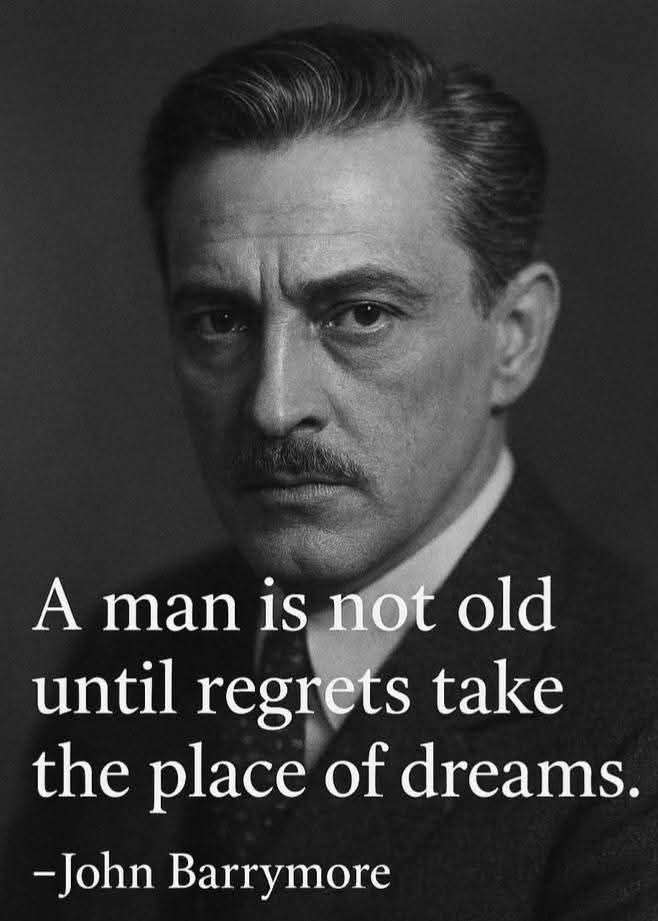
When you finally become an octogenerian, you realize that you are approaching the final steps in your mortal toil on this good earth. Most of the signs are unmistakable. For example, routine tasks become outright burdens. Mildly troubling challenges become impossible. And more difficult undertakings are taken on only if one has a death wish.
You cannot miss the signs. When I recently bought a new car. My first concern was not about horsepower, nor what fancy gizmos the vehicle contained, nor gas mileage, nor even price. While they were all important factors, they were not deal breakers.
No, what concerned me most was whether or not I could get in and out of the damn machine. This turned out to be a prime example of a simple task that is now a major hurdle to be surmounted only at great cost. Similarly, getting out of bed in the morning, as well as the several required nocturnal risings to whiz, are typically accompanied by a cascading array of cracking bones, a moan or two, and at least one expletive of oh shit.
Then there are stairs. Remember how one bounded up a flight with alacrity when young. Now, we organic antiques begin to organize our lives about tactics to avoid exertions of that kind. You start thinking about moving to houses without levels because the thought of dealing with them on a daily basis is unacceptable. You no longer think about Rhodes Scholar trips because virtually all require you to be an active senior. And where are all these active seniors? The old farts you know seem to be as decrepit as you feel, at least they do to me.
And why does every piece of medical advice oriented toward improving one’s longevity start with some variant of keep moving. Most of us would prefer death to daily mandated Bataan Death Marches that all doctors seem to love. If the medical profession wants to impress me, they would come up with some pill.
I ran across a YouTube video that had Richard Feyman talking about the inevitability of the aging process. Now, why they had a dead phycisist talking about aging is a bit weird but he was supposed to be a legitimate genius so there is that.
What I remember of his thesis goes as follows. Our bodies start deteriorating around age 40 or 45. But the rate of decay is so gradual that we do not notice. Oh, we eventually feel a difference but it is manageable and quite easily dismissed. Eventually, however, reality sets in. It is like you hit a brick wall.
According to Feyman, that sudden collision hits us somewhere between 75 and 80 years of age. At that point, the gradual decline in a variety of biological functions intersects with a hidden baseline level of motor functions … a point at which one can no longer ignore a reality that one’s body screams out in several ways. When that happens, the body unmistakably rebels.
Simply rising from a comfortable chair becomes the equivalent to bench pressing 300 pound dumb bells. Walking up an incline is now like scaling the Mattahorn. Lifting a 40 pound bag of water salt pellets turns you into a puddle of mush. It happened to me at about age 80. And it seems like it all happened over night. That’s how I recall the transition. One day you are getting by, the next you are asking all your friends what happened to that guy (or gal) you used to be.
Remember when we were young, when we were on the ascent in our journey through life. We had life markers back then, points representing change. But they were of a different order. They typically represented transitions or moments primarily focused on greater freedom or responsibility.
For example, there was starting school, becoming a teen, getting a driver’s license, going off to college, turning 21 (becoming an adult) and, for us guys back then, turning 26 which meant we escaped being sent off as canon fodder to a senseless war in Asia.
After that, the markers become less certain, more nuanced. They likely are associated with distinct choices: graduate degrees, career paths, marriage, and children. All can be seminal but contingent on individual, perhaps idiosyncratic, preferences.
I guess I am musing on such matters because of two recent events in my life. The first was when the one friend from my youth with whom I maintained contact called me. He wanted me to know that a mutual friend of ours had passed. We spent some time on the phone chatting about our endless hours on the basketball court and in other games at which I sucked, unlike them. We spent so much time and energy back in the day dreaming of athletic glory that was never to be. In the whole, these memories reminded me of moments that seemed to belong to someone else … yet I knew were mine or should I say ours.
And then I got an email informing the members of my old Peace Corps group that another one of us had recently passed. His biography noted that he was an American composer, musician, author, and mathematician renowned for his pioneering contributions to computerized music and the mathematical foundations of music theory. His entire list of accomplishments has always astounded me. It includes the following: receiving a Doctorate of Musical Arts from Stanford University and writing a two volume work titled Musimathics: The mathematical foundations of music. He also was a talented performer who was, by most standards, a Renaissance man.
It is funny. I have had numerous colleagues and associates pass in recent years. Yet, in some strange way, their leavings were both anticipated and expected. I had seen them as they aged, and then retire, and then enter that inevitable period of decline. While passings inevitably and sadly are regrettable, they are part of the process as we understand it. So, I accepted losing them simply as inevitable.
On the other hand, when someone from my youth leaves the scene, it comes as a bit of a shock. We, or at least I, recall them as they were in the ascent period of our lives, when all was still possible.
I often think back on my Peace Corps group from the 1960s, a collection of such talented young men and women. Our service over seas was a profound and unique marker in each of our journeys through life. I have remarked in other blogs as to the special character of that group … their individual intelligence and commitment and qualities that destined each for success as adults. I can never quite decide whether our training and service in India informed our subsequent trajectories or whether all would have been the same absent such an experience. On that matter, I can only speak for myself.
What I can say is that I’ve been fortunate to know some very remarkable people throughout my personal journey. Now, in this moment when I am beginning to lose them, it is not so much with a sense of loss as it is with profound gratitude. I rejoice in knowing them and in having taken this journey together, even if only for a moment or two.
And about all those aches and pains and physical challenges that accompany our final steps through life. In the end, they matter little, at least to me. Why is that, you ask? Because most of my (our) personal trek has been one hell of a trip.