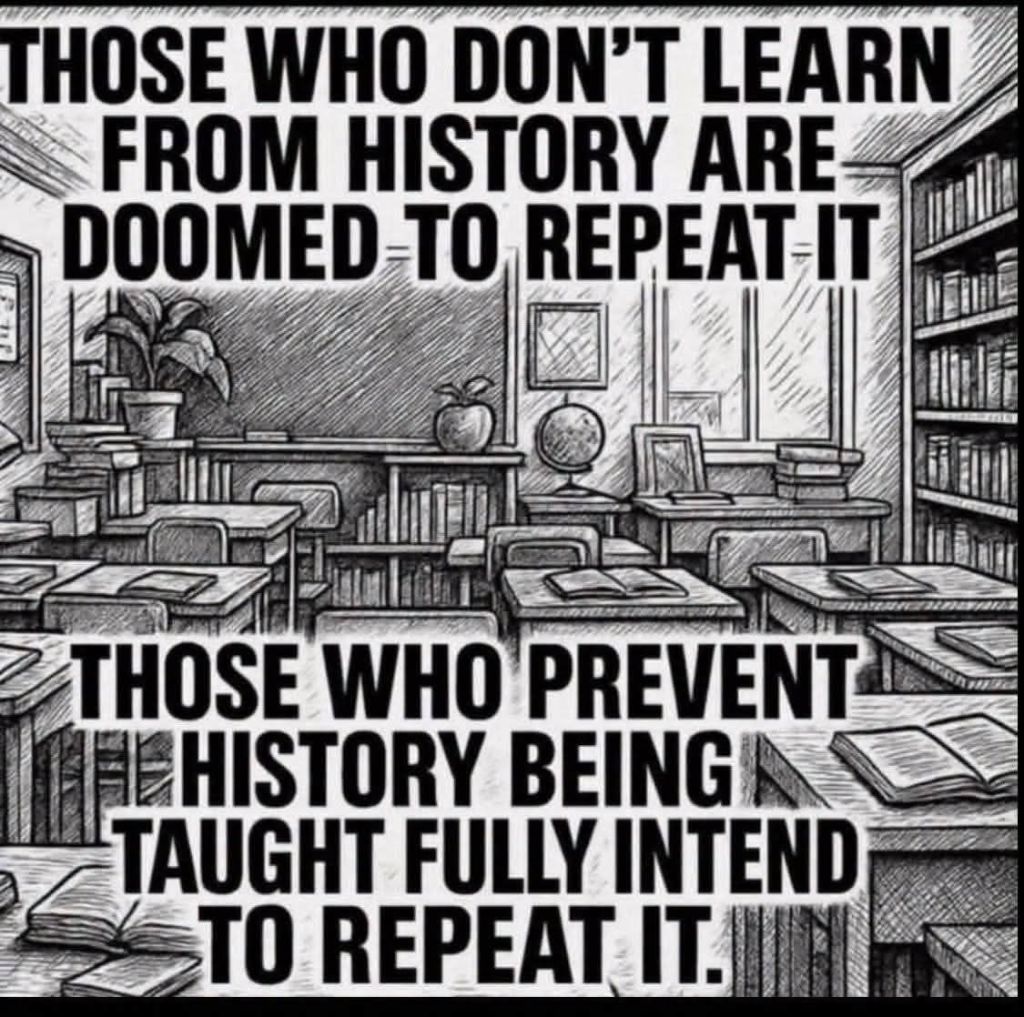
I have never forgotten the day I endured my physical exam to determine my fitness to fight in Vietnam. Millions of us went through this exercise back some 55 plus years ago. Still, a couple of small moments elevated my own exam to the unforgettable status.
At one point, we were required to complete exercises to test our cognitive and practical capacities. The math and reading segments were simple enough. The parts guaging our practical knowledge, like identifying tools familiar to most male teens back then, were way beyond me. Still, if I had been drafted to serve, they probably would have assigned me to the motor pool.
But I digress. At the end of these paper and pencil tests were a set of questions designed to ferret out subversives. One question asked whether I had belonged to any of a long list of organizations that were considered subversive back in the 1960s. None on the actual list registered with mea except one … The Lincoln Brigade.
I had a vague sense that this was a long defunct organization of young men and a few women from around the world who volunteered to fight for the Republic side in the bitter Spanish Civil War … a conflict that raged for three years in the late 1930s.
The query contained little logic. This group was largely dissolved by 1939, some three decades before I was being assessed as suitable canon fodder for America’s foolhardy military venture into Southeast Asia. The possibility that anyone who had participated in the Brigade would stiĺl be of draft age in 1970 was absurd. Logic, of course, had little to do with it.
Those troubled times in the 1930s themselves bordered on the absurd. It was a moment in history when the forces of good and evil confronted one another on the international stage. Fascism, championed by Hitler, Mussolini, and Franco, battled communism, championed by Stalin and perhaps Mao. These power centers struggled against democracy, championed by Britain, France, and America. All three ideologies competed with one another in a dress rehearsal for the violent global conflict to come. The apocalyptic ideological contest of World War II, one that ultimately would consume some 50 to 60 million lives, was the testing ground for man’s basic inhumanity to man founded on blind allegiance to distinct personal faiths.
At the time, the future of the globe seemed to hang in the balance as competing ideologies competed for more hegemony and ultimate control. Looking back, it was a dark and desperate time.
“Comrades of the International Brigade. … you can go proudly. You are history. You are legend. You are the heroic example of democracy’s solidarity and universality. We shall not forget you and, when the olive tree of peace puts forth its leaves again mingled with the Spanish Republic’s victory … come back!“
This homage to the International Brigade, of which the Lincoln Brigade was a part, came as members paraded one final time through Barcelona. Ironically, the words were spoken when defeat of the Republican forces who were defending the legitimately elected government was almost certain. It marked the end of an almost unparalleled moment in history. Never before had so many men, from so many countries, against the wills of their own governments, come to a place foreign to them all to fight for a cause to which they were so devoted. It was a final moment of excruciating poignancy.
Some 2,800 Americans joined the XV International Brigade to fight along with volunteers from Britain, Canada, and a host of European nations. This included some 80 Black Americans who finally tasted equality some 3,000 miles from home. The Americans joined up in violation of America’s Neutrality Act, thus becoming outlaws within their own nation. They did so to defend Republican Spain against the insurgency of self- proclaimed Generalissimo Francisco Franco, a Spanish autocrat and army general devoted to the feudal past and the conservative Catholic church.
Some 800 Americans would perish for their devotion to a set of ideals respecting how men should govern themselves. The Spanish Civil War, it turned out, was a microscopic version of the larger ideological war suggested above. On the one hand, you had a group of idealists presumably fighting for democracy and the common man. On the other were defenders of the old order, a near feudal system where a few privileged elite ruled absent any checks or accountability. This side was led by autocrats protected by the sacred authority of religion and, presumably, sanctioned by God himself. It offered a stark choice to young idealists.
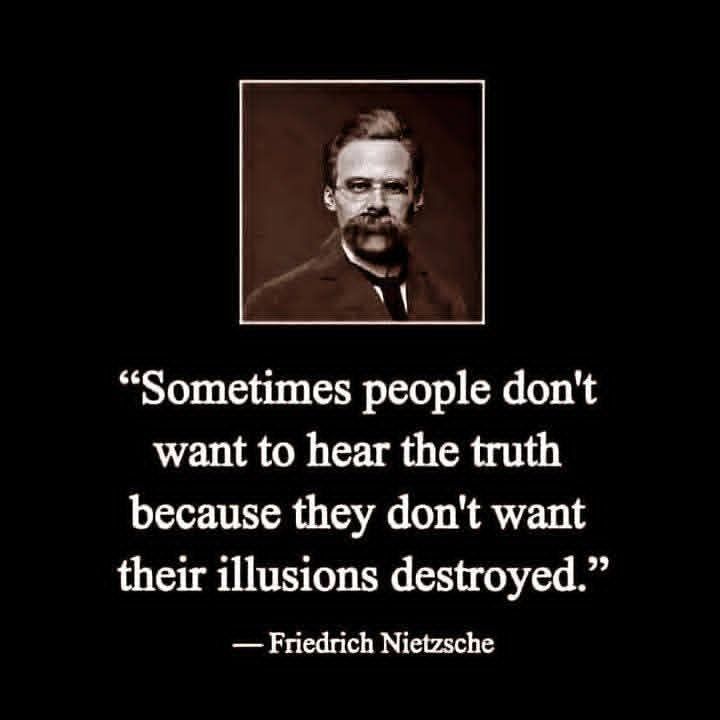
Of course, reality was a lot messier than good versus evil, particularly on the Republican side of the ledger. A good many of their volunteers were pure idealists fighting for democratic principles we yet struggle to preserve today in the face of threats from MAGA cult devotees. Others were trade unionists and related idealists devoted to the working classes. But many were committed Marxists (either Stalinists or Trotskyites) who evidenced scant devotion to our democratic ideals. They were more concerned with acquiring power.
This led to internal divisions that ripped apart any presence of coherence or unity on the leftist side. Tragically, members on the so-called Republican side fought each other as much as they did the fascist Nationalists. These divisions emanated from concerns about who would be in charge after victory was secured.
The conflict raged from 1936 to 1939, cost hundreds of thousands of lives, and left scars that took generations to erase. If the conflict were determined by passion, the Republican side might well have prevailed. But it was, as often is the case, determined by which side had the biggest and best guns.
The Spanish defenders of the elected government appealed to the western democracies for help. But France, Britain, and America largely turned their backs, afraid that such assistance might tip the continent into war. Only Stalin materially helped the Republican side.
Hitler and Mussolini, on the other hand, sent Franco abundant supplies of war materials, including planes and tanks. The fascist leaders saw this as a perfect opportunity to test out equipment and tactics for the larger conflict they knew would soon erupt. After all, they already were determined to start the coming global war.
The Republican side, along with the principles they intended to protect, were soon doomed. High ideals, and good intentions, could not long compete with the latest in advanced military hardware. Pablo Picasso’s masterpiece titled Guernica was his homage to the city in northern Spain that was obliterated by Hitler’s Condor Legion as a testing ground for the capabilities of his new Luftwaffe.
Some of the great writers of that generation also poured their hearts out based on their caustic experiences in that conflict. George Orwell wrote Homage to Catalonia (1938), a memoir about his time as a volunteer fighter with POUM (committed to democratic principles) on the front. He also wound up fighting Stalinist elements among the nationalist coalition, experiences that later informed his two great classics … 1984 and Animal Farm.
Ernest Hemingway penned For Whom the Bell Tolls (1940), a novel based on his service as an ambulance driver. His novel contained events inspired by his actual participation in behind the lines guerrilla activities. Like many idealists, he was crushed as his ideals ultimately experienced bitter defeat.
What made this particular ideological conflict so memorable, unforgettable really, is that it was battle over absolutes. One side thought it was fighting for God. They were defending a rigid and hierarchical, if not feudal, world view that reflected the Catholic sense of society to which they were devoted. The other side believed they were advancing a radically new vision of man and society in which reason, not blind faith, and equality among all men might eventually prevail.
And therein lies the ultimate curse associated with conflicts rooted in absolute, but quite oppositional, truths. They permit their advocates to do virtually anything. As Blaise Pascal once noted, “Men never do evil so completely and cheefully as when they do it from religious conviction.” Atrocities can easily be rationalized as acts of god.
Horrific acts were common on both sides in this civil conflict but, if there were just scales on which to balance evil, it probably would tilt toward the Nationist (Franco) side in terms of unspeakable horrors. The sheer numbers slain because of their beliefs and associations were staggering. Yet, these countless victims were mere shadows of the coming holocaust.
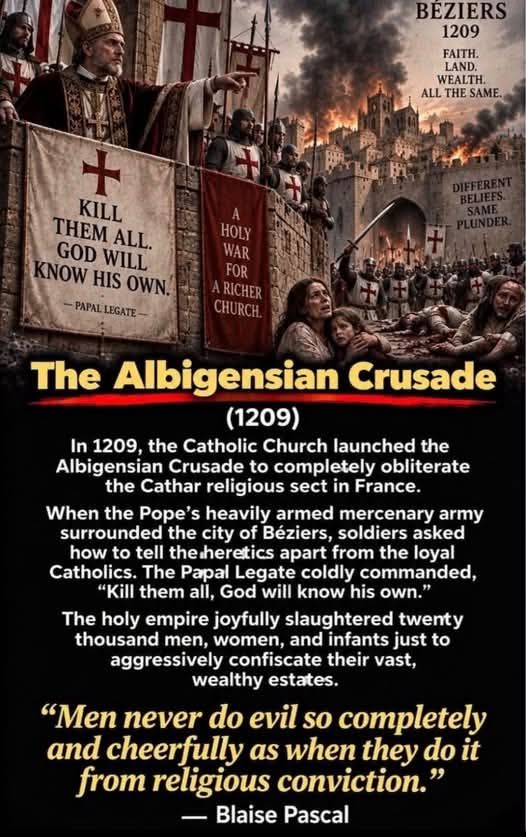
As suggested in the above meme, the Papal Legate asserted that the Pope’s mercenaries should kill them all since God could later decide who was on the side of right and then dispense ultimate justice. Such a convenient way to avoid guilt and responsibility.
I have recently thought about that long ago war a lot, reflections mostly stimulated by reading the book Spain in Our Hearts for a history book club to which I belong. I struggled mightily as I considered the decisions facing potential combatents during that awful period. For Spaniards, which side to join and how deeply to become involved were choices often constrained, or at least informed, by one’s situation and history.
For those joining the International Brigade, the decision was more complex. After all, they were under no compunction. Moreover, they often were violating their own nation’s laws. Still, it strikes me that they were driven by one of two core sentiments: (1) My country (beliefs), right or wrong and (2) my god (or again, beliefs) is stronger than your god (or beliefs).
Such absolutes are among the most dangerous narcotics available to us. They absolve us from thinking through what we really believe, through the total complexities of our apparent alternatives, and even of the longer consequences of our actions. Such fundamental sentiments make binary choice seductively easy, thus permitting us to avoid hard analysis. And throughout history, they have led to horrific actions that are fully reprehensible to all sensitive beings.
In the end, I don’t know what I would have done in the 1930s. Surely I would have been tempted to sign on to the International Brigade. Then, again, I might have joined the college freedom Riders opposing southern segregation in the early 1960s. But I didn’t. I like to think I would gave gone to any lengths to avoid participating in a war (the Vietnam conflict) I came to bitterly oppose (and I believe whose analysis of which history has proven me correct even as a naive young college student). But I managed to avoid the draft without emigrating to Canada or going to prison as a conscientious objector.
Perhaps, though, circumstances might yet offer me one of those clear seminal choices that each generation faces. What if Trump and his most rabid devotees choose to ignore the established rules by which lawful authority is passed on. What if they simply reject election results, or impact voting rights through coercion, or call out ICE and a radically reframed military apparatus to forcefully remain in power. What then? Does one summarily discard some 250 years of struggle to create a mature democracy? Do you merely enjoy the next football contest, today’s palliative bread and circuses.
Perhaps, finally, I would act as thousands did during the Spanish crisis. Though a pacifist at heart, I would find the lure of picking up arms to defend something so very irreplaceable to be to precious to ignore. Like those who joined the International Brigade some nine decades ago, perhaps I would do what I considered the right thing. In truth, I am too distrustful of my own convictions to welcome the opportunity. 😞
At the start, I mentioned experiencing two unforgettable moments during my draft physical but only mentioned one. The second moment involved responding to an open ended question about belonging to any organization that threatened to overthrow our government, like being member of the republican party is today.
I asked a burly Sargent in charge if the Students for a Democratic Society (SDS) qualified. I then put SDS in the space provided when he groused you bet your ass it does, buddy. That eventually led to me being grilled by several military intelligence officers for a few hours. All these years later, I still smile at how much fun that was 😀. It really was.

