I am half Irish, which is a bit of a curse in itself. Despite our ethnic penchant for storytelling, lively music, and energetic dances, we can be a pessimistic and cynical tribe. It is as if a dark cloud follows us around, casting the present and surely the future in at best a somber light.
President Kennedy had a long time advisor, an Irishman named Dave Powers (he was informally referred to as the ‘first-friend’). Shortly after JFK’s assassination, this loyal assistant and ever present confidant presumably was reported to have said something like the following: “… being Irish I knew the dream would be crushed one day but I thought we had just a little more time.”
Recently, however, a friend and neighbor of mine, a distinguished infectious disease doctor at the University of Wisconsin, shared an article with me that cut through my ordinary gloom. The piece focused on a long term member among what are known as neglected tropical diseases (NTDs) known as dracunculiasis. Never heard of it, you say. And you could care less, you assert? Keep reading, the story is rather interesting.
First of all, it is an upbeat story in an era generally defined by ongoing feelings of political doom and gloom. Secondly, and more importantly, it means something to me. How’s that, you might ask, assuming you haven’t already stopped reading?
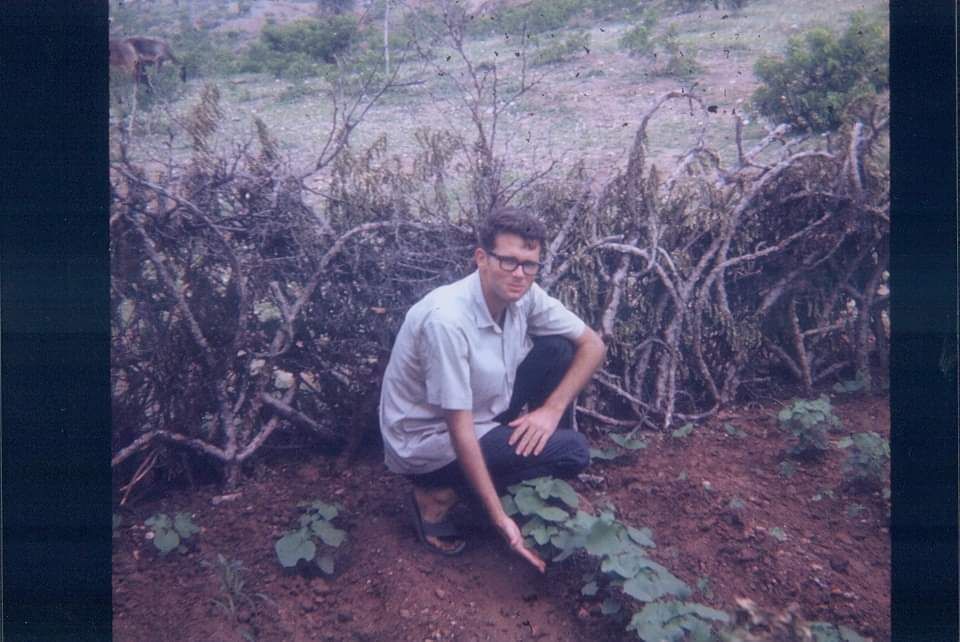
Here’s the thing. In the above pic, I am a 20- something Peace Corps Volunteer serving in Rajasthan, a province in northwest India bordering on Pakistan. The area in which we served was remote, backward, and subject to historic forces and impediments slowing India’s progress. One of these challenges was the prevalence of that dreaded disease known as dracunculiasis. Still don’t recognize this affliction. Well, it is more commonly known as Guinea Worm (GW).
Still clueless? Then let me fill you in on the details. In my site, you could catch this awful illness by drinking contaminated water from what were called step wells, places where humans could step down to the surface of the water to collect some of that precious liquid. It was not uncommon for such wells to be contaminated with crustaceans called copeds. These very tiny organisms contained the larvae from which a parasitical worm would hatch and grow. A human body, alas, was the perfect host.
Think about the following. These small cysts (or copeds) would, when ingested, lodge in the lymph system or some other suitable home. Then, over the course of a year or so, a worm of about one meter in length would grow, often along an arm or leg. Then, at long last, would erupt through the human host’s skin.
It was only then that most locals would consult a local practitioner skilled in the practice of slowly, very slowly, winding the worm out of its human abode by slowly twisting it on a stick. That process could take days, sometimes weeks. If the worm snapped, it likely would retreat into the body, creating an abcess that would cause further damage and problems.
There was a story attached to this primitive treatment process that somewhat amused me. The sign employed as advertising by these local professionals(?) was a worm encircling a stick. Now, it turns out that GW was common in Europe during the middle ages. Back then, the local barber also passed as the town surgeon. So, when you run across that stylized red stripe wrapped around a white pole, the barber symbol, you just might be looking at what remains of the traditional worm wrapped around a stick. Bet you didn’t know that. Then, again, there are other stories about the origins of the barber pole.
While GW had long disappeared from advanced nations, it remained common in parts of Asia and Africa throughout the 20th century. In fact, what are called neglected tropical diseases (NTDs) still threaten some 1.7 billion people globally. I might understand if you now are asking where the good news I promised might be.
Here it is! Starting in the 1980s, the Carter Center (yes, our former President Jimmie Carter) made eradicating GW a personal priority of his, along with a few other retirement priorities like building houses with Habitat for Humanity. That man had a big, empathetic heart.
How well did he do, along with those who worked for him? Well, there were still an estimated 3.5 million GW cases in 1986, which was around the time they launched their eradication campaign. By 2023, only 13 cases were reported around the globe, all in Africa. That is a 99.9 percent reduction, just about as perfect as you can get.
Now, GW was never, or at least very seldom, fatal. But it was a lengthy affliction that would often incapacitate sufferers to the point where self care was extremely difficult. I knew several people in my town who were struck down. I still recall one man, a Muslim who owned a small shop as well as a farm outside the town. I would often visit and chat with him. One day he mentioned that thirst overcame him while tending his farm, and he threw caution to the wind by drinking some available water. Now, he was infected by several worms. I can still see the expression on his face as he related his sad story.
My site mate and I had a local tribal boy who looked after our survival needs. Since running water was merely a dream where we resided, he brought our H2O ration from some nearby well. Though we insisted he boil everything before use, we lived in constant terror of being struck down by the dreaded GW.
During our service, we were aware of many threats … snakes, scorpions, ring worm, intestinal bugs of various sorts, dehydration in the blasting desert heat, and so on. I was down to 148 pounds at one point and considered myself one of the lucky ones. But nothing scared the crap out of me more than the threat of sharing my limbs with foot long worms.
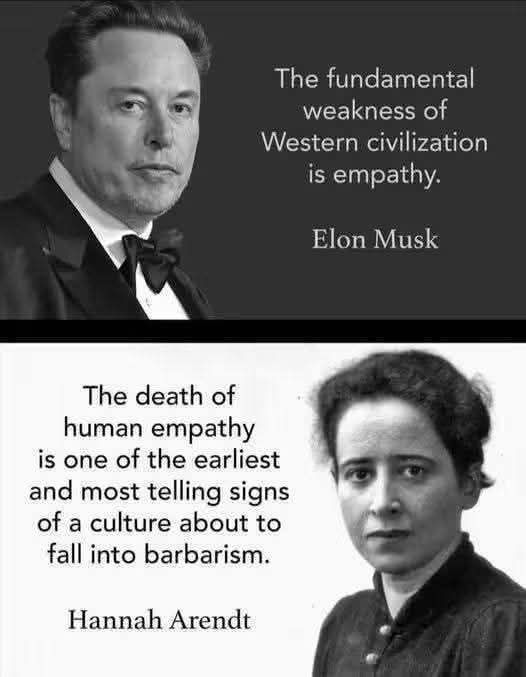
The work that Jimmie Carter and others did in eradicating this disease has been a blessing to so many. And yet, his humanity and goodness too often is ignored. Those in the MAGA cult will venerate Trump, who loves only himself, while denigrating President Carter, perhaps one of the humblest and finest humans to serve in high office. I simply cannot fathom how some people think about things.
I sometimes wonder how many children will suffer and die because Trump (and Musk) dismantled much of our foreign humanitarian programs (e.g., U.S. Aid), along with domestic agencies like the well respected Centers for Disease Control. Such cuts mean little to our future fiscal well- being. Yet, what they offer in terms of our general health and quality of life are immeasurable. Untold lives, particularly children, will be lost given such casual decisions to prioritize tax cuts for the wealthy over humanitarian concerns.
In the end, the GW story is a source of encouragement to me. It tells me that, if we focus on the right issues, we can make a difference in the world. I am not naive. I spent my professional life tilting at difficult policy windmills, often (usually) without success. But that doesn’t mean we should stop trying. If a retired President who was considered a mediocre chief executive by many can have such a positive impact on so many after leaving office, perhaps there is hope for the rest of us.
Perhaps, just perhaps, those slashing budgets helping the common man and woman might have benefited from experiencing human suffering up close and personal just once in their own youths. Perhaps then they might have retained just a bit of their core humanity. While some foreign educational systems try to develop empathy in their young students, some leading figures in America (e g., Musk, Thiel, Miller, Hegseth, and Trump) will deride compassion as a dangerous and rather outmoded human frailty. How odd!
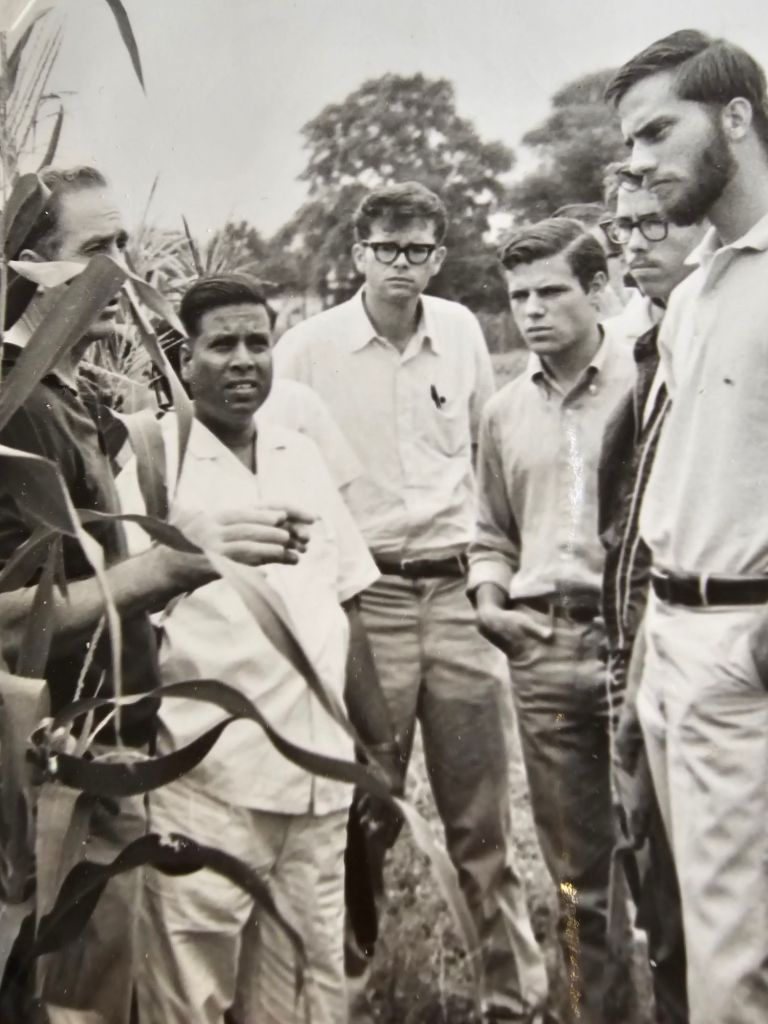
Above is one additional pic taken at the beginning of my service. Do I look worried about GW yet? No! Perhaps I just hid it well.

