I ran across a story recently that caught my attention. Apparently, a professor mentioned to his college class that his early Peace Corps service had motivated his subsequent academic career in Ag Economics. One of his students, clearly puzzled, finally asked: Professor, what is a P – Score?
I have been in that poor prof’s shoes. How many times had I used a familiar term, to me at least, and then realized just how young my students were. What did the post-war period mean to them, which war? Many of them might remember the Vietnam conflict but WWII was tantamount to ancient history to be catalogued next to our Civil War or the Hittite invasions of antiquity.
And take The Great Depression. While I never experienced that social trauma first hand, my parent’s generation did. In many ways, the scars left on their psyches from that global challenge informed the way they lived and how I was raised. To my youthful students, though, that economic disaster was a vague prehistoric shadow, something largely irrelevant to my youthful students … like rotary phones.
So, I guess it is not surprising that the Peace Corps, a cultural phenomenon in the 1960s, is now an item for a trivia quiz. Still, having personally run off to India as a volunteer during my misguided youth, I find that a bit sad.
President John F. Kennedy created the Peace Corps by executive order (10924) in March, 1961, a program that would subsequently be authorized by Congress the following September. In some ways, it was an accidental product of fortune and timing. Candidate Kennedy arrived at the Ann Arbor airport one October evening in 1960 after a televized debate with his opponent, Richard M. Nixon.
In that famous verbal joust, tricky Dick had suggested that Republicans were the party of peace while the Dems typically led us into war. That did not sit well with Junior Senator from Massachusetts who had stewed upon this allegations during the subsequent plane ride.
Shockingly, a crowd of 10,000 were still awaiting his arrival around midnight, many being students from the University of Michigan. A few unprepared words were required of the exhausted candidate. Besides, who would recall anything from a few random, late-night remarks.
Paraphrasing a portion of his remarks, Kennedy, while drawing on a vague concept he had toyed with in the past, spontaneously threw out a challenge to this largely youthful gathering: how many of you would be willing to volunteer one or two years of your lives as educators, ag experts, or engineers in underdeveloped foreign lands before suggesting that the fate of the free world might well rest on just such sacrifices. The term Peace Corps was never mentioned but a seed had been planted.
About fifty years later, I was in Washington for a gathering of India-44, my own P.C. group. Peace Corps, as a federal program, was celebrating its 50th anniversary at the same time that included a number of public events. At a panel on the program’s origins, a woman stated that she had been in the Michigan crowd that night when Kennedy laid out his challenge. His chance remarks, she shared, surged through the young crowd like a bolt of lightening.
In the days before social media, word about this new volunteer program (that didn’t exist) spread from campus to campus like wildfire. Soon, the now President-elect’s office was inundated with requests for information about an initiative that had only been a throwaway line in a late night campaign speech. But now there was no turning back.
Many among the college youth of that day thirsted for a way to express their higher ideals. Though still in high school, I certainly felt that tug. Many of those who later would join me in India vividly recalled Kennedy’s clarion invocation during his inauguration speech: Ask not what your country can do for you, ask what you can do for your country.
For many, that sentiment sparked something in our generation … a desire to make a difference. That desperate need to seek our better angels burned bright at that very moment in time when nuclear apocalypse seemed so present and so possible. Civilization did appear to hang in the balance.
Richard Goodwin, a speechwriter for Kennedy and other icons of that era, said the following to a early group of volunteers: “Peace Corps touches on the profoundest motives of young people … that idealism, high expectations, and ideological convictions are not inconsistent with the most practical, rigorous, and efficient of programs. … every one of you will definitely be judged – and will ultimately judge himself – on the effort he has contributed to the building of a new society.”
Peace Corps did seem to capture the spirit of the times, evoking the more salubrious instincts of my generation as it then was coming of age. In 1966, when I started my own training, some 15,500 volunteers were serving in 46 countries. The program in those years was flooded with tens of thousands of applicants, way more than could possibly be used. If you survived the selection process and rigorous training, you felt you belonged among the privileged few.
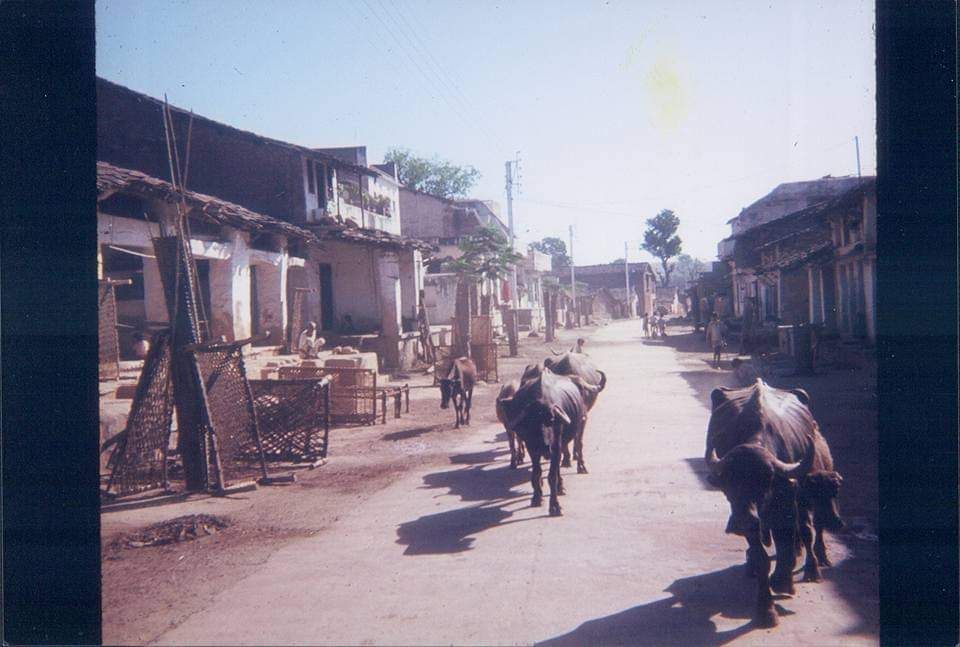
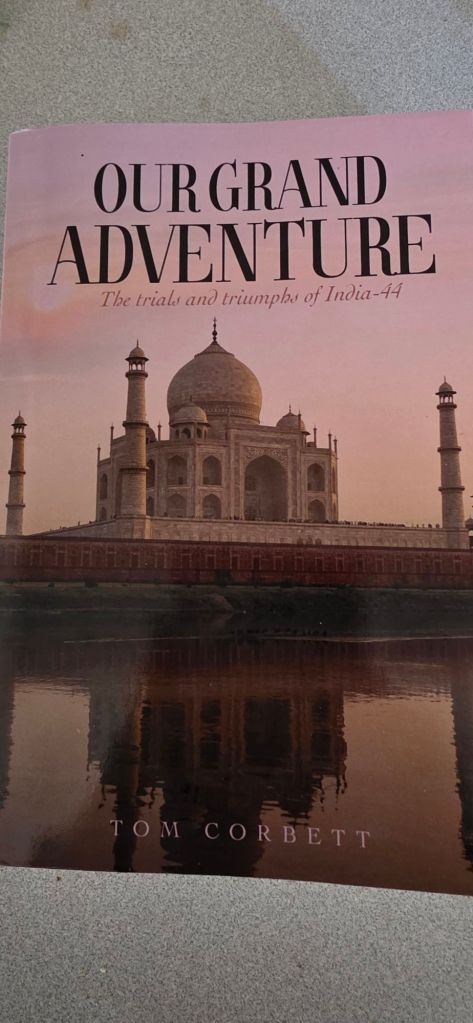
In those days, that sense of privilege segued into a test of our individual characters. Being assigned to rural India was not for the faint of heart. Heat, isolation, disease, cultural conflicts or misunderstandings, loneliness, and poor program planning became everyday challenges for us. This was still what was called the wild west days of the program, when they were still turning a vague concept into a functioning system (see Our Grand Adventure for the entire story).
The Peace Corps program has remained active all these decades later. In recent years, some 8,500 volunteers yet serve in 77 countries. In some critical ways, the program is much better now. The volunteer sites are more thoughtfully planned and the skill sets of the volunteers are matched more closely to their expected roles. And, of course, with global communications today’s volunteers do not experience the raw isolation and loneliness we endured.
Yet, in other ways, something has been lost. We in India-44 were thrown off the deep end, placed in remote sites largely without any creature comforts (often without running water, electricity, indoor plumbing to name a few). Worse, we were expected to perform tasks we were not exactly prepared to do. All this while confronting searing heat, monsoons, snakes and other reptiles, dysentery (and worse), language issues (incomprehensible local dialects), and so much more. And there was, as I oft note, that debilitating sense of isolation.
While surely trying, these challenges didn’t matter in the end. We still were Kennedy’s children, inspired to go forth and do our best. We stubbornly believed that a better world was possible. We even grasped at the naive aspiration that we might conceivably contribute to that new world.
In truth, we fell far short of changing the world. At the 2011 50th Peace Corps anniversary, the Indian Embassy had a reception for the former volunteers who were in town. In his remarks, one of the Indian officials talked about what he thought Peace Corps had meant. It was, he asserted, not really about the technical contributions we made. They were inconsequential in such a huge country. No, it was more about the lasting connections between two very different cultures. It was, at the end of the day, mostly about greater human understanding.
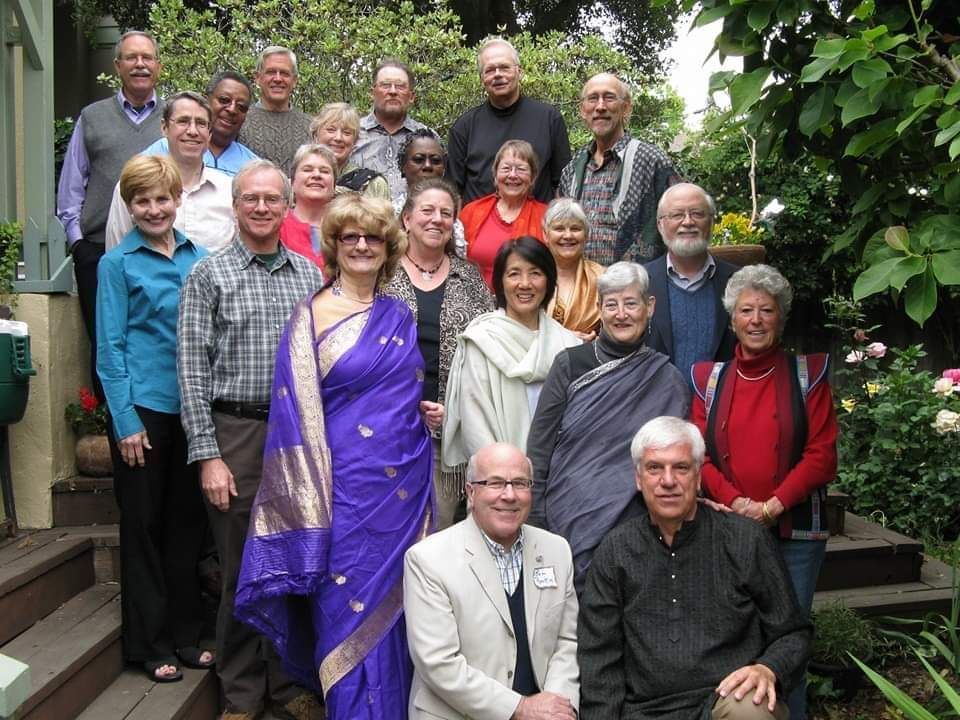
He was right. Each of us in India-44 had been stretched as young adults. And each of us came away with a better understanding of who we were as individuals and with an appreciation of the wonderfully complex world in which we lived. I oft have looked upon my fellow volunteers in wonder and admiration. What a marvelous and talented group, each of whom would contribute much throughout their lives.
Of course, they might have done so anyways, without any volunteer service. But I suspect that Peace Corps had something critical to do with what each managed to accomplish in the ensuing decades.
Of course, the 1960s turned out to be a very mixed bag … hope and the promise of change was mixed with anger, assassinations, riots, and excessive drug use. Change is never easy. But I personally will never forget those moments back then when we dreamt of a better world where all of us would be valued, and where each of us had at least the opportunity to seek our full potential.
Were the kids today to be so fortunate!

