The pic below is not from Iceland. No, it is a final shot from Nuuk Greenland. As you know, Eric the Red first colonized this then unknown and barren land in the 10th century. He had been banished from Iceland for some indiscretion that remains debated to this day. Clearly, though, he did not want to live alone, so he came up with an early bait and switch tactic … he called this new paradise Greenland. Since most of the island lay above the Arctic Circle, people were not fooled for long.
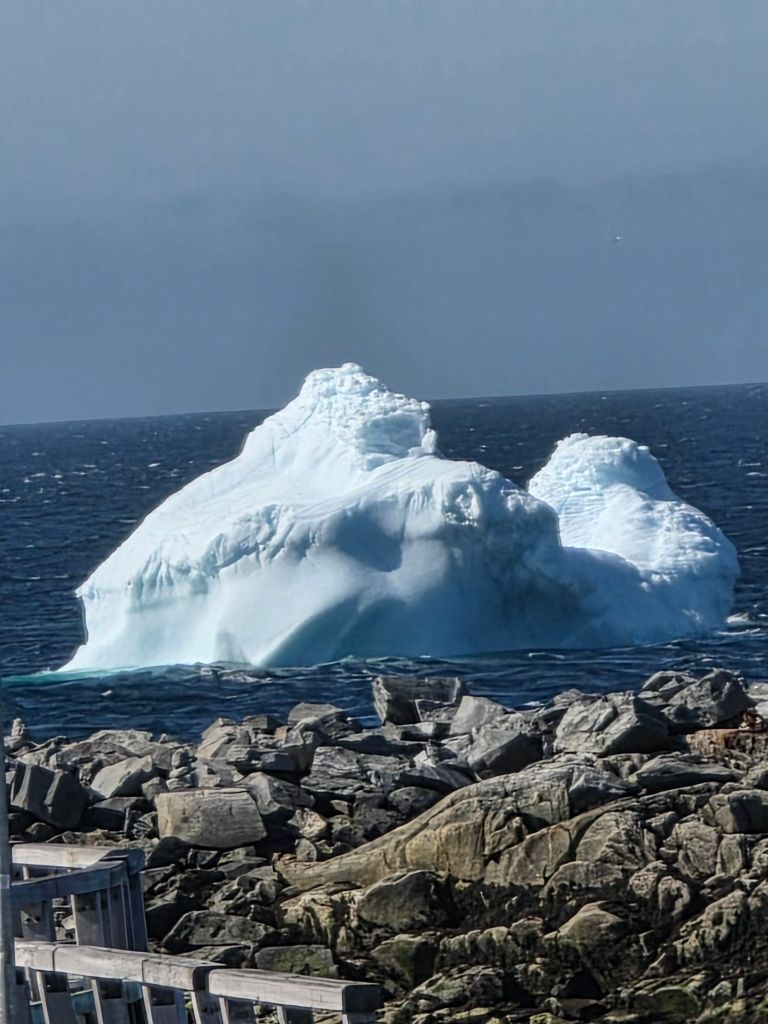
As we set sail again toward the high seas, I lingered over what we were leaving behind. There was natural beauty everywhere. One did not have to obscure reality to sell the virtues of this magnificent place. It really is one of God’s better works of art … even if survival could be harsh at times. Too often, it would appear, the beauty was offset by the challenges to mere survival.
We learned that Inuit children have an exceptionally high suicide rate, perhaps the highest in the world. This tragedy is most common in the small, isolated communities that dot the coastline of this massive island. Each settlement is detached and utterly isolated from the others, the human connections severed by miles upon miles of rugged terrain and inhospitable waters. In the long winters, absent sunlight, the loneliness must be overwhelming, even oppressive. Or perhaps that’s my own preferences speaking.

Our current course on the high seas takes us down the west coast, around the land’s south tip, then up straight to the to a port on the northwest coast of Iceland. The west coast is the more sanguine for human habitation since the ice cap is less dominant here. Still, outcroppings of ice gliding along the water’s surface were omnipresent, generating unwanted memories of the Titanic’s horrific fate. But modern ships have much better ways of detecting disaster, or that is what I prefer to believe.


Apparently, these floating ice islands get blown into the southernmost communities at the lower tip of the land mass, the ones we originally were scheduled to visit. So much ice apparently piled up in these harbors that it was deemed too dangerous for the tenders that were to ferry us to land to operate. Thus, the last minute switch to Nuuk and more time at sea. Apparently, Viking had never stopped at Nuuk before. My guess is that it may become a regular stop in the future.
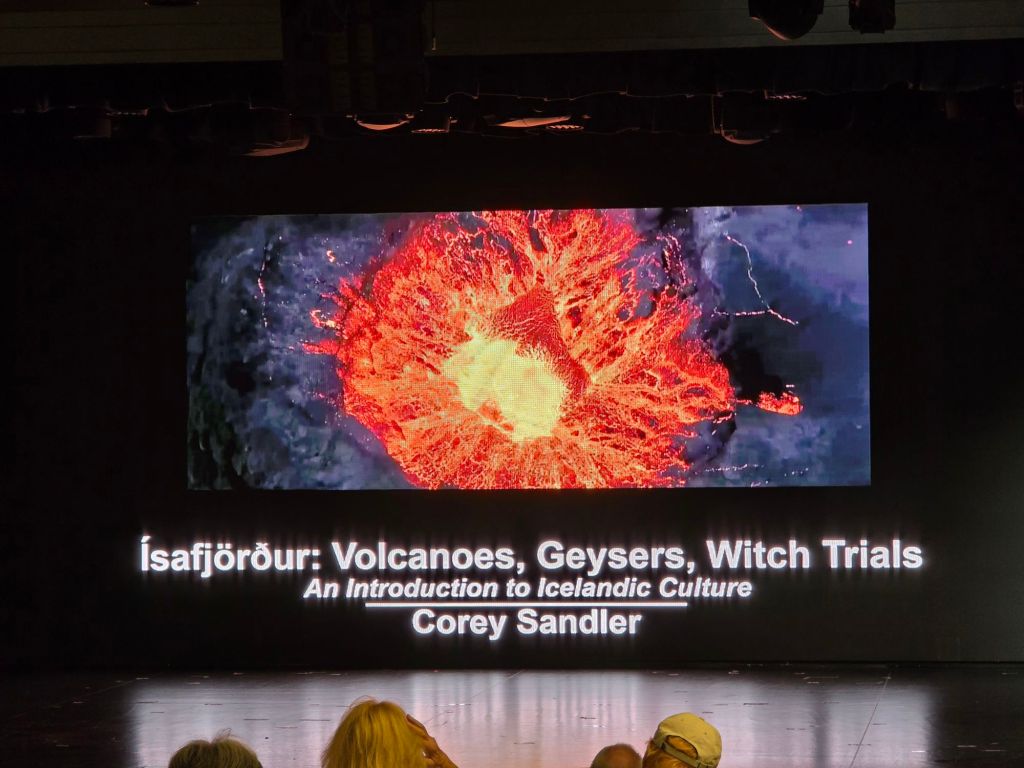
We have the option of attending several lectures today. This is the aspect of the sea going Viking experience that surprised me. The level of available expertise in various arenas (history, nature, culture, anthropology, etc) exceeded my expectations. The river cruise was good in that respect, but then we were doing shore excursions every day. There was less time for preparatory learning experiences. Our educational experience here can only be described as exceptional. The backgrounds and levels of expertise among speakers is beyond impressive.
A Brief Preview. The current stock of Icelanders began to arrive over a millenia ago, primarily Norse explorers from Scandinavia. Today, some 390,000 people call Iceland their home, the second largest island in Europe (remember that Greenland is considered part of North America). That gives us same population density as Australia. As in Greenland, most residents live in or around the capital … Reykjavik.
What sets Iceland apart is its active underbelly. Even before seeing it, I think of our destination as a huge Yellowstone National Park on steroids. The place is a bubbling thermos bottle of hot gases, geo-thermal baths, and lava flows punctuated by mountain peaks and icy glaciers. There are 30 volcanoes still considered active, even if they haven’t erupted in some time. Perhaps the source of all this subterranean activity can be found in the nation’s unique geological situation. Iceland is divided by two continental plates (North American and Eurasion). They are moving away from one another at an amazing rate of one inch per year. These perpetually grinding plates result in a land heated by geo-thermal sources and an active shaping of the land’s surface.
The other dominating fact explaining Iceland’s uniqueness is found in its proximity to the Arctic circle. The top of the island touches this hypothetical line that circles our globe some two thirds of the way between the equator and the north pole. In practical terms, this means that anyone on this line will experience a full 24 hours of sunlight on the summer solstice. Conversely the sun will not appear on the winter solstice. For reasons I don’t fully understand, that line is moving. Perhaps that has something to do with a slowing of our global rotation. Just like my long ago student days, I tend to doze off during lectures.
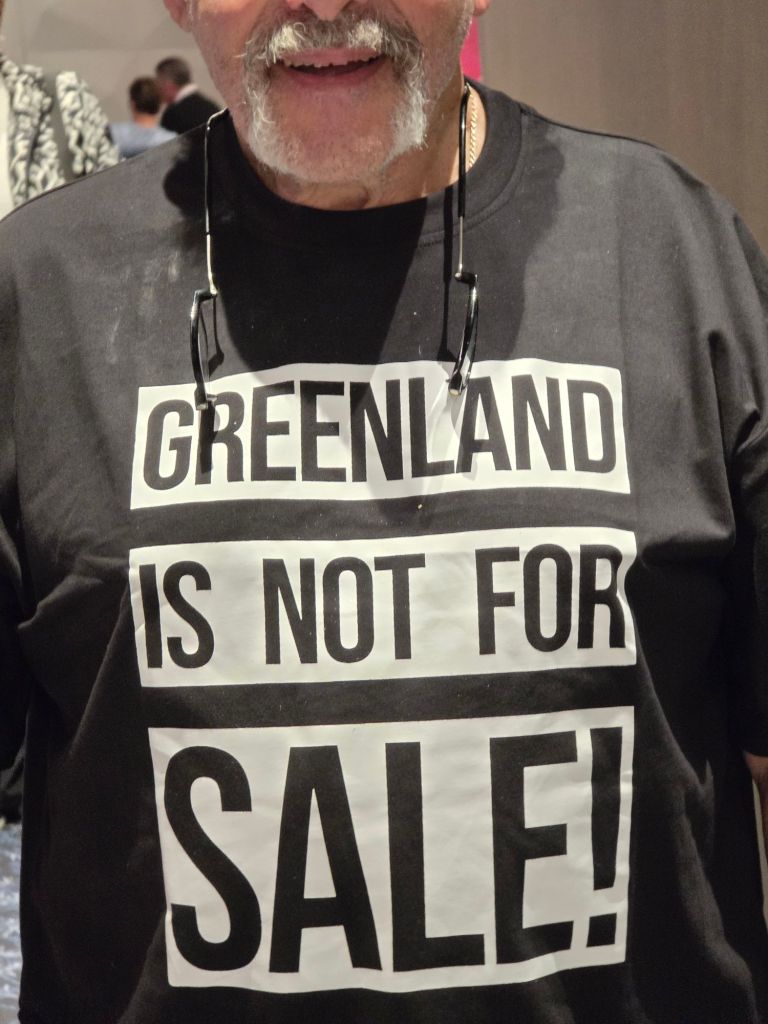
Before moving on, I wanted to share this t-shirt I saw today. I sense that the clear majority of fellow travelers share my disgust with our impossibly incompetent American leadership.
Next time I write, I should have actually experiences on the island. 😁
 Tom's Musings
4 responses to “Iceland … ho!”
When you reach Norway, stop by for a barrel of mead.
LikeLiked by 1 person
I wish I were going that far.
LikeLike
I always wanted to go to Iceland. I had a high school friend who was an exchange student from Iceland. We stayed in touch and she begged me to come visit. She passed away last year and I regret never having to take her up on her offer. The pictures are majestic!
LikeLiked by 1 person
Yes, the scenery is spectacular. I’ll send more pics.
LikeLike