I have long wondered why I turned out as I have. By that I mean one of those woke liberals (if not a socialist), a snowflake that MAGA types loathe with particular ferocity. Perhaps my worldview was due to the indoctrination I received at Clark University, a liberal arts school in my hometown known in Catholic circles as a den of Atheists and Communists. I only ended up there because Holy Cross, a good Catholic college, would not accept spring semester admissions after I left the Seminary (more on that later).
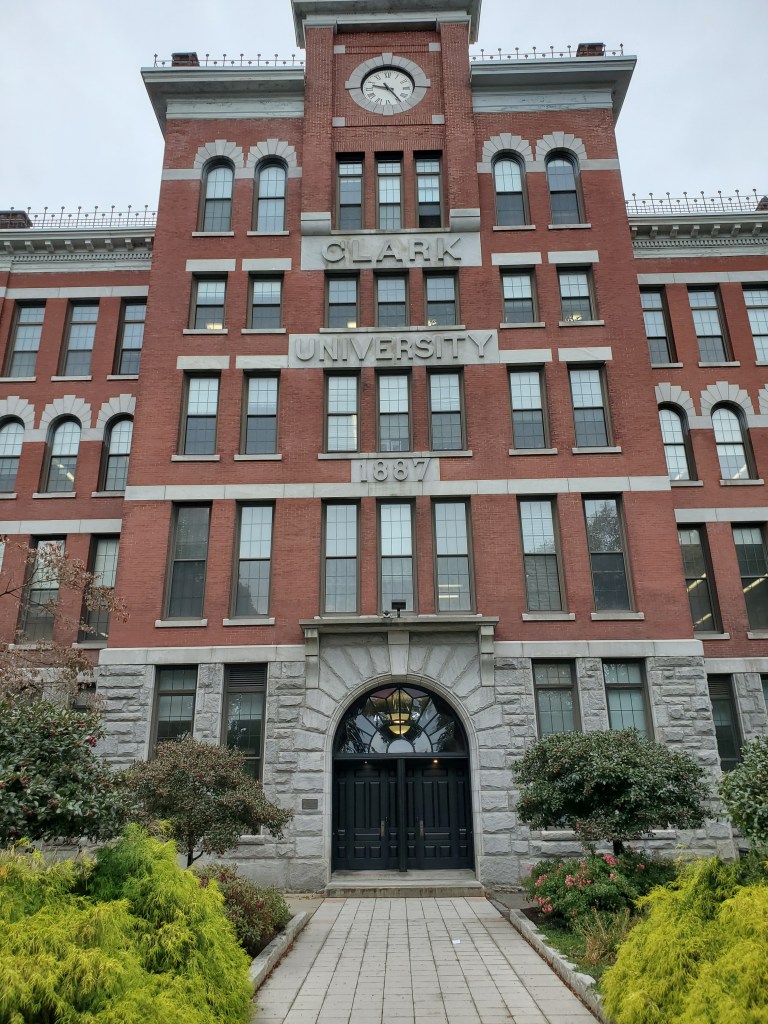
But no, while Clark changed my life by opening up my intellectual curiosity, it did not infuse me with my liberal impulses. Those started much earlier and their origins yet elude me. I am not alone in this. I’ve talked with many others who grew up in conservative homes or environments, and whose siblings remained true to these conventional beliefs, yet who struck out on the road less taken. They are puzzled as well.
My white, Catholic, lower working class world had all the prejudices and bigotry one might expect. Not only did they evidence the usual disdain for conventional minorities, but WASPS were intensly disliked along with Jews and a host of fellow Catholics from what we’re deemed as the wrong ethnic tribes. Irish Catholics would walk past the Polish and Lithuanian churches to get to their own Catholic church. The tribalism of bigotry was universal.
And yet, even when I was young, I had different impulses. I wondered why we didn’t give more of our abundance to those suffering around the world. I even joined something called the world federalist society at a very young age (probably a Commie front organization) because I instinctively thought the notion of separate countries an ill-conceived and divisive concept. None of my neighborhood friends (nor the adults in my orbit) thought like I did.
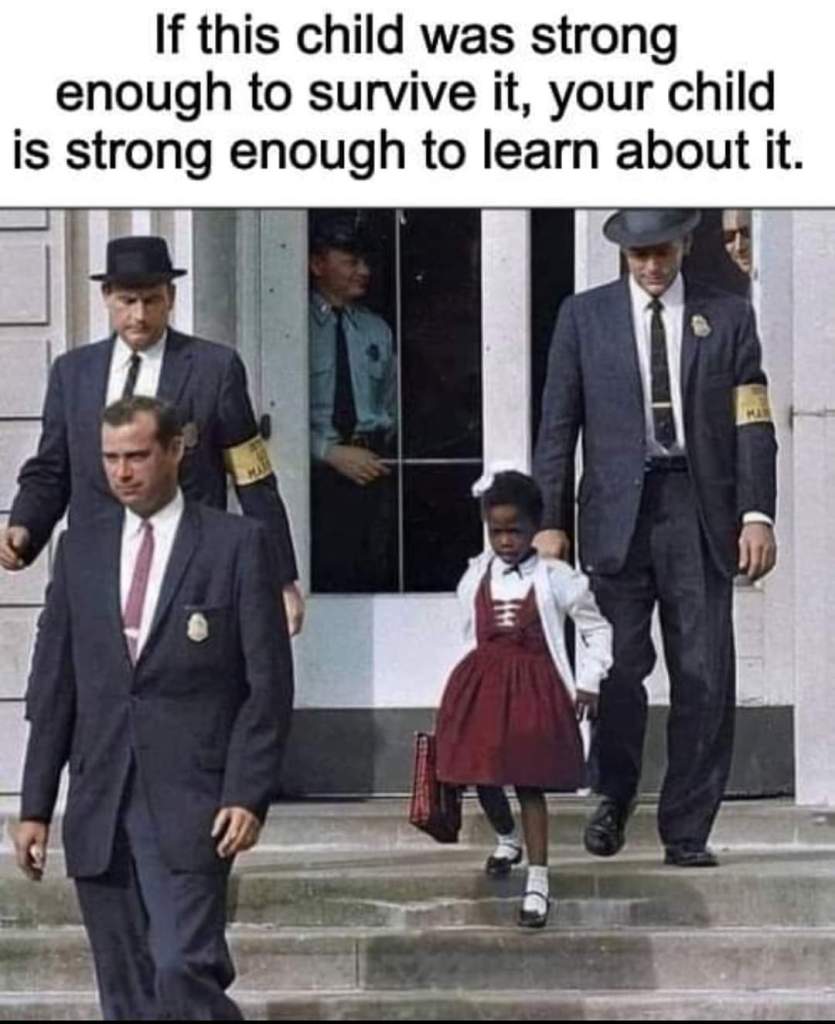
When the Civil Rights movement started after Brown versus the Board of Education Supreme Court ruling, I was outraged by the fact that we yet had legal apartheid in the land. I was enraptured by young blacks (see above pic) braving fiery mobs to attend integrated schools or risking their safety to sit at segregated lunch counters or their lives by riding freedom busses into terrible dangers. They were my early heros. I recall arguing with visitors from Virginia about why the Supreme Court desegregation decision was a good and proper thing. I was only 12 or 13 at the time. Where did that come from? No one I knew felt the same way.

In the above pic, I am with my two roomates in the Maryknoll Seminary in Glenn Ellen Illinois. I entered right after graduating from my demanding Catholic high school which had rigorous academic standards and exacting behavioral expectations. The Xaverian brothers would whack you if you misbehaved. Then, your parents would whack you again if they found out about it.
This particular Catholic order was a missionary society. It was a very regimented experience that started around 5:30 AM with morning prayers and Mass. Each day was filled with studies, work assignments, more religious activities, physical exercises, and enforced periods of silence. But I didn’t mind all that, not even the absence of females since I had only known Catholic girls to that point, which was pretty much like mandatory celibacy.
No, the problem was more subtle. I came to realize that I had chosen this route, not because of any real belief in a deity, but from a fundamental impulse to do good. I wanted to improve the lives of needy 3rd world folk and not necessarily save their souls.
It was then I matriculated at Clark University, a decent yet small liberal arts school that started out as the second graduate school in the U.S. (after Johns Hopkins). Not unexpectedly, I veered further to the left in college. I can not recall any form of brainwashing in the classroom at all. However, after I realized I could handle college work (which I doubted going in), I spent hours dialoging with fellow students on the great issues of the day. If anything helped me become a critical thinker and sharpened my analytical tools, it was these intense and never-ending discussions. Unlike the kids I saw less than a decade later, we endured a crucible of doubt and transformation in which we discarded our childhood myths and recreated our moral compasses. It was a trying transition, yet thrilling. By the end of my college years, I headed the left wing group on campus … a more sophisticated version of what drove me into the seminary years earlier.
I had started working as a freshman in high school and never stopped. While I had a couple of normal jobs (for a while I was night watchman for the Worcester sewer department during which time not a single sewer went missing 😅). But I tried hard to find work compatible with my instinct to do good. During my college years, I worked the eleven to seven shift in a Catholic hospital and then later worked lwith disadvantaged kids in an early War on Poverty neighborhood program. I kept looking for socially meaningful work, not just work to get me through school. Between work (especially the 11-7 shift), chasing women with little success, trying to stop the Vietnam War, and my full-time studies, I can not fathom now how I survived, much less graduate.
But I did graduate (with honors by some miracle). When I asked my advisor where I might consider graduate school, he said without hesitation … Harvard, Yale, or Stanford. I thought him daft, my self- image was that of a working class kid who somehow made it through college with charm and a heavy dose of Celtic blarney. I was stricken by the imposter syndrome.
But inside, I knew what I really wanted to do. In 1962, my impulse to save the world pushed me toward the Priesthood and an overseas missionary society. By the middle part of the 60s, the Peace Corps was a definite possibility. I applied for a program doing public health in India. After all, I had spent several years working the graveyard shift in an urban hospital. I was accepted but would wind up doing agriculture in the desert of Rajasthan, a poor area bordering on Pakistan.

We were a bunch of college kids who had never seen a farm. Really, what was Peace Corps thinking? But we had hubris and thought we could do some good. Our training was long and demanding, and India proved a very harsh site for a number of reasons. Of the 100 or so wanna-be volunteers on day one, only about two dozen made it to the end.
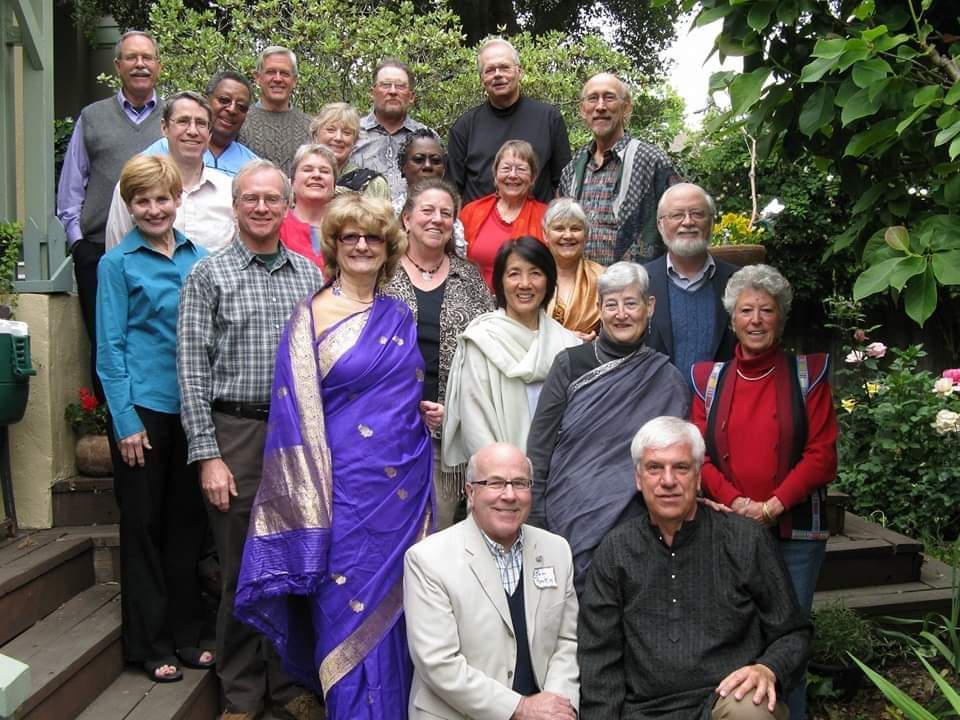
However, when we gathered some four decades after our return in 1969 (see above pic, I am back row, 2nd from right), we agreed that the experience transformed us in many ways. My PC colleagues did amazing things with their lives. They might have in any case, but I suspect this testing experience exerted a value-added component to their subsequent lives. For me personally, spending two years in a hot desert area fighting boredom, loneliness, disease, a fascinating but hard culture, and doubts about your technical skills, I was grounded in the lessons of cultural relativity. I came back a changed person. My later work as an academic reflected those lessons.
As you may recall, I eventually went on to get a Doctorate in Social Welfare from the University of Wisconsin while studying under some of the leading poverty scholars in the land. I never left UW, eventually becoming the Associate Director of the nationally recognized Institute for Research on Poverty, the only such think tank to receive federal support continuously since 1966. I also taught social policy classes to a generation of undergraduate and graduate students at Wisconsin and consulted wth federal and state officials on a variety of human services issues. I can not think of a more fitting career for a wanna-be do-gooder.
But let me be honest here. While I did satisfy my need to be relevant, I also realized I was not in the trenches as many activists are. My impacts on the public good, if any, were from afar. I salute those who worked directly with the vulnerable and remain guilty about my own failures in that regard. Still, I cannot be too harsh on myself. After all, I did what I do best.
And consider this, I might have become a Republican. Oh my God! Perish the very thought.
 Tom's Musings
2 responses to “Seeking a better world.”
As my favorite author, F. Scott Fitzgerald, said, “So we beat on, boats against the current, borne back ceaselessly into the past.” Thanks for the post.
Judy
>
LikeLiked by 1 person
Our conversation on this topic the other day got me thinking about this once again. So, thanks.
LikeLike