If you will permit me, I’d like to share a few comments on my life at the University of Wisconsin or, to be more precise, the Institute for Research on Poverty. I spent some four decades there, in one fashion or another. I did research, taught undergraduate and graduate classes, helped run a nationally renowned policy research institute, consulted with officials from all levels of government, cemented ties between academia and various institutions in the real world (think tanks, evaluation firms, the philanthropic community), raised a great deal of money, gave untold talks to academic and policy audiences, served on numerous committees, wrote uncounted reports and articles and book chapters, and so forth. And yet, I was never a formal part of the university community. I remained, more or less, an independent entrepreneur who exploited the academy as a platform from which to operate.
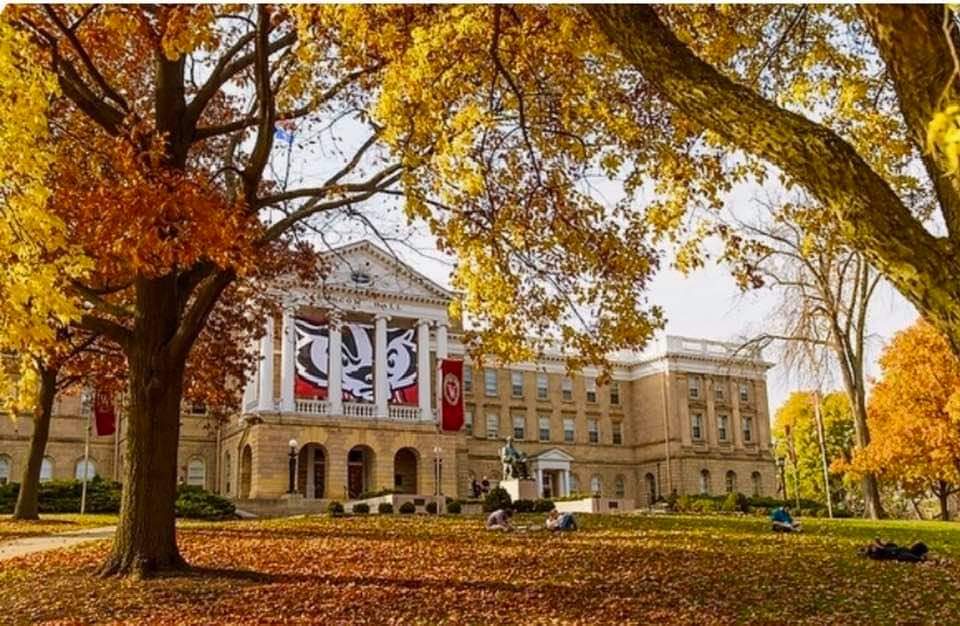
How did I get to this unique position? Professionally, I started out as an analyst with the State of Wisconsin. That proved a blessing in disguise since I formed a love of policy work before being exposed to the stifling aspects of the academic culture. After about 4 years of working for the State of Wisconsin, I migrated the mile or so down State Street to the University of Wisconsin. I enjoyed my life as an analyst for Wisconsin’s social welfare programs. As was my want, however, I was never satisfied with doing my formal job since that was never stimulating enough. So, I was always searching for new mischief in which to get involved.
Early on, for example, I realized that the paper basis for managing income maintenance and human service programs was outdated (this was in the early 1970s). We had to move forward to the emerging digital age, which was rather advanced thinking back in those primitive days. Perhaps I thought boldly because I knew nothing about computers … zilch, less than nada. Ignorance easily can generate foolish and excessive zeal. Still, I joined several other young turks to push for the computerization of these programs, even in the face of initial opposition from the powers that be. You can imagine our naivete. Still, we were a stubborn lot. Eventually, Wisconsin became the first to develop and implement a computerized system for managing the major welfare programs and, once again, a model for the nation.
Since I cannot tell this remarkable story here, I do recommend reading my memoir titled A Wayward Academic: Reflections from the policy trenches. (See pic below, the one on the left).

But let me move on to the university. Much in my life happened by serendipity. That is, little was planned or intentional. Becoming a quasi-academic was no exception. As I noted, I was involved in many projects as a state analyst. One day, my state bosses (who had little faith that academics had anything of substance to contribute) told me to work with an egghead from the University (Irving Piliavin) who had an idea for a research project. Eventually, it was funded by the federal government. Out of the blue, he called and asked me to move to the Institute for Research on Poverty where this large, complicated project would be housed. He needed someone who knew how government worked. He assumed I did, and even better, I came cheap. I thought about his offer for 5 seconds (I was giving up a civil service position after all) and said yes.
As the two-year project wound to a halt, I concluded that this academic lifestyle was better than working for a living (despite seeing first hand the tensions and driven work habits of scholars at a top research university). But I first needed a doctorate, which I managed to obtain only after many years and, in the end, more as a gift than anything earned. Doctoral studies were not a difficult process for me. I recall working harder in high school. But I was always distracted. I never stopped working on an array of policy projects that interested me. The real world kept dangling interesting and amazing issues before me to distract me from the tasks at hand. I must have had an attention deficit disorder. Even while taking classes, I was lured into playing a major role in a legislatively mandated welfare reform study. Getting a degree could not compete with what I termed the enticements available in my policy candy store.
I never thought of myself as an actual student. I was older and already had tackled a set of tough challenges. Besides, my nominal dissertation advisors were my colleagues, not mentors. I had bailed out several of their research projects with my knowledge of how policy operated in the real world. I also had wowed them with my Prelim answers. One of my committee members publicly stated I was the smartest student to come through the program. I knew that was not true, but it was nice to hear. I believe they were confused by the experience I brought to the table and my verbal skills. Having barely passed high school algebra, my quantitative skills were decidedly lacking. When they realized I would remain an ABD (all but dissertation) for life, they dummied up a plan to get me a degree by hook or crook
Upon being handed an undeserved degree, there was no way I was leaving. I already had a robust agenda of projects to keep me busy. So, I remained at the University as a researcher and then scientist … academic positions but not with faculty status. I soon began teaching policy courses in the School of Social Work where I proved an inspiring teacher. I was always an entertainer at heart.
This was perfect for me. I had maximum flexibility and freedom to do what I wanted, as long as I could raise my own money. That was no problem, I was good at that. In fact, the university occasionally made me ‘take a month’ off despite the fact I had plenty of money banked in my personal account. It was a rule I was told, the rationale for which escaped me.
Being identified with the Institute for Research on Poverty (IRP) proved another blessing. This was the premier academic-based research entity on social policy in the country. Being associated with it (and being in a management position there by the 90s) opened up many doors. Everyone assumed I was an expert. IRP had been created as part of Lyndon Johnson’s War-On-Poverty and has remained in business as a designated federally sponsored institute almost 60 years later.
Eschewing a typical academic position proved a blessing, in my mind at least. Conventiomal scholars must, especially early in their careers, focus on narrow issues. They must drill down, publish a lot of what I consider narrow papers in provincial journals with limited audiences. Later in their careers, they can focus on broader and more meaningful issues of real importance. Besides, I wanted to remain involved in the real world. I learned a lot from interacting with real people and programs. The scholarly ‘literature’ was only one source of information
Hell, I was too impatient to do that insular scholarly stuff. I came of age professionally when poverty and welfare issues were front burner items. I surely was not going to waste a dozen years or more earning my academic bona-fides while the welfare wars were raging in Washington and State capitols. That would be like showing up for the war a week after the armistice had been signed.
For about two decades starting in the mid-80s, I plunged deep into the very guts of the welfare and poverty wars. I was on the speed dial of reporters around the country and sought after as a consultant and public speaker. More critically, I had not been pigeonholed as an expert in a narrow area as scholars often are. I could, and did, take the big picture, often reframing traditional disputes in refreshing ways. I had freedom to select which issues to take on and how to approach them.
In 1993, just before heading for Washington to work on Clinton’s welfare plan, I wrote a piece for FOCUS (an IRP publication popular with academics and policy wonks) titled Child Poverty: Progress or paralysis. It was a synthesis piece that integrated perspectives and ideas from across the political spectrum. I was stunned by the popularity of the ideas contained in this article which I almost didn’t publish it because I thought the ideas old hate since I had used them in many of my talks. A research assistant working for me changed my mind on that score, thank God.
This piece, as it turned out, took the policy and scholarly world by storm. At the center was a metaphor that employed the image of an onion where different reforms represented distinct layers. I argued that what had been thought of as contradictory ideas really were complementary initiatives that addressed separate issues or subgroups within the population of vulnerable families. This seemed obvious to me but stunned the policy world. However, I doubt I could have published this (and similar pieces popular with policy audiences) if I were mired in the narrow and provincial world of academia. My unique position as a free lance academic entrepreneur gave me unusual lattitude to exercise imagination and function outside conventional boxes.
Over the years, I worked on virtually every major initiative to come down the pike. As laid out in A Wayward Academic, my involvement in these issues typically came with a call or request to get involved. I did not have to seek out interesting topics. They literally were thrust upon me, for better or worse. That is, opportunities fell into my lap.
Early on, I had worked on several large and conventional research initiatives … the use of discretion in welfare decision-making, the under- subscription of wage-bill subsidy programs, a longitudinal study of homelessness, an exploration of the welfare migration dilemma, and several other conventional academic topics. While I was competent in these traditional studies (actually very good at managing large-scale data collection efforts), I was easily bored. I wanted bigger challenges that cut across distinct policy issues and narrow siloed questions. My strength lie in seeing broader issues and reframing them in ways that others couldn’t or at least didn’t.
Let me just note a few of these larger and more compelling issues to be found in my policy and intellectual candy store: helping legislate work-oriented welfare reform initiatives in Wisconsin and elsewhere, developing one-stop work and welfare model programs, exploring why integrated human service models fail and what can be done about that, developing models for critically examining reform proposals to increase the prospects of success or seeing changes on the ground that others failed to see, updating evaluation methods as welfare programs evolved beyond income support initiatives, theorizing about the importance of culture and institutional frameworks to reform efforts, reconceptualizing and updating the official poverty measure, articulating new approaches to human service integration schemes, launching successful ‘peer assistance models’ for stimulating and developing new reform concepts, updating and advancing the social indicators movement, and advancing a new arena of scholarly study … institutional ethnography. There are others, but let us move on.
Of course, all was not wine and roses. Being at the forefront of the welfare wars, one was bound to create enemies. Tommy Thompson, long time Wisconsin governor and HHS Secretary under Bush (the son), disliked me, an animus that threatened the relationship between IRP and the state. But I began working with his policy advisor and welfare expert, Jennifer Noyes (pictured below).

Over time, we repaired the fractured association between academia ((IRP) and the real-world (the State of Wisconsin). Later, I worked hard to get Jennifer to the University (and IRP) where she became a wonderful colleague and friend. She now serves as a top assistant to the Chancellor of the entire campus.
I cannot imagine a better career. My standard line when asked what I did was this … I flew around the country to work with the best and the brightest on society’s toughest challenges. I loved it, but it was exhausting. I would arise at 5 AM each morning and get to the campus by 6 or 6:30. Even in DC, I would get to the Humphrey building so early that I would be checked in by night security. The workload was unending. I still recall putting talks together on the plane to some event and planning class lectures on the return flight. And yet, I never could get over the fact that they paid me to have this kind of fun.
If I did make one mistake, it was letting others talk me into putting my name forward for a tenure track position in the School of Social Work very late in my career. Whatvin gods name was I thinking. All that did was add some additional burdens onto my already exhaustive schedule with absolutely no advantage for me. But I was such a people pleaser I went along with this fiasco. It likely was headed for disaster though we will never know. I retired from teaching and administration before any decision came due. I would continue my consultation, research, and writing for another decade or more.

I was retired when I got a call from Bob Haveman one day. They were launching an IRP initiative to bring in professors who taught poverty courses from around the country. (A pic of the 2015 class is above … I’m the gray hair head in the back row). The intent was to employ IRP associates to upgrade the skills of those training the next generation of policy wonks. A long-time IRP affiliate (Rob Hollister from Swarthmore College) was to give the plenary talk that would set the tone for the week. However, he came down with an illness at the last moment. Could I fill in?
I had given so many talks on a variety of topics over the years. ‘Sure,’ I responded, ‘Why not.’ Then I reflected that I had not been thinking about these issues for a while, and this was such a last minute request. But the magic never disappears fully. I threw something together that, to my surprise, wowed the audience. I was asked to write up my notes for a FOCUS piece which came out in 2015. It was to be my final contribution.
This is a long segue into where I’m hoping to go next with this blog. That last talk (and subsequent article) is a decent summary of my concluding thoughts on a rewarding career. So, I will share it with you, in bite-size pieces, over the next several blogs.
I’m sure you cannot wait!
 Tom's Musings
One response to “A Final Reflection?”
Hi Tom
I really enjoyed your post. Who knew you weren’t just another pretty face?
<
div>See you
LikeLiked by 1 person