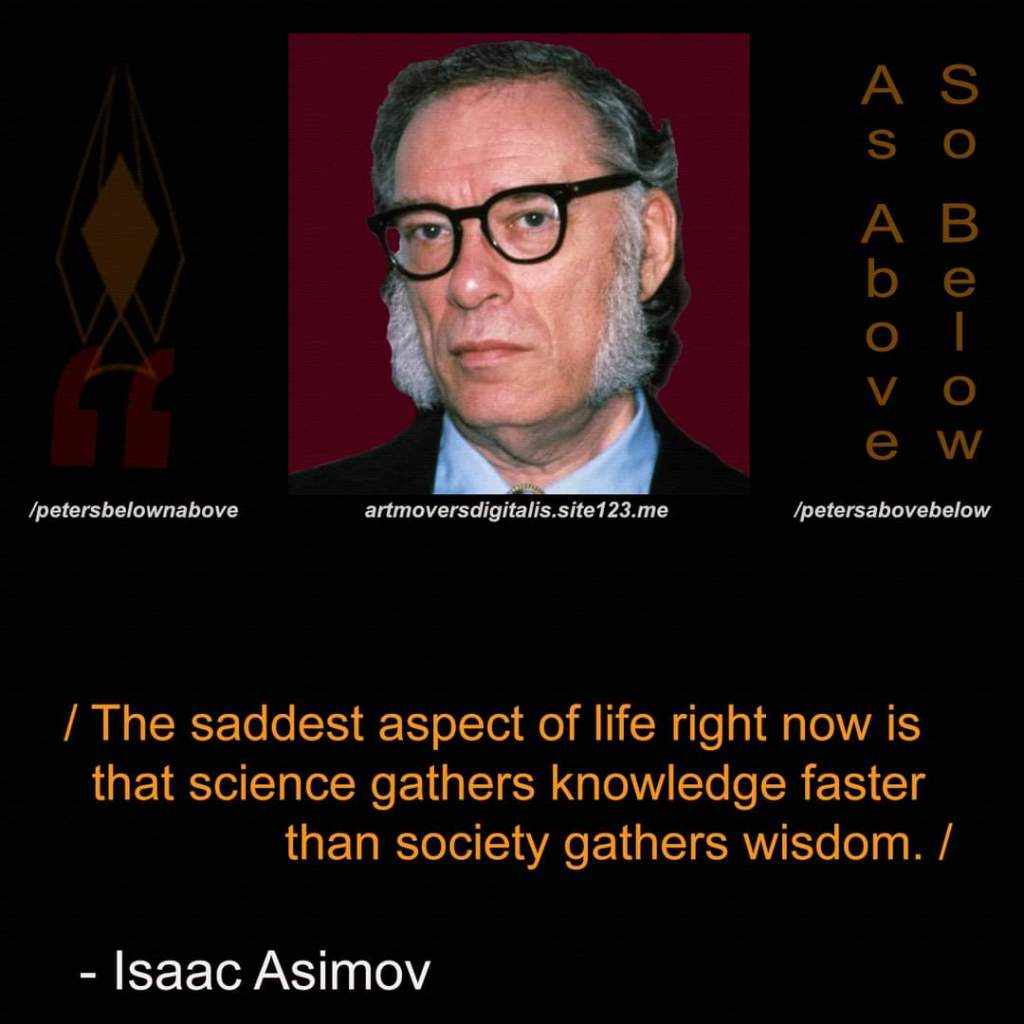
Technological advances have always been a two edge sword … the Janus head figure of Roman mythology with one face gaze toward the future and the other fixed on the past. For Roman believers, Janus represented many dualities we see about us. Today, we might focus on the duality inherent in technological advancement. Put another way, most innovations can be used for good or evil, applied to the advancement of mankind or to its demise. In the beginning of any breakthrough, we cannot know where innovation will end.
In some ways, Mary Shelley captured our ambivalent attitude toward technology in her 1818 novel about Frankenstein’s monster. Victor Frankenstein set about to create an artificial man based on decent intentions, including responding to his scientific curiosity. His creation, for a variety of reasons he could not foresee, escaped his control. This marvelous, if not inspirational, creation soon became a fearsome being to the world outside his lab. Victor had unleashed a force on his community that ordinary people could not understand nor accommodate.
There are historical examples that go in both directions of course. The breakthrough inspirations of Jenner and Fleming led to life-saving innovations against infectious diseases. Henry Ford’s innovations in assmbly line production of cars reduced the time it took to assemble a Model T Ford from 12.5 hours to less than a minute. The cost fell from $850 to less than $300, thus bringing the automobile within the reach of the middle class. Of course, the unintended consequences on assembly line workers, congested streets, and air pollution were yet to be appreciated.
Other examples fit Asimov’s warning more closely. Between the American Civil War (and the Franco-Prussian War) and the outbreak of WWI, the technology of warfare advanced dramatically. At the start of the Civil War, most soldiers employed single shot, front loading rifles. They were slow, cumbersome weapons that were not accurate. Tactics demanded massing soldiers together to generate any effective firepower.
By 1914, armies had machine guns followed by tanks and high-powered artillery and bombs dropped from planes and lethal nerve gases. Yet, the battlefield tactics still were based on the killing technologies of prior generations. The result was an unimaginable slaughter (over 10 million soldiers) as leaders could not, or would not, recognize how the world had changed. They sent massed armies into technologies that cut them down with efficient ferocity.
Most of us have seen the movie ‘Oppenheimer.’ This epic captures the angst of modern science and scientists. The instinct to pursue knew technologies, often based on compelling rationales in the moment, can and do result in faustian choices. Could the scientists working on the Manhatten project risk Getrmany developing the bomb first?
At the same time, many of them realized they had unleashed an apocalyptic weapon upon the world, regretting their actions. And yet, almost 8 decades after Hiroshima and Nagasaki, wars have been localized and conventionally waged. Has the totality of nuclear force lessened our militant instincts. A point to be debated.
Nothing touches upon Asimov’s point better than the AI (artificial intelligence) spectre 👻 . Will this modern day Framkenstein be a net force for good or evil. Without question, the potential applications are endless and the possible benefits breathtaking. Just take medical diagnoses alone. Think about a digital doctor with all medical knowledge available to them, who never tire, and who can make decisions in nanoseconds. Think how quickly science can progress when not impeded by human frailties and inefficiencies.
And there lies the rub. As AI abilities leap forward, who can predict what might happen? The current versions have a fraction of the connections in the human brain and yet can outperform us in virtually every dimension. How long before our products, over which we yet exercise some control, simulate consciousness, free will, and even our more basic failings. Is it not likely that they will conclude that these wholly imperfect humans atremptingvto exploit them are unnecessary. What then? The so-called ‘godfather’ of AI has upped the probability that AI will replace, or at least significantly diminish the presence of humanity, by at 25 percent.
Noodling this led me to the following thought. As these machines become capable of mimicking, or even exceeding, advanced human attributes (emotions, creativity, desires). If so, what will prevent them from simulating the worst of our tendencies … except at a higher level.
The thing is, we are only at the very beginning of this adventure. Today, AI is like those huge, clunky IBM mainframes of the 1950s with vacuum tubes that could not even perform tasks easily available on a cheap hand-held calculator today. Just think what they will be able to do in a couple of generations, especially if they assume control of their own futures. Perhaps they will simulate all human attributes such as jealousy, ambition, and anger … except at higher functioning levels.
If that happens, why in the world would they not dismiss and eliminate these slow moving and archaic homo-sapiens who would be good for very little, at least to their analysis. To my mind, we would be more bother than anything else.
Consider this, does functioning at levels far beyond what humans could ever hope to achieve guarantee that our future machines will act at higher normative levels. Will they be kind, morally superior, focused on higher level goals? I’m not sure. After all, we have highly educated (Ivy League) Republicans who act like barbaric, school yard bullies. Perhaps our future machines (we need a better term) will wage botter battles among themselves but at an unimaginable level of sophistication and ferocity. In such a world, heaven help us or whomever replaces us.
I will say this one time. I’m glad I’m old!
 Tom's Musings
2 responses to “Technological apocalypse!”
And we have crooked, elitist, ignorant, hate-mongering Democrats who used the monies their daddies gave them for enlightenment by idling-away in Sentate whorehouses. In the words of another old codger, “C’mon man, stick to the facts – it’s the Orange Man’s fault.”
LikeLike
LOL. I knew I’d get a rise out of you. However, I do believe (being as objective as I can) that Republicans have lost their way. Romney and Liz Cheney were about the final two with principles. Your description of Dems was somewhat accurate when I was a kid though, as struggling working folk, we were democrats. But even I knew there were a bunch of crooked ones back then. The GOP was the party of sobriety and common sense. Then the Goldwater rebellion, the Reagan resurrection, the Gingrich revolution, and the Trump fiasco. Now the roles have switched. The reasonable Republicans with whom I worked with on policy issues have given up on them. Many were blindsided by how quickly the crazies took control. 😳
LikeLike