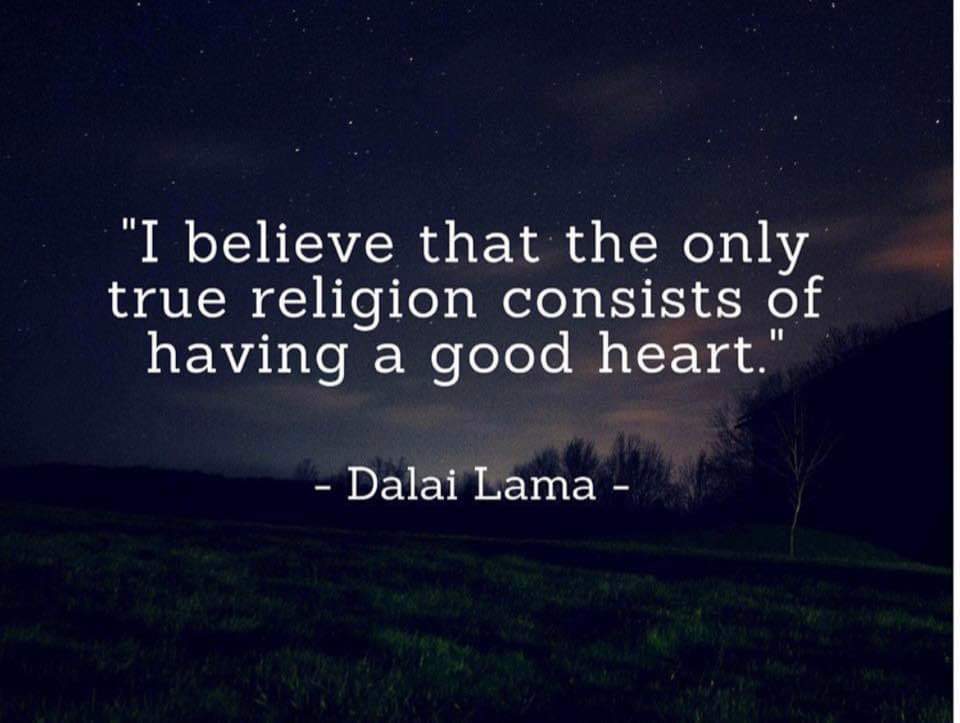
This is Nobel Prize week. The Peace Prize was just awarded to an Iranian female activist (Narges Mohammedi) who has dedicated her life toward seeking the freedoms that others of her gender enjoy elsewhere in the world. Her persistent efforts to secure some reasonable treatment for Islamic women have been met with ferocious resistance by the Islamic extremist authorities. She has been arrested more than 30 times, convicted some 13 times, and has been sentenced to almost 3 decades in prison and some 145 lashes. She is paying a harsh price for her convictions.
We in the West shake our heads at what we consider such barbaric behaviors on behalf of governing authorities in many Islamic countries. Why treat half of the human species with such casual, yet excessive, cruelty?
But think about it for a moment. Has not the American Republican Party of today become, or is at least trending toward, the American version of the extremist religious Taliban. They seek to command ever greater control over women, their reproductive rights, and their role in society … mostly yearning to reestablish a male dominated society.
Then, another thought struck me. Didn’t Western society go through a similar era where laws and customs were dominated by religious and not secular principles. I just finished reading ‘A World Lit Only by Fire’ by William Manchester. This is an excellent work focusing on the period of time in Europe when the Protestant Reformation challenged the existing primacy of religious authority and where our world view was circumscribed by dogmatic orthodoxy. And yet, it was a period during which scholars began to question the existing consensus on the nature of the world. Pioneering souls, driven by curiosity and the drive to make better sense of the world, began to question accepted truths passed down from sacred sources and endosed by religious leaders. These proto-scientists relied more and more on careful observation and their analytical skills. This often put them at odds with the religious authorities of the times which is a significant understatement of the reality in those times.
Of the many lessons from Manchester’s excellent work, two strike me as relevant today. First, the pre-reformation religious authorities were hardly role models for the spiritual path in life. Pope’s waged war, employed their Papal position to enrich themselves, routinely engaged in lascivious behaviors (too often siring illegitimate children). It was common for the religious elite to sell top positions in the Church to the highest bidder. Corruption started at the top and drifted down the spiritual hierarchy.
Church officials systemically sold indulgences, i.e. get out of Hell free cards. Their approach was simple. It was all too easy to implement since their followers were illiterate and all important documents were in Latin which only the top elite understood. They first sold an uneducated laity on the horrors awaiting them in the after-life, scaring them into submission. Then they suggested that the Church hierarchy, and only them, offered an alternative to an eternity of torture. Finally, they they moved in for the kill by offering a convenient way to avoid the unthinkable consequences of a wayward life … for a price of course. The Republican Party learned well from these early con men. Scare your followers, offer a simple solution, and bleed them dry.
The competition for the goodies attached to Church leadership were so seductive that three different candidates assumed the position of Pope at one point. With time, The abuses were sufficiently flagrant that secular leaders, particularly those in Northern Europe became restive to the point of questioning their subservience to a Papal authority that inspired less and less respect. The way for Martin Luther’s revolt was set by the early 1500s.
The second theme associated with the pre-reformation church involved the harsh penalties for any deviation from accepted orthodoxy. There was an accepted view of the world, one sanctioned by religious authorities. Those deviating from these revealed truths were subject to the severest penalties including torture and death. The empiricists of the era often cowered in the face of religious intolerance. Copernicus did not publish his findings of a helio- centric solar system until after his death (his friends saw to its release) while Galileo retracted his supportive findings in the face of Papal approbation. Rigorous inquiry was not for the faint of heart. Many who questioned existing dogma went into hiding if they could.
Wars stimulated by religious or arcane disputes over seemingly insignificant points of dogma, though often colored by conventional political overtones, were an ongoing reality in that era. The pre-reformation era saw a series of Crusades which pitted Christianty against Islam. But intra-Christian conflicts spawned by the dissolution of a homogeneous religious framework in the West became a constant source of terror … the consequences of which typically fell on innocent peoples lower down in society. I’ll mention just a few … the War of the Three Henrys, the French War of Religion, the Julich Succession during the German Reformation, the English reformation conflicts including the Jacobite uprisings, and so many more. Untold numbers suffered and perished in the name of God.
The point of all this being that monotheistic absolutism, the stubborn belief that ‘my God is better than your God’, has led to more suffering and death than most, if not all, competing causes. The irony should not be lost on anyone. So many killed and maimed in the name of the Prince of Peace. Even when considering more recent world conflicts based largely on secular political goals, they were often imbued with appeals to superior cultural and spiritual meanings. Each side invoked the blessing of God.
Fortunately, as more secular sentiments dominated political life, especially in Europe where religiosity is low, the levels of conflict have abated dramatically. (A recent exception has been the Catholic-Protestant ‘Troubles’ in Ireland.)
All this leads me to wonder if the conflicts we have seen in the Middle East, including the religious orthodoxy that punishes women simply for being women, suggests that the Islamic world is struggling through its own version of an evolutionary period. Perhaps they are struggling with the very issue that plagued Western societies for centuries … should religious or secular impulses govern our national and international lives. Perhaps the existing regimes, including the Shia and Sunni factions, must exhaust their outdated beliefs and emotional dispositions until more secular attitudes and perspectives become dominant. Hopefully, their maturation won’t take as long as it did in the Christian West. Only time will tell whether that optimistic notion is warranted.
The irony of all this is that spiritual beliefs can be a two edge sword. They can elevate individuals and the collective to behave in ways we all can admire. At the same time, they can be used to rationalize and justify the most bestial of attitudes and behaviors.
This brings me back to the comments from the Dalai Lama introduced at the beginning. Spiritual beliefs asserted as dogma are seldom a good idea. Their authority is always debatable, and the consequences of slavishly adhering to them often are reprehensible. Love, and a good heart, should always trump dogma asserted in the form of absolute truth. That is authentic spirituality.
The early 1500s were a kind of tipping point in our Western evolution. In religion, the process of rethinking unquestioned dogma began. Early scientists began to explore the universe about them in rigorous ways. The great texts (and religious documents) were translated into local languages and made available more broadly. Local and national authorities began separating themselves from religious authorities. Brave explorers began to seek out worlds and possibilities previously unimaginable, with Magellan’s circumnavigation of the globe a prime example. A new world was being born.
Slowly, people began looking to the future as opposed to revering the past. They started recognizing that the world around them was not static but malleable. Situations and society could be improved for the benefit of all. Of course, substantive change takes time, and selecting critical moments in the past is a subjective exercise. But I see the decades around 1500 as a tipping point in history. After that, we began the slow march to modern society.
Perhaps a tipping point is taking place in the Islamic world. We just don’t see it yet. Still, we can hope.
 Tom's Musings
2 responses to “BELIEF and REASON?”
Well, my normally palatable man, you’ve bested yourself today. In only the third paragraph of your essay, you’ve crawled over the edge immediately characterizing Republicans as sole proprietors of bigotry, hatred, sexual predation (&etc), suggesting casual listeners must understand all Republicans are completely evil and all evil is divinely only Republican. I have said so before. I will say so again. If you were to abandon such hyperbole, simply sticking with your argument, resisting urges to constantly aside in wild, undocumented accusation, you would do your arguments greater justice.
Whatever do I mean? You know I mean first, it being fundamental to Liberal rhetoric, crazed, off-topic accusations are essential to liberal dissertation. I get that. Don’t appreciate it, but to a point will abide some of that to hear what liberals have to say. What I further, and more importantly mean, is that this particular episode is so representative of wild-eyed liberal rants that I will read no further. Any credible, convincing arguments will not receive audience.
Is any of this making sense to you?
Of course not.
LikeLike
Hi there. I’m not surprised at all by your reaction, nor am I taken aback in the least. I’ve long known we see the world differently. I would never have employed such hyperbolic language through most of my life. I worked with many Republicans in D.C. and the states. But then I witnessed the party continuously lurch to the right until they fell off the edge of sanity to places none of us understand. I’m surrounded by highly educated, highly professional folk and we cannot fathom how the GOP got to such a dark and angry place. However, you and I can simply agree to disagree. 😀
LikeLike