I’ve long been a fan or the Southern Poverty Law Center (SPLC). They have fought the good fight against blind hate, racism, and bigotry for many decades now, starting out when such endeavors could well risk one’s continued well-being. I seriously doubt that I would have the courage to stand up to the pure vitriol they have endured. For one thing, I’m not good with conflict. For another, I’m a freaking coward.
I mention them since they publish an annual report on hate groups in America. Hate has been a growth industry of late in the U.S. though, in truth, it always has always been a big seller. In fact, hate experienced an exponential spurt with the election of the first Black American as President. I still cannot quite believe that Barak Obama finshed his tenure without a serious atempt on his life, at least that we know about. There were many individuals and groups dedicated to saving America in their warped minds at least if they could just assassinate one of the best Presidents and most decent of men in public life I’ve encountered in my lifetime.
It is no secret that we are a nation divided by many factors … politics and ideology and race and ethnicity and class and life style. Without an external enemy (the cold war is now merely an historical note while Islamic Terrorism never materialized as a serious threat), our internal squabbles continue to escalate and pull us apart. The reasons are ancient and embedded in our earliest formation. Slavery and prejudice were woven into our founding documents. We remain a patchwork quilt of immigrants with many of the core groups never being assimilated from the start. Thus, we are have one dominant characteristic other nations do not necessarily have … heterogeneity.
Our national myth argued that the underlying differences, often expressed in traditions and perspectives and values not always aparent on the surface, would be irrelevant in the end. They would all be melded into a unique American identity with time. Then again, many myths have a certain casual plausibility.
Our internal differences sometimes appeared harmless and even quaint. Growing up in Worcester Massachusetts, the city was a patchwork of ethnic and racial enclaves. On my ‘hill’ (like Rome, Worcester was built on seven hills), there was clearly an Irish section, a Polish section, and a Lithuanian section. At the bottom of the hill was a Protestant Lutheran enclave, a group we Catholics knew were destined to go to Hell. Our priests intimated as much. If you wandered farther afield you could visit the large Italian community on the east side, smaller Chinese and Black communities closer to the central city, and the Jewish and WASP settlements to the north side of the city. These were all natural affinity gatherings of like associating with like.
Oh, it broke down with time. There were a lot of ‘mixed marriages’ like my parents where an Irishman married a Polish gal. But in a larger sense the divisions remain with people aggregating in their separate ghettos based on color, culture, class, and other such things. Our tendency to self-segregate has never disappeared. We now move to communities we deem safe, or behind the walls of gated communities with 24/7 security where we only run into ‘our own kind,’ however defined. We put up ring cameras and mount security systems and, most of all, arm ouselves to the teeth. (Okay, I have never owned or even fired a gun but I know they are out there, though I don’t believe any of my neighbors own them.) That AR-15 will keep us safe from all those threats lurking out there.
Here is a most disturbing fact. There are some 390 million firearms in this country. Okay, I get that we have many hunters. I even understand that they are necessary to weed out the surplus of stock of deer so that they don’t overpopulate and starve. But the sheer number of weapons go beyond hunting needs, and the plethora of miltary-grade weapons speak to something far more sinister. We fear and loathe one another based on beliefs, traditions, and sometimes immutable attributes. Moreover, it is too easy to get one … even the blind and insane seemingly have no trouble securing one or more.
Some 46 perecnt of kids under 18 say it is easy, or at least not very hard, to get their hands on a gun. Some Republicans in my state once argued that students on the University of Wisconsin Campus should be encouraged to carry firearms since ‘the bad guys now know they are unarmed and easy targets.’ Sure, like I would have failed any of my students, no matter how pathetic, if I knew they were packing heat. Really, just how did I manage to wander about a college campus for several decades without being attacked and robbed?
I look upon places like Norway, Sweden, Denmark, and so forth with envy. They routinely rank high on global assessments of happy citizens while we hudde far down the list. Many Americans cannot quite accept that these people can be so content and happy. After all, they pay extraordinarily high taxes, a fact of civilized life on which Americans obsess relentlessly. But they also receive many public services and supports which, when viewed dispassionately, eliminate any number of stresses and inequities from the social body. There is a stronger sense that they (citizens in general) are all in this together. To be fair, these Scandinavian countries may have an easier road to a common culture since heterogeneity, while found in virtually all nations today, is less pronounced in some of these places.
We, on the other hand, don’t have a common ethos or sense of a larger community. We tend to idolize what we think of as self-reliance, freedom, and competition. We have somehow convinced ourselves that a ‘winner take all’ approach to life is the ‘American way.’ It is the John Wayne image of the strong man overcoming all impediments to self- aggrandizement with no help from others. This peculiarly American brand of freedom means having no constraints or rules to control individual actions nor impede the acquisition of life’s goodies. If other’s fail and fall, there is something wrong with them. Better that they know failure and its consequences than to lift them up. Compassion or charity breeds weakness. Competition, not collaboration, generates progress.
This Darwinian view of the good life, accompanied by heterogeneity along lines of sometimes transparent and immutable atributes, accentuates divisions, suspicions, jealousies and (in the end) hate. We are extremely tribal and we often don’t like the other tribes. Perhaps they are getting government help that we are not. Perhaps they are not pulling their weight while we are struggling. Perhaps they will come to take what I have. ‘‘They‘ are the enemy.
In my home state, the latest cultural conflict is over programs fostering inclusion and diversity in our public universities. Republicans have slashed millions from the university budget as leverage to encourage administrators to eliminate such programs that help traditionally disenfranchised students and applicants. They assert that such preferences are not fair. Perhaps they find it is so easy to pit one minority group against the other, Blacks against Asians against Jews. Divide and conquer is such a popular approach because, unfortunately, it has worked so well. You know, keep your eyes focused on those other guys with whom you are competing for the scraps while neglecting to notice those who are robbing you blind.
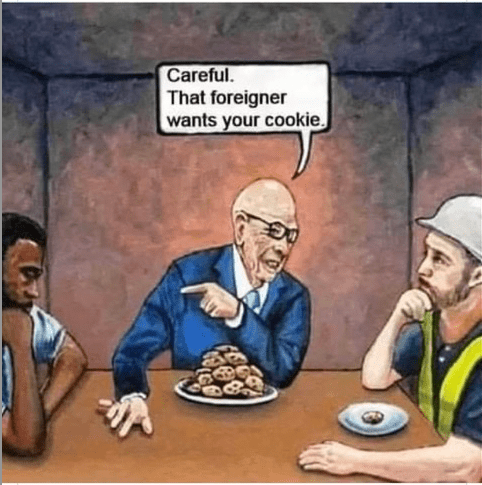
Of course, those who have struggled to overcome many obstacles to make it to the university level (and a better life) see fairness in a whole different light. Should an applicant who has been to the finest private secondary schools and been exposed to the rich cultural opportunities available to the wealthy be judged by the same standards as one who dodged gang bangers and crack heads daily to get to his run down high school? Is that fair? Equity is a matter of interpretation, not an absolute. Yet, such differences in viewpoint are the flashpoints of discontent. I can remember my first year in college, meeting students who were raised in placed like New York and who talked about the plays they had seen, the art museums they had visited, the lectures they had attended. I felt like the freaking country bumpkin.
If there is one thing that marks this generation of hate from earlier versions is social media. The fractal nature of communications makes it possible for all our numerous tribes and subgroups to communicate easily with one another. Donald Trump can issue a call to come to Washington and his message will travel through a dark web of communication lines to reach the far corners of the hate world including the Proud Bys and the Oath Keepers and the neo-Nazis and untold number of other splinter groups harboring some sort of festering wound. Inequality, or obvious differences in social and economic outcomes, is like pouring salt on open wounds. Jealousy boils over into something worse.
The SPLC reports that last year we had some 702 identifiable Anti-government groups and 523 Hate groups in America. While still astounding, that number has declined a bit from the previous year, perhaps a fallout from the arrests and prosecutions attendant to the January 6 insurrection. Many of the hate groups are rather catholic in their targets (a dislike of many other groups) but some are focused on singular targets … anti-semites, anti-black, anti-LGBTQ+, anti-Muslim and so forth. There is no shortage of objects for our venom. My guess is that the number will rebound measurably in 2024 as the rhetoric of the next Presidential campaign heats up.
The ordinary tribal hates are just one way that we go at each other these days. I am most disturbed by efforts to perpetuate hate and misunderstanding across time. There are some extraordinary efforts taking place to ensure that this generation’s vitriol might be passed on to the next. Some 45 percent of school principals report an increase in parental involvement directed at controlling curricula, instructional materials, and basically what kids learn. Favorite targets are limiting what students learn about our racial past (about 50% of all incidents), about LGBTQ issues (48%), or are directed toward banning access to books and educational materials that a few find objectional even though some of these works are seen as literary classics (33%).
Before ending, let me pause on one specific issue that is both emblematic and fundamental to our current cultural wars. Is America a secular state with no established religion but which permits freedom of worship or are we a Christian nation to be shaped according to those particular set of beliefs. There are all kinds of spin-offs to this question. Thus, how one responds is a proxy for the core norms that tend to separate us. I am reminded of one local Republican politician who has argued that public libraries should be replaced by church-sponsored alternatives. OMG!
Below are some survey responses to this issue:
Belief in the Separation Belief that America
of Church and State is a Christian Nation.
All adults ……………… 61 % 28 %
Democrats …………… 67 27
Republicans ………… 46 44
Independent ………. 65 24
Whites ……………….. 64 27
Blacks ………………… 53 28
Latino ……………….. 57 32
A 28 percent response affirming that we are a Christian nation may not seem alarming. But I suspect it is a low figure with some choosing what they consider a socially desired response. If the true number is closer to 33 to 35 percent, that would correspond to what the Nazis got in the elections just before Hitler was appointed Chancellor. All you need is a core of true believers to reek great havoc under the right (or should I say wrong) circumstances.
Lincoln’s assertion that ‘a house divided cannot stand’ remains true today. We have kept it together through conflict and sometimes at the point of federal guns. But when a contry is abysmally divided and full of hate, its prospects over the long haul are not exactly bright. It has been almost 160 years since we had a bloody conflict costing some 600,000 to 700,000 lives to force the country together into an uneasy union.
And yet, more than 40 percent of Americans feel that another civil war will take place in the next decade. Is it time to consider the dark reality that our promised melting pot might never work?
 Tom's Musings
4 responses to “The Unmelted ‘Melting Pot’”
ironically, in a number of John Wayne western movies, where he is the sheriff or town marshal, he has his deputy take away the guns of visiting cowboys at the town line…
LikeLike
Western cow towns often had lower homicide rates than Eastern cities for precisely this reason. They did not permit guns within town limits. We are regressing, not progressing.
LikeLike
Damn, but you’re a good read. Makes no difference we are at odds on so many points.
LikeLike
Thank you. You also are a great read which is why I can forgive your errors of judgment ..
LOL 😆.
LikeLike