Several days ago, I started writing about what I call the cultural divide without really defining what was on my mind. So, let me start today’s offering by remedying that omission, at least in some small way.
I was all over the map as an academic, which made me a poor scholar but a pretty good policy wonk. It turns out that, in my wanderings as a faux academic, I did focus on the concept of culture in the latter part of my career. I mostly was concerned with what I termed institutional culture, the way that organizations form their goals, determine appropriate behaviors for their members, and shape the perceptions and dispositions of those members. Trust me, organizations have distinct cultures.
What initially drove that interest was a desire on my part to shift human service systems away from narrow and siloed perspectives toward more comprehensive and (hopefully) coherent intervention strategies. After all, social challenges such as poverty are not unidimensional in character and cannot be resolved by simplistic silver bullets.
Driven by this rather obvious (to me), but oft overlooked, insight, I and my colleagues helped develop the first integrated welfare-work agency (Kenosha, Wisconsin) in the late 1980s, which became a model for the nation and even oversees. In doing so, it was apparent that the impediments to integrated systems were less structural and legal. The real hurdles were more in how distinct institutional cultures impeded real collaboration when separate programs and agency staff were brought together and expected to collaborate.
Of course, there are many cultures to which one is, or can be, exposed. First, we are raised in a specific culture. I was immersed in a Catholic, ethnic, working class environment early on. We often are exposed to a different culture as we break away from childhood, especially in college. Then we are newly acculturated (or prior ones are reinforced) during our professional training and then again when we accept a position in a firm or organization. Then there may be other influential cultural forces in our neighborhoods and among acquaintances.
Most of my academic colleagues were shaped by very similar experiences and forces over time. Many were raised in households where their parents were academics, then went straight on to school and graduate training where the coda of science was ingrained in them. Finally, they segued into a research university, if lucky, where the rules remained the same as they had been throughout their lives to that point. Consistent cultural experiences can blind one in an inflexible normative and experiential bubble.
You can spot a lifelong member of the academy a mile off. Given a choice of curing cancer or getting one more publication in a top peer reviewed journal that will be read by a few hundred others who think just like them, they will choose the latter without a moments hesitation. That is what their whole life trained them to worship and what their institutional culture rewards. Getting that next journal piece out trumos all else, certainly teaching. (Note: Want your kid to get a good education, send them to a school that considers teaching important, not to a school where it is a grudging institutional function at best.)
Some of the more rebellious types, like me, do not stay within a single cultural straitjacket and bounce around where whims and exciting opportunities take us. I feel that makes us more like wanderers through life. This has its costs but also makes us more insightful and better lateral thinkers. Of course, that might just be me rationalizing my professional life, such as it was.
I was a wanderer. If I had been a real academic, I would have focused on one or two narrow questions and cranked out several dozen articles looking at those narrow issues from every possible angle. There is a reason that every research article ends with the phrase … we need more research. It has nothing to do with science and everything to do with the currency of the academy, pumping out a high quantity of publishable technical work.
I, on the other hand, crafted a professional life where I was positioned in a research university but spent a great deal of time in the real world. That meant I had to go back and forth between radically separate cultures. Most of my colleagues would have been paralyzed by this. But I thrived in the chaos. Even now, I cannot escape thinking that my colleagues missed so much by only getting their input from ‘the literature’ and from their cloistered colleagues. There is a whole world out there to be explored and lessons to be extracted.
Developing a cultural adaptability and some capacity for nuanced thinking helped me in another way. I could see things from diverse perspectives and appreciate where others were. Therefore, while I came out of my youth as a starry eyed leftist and socialist of sorts, I soon saw a bigger picture. As I got deeper into impossible issues like welfare reform at the state and national levels, it was encumbent to work with people who did not agree with me, as wrong-headed as they were :-). That was the nature of the beast. Advocates could afford to be self-righteous, but policy wonks needed to be more flexible. You might try reading my profesional memoir titled A Wayward Academic: Reflections from the policy trenches.

Now, the issues in which I was engaged were not for the faint of heart. Welfare was a huge issue back then, it was considered the ‘Mideast of domestic policy.’ People dug in and normative conflict was a daily affair. I was contacted by media on a weekly basis (at least) and always tried to give objective, neutral facts and unbiased opinions. That confused the crap out of them because reporters were used to getting ideological rants. I, however, always tried to play the academic role. My preference was not to persuade but to enlighten. With my students, it was the same. Conservative students loved me (there were a few but not many) because I focused on how to think about complex issues and not what to think about them.
One of my better articles was called Child Poverty: Progress or Paralysis (I’ve mentioned this before when talking about my famous onion metaphor). I mention it again since it represented a major theme of my professional work … to seek out arenas where I thought people might agree even where extant normative dissension seemed beyond repair. Again, the genius of this piece was to lay out a diverse set of approaches to reform, from very liberal to very conservative, and show that they were complementary and not competing strategies. All I can say is that the piece was amazingly popular.
But here is the thing. Back in my day, many conservatives who cared about poverty issues remained attached to the real world. They liked data and evidence even if such might come to different conclusions. Believe it or not, we could have reasonable discussions about things. I will mention Ron Haskins whom I met during my year in D.C. which, in fact, took place right after the release of my Child Poverty article. Ron loved it and sought me out. He was widely considered THE Republican staff expert in Congress on poverty and welfare issues. At the same time, he was rational and evidence driven. We hit it off immediately and sparred on and off for the next couple of decades.
BUT, in the 1990s, the political world was changing. Newt Gingrich was putting the final nails in the coffin of sensible government. In the future, it was all about power and winning, not doing what was right. I remember Ron at a conference with mostly eggheads. He was asked what role evidence and data played in making policy (this was mid to late 1990s after the cultural divide in politics was rapidly hardening). Without pause, he said maybe 5 percent, possibly 10 percent on the upside. He told the assembled academics that it now was all about power and values … ideology told you what to believe and power enabled you to get it done no matter how much sense it made.
He was the ultimate insider and should know. Then again, he left the Hill around this time, perhaps seeing what was happening. He took a position with the prestigious Brookings Institute. Later, he would lament that his party ‘had lost their way.’
I think back to Tommy Thompson, a lifelong Republican who served as Wisconsin Governor, Secretary of HHS under George W. Bush, and even President of the University of Wisconsin system late in his career. While he had some suspicions about me (once yelling at me in a public forum in Chicago), he was a old school Republican with whom one could work if they tried. He wasn’t the slash and burn conservative that dominates the party today. He cared about the programs and clients being served even as he fought hard to make recipients more responsible and accountable. He loved the University and was light years from Today’s Republicans who attack the Madison campus just to make cheap points with rural voters even as such attacks cripple the state’s economic engine. Retribution against ‘woke’ liberals is all that counts among today’s so-called conservative leaders.
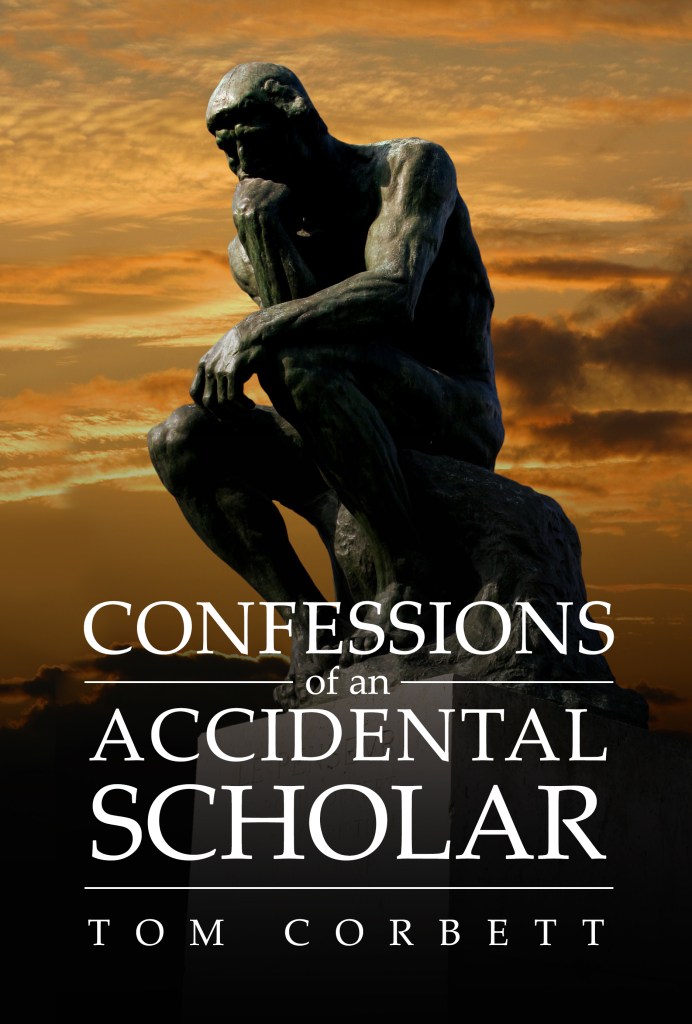
In Accidental Scholar (see above), I summarize a lot of my thinking on various topics though I’m thinking of updating this work later in the year. Most of the material contained here comes from an earlier period when reason and evidence yet played a substantive role in the doing of policy, a least more than the ‘point scoring’ role or ‘owning the libs’ role found in recent policy debates. It was a golden age for people like me who seek reasonable solutions to very difficult problems.
Well, that was a cook’s tour of a long and comlicated story. The bottom line … the essential ingredients to what made government work, even with varying norms, has slowly eroded over time and has disappeared almost totally in the past two decades or so. Without reason and evidence, all we have is passion and fury and revenge. Now we are on the precipice of losing our status as a ‘nation of laws’ and as a government guided by established constitutional principles.
All this is a long way from the golden years when I could sit down with those of differeing views, a Ron Haskins for example, and talk things through. How I miss those days. And, given the stakes involved, how desperately we need to rediscover them.



2 responses to “The Cultural Divide (Part 2)!”
I know it’s fun to be creative with judgemental phrases like “…final nails in the coffin…” and “…slash and burn…” when characterizing non-liberals. At least be mindful to snicker when next a loco conservative tosses undocumented inflammatory descriptions of liberal policies and gaffs. These devices are pretty prose, but hardly empirically grand arguments. And recognize that some of the ka-ka tossed into the air might get caught in a stray wind [“…ideology told you what to believe and power enabled you to get it done no matter how much sense it made.”] and get caught in your whiskers. And “law and order” innuendos? Be reminded which ideology holds the torch but encourages inane [I must apologize, that is judgmental and inflammatory – see how easy it is?] actions such as defunding police, not working to curtail illegal immigration, and not prosecuting graft and corruption without respect to politics for starters.
[Snicker.] I’m taken aback by characterization of academics as more interested in playing at academia instead of actually working toward solutions. I hope an old geezer from your former institutional days looks you up, buys you a beer, and thumps you ion the noggin.
LikeLike
Hah, my old colleagues know where I stand. I’m not shy. They still like me, go figure. And ‘defund the police.’ Stupidest catch line ever! But the conservative campaign against immigration is less about illegality than keeping America in the hands of white nationalist. In a different era, they would have fought like hell to keep my ancestors put. My point was not to attack conservatives but to show how far the Republican Party has drifted to the extreme right. This is THE view shared by everyone who is longer part of the cult, including most former Republicans I knew (and loved).
LikeLike