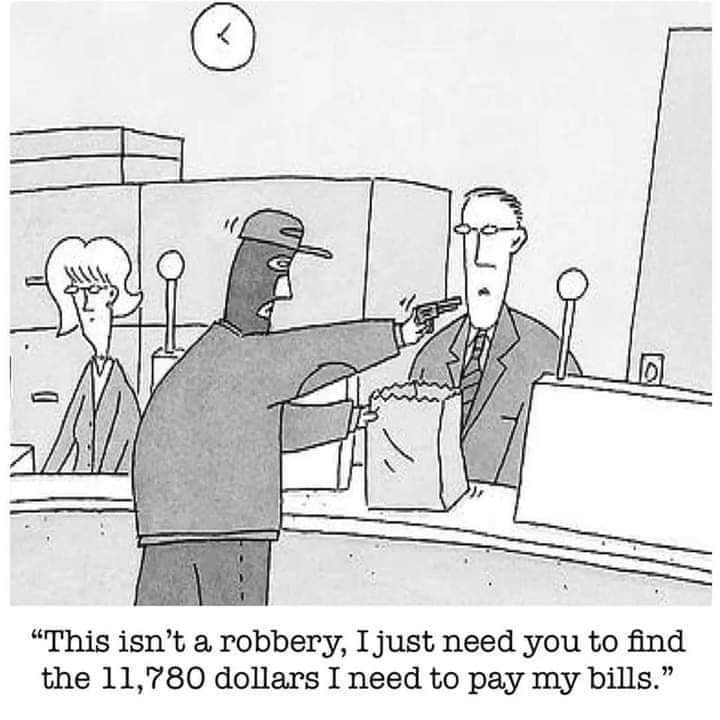
So, I was perusing a piece in the Washington Post that reported out on a large survey of American workers who could work at home, the so-called remote-capable workers. It turns out that 60 percent fully worked on site before the pandemic, a proportion that fell to 22 percent after the plague was over. That’s probably a good thing since only 6 percent of these workers would prefer to work in the office all the time. I’m guessing those respondents probably have bratty kids at home or a spouse of questionable temperment.
As the researchers probed a bit deeper, they uncovered some interesting findings. A full 69 percent of the survey takers agreed that working in the office helped them connect better with their peers while slightly more than half (54 percent) felt that on-site work facilitated collaboration. This strikes me as critical arguments for spending some time in the office though that would depend greatly on the nature of the jobs. For me, as someone who finds other people highly overrated, human contact is not much of a draw. However one slices it, the trend toward remote work was greatly assisted by the pandemic.
This reminds me of one of my many adventures in life which was to be part of a Union bargaining team during some tense negotiations. This happened when I was a Wisconsin State employee in the early 1970s and this was the first contract to be worked out in this manner since legislation had been passed to permit more or less full negotiations over compensation and the conditions of employment. I worked as a research analyst at the time. Somehow, and I really cannot recall how this happened, I became the head of the Research Analyst and Statistician bargaining team or just Analysts for short.
We were one of five such teams, the smallest and the least powerful group as opposed to some of the others like the State Police, Public Safety, and Prison Guards. If we nerds went on strike, who would care. I can envision it now … ‘cave to our demands or we’ll march on the capitol armed with our pocket calculators.’ Admittedly, it was a great personal experience with tough negotiations that went on months even after the existing contracts had lapsed. Unfortunately, I left my position to take an opportunity at the University just before it all came to a close.
But I raise this episode in my so-called career for a specific reason. One of the ‘demands’ repeatedly raised by members of my unit was the desire to be treated as ‘real professionals.’ That included the ability to work from home when it was appropriate and, of course, that the work actually got done. I hit a brick wall with that one, not only with the State negotiators but with the heads of the other bargaining units on my own negotiating team. The other bargaining units were focused on traditional issues like pay, benefits, traditional work rules, and maintaining the advantages of seniority in job security. Whenever I brought up issues like being treated as real professionals or having more control over how we did our work, some beefy prison guard would pat me on the head and tell me to go sit in the corner and shut up. They did not want the peculiar wants of the nerds complicating negotiations over real isues. It was concept before its time.
In any case, I paid much attention when this study of contemporary workers moved on to the issue of job satisfaction. Obviously, back then, the research analysts and the rest of the state workers were not on the same page. Satisfaction was rooted in distinctly separate dimensions of one’s work experience. Even without comparable data from my era, what would we find today? In this study, roughly four out of five respondents expressed satisfaction with their jobs though slightly more than half felt definite stress in their work.
In my state employment world of five decades ago, I recall considerable stress (we were in a period of considerable innovation) but most were happy and energized in their work unlike, as I understand it, the more recent mood of state civil servants which is downbeat after years of Republican control in the State. This suggests that some workers today (outside of state employment at least) are finding positions that generally are meeting their needs even though about half are experiencing stress through their work. Just what might some of those employment needs be?
When asked what was important in their job, compensation or pay was at the top of the list with job benefits close behind in the ranking of factors. The first non-monetary attribute receiving a high rank is having a good boss, which ranked in the top three. Then you fall all the way to 6th position to find any other social or interactional factor. There, the friendliness of coworkers is sited, followed by the prospects for advancement in 7th. Finally, in 8th place, respondents mentioned the perceived benefits to society. The focus on compensation also dominated the reasons for switching jobs with higher pay being the most important factor followed by dislike for their old position and then a search for a more interesting job.
There’s probably nothing earth shaking in these findings. Yet, they raised some thought in my febrile brain. The focus on pay is consistent with results from more general questions of what is important to people. When I was coming of age in the 1960s, the attitudinal surveys of that era, when focused on the young, found establishing a sound philososphy of life or finding meaning in life relatively more important that materialistic goals. That finding has been fully reversed over time.
I doubt this reversal can be attributed to the fact that we have suddenly become obsessed with shiny baubles and hedonistic lifestyles, though such have always had their attractions. I suspect that today, young people see a higher and steeper mountain to climb before them. As income and wealth inequality has grown, achieving even the vaunted so-called American Dream is now more of an acquisitional nightmare. In many markets, the home of one’s own with a white picket fence and a secure job with a pension to support your family is more mirage than reality. Fewer now can focus on the content and conditions of their professional lives as opposed to how much it will pay simply to keep their heads above water.
My own life’s experiences are instructive here. As I have stressed in other posts, I seldom worried about what I would do in life after I reached my teens. True, I constrained certain choices to maximize my life options … like deciding not to have children and minimizing any interest in material possessions. Still, I and most of my own peers felt we would always find our place in society. We often took courses that interested us and not because they would lead to a well-paying job. I chose a major because it was the strongest at my school and promised insights into the human condition, not because it promised future riches. I sought out jobs in my youth that seemed to offer work of significance (hospital work and work with troubled kids) and not merely for money or how these positions would look on a college application or a future resume. And we spent countless hours discussing the issues of our day and how to make the world a better place, not trading tips on how to dress for success or in seeking future contacts for a hoped for rise to the top.
As I went through life, how much I made was always less important than what I was doing. Whereas doing something of ‘benefit to society’ was buried well down the list of meaningful job attributes for today’s workers, it was very high on my list and on the lists of many of my peers. During my working life, I suspect it would have been second on my ranking, right after ‘doing something that interests me.’ Whether or not the work was challenging, and stimulating, and absorbing was always what drew me in and kept me going. That was true in my early civil service work where my colleagues and I did some groundbreaking stuff in the management of human service programs and in my university work where I had the pleasure of engaging in so many of society’s most difficult challenges (e.g., welfare reform). I revelled in being a ‘player,’ one who had the opportunity to take on whatever issue or puzzle attracted my admittedly short-term attention span. It was fun and stimulating which is what counted above all else in my book.
Now, there was a cost to this approach. I never did the things that would ensure my rise in academia and, as a result, never made much money. Even as Associate and Acting Director of a university-based research entity, I was likely the lowest paid academic affiliate in that nationally renowned Institute (which included faculty from leading universities from around the country). Without going into detail here, making more money would have required that I do stuff that academics prized but which I found narrow and provincial. It was more important to me that my position, at least as perceived by the outside world, opened all the doors to me that I needed. Once in, I was always able to fool people (whether in D.C., in state governments, and even among academics) into believing I knew what was talking about. Thus, I was continuously invited to give talks, to consult on public issues, to be at the table when the direction of policies were being debated, and to share my ‘expertise’ with fellow academics. However, while I wrote tons of reports, policy papers, book chapters and the like, I seldom wrote for peer reviewed journals which I felt constained creativity into siloed straight jackets and were targeted at an audience that did not necessarily interest me.
Being a respected policy wonk while pretending to be an academic (necessary to give me maximum flexibility and allowing me to teach) was perfect in most respects. It afforded me national credibility even if (as I already mentioned) it never paid well. In the end, the low relative pay never bothered me. Perhaps being married to a woman who made more than me (and didn’t care how much I made) helped a lot, as did my (our) early decision to forego offspring which would have changed things. We were comfortable, and that’s the important thing. We enjoyed our work and we shared common values. She also was more interested in the substance of the work she was doing and much less than the pay though her high position in the judiciary ensured she did okay. However, when she saw the Wisconsin Court system going into a kind of partisan death spiral by the beginning of this century, she retired early rather than participate in the death throes of impartial and objective justice. Yes, there was an economic cost to that decision but I agreed with her totally. Don’t do it just for a somewhat better retirement package.
Economists know that the marginal utility of each extra dollar earned has value up to a point when basic needs are satisfied. Based upon numerous survey data, that kink point can be identified and is usually located somewhere above (though not far above) the median income figure for a locale. After that, each additional dollar acquired has less value which continuously diminishes as you climb the income ladder. As one wealthy venture capitalist once argued, what can people do with all this money his rich peers were seeking? You can only eat so much food. A nice digital watch tells time just as well as a Rolex. You can only drive one car at a time, etc. The acquisition of more and more becomes merely a game of one-upmanship among a few of the elite. As one of those elite once procalimed, ‘money is how we keep score.’ But, in the end, it really is a game and one with awful consquences for so many others.
Bottom line, we both were happy with ‘what’ we were doing, not ‘how much’ we were making. I recall once being asked to fly to Canada to consult on some human service design issues in Toronto. I was doing a lot of that (not something valued in the academy). My close colleague at the time (she now works directly with the University Chancellor) asked me on this occasion why I never asked for compensation for such excursions, perhaps a stipend of some sort from whomever made the invite. Most of my colleagues probably would.
But these were public entities which I thought were always short of resources. Thus, asking them to kick in never crossed my mind. After all, I already was being paid (not a lot but enough) for whatever I did through the university so I was happy. I also raised a whole lot of money from outside grants to support my project and consulting work. Therefore, some things I did (like teaching policy courses) were more add-ons than necessary tasks. I wound up banking money for the future since I could not draw it down in salary due to university rules.
Thus, I wound up being way over stretched. In addition to my research and project work, I felt an obligation to help run the Insitute, to teach students, and to give talks to policy and academic audiences around the country. These functions were important to me even if it required I get up at 4:30 or 5:00 each morning and get to the university when it was still a ghost town. I could not pass up the opportunity to share what little I knew with others and perhaps making a difference down the road. I suppose that nothing had changed since I was a kid trying to figure things out and discussing how to create a better world with my college friends, except now people were listening to me … often a frightening prospect.
Let me end this with one thought. I am NOT anyone special. Many of us came of age in a different world which had different opportunity sets and distinct dominant concerns. My spouse and I were simply fortunate to be able to live according to values that were more prominent than they are now, ones that I still revere. But I know that the young today face different constraint sets and confront severely altered and enhanced pressures. If I were young today, I might respond very differently to an uncertain and hostile future. It seems more of a future based on a Darwinian struggle, a dog-eat-dog world. That is sad.
I am SOOOO glad I am an old fart.
PS: For more detail, check my professional memoir … A Wayward Academic: Reflections from the policy trenches.
 Tom's Musings
One response to “Work … a four letter word or not.”
Much more positive than pre walk days
LikeLike