Back in pre-historical times, before the internet and smart phones, I still had dreams and, incredibly, values. I even went to church as a kid. Surprisingly, I took it all that spiritual instruction seriously while absorbing the lessons that most others seemed to miss. You know, love thy neighbor and not just cute Suzy the next block over but those who don’t look like you and those who need help. You might remember those lessons, Christ’s message that others, like Evangelicals, conveniently over look.
So, I tried the Catholic Seminary for a while until I realized you had to believe in God to be a priest before doing other do-gooder stuff like working in a hospital and with poor kids in a rough neighborhood while working my way through college. And what does a Psych major with such delusions of sainthood do after they hand him his BA degree? He joins the Peace Corps. What else?
Peace Corps was big back in the 1965 when I applied. The program was still in its so called ‘wild west’ days when huge numbers applied, only a few were chosen, and fewer still survived the long training and arduous placements. I actually chose India, what I later found to be one of the program’s tougher sites. I also thought I had signed on for a rural Public Health program, spurred on by my vast experience emptying bed pans on the 11-7 shift at a Catholic Hospital while I slept through my classes during the daylight hours. I had visions of being the next Albert Schweitzer. I doubt I was very swift in those days, having tried a shot at Sainthood and then giving SDS (Stidents for a Democratic Society) a shot as I tried to stop the war in Vietnam.
Two surprising things happened. Peace Corps took me and I made it. However, instead of healing the sick, I was first assigned to a poultry program and later agriculture. Talk about a mismanaged and misguided effort. We were all urban kids with a rather large proportion from elite colleges … Berkeley, Yale, Columbia, and so forth. Farmers we were not, but we had some great discussions. It later struck me as a classic ‘bait and switch’ scheme.
One day, in 1967, I was dumped in a small town some 60 kilometers or so south of Udaipur, Rajasthan. Here is my abode for two years:
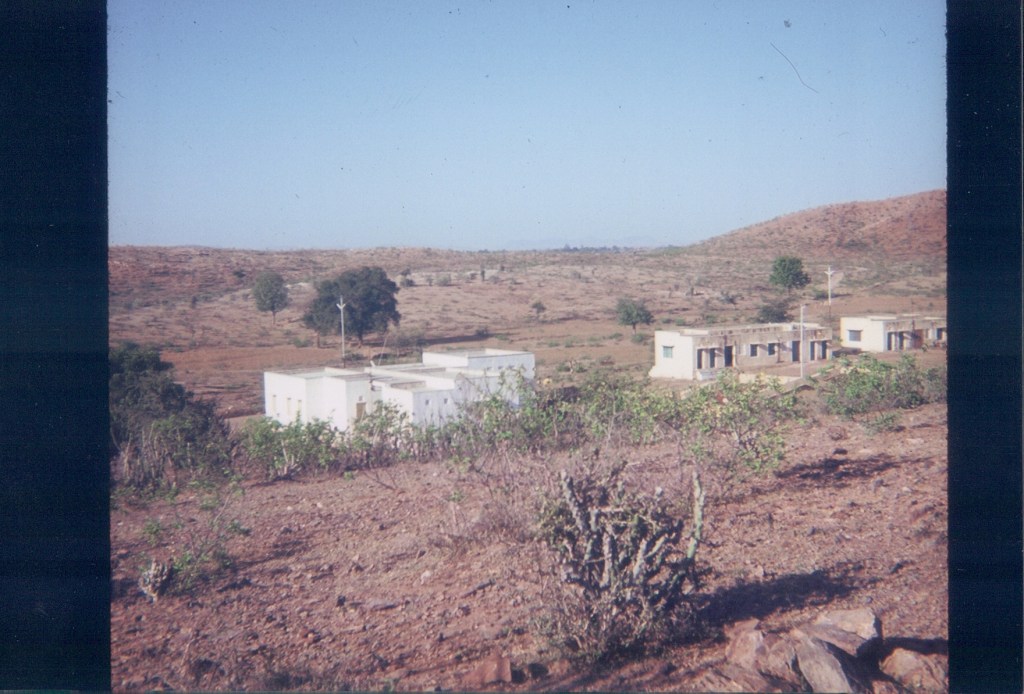
My home was the building on the far right. It was part of the government complex devoted to developing this backward part of a Province located on the Northwest border adjacent to Pakistan. While there were several accomomadations for goverment workers, they all lived in the town about a mile away. I shared my living quarter with scorpians and other unseemly creatures. I got some flip flops since I never wanted to insert my feet in real shoes, not knowing what surprize might await. I had no running water but I did get electricity after six months. I thought that luxurious indeed.
The real challenge is that we had no idea what we were doing. You can’t take city kids and turn them into ag experts with a little training. And we were isolated. No cell phones or internet or any means of communication. Making things worse, the Hindu culture was complex and rather rule bound … rigid actually. There was no bar to carouse with the locals and women were strictly off limits. This enforced chastity, though, was not that hard for me. After all, I had grown up with Catholic girls. Still, the relentles heat, isolation, and lack of any obvious purpose in the desert tested us all. Crapping in a hole in the floor with no toilet paper added to the charm of the place.
But some of us perservered. From about a hundred of us excited kids on day one of training, about two dozen of us were left standing at the end. Many were asked to leave and more self-selected out. Below are the hopefuls on the first day of training and next are many of the male survivors (about a similar number of females that we trained with were in the Public Health program I wanted and served in a different Province) when we gathered some four decades after returning to the States.


When we gathered many decdes later, we shared our horror stories and laughed at our ineptness. And yet, we all tried. Though working in technical areas we knew little about, we were a bright bunch (the accomplishments of this group in life are quite amazing, with the exception of me that is). Let me amaze you with my achievments:

Ah yes, even before we made it to our villages, we cemented Indo-American relations through a series of basketball games with the local college kids. We beat them easily until we showed up for the final match and they brought in a bunch of ringers from the military or a local prison, we never found out which. No matter, they beat us in every way possible including in the score. A riot almost broke out but we were all friends in the end. Three of us joined the local Udaipur team in an ‘All India’ tournament in Jaipur. There, we found out they could play the game in othe rparts of the country. We were crushed.
Beyond that, there were gardening projects, poultry projects, and demonstration plots marketing new types of seed. I have no idea how much good all this did. I did become aware that there were two rumors about why we were there. Either, I was a CIA spy OR I was there to learn farming so I could become a farmer when I returned to the States. No one saw me as an expert. I do like to poimt out that India was importing grain when I arrived in 1967 and exporting grain when I left in 69. I hate to take all the credit but numbers don’t lie. LOL!
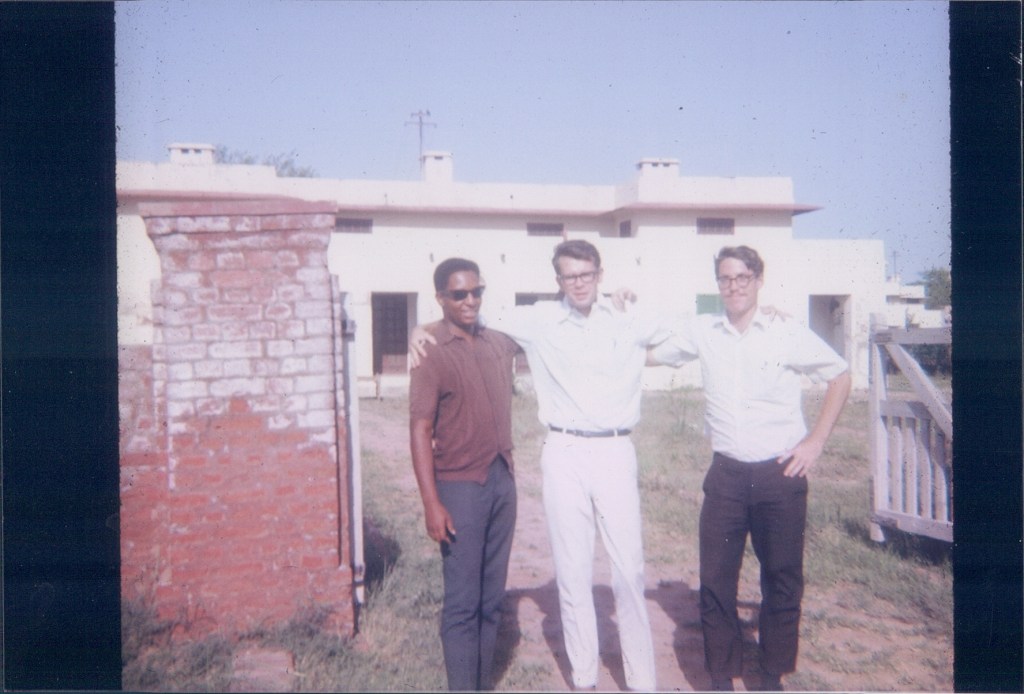
In the end, we got way more out of the experience than the natives. We formed friendships that would last a lifetime for one thing. In the foto below, I’m with Haywood on the left and Bill on the right. Haywood grew up dirt poor to a North Carolina sharecropper family. He credits peace Corps witjh inspiring him in his future life which included getting advanced degrees and securing a high postion in a national labor union. Bill, a Yale scholarshop student, went on to get an MBA from the Wharton School and a Ph.D. in economics from NYU. He did international banking before the lack of ethics in that field disillusioned him. He later worked for the U.S. Federal reserve System. Here, we are visiting the family of one of our language instructors in Delhi.
As we discussed our experiences during several gatherings over the past dozen years or so, one thing became clear. Our India experience changed us. I became more confident, though the imposter syndrome has stalked me through life. And I learned so much about the power and influence of culture and how to work with diverse people. Those lessons shaped my peronality and informed my approaches to the policy issues I struggled with in my career as an academic and policy wonk. I brought a unique approach to my labors which, I believe, came out of this experience. I am so thankful.
Perhaps there is some merit in making such experiences more available to our youth today. I realize you cannot replicate what we endured back then in the ‘primitive’ days of the Peace Corps experment. Still, exposing young people to starkly different cultures and getting them out of their familiar comfort zones cannot help but expand their view of the world.
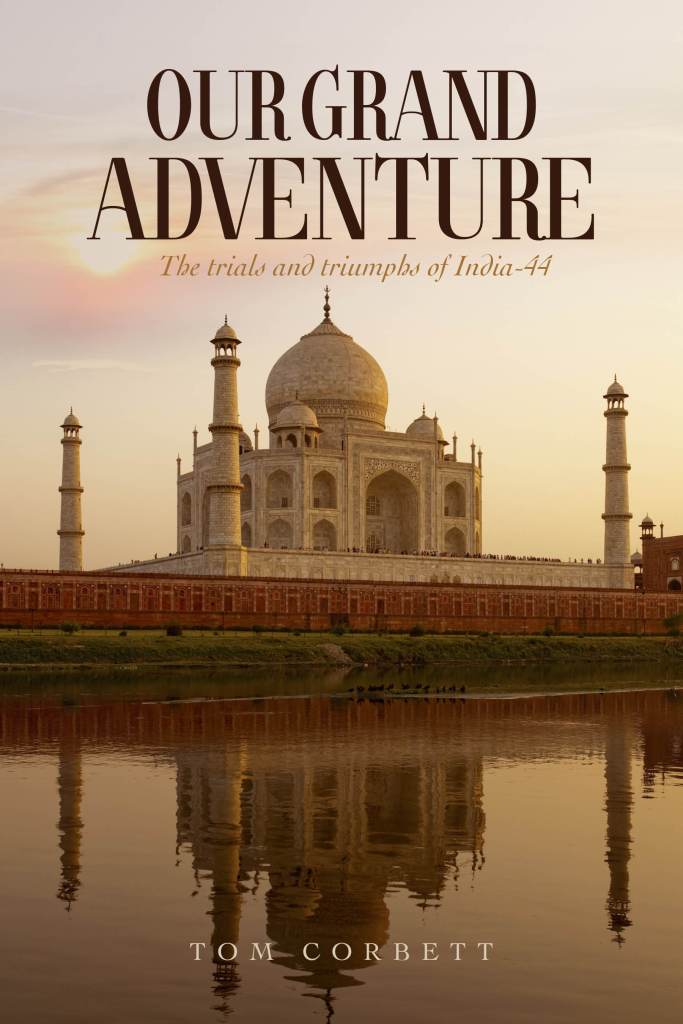
Obviously, this is a cook’s tour of an unforgettable period of my life. And being me, I’ve written a book about it, drawing upon the thoughts and writings of my fellow sufferers. It is witty, insightful, sad, and hopeful all at the same time. ‘It really was a good idea at the time.’
 Tom's Musings
2 responses to “Our Grand Adventure or It Seemed Like a Good Idea at the Time.”
I remember, as a kid in the 60’s, seeing commercials for the Peace Corps all the time. It was a great opportunity for all those young people eager to make a difference. Good for you, being a part of it.
LikeLike
Back then, it was considered the wild west days
the Peace Corps experience. It proved hard but life changing. You might check out Our Grand Experiment, which I wrote to capyure part of my group’s experience,
LikeLiked by 1 person