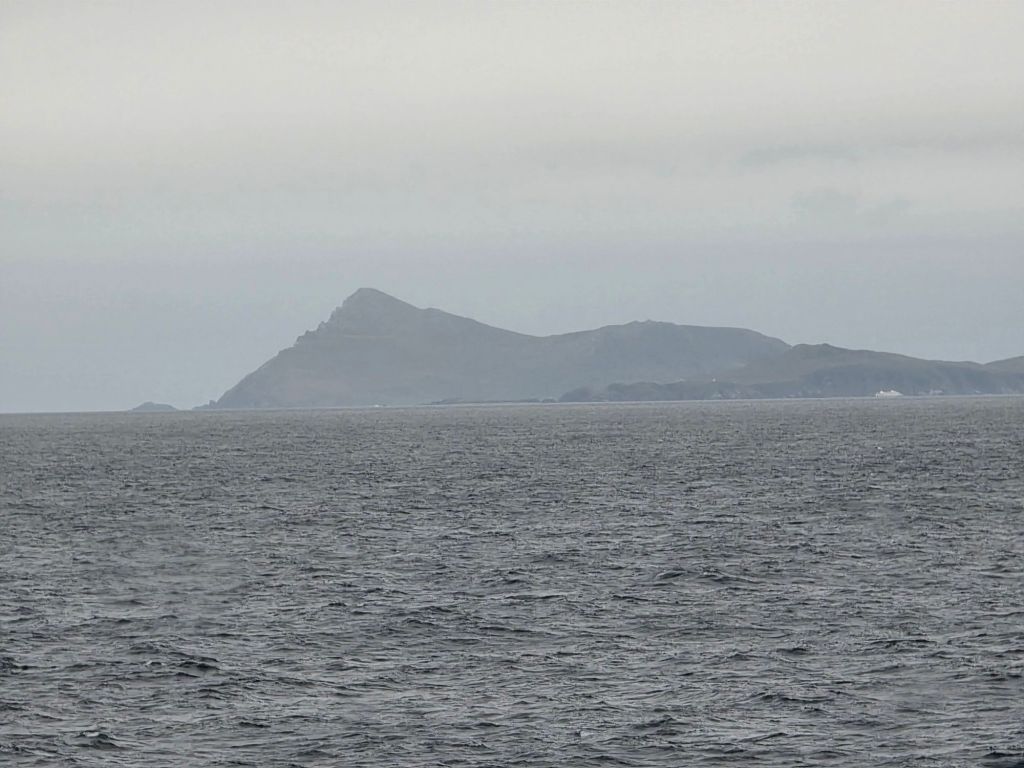
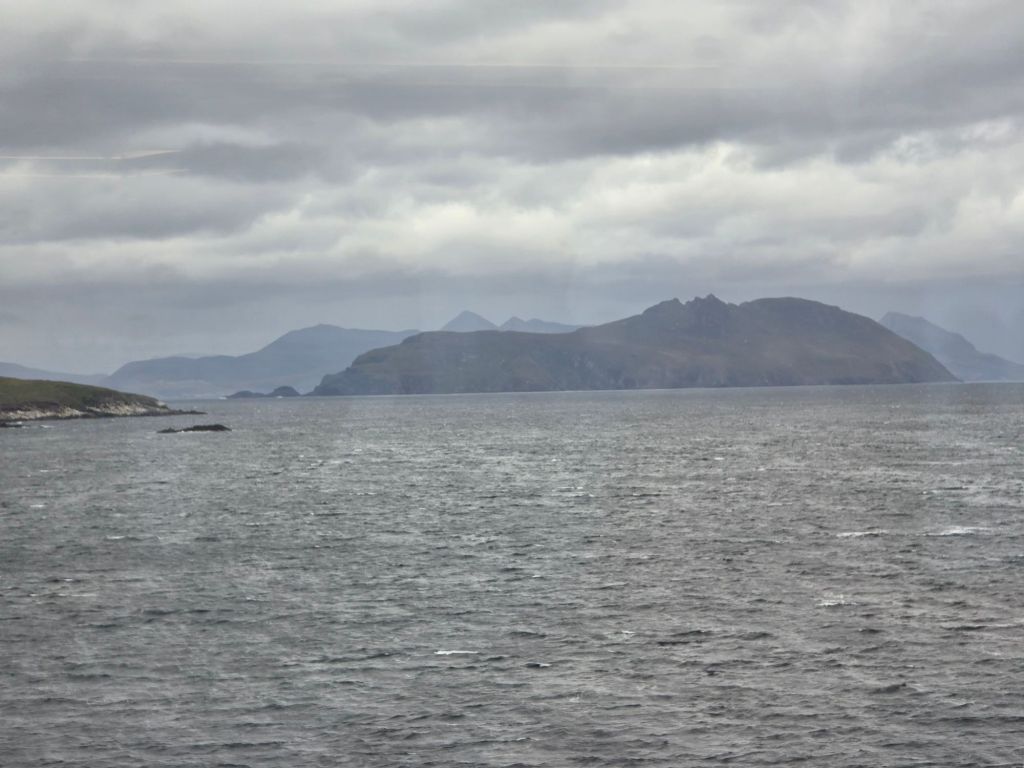
That is Cape Horn in the distance, the southernmost point of land until you reach the Antarctic continent. Having read many books about early explorers, those crazy mariners who would spend two or three years risking their lives on the high seas seeking gold and glory, my curiosity was aroused about this notorious place. So many adventurers died in these same treacherous waters whose unpredictable and even deadly seas ended their lofty aspirations. I oft asked what could motivate so many to risk their lives in such a fashion. The odds of success were not great.
Well, there was Sir Francis Drake of course. He came around the Horn, then surprised the Spanish before plundering a good amount of their gold and silver. He then circumvented the globe, returning to Queen Elizabeth 1st with much booty for her majesty. His personal take amounted to some 20,000 pounds or about $100 million in today’s currency. Most others were not as fortunate. Now, here I am though, alas, my fortune surely will be diminished, not enhanced, by the journey.
We are told the seas are calm today, an unusual condition. That was not the case around the Falkland Islands. On our approach to Stanley (the Capital) and on our exit, the seas were very turbulent. Getting around the ship, even making it to the bathroom, presented a challenge. During the night, the rolling, bumping, and banging was most disconcerting. In fact, I feared rolling off the bed on numerous occasions. I could just see explaining a broken bone or two from a fall off the commode 😞.
Based on comments made by our guest lecturers, it was touch and go whether or not we would land at Stanley. The odds were 50-50 at best. But the captain expertly negotiated the challenge and all went well. There was an additional concern that the tenders taking us to the pier might be problematic. But that went smoothly as well, nothing like a boat trip I recall on the north shore of Kuai where ocean swells kept pitching our craft totally out of the water. Now, that was a ride.
We learned that such problems were common occurrences when sailing in northern and southern waters. Many other tour vessels have been forced to entirely skip this port of call. On our trip to Iceland last year, two planned stops in Greenland were canceled at the last minute due to ice buildups in their harbors. Instead, they took us to Nuuk, the capital. At least that port was open.
One lecturer on this vessel shared that he was on one of the first Viking ships back in 2015, when the company was just starting their ocean cruises. His voyage began in Bergen Norway before heading out to the North Atlantic. He chuckled as he mentioned the horrific sounds of crashing during one stormy night. The next morning, he learned that some $64,000 worth of wine had been lost due to inadequate storage of this liquid of the gods. It was a steep learning curve for Viking. Now they have ships all over the world and expect to further expand their fleet dramatically over the next five years. They have got the drill down pat.
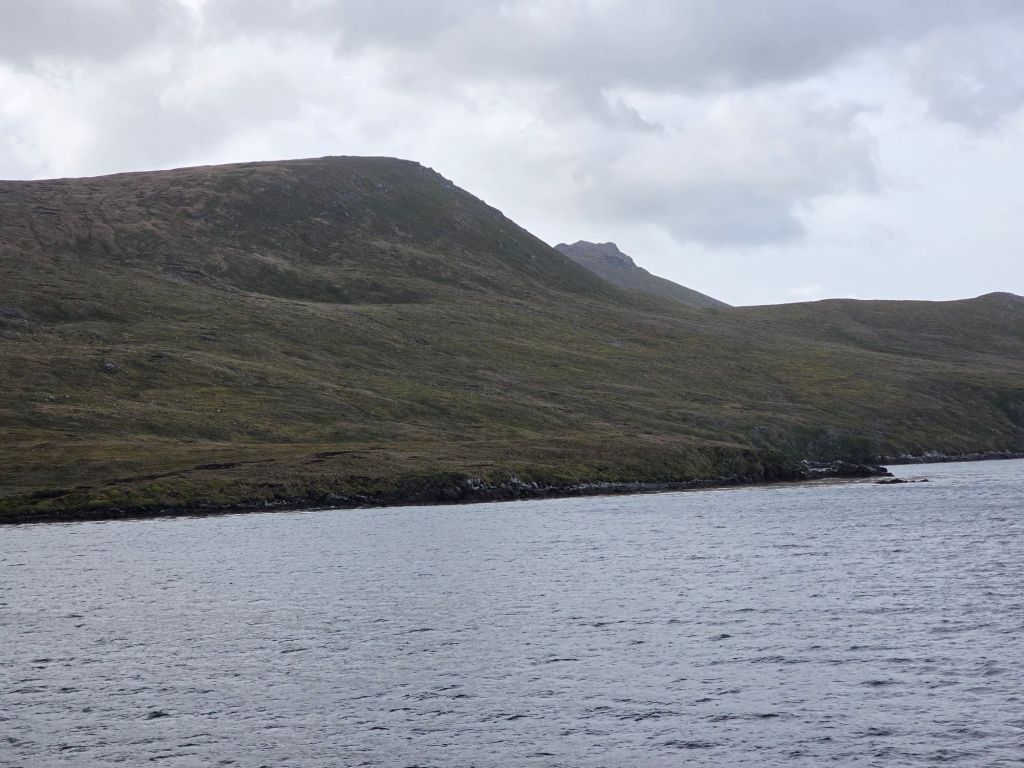
The straights of Magellan and Drake’s passage remain treacherous even for today’s powerful ships. We were informed that two Chilean pilots are on board. Their experience enables us to get closer to various land masses than many ships would risk. I’m happy they are aboard. Truth is that I would hate to become a news headline … boat filled with old farts sinks off Cape Horn.
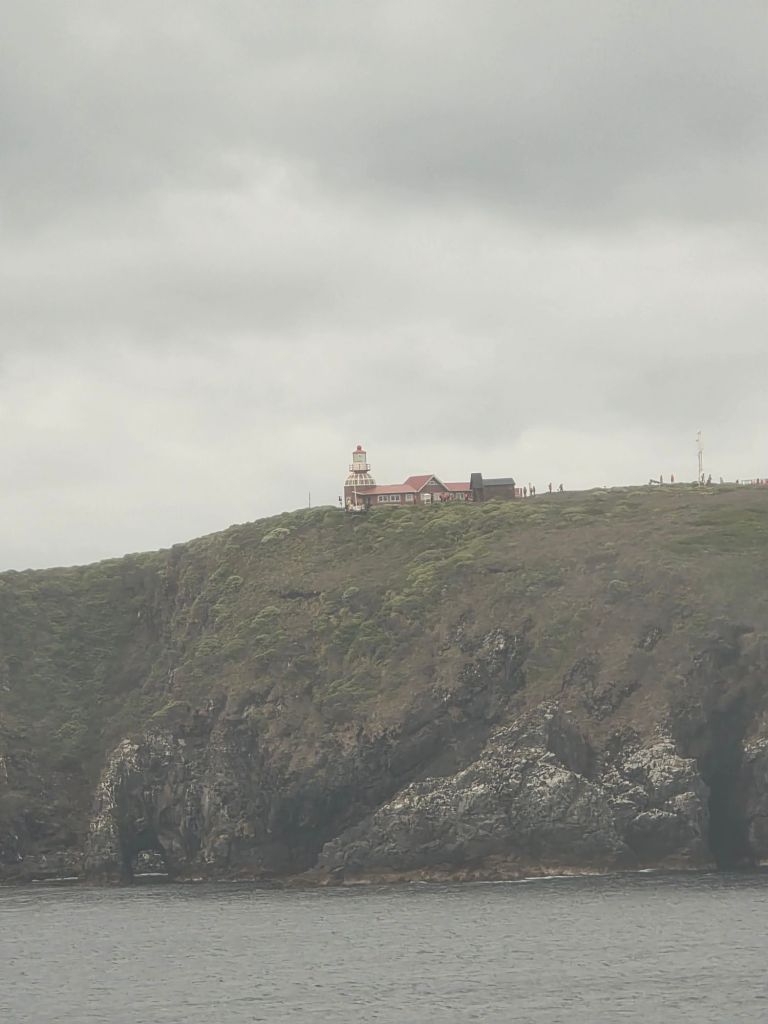
Above we have the southernmost home in the world (excepting Antarctica but that’s all ice so doesn’t count). The building you can see is a lighthouse and a home for the keeper. So what, you say! Thing is, a family volunteers to live there (for pay but in total isolation) for one full year. All supplies are periodically brought to them. The recent inhabitants (a couple with three kids and a cat) have liked it so much they just completed a three year tour. Wow, while I’m not a big fan of people, that kind of isolation eventually would wear down even a misanthrope like me.
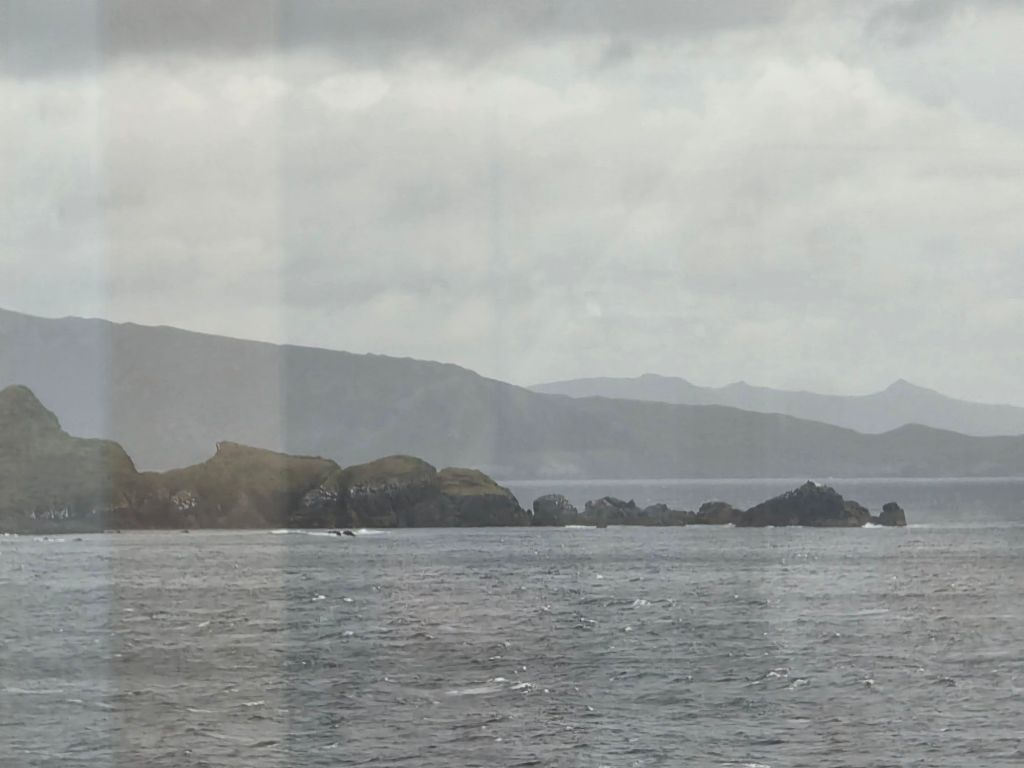
Above is the southernmost tip of the Americas and (as noted) all other land masses north of the Antarctic. Last year, when we sailed to the north of Iceland, we reached the Arctic circle. Now we are approaching the other end of our planet. Alas, the Antarctic Circle is still a number of miles south. But I’m happy.
I can’t help but think about my parent’s generation. They never traveled much of anywhere. Florida was an exotic land to them. Only WWII got two of my uncles overseas, one as a Marine in the Pacific and the other as a sailor in the Atlantic (I know he was part of D-day). But that was it. That generation saw so little of the world. We, on the other hand, are so fortunate. I have visited every U.S. state as well as 30-plus countries on four continents (five by next year). Just this past year Mary and I have been to the top of the civilized world and (today) to the bottom.
We will soon be winding our way back north through the islands and rocks that proved to be the watery graves of so many in the past. We are headed to Ushuaia, Argentina, the southernmost city in the world. After that, we reach Punta Arena, our first stop in Chile. From there we meander along the Chilean fiords which contain some spectacular glaciers. Well, a former neighbor of mine tells me they are spectacular 😀, and he always struck me as a straight shooter.
The adventure continues.
 Tom's Musings