Power without limits:
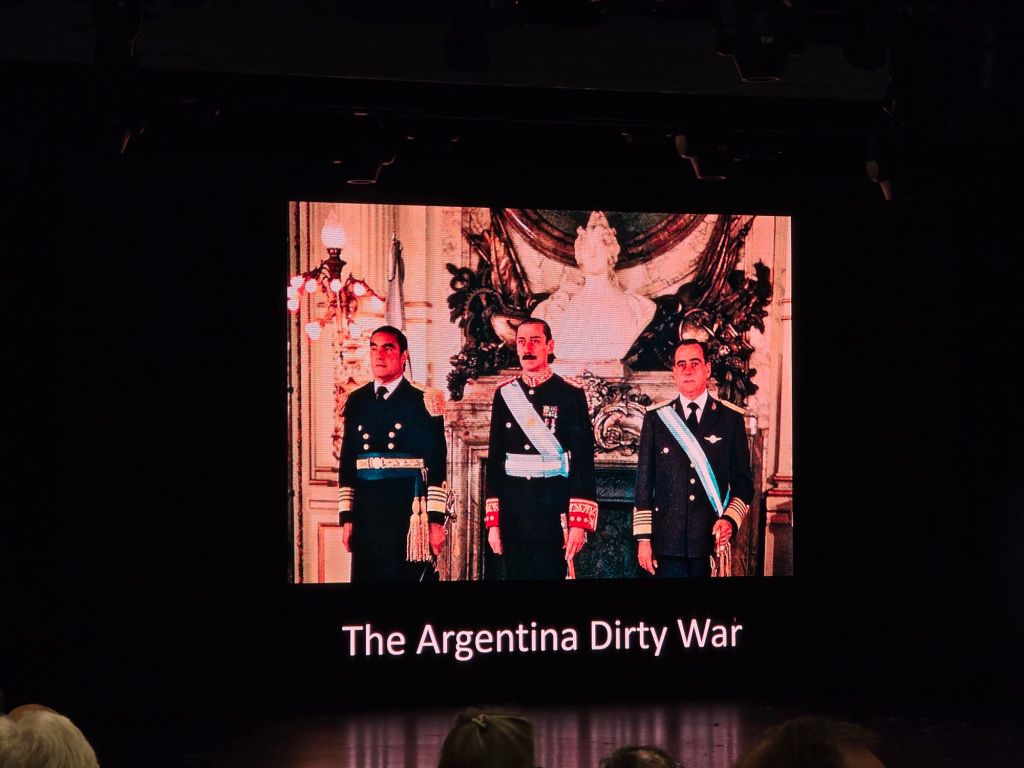
I started this when we were at sea, headed to the Falkland Islands … the Malvinas to the Argentinians. But more on that later. During our journey through rather rough seas, we attended a lecture on what is generally called Argentina’s Dirty War. This sad piece of history covers events that happened during the 1970s and 80s, but whose consequences remain with us today. More importantly, that piece of history may have relevant lessons for Trump’s America today.
Argentina, and other South American nations, had always been susceptible to military coups. What led to the coup of interest in this case was the sudden death of Juan Peron in the mid 1970s. His demise took place shortly after he had again been reelected as President after a period of absence from power (he was first elected in 1946).
Peron had appointed his 2nd wife (Isabel) as Vice President but she had little experience or support. The Military leadership (disenchanted with Peronism) saw their opportunity and pounced. They dismissed Parliament, the Supreme Court, and ruled by absolute decree. They also ruled by terror.
During their 8 year reign, they rounded up some 30,000 individuals. Virtually all of these unfortunates were never seen again. Many were tortured and shot. Others were drugged and dropped into the ocean. Imprisoned pregnant women were allowed to have their babies before being eliminated and the child given to a military family to raise.
One aspect of this sad story strikes a contemporary chord. Those deemed enemies of the Junta were picked off the streets, or from their homes and places of work, by men with no identification driving cars with no license plates. No warrants were obtained, no judicial review existed. These people just disappeared. Hmm, seems familiar to how ICE operates in America today.
These atrocities did not take place absent opposition, however. First, the mothers, later the grandmothers, would march each week on the center of government demanding information on their loved ones. This went on for years and years. As the Junta’s popularity decreased, the leaders became desperate. To rekindle support, they attacked the Malvines (the Falkland Islands under British control) in 1982. They thought the Brits wouldn’t care but failed to appreciate Margarate Thatcher’s iron will. It took the Brits about 74 days to oust the Argentinians but at a considerable cost of lives and treasure.
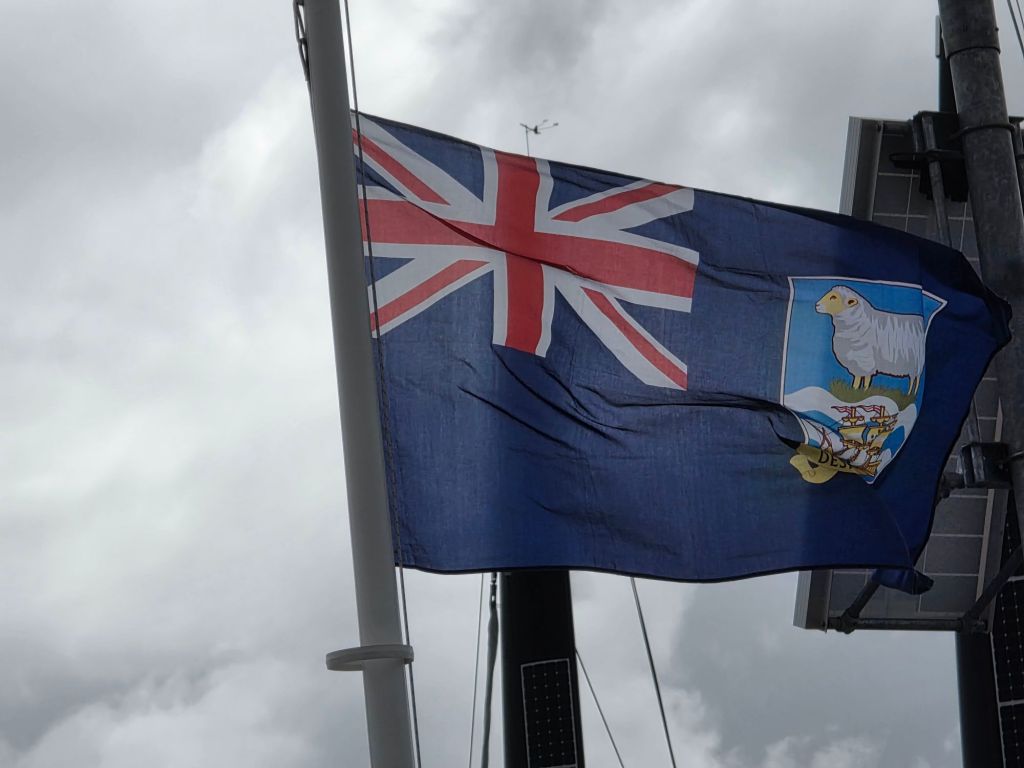
Still, there is an upbeat ending to all this. The Junta collapsed with their failed attack on the Falklands. Argentina, which had suffered from coups periodically in the past, has been a democracy ever since 1983. More importantly, for the first time in history, the military leaders were brought to account. After being tried, many of the Junta leaders were given life sentences. The process of trying those for their crimes stopped for a while, presumably due to fears of another military intervention.
That, fortunately, never happened. Rather, the trials of hundreds more who allegedly were guilty of heinous human rights violations have been carried out. Some were acquitted but over a thousand others eventually were convicted and sentenced. It would be wise for Donald Trump, and his minions, to remember this part of Argentina’s past. Karma does exist. One cannot act with total disregard for basic human rights and not fear some form of ultimate accountability.
It should also be recalled that American policy in that era supported many of these Juntas and military dictatorships not only here but throughout South America … Chile (and Pinochet) being another egregious example. This unforgivable policy (which began under Nixon and was reinforced under Reagan) was known as Operation Condor. Too bad those responsible for our own national sins in that sad era were never made to account for their sins against humanity.
A Land of Immigrants:
I have found one aspect of this journey particularly surprising. I thought of South America as being overwhelmingly Spanish or Portuguese (Brazil). But a wide range of immigrants have added to this continents culture. In Buenos Aires, Italians have profoundly impacted local culture and language. Locals told us that you should not come here to practice your Spanish. The local version has been corrupted, or enhanced if you will, by many Italian words and phrases. It is a dialect based on a fusion of two cultures.
And the food! Well, beef from their ranches remains a favorite of course. And empanadas are ubiquitous. Still, one can hardly go a block without seeing a pizza and pasta joint. Germans and Irish have also exercised considerable input into local customs and culture.
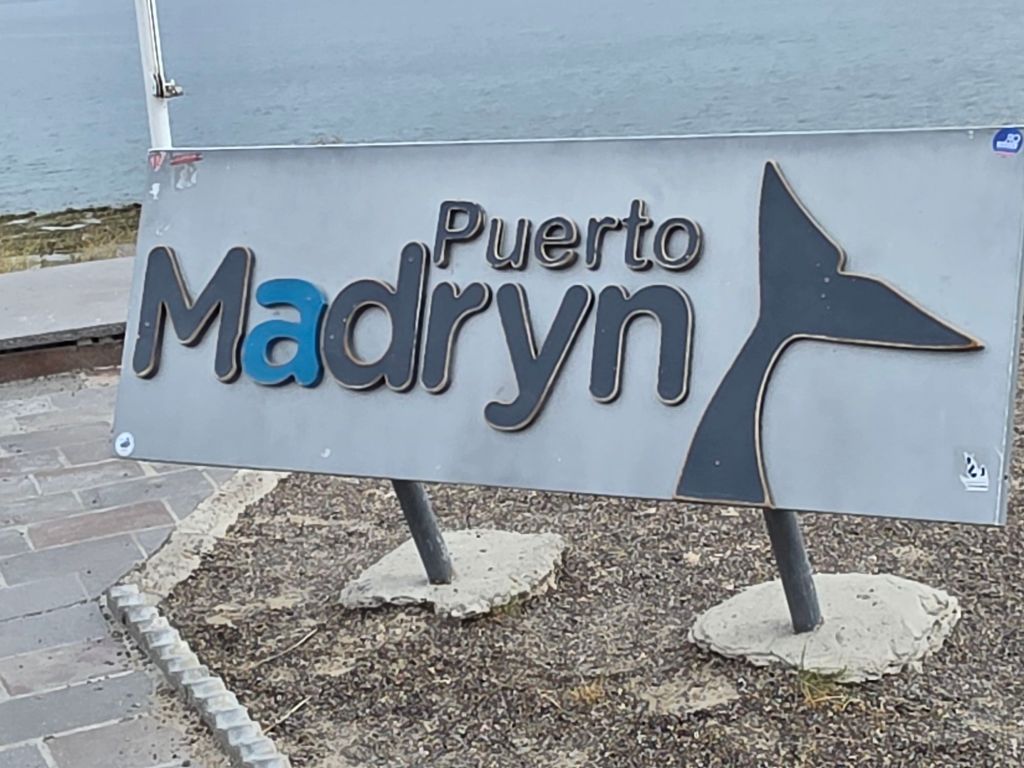
Here is another example. We stopped in the port of Puerto Madryn. This is a growing town that was settled in 1865 by emigres from … Wales. The original settlers amounted to some 150 brave souls from that far off corner of the United Kingdom. Despite the small numbers, their culture continues. You see Welsch street names and other signs that the ethnic origins of what is now a bustling metropolis of 140,000 have not been forgotten.

We were given a tour of the first school in Puerto Madryn. All that was interesting enough. But I noticed that the cakes offered us were based on an old Welsh recipe. When they showed us local cultural dances, we were taken by how British they looked. In fact, at one point I remarked that the moves reminded me of an Irish Jig. No tangos here.
While we found more diversity in Argentina and Uruguay than expected, the record is not without blemish. Back slaves once represented a significant portion of the population. While slavery was abolished here before it was ended in the States, African Americans were never integrated into the society. Many were killed in war or forced to emigrate. Few Blacks remain today.
Who would want to live here?
We visited the Falkland Islands today, which many of us recall only because the Brits and Argentinians fought over the place in the early 1980s. To be honest, disputes among several nations go back to the time that explorers stumbled upon these rocks in the 17th century.
What those explorers found was an archipelago comprised of some 700 islands. The place has a stark beauty, no doubt about that. But it strikes us as a harsh place to live for the 3 to 4,000 souls that call this place home.
To be entirely honest, it is difficult to see the attraction here. Yes, there is that rugged beauty and numerous beaches. But you are isolated in the middle of nowhere. It is 300 miles to Argentina and they don’t like you, so most flights from here go to Chile which is further away. Oh, you could fly to the UK but that’s 7,500 miles away.
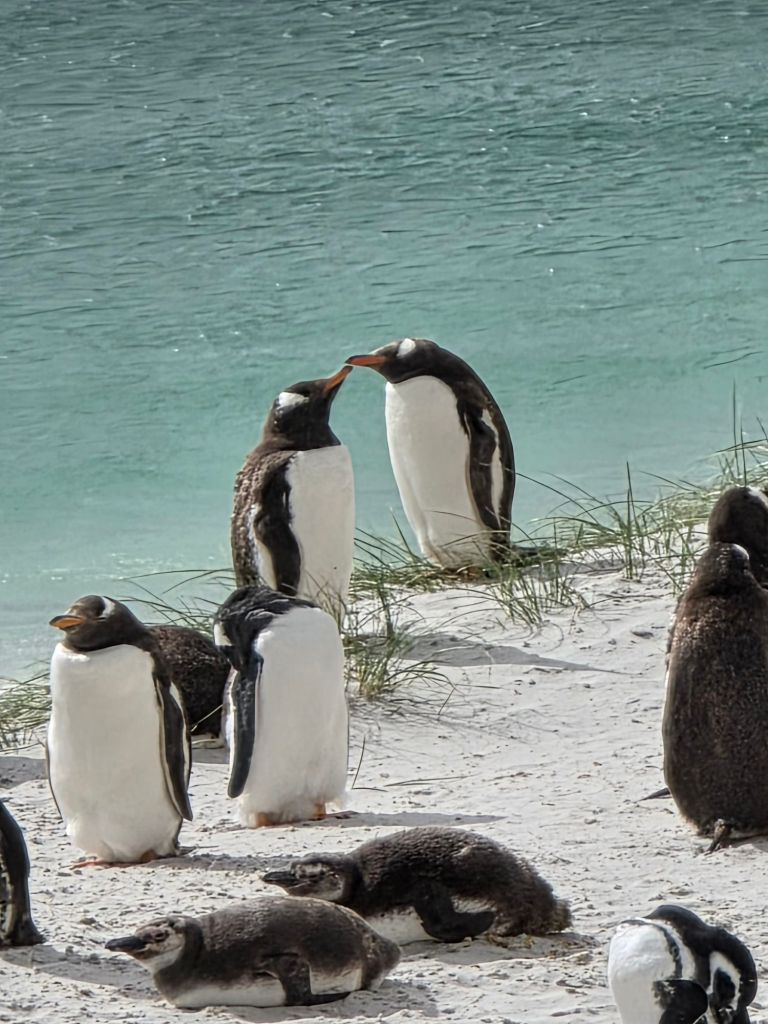
Then there is the balmy weather. It is Summer here right now and guess what greeted us on our trip to see the cute penguins… snow squalls. That’s right … snow! Now, they do get a few warm days in December but this would not be the place to work on your tan. The guide also mentioned that most locals work two jobs. They have to. Imported stuff, like fresh foods, are incredibly expensive. One banana would cost about a British pound.
Still, I get a sense that people are happy. They certainly are attached to their British roots. In a referendum a few years ago, 98.8 percent voted to remain attached to the U.K. with a 92 percent voting turnout rate. You never get that kind of consensus on any issue in the States
And yes, the penguins are damn cute. See below:
Off toward Cape Horn tomorrow.
 Tom's Musings