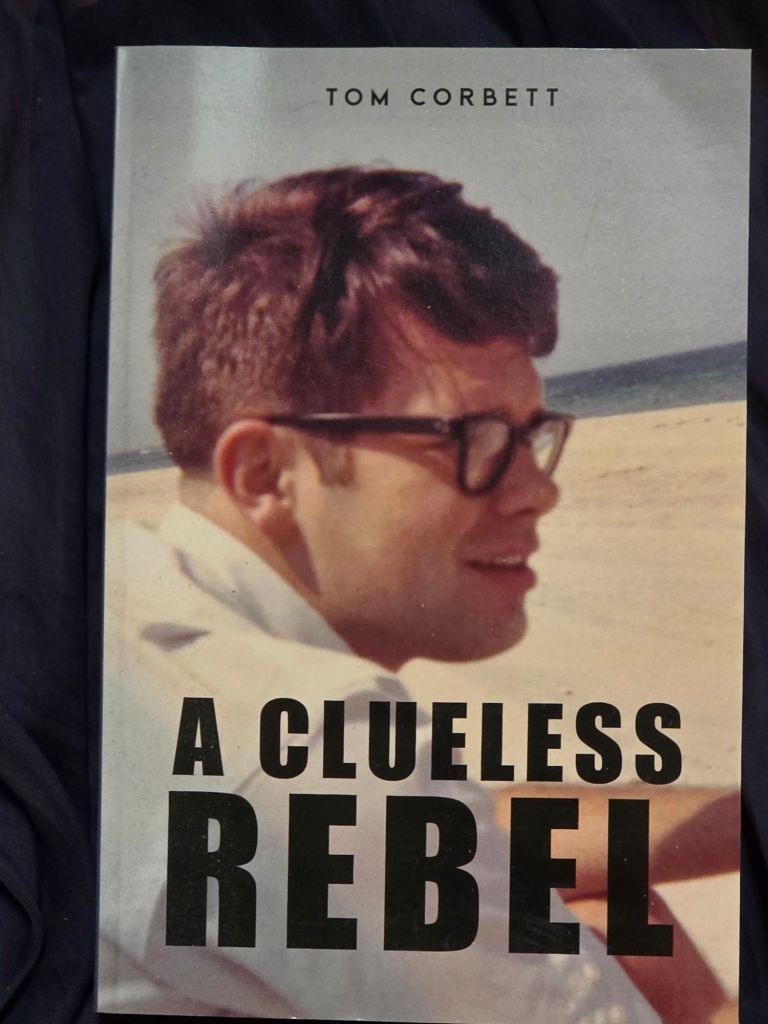
A few blogs ago, I wrote on the topic of my evolution in personal values and perspective during during the period of my misspent youth. If you want the full story of those fascinating post-WWII years, try tracking down the following page-turner (it did get a reader rating of 4.9 out of 5 stars).
In a subsequent blog, I focused on my views as I transitioned into early adulthood. In this treatise, I am moving on to full adulthood. I look at various moments in my professional career that were selected primarily because circumstances surrounding the issue challenged my comfort zone. These were situations where professional necessity and normative values potentially clashed … at least to some extent. After all, one’s world views, or at least one’s behaviors, are elastic phenomena that can change over time in light of unavoidable exigencies.
Let’s begin. I started working as early as I could … delivering newspapers (among other odd jobs), then working in the public library as a page. In college, I labored as an orderly (on the night shift) in a large urban hospital and as a semi-social worker trying to help vulnerable kids from a poor neighborhood that was remarkably close (as it turned out) to where I myself was raised. There were other such efforts … once I started working I never stopped.
These early jobs were, in fact, largely consistent with my values at the time, which determined my selection of them in the first instance. Of note, I occasionally lost money on my paper route. Turns out that I was very passive about collecting what was owed by my poorer customers. That was clue number one that I was not disposed to any future entrepreneurial career path.
I also might add one ethical lapse from my early, non-professional work. For a while, I labored as a ticket taker at an artsy theater in north Milwaukee (while pursuing a Master degree). It was a position that paid little though it enhanced my popularity since I could let my acquaintances in for free on the one night I was fully in charge. If you can’t attract real friends, then bribe them to like you or at least tolerate you.
Alas, I would palm tickets that the gal in the ticket booth would then resell. She and I would share the profits at the end of the evening. It was a matter of survival in those days but I still feel guilty about it almost six decades later. Ah, the scourge of Catholic guilt. That oppressive feeling never diminishes.
My first real professional job was as a research analyst with the State of Wisconsin … a position I pretty much stumbled into. Given my unavoidable attention-deficit disorder, I quickly got involved in many initiatives beyond what I was originally hired to do … which involved administering the so-called welfare Quality Control program. This initiative reviewed random samples of welfare cases to determine eligibility and payment errors. Based on the evaluation results, we were to generate initiatives to systemically root out errors and fraud.
Normatively, I struggled a bit here. My instinctive moral sense pushed me to help the vulnerable and disadvantaged, or try to at least. While I never discounted that individual choices played some role in determining life’s outcomes, I fully embraced the notion that people did not face similar or equitable opportunity sets, while many in fact faced variable, often unfair, challenges to success in life. Structural or societal factors contributing to their life situation could not be discarded.
Yet, here I was running a system where some poor families might be punished, or perhaps further disadvantaged, for errors that might not be of their making. That caused me pause. Yet, this accountability system had the potential for easing public concerns about an unpopular public program … a potential silver lining. Perhaps this suggests that anything can be rationalized.
Another initiative from my pre-university days involved starting the movement of welfare management from a paper-based system into the digital wonders of the computer age. (As I said, I was easily bored and always looking for new challenges.) This was groundbreaking stuff at the time and, on the surface, seemed normatively neutral. But was it?
Creating an automated approach to welfare management was a herculean task that went well beyond introducing emerging, sophisticated management technologies. To make automation feasible, we had to make wholesale changes to program rules. All discretion had to be eliminated as we turned every decision point into an either-or dichotomy. No room for individual caring or empathy here.
However, there were many positives. Applicants would be assessed for all applicable programs in a single, integrated eligibility process. In addition, front line workers were less likely to abuse their discretion to punish clients they disliked. These, among several others, were positive outcomes.
As suggested above, the process of automating welfare decision -making required that we a simplify program rules and change every decision into a binary form. Everything would be either-or with no personal touches permitted. Individual circumstances were ignored as we moved toward a broader sense of equity (all treated alike) and efficiency (ruthlessly eliminating complexity). While abuse might be rooted out, so was individual treatment based upon special circumstances. These concerns raised complex questions about the meaning of equity and the value of efficiency.
Herein lies the thing about doing public policy … you inevitably confronted tradeoffs between equally desirable ends … equity versus efficiency being one example. It is difficult to treat cases on an individual basis while keeping administrative costs low or absorbing ever-increasing caseloads. How to choose?
Policy wonks always confront what I called the burdens of objectivity and efficiency. You are making rules for society, not the individual. Thus, you can’t approach your work as an advocate nor a politician where (for the most part) you can argue for ideal (usually unobtainable) outcomes. These are easier to pursue in individual cases. No, you inevitably are constrained by fiscal realities, by inevitable tradeoffs, and by a plethora of unintended (yet very real) consequences. Doing policy is a harsh teacher about the limitations and complexities in life.
I could write a book on these issues, how complex and sobering doing policy can be to an idealist. In fact, I did. If you want the full story, check out the following:
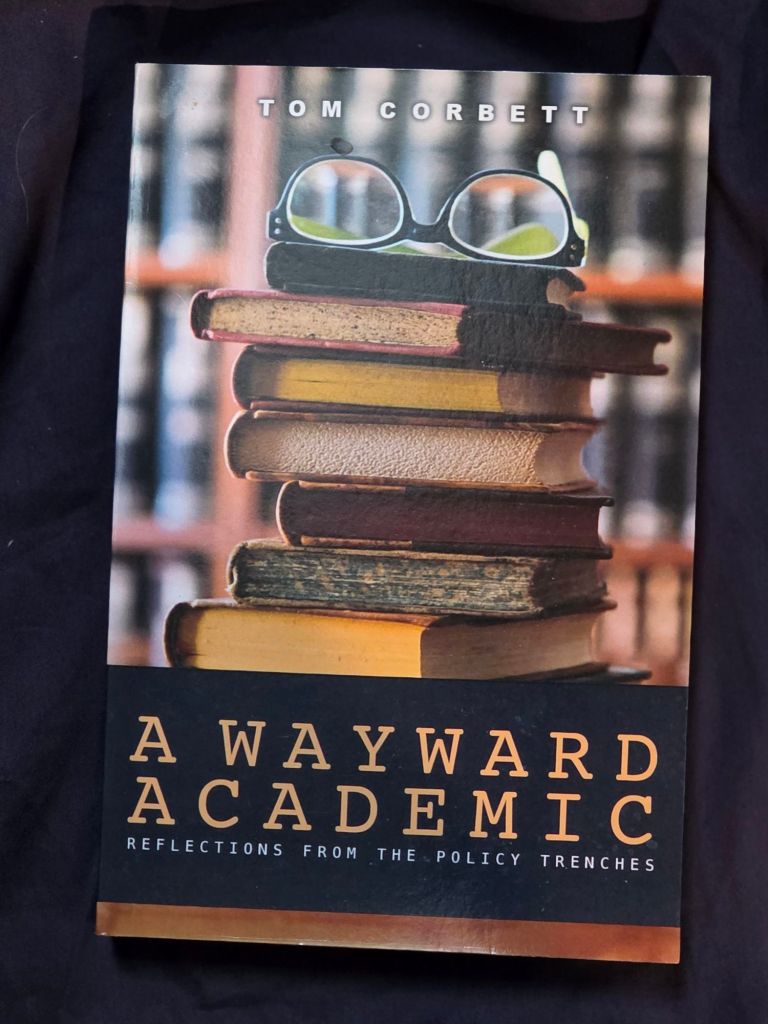
Here, I will touch briefly on a few of the policy issues I confronted after transioning to being a full-time policy wonk while operating out of the University of Wisconsin. As an academic entrepreneur, I could flit from issue to issue with little to no supervision (as long as I could raise money to support my dalliances into those various policy delicacies that caught my attention). It was all so much fun that I metaphorically referred to my career as browsing through a candy store.
Just the other evening, oddly enough, I discussed some issues with a retired attorney who handled child support cases during his years of practice. Way back in the 1980s, I had been involved in a State-University collaborative project reworking the child support system. As part of that initiative, we introduced highly simplified rules for establishing support obligations and more efficient mechanisms for collecting such. My debate partner the other evening focused on specific cases where our new rules seemed unfair in individual situations. On the other hand, I easily recalled our motivations as policy wonks. We were driven to maximize uniformity and efficiency. Another harsh truth of doing policy is that you cannot please everyone.
Virtually all the major issues that crossed my path raised complicated normative questions for me. They could be described as wicked policy problens, loaded with hard choices but also the most fun to confront. I can only touch on a very few, and only briefly (don’t forget the book).
As the 1980s progressed, welfare reform evolved into a front burner issue both in Wisconsin and nationally. In fact, the Badger state took the lead under the aggressive leadership of Governor Tommy Thompson. I would soon get caught up in the workfare, so-called learnfare debates, one-stop welfare offices, and other related initiatives.
Simplifying these complex reform topics, the new thrust was to introduce a new social contract into the design and management of welfare programs. Liberals (progressives) went ballistic over most of these changes which threatened welfare as a more or less pure income-support entitlement. I had to assess each reform proposal in light of my experiences and growing reputation. My position as a player meant my opinions now counted. This upped the stakes as someone who considered himself as a defender of the downtrodden. It was not easy.
Being a knee-jerk liberal no longer seemed possible. I was no longer merely an observer on the sidelines. I was a player whose opinions now carried weight. At times, I recoiled in disbelief that people, sometimes important people, listened to what I had to say. In fact I would be called upon by the local and national press all the time. I tried not to register who was calling, since I wanted my observations and comments to be objective, if that were possible. I would provide both sides on the issue du jour, if I could. I still recall one reporter who became silent during our telephone conversation. When prompted, she explained that I was her first interview where the interviewee did not go ballistic over the policy question at hand.
When I found I could not escape the spotlight, I occasionally found myself caught up in some very difficult dilemmas. I appeared before a Congressional Committee in DC examining Wisconsin’s learnfare reform, an initiative that penalized welfare families whose children failed to meet educational expectations (another component of the new social contract). I was pressured relentlessly by both sides to say things favoring their position. The governor’s people wanted me to support the program while advocates pushed me to attack it as an evil scheme spawned by the devil himself. I genuinely feared that if the Governor’s representatives at the hearing did not like my remarks, we (my University research institute) would face the termination of state research grants which at a minimum would result in many students losing their support. In my remarks to the Committee, I wove a middle ground where I supported the underlying intent but questioned its execution. I wondered after if I had sold out my values.
During the 90s, I was caught up in all the issues of the day at the apex of the welfare reform frenzy … Clinton’s welfare proposal (on which I worked while spending a year in D.C.); Wisconsin’s welfare replacement initiative known as W-2; efforts to update the national poverty measure; the so-called Super-Waiver to grant states greater discretion over some programs; initiatives to explore new methods for evaluating complex reform initiatives (including serving on a National Academy of Sciences expert panel); and a significant push to move from siloed service programs to more comprehensive and collaborative models.
When addressing any issue in the welfare or human services morass, political sensitivity inevitably became an issue. Welfare, among all public policy questions, tapped such emotional dimensions as sex, personal responsibility, individual character, and public guilt. Conflict and contention inevitably arose. I can’t even begin to account for all the delicate moments I faced.
When I spent time in Washington on leave from the University, I often was sent out to give talks on where the administration was heading. My university colleagues who had worked in D.C. in the past were stunned that I never had to have my remarks politically vetted in advance. In some of these public events, I was shadowed by a well-known Washington advocate for the poor whom I respected greatly. He often suggested that, while he respected me personally, he feared that I had been seduced to the dark side. Had I? I can’t answer that but felt bad that this admired advocate would suggest such.
Even trying to update an official poverty measure that had fallen way out of date proved to be a normative minefield. One might think this would be a more or less technical exercise. But no! Any and every recommended change was viewed through the political prism of who would win and who would lose. Both sides on the normative spectrum saw nefarious motivations behind every scheme. The highly polarized political scene we see today was well on its way to reality.
I can still recall the time I was on a panel at an event being run by the National Governor’s Association. The issue of the day was whether the federal government should give states more flexibility in designing their safety nets. I had been working closely with a number of states at the time and been impressed by the energy and intelligence they brought to policy matters. Still, the liberal establishment was appalled at the prospect. A statement was circulated where virtually every center-left organization in the nation signed on to their opposition to the so-called super– waiver concept. Had I fallen this far from my roots?
No matter, I could always be comforted by the fact that Governor Thompson (who would become Secretary of HHS under George W. Bush) remained convinced that I was a left wing terrorist. At an event at the Joyce Foundation in Chicago (which supported much of my work), the then Governor publicly attacked me for opposing his reforms. I found that amusing since he did not realize that I had been instrumental in shaping a number of the ideas he touted as his own.
For politicians, you were either for or against them. There was no middle ground. I functioned in that gray area where compromise and accommodation were essential. When I gave reporters the pros and cons respecting a reform initiative, they often cherry picked my cons. That was the print media’s game. What the Governor saw in the press had him conclude that I was his enemy. Unfortunately, he had a thin skin.
I yet recall getting a call from the Secretary of Wisconsin’s human services agency praising me for saying positive things about the latest state initiative … something called Bridefare which was designed to encourage marriage. I chuckled at the Secretary’s praise, telling him that I called them as I saw them. Then I went on to add that “I only realized I was approaching the truth in welfare policy matters when no one agreed with me.” Yes, I had long recognized an uncomfortable truth. Staying true to your moral center oft meant you were all alone amidst a sea of conflicting norms and emotions. That can be a lonely place to be.
I taught several policy courses at the University of Wisconsin. One of my favorites involved working with 2nd year Social Work Master’s students interested in doing internships to prepare for careers in the policy field. I would meet prospective applicants for this field experience course at the beginning of the year. Part of my spiel would involve sobering them up to any illusions they might possess about doing policy work.
Often, I would start with the ‘river metaphor‘ where you see individuals in danger of death by drowning. Which is better, to attempt to rescue each threatened person or to go upstream to keep them from danger in the first instance. Choosing the policy approach over an individual habilitation route is an individual choice depending upon your orientation and disposition. Both are rewarding. The policy strategy promises broader impacts for sure.
Then, I would segue into a cautionary tale. Doing policy is hard, I would tell them. You are always making decisions with imperfect, if not contradictory, information. This is especially true of ‘wicked’ problems where uncertainty abounds with respect to ends, theoretical foundations, divided public support, and evidence. Moreover, you can never fully account for externalities and various unintended consequences. Often, you will face excruciating choices where there are winners and losers in the available possibilities. For young people wanting to do good for society, this can be an unsettling professional path. Don’t take it if you cannot accept inescapable limitations and the glacial pace of change.
Yet, almost all accepted the challenge. Surprisingly, no one came back years later to sue me for ruining their lives. Apparently, many of us love pain.
Recently, I was reminded of my long-ago days as a shaper of young minds. I had returned to the School of Social Work at UW as a new member of the school’s Board of Visitors. One other member, the head of Wisconsin’s Planned Parenthood program, joined us via Zoom. She revealed that she had had a mentor during her days in the master’s program, someone named Tom Corbett. She confessed to her confusion back then about whether to pursue a clinical or a policy focus in the future (a micro or macro orientation). Apparently, I convinced her to choose a policy oriented future. She smiled as she confessed she wasn’t sure she should thank me or curse me now 🙂.
Looking at today’s fractured political landscape, I wonder what I would say to today’s youth. I doubt I would encourage many to seek a policy career. How sad is that ?
 Tom's Musings