Perhaps it is time to complete my sojourn to the northeast.
In my last piece, I covered part of my recent road trip … my visit to Worcester Mass or the tragic/humorous site of my early years. That was a sentimental journey for the most part. These trips back home, and back in time, always remind me of certain fundamental truths. We all, most of us at least, endure similar personal challenges. We all face embedded scripts born both of nurture and our surrounding culture. Much of our early lives are enmeshed within struggles to accommodate such scripts, to break free from them, or both. Seeing the scenes of of my youth inevitably reminds me of those enduring struggles.
The remainder of my road trip, however, took me in a different direction. It also had a nostalgic component … recalling favored sites and feelings from my youth. This next portion of the journey took me to places I recall fondly from past vacations and excursions during what now seems like a different life, as if whispered from tarnished black and white photos in a memory book. Faint images of a restless ocean, of sand-drenched beaches, or of bucolic scenes from the rural New England landscape quickly flit through my consciousness.
This portion of the journey also contains a previously unexplored component, one where I (we) would venture into Quebec Province. I cannot quite believe I had never been there before, a somewhat unique place where one can experience a decidedly foreign culture right here in our own North America.
From Worcester, one can take I-495 north to a string of beaches along the shore in northern Mass., New Hampshire, and South Eastern Maine. There are numerous places I recall from long ago like Salisbury, Hampton, and Rye beaches. While some are oriented to the working class and have a gritty feel, others like Agonquit and Kennebunkport seem to cater to a wealthier crowd. They are likely to offer more stately manors redolent of privilege and entitlement. Yet, the beauty of the landscape is a gift to all, even if the ocean waters are on the chilly side.
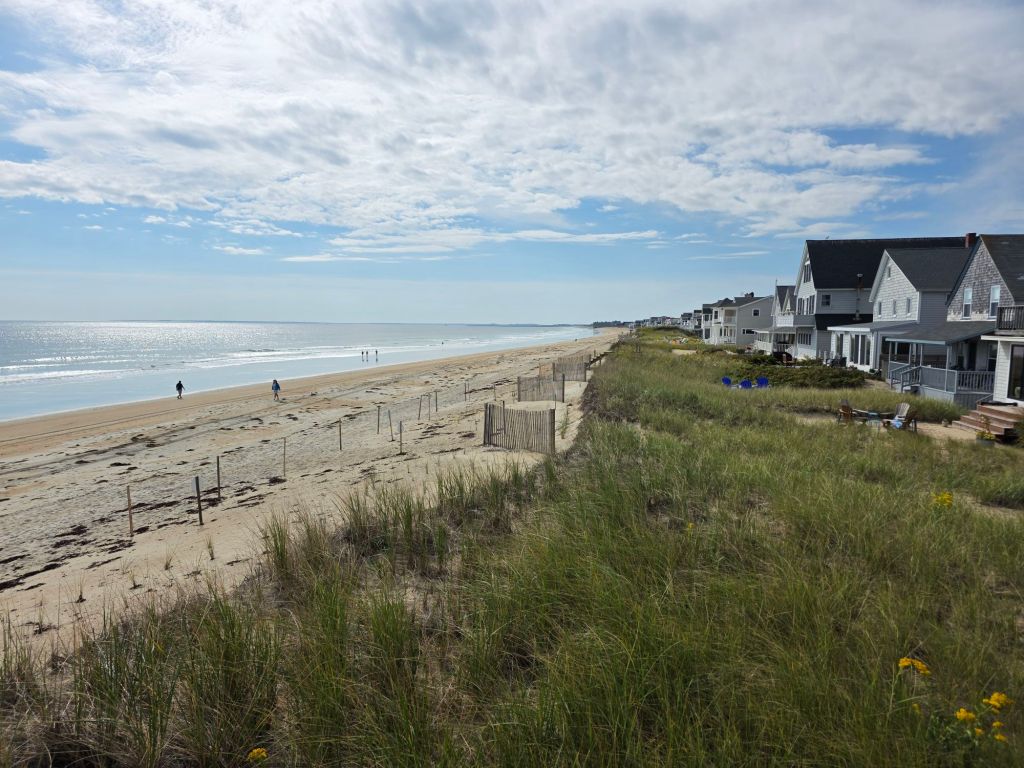
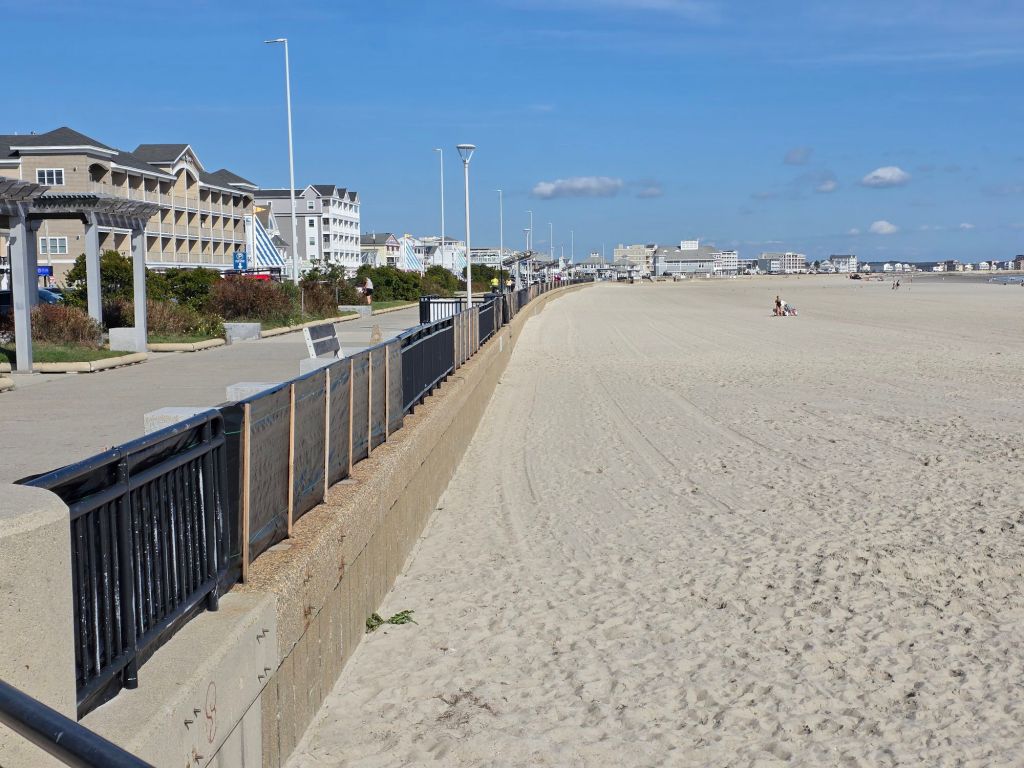

Meandering along the shore was never our destination, no matter how enticing might be the rocky shores of Maine. We were headed toward Lewiston Maine where Bates College is located. That is where Amelia, the grand-daughter of my traveling partner has recently matriculated. Amelia grew up in England, raised by her American mother and British dad. Given her excellent academic preparation, she had many options from wish to choose. But she wanted to come to America for college. Why anyone with choices would come to our sinking Republic at this moment in time seems a bit odd, but there you have it.
Amelia and her grandmother!

She has the benefits, and challenges, of embracing two cultures … British and American. Each year, she would spend several weeks in Wisconsin, becoming a fan of the Packers, of cheese, and of brats (not sure about the brats). Like her American mother, who rowed for the University of Wisconsin as a collegiate athlete, Amelia immersed herself in competitive sports as a swimmer (which would not be supported at a British university).
Her choice of schools was partly determined by the fact that Bates offered her the opportunity to compete at the collegiate level on their swim team. It was also important that Bates is an excellent liberal arts college that admits a small minority of applicants (i.e., they never would have accepted me for example). It is the kind of educational institution where inquisitive younger minds can be intellectually challenged, where life’s directions might be shaped, if not directed.
I don’t know Amelia well. However, while reserved, she strikes me as intelligent and thoughtful. Like her mother, she has a deep interest in art and in psychology. She also has the advantage of possessing just enough of a British accent to give her a singular advantage. I recall that my Boston accent helped me stand out after I left New England, at least until I lost it. If I am any judge, she will do well no matter where life takes her.
It is hard for me not to reflect on Amelia’s opportunities. Her parents have sufficient resources to support her dreams. That is a blessing. Still, I wonder if things can come too easily for someone like her.
I had to make my way through college without parental support, though admittedly during a period when such a feat was far more feasible. Still, working some nights 11 to 7 before heading off to classes in the AM did present a few challenges, not that I ever studied very diligently in any case. Nonetheless, I started working as a freshman in high school and never really stopped.
Was I strengthened by such demands, or held back in some way? Who knows? I somehow managed to land in a totally satisfying career as an academic and policy wonk, so-called work I might well have done for no pay (were I not to starve to death as a result).
What I do know is that I felt enormously blessed to have the opportunity that the university experience provided. I never could quite comprehend, nor empathize, with those who cast aside similar opportunities by concluding that college is too difficult or boring. But that’s me. After all, I managed to avoid the real world for virtually my entire life.
The world of ideas inevitably attracted me more than available alternatives like, you know, real work. As I’ve mentioned elsewhere, one of my favorite mantras to share with my college students was ‘to avoid reality for as long as possible since adulthood is wildly over rated.’
But my preferences are immaterial at this point. What matters is how this promising young woman fares. The world I faced back in my day seemed less frightening than what she faces today. Yet, I have confidence that she will, indeed, do very well despite the challenges she and her peers face.

The Bates campus, as with many such New England campuses, is an oasis of serenity and beauty. The wider town of Lewiston, on the other hand, reminds me of the many industrial towns that once flourished in past eras … Lowell, Lawrence, Haverill, Ware, and I suspect my hometown of Worcester. They all possess that patina of a reddish brick hue which reminds us of a time when America actually made consumer goods. Now, they are dotted with old and abandoned mills and factories seeking new identities and purposes.
Today, such towns are remaking themselves, or trying to, by transforming into places where those plying post-industrial vocations might thrive. Worcester seems to be making it. Lewiston strikes me as trying hard. Indeed, there are positive signs that they are transitioning into the future with some success.
Our stay there was short. After our visit, we would take a quick side trip to Arcadia National Park (Bar Harbor). As many know, the Maine coast line is special … marked by hills topped with rugged forests and serene inlets that touch the sea in places, where coastal villages retain a rustic charm and where rock-defined barriers separate land from the vast and oft turbulent ocean waters.
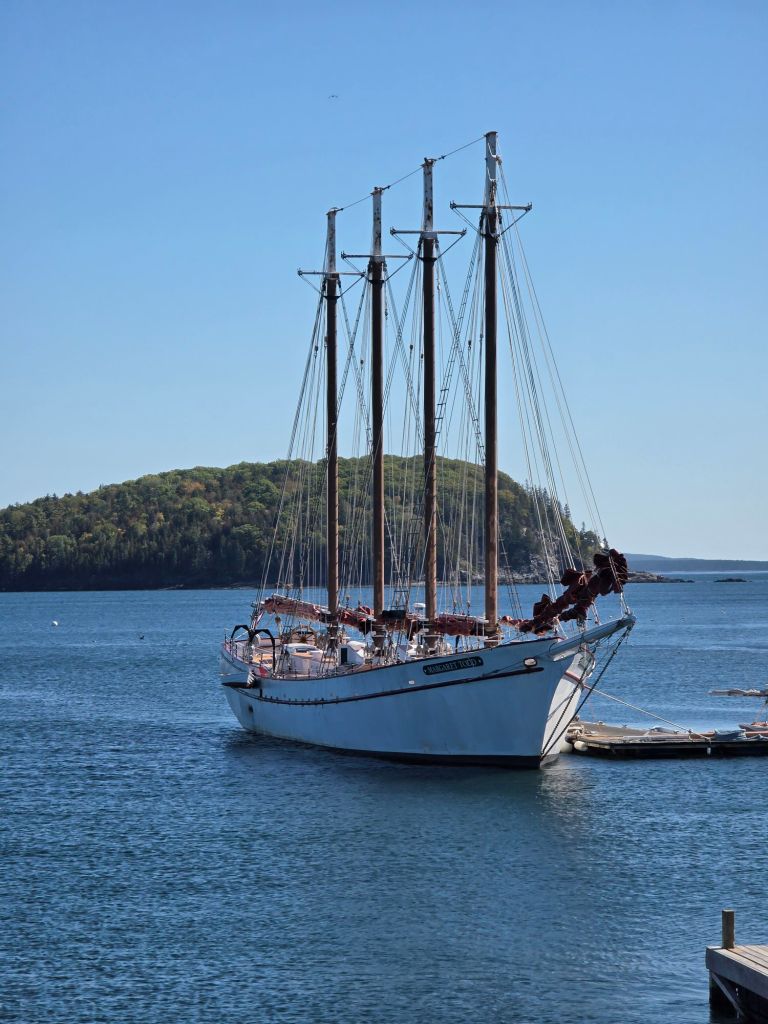
The beauty is undeniable. So much so, that the numbers of tourists deny one a full opportunity to enjoy local offerings as much as one might want. Alas, the human crush was daunting at times. Still, I miss the fact that there was not enough time to revisit Port Clyde. I recall this dot on the Maine map as a picturesque, if not iconic, fishing village from a visit decades ago. Then again, better to keep that image than shatter it with some new, and less appealing, slap of reality.
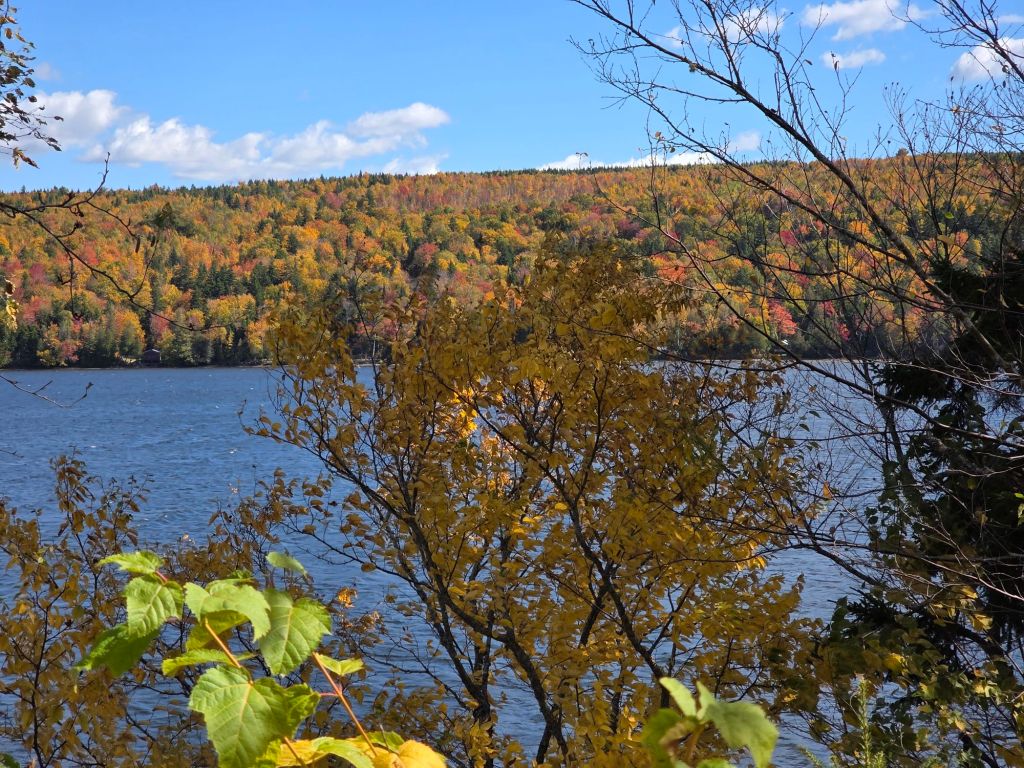
We soon were heading north, through the vast inland forests of Northwestern Maine. To anyone who lives in a city, or who grew up in an eastern metropolis, these vast wilderness areas appear magical, if somewhat unreal. The multi-hued forests (at this time of year) seem endless. Blue lakes and rivers break up the canvass of greens and yellows and oranges that cover the earth. God did some of his finest work here. Who needs art amidst such masterpieces of nature.
Then you reach Quebec Province. Suddenly, you are in Canada. No, that’s not correct. You are in France. Except, in most of Europe, you can always get by with English. Not so much here.
When I had trouble at a gas station in a rural part of the Province, the proprietor launched into an explanation regarding what was wrong. He did so, however, in rapid French. I responded with my 65 year old high school version of the language … Je parle Anglais seulement. He looked pained as he struggled to explain to me that his pumps were broken, but a repair person was on the way.
Quebec City is well worth a visit. I cannot fathom why I had never made it here before. It was developed in the early 18th century by the French at a strategic spot on the St. Lawrence River. They chose a location where the waters narrow and a prominent hill gives anyone who possesses the high ground a distinct military advantage. Control the river and you control the territory. Even I could figure that out.
On this high ground, the early inhabitants built a traditional walled city and military defensive positionI. Over time, it evolved into a gem that recreates a part of old Europe on North American soil. It certainly looks and feels like the old country. In the pic below, you can see the iconic Fontenblac Hotel and the walkway overlooking the St. Lawrence and surrounding countrside.

The early French traders gave France a claim to what would have become Canada. But the growing English colonies to the south made conflict inevitable, leading to the French and Indian Wars (otherwise known as the 7 Years War) between these two superpowers beginning in the mid-1750s.
The key battle between French and Indian forces under General Montcalm and English forces under General Wolfe took place in September of 1759 after months of seiges and skirmishes. The English commander finally got the upper hand by scaling the vertical cliffs adjacent to the fortress secretly at night. The British forces surprised the enemy by suddenly appearing at dawn outside the French fortification at a site known as the Plains of Abraham.
Montcalm decided to confront his mortal enemy once and for all in a pitched battle. It did not go well for him. The British forces, being better organized and disciplined routed Montcalm’s mix of French regulars and their indigenous allies. The French general was killed, as was the British commander, Wolfe. The last words that General Wolfe heard was that ‘victory was his.‘ Allegedly, he happily accepted death having heard such news.

Though fighting continued for some time, the issue was pretty much decided that day. The English would control Canada. I’m still confused, though, how the British could win the war so decisively but Quebec remain so French. Go figure!
Nevertheless, this conflict (part of a larger conflict between English and French ambitions during this era) had far reaching consequences. Britain began taxing the American colonies at the end of the 7 Years War to defray the conflict’s costs. Parliament had this naive belief that the colonists should help pay for the troops that kept their enemies at bay. That innocent assumption more or less led to our Revolutionary War a dozen years later. You know, taxation without representation or, more likely, the American tendency to want something for nothing.
France‘s military and monetary support for the colonial revolution in turn helped bankrupt the treasury of King Louis. That eventally resulted in such financial straits that the King was forced to convene the Estates Generale. Bad move! The French Revolution would soon start. So, a lot of history can be found outside the walls of historic Quebec, or at least the starting point for a series of subsequent events that essentially changed our world.
The British would fortify their hard won citadel above the river as protection against a new enemy … those American upstarts to the south. Their fears were not unfounded. American forces invaded several times during the Revolutionary conflict and the War of 1812. Such incursions were easily repulsed. Currently, of course, our toddler President is making renewed threats to absorb our once friendly neighbor to the north into our flailing Republic. They must think us utterly insane.
It was now time to head home. But we would do so slowly, first wandering through Vermont.

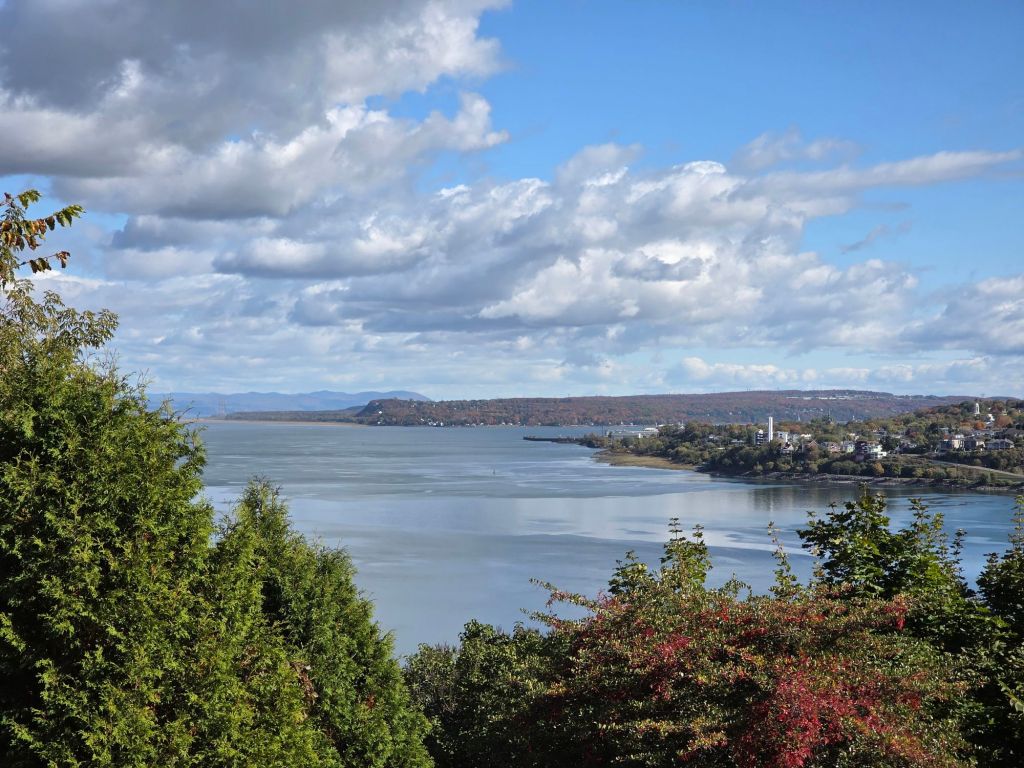
The picture above is Lake Champlain with the Adirondack mountains of New York on the other side. It is a view from Burlington, the state’s largest city … which, in fact, is not very large. But it is quaint with the state’s flagship University situated at the top of a hill overlooking the lake.
Years ago, I did some work in Vermont, much as I did in many other states. I found the state workers there exceptional and progressive. I was fortunate to work with many smart and visionary public servants during my career. In fact, the head of their human services department tried to convince me to relocate to the University of Vermont so that I could could more directly with them.
I would get such feelers from time to time. Some, like this one, had merit or some modest attraction at least. The beauty of the area is undeniable. But Madison is Madison and the Institute for Research on Poverty was, after all, such a special place.

And so we would say good by to God’s country and make our way home. It was, I believe, Dorothy in the Wizard of Oz who claimed there was ‘no place like home.’ She might have been on to something there.
 Tom's Musings