I started this message Easter morning, then got distracted by other things … a rather typical occurrence. While it has been many decades since I’ve believed in the Easter bunny or that the Son of God miraculously rose from the dead, this celebration yet strikes me as a good moment to reflect on more elevated matters. What counts in life? What matters? Where is meaning found? Whether or not we are judged by some divine arbiter at the end of our days, how will we judge ourselves in the final analysis?
I came of age in an era when college age youth routinely asserted that developing a coherent personal philosophy was the most critical challenge they faced. (Today, a similar cohort of young people stress a need to make a lot of money).
Personally, I believe we were fortunate. My parents were grounded in the harsh realities of the great depression. Economic survival was critical to them. While I was raised in near poverty, what I saw about me was confidence and hope in the future. For some reason, making the world a better place was more important than merely making money. Perhaps we were fortunate to come of age during what economists called the great compression … that three decade period after WWII when income and wealth inequality narrowed and the vaunted American middle class expanded. This occurred despite top income tax rates of 90 percent. Even we poor kids saw opportunity before us. That might partially explain why the youth of the 60s responded to President Kennedy’s call to do something for your country with such intense fervor.
That inherent sense of possibility, perhaps better thought of as optimism, was reflected in how I approached my higher education. To me, getting a degree had little to do with a future career. It had everything to do learning more about the world. I studied what interested me in school, which largely focused on how our political and social world worked. I explored such macro-issues such as peace, justice, and fairness as opposed to mastering technical skills in order to make money. I examined issues, including our own history, both critically and with an objective eye. Finally, I focused on that central challenge that captured the attention of so many of my peers … formulating a core moral center upon which to ground a personal philosophy. Many of us struggled to understand our world rather than merely accept what we were told.
Those interests, that perspective, was far different from what I saw in my university students several decades later. They were hyper-anxious about the future, the debt they had accumulated, the uncertainties that clouded their confidence. They seemed dominated by a sense of angst … a feeling that the future was full of peril. Too many were hemmed in by an inchoate sense of dread that I felt limited their vision and freedom. It certainly added to their overall feelings of anxiety.
I came of age in the 1950s and 1960s, graduating from high school in 1962. In some ways, those few years were an inflection point in U.S. history. At the beginning of the 60s, most of us kids were quiet and submissive. True, the Port Huron statement had been penned by future radical Tom Hayden. It was a call for a questioning of society by the young, a call that led to the creation of Students for A Democratic Society (SDS). Moreover, the first Southern lunch counter sit-ins to oppose American apartheid were reigniting the civil rights movements that Rosa Parks had sparked a few years earlier. Still, it would take some time, including Kennedy’s assassination and the making of the conflict in Vietnam America’s war, for these early rumblings to emerge into outright rage and then revolution.
By the time I had finished college and took off for India as a Peace Corps Volunteer, the quiescent 50s seemed like a distant dream. I had gone from a good working-class boy who entered a Catholic seminary to become a missionary priest to being the leader of the leftist anti-war movement in college … Clark University in my hometown town of Worcester Mass. But that transformation was not casual or easily accomplished. It was the result of endless dialogue, study, and debate among my peers. It was the result of a deep process of self- examination and personal questioning. Moreover, it could be painful since it involves first questioning and sometimes rejecting long-held truths and ingrained ethical precepts.
On the morality and wisdom of Vietnam, perhaps the seminal issue of my young world, there was an identifiable and specific turning point in my personal views. I remember it this way. I had been selected as one of several top students to do summer research with a National Science Foundation grant. Another one of those selected (who would go on to get his doctorate at Harvard) and I spent one whole day discussing the war rather than working on our projects. I remember trying my best to cling to my childhood script that we Americans were in the right, that the domino theory was real, and that our efforts were entirely defensible. After all, just a couple of years or so earlier, I had contemplated leaving the seminary and joining the military during the height of the Cuban Missile crisis. The correctness and righteousness of America was the myth in which I had been raised. It was deeply embedded within my psyche … a belief system that was extremely difficult to question and harder to repudiate. Discarding it was like excising part of my being.
I did not admit it in the moment, but I knew that the other student had bested me that day. The doubts that had been creeping into my worldview soon overwhelmed me … replacing my naive beliefs with a new and more questioning framework. That transition was assisted by many endless debates about policy issues and ethical dilemmas that often went deep into the night. Perhaps I should have studied more but, in hindsight, this seemingly endless dialogue proved to be my real education. This is where I sharpened my analytical and debating skills on which my later career rested.
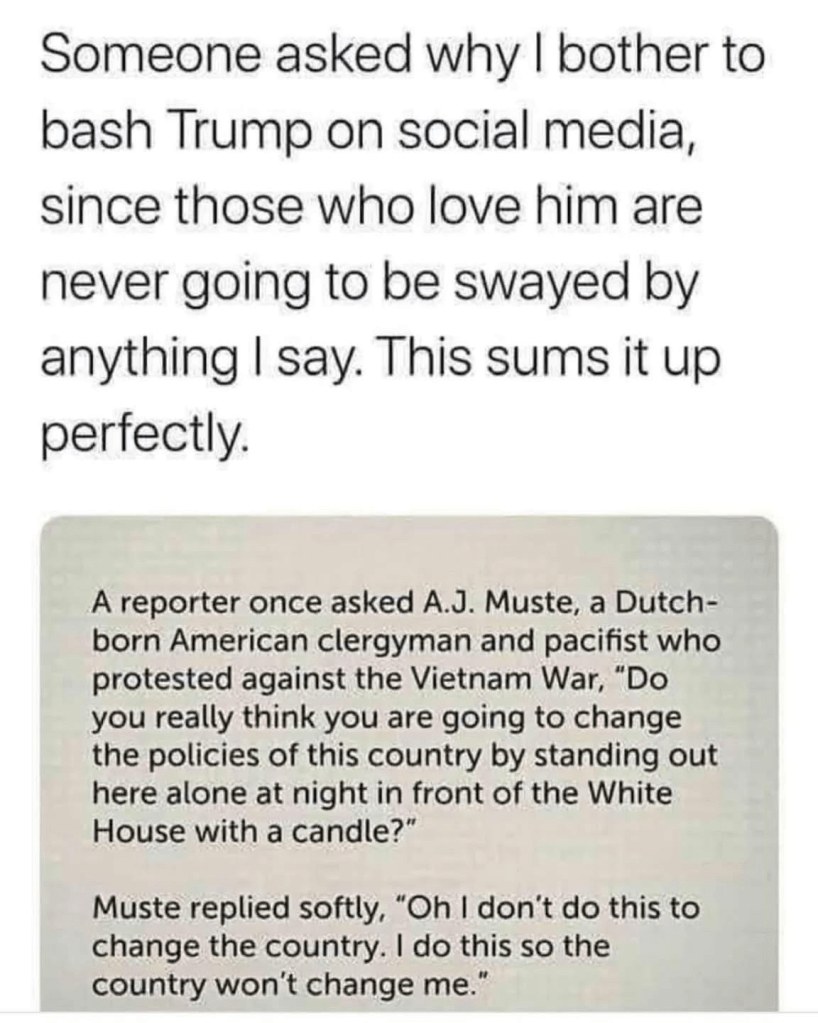
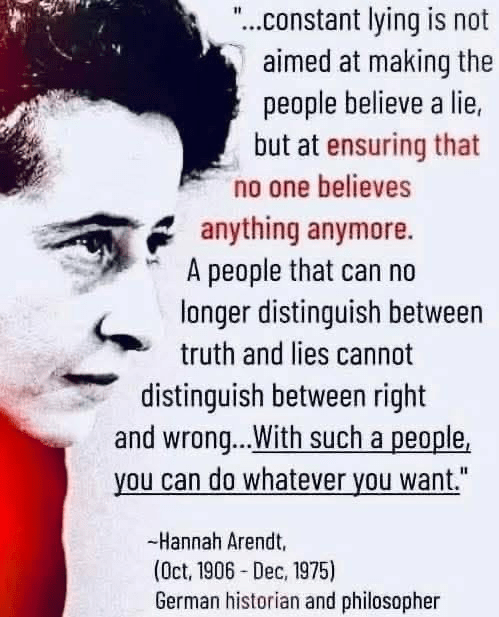
Why was this transition all so important? That is, why was this period of self-examination and change so critical to whom I became. I will answer that query with a story about what I saw coming back from India in 1969. Upon my return, I was in a masters program in Wisconsin. The anti-war fever still raged. However, when I attended my first protest since returning to campus, there was something off. It was as if the students were largely repeating slogans they had been programmed to utter. I had no evidence that they were not sincere. But I felt somehow that they had not earned the right to resist. It was not clear to me that they knew why they were protesting. It seemed more like they were doing the in thing rather than the right thing. Silly, perhaps, but that is how I felt. Protest ought not to be mere parroting of socially acceptable scripts. It should emanate from one’s core set of beliefs.
Perhaps it does not matter how and why one arrives at their personal moral position. Perhaps the actuality of opposition, of taking a stand, is all that counts. In the end, though, I can’t accept that. How we arrive at our moral positions does matter. Beliefs arrived at without effort, absent some pain, appear somewhat shallow to me.
I often considered my reactions during those turbulent years of my youth over the succeeding decades. In truth, those of us who rose up in protest were always a minority. Despite our rosy recollections of that era, most kids ignored all the righteous uprisings that erupted on campuses and in the streets. Most of my peers saw the protests, the tear gas, the shutting down of campuses as mere inconveniences. Why did only some of us take it so seriously when most went on with their lives without much, if any, reflection?
To this day, I can not answer that simple question fully. There are, however, hints in my distant memory. As I’ve written about before, my early years were spent in the suffocating confines of rigid Catholicism, ethnic tribalism, and working class orthodoxy. Prejudices and this feeling of superiority surrounded me in childhood. The WASPS were our social and political enemies. Anyone of a different color or religion or cultural background was deemed inferior. Even those in my environment who differed slightly were suspicious.
There were five Catholic churches nearby. Two catered to the Irish; one to the Polish; one to the Lithuanians; and one to the French living in the general area. People would walk past the nearest Catholic church to get to their Catholic church. In short, I lived in a Balkanized and divided world. Imaginary hierarchies and artificial divisions were everywhere.
The first question you might be asked on meeting someone new was what are you? I would say half Irish and half Polish … a child of a mixed marriage in this strange world. Then, the questioner would know where to situate me in the mosaic of religion, ethnicity, race, and class. Of course, there was that moment when, as a toddler, I was confused by the question and said I’m English … because that’s the language I spoke. My father immediately gave me the lecture on why we Irish hated the English. I never made that error again.
As I grew up in this rigid society, and despite my dad’s diatribe on our hatred of the Limeys, I started to think differently about things early on. I rebelled against the stereotypes prevalent in my world. I rejected the ethnic prejudices and casual racism so easily embraced by those around me. I surely dismissed what I saw as religious arrogance that assigned non-believers in the Catholic faith to limbo or purgatory or even Hell. That was a non-starter for me. Early on, I even questioned why we were divided into all these distinct countries. Were we not all residents on this one fragile globe? From afar, in space, there were no visible dividing lines. Why all the fighting? It made no sense to my young mind. And why, when we had such surplus crops, we’re we not feeding a suffering world. That made even less sense to me. Sharing with those in need is what my image of Christ would have demanded.
I can recall so many moments in my youth when I felt things (or expressed ideas and opinions) that were at odds with my environment. It was only later, with years of experience and perspective, that these anomalies struck me as odd. Why, for example, did I argue in defense of the Brown vs. the Board of Education Supreme Court decision as a preteen? No one I knew felt that way. Where did these strange notions come from. Few, if any, in my young world had such beliefs, at least not that I recall. It strikes me that the seeds of my future rebellion had been planted early on. They resided within me from the start.
Of course, one can not discount nurture or our environmental inputs. In that regard, one vignette that I’ve shared before involves an article that I read many, many years ago. Obviously, it struck a deep nerve in me since I keep retelling it. A justice of the New York Supreme Court recalled his college years growing up in the 1930s. As with many of his peers, he dabbled in leftist politics during the horrendous economic sufferings associated with the great depression. He even flirted with Communism for a while. That youthful experiment didn’t last long. Still, he considered himself lucky to have come of age when he did. The challenges of that decade forced him to question everything about him. In desperation, he had to formulate his own personal worldview … not merely embrace something off the shelf. He had to forge a moral code unique to him. That personal journey made him a stronger adult. I felt the same about my trail by fire during the 60s.
There it was. I am a product of nature and nurture. There always was something inside pushing me to see beyond artificial barriers. In part, it probably was some inherent accident of biology, some structuring of my brain, that drove me inexorably beyond the strictures and limitations of tribal codes. It was a byproduct of the intense exloration that I, with the help of close college peers, experienced as we tried to make sense of our changing world. Is there a label for that byproduct, that personal attribute? Well, we might call it empathy.
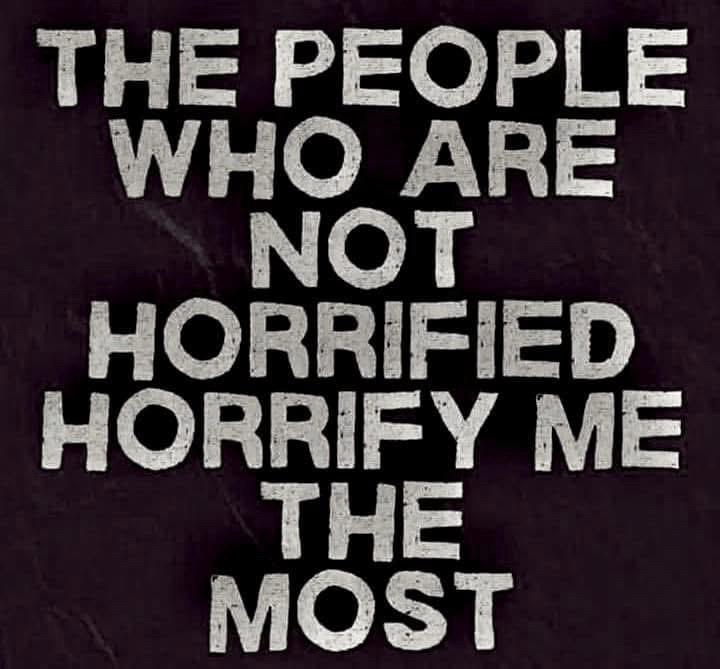
Like the New York Justice, I came of age in a tumultuous decade and feel so very lucky that I did. It was not economic necessity that drove me (us) but the inexorable winds of change. The old codes were challenged, sometimes radically. Racial injustice, gay rights, Native American exploitation, women’s emancipation, and environmental degradation all became subject to intense scrutiny and change. And there was the elephant in the room, an ill-advised war half a world away that sapped our sense of moral superiority.
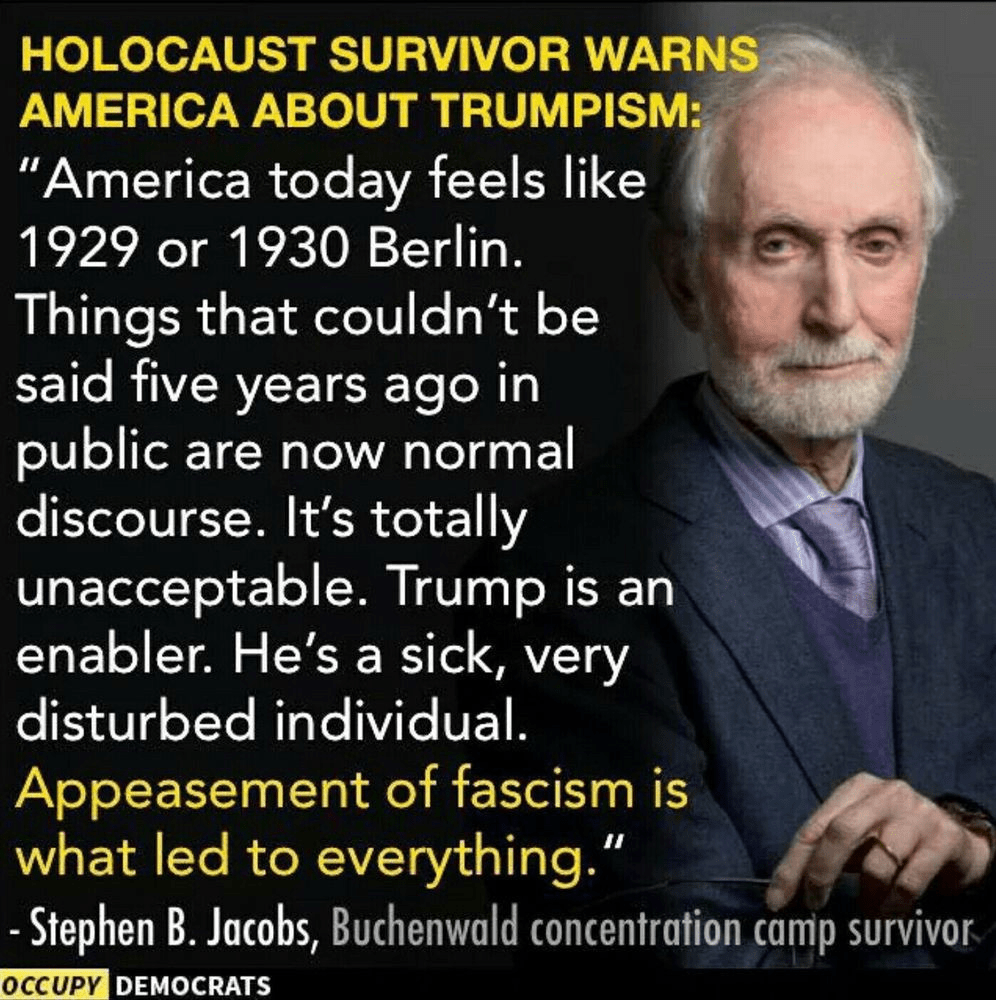
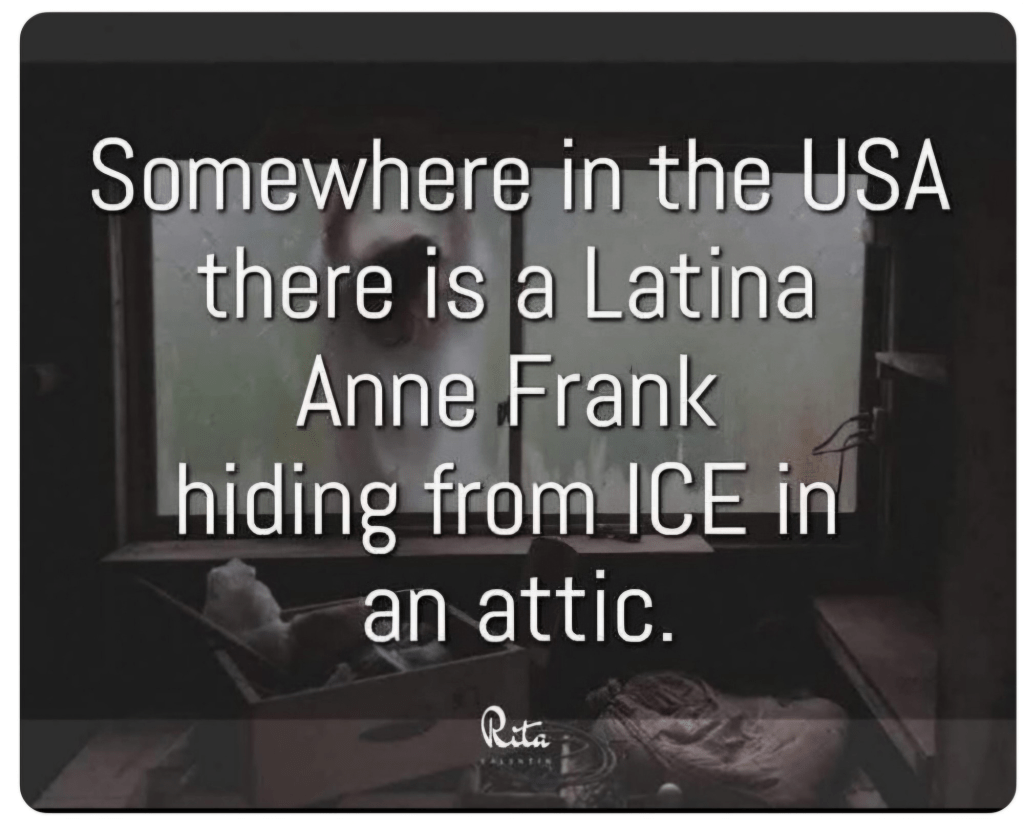
At the end of the day, one either dug in and ignored those winds of change or confronted what was going on about them. Today, over five decades later, we are in another turbulent era. Everyone must either bury their heads in the sand or confront the moral and ethical challenges about them. Will each of us retreat into our tribal shells (i.e., Make America Great Again) or will we think and act with sensitivity, understanding, and empathy.
And there it is. In the end, all the self-examination and moral questioning come down to simple choices. Do we only consider our own needs? Or, conversely, do we see each of us as connected to a complex matrix we call mankind? Do we only think about today, or can we look into the indefinite future? Do we have that basic attribute essential to our longer-term survival … empathy.
I remember a moment in college when I was probably attempting to seduce a young lady. The effort, like most of them, probably failed. Nor can I recall her identity. However, I recalled one moment in that conversation. I said something like the following: “Life is hard. We are born and then, after many years, we pass. The best we can do during those intervening years is not cause much harm to others. If fortunate, we might even pass along a few smiles to those we touch on our journey.”
My guess is that the words are approximated. The meaning, though, is rather exact. All these years later, oddly enough, I could not improve upon them. They still capture whom I wanted to be.
 Tom's Musings