As are virtually all my peers, we are watching the national election with dread. Will the American experiment with democracy be at an end? Did all those who died in this country’s legitimate wars perish in vain, merely to now hand power over to a megolomaniac wanna-be dictator? The very prospect boggles our imaginations.
When such possibilities drive me toward a deep depression, I look to the heavens, well to our cosmos at least. No, I’m not looking to any divine presence for comfort and certainly not for a remedy. That childhood fantasy evaporated over six decades ago. But there are mysteries out there that still can inspire awe and even generate a form of devotion. More to the point, what is out there instills a new sense of perspective within me. That is refreshing and much needed.
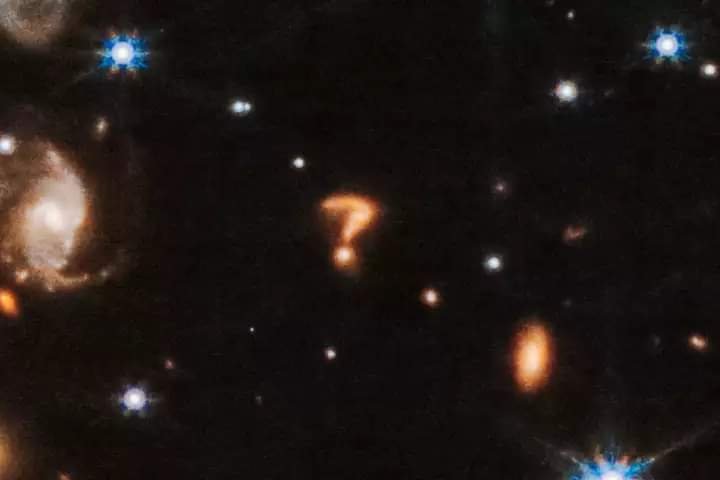
It is not entirely clear why my appreciation of our galactic wonders inspires me so much. Part of it is the immensity and complexity of what is out there. Part of it is the awareness that, despite our technical sophistication, there is so much left to learn and to understand about our universe. I ponder, as the only sentient beings about (of which we are aware that is), whether we are part of an evolutionary process that is creating some future deity of unimaginable powers. Perhaps, as we continue to change and grow, we can approach some capabilities we now associate with divine entities. Either that, or we may be destined for a premature extinction due to our collective stupidity. But let us not dwell on that.

I try to keep an open mind in such matters. Our imagination is the gift (or curse) given to us by evolution (or God). Why not use it? And nothing stirs the imagination like the magistry and mystery of the universe out there.

There are so many awe-inspiring entities out there in the night sky (unseen to the naked eye) … black holes and quasars and astrophysical jets and novas and supernovas and many other curiosities. But what first literally numbs my brain is the sheer size of our larger world. A century ago, what we thought of as the universe was little more than an imperfect understanding of our own galaxy, the Milky Way. Now, we can appreciate that it was merely a drop in the bucket.
Let’s start with a measure of distance. A light year (the distance light travels in one year) comes out to be approximately 5.88 trillion miles. Now, that’s a long haul. Yet, our nearest galaxy to us, Centauri Proximus, is well over 4 light years away … like 25 plus trillion miles. We will be long extinct by the time Voyager I (the furthest that any man made object has traveled since it was launched several decades) could ever get there.
Let’s look at the cluster of galaxies around us. Our immediate supercluster is composed of 54 galaxies. One of these is our Milky Way which is composed of some 100 billion stars and measures 100,000 light years across. Scaling up, we have the Virgo Supercluster which has 100 galaxies and measures 110 million light years across. Expanding our view further, we next capture the Laniakea Supercluster. This baby encompasses some 100,000 galaxies and measures 520 million light years across. Already, we are confronting numbers that boggle our poor minds, mine at least. Yet, we have seen nothing yet.
As our knowledge of the universe expands with powerful telescopes mounted on satellites out in space, our pedestrian minds kept getting blown. A number of years ago, astronomers focused their attention on what appeared to be an area of empty space. They developed images based on long-term exposures to that seemingly blank area. That empty space, it turned out, was not so empty after all. There were another 100,000 galaxies lurking out there.
As of today, cosmologists have arrived at a consensus about the size of the known universe. It contains some 2.2 trillion galaxies. The number of stars out there, many like our sun, is a really, really huge number as you can well imagine. To put it in perspective, there are more stars in our known universe than there are grains of sand covering the entire earth. If we went in any direction, we would need to go 45.6 light years before we reached the end of what we can now observe. And remember, each light year is about 5.9 trillion miles. That gives us a diameter of the known universe of some 93 billion light years across.

I’m not sure what all this tells us as fragile humans living on a spinning sphere at the outer edge of a single galaxy in a remote cluster of galaxies. For me, it is hard to get worked up by our importance when we exist in such vastness. We really are a speck in the universe. On the other hand, if we are the only sentient beings in this vast cosmos, then we are special. But what are the odds? And what might it mean, if anything?
One last note to blow our minds further. Some theoretical physicists and astro-phycisists argue that we can only see (as of now) a tiny portion of what exists out there. They have estimated (using math only they understand) that the real universe may be some 150 sextillion times larger than what we can observe. Numbers like that put me into a catatonic state. So, think of a small light bulb. That is what we know (what we can observe) at present. Place that bulb at the center of Pluto (once a real planet). All the rest of Pluto represents what we don’t know.
I can never explore such concepts without … well … having my mind blown. Can we ever get to know this wide world. Not today, we can’t. But look how much has changed in just one century. Moreover, physicists chatter about phenomena like quantum entanglement, which suggests a form of physical connection over vast distances. Who knows what the future holds? At the least, the immensity of our universe changes my perspective on things. The small crap that we tend to obsess about seems just a tad less important. As the election approaches, I need the solace of being utterly insignificant.
 Tom's Musings