I probably should write about the fact that President Biden recently announced he is dropping out of the race. But everyone will be chatting about that. I prefer to focus on deeper (though not necessarily more important) issues.
So, let me meander into the way we too often think about public issues or, perhaps more accurately, how we fail to think about them with much accuracy. I am occasionally struck by how often consensual beliefs operate (or thrive) independent of experience and evidence. Of course, there are a host of well-known psychological phenomenon (e g., confirmation bias) that help explain why erroneous beliefs remain impervious to correction. Still, it is baffling that numerous false perceptions thrive despite contradictory history and fact.
For example, most Americans probably believe that Democrats long have been the liberal political party, the defenders of the oppressed and supporters of minorities. Republicans, on the other hand, have been associated as defenders of big business, of hard money, and of white privilege. Those views, however, are way too simple if we take even a cursory tour of our past.
The Republican Party was formed in Wisconsin to oppose the spread of slavery to future western states and to use government as a pro-active arm in creating economic expansion and social opportunity. Everything from land-grant colleges, to the investment in the intercontinental railroad, to the creation of a national currency and a proto-income tax, came from those early Republicans … the party of Lincoln. The Dems remained the Party of ‘state’s rights’ and backward thinking for a long time. Even Democratic President Woodrow Wilson, a highly educated southerner, was a resolute racist.
It was during the Great Depression that the contemporary roles of the major parties began to evolve. FDR’s activism, his support for labor and unions (e.g., the NLRA), and whose spouse publicly advocated for the oppressed began to break the Republican hold on Black Americans and other minorities. Roosevelt’s issuance of an executive order to end discriminatory hiring in defense industries during WWII proved a pivotal turning point. Harry Truman’s executive order integrating the military in the late 1940s cemented this new political alignment.
In the mid-part of the 20th century, the two parties were substantively similar in many respects despite differing rhetorical styles. Republican Dwight Eisenhower (who had spent his professional life in the military) was imbued with the need for public investment if the country were to remain strong and an international leader. Having been stuck stateside during WWI, he volunteered for a tortuous cross-country military caravan in 1921. From that experience, he intuitively understood that only the federal government had the resources and perspective to move the country forward. So, when he became President three decades later, rather than undoing the New Deal during the 1950s, he poured significant government resources into research and development (multiplying such investments by several fold), invested in the largest infrastructure project to date (the interstate highway system), and kept marginal tax rates at their war time levels of around 90 percent on the wealthy. He even sent federal troops into Little Rock Arkansas to support the integration of public schools after the 1953 Brown v. Board of Education SCOTUS decision. Ironically, it was Democratic President JFK who started lowering the top marginal tax rates on the most affluent Americans. .
Not long after, another Republican President, Richard Nixon, would speak with a decidedly conservative tongue while acting like a radical liberal. He created new federal agencies like the Environmental Protection Agency (EPA), federalized several welfare programs for the aged and disabled, introduced an automatic COLA provision for Social Security recipients, and almost enacted a universal income floor. Not even today’s most liberal politicians could pull this semi-socialist agenda off.
Yet, the public image of the two parties had already been set in an odd kind of orthodoxy. The Republicans were the party of fiscal prudence, sound business, and strong family values. That other party was weak on national defense, were anti-capitalist, and were considered to be big spenders. Once these emotional images were imprinted in the electorate’s DNA, they remained relatively impervious to change.
However, let’s look at a few numbers. Between 1933 and 2020, we have had 7 GOP executives and 7 Democratic leaders. The economy has grown an average of 4.6 percent under the (so-called) anti-business Dems and only 2.4 percent under the pro-business GOP. While 10 of the past significant recessions began under the GOP, only 1 began under a Dem. The only balanced budgets for the past 60 years were under Democratic leaders… Carter, Clinton, and Obama … so much for GOP fiscal pridence. If not for the Reagan, Bush, and Trump tax cuts (skewed to the wealthy), and the unnecessary Bush wars in support of neo-conservative delusions, our national debt would be closer to 0 than to the actual figure of over $30 trillion dollars. Finally, job and wage growth has been better, and consistently so, under Democratic administrations.
To be accurate, a significant normative diversion between the two parties only became obvious in 1980 with the Reagan revolution. At that point, the two camps clearly moved in distinct directions. The ideological sorting out that began in the 1960s had been fully finalized by 1990. Our politics were fully polarized by then and, with the 1994 Gingrich Congressional takeover of the GOP, virtually all inter-party collaboration and bi-partisanship ceased. Governance in the public interest became a rare event, to be replaced by gotcha moments and personal attacks. These tactics were not new, just more virulent and universal.
The odd thing about our current state of affairs is the continuing disconnect between image and reality. Republicans are seen as the ‘good for the economy’ party despite their poor performance in this arena over the decades. They have, however, been good for those at the top of the pyramid. Under the general supply side principles that have exerted a stranglehold on economic policy since 1980, the top 1 percent earned 26.3 percent of AGI (Adjusted Gross Income) in 2021, up from less than 10 percent in 1979. The wealthiest Americans recently paid less proportionally in income taxes than working stiffs, something unthinkable during the Eisenhower years where progressive taxation was yet considered both fair and good public policy. Astoundingly, many working class Americans firmly believe that the GOP has their best interests at heart. Unbelievable!
It might be noted that it was during the post WWII period of high taxes and growing public spending that a robust middle class grew and social inequality fell. Economists call this era the great compression where income and wealth disparities fell dramatically as the rich contributed their fair share to the public good. Astonishingly, when compared to today’s world, some top business executives (e.g., Paul Hoffman and George Romney, father of Mitt) argued for a cap on CEO salaries as being good for America. They suggested $250 thousand back in the 1950s (about $2 million today). I cannot see Elon Musk or Jeff Bezos doing something like that today.
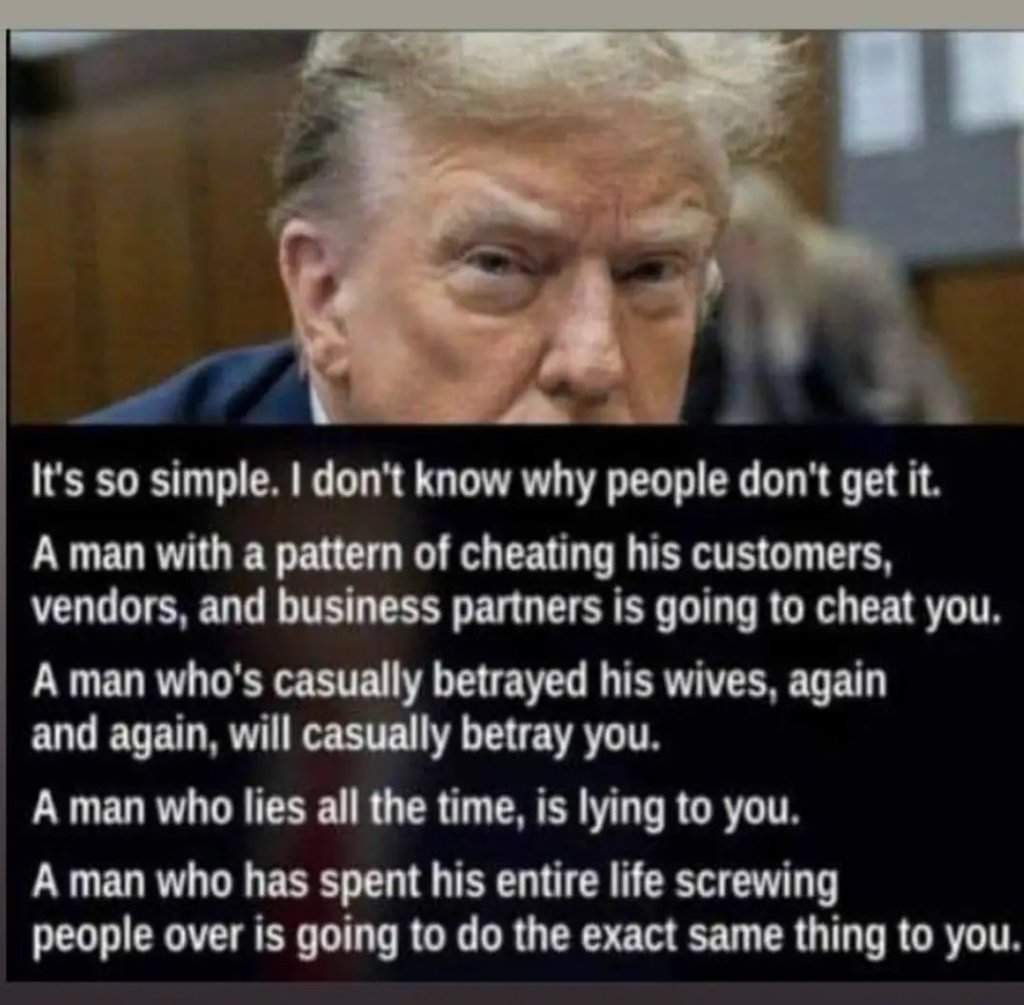
But nowhere has our political thinking been more askew than when it comes to so-called family values. I can remember when Republican Nelson Rockefeller was shunned by his party for getting a divorce. Now, the undisputed leader of today’s GOP is a serial sinner, an inveterate misogynistic, and a total degenerate who somehow remains the darling of evangelical extremists and the GOP base. He rejects all of the sober fiscal tenets to which his party once paid lip service (e.g., balanced budgets and free trade while endorsing big tariffs and trade wars). Moreover, he sucks up to an array of dictators and international thugs that older Republicans would have reviled and repudiated without question. And he would trash our revered Constitution in favor of authoritarian, strongman rule, abandon the Western alliance that has defended liberal democracies since WWII, and take the country back into a form of head-in-the-sand isolationism in a global economy. Talk about orthogonal thinking.
There has always been a political disconnect between what is and what is believed. That has always fascinated me and raised a question in my mind. Can a democracy last if there is no relationship between what is and what the electorate believes exists? For the American experiment in a vigorous republic to succeed in the future, we must find a way to match perception with reality. The average American must be educated to the point where they can connect the most obvious dots.
Otherwise, welcome to 1933 Germany. We might well end our fragile democracy and all because we did not pay attention to what was real and what was mere illusion.
 Tom's Musings
4 responses to “Orthogonal Thinking.”
OK. I saw the title of this piece, and it triggered thoughts of my ill-fated semester with Warren Haggstrom, he of the never-ending discourse on orthogonal polynomials. Even after all that, I’m still not sure what orthogonal thinking is. I blame age, not you. But a paragraph for the slightly impaired among us couldn’t hurt!
LikeLike
Ah yes, obtuse at best. I tend to put down a title and start writing, not knowing where my restless mind will take me. The title still might fit. Orthogonal, to my mind, means uncorrected or independent. In thus case, beliefs and perceptions are often disconnected from underlying reality. This works for me. Good to know you have so many happy memories from UW 😀.
LikeLike
Please unsubscribe me.
Judy Sikora
<
div>
Sent from my iPad
<
div dir=”ltr”>
<
blockquote type=”cite”>
LikeLike
Not sure how to do that. Just ignore.
LikeLike