One more recollection from my past … at least until another thought pops into my head. I may even give you a short break after this one. We will see.
I should say something about my professional career, or what passed for a career in my case. On paper, I ended up as a Senior Scientist at the University of Wisconsin-Madison and the Associate Director of the Institute for Research in Poverty … a nationally recognized research entity that focused on social policy questions.

Nominally, that sounds impressive. If you were an academic type into issues of domestic policy, this definitely was the place to be. There was one slight problem. I was not, by disposition, a scholar. True, I had many related skills … I raised tons of money for research; my students generally loved me; I wrote beautifully; I was excellent in the logistics of complex research projects; I was in demand as a speaker; and I consulted at all levels of government on a variety of public issues. Though rather disorganized, I was creative enough to be considered a talented administrator. I even had the respect of my Institute and academic colleagues (outside of Social Work that is), including the hard ass economists. Finally, I was on the speed dial of reporters across the country and very well known within the national domestic policy community.
So, what’s the problem you ask. Well, I believe there were two problems for me. First, I detested writing for the disciplinary focused, peer reviewed journals. They struck me as highly stylized, overly narrow in substance, and targeted only on a small audience of peers. Unfortunately, that is the only expectation for academic based scholars. Though they talk about research, teaching, and public service, only the first counted in my day. You put effort into the other two only at night and when no one was looking.
Second, I had the attention span of a hyperactive gnat. Good scholars drilled down to explore the minutia of sub-issues. I gravitated toward cross-cutting questions of relevance to the real world. I was a round peg in the square hole. Worse, I could never focus for long on an topic. There always was something new to capture my attention. My first title for my professional memoir was Browsing Through My Candy Store because that was what my career felt like … I was surrounded by enticing problems to explore and kept moving on to the next glamorous challenge that grabbed my attention.
Nevertheless, I did love academia. I enjoyed the freedom to explore whatever I wanted. I reveled in not having a nominal boss. I loved being surrounded by really smart people and constantly being exposed to new ideas and thinking. I was drawn to the intellectual challenges and, because I was associated with a top-notch research entity, people assumed I was some kind of an expert, smart even. I loved being in a professional environment where I got to fly around the country to work on complex and challenging issues with some of the brightest folk around. Better yet, they paid me to do this. It was heaven.
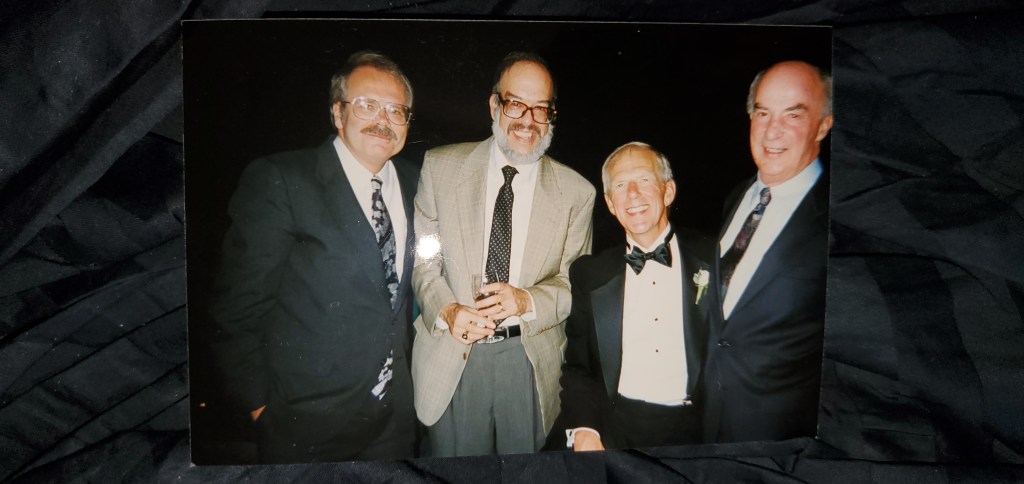
I particularly loved the people, some of them at least. The above pic was taken at the wedding of Robert Haveman’s (seated with bow tie) stepdaughter in New York. On the right is the late Irv Piliavin. He was a delightful character who first recruited me to the university from Wisconsin State service. He needed someone who knew state government to run a large research project for him. I next worked closely with Bob Haveman on a legislative mandated welfare reform study. We put together an innovative reform plan that led to several innovations in the state’s social safety net. Soon, I quickly moved on to working with Irv Garfinkle (next to me) on child support issues which, in turn, quickly led to a fascination with creating integrated or one-stop work-welfare systems (where I worked with economist Michael Wiseman (visiting from Cal-Berkely) and Political Scientist Lawrence Mead (visiting from NYU). The internationally famous Kenosha model was the result. These were just a few topics in the beginning days.
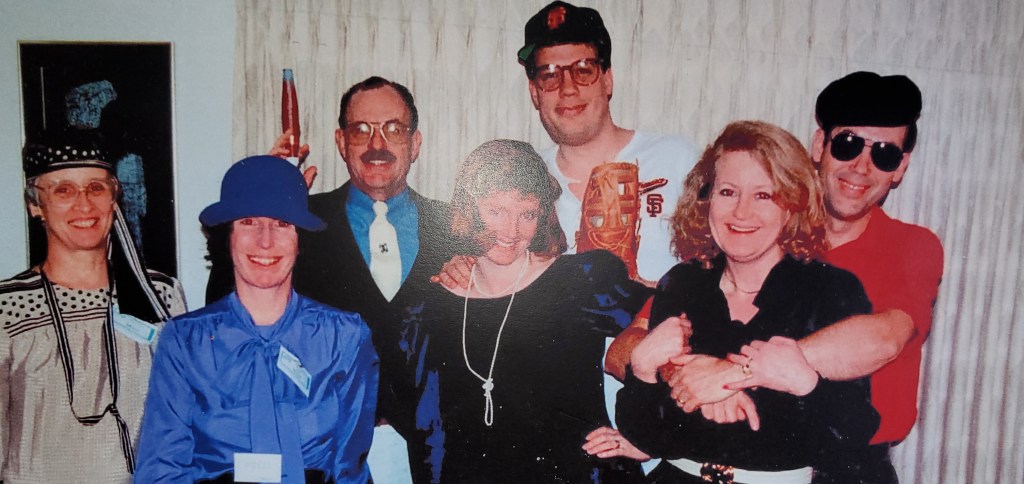
It was not all work. There were times for friendships and frivolity. The three men (and spouses) above were close colleagues. It was taken at a theme party my spouse (blue dress) and I threw at our house. The man of the left was a visiting Federal official who was very helpful to me when I spent a year in D.C. working on Clinton’s welfare bill. Next to him is Karl Scholz, then a junior economist at UW. He went on to become Provost at UW and currently is President of the University of Oregon. The man on the right is Gary Sandefur, a Native American Sociologist who later became Dean of L&S at UW before heading back to his native Oklahoma to assume the position of Provost at Oklahoma State University. These were not only treasured colleagues but friends as well.
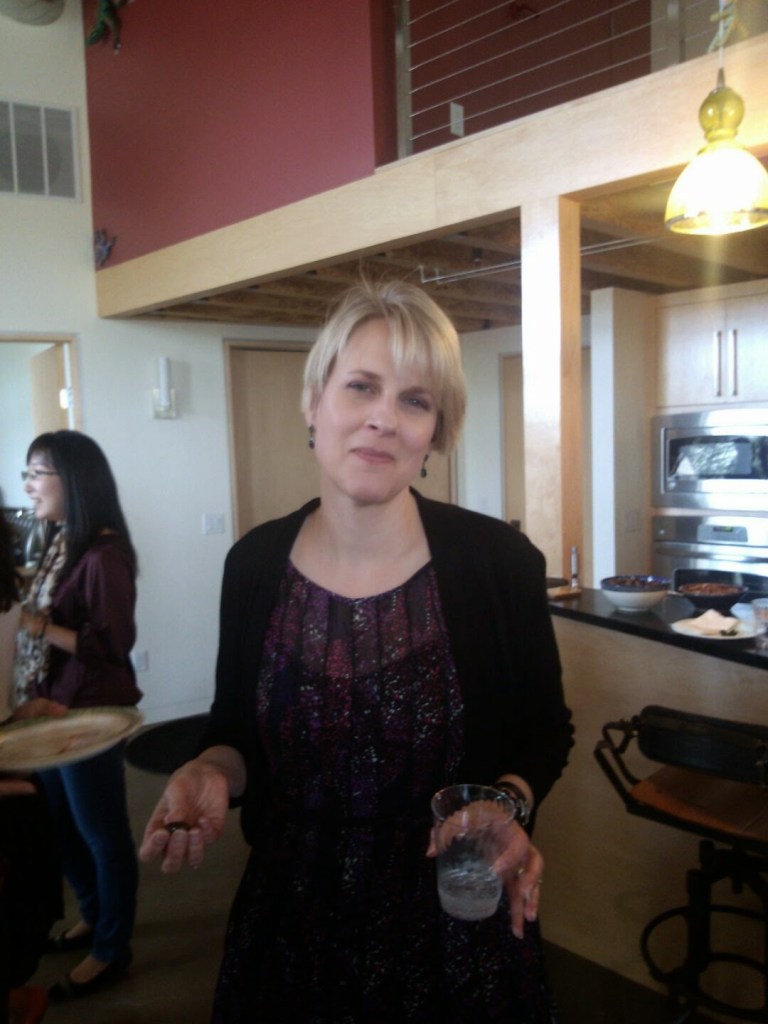
Above is Jennifer Noyes. I must admit that my choice of professional colleagues shifted to the feminine side over time. I found women to be organized and focused while I was … NOT. When I first met her, she was working as an advisor for Governor Tommy Thompson, the ambitious Wisconsin Governor who ran for U.S. President and became Secretary of HHS in Washington. She also headed his nationally renowned welfare replacement program known as W-2. Tommy disliked me and the Institute, but I found that I could work with Jennifer. We repaired IRP’S fractured relationship with the State. In time, I strongly encouraged her to move to the University where we collaborated for a number of years on developing Peer Assistance Models for states attempting to reform their welfare programs and with others pursuing integrated models for their human service systems. She now works directly with the UW Chancellor.
Below is another female colleague … Karen Bogenschneider (left) and her graduate student (a Harvard Grad) at the time. Karen and I wrote two books on evidence – based policymaking along with several articles. I also helped her develop what were called Family Impact Seminars, a successful method for bringing research to state legislators in Wisconsin and across the country. She was the epitome of organization and focus.
There were so many others, on the Wisconsin campus, at other universities around the country, or located in government, think tanks, advocacy groups, and foundations. I knew more people in Washington than many who actually worked there. I worked with local and state officials across the U.S. as well as Canada. Almost all were dedicated, committed, and very hard working. They taught me so much.
I will only mention three people who impacted my professional life in a large way. Bob Lampman (a UW economist) was considered the godfather of the War On Poverty launched by President Johnson in the 1960s. He was a giant in poverty studies and one of the nicest individuals I ever met in academia, or anywhere.
Sheldon Danziger was an economist by training but situated in the School of Social Work (he went on to Michigan and then to Russel Sage in New York). I mention Sheldon because I never would have gotten my doctorate without him. As usual, I was too busy or distracted to finish my dissertation despite receiving rave feedback on my prelim exam responses (when they were real exams) and having tons of data from projects on which I had been working. When Sheldon was IRP director, he pulled me aside one day with a plan. He suggested throwing together several papers I had written and calling it a dissertation. It must have set a record for length (2 volumes and some 600 to 700 pages), but the scheme worked. It was a variation of the ‘baffle them with length and bullshit’ approach. They were desperate to get rid of me.
Finally, I must mention Barbara ‘Bobbie’ Wolfe, an economist and public health scholar. She was director of IRP when I first served as Associate Director and then Acting Director (in her absence). We guided the Institute during a period when its funding was under serious threat. There were lots of sleepless nights in that era. She and I made a good team. She was the serious academic while I was the schmoozer who worked in the public arena and kept the Institute’s brand visible.
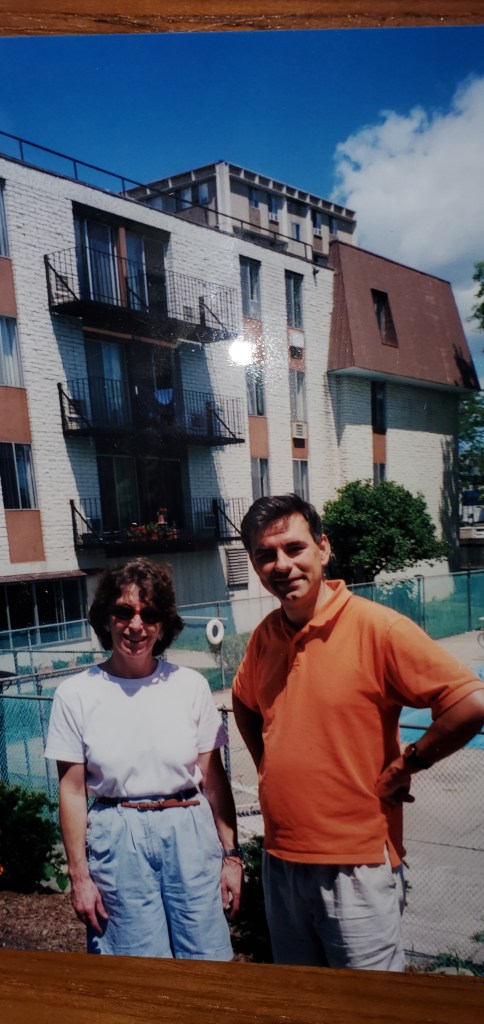
Others come to mind. The couple above is my spouse with Luke Geohegan. He was a Harkness Fellow from England whom I mentored during his six month stay at UW. We remained close, visiting each other over the years. He went on to become warden of Toynbee Hall (a famous British landmark known in policy circles) and is now the head of research for the Britain-wide organization of Social Workers. They play a key role in advancing social policies.
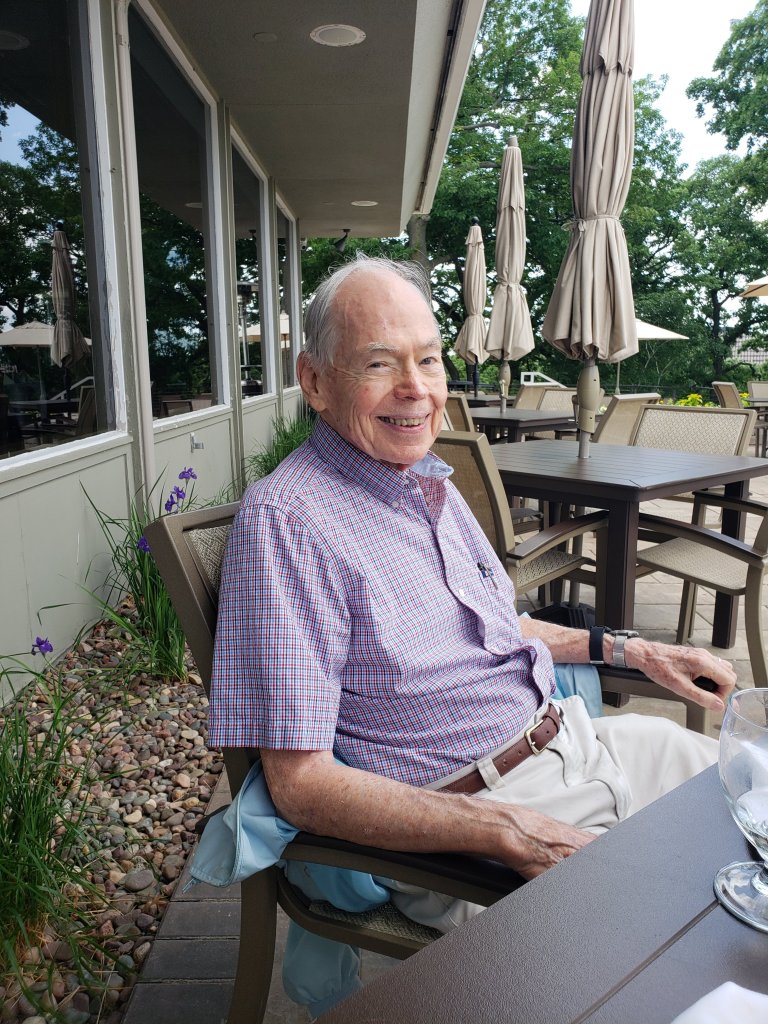
The elderly gentleman was Jack Westman. He was a child psychiatrist attached to the Medical School at UW. He drew me into an organization called Wisconsin Cares as Vice President. This was a group of retired movers and shakers from state government and the university. We kept busy working on public issues affecting children and families in retirement.

One of my final projects at UW was to run (with Bob Haveman) what was called the Poverty 101 workshop. We brought in academics from around the country who taught poverty related courses. Over a week, we exposed them to intensive seminars given by IRP affiliates. My plenary talk at two of these courses (The Rise and Fall of Poverty as a Policy Issue) was considered a classic.

One thing is certain. We all fade from the scene but not entirely. The above pic is taken from an interview I did discussing evidence based policy making. Just this past week, I realized that it is still used in training sessions for those who run Family Impact Seminars around the country. I wonder if anyone listens.
I also hope that some of my papers yet resurface from time to time. My paper (Child Poverty: Progress or Paralysis) was a sensation when it came out in 1993. Another paper on welfare motivated migration was read into the Congressional record. Several papers on service integration written by Jennifer Noyes and I created a stir in the policy community. For years, we would get calls from policy makers praising our unique take on the topic as well as invites to consult. A lead article to a major IRP publication around the year 2000 was seen as a seminal summary of the welfare revolution that was beginning to wind down by then. That is what I enjoyed, bridging the gap between research and practice to take a fresh look at what is going on and writing about it for broad audiences.

It wasn’t all fun and games. I grew to hate the constant traveling. And the workload was brutal at times. I can yet recall semesters where I had a full-time teaching load, served as Associate Director of IRP, was the principal investigator on several projects, organized a number of conferences, and gave numerous talks around the country. I would organize a talk on the plane out to whichever city in which I was scheduled to talk and plan my next lecture on the return flight. I would wake up each morning at 4:30 or so in a panic, feeling way behind. That’s only because I was.
Yet, I only had one regret in all this. Apparently, the university administrators at UW wanted me on the faculty (I was a senior scientist at this time even though I performed all the roles of a faculty member). They first set me up with something called the Department of Governmental Affairs. I barely learned where they were located. That arrangement collapsed while I spent a year in DC during Clinton’s tenure.
When I returned, they had set me up for a tenure track half-time position as a clinical professor in Social Work. I was way too passive in these matters. I would say ‘whatever’ but not change my work style one bit, other than to add faculty meetings and mandated faculty assignments to my already overwhelming schedule. How stupid of me. I initially thought my national reputation would make this a slam dunk. By the third or fourth faculty meeting, I was disabused of that notion. While individual academics can be whip smart, in a pack they can be remarkably hide bound and culturally rigid. But we have always done it this way. I knew they would be paralyzed by my situation since I never played by the rules.
My greatest (and only regret) was not ending this doomed experiment immediately. Thus, my passivity resulted in me losing a lot of money (which bothered me little) and, more importantly, stretched my limited time and energy way too far. At the time, though, I knew I would retire (at least partially) before my half- time tenure clock expired. So, I let this uncomfortable experiment continue on, much to my ultimate regret. I was way too nice.
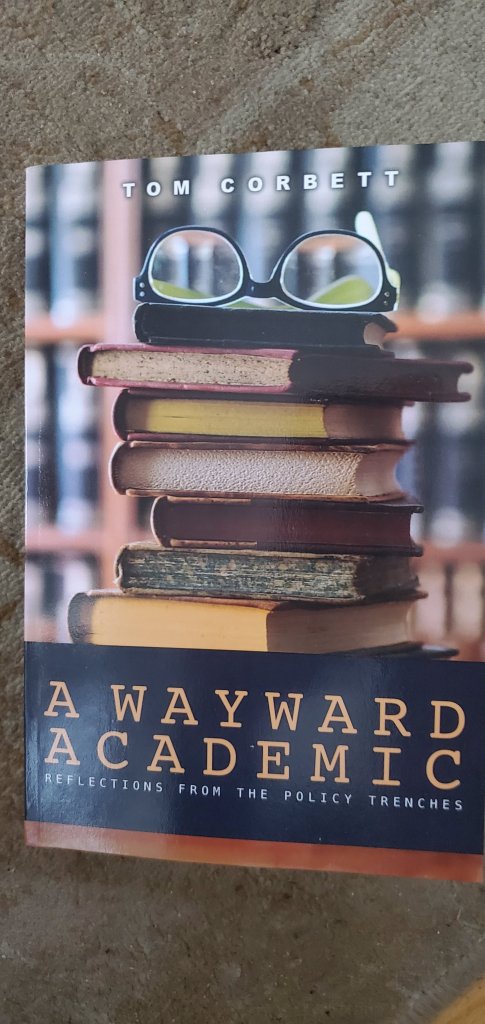
Nevertheless, it was a blessing to spend a life in Madison Wisconsin at this gorgeous campus on the shores of Lake Mendota. I had the opportunity to engage in every major issue impacting poverty and welfare policies during my tenure as a fake academic, way more than I can mention here. And this was the era in which these topics were front burner issues. Back then, welfare reform was known as the Mideast of domestic policy. I fully enjoyed being a player on the national scene.
As I always say, being an academic, even a fake one, beats working for a living even if it consumes your life. It remained an exciting joy. I often said that I probably would have continued working even if they stopped paying me. I’m not sure how many people can honestly say that.
 Tom's Musings