The other day, we in Stonefield Terrace gathered for our weekly gab fest on the great and small events in the world. The discourse eventually turned to travel and then to the Peace Corp service that a couple of us experienced in our misspent youths. That brought back many memories, and a few long dormant stories.
I’m sure that I’ve shared more than a few of the pics and stories you will find below. No problem, at our ages, repetition is not only good, it is necessary. I can barely recall my name most days. While we all have seminal experiences that shape who we become, a few really stand out. Foremost for me are my days at Clark University and my Peace Corps days in India. So, here goes with only a token effort at coherence … a quick review of my Grand Adventure.
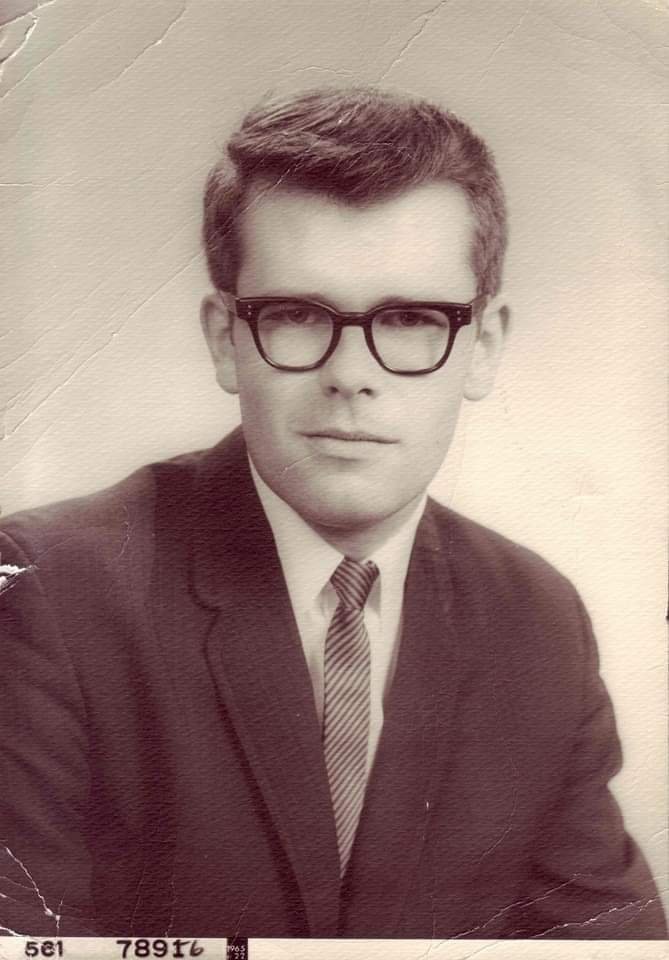
The first pic is my yearbook shot during my final year at Clark. I don’t look much like a Rebel and left wing trouble maker, but some saw me as such. I did lead the anti-war group on campus. We called ourselves the Student Action Committee or SAC, which was the same acronym employed by the Strategic Air Command (the bombers that flew continously in case of a Commie sneak attack). The Cold War was yet real, and we young rebels who despised the global insanity about us thought we were so clever.
All that may have contributed to my decision to head to the other side of the world in the Peace Corps. Nuclear annihilation struck me as a decidedly dubious idea. A better bet was to contribute to global understanding, no matter how small that contribution. Besides, I had been on this do-gooder quest for years, my seminary days being one example, working nights in a hospital to pay for school, trying to save disadvantaged kids, etc. Graduate school was an option, but a 2 year stint in the service of others struck me as ideal in the immediate term. Higher education could wait.
Below are the college kids (and PC staff) gathered in 1966 during the first week of Peace Corps training at the University of Wisconsin- Milwaukee. I am 2nd row, 2nd from left.)
We were so naive. The training would be long and arduous. And India would prove to be far from the romanticized, idealistic paradise of our imagination. The Hindu culture was harsh and demanding. We would confront unrelenting heat, loneliness and isolation, disease, frustration, and the realization that we had been assigned a task beyond the skill sets of city college kids, no matter how smart. Only in hindsight did we realize we had signed up for one of the most difficult tours the Corps offered.
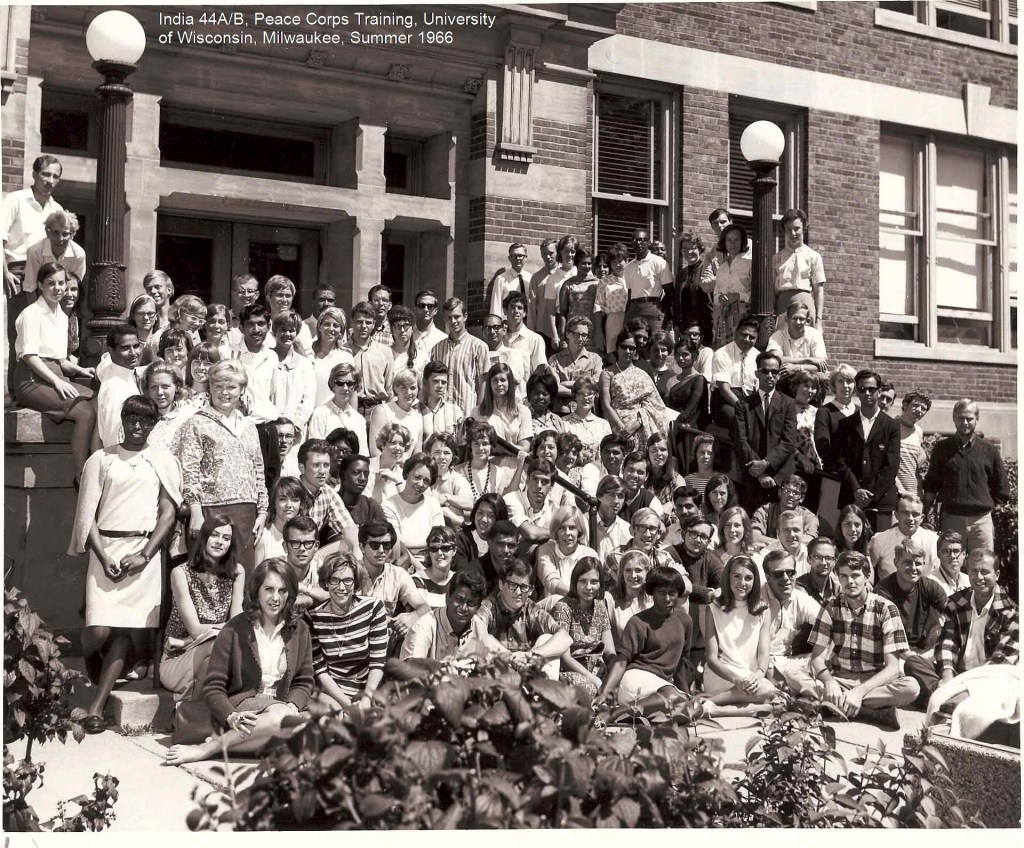
Many of these kids fell by the wayside. Some dropped out during training. Others were deselected (told to go home), sometimes for reasons obscure to the rest of us. Still others left when confronted with the harsh reality of India and two years of life in a remote desert. And a few fell ill to the diseases and dangers all around us and were medically discharged.
In the end, only about two dozen were left to gather in the Bay Area some 4 decades after completing our service (Most of the survivors are in the reunion pic below. I am back row, 2nd from right).

I must say. While we had our challenges, and yet displayed a few emotional scars all these years later, this was an extremely talented group who did some amazing things in life. I cannot decide whether the Corps picked good people or the PC experience added value to our life trajectories.
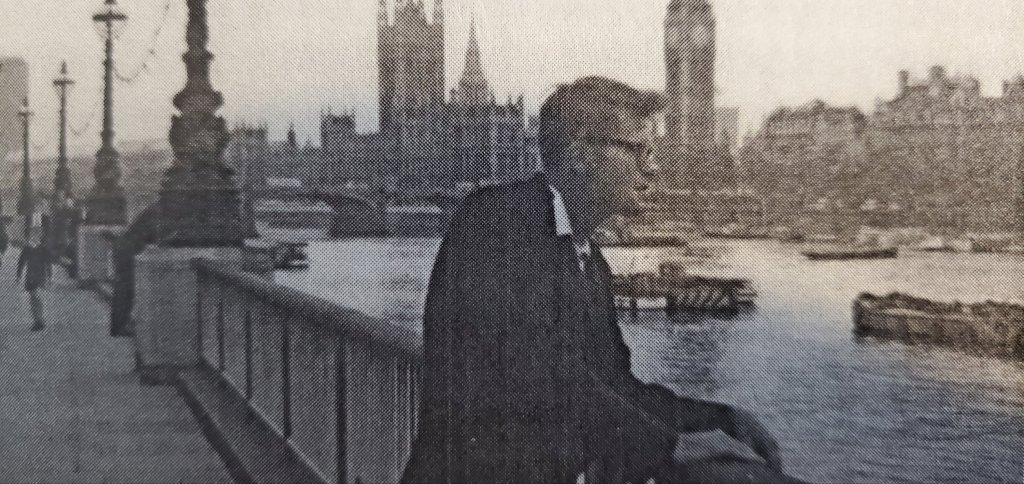
Below, I am in transit to the other side of the world. I am contemplating what is ahead of me as I gaze over the River Thames. How little we knew.
I can no longer recall how many of us made it to India, perhaps 40 or so. We were in two groups, males who were headed to Rajasthan to eventually work in agriculture (India 44-B) and mostly females who would do public health in Maharasthra (India 44-A).
The next pic looks at many of the 44-B group as we continued our training. Yes, they tried hard to turn us into farming experts, a hopeless task given that we were all city kids. But this was yet what was considered the ‘Wild West’ of the PC concept where it was believed that smart US kids could do anything. We did a lot, I suppose, but we were far from miracle workers.

The pic above shows us getting still more Ag training before the final selection of who would stay was made. I was always stunned by how few of my University colleagues several decades later could accurately identify me in this group shot above (6th from the left). Perhaps it was the abundance of thick, dark hair back then that confused them.
Before we were sent to our sites, we had some basketball games against a team of students from the University in Udaipur. (See pic below… I am front row, left.) We triumphed in a couple of games until they brought in an army team that proceeded to beat us into submission. Still, three of us were asked to join the Udaipur team competing in an All-India tournament. Alas, we were easily ousted in the first round, but it was fun.

Eventually, the survivors of our ordeal were sworn in as official volunteers. We had one final party at the famous Lake Palace situated in the middle of Lake Pichola, now a world famous luxury hotel. (See pic below) I am the tall one on the left who is chatting with two of our language instructors. Okay, I had a crush on Usha … the gal on the right.

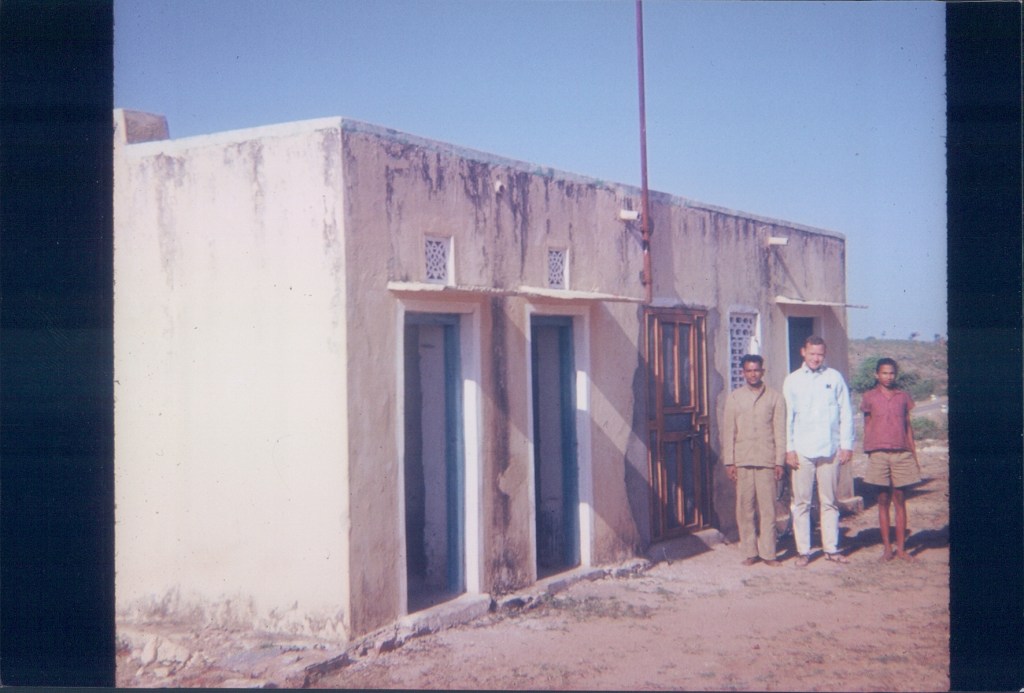
The reality of actual service was a shock. My partner and I were assigned to the town of Salumbar, situated in the desert about 50 kilometers south of Udaipur. It was a harsh environment in an equally harsh and unyielding land. Below is our government housing (all the other government workers lived in town about a mile or two away). Randy is in the middle, surrounded by the two locals who kept us alive… Rooknot and Cutchroo. Do I have stories about those two! The local officials promised us electricity but that took about six months to arrive. Everything in India was ‘just now coming.’ ‘Now’ meant in five minutes, five days, or five months … but not to worry.
Salumbar itself was a decent size town situated in a bleak desert area. It was spotted with mostly tiny farms fed by well water drawn up by technology perfected in the 12th century or much earlier. Most of the poor farmers barely scratched out a survival and spoke Mewari, a local dialect I could never master. But the town was big enough to include some more educated folk we could work with. I never escaped the guilt of focusing on the local gentry, however. I was creating even more inequality in the local economy. We were trying to convince the locals to try new and high yield varieties of seed. However, many things could go wrong. If you screwed up the annual crop of a poor farmer with a large family, the guilt would have been unbearable.

The pic above is a street scene in Salumbar. I never got over the sense of living in Dodge City in the 1880s. I expected Wyatt Earp to show up, guns blazing. There was little question that we were immersed in a dramatically different culture. That itself was to prove a priceless experience for later life. I can yet remember when a bunch of menacing looking guys rode through town on camels while sporting rifles and much ammunition across their chests. I always wondered if they were bandits. On another occasion, a group of Jain Saints arrived to the great joy of the locals. They were into self mortification. I watched one pull all the hair out of his body. I decided to just let my remaining hair fall out naturally
A lot of the day to day experience involved battling the tedium and heat and loneliness and disease and guilt (from feeling incompetent) and cultural friction. As noted, India was known as one of the most difficult countries for volunteers. The culture was complex and mistakes were not easily forgiven. In short, we were tested on many levels, nor did we have the options for letting off steam available elsewhere.
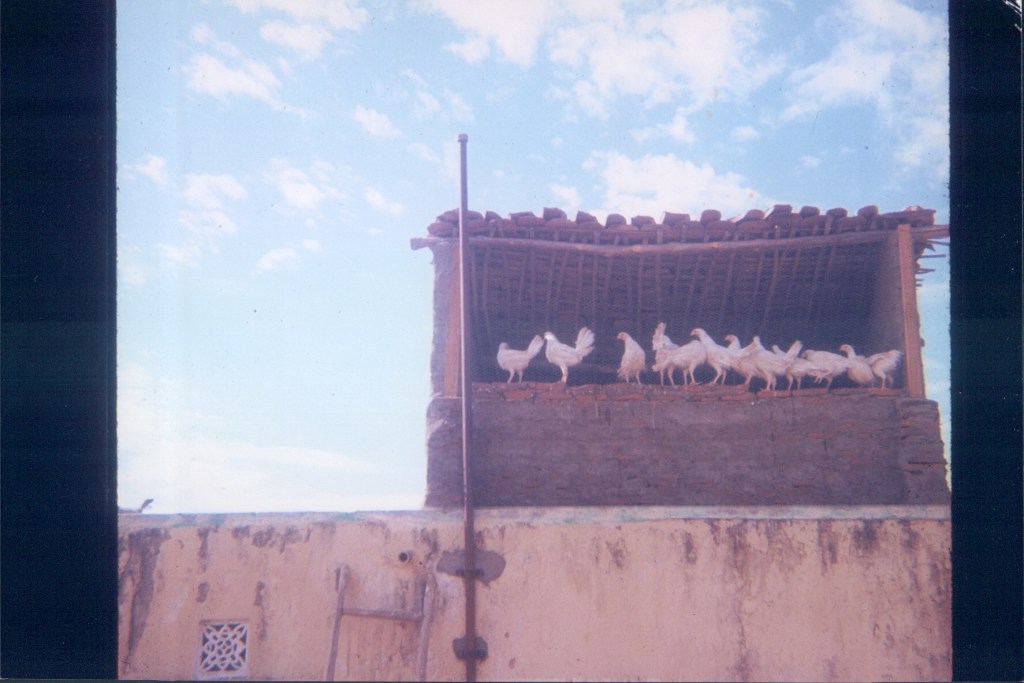
Still, we were not completely hopeless. In order below, I show one of the farmers with whom I worked. He successfully grew a demonstration plot using the new high yield seeds we were pushing. That was followed up by a chicken coop Randy and I built on top of our housing. And that is followed up with a demonstration garden. The chicken and garden demos were an attempt to inspire others. There were other projects, but you get the idea.


I don’t know how much good we did, if any. I always joked that we went to India amidst a failure of the monsoon for several years and in the midst of a severe drought. In fact, things were so bad that India had been importing grain. When we left, the crops were good, and they were exporting grains again. While I took credit, the turning point more likely was the return of the monsoons. Still, numbers don’t lie 😀.
I was pessimistic about the area when I left. What would happen to these small farmers with so many kids. 🤔 They could not divide these tiny plots any further. I feared social conflict was right around the corner.
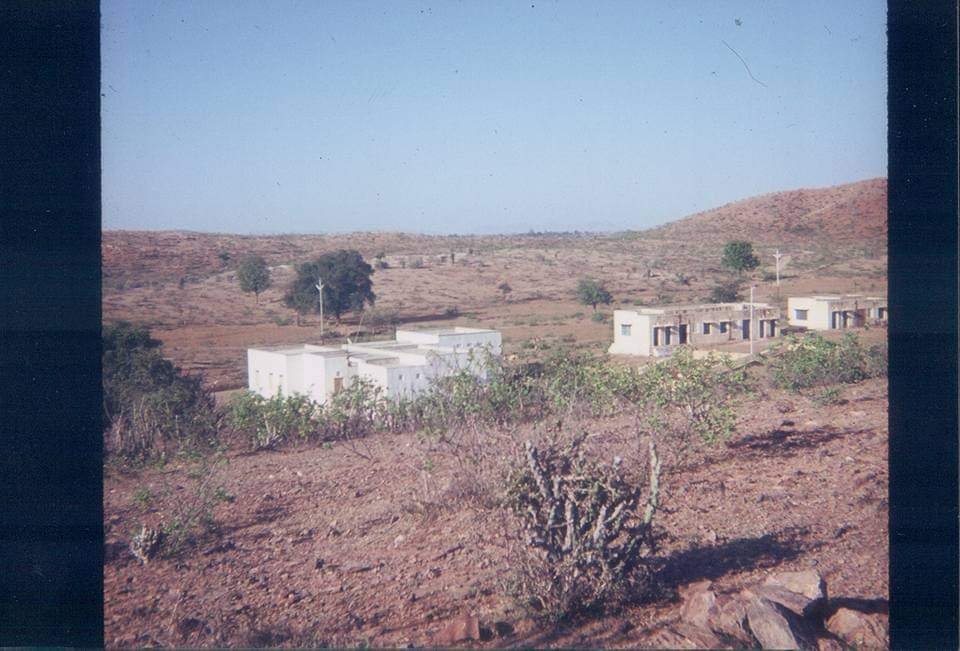
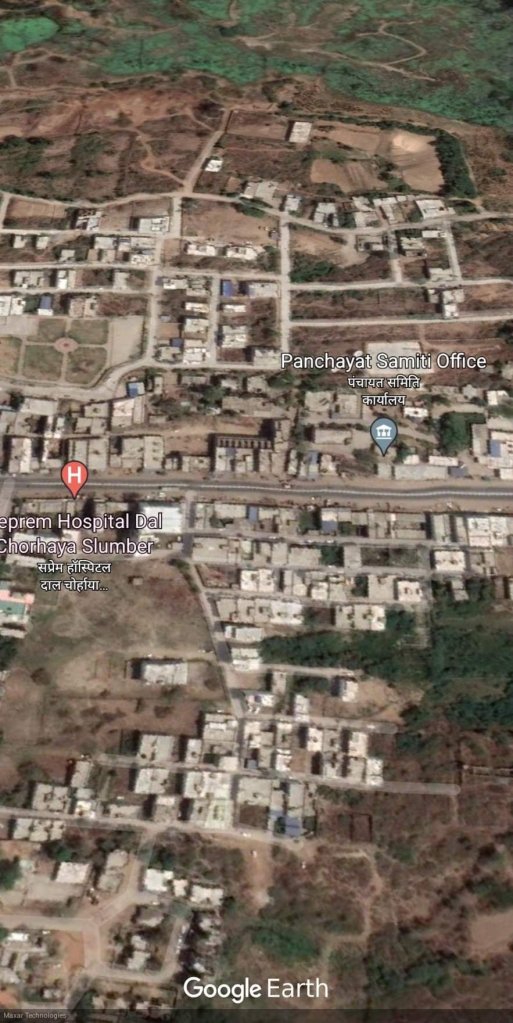
Above, however, is a wider shot of the government offices in Salumbar and the surrounding area (our estate was on the far right). Nothing but parched desert with little apparent hope of development. The pic below is that same area from a recent Google earth shot. The area has been transformed, with many green working farms just beyond this pic. There are hospitals and higher educational institutions now available. Disaster didn’t happen, further development did. Oddly enough, I often would dream about my site, and it had always blossomed into an American type suburb. That turned out to be somewhat true… thank goodness.
Our one consensus group conclusion is that we volunteers benefited most from our experiences. We were tested and became stronger for the challenges we faced. We became more culturally aware. We learned how to show initiative, to adapt when challenged, to appreciate differences, to see realities beyond our own blinders. These are lessons that can not be learned in any classroom. They had to be experienced.
More than all that, we bonded with our fellow volunteers. Intense shared experiences breed a closeness and a common understanding. In the pic below, I am with Haywood (on the left) and Bill (on the right). Haywood came from a very poor sharecropper family and (after post PC graduate school) went on to become a national labor union leader in DC. Bill (a scholarship student at Yale from a large Catholic family) went on to earn a graduate business degree from The Wharton School and Ph.D in economics from NYU. In his career he did international banking in Paris but eventually became a top analyst for the Federal Reserve. He found the lack of ethics in banking disturbing and returned to working for the public good, or at least trying to.

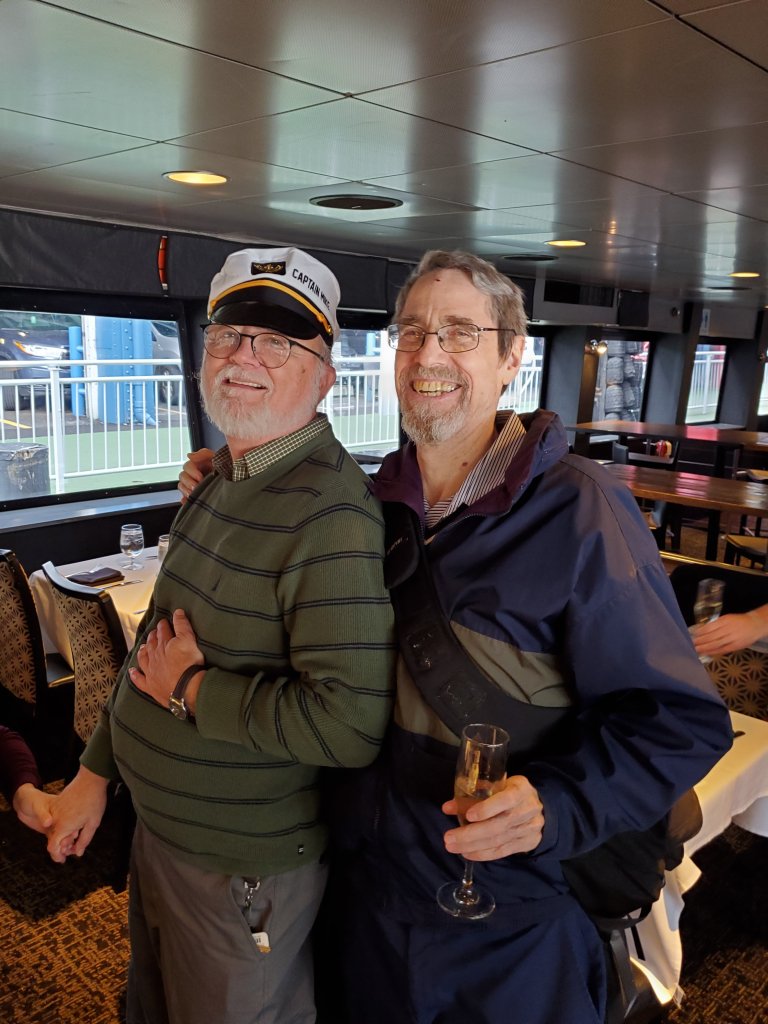
The India 44-A&B volunteers have gotten together several times since 2009. These were the ONLY reunions I have ever attended. We were a band of brothers and sisters. Below is Bill (on the right) with his good friend Mike (also a member of India 44 B). It is Mike’s 75th birthday, and we are embarking on a boat trip with his family up the Hudson to celebrate. I am proud to know these great people.
I could only scratch the surface of this adventure. You really should read the book. Hilarious, sometimes sad, and very insightful.
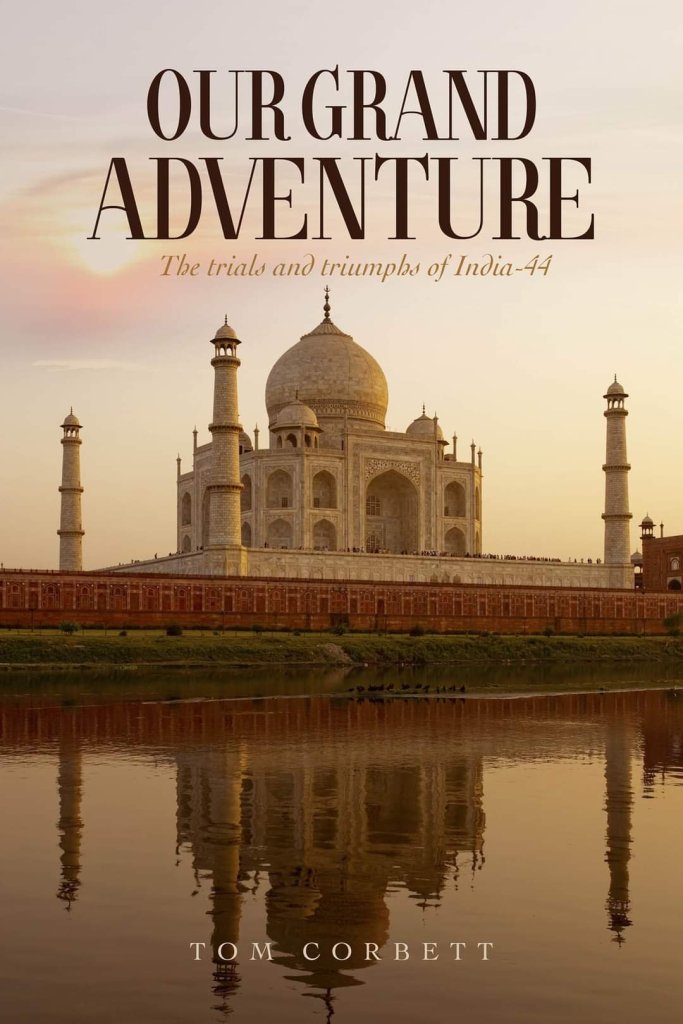
I sometimes think that all young people should experience a seminal life experience while they are still young. Clark helped me formulate my world view while India tested me as an adult. I am not sure what and who I would have become without this personal trial. It proved unforgettable, that is certain.
 Tom's Musings