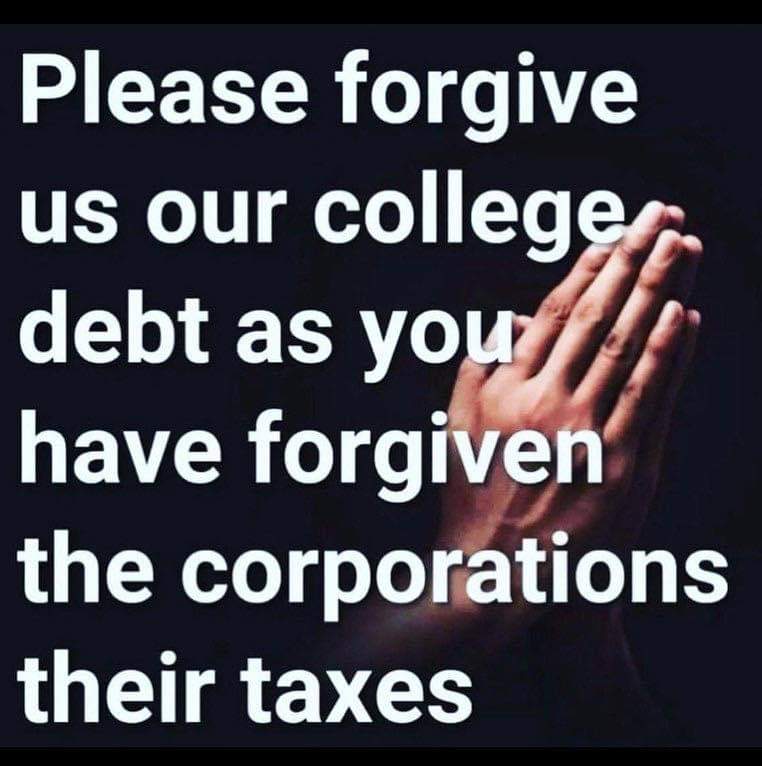
Biden’s issue of forgiving some student loan debt has raised many hackles out there. Of course, in this political climate nearly everything does, so that’s not surprising. Whenever one group is favored by our tax laws or our public policies more generally, questions of fairness inevitably arise. I can hear my dear neighbor now … why should these elite kids (elite by virtue of having access to higher education) get this windfall while others before them struggled to pay off their college loans. There is a surface inequity lurking here. So, how should we look at this, and other benefit programs for the public good.
I remember way back in my youth as a policy wonk. I was staffing a Wisconsin legislatively mandated study of welfare programs. One set of reforms we considered involved making substantial changes to the state tax system. For example, we proposed a state level earned income tax initiative that would employ the tax system to incentivize work and provide some benefits to low-income workers. It was, in fact, enacted. This was back when this was a novel idea.
Another colleague from the university was involved in a mandated study of the tax system. He pulled me aside one day, chastizing me for laying on further bells and whistles to an already complicated tax system. His message was clear. The tax system should focus only on raising revenue. All these other deductions, exemptions, and writeoffs (sometimes justified on noble grounds) merely introduced inefficiencies and inequities.
My reaction was classic. I understood the principle he espoused, but my social ends were too important and deserved to be an exception. And there you have it. Anything that favors my ends is justified but everything else is a boondoggle. A classic case of self interest.
A few years later, in the mid 1980s, there was another push to rationalize the federal tax system. That push was to streamline the rules. You know, replace the thousands of pages of the tax code with something simple. For example, how much money do you have? Send it all in to Washington.
This remarkably effective set of reforms is well told in the book … Showdown at Gucci Gulch. This book relates a fascinating story. It was assumed that the reform would flame out as all the high priced lobbyists (who tended to wear Gucci loafers) attacked the bill to advantage their individual clients. If anyone of them had said, ‘let’s meet in this corner and form a united front,’ the bill would have collapsed. But they didn’t, each pursuing their own agenda. The bill passed.
Almost immediately, the lobbyists regrouped and began passing a host of special tax provisions. Republicans loved this tactic since it provided benefits to one of their prime constituencies (the super rich) without expanding the bureaucracy, at least not by much. It took no time at all to recreate the complex tax system everyone loathed because few could understand.
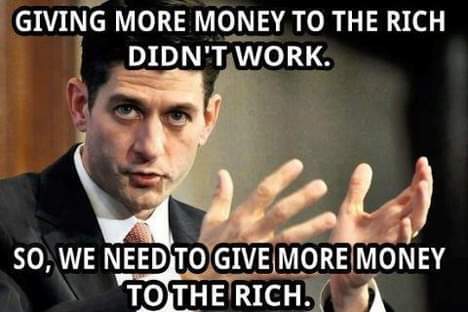
Anyone who was paying attention could figure out what was happening. From the 1980s on the tax system became a massive vehicle to redistribute wealth and income to the top of the pyramid. Not surprisingly, the share of all goodies going to the top 1 percent exploded from less than 10 percent in 1979 to almost one quarter in recent years. This is a tectonic shift and risks destabilizing our democracy.
Let us go back to the student debt question for a moment. Would the forgiveness program penalize those who paid their debt already. Perhaps, but here is how I look at it. Most other countries substantially subsidize higher education. Our public universities once did the same, but those days are long gone. Whereas other places see this as an investment in overall human capital and the public good, we tend to see education as a private benefit, to be paid for if the student is able. It is a classic example of a collective versus an individualistic perspective.
It doesn’t take much to flip this issue on its head. The loan forgiveness program is merely a long overdue way of back dooring a higher education public subsidy. In effect, we merely would be joining so many other countries in making higher education broadly available and affordable. The loans you take up front that are later forgiven. The public subsidy occurs at the end of your education and not at the beginning, and it includes private schools. I’m sure we can debate the details.
There are other tax issues we might look at anew. Take corporate taxes for example. Their contribution to the overall revenue base has diminished radically. As far as I can see, these tax provisions are merely a full employment scheme for corporate tax attorneys. Why don’t we end this program outright. From what I recall, the ultimate burden of corporate taxes falls on either the consumer or the shareholders, though economists never quite agreed on which. But one thing is sure, the big firms often get substantial pay outs in terms of tax refunds.
Of course, we would have to recoup lost revenue somehow. I would raise the personal income tax rates substantially while eliminating all these egregious give aways. In this, I’m arguing forca broadend tax base with few loopholes.
We would be hit with ‘the sky is falling’ doom and gloom predictions by the right. But remember this. America became the economic envy of the world when we had top tax rates around 70 percent. When Clinton raised the top rate in the 90s (after they had been cut by more than half in the Reagan years), Republicans were apoplectic. They screamed that we were in the end times.
What actually happened. Our economy boomed. Our annual deficits became surpluses. The stock market flourished. The Republicans, once again, were dead wrong.
Ben Franklin asserted (allegedly) that nothing is more certain than death and taxes. How odd he would associate taxes with death. Taxes are not the equivalent to death. Far from it. They are an investment in the public good. The happiest countries in the world (according to repeated international hedonic studies) are those that pay the highest taxes. Why? They realize what they get for their investment. They recognize that much of the stress of modern living is diminished by these public investments.
Ultimately, taxes are an expression of a nation’s values. They can be positive or negative, a classic tale of the devil being in the details. Perhaps it is time for a renewed look at an old issue. Perhaps we can recreate a system that reflects positive norms and a collective sense of community values.
 Tom's Musings