Continuing on with my discussion of the ‘Troubles,’ this time from the place where the fighting started. This is Derry, as the Catholics call it, or Londonderry which is preferred by the other side.
When Irish independence was declared (won in hard fought battles) in 1921, Derry was included in Northern Ireland despite having a majority Catholic population. The rules were such that the Protestants held local control for decades, setting up the seeds of future conflict.
Historically, it was a walled city, the walls of older times yet standing which is rare indeed. One moment in the Catholic-Protestant divide occurred around 1698. The deposed Catholic King of England (James II) was fighting to take back his throne. As he approached Derry, a group of (Protestant) apprentice boys hurried to close the gate and raise the alarm with the iconic call of NO SURRENDER!
A long seige ensued with resulted in the deaths of 7,000 of the 20,000 trapped inside the wall. James eventually left and was defeated by William of Orange (his son-in-law) at the Battle of the Boyne, thus ensuring Protestant rule in England and eventually Ireland.
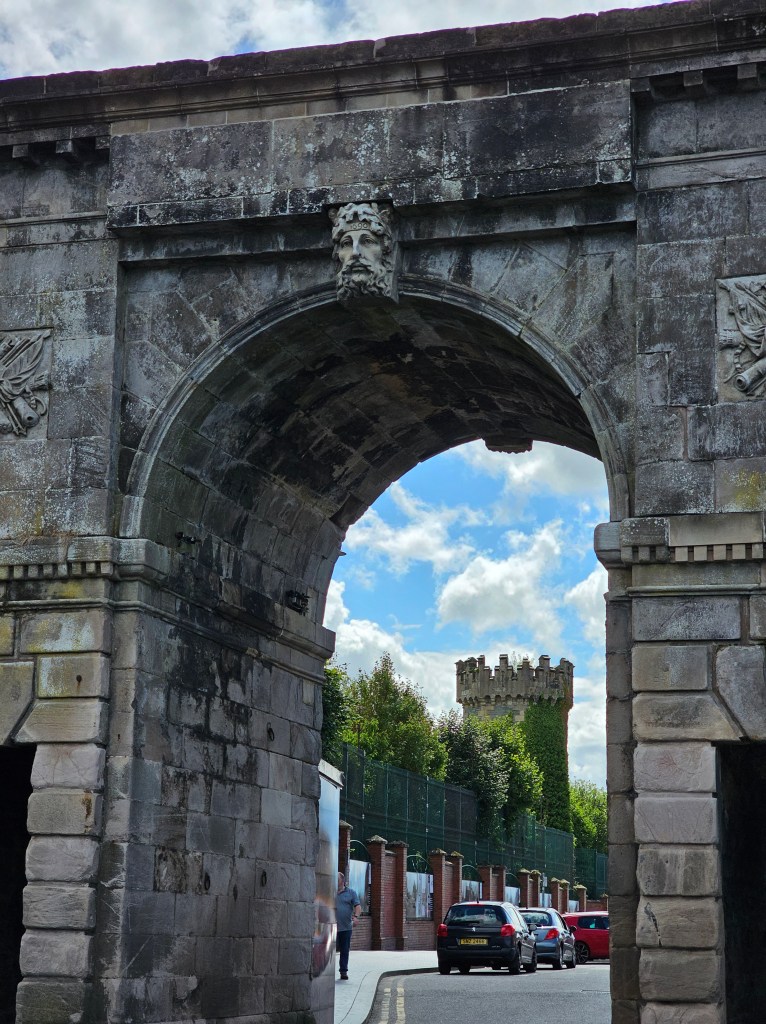

Below is a picture of the Bogside, which I believe is now 97 percent Catholic. The Protestant minority would March to celebrate the Apprentice Boys and then the Battle of the Boyne. They did so with flourish which pissed the Catholics off no end.
Finally, inspired by the American Civil Rights movement, the Catbolics, seeing themselves as 2nd class citizens, fought back for the first time in August of 1969. This militancy spread to other cities.

The conflict exploded in 1972 after British soldiers fired on an unarmed Catholic crowd killing 14. It was known as Bloody Sunday. The British initially whitewashed the event until the British PM admitted total wrongdoing on their part in 2010.
An earlier set of executions also proved counterproductive to the Brits. At the end of the Easter Uprising of 2016, one that did not have broad support across the Republic if Ireland since many Irish had sons fighting in Europe with the English. But the British summarily executed the leaders of the uprising after shelling the revolt into submission. This enraged the general public and led to a more effective uprising that, in turn, resulted in independence in 1921.


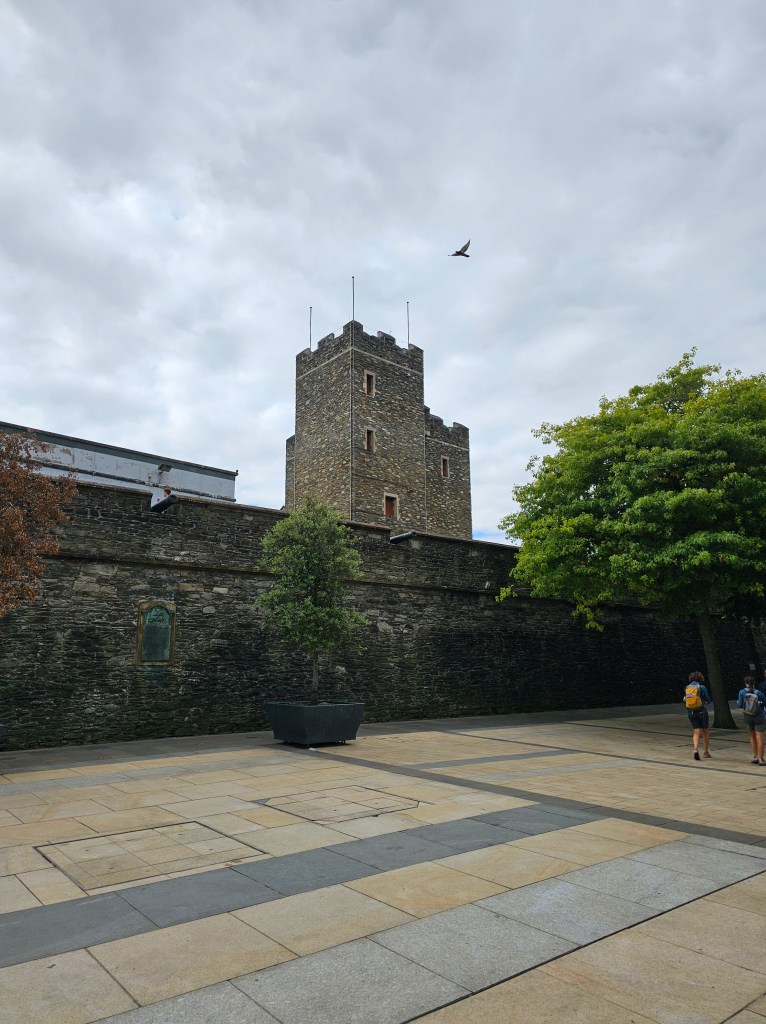
Within the old city are some significant churches and government buildings. Like Belfast, there were walls everywhere to separate Protestant and Catholics, some were more recent barriers built atop the ancient city walls. Even churches were not exempt from sectarian conflict. One Presbyterian church near the old wall was further protected by additional structures to prevent missiles and explosives from being hurled from the Bogside direction.
The court house in the above pic is a good example of the ongoing tensions. It was bombed 13 times during the Troubles.
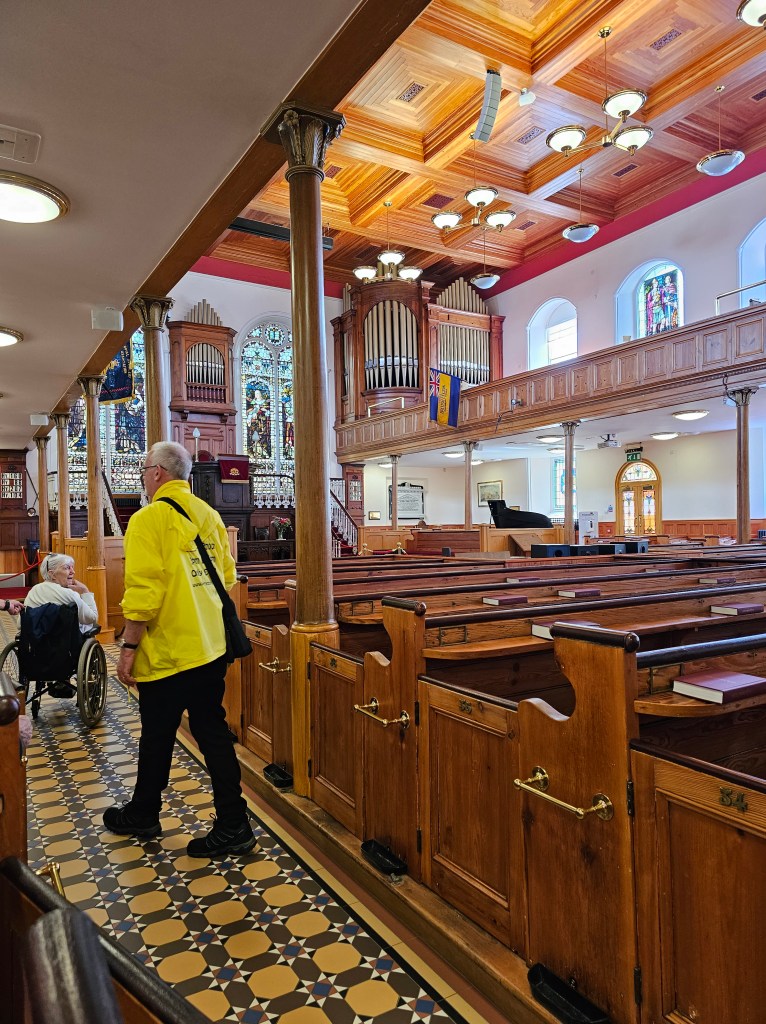
Peace finally came in 1990s. David Hume won the Nobel Peace Prize, plus the Gandhi and Martin Luther King Peace Prizes. He managed to bridge the gap between the warring parties. In the Protestant church below, Hume, the Chief of The British Police forces, and the local Catholic Archbishop all gathered to commemorate the new and more peaceful era. A miracle indeed.
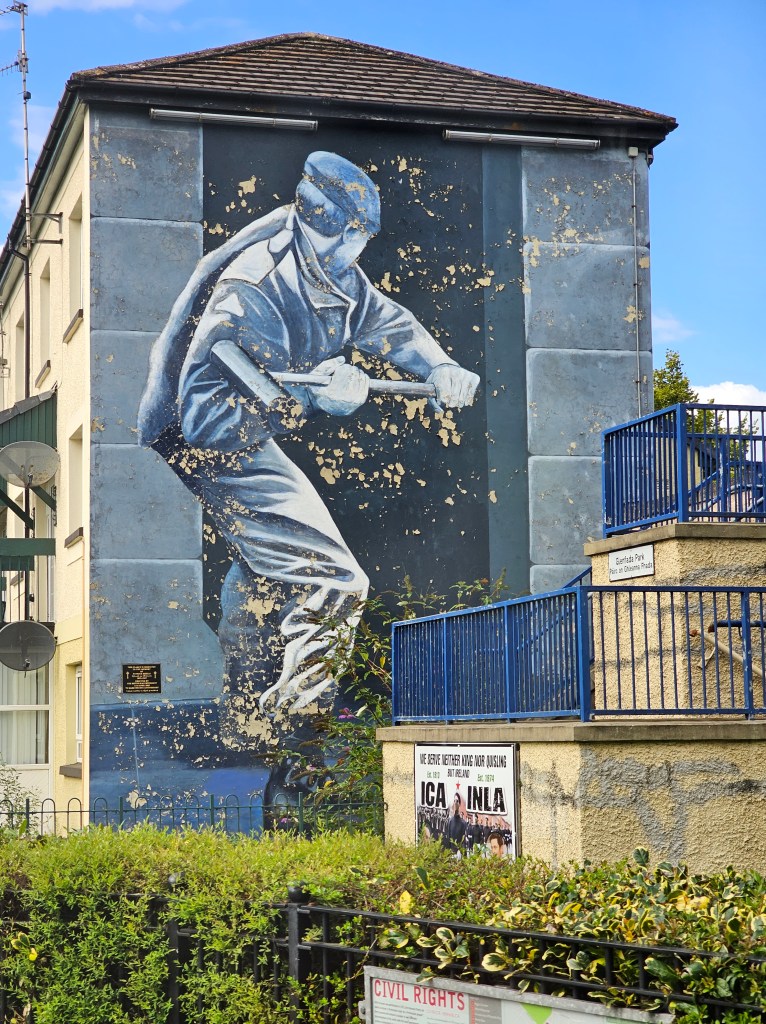
In the pics below are two of the many murals that are found through the Bogside. I’m not certain of the meaning of the second, but the first captures a British soldier breaking down a door looking for IRA soldiers.

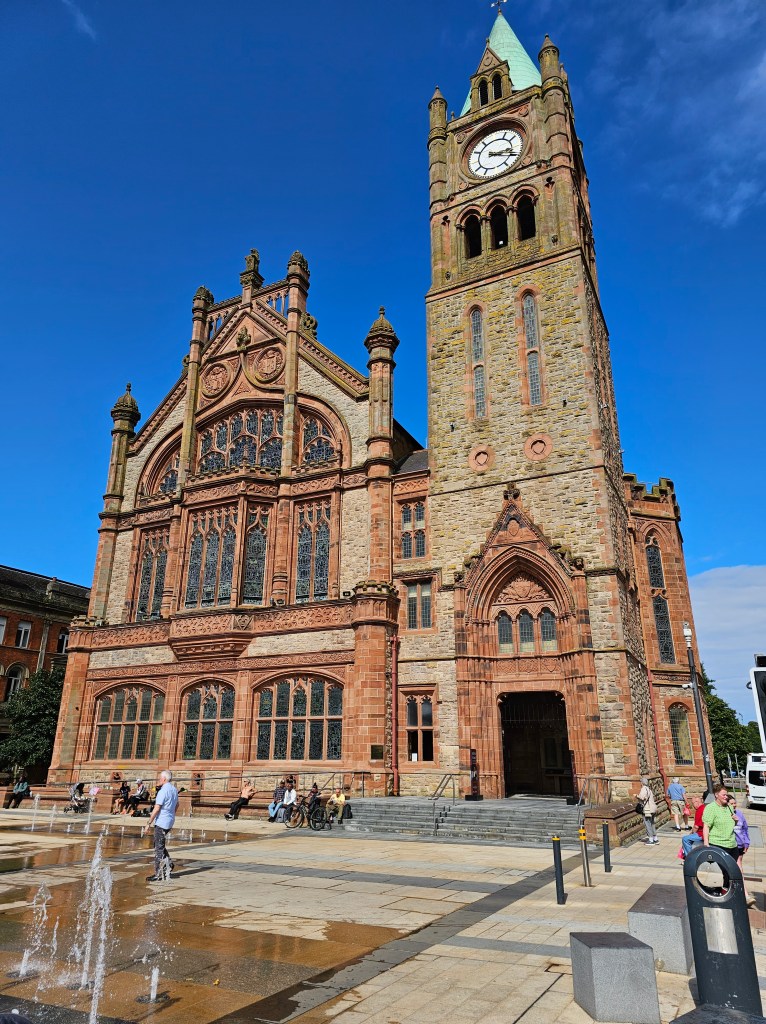
Below is the city’s Guild Hall. Here, the Peace prizes won by David Hume are on display.
Hopefully, the Peace will last and sanity will remain. Only time will tell.
 Tom's Musings